Meta Ads Strategy for FinTech SaaS Businesses
Meta Ads
August 11, 2026

Table Of Contents
If you're figuring out how to run Meta ads for a fintech SaaS company, you're not alone. Most fintech SaaS teams assume their buyers only live on LinkedIn. So they overpay for leads, fight a crowded auction, and wonder why paid acquisition never scales.
Meta (Facebook and Instagram) is a different story. Your CFO and compliance officer scroll Instagram after hours just like everyone else. When you structure campaigns for qualified pipeline—not raw lead volume—Meta becomes a reliable, scalable demand-gen channel for fintech SaaS products.
This guide covers:
Feasibility: Whether Meta actually works for fintech SaaS.
Budgeting: What budget to plan for testing and scaling.
Structure: How to optimize campaigns for qualified leads.
Compliance: Rules unique to financial services advertising.
Everything is grounded in our work running Meta for B2B software companies (roughly 70% of our client base) and spending $3M+ per month across accounts.
Key Takeaways
Meta works for fintech SaaS when you optimize for qualified pipeline, not cheap leads.
Plan $3,000–$5,000 per month minimum to test and allow 60–90 days to prove pipeline.
Fintech has extra compliance requirements—know whether the Special Ad Category applies to you before launch.
Landing pages and conversion tracking decide profitability more than any targeting tweak.
1. Do Meta Ads for Fintech SaaS Actually Work?
Yes. Meta ads work for fintech SaaS when you optimize campaigns for qualified, revenue-tied events rather than raw lead volume.
Why? B2B buyers don't stop being people after 6 PM. They scroll Instagram and Facebook in contexts where they're more receptive than in the middle of a LinkedIn bidding war. Meta's qualified-lead optimization tools now fix the old lead-quality reputation that kept B2B teams away.
The reach is hard to ignore. With Meta's 3.56 billion daily users across apps, your fintech buyers are already there. HubSpot ranked paid social ROI for B2B as the second-highest B2B marketing channel in 2024.
At Flighted, we call Meta the last arbitrage channel for B2B SaaS. Competition is lower than LinkedIn, costs are better, and the platform's machine learning has caught up. For a deeper breakdown, read our profitable B2B SaaS Meta strategy guide.
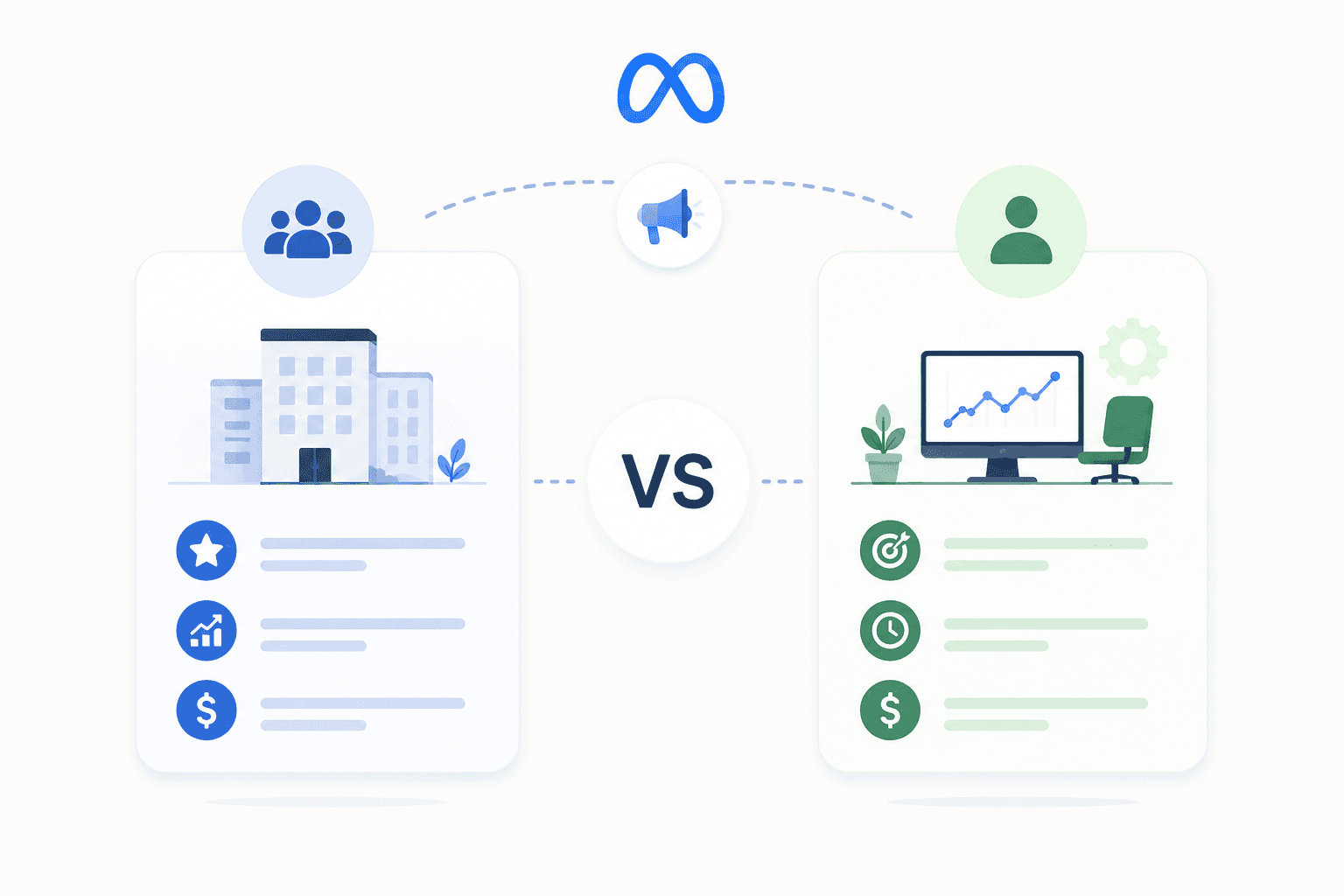
2. Meta vs. LinkedIn: Why Fintech SaaS Should Not Skip Meta
LinkedIn dominates mindshare for B2B advertising. But it dominates budget, too—and not in a good way.
The cost gap between platforms is significant:
Platform | Average Paid Social CAC |
|---|---|
Meta (Facebook/Instagram) | $230 |
$982 |
Note: These are cross-industry averages from Phoenix Strategy Group; expect fintech-specific numbers to be higher.
Factor | Meta (Facebook/Instagram) | |
|---|---|---|
Average Paid Social CAC | ~$230 | ~$982 |
Audience Context | Relaxed, off-hours scrolling | Work mode, competing for attention |
Targeting | Interest/behavior + CRM lookalikes | Job title, company, seniority |
Creative Style | Scroll-stopping, native | Polished, professional |
Competition Level | Lower for B2B | Crowded |
Our recommendation: use both where budget allows. Start Meta first for efficiency, then layer LinkedIn for high-intent Account-Based Marketing (ABM). If you must pick one to test, Meta gives you faster signal at lower cost.
3. Fintech Compliance: Rules to Check Before You Launch
This is where most guides stop short. Fintech advertising on Meta has specific requirements you need to understand before you spend a dollar.
Verification requirements: Meta's financial services ad policy states that advertisers promoting financial products may be required to verify their business identity and demonstrate regulatory authorization where applicable.
The Special Ad Category question: The Financial Products & Services Special Ad Category is mandatory when you're promoting consumer credit, lending, or insurance. Pure B2B SaaS tools—accounting software, payment APIs, compliance platforms—are often NOT required to use it.
When the Special Ad Category applies, you face these limits:
Targeting: Lookalike audiences become Special Ad Audiences with reduced precision.
Advantage+ expansion: Some automated targeting features become unavailable.
Tracking: Additional restrictions may apply to conversion tracking.
Do / Don't checklist:
Do verify your business in Meta Business Manager before launch.
Do check whether your product falls under consumer credit, lending, or insurance.
Do not assume all fintech must use the Special Ad Category—many B2B tools do not.
Do not launch without reading Meta's current financial services policies.
4. What Budget and Results to Expect
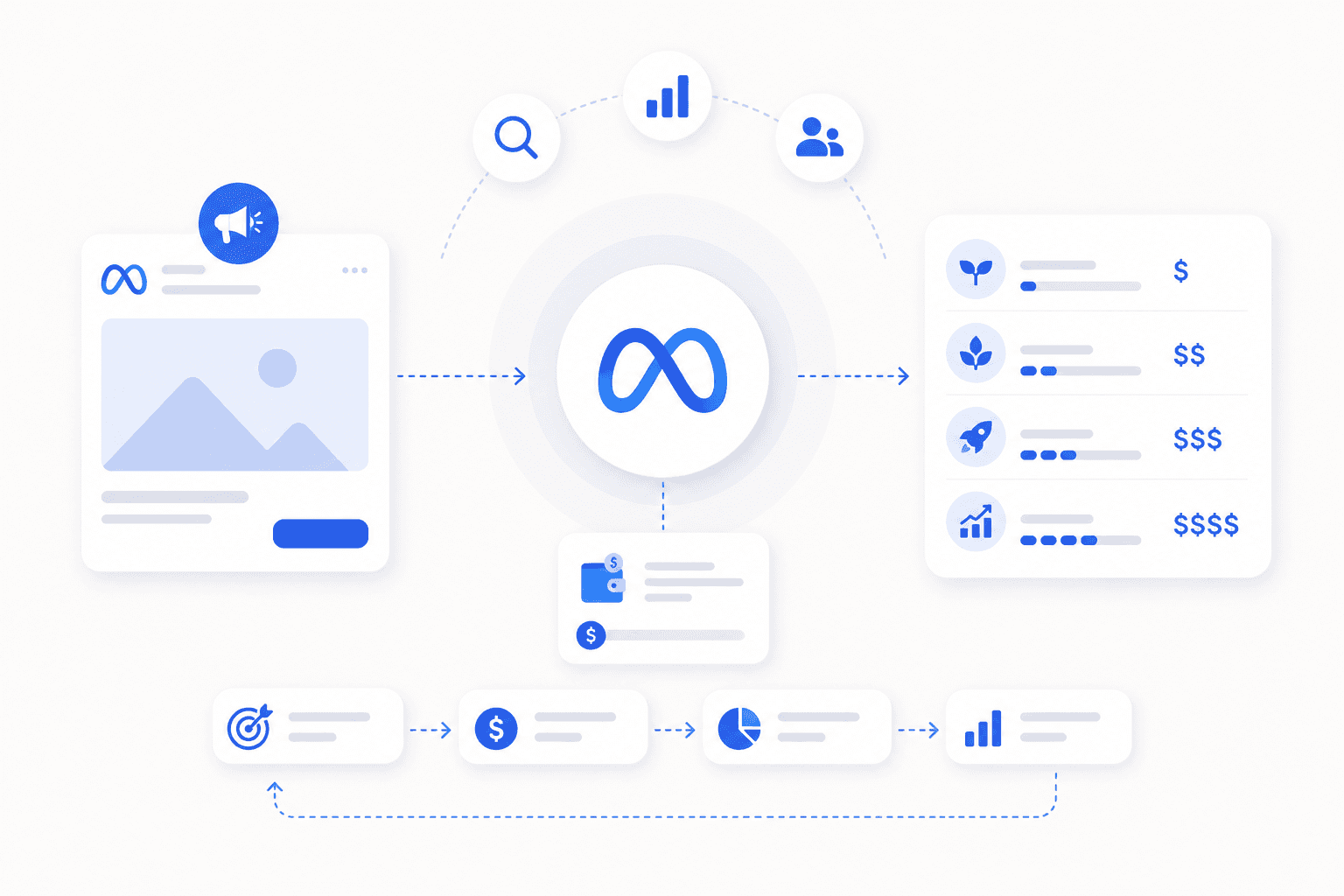
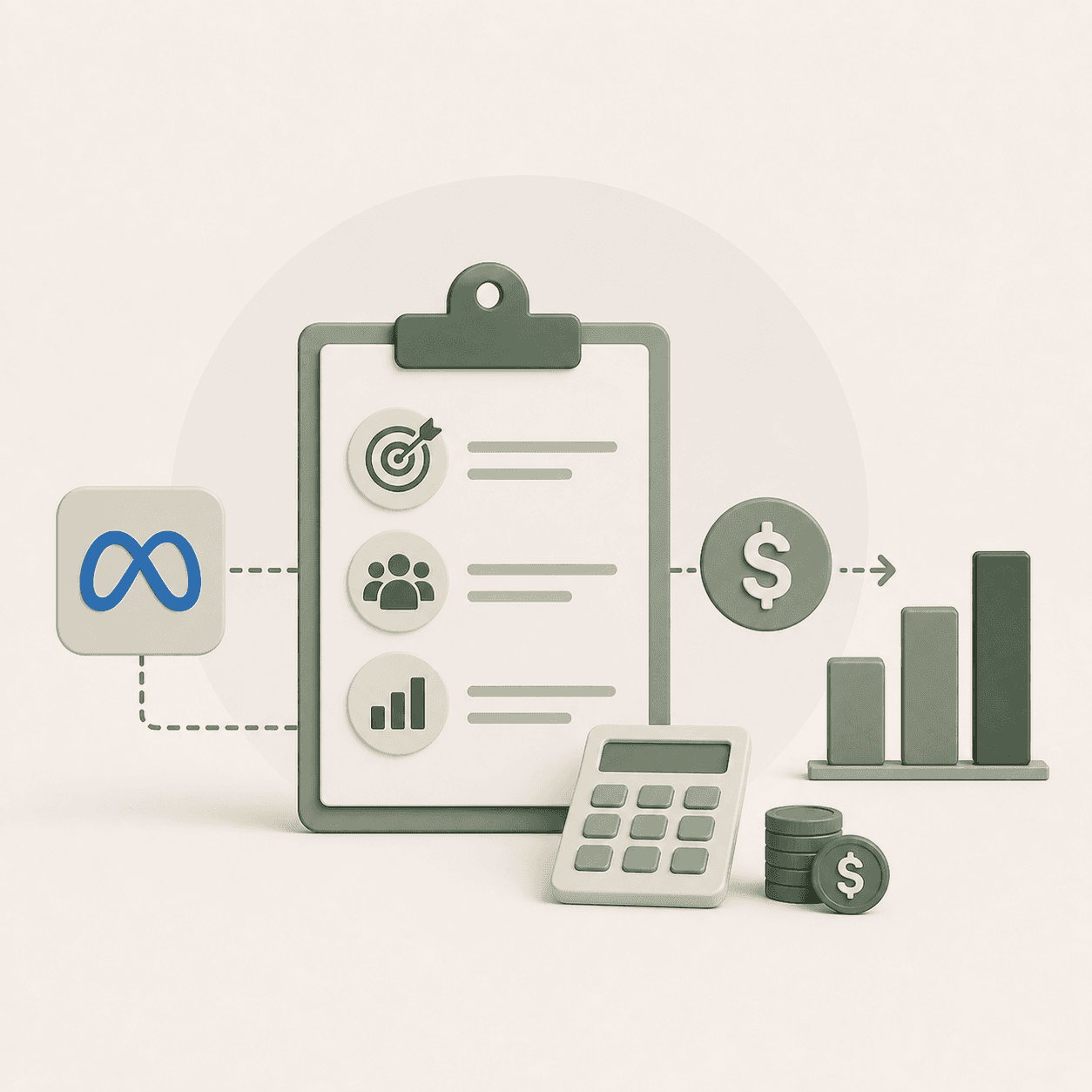
Direct answer: plan $3,000–$5,000 per month minimum to generate enough signal for Meta's algorithm to optimize.
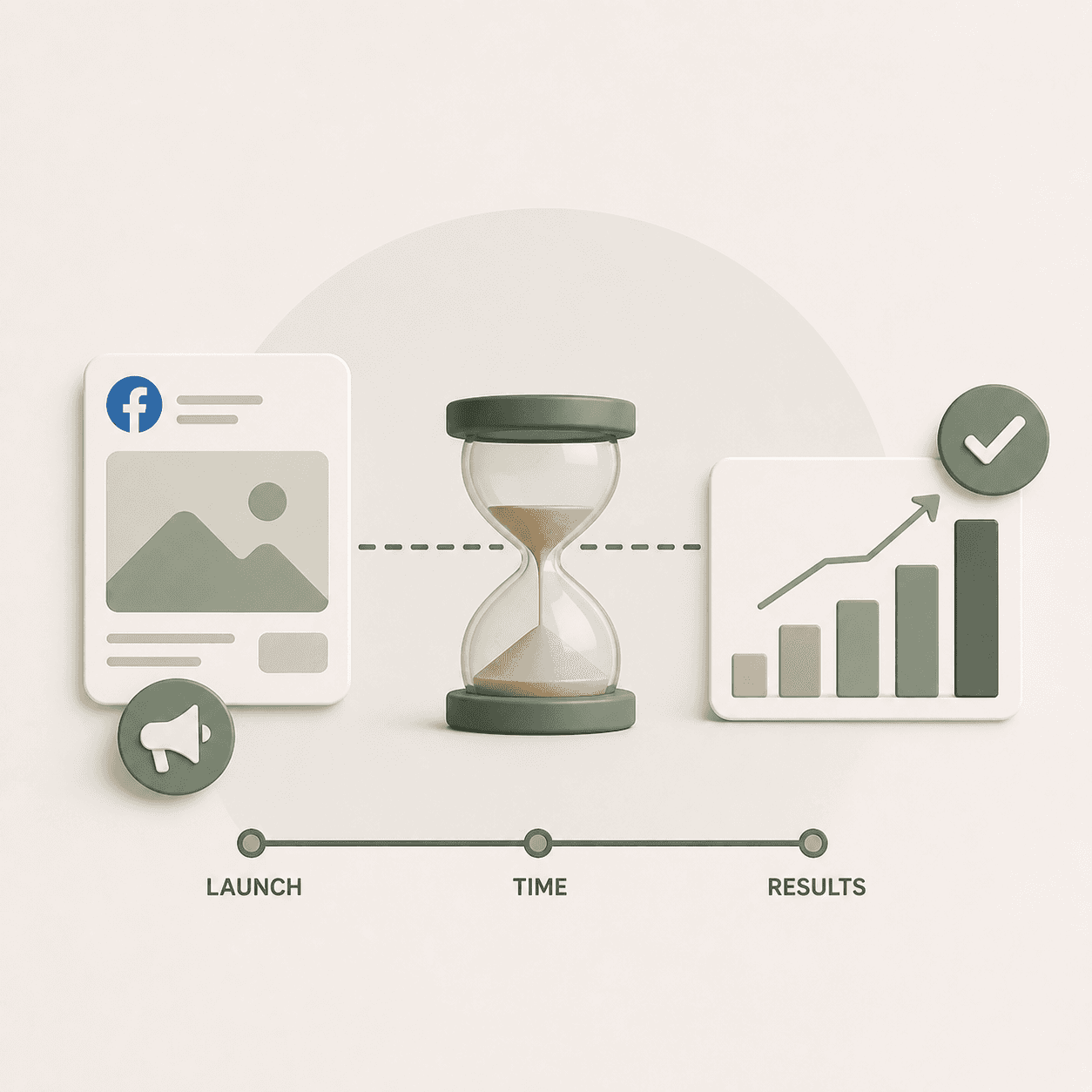
Timeline matters. You'll see early indicators (click-through rates, Cost Per Lead, landing page conversion rates) in 2–4 weeks. Meaningful pipeline takes 60–90 days due to typical B2B sales cycles.
Cost expectations should be realistic. According to WordStream, Finance and Insurance has the highest cost-per-click industries at $1.22. The average Facebook cost per lead across all industries is $27.66—but B2B fintech runs higher.
Expectation | Reality |
|---|---|
"We'll have qualified pipeline in 2 weeks" | Signals in 2–4 weeks; pipeline in 60–90 days |
"Cross-industry CPL benchmarks apply to us" | Finance CPCs/CPLs run 20–50% above median |
"$1,000/month is enough to test" | $3,000–$5,000/month minimum for meaningful data |
"We'll know if it works in a month" | Prove signal by 60 days; scale after 90 |
If your CPMs (cost per thousand impressions) run high, tactics exist to fix that. Read our guide on how to reduce your Meta CPM.
5. How to Structure Your Fintech SaaS Meta Campaign
Campaign structure beats hacks. The right foundation outperforms endless optimization tweaks on a broken setup.
At Flighted, we use a three-pillar approach: Paid Media Expertise, Creative Strategy, and Landing Page Optimization working together. Here's how that applies to campaign structure. For more detail, see our best Meta account structure breakdown.
Optimize for Qualified Pipeline, Not Cheap Leads
Run two conversion events minimum:
Lead event: Fires when someone books a demo or starts a trial.
Qualified Lead event: Fires only when the lead meets a business definition you control.
For example, when we worked with Tie (a B2B software company), qualified leads were defined as demo submissions reporting 150,000+ monthly sessions. Optimizing for all form fills finds the cheapest, worst leads. Optimizing for your actual Sales Qualified Lead (SQL) definition fixes that.
Fix Your Conversion Tracking with the Conversions API
Browser-only tracking loses signal. Ad blockers, iOS restrictions, and cookie limitations erode the data Meta needs to optimize.
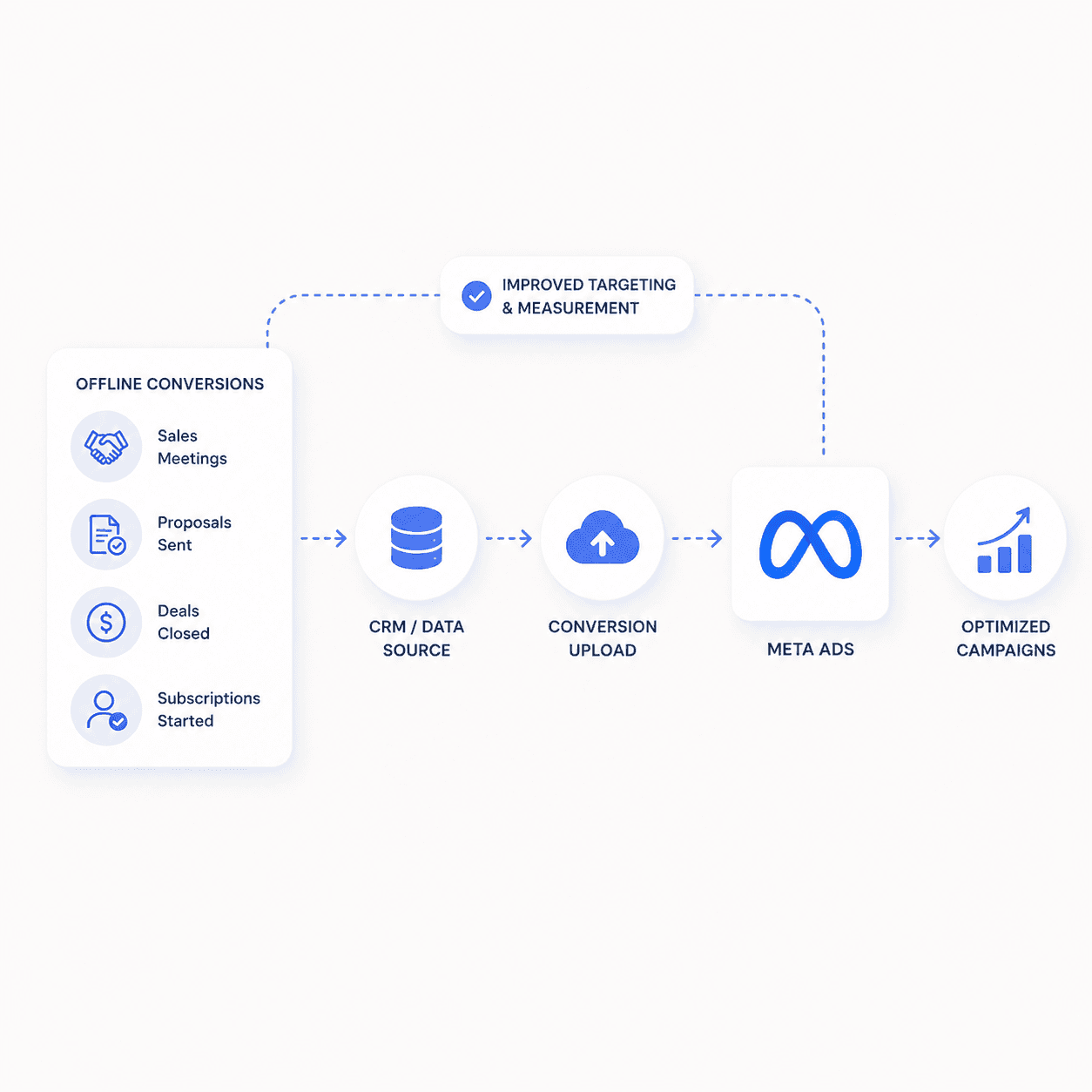
Add the Conversions API (CAPI) to send server-side events directly from your CRM or backend. This raises Event Match Quality and gives Meta cleaner signal.
If the Special Ad Category applies to your fintech, note that some tracking features may face additional restrictions. Plan your CAPI implementation accordingly.
Start Simple, Then Scale Winners
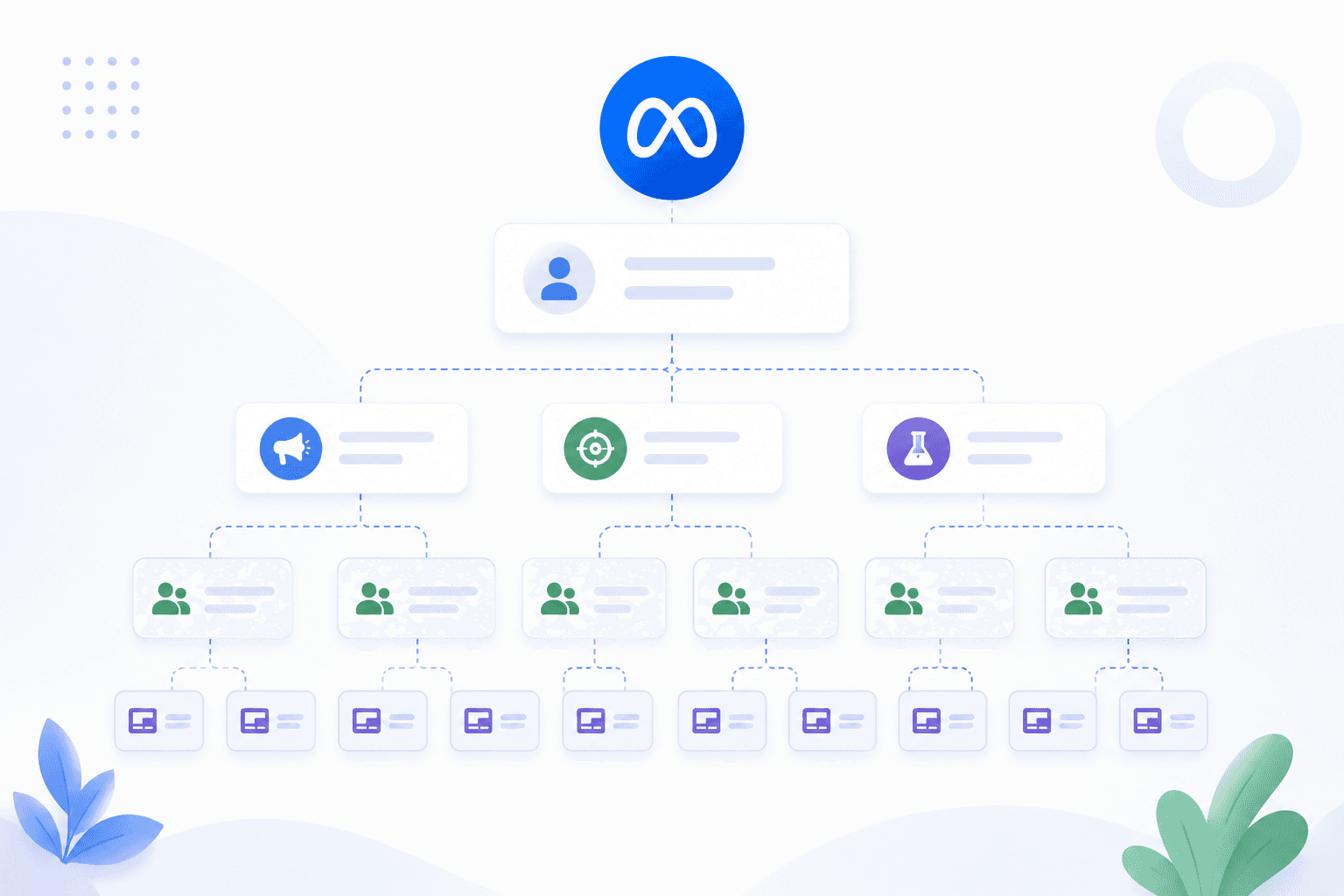
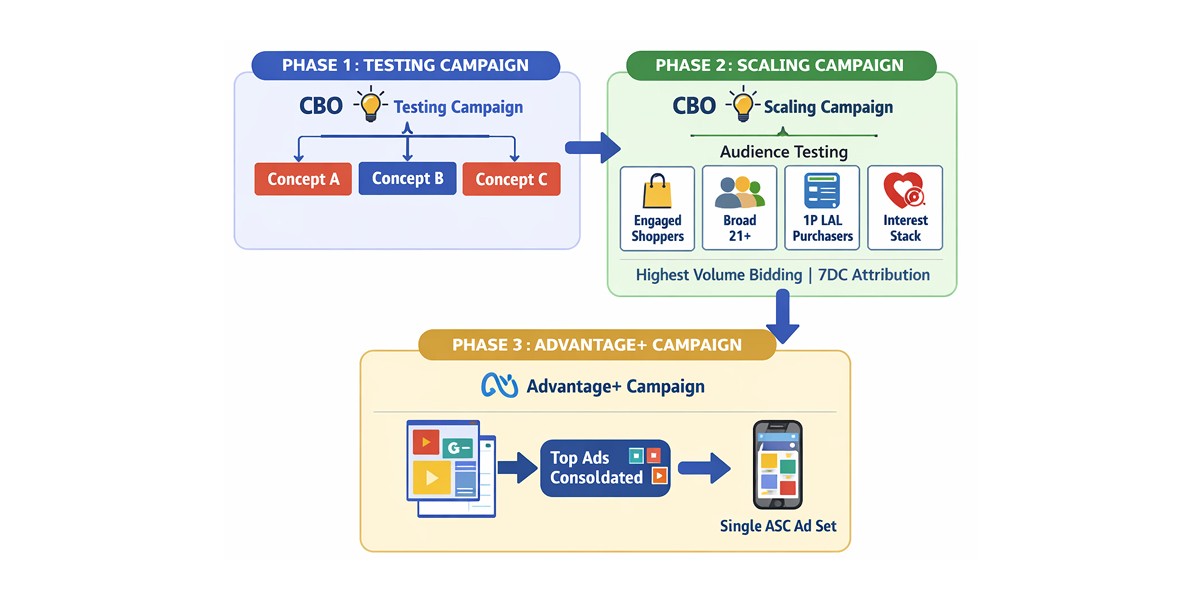
Do not launch with 10 campaigns and 50 ad sets. Start simple:
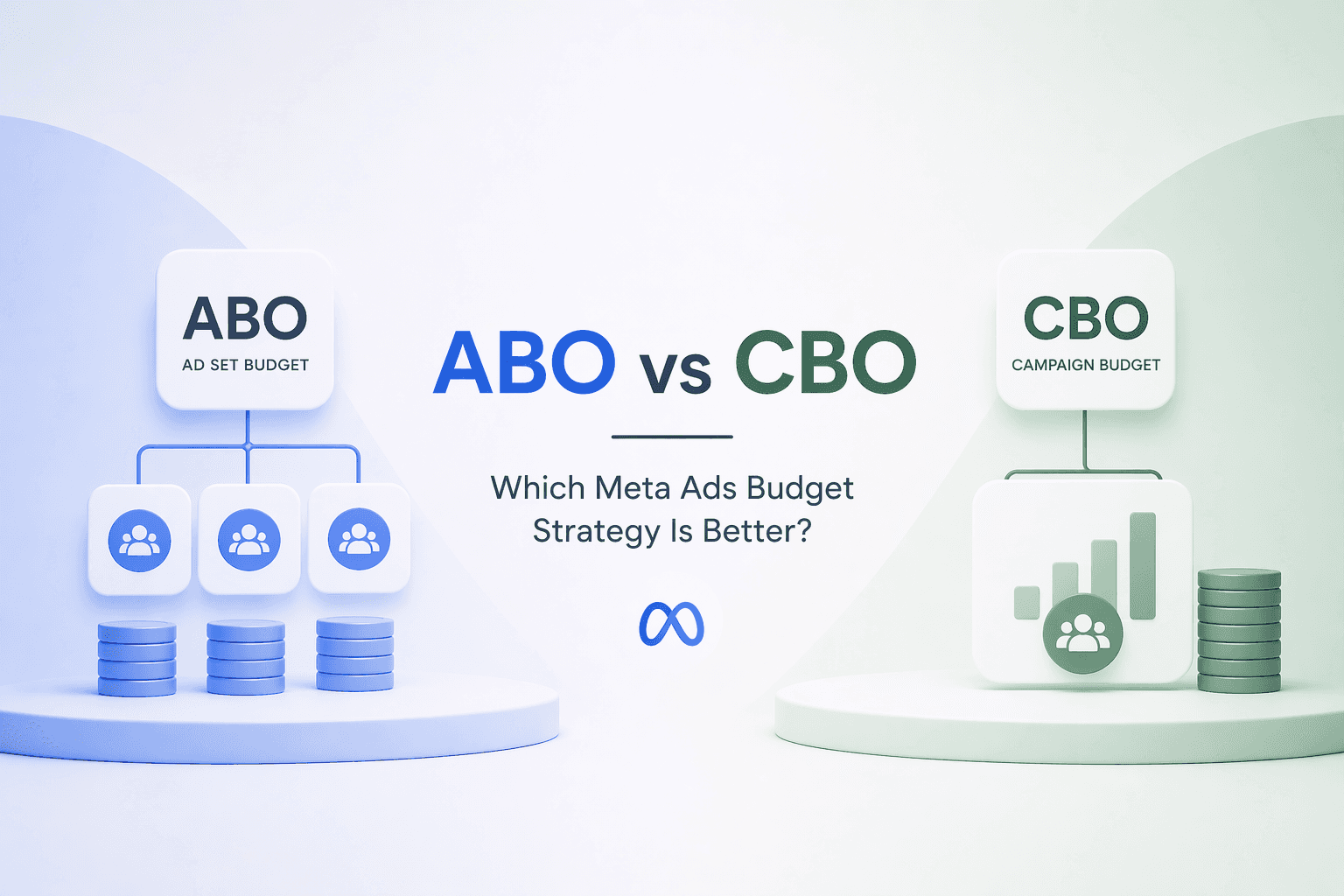
Launch one high-volume Campaign Budget Optimization (CBO) campaign for creative testing.
Consolidate winners via Post IDs into a scaling campaign.
Introduce Advantage+ once you have 50+ conversions—not before.
This mirrors the progression we used with Tie. They hit profitability within 30 days with a month-one Pipeline Return on Ad Spend (ROAS) above 5x. Advantage+ was introduced only after hitting 50+ conversions. See the full 5x pipeline ROAS case study.
6. How to Target Fintech Buyers on Meta
Meta targets personal identity, not job titles. This is a feature, not a bug—but it requires a different approach than LinkedIn.
Layer these signals:
CRM custom audiences: Upload customers, SQLs, and closed-won deals using personal emails where possible.
Lookalike audiences: Build from your best customers with enriched personal emails to improve match rates.
Interest and behavior: Use as directional signals, not primary targeting.
Key point: If the Special Ad Category applies, lookalike audiences become Special Ad Audiences with reduced targeting precision. Advantage+ expansion tools may also be limited.
7. Ad Creative That Converts for Fintech SaaS
Meta rewards scroll-stopping, human creative over corporate polish. Your LinkedIn brand ads will underperform here.
What works:
Problem-agitation-solution hooks: Lead with the pain your software removes.
Micro-persona callouts: "If you're a fintech CFO still reconciling in spreadsheets..." beats generic.
Native formats: UGC-style video, talking-head testimonials, and images that look organic.
Diverse formats: Test carousels, single images, and video to find winners.
What doesn't work:
Over-polished brand videos designed for LinkedIn
Feature-list creative with no emotional hook
Generic stock imagery
We produce 500+ ads per month across clients. The consistent pattern: human, specific, problem-first creative beats corporate polish every time.
5 Meta Ad Creative Formats That Crush in Fintech SaaS
The best Meta ad creatives for fintech brands make complex products feel simple, relevant, and trustworthy. Based on the campaigns we’ve worked on, the following five creative formats consistently help fintech advertisers capture attention and communicate their value across Facebook and Instagram.
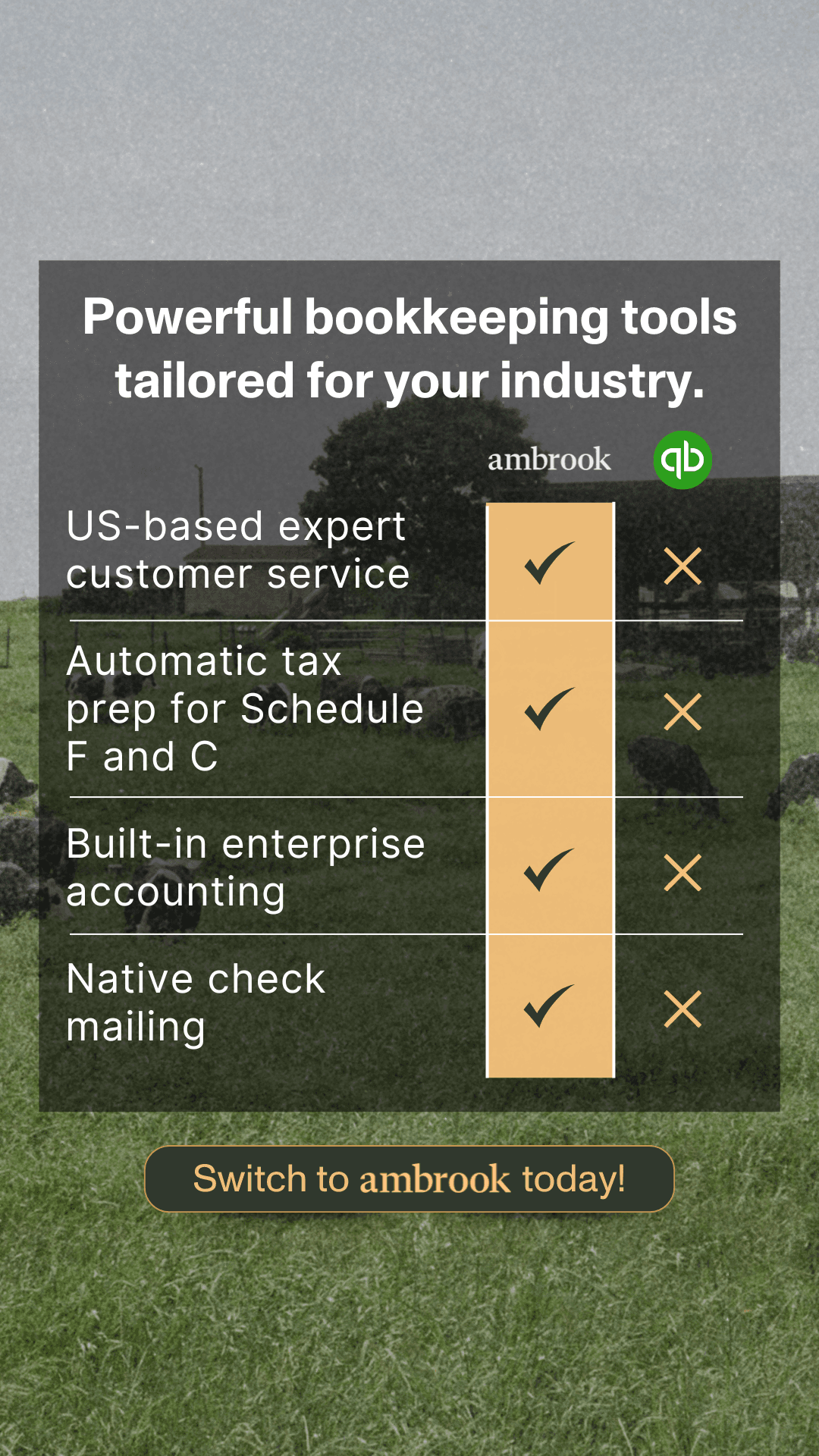
1. Static Comparison Charts
A static comparison chart positions your fintech product against a larger, better-known competitor. By featuring a recognizable brand, the ad borrows some of that competitor’s name recognition to attract attention before showing why your product may be a better fit for a specific customer or use case.
Keep the comparison focused on the differences that matter most to your audience, such as:
Pricing or fees
Product features
Setup time
Eligibility requirements
Customer support
Industry specialization
Pair the chart with a strong headline that explains your unique selling proposition. The goal is not simply to claim that your company is better—it is to show why it is better for the particular segment you serve.
All comparisons should be accurate, current, and easy to substantiate, especially in a regulated category such as financial services.
2. LinkedIn-Style Static Ads
LinkedIn-style static ads recreate the recognizable appearance of a LinkedIn post while running as paid ads on Facebook or Instagram. The unexpected visual contrast can make the creative stand out in the Meta feed and improve its ability to stop the scroll.
A typical version of this format includes:
An avatar or spokesperson profile
A short, first-person post about the product
A supporting product image, graphic, or screenshot
A prominent social-proof element
The copy should quickly communicate what makes the fintech product different. It can be written from the perspective of a founder, customer, industry professional, or fictional representative of the target audience, provided the presentation does not mislead viewers.
Adding a high-impact proof point—such as a customer count, review score, amount funded, or percentage of users who achieved a specific outcome—can strengthen the creative further. Any financial or performance claim should be properly supported and accompanied by necessary disclosures.

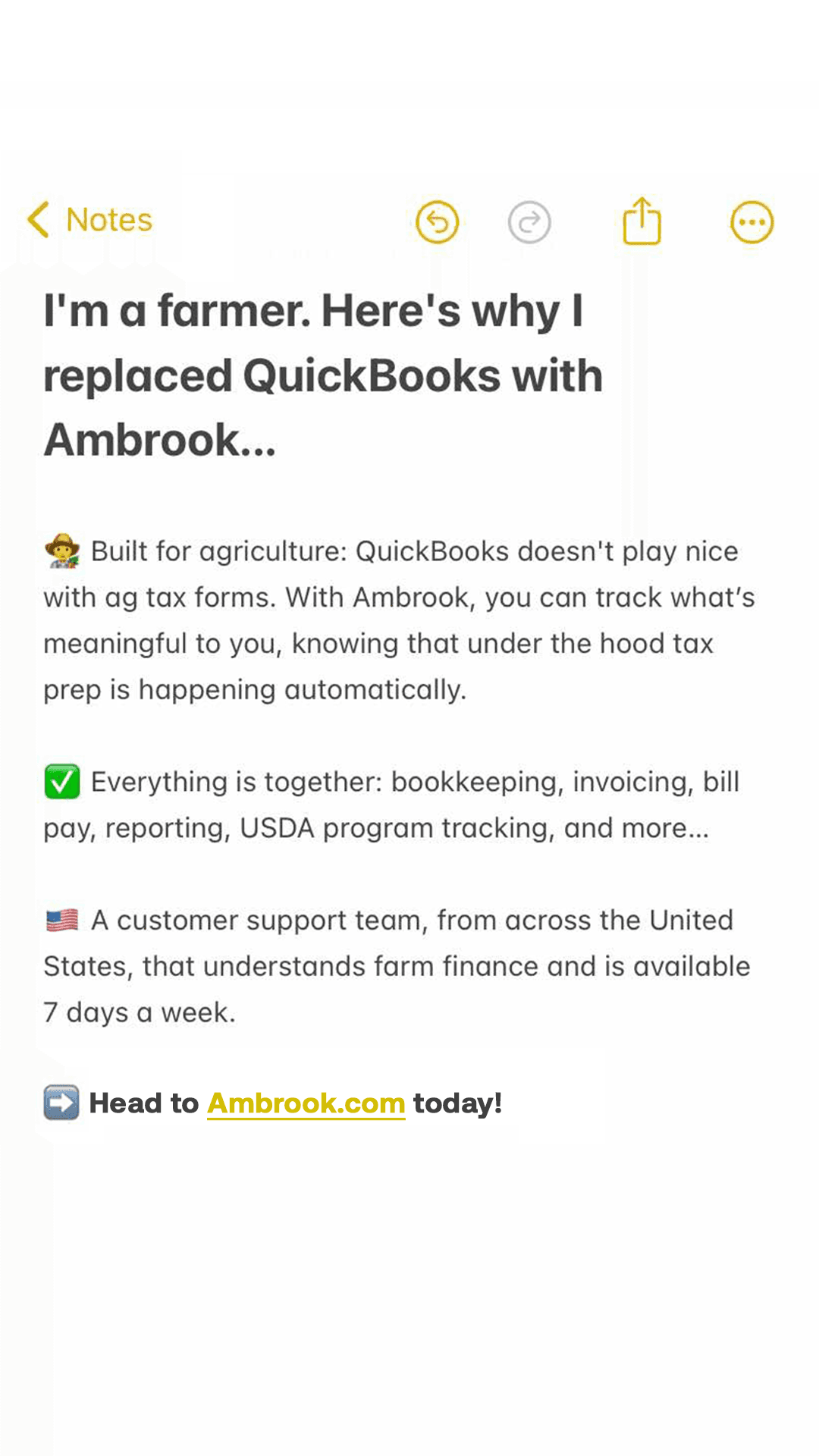
3. Apple Notes Advertorials
The Apple Notes advertorial uses the visual language of a familiar notes app to deliver a short, text-led sales message. Like the LinkedIn-style format, it works because it feels native to how people already consume content on their phones. It does not immediately resemble a conventional advertisement.
This simplicity makes the format especially useful for fintech advertising. Financial products often require more education than a typical consumer purchase, and an advertorial gives you room to explain:
The problem your audience is experiencing
Why common solutions fall short
How your product works
Who the product is designed for
What the reader should do next
Because an Apple Notes ad may not show the product at all, the copy has to carry the creative. Open with a compelling customer pain point or observation, keep the language conversational, and break the message into short sections that can be understood at a glance.
This format is particularly effective for introducing unfamiliar fintech products, reframing complicated financial problems, and addressing common customer objections.
4. AI Avatar Videos
AI avatar videos allow fintech advertisers to adapt scripts, testimonials, and educational content to specific customer profiles. Instead of using a generic spokesperson, the creative can feature a person and setting that resemble the audience the product is intended to reach.
For example, a fintech company targeting back-office employees at manufacturing businesses could feature an avatar in a factory or industrial office. Other possibilities include:
A business owner speaking from an office
A finance professional recording a podcast
A freelancer working from a coffee shop
An e-commerce operator reviewing numbers on a laptop
A contractor speaking from a job site
The strongest concept depends on the brand’s ideal customer profile. The speaker’s appearance, environment, language, and problem should all feel relevant to that audience.
AI avatars can be used for educational scripts, founder-style messages, podcast clips, product explanations, or dramatized customer stories. However, synthetic spokespeople and recreated testimonials should be clearly presented in a way that does not deceive viewers or imply a real customer endorsement when none exists.
5. Social-Native Instagram Story and Reel Ads
Social-native Instagram ads are designed to look more like something a friend would post than something a company would produce. This format performs particularly well in Instagram Stories and Reels, where overly polished brand creative can feel out of place.
One effective structure begins with a plain block of text on the screen, often without music, narration, or elaborate formatting. This creates the appearance of a personal Instagram Story and gives the viewer a reason to pause.
The opening is then followed by a short sequence of simple images or video clips, each paired with an additional text block. The complete ad might follow this progression:
Introduce a relatable financial problem.
Explain the frustration or consequence.
Present the fintech product as the discovery or solution.
Highlight one or two key benefits.
End with a clear call to action.
These ads are fast and inexpensive to produce, making them useful for testing multiple hooks and messages. Their effectiveness comes from matching the platform’s natural visual language. On social media, the best-performing fintech ads often do not feel like traditional ads at all.
8. Why Landing Pages Decide Profitability
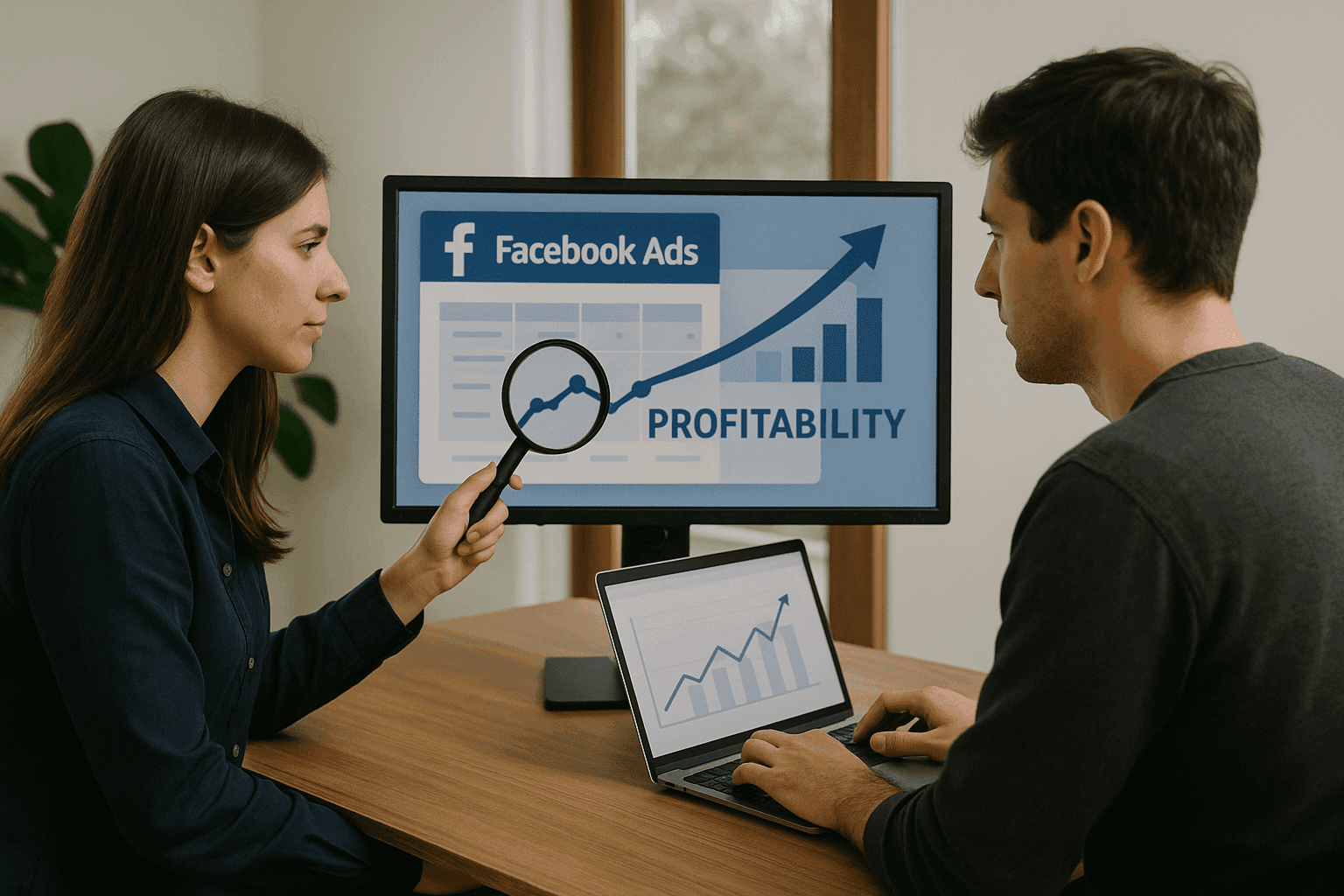
The click is half the job. The post-click page decides whether that click becomes pipeline.
A slow, generic landing page destroys your Cost Per Acquisition (CPA) no matter how good your targeting is. Flighted treats Landing Page Optimization as one of three interdependent pillars alongside Paid Media Expertise and Creative Strategy.
What to do:
Mobile-first: Most Meta traffic is mobile. Design for thumb scrolling.
Message match: The landing page headline should mirror the ad's promise.
Isolate Meta traffic: Send Meta visitors to a dedicated page you can test without affecting other channels.
A/B test continuously: Treat landing pages as living assets, not one-time design projects.
When we launched Podium (an AI agent SaaS) from zero, the combination of conversion-optimized campaigns and message-matched landing pages drove six figures in Annual Contract Value (ACV) in month one and 3.98x pipeline ROI within 60 days. Read more in the scaling a SaaS launch case study.
If you're figuring out how to run Meta ads for a fintech SaaS company, you're not alone. Most fintech SaaS teams assume their buyers only live on LinkedIn. So they overpay for leads, fight a crowded auction, and wonder why paid acquisition never scales.
Meta (Facebook and Instagram) is a different story. Your CFO and compliance officer scroll Instagram after hours just like everyone else. When you structure campaigns for qualified pipeline—not raw lead volume—Meta becomes a reliable, scalable demand-gen channel for fintech SaaS products.
This guide covers:
Feasibility: Whether Meta actually works for fintech SaaS.
Budgeting: What budget to plan for testing and scaling.
Structure: How to optimize campaigns for qualified leads.
Compliance: Rules unique to financial services advertising.
Everything is grounded in our work running Meta for B2B software companies (roughly 70% of our client base) and spending $3M+ per month across accounts.
Key Takeaways
Meta works for fintech SaaS when you optimize for qualified pipeline, not cheap leads.
Plan $3,000–$5,000 per month minimum to test and allow 60–90 days to prove pipeline.
Fintech has extra compliance requirements—know whether the Special Ad Category applies to you before launch.
Landing pages and conversion tracking decide profitability more than any targeting tweak.
1. Do Meta Ads for Fintech SaaS Actually Work?
Yes. Meta ads work for fintech SaaS when you optimize campaigns for qualified, revenue-tied events rather than raw lead volume.
Why? B2B buyers don't stop being people after 6 PM. They scroll Instagram and Facebook in contexts where they're more receptive than in the middle of a LinkedIn bidding war. Meta's qualified-lead optimization tools now fix the old lead-quality reputation that kept B2B teams away.
The reach is hard to ignore. With Meta's 3.56 billion daily users across apps, your fintech buyers are already there. HubSpot ranked paid social ROI for B2B as the second-highest B2B marketing channel in 2024.
At Flighted, we call Meta the last arbitrage channel for B2B SaaS. Competition is lower than LinkedIn, costs are better, and the platform's machine learning has caught up. For a deeper breakdown, read our profitable B2B SaaS Meta strategy guide.
2. Meta vs. LinkedIn: Why Fintech SaaS Should Not Skip Meta
LinkedIn dominates mindshare for B2B advertising. But it dominates budget, too—and not in a good way.
The cost gap between platforms is significant:
Platform | Average Paid Social CAC |
|---|---|
Meta (Facebook/Instagram) | $230 |
$982 |
Note: These are cross-industry averages from Phoenix Strategy Group; expect fintech-specific numbers to be higher.
Factor | Meta (Facebook/Instagram) | |
|---|---|---|
Average Paid Social CAC | ~$230 | ~$982 |
Audience Context | Relaxed, off-hours scrolling | Work mode, competing for attention |
Targeting | Interest/behavior + CRM lookalikes | Job title, company, seniority |
Creative Style | Scroll-stopping, native | Polished, professional |
Competition Level | Lower for B2B | Crowded |
Our recommendation: use both where budget allows. Start Meta first for efficiency, then layer LinkedIn for high-intent Account-Based Marketing (ABM). If you must pick one to test, Meta gives you faster signal at lower cost.
3. Fintech Compliance: Rules to Check Before You Launch
This is where most guides stop short. Fintech advertising on Meta has specific requirements you need to understand before you spend a dollar.
Verification requirements: Meta's financial services ad policy states that advertisers promoting financial products may be required to verify their business identity and demonstrate regulatory authorization where applicable.
The Special Ad Category question: The Financial Products & Services Special Ad Category is mandatory when you're promoting consumer credit, lending, or insurance. Pure B2B SaaS tools—accounting software, payment APIs, compliance platforms—are often NOT required to use it.
When the Special Ad Category applies, you face these limits:
Targeting: Lookalike audiences become Special Ad Audiences with reduced precision.
Advantage+ expansion: Some automated targeting features become unavailable.
Tracking: Additional restrictions may apply to conversion tracking.
Do / Don't checklist:
Do verify your business in Meta Business Manager before launch.
Do check whether your product falls under consumer credit, lending, or insurance.
Do not assume all fintech must use the Special Ad Category—many B2B tools do not.
Do not launch without reading Meta's current financial services policies.
4. What Budget and Results to Expect
Direct answer: plan $3,000–$5,000 per month minimum to generate enough signal for Meta's algorithm to optimize.
Timeline matters. You'll see early indicators (click-through rates, Cost Per Lead, landing page conversion rates) in 2–4 weeks. Meaningful pipeline takes 60–90 days due to typical B2B sales cycles.
Cost expectations should be realistic. According to WordStream, Finance and Insurance has the highest cost-per-click industries at $1.22. The average Facebook cost per lead across all industries is $27.66—but B2B fintech runs higher.
Expectation | Reality |
|---|---|
"We'll have qualified pipeline in 2 weeks" | Signals in 2–4 weeks; pipeline in 60–90 days |
"Cross-industry CPL benchmarks apply to us" | Finance CPCs/CPLs run 20–50% above median |
"$1,000/month is enough to test" | $3,000–$5,000/month minimum for meaningful data |
"We'll know if it works in a month" | Prove signal by 60 days; scale after 90 |
If your CPMs (cost per thousand impressions) run high, tactics exist to fix that. Read our guide on how to reduce your Meta CPM.
5. How to Structure Your Fintech SaaS Meta Campaign
Campaign structure beats hacks. The right foundation outperforms endless optimization tweaks on a broken setup.
At Flighted, we use a three-pillar approach: Paid Media Expertise, Creative Strategy, and Landing Page Optimization working together. Here's how that applies to campaign structure. For more detail, see our best Meta account structure breakdown.
Optimize for Qualified Pipeline, Not Cheap Leads
Run two conversion events minimum:
Lead event: Fires when someone books a demo or starts a trial.
Qualified Lead event: Fires only when the lead meets a business definition you control.
For example, when we worked with Tie (a B2B software company), qualified leads were defined as demo submissions reporting 150,000+ monthly sessions. Optimizing for all form fills finds the cheapest, worst leads. Optimizing for your actual Sales Qualified Lead (SQL) definition fixes that.
Fix Your Conversion Tracking with the Conversions API
Browser-only tracking loses signal. Ad blockers, iOS restrictions, and cookie limitations erode the data Meta needs to optimize.
Add the Conversions API (CAPI) to send server-side events directly from your CRM or backend. This raises Event Match Quality and gives Meta cleaner signal.
If the Special Ad Category applies to your fintech, note that some tracking features may face additional restrictions. Plan your CAPI implementation accordingly.
Start Simple, Then Scale Winners
Do not launch with 10 campaigns and 50 ad sets. Start simple:
Launch one high-volume Campaign Budget Optimization (CBO) campaign for creative testing.
Consolidate winners via Post IDs into a scaling campaign.
Introduce Advantage+ once you have 50+ conversions—not before.
This mirrors the progression we used with Tie. They hit profitability within 30 days with a month-one Pipeline Return on Ad Spend (ROAS) above 5x. Advantage+ was introduced only after hitting 50+ conversions. See the full 5x pipeline ROAS case study.
6. How to Target Fintech Buyers on Meta
Meta targets personal identity, not job titles. This is a feature, not a bug—but it requires a different approach than LinkedIn.
Layer these signals:
CRM custom audiences: Upload customers, SQLs, and closed-won deals using personal emails where possible.
Lookalike audiences: Build from your best customers with enriched personal emails to improve match rates.
Interest and behavior: Use as directional signals, not primary targeting.
Key point: If the Special Ad Category applies, lookalike audiences become Special Ad Audiences with reduced targeting precision. Advantage+ expansion tools may also be limited.
7. Ad Creative That Converts for Fintech SaaS
Meta rewards scroll-stopping, human creative over corporate polish. Your LinkedIn brand ads will underperform here.
What works:
Problem-agitation-solution hooks: Lead with the pain your software removes.
Micro-persona callouts: "If you're a fintech CFO still reconciling in spreadsheets..." beats generic.
Native formats: UGC-style video, talking-head testimonials, and images that look organic.
Diverse formats: Test carousels, single images, and video to find winners.
What doesn't work:
Over-polished brand videos designed for LinkedIn
Feature-list creative with no emotional hook
Generic stock imagery
We produce 500+ ads per month across clients. The consistent pattern: human, specific, problem-first creative beats corporate polish every time.
5 Meta Ad Creative Formats That Crush in Fintech SaaS
The best Meta ad creatives for fintech brands make complex products feel simple, relevant, and trustworthy. Based on the campaigns we’ve worked on, the following five creative formats consistently help fintech advertisers capture attention and communicate their value across Facebook and Instagram.
1. Static Comparison Charts
A static comparison chart positions your fintech product against a larger, better-known competitor. By featuring a recognizable brand, the ad borrows some of that competitor’s name recognition to attract attention before showing why your product may be a better fit for a specific customer or use case.
Keep the comparison focused on the differences that matter most to your audience, such as:
Pricing or fees
Product features
Setup time
Eligibility requirements
Customer support
Industry specialization
Pair the chart with a strong headline that explains your unique selling proposition. The goal is not simply to claim that your company is better—it is to show why it is better for the particular segment you serve.
All comparisons should be accurate, current, and easy to substantiate, especially in a regulated category such as financial services.
2. LinkedIn-Style Static Ads
LinkedIn-style static ads recreate the recognizable appearance of a LinkedIn post while running as paid ads on Facebook or Instagram. The unexpected visual contrast can make the creative stand out in the Meta feed and improve its ability to stop the scroll.
A typical version of this format includes:
An avatar or spokesperson profile
A short, first-person post about the product
A supporting product image, graphic, or screenshot
A prominent social-proof element
The copy should quickly communicate what makes the fintech product different. It can be written from the perspective of a founder, customer, industry professional, or fictional representative of the target audience, provided the presentation does not mislead viewers.
Adding a high-impact proof point—such as a customer count, review score, amount funded, or percentage of users who achieved a specific outcome—can strengthen the creative further. Any financial or performance claim should be properly supported and accompanied by necessary disclosures.
3. Apple Notes Advertorials
The Apple Notes advertorial uses the visual language of a familiar notes app to deliver a short, text-led sales message. Like the LinkedIn-style format, it works because it feels native to how people already consume content on their phones. It does not immediately resemble a conventional advertisement.
This simplicity makes the format especially useful for fintech advertising. Financial products often require more education than a typical consumer purchase, and an advertorial gives you room to explain:
The problem your audience is experiencing
Why common solutions fall short
How your product works
Who the product is designed for
What the reader should do next
Because an Apple Notes ad may not show the product at all, the copy has to carry the creative. Open with a compelling customer pain point or observation, keep the language conversational, and break the message into short sections that can be understood at a glance.
This format is particularly effective for introducing unfamiliar fintech products, reframing complicated financial problems, and addressing common customer objections.
4. AI Avatar Videos
AI avatar videos allow fintech advertisers to adapt scripts, testimonials, and educational content to specific customer profiles. Instead of using a generic spokesperson, the creative can feature a person and setting that resemble the audience the product is intended to reach.
For example, a fintech company targeting back-office employees at manufacturing businesses could feature an avatar in a factory or industrial office. Other possibilities include:
A business owner speaking from an office
A finance professional recording a podcast
A freelancer working from a coffee shop
An e-commerce operator reviewing numbers on a laptop
A contractor speaking from a job site
The strongest concept depends on the brand’s ideal customer profile. The speaker’s appearance, environment, language, and problem should all feel relevant to that audience.
AI avatars can be used for educational scripts, founder-style messages, podcast clips, product explanations, or dramatized customer stories. However, synthetic spokespeople and recreated testimonials should be clearly presented in a way that does not deceive viewers or imply a real customer endorsement when none exists.
5. Social-Native Instagram Story and Reel Ads
Social-native Instagram ads are designed to look more like something a friend would post than something a company would produce. This format performs particularly well in Instagram Stories and Reels, where overly polished brand creative can feel out of place.
One effective structure begins with a plain block of text on the screen, often without music, narration, or elaborate formatting. This creates the appearance of a personal Instagram Story and gives the viewer a reason to pause.
The opening is then followed by a short sequence of simple images or video clips, each paired with an additional text block. The complete ad might follow this progression:
Introduce a relatable financial problem.
Explain the frustration or consequence.
Present the fintech product as the discovery or solution.
Highlight one or two key benefits.
End with a clear call to action.
These ads are fast and inexpensive to produce, making them useful for testing multiple hooks and messages. Their effectiveness comes from matching the platform’s natural visual language. On social media, the best-performing fintech ads often do not feel like traditional ads at all.
8. Why Landing Pages Decide Profitability
The click is half the job. The post-click page decides whether that click becomes pipeline.
A slow, generic landing page destroys your Cost Per Acquisition (CPA) no matter how good your targeting is. Flighted treats Landing Page Optimization as one of three interdependent pillars alongside Paid Media Expertise and Creative Strategy.
What to do:
Mobile-first: Most Meta traffic is mobile. Design for thumb scrolling.
Message match: The landing page headline should mirror the ad's promise.
Isolate Meta traffic: Send Meta visitors to a dedicated page you can test without affecting other channels.
A/B test continuously: Treat landing pages as living assets, not one-time design projects.
When we launched Podium (an AI agent SaaS) from zero, the combination of conversion-optimized campaigns and message-matched landing pages drove six figures in Annual Contract Value (ACV) in month one and 3.98x pipeline ROI within 60 days. Read more in the scaling a SaaS launch case study.
Looking for fintech SaaS Meta ads support?
Flighted combines Paid Media Expertise, Creative Strategy, and Landing Page Optimization under one team. Get a free audit and see where your account stands..
9. How to Measure Meta Performance for Fintech SaaS
B2B attribution is hard. According to HubSpot, 41% of B2B marketers say it's hard to tie social activity directly to business outcomes—see B2B attribution is hard.
Do not rely on Meta's dashboard alone. Combine three sources:
Meta Ads Manager: Platform-reported leads, CPL, CTR, conversions.
CRM attribution: Track which leads from Meta become SQLs and closed revenue.
Self-reported surveys: Add "How did you hear about us?" to capture dark social and word-of-mouth influence.
Track these leading indicators weekly:
Click-through rate (CTR)—use as directional signal, not a KPI. See what qualifies as a good Meta ads CTR.
Cost Per Lead (CPL)
Landing page conversion rate
Event Match Quality (above 6.0 is the target)
Track these lagging indicators monthly:
SQL volume
Pipeline attributed to Meta
Customer Acquisition Cost (CAC)
Payback period
10. Common Meta Ads Mistakes Fintech SaaS Companies Make
Avoid these errors we see repeatedly:
Optimizing for cheap leads: Low CPL means nothing if those leads never convert to pipeline.
Running Meta like LinkedIn: Over-polished brand creative underperforms native, human content.
Ignoring the landing page: A 50% improvement in landing page conversion cuts your effective CPA in half.
Building lookalikes from work emails: Work emails match poorly on Meta. Enrich with personal emails.
Relying only on browser tracking: Without CAPI, you're flying blind on 30–50% of your conversions.
Skipping compliance checks: Launching without understanding verification requirements or the Special Ad Category wastes time and risks ad rejections.
11. Where Meta Fits in Your Fintech Paid Media Mix
Meta generates demand. Search captures it. They work together.
A typical fintech paid media mix:
Google Search: Demand capture for high-intent buyers actively searching.
LinkedIn: High-intent ABM for named accounts and senior decision-makers.
Meta: Scalable demand generation at efficient costs.
Multi-touch reinforcement lifts conversion. A prospect sees your Meta ad, searches your brand on Google, and converts. Attribution shows the Google click, but Meta created the awareness. Measure Marketing Efficiency Ratio (MER)—total revenue divided by total marketing spend—to capture this full picture.
12. How to Launch Your Fintech SaaS Meta Strategy
Here's your getting-started sequence:
Audit compliance: Verify your business in Meta Business Manager. Determine whether the Special Ad Category applies.
Set two conversion events: Define your Lead event (demo booked, trial started) and your Qualified Lead event (business definition met).
Implement CAPI: Send server-side events to raise match quality.
Launch a CBO creative test: Start with 5–10 ad variations in one campaign.
Build a message-matched landing page: Mobile-first, fast-loading, dedicated to Meta traffic.
Scale winners: Consolidate top performers via Post IDs into a scaling campaign.
When to bring in a specialist: If you've hit $3,000–$5,000 per month and aren't seeing qualified pipeline signal after 60 days, the structure or creative strategy likely needs professional attention. Flighted works with fintech and B2B SaaS companies at this exact inflection point.
Conclusion
Meta is a real qualified-pipeline channel for fintech SaaS when you do the work: respect compliance requirements, optimize for qualified events, invest in creative and landing pages, and measure beyond the platform dashboard.
The path is straightforward. Start with $3,000–$5,000 per month minimum. Expect early signals in 2–4 weeks and meaningful pipeline in 60–90 days. Use the budget and timeline to prove the channel before scaling.
Flighted has scaled fintech-adjacent companies like Ambrook from zero to roughly $800,000 per month in ad spend. We've driven 5x pipeline ROAS for B2B software clients within 30 days. The model works—but it requires getting structure, creative, and landing pages right from the start.
FAQ
Do Meta ads work for B2B fintech SaaS?
Yes, when you optimize for qualified pipeline events rather than raw lead volume. Meta's machine learning and qualified-lead tools now solve the lead-quality problem that kept B2B teams away.
What's the minimum budget to test Meta for fintech SaaS?
Plan $3,000–$5,000 per month minimum to give Meta's algorithm enough data to optimize.
How long until Meta drives pipeline?
Expect initial signals (CTR, CPL, landing page conversion rates) in 2–4 weeks. Meaningful pipeline typically takes 60–90 days due to B2B sales cycles.
Does the Special Ad Category apply to my fintech SaaS?
Only if you're promoting consumer credit, lending, or insurance. Pure B2B SaaS tools—accounting software, payment APIs, compliance platforms—are often not required to use it.
Should I use Facebook or LinkedIn for fintech SaaS?
Use both where budget allows. Start with Meta for cost efficiency, then layer LinkedIn for high-intent ABM.
Related Posts
Related Posts
Related Posts
Related Posts































Ready to talk?
New York, NY 11217
hello@flighted.co
© Flighted, 2026
Ready to talk?
New York, NY 11217
hello@flighted.co
© Flighted, 2026