ABO vs CBO Meta Ads: Which Budget Strategy Wins in 2026
Meta Ads
April 21, 2026
Table Of Contents
No headings found on page
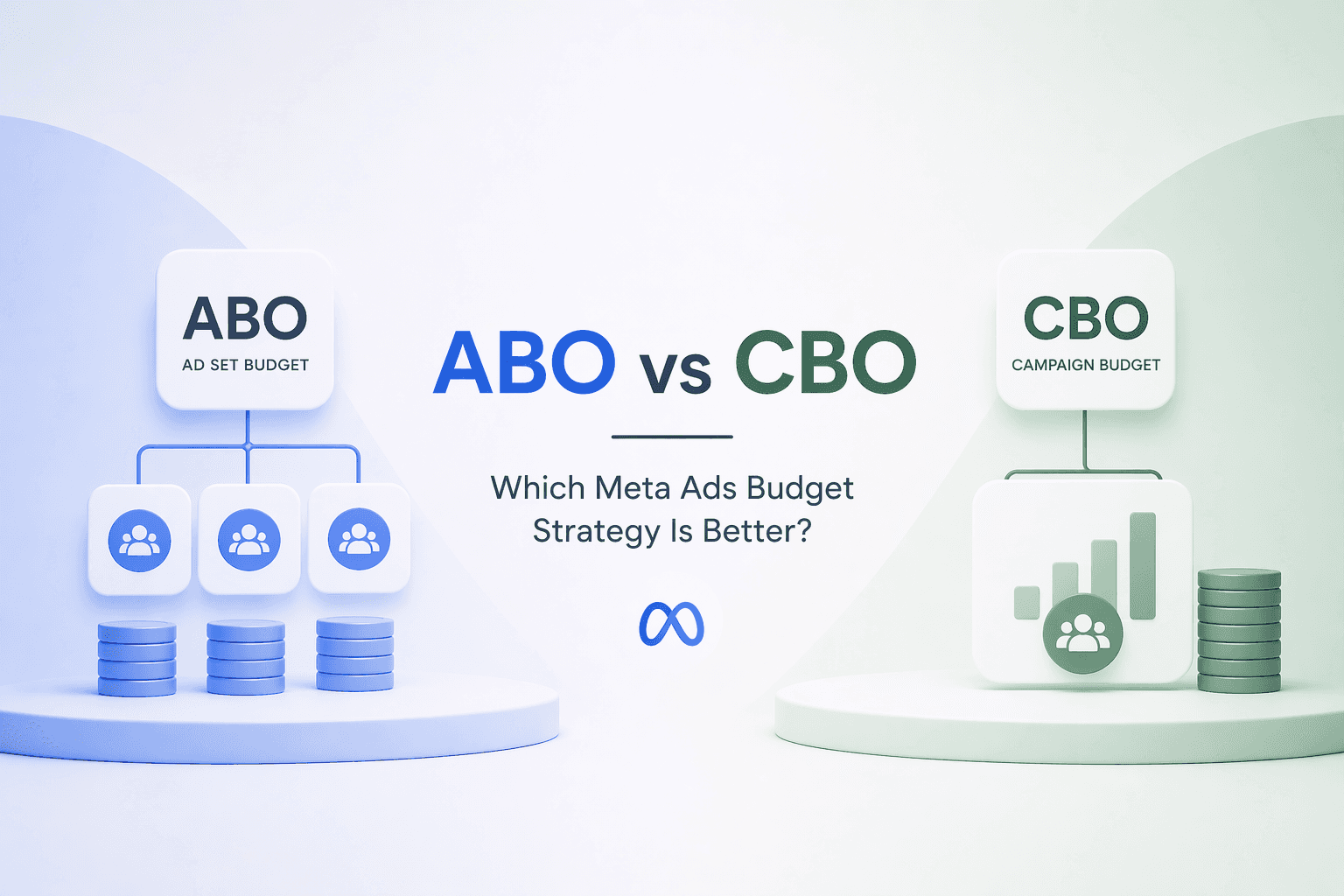
CBO sets your budget at the campaign level and lets Meta distribute spend automatically. ABO sets budgets at the ad set level, giving you manual control over exactly how much each audience or creative receives.
The real question isn't which one is "better"—it's which one fits your current objective. This guide breaks down when to use each and how to set them up. It also covers the hybrid workflow that lets you test with precision and scale with efficiency.
Key Takeaways
CBO (now called Advantage Campaign Budget) sets your budget at the campaign level. Meta's algorithm distributes spend automatically toward the best-performing ad sets.
ABO (Ad Set Budget Optimization) sets budgets manually at the ad set level. You control how much each audience or creative test receives.
Use ABO when you're testing new creatives or audiences and want guaranteed, equal spend across each variable.
Use CBO when you're scaling proven campaigns and want Meta to maximize efficiency without daily manual adjustments.
The hybrid approach—testing in ABO, then graduating winners to CBO—combines the control you get from manual budgeting with the automation you get from algorithmic optimization.
What Is ABO in Meta Ads
ABO stands for Ad Set Budget Optimization. When you use ABO, you set a specific daily or lifetime budget for each individual ad set within a campaign. So if you have three ad sets, each one gets its own budget, and they operate completely independently of each other.
The main benefit here is control. You're telling Meta exactly how much to spend on each audience or creative, regardless of how the others perform. One ad set can't take budget away from another.
That said, ABO requires more hands-on work. You'll be checking performance daily and adjusting budgets manually based on what you see. It's not a set-it-and-forget-it approach.
What Is CBO in Meta Ads
CBO stands for Campaign Budget Optimization. In the current Meta Ads interface, you'll see this labeled as Advantage Campaign Budget. The name changed, but the functionality stayed the same.
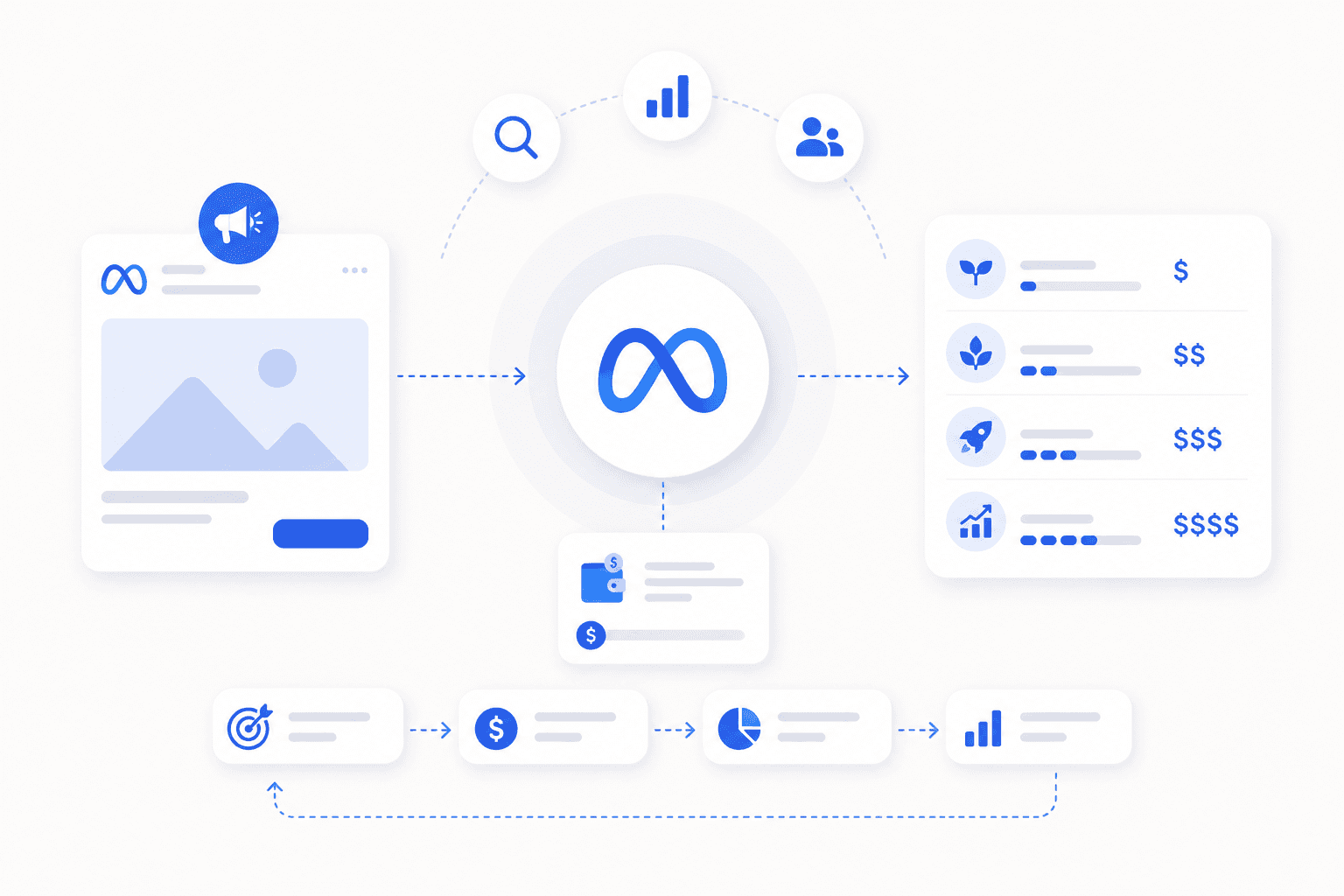
With CBO, you set a single budget at the campaign level. From there, Meta's algorithm distributes that spend across all ad sets in the campaign.
The algorithm automatically shifts more budget toward ad sets it predicts will deliver the best results. This means favoring the lowest cost per acquisition (CPA) or highest return on ad spend (ROAS).
The tradeoff is straightforward: less manual work, but also less direct control over where every dollar goes. You're trusting Meta's machine learning to make real-time optimization decisions on your behalf.
ABO vs CBO Meta Ads: Key Differences
Feature
ABO (Ad Set Budget)
CBO (Advantage Campaign Budget)
Budget Level
Ad Set
Campaign
Control
High (Manual)
Low (Automatic)
Best Use Case
Testing / Small Budgets
Scaling / Efficiency
Time Investment
High Maintenance
Low Maintenance
Learning Phase
Per Ad Set
Campaign-Wide
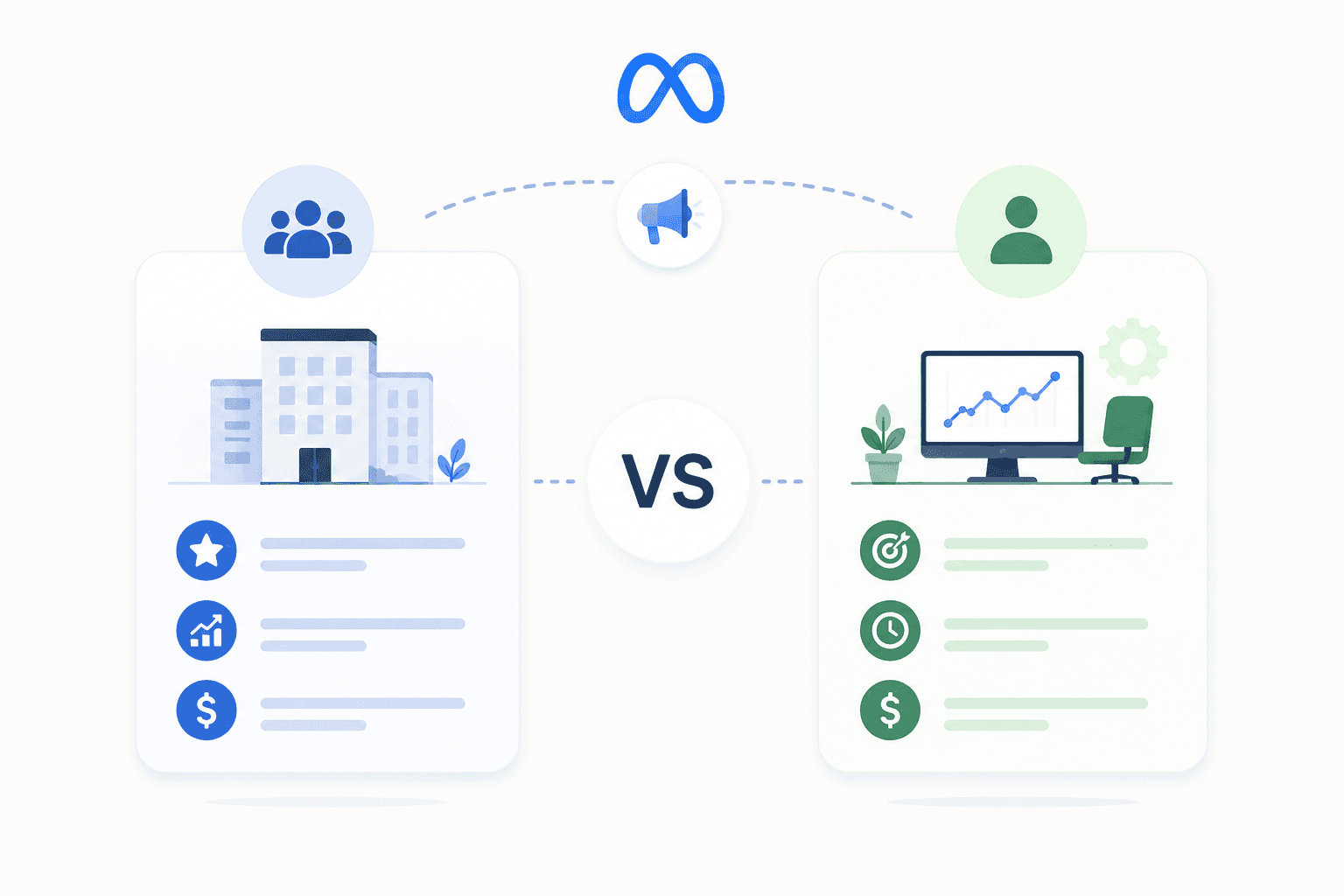
The fundamental difference in ABO vs CBO Meta Ads comes down to control versus automation.
ABO gives you precise control over spend per ad set, which makes it ideal for testing new variables.
CBO automates spend allocation to maximize overall campaign performance, which makes it ideal for scaling what's already working.
Neither option is inherently better. They're different tools for different jobs, and most experienced media buyers use both within the same account.
When to Use ABO for Facebook and Meta Ads
ABO works best when you want guaranteed, equal spend across ad sets. This is particularly useful when you have a high CPA. It lets you force more spend toward new creatives to determine if they're winners or just slow starters.
You want to test creatives with equal spend
When you're running creative tests, ABO ensures each variation receives the same budget regardless of early performance signals. Some creatives take longer to find their audience.
ABO prevents Meta from prematurely starving a potentially strong performer based on the first few hours of data. For a deeper look at what's working creatively in 2026, see our guide to Meta Ads creative strategies.
You have proven winners you want to control manually
If you already know which audiences convert, ABO lets you dictate exact spend per segment. You can force specific budget amounts to different audience and creative pairings without any algorithmic interference.
You are running isolated audience tests
ABO keeps audience tests independent. One high-performer won't cannibalize spend from tests still gathering data in the learning phase. Each ad set lives in its own budget silo.
You have capacity for hands-on daily management
ABO is not a passive approach. It requires daily monitoring and manual budget adjustments. If you don't have the bandwidth for that level of involvement, CBO might be a better fit for your workflow.
CBO sets your budget at the campaign level and lets Meta distribute spend automatically. ABO sets budgets at the ad set level, giving you manual control over exactly how much each audience or creative receives.
The real question isn't which one is "better"—it's which one fits your current objective. This guide breaks down when to use each and how to set them up. It also covers the hybrid workflow that lets you test with precision and scale with efficiency.
Key Takeaways
CBO (now called Advantage Campaign Budget) sets your budget at the campaign level. Meta's algorithm distributes spend automatically toward the best-performing ad sets.
ABO (Ad Set Budget Optimization) sets budgets manually at the ad set level. You control how much each audience or creative test receives.
Use ABO when you're testing new creatives or audiences and want guaranteed, equal spend across each variable.
Use CBO when you're scaling proven campaigns and want Meta to maximize efficiency without daily manual adjustments.
The hybrid approach—testing in ABO, then graduating winners to CBO—combines the control you get from manual budgeting with the automation you get from algorithmic optimization.
What Is ABO in Meta Ads
ABO stands for Ad Set Budget Optimization. When you use ABO, you set a specific daily or lifetime budget for each individual ad set within a campaign. So if you have three ad sets, each one gets its own budget, and they operate completely independently of each other.
The main benefit here is control. You're telling Meta exactly how much to spend on each audience or creative, regardless of how the others perform. One ad set can't take budget away from another.
That said, ABO requires more hands-on work. You'll be checking performance daily and adjusting budgets manually based on what you see. It's not a set-it-and-forget-it approach.
What Is CBO in Meta Ads
CBO stands for Campaign Budget Optimization. In the current Meta Ads interface, you'll see this labeled as Advantage Campaign Budget. The name changed, but the functionality stayed the same.
With CBO, you set a single budget at the campaign level. From there, Meta's algorithm distributes that spend across all ad sets in the campaign.
The algorithm automatically shifts more budget toward ad sets it predicts will deliver the best results. This means favoring the lowest cost per acquisition (CPA) or highest return on ad spend (ROAS).
The tradeoff is straightforward: less manual work, but also less direct control over where every dollar goes. You're trusting Meta's machine learning to make real-time optimization decisions on your behalf.
ABO vs CBO Meta Ads: Key Differences
Feature
ABO (Ad Set Budget)
CBO (Advantage Campaign Budget)
Budget Level
Ad Set
Campaign
Control
High (Manual)
Low (Automatic)
Best Use Case
Testing / Small Budgets
Scaling / Efficiency
Time Investment
High Maintenance
Low Maintenance
Learning Phase
Per Ad Set
Campaign-Wide
The fundamental difference in ABO vs CBO Meta Ads comes down to control versus automation.
ABO gives you precise control over spend per ad set, which makes it ideal for testing new variables.
CBO automates spend allocation to maximize overall campaign performance, which makes it ideal for scaling what's already working.
Neither option is inherently better. They're different tools for different jobs, and most experienced media buyers use both within the same account.
When to Use ABO for Facebook and Meta Ads
ABO works best when you want guaranteed, equal spend across ad sets. This is particularly useful when you have a high CPA. It lets you force more spend toward new creatives to determine if they're winners or just slow starters.
You want to test creatives with equal spend
When you're running creative tests, ABO ensures each variation receives the same budget regardless of early performance signals. Some creatives take longer to find their audience.
ABO prevents Meta from prematurely starving a potentially strong performer based on the first few hours of data. For a deeper look at what's working creatively in 2026, see our guide to Meta Ads creative strategies.
You have proven winners you want to control manually
If you already know which audiences convert, ABO lets you dictate exact spend per segment. You can force specific budget amounts to different audience and creative pairings without any algorithmic interference.
You are running isolated audience tests
ABO keeps audience tests independent. One high-performer won't cannibalize spend from tests still gathering data in the learning phase. Each ad set lives in its own budget silo.
You have capacity for hands-on daily management
ABO is not a passive approach. It requires daily monitoring and manual budget adjustments. If you don't have the bandwidth for that level of involvement, CBO might be a better fit for your workflow.
CBO works best when you trust Meta's algorithm to find efficiency at scale—and when you've already validated what works through testing. Our guide to the best Meta Ads account structure in 2026 covers how to organize test and scale campaigns effectively.
You want Meta to allocate spend automatically
CBO shifts budget toward ad sets generating the lowest CPA or highest ROAS in real time. You're letting the algorithm do the optimization work instead of making manual adjustments yourself.
You are scaling campaigns with validated creative
Once you've identified winning creatives through testing, CBO excels at maximizing their reach. You don't have to micromanage budget distribution—Meta handles it based on performance signals.
Your creative hit rate is uncertain
If you're unsure which creatives will win, CBO prevents you from wasting budget on underperformers. The algorithm naturally favors stronger performers and pulls spend away from weaker ones.
You prefer stability at higher spend levels
CBO tends to smooth out performance volatility when scaling budgets significantly. The algorithm manages spend distribution across a broader portfolio, which can reduce the day-to-day swings you might see with manual budget management.
How to Combine ABO and CBO in One Account
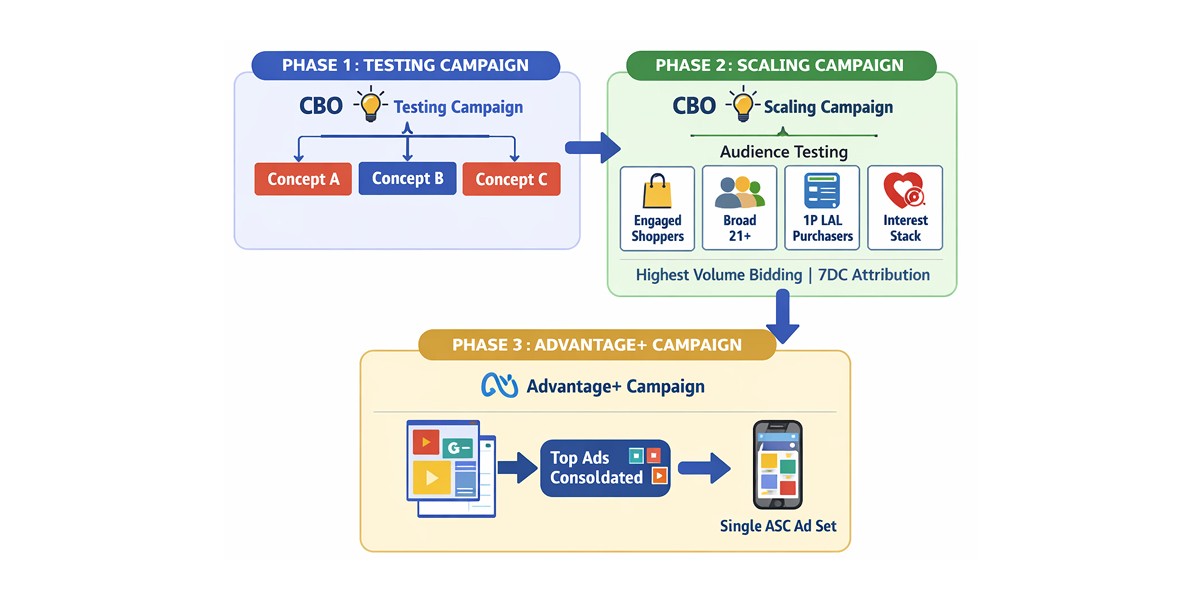
The most effective ABO vs CBO Meta Ads approach for many advertisers is a hybrid model: use ABO to test, then graduate winners to a CBO campaign to scale. This workflow gives you the control you want for clean data collection and the automation you want for efficient growth.
Use ABO for creative and audience testing
In the testing phase, run new creatives or audiences in ABO campaigns with fixed daily budgets per ad set. This gives you clean, comparable data because each variable receives equal spend.
Move winners into CBO for scaling
Once you identify a winning ad set—say, it holds a CPA below your target for 5-7 days—duplicate it into a separate CBO campaign for scaling. Keep your testing and scaling campaigns separate.
The ABO to CBO graduation workflow
Here's the step-by-step process:
Launch new tests in an ABO campaign with equal budgets per ad set (for example, $50/day each).
Let ad sets run long enough to exit the learning phase and gather stable data.
Identify winners based on your target CPA or ROAS threshold.
Duplicate winning ad sets into a new CBO campaign, using the post ID to preserve social proof (likes, comments, shares).
Pause the original ad sets in the ABO testing campaign to prevent overlap.
This workflow combines structured creative testing with algorithmic scaling. At Flighted, we use this approach across accounts to consistently reduce CPA while increasing spend. It's one of the core tactics within our Meta Ads management service.
How to Set Up ABO and CBO Campaigns
Setting up an ABO campaign
When creating your campaign, ensure the "Advantage Campaign Budget" toggle is turned off. At the ad set level, you'll be prompted to set a daily or lifetime budget for that specific ad set.
Set a unique audience or creative variable for each ad set. This ensures you're testing isolated elements rather than mixing multiple variables in a single ad set.
Setting up a CBO campaign
Turn the "Advantage Campaign Budget" toggle on when creating your campaign. Set a single daily or lifetime budget for the entire campaign.
Add multiple ad sets—each with different audiences or creatives—so the algorithm has options to optimize between. If you only have one ad set, CBO has nothing to optimize against.
Using CBO minimum spend controls
Within a CBO campaign, you can set minimum and maximum spend limits at the ad set level. This gives you a degree of control within an automated structure. For a broader overview of how to structure your account, see our Meta Ads best practices guide.
For example, you can ensure a specific ad set receives a baseline amount of spend. This is useful for testing a new audience while still allowing the algorithm to optimize the remaining budget.
Setting a minimum spend of 10-20% of your total campaign budget per ad set helps newer ad sets gather enough data. This allows them to compete fairly against established performers.
Common ABO and CBO Mistakes to Avoid
Running ABO without enough creative volume: Low creative hit rate forces equal spend on losing ads. Budget is wasted on underperformers that CBO would deprioritize.
Expecting CBO to fix bad creatives: CBO optimizes distribution, not creative quality. Poor creatives will fail in any structure.
Using too many ad sets in CBO: More than 3-5 ad sets dilutes learning signals and extends the learning phase. Keep CBO campaigns focused.
Making frequent budget changes during learning: Significant edits reset the learning phase. Let campaigns stabilize before making major adjustments.
Mixing testing and scaling in the same campaign: Keep testing (ABO) and scaling (CBO) campaigns separate. A clear account structure makes performance analysis much easier.
Which Budget Strategy Fits Your Spend Level and Goals
The right ABO vs CBO Meta Ads choice depends on where you are in your campaign lifecycle and how much time you have for hands-on management.
Launching new creatives or audiences? Start with ABO to guarantee equal testing across each variable.
Have validated winners and want to scale? Use CBO to let Meta optimize for maximum efficiency.
Limited time for daily optimization? Default to CBO for its lower-maintenance approach.
Want granular control over specific audiences? Use ABO to dictate exact spend per segment.
Most mature accounts use both approaches in tandem. The combination of rigorous testing (ABO) and efficient scaling (CBO) is what separates accounts that plateau from accounts that grow profitably over time. You can see this hybrid approach in action in our Meta Ads case studies.
At Flighted, we structure Meta accounts around this hybrid model. We pair Paid Media Expertise with Creative Strategy and Landing Page Optimization to drive results across the full funnel. If you're spending $20K-$500K+/month and want to see how this approach could work for your account, book a call to talk through your goals.
FAQs About ABO vs CBO in Meta Ads
How much budget does CBO need to work effectively?
CBO requires enough budget to generate sufficient conversion events across all ad sets during the learning phase. A general benchmark: aim for enough daily budget that each ad set can realistically generate conversions within your target CPA range.
Can I switch from ABO to CBO mid-campaign?
You can change the budget setting, but doing so resets the learning phase. Duplicating winning ad sets into a new CBO campaign is the cleaner approach and preserves the learning data from your original ad sets.
What is the ideal number of ad sets for a CBO campaign?
Most media buyers recommend 3-5 ad sets per CBO campaign. This concentrates learning signals and allows Meta to optimize efficiently without spreading budget too thin across too many variables.
Is CBO the same as Advantage campaign budget?
Yes. Meta rebranded CBO as Advantage Campaign Budget, but the functionality is identical. You'll see both terms used interchangeably in the industry.
How long should I let a CBO campaign run before making changes?
Allow the campaign to fully exit the learning phase before making significant edits. This typically means waiting 7-14 days depending on your conversion volume.
Making changes too early can reset learning and hurt long-term performance. See our Meta ad performance improvement checklist for guidance on when and how to intervene.