The Persona-Angle-Offer Method: How To Structure Meta Ad Concepts At Scale
Meta Ads
July 2, 2026

Table Of Contents
Looking for Meta ads support?
We're a small, hardworking, US-based team. Book a call and get a free audit today.
6. Testing Discipline: Budgets, Timelines, and Keep-or-Cut Rules
Creative testing without spending discipline is just burning money. Here is how to set guardrails.
Set Your Test Budget
Use this formula:
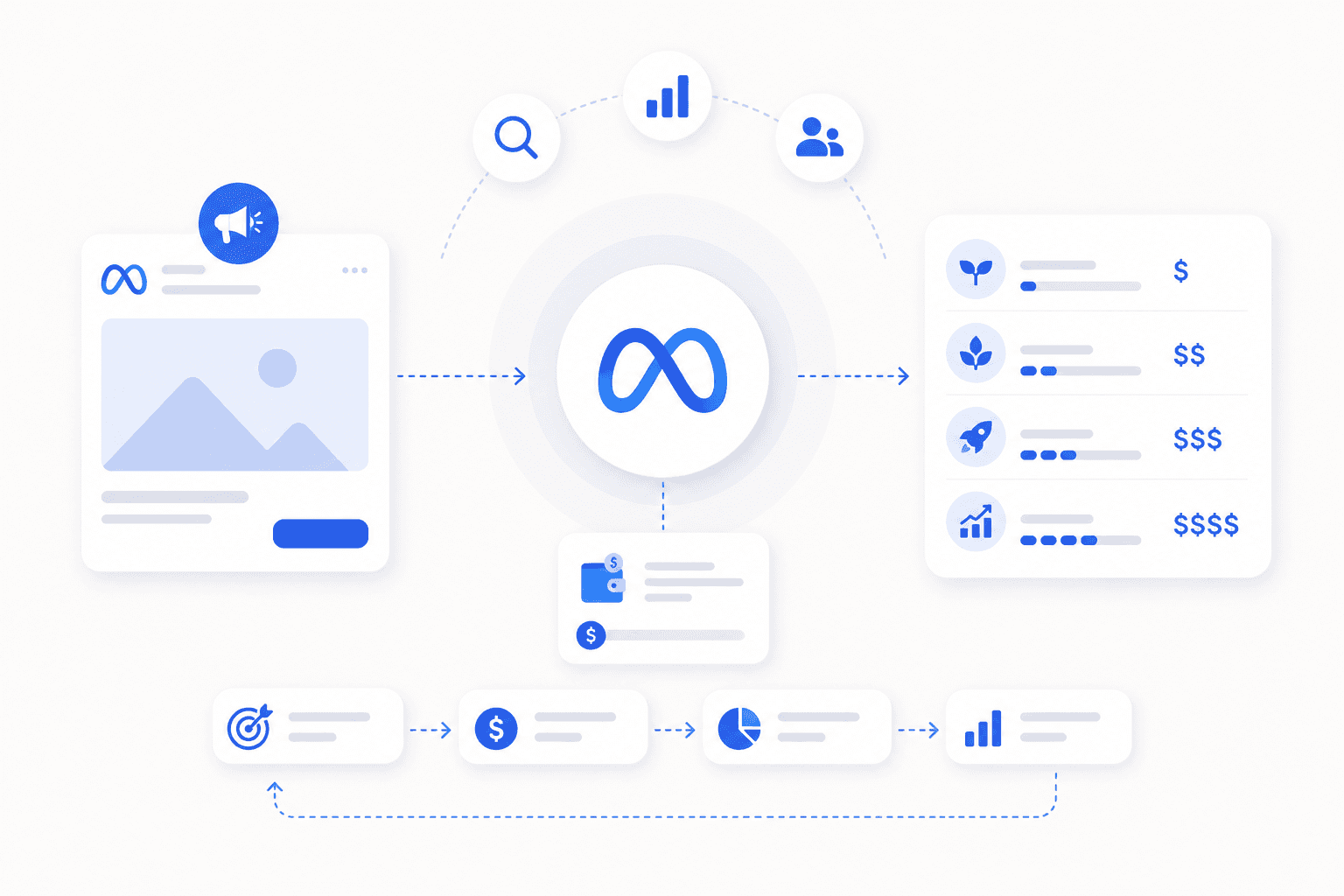
Daily test budget = target conversions x expected CPA / test duration in days
If your target CPA is $50 and you want 10 conversions over a 7-day test, your daily budget is $50 x 10 / 7 = roughly $71/day per adset.
The Keep-or-Cut Rule
After spending 3x your target CPA on a concept (illustrative example: $150 on a $50 CPA target), apply this decision framework:
3+ conversions: Keep. The concept is working.
2 conversions: Yellow light. Let it run for roughly 1x more CPA of additional spend before deciding.
0-1 conversions: Cut. Move on.
Do not make decisions before you hit the 3x CPA threshold. Early data is noisy and will mislead you.
Test Windows
Your default test window should be roughly 1 week. Adjust based on your business:
High-volume, fast-purchase businesses (low-cost ecommerce, impulse buys): 3-4 days can be enough
Small budgets or long purchase cycles (high-ticket B2B, considered purchases): 10-14 days to accumulate enough signal
7. Scaling Concepts: The Adset-Level Rules
Once you have winning concepts, you need to scale them without breaking what is already working.
The Cardinal Rule
Never touch something that is working. Do something next to it.
If a performing adset needs new creative, launch the new creative as a separate adset. Do not add new ads into a proven adset and risk disrupting its delivery.
If a non-performing adset needs new creative, add the new ads to the existing adset. There is nothing to protect.
Ads Per Adset
Run 3-15 ads per adset. Here is why.
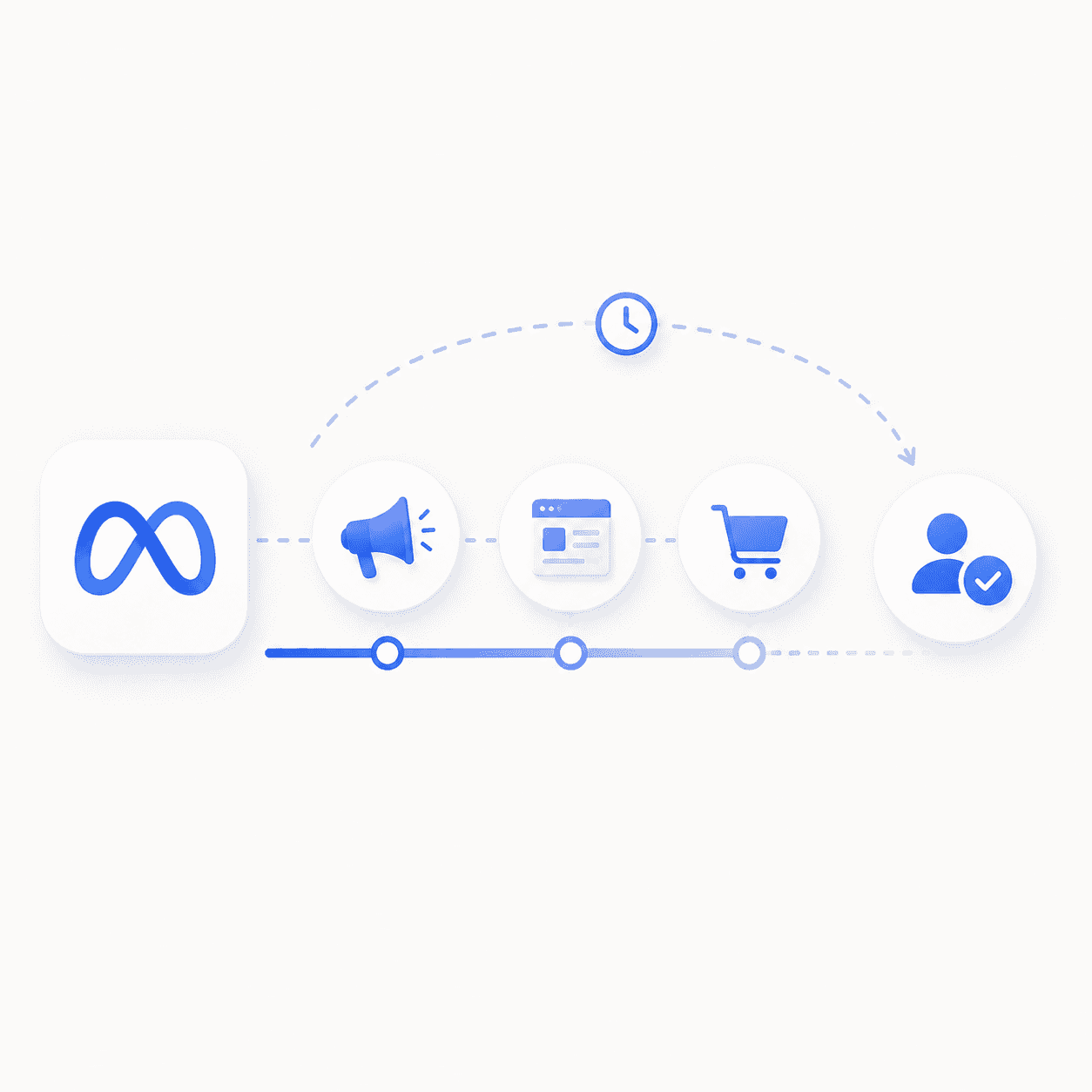
In our experience, people generally need to see an ad 2-6 times before they buy. One ad cannot sequence. The algorithm needs multiple creatives to show different messages across those impressions.
But watch your ad-to-budget ratio. If you have 15 ads in an adset with a $30/day budget, the algorithm will starve most of them. Match your ad count to your budget so each ad gets enough spend to generate meaningful data.
Concept Testing as a Strategic Unlock
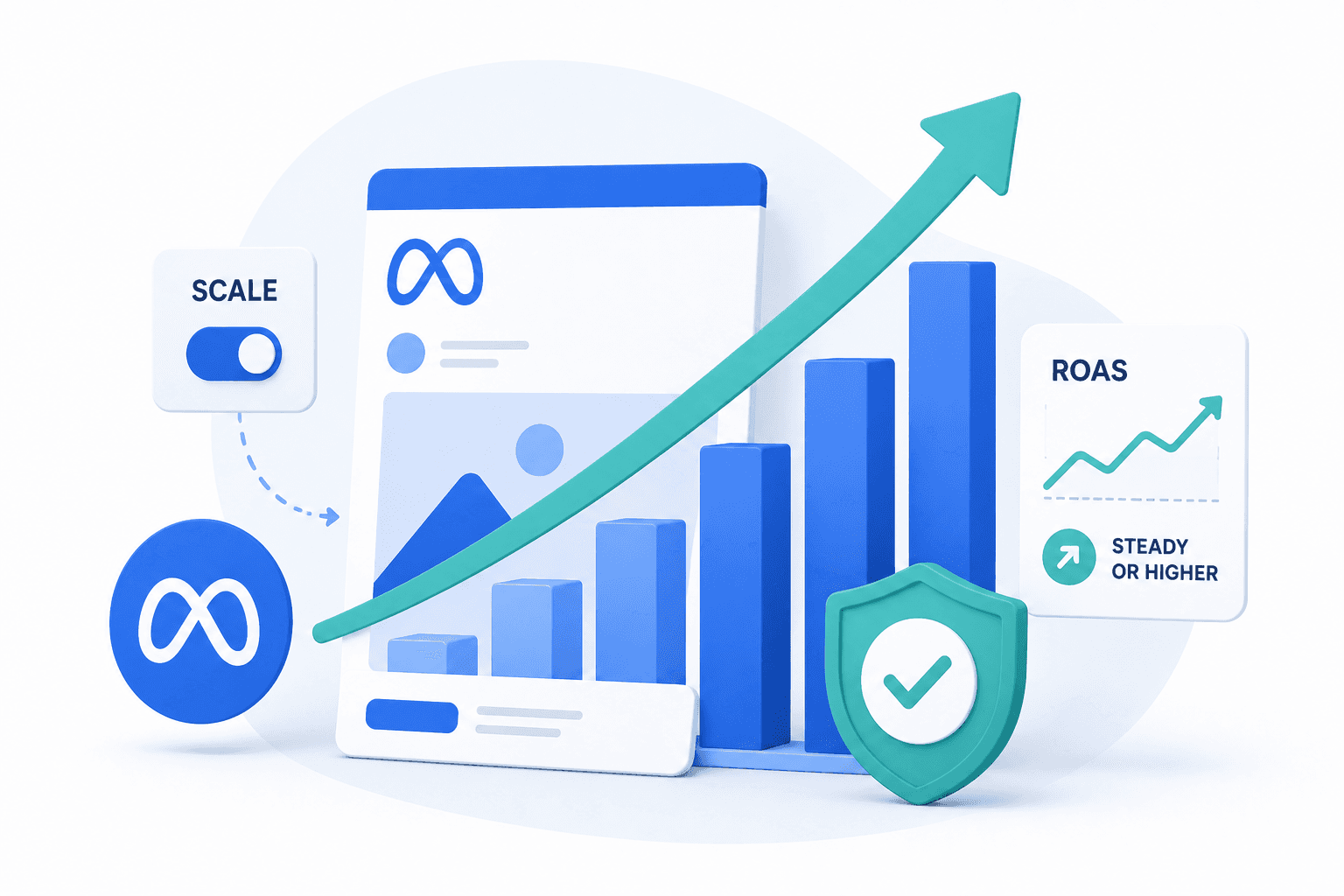
At $50k-$250k/month in Meta spend, concept-level testing becomes a real competitive advantage. Each concept generates enough conversion volume for you to measure Return on Ad Spend (ROAS) and CPA by concept, not just by campaign.
This means creative production becomes actual strategy. You are no longer guessing what to make next. As an illustrative example, you might find that the "brides" persona converts at a 2.1x ROAS while the "coffee drinkers" persona converts at a 1.4x ROAS with the same offer. That tells you exactly which angles drive the highest volume and which offers produce the best margins.
These insights go beyond your ad account. If you discover that 40% of your conversions come from smokers and 40% come from brides, that informs product development, landing page strategy, email segmentation, and inventory planning.
This is where Flighted's three pillars (Paid Media Expertise, Creative Strategy, and Landing Page Optimization) work as a single system. The concepts you test in Meta inform the landing pages you build, the landing page data feeds back into your creative strategy, and the paid media structure makes it all measurable.
Conclusion
The Persona-Angle-Offer framework turns Meta creative testing from "make stuff and see what sticks" into a systematic methodology that builds on itself.
Define your personas as behavioral or situational profiles. Build angles that match each persona's specific pain points. Configure offers that align with their buying context. Test one variable at a time. Name your adsets so you can learn from the data. And apply clear spending thresholds before making keep-or-cut decisions.
This is how you move from random creative production to a system that compounds learnings, reduces wasted spend, and gives you real strategic intelligence about your customers.