Your Meta ads budget determines whether your campaigns get enough data to optimize—or stay stuck in learning limbo indefinitely. The platform minimum of $5/day might seem like a low barrier to entry, but it's a trap that keeps most advertisers from ever seeing real results.
This guide walks through how to calculate a starting budget based on your target CPA, why the learning phase dictates your spend, and how to allocate budget across campaigns without starving your ad sets of the conversions they need.
Key takeaways
Meta's platform minimum is $5/day per ad set, but the practical minimum that produces real results is $20–30/day per ad set.
Your starting budget depends on your target CPA—use the formula: Monthly Budget = Target CPA × 50 conversions × 4 weeks.
The learning phase requires roughly 50 conversions per week per ad set. Budget below this threshold keeps your campaigns stuck in "Learning Limited."
Daily budgets work best for ongoing campaigns. Lifetime budgets suit time-bound promotions with fixed end dates.
Budget alone does not fix underperforming campaigns. Creative quality and landing page experience determine whether your spend converts.
What is a Meta ads budget
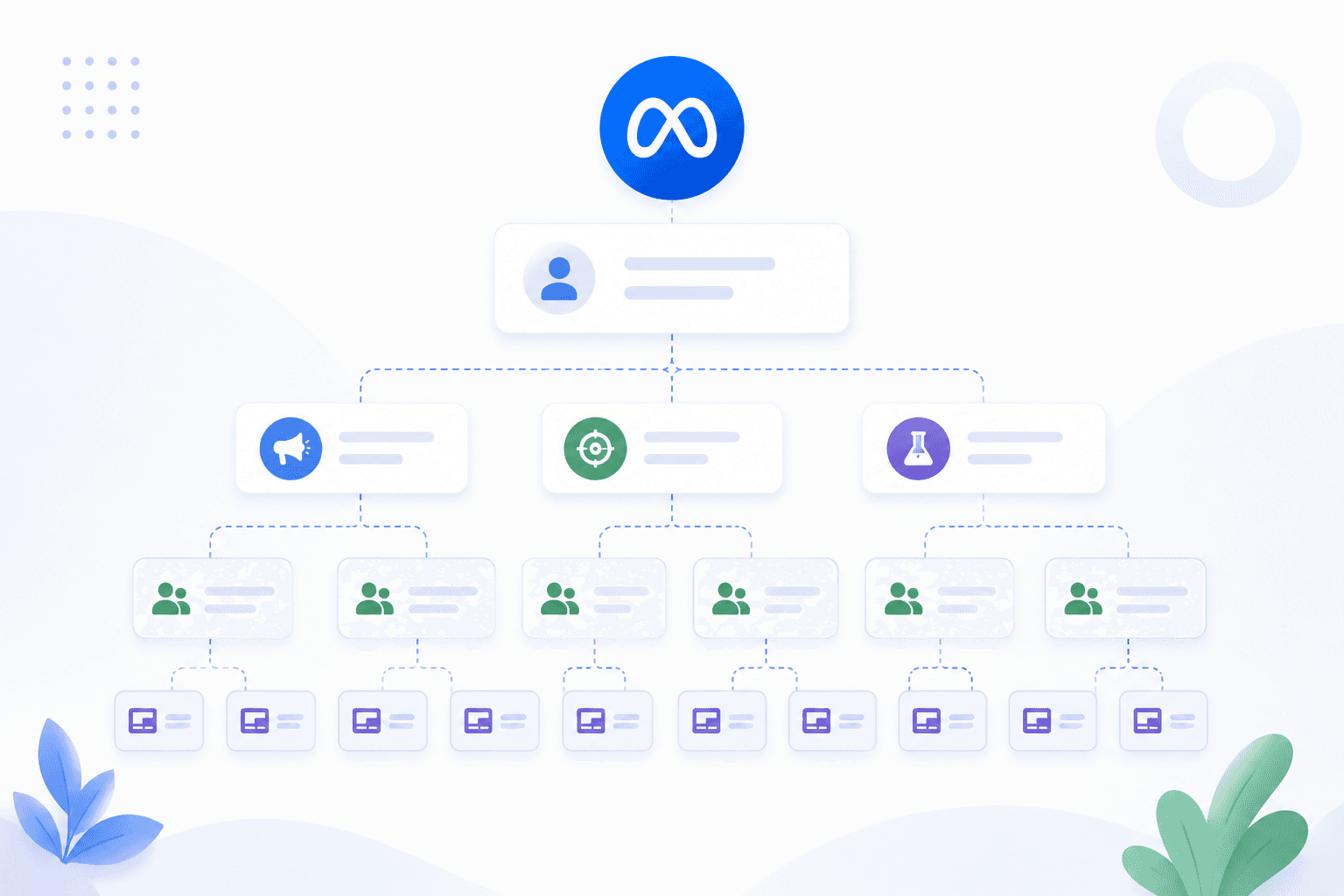
A Meta ads budget is the total amount you allocate to show ads on Facebook and Instagram. You set this at either the campaign level or the ad set level inside Ads Manager, depending on how you want to control spend.
Meta offers two budget types: daily and lifetime. Daily budgets set an average daily spend over the course of a week. Lifetime budgets cap total spend over a campaign's full duration. We'll cover when to use each one later.
Meta ads minimum daily budget requirements
Platform minimums set by Meta
Meta's technical minimum is $1/day for impressions-based campaigns and $5/day for campaigns optimized for clicks, conversions, or other actions. Think of this as a floor—the lowest amount the platform will accept—not a recommendation for what actually works.
The practical minimum that produces results
Here's where things get real. With ad prices rising 9% year-over-year, the gap between what Meta allows and what produces meaningful data is significant.
Most advertisers find that $20–30/day per ad set is the realistic minimum to generate enough conversions for optimization.
Several factors influence your practical minimum:
Your optimization event: Optimizing for purchases requires more spend than optimizing for link clicks, simply because purchases happen less frequently.
Your target CPA: If your target CPA (Cost Per Acquisition) is $50, you want enough daily budget to afford at least one conversion per day—ideally more.
Number of ad sets: Each ad set competes for budget. Running five ad sets on $50/day total means each gets only $10/day.
Why the platform minimum fails most advertisers
Spreading a small budget across multiple ad sets starves each one of conversion data. Meta's algorithm cannot optimize delivery without sufficient signal, so your campaigns stay stuck in learning indefinitely.
One well-funded ad set outperforms five underfunded ones. Every time.
Why the learning phase dictates your Facebook ads budget
What the learning phase means for new campaigns
The learning phase is the period when Meta's algorithm gathers data to optimize ad delivery. During this window, performance is volatile. CPAs may spike, and results fluctuate day to day.
Every new ad set enters learning. The goal is to exit as quickly as possible so performance stabilizes.
How many conversions you need to exit learning
Meta requires approximately 50 conversions per ad set per week to exit the learning phase. This threshold directly ties to your budget.
Minimum Weekly Budget per Ad Set = Target CPA × 50
So if your target CPA is $30, you want at least $1,500/week per ad set to exit learning consistently. That's roughly $215/day—far above the platform minimum.
What Learning Limited tells you about your budget
"Learning Limited" is a status in Ads Manager that signals your ad set is not getting enough conversions to optimize. This usually means your budget is too low relative to your CPA.
When you see Learning Limited, you have three options:
Consolidate ad sets: Combine audiences to concentrate budget into fewer ad sets.
Raise your budget: Give the algorithm more room to find conversions.
Broaden your targeting: Increase the audience size to generate more conversion volume.
How to Determine Your Starting Meta Ads Budget
Your Meta ads budget determines whether your campaigns get enough data to optimize—or stay stuck in learning limbo indefinitely. The platform minimum of $5/day might seem like a low barrier to entry, but it's a trap that keeps most advertisers from ever seeing real results.
This guide walks through how to calculate a starting budget based on your target CPA, why the learning phase dictates your spend, and how to allocate budget across campaigns without starving your ad sets of the conversions they need.
Key takeaways
Meta's platform minimum is $5/day per ad set, but the practical minimum that produces real results is $20–30/day per ad set.
Your starting budget depends on your target CPA—use the formula: Monthly Budget = Target CPA × 50 conversions × 4 weeks.
The learning phase requires roughly 50 conversions per week per ad set. Budget below this threshold keeps your campaigns stuck in "Learning Limited."
Daily budgets work best for ongoing campaigns. Lifetime budgets suit time-bound promotions with fixed end dates.
Budget alone does not fix underperforming campaigns. Creative quality and landing page experience determine whether your spend converts.
What is a Meta ads budget
A Meta ads budget is the total amount you allocate to show ads on Facebook and Instagram. You set this at either the campaign level or the ad set level inside Ads Manager, depending on how you want to control spend.
Meta offers two budget types: daily and lifetime. Daily budgets set an average daily spend over the course of a week. Lifetime budgets cap total spend over a campaign's full duration. We'll cover when to use each one later.
Meta ads minimum daily budget requirements
Platform minimums set by Meta
Meta's technical minimum is $1/day for impressions-based campaigns and $5/day for campaigns optimized for clicks, conversions, or other actions. Think of this as a floor—the lowest amount the platform will accept—not a recommendation for what actually works.
The practical minimum that produces results
Here's where things get real. With ad prices rising 9% year-over-year, the gap between what Meta allows and what produces meaningful data is significant.
Most advertisers find that $20–30/day per ad set is the realistic minimum to generate enough conversions for optimization.
Several factors influence your practical minimum:
Your optimization event: Optimizing for purchases requires more spend than optimizing for link clicks, simply because purchases happen less frequently.
Your target CPA: If your target CPA (Cost Per Acquisition) is $50, you want enough daily budget to afford at least one conversion per day—ideally more.
Number of ad sets: Each ad set competes for budget. Running five ad sets on $50/day total means each gets only $10/day.
Why the platform minimum fails most advertisers
Spreading a small budget across multiple ad sets starves each one of conversion data. Meta's algorithm cannot optimize delivery without sufficient signal, so your campaigns stay stuck in learning indefinitely.
One well-funded ad set outperforms five underfunded ones. Every time.
Why the learning phase dictates your Facebook ads budget
What the learning phase means for new campaigns
The learning phase is the period when Meta's algorithm gathers data to optimize ad delivery. During this window, performance is volatile. CPAs may spike, and results fluctuate day to day.
Every new ad set enters learning. The goal is to exit as quickly as possible so performance stabilizes.
How many conversions you need to exit learning
Meta requires approximately 50 conversions per ad set per week to exit the learning phase. This threshold directly ties to your budget.
Minimum Weekly Budget per Ad Set = Target CPA × 50
So if your target CPA is $30, you want at least $1,500/week per ad set to exit learning consistently. That's roughly $215/day—far above the platform minimum.
What Learning Limited tells you about your budget
"Learning Limited" is a status in Ads Manager that signals your ad set is not getting enough conversions to optimize. This usually means your budget is too low relative to your CPA.
When you see Learning Limited, you have three options:
Consolidate ad sets: Combine audiences to concentrate budget into fewer ad sets.
Raise your budget: Give the algorithm more room to find conversions.
Broaden your targeting: Increase the audience size to generate more conversion volume.
How to calculate your starting Facebook ads budget
1. Define your target CPA
CPA is what you pay for each conversion—whether that's a purchase, lead, or signup. Your target CPA comes from your unit economics: what can you afford to pay for a customer while remaining profitable?
If your average order value is $100 and your gross margin is 60%, you have $60 to work with. Subtract fulfillment, overhead, and your profit target to arrive at your CPA ceiling.
2. Estimate weekly conversions needed
Meta's algorithm performs best with roughly 50 conversions per week per ad set. This is your baseline for budget planning.
If you're running one ad set, plan for 50 conversions. If you're running three ad sets, you technically want 150 conversions per week total—though consolidating into fewer ad sets is usually smarter.
3. Multiply to set your monthly budget
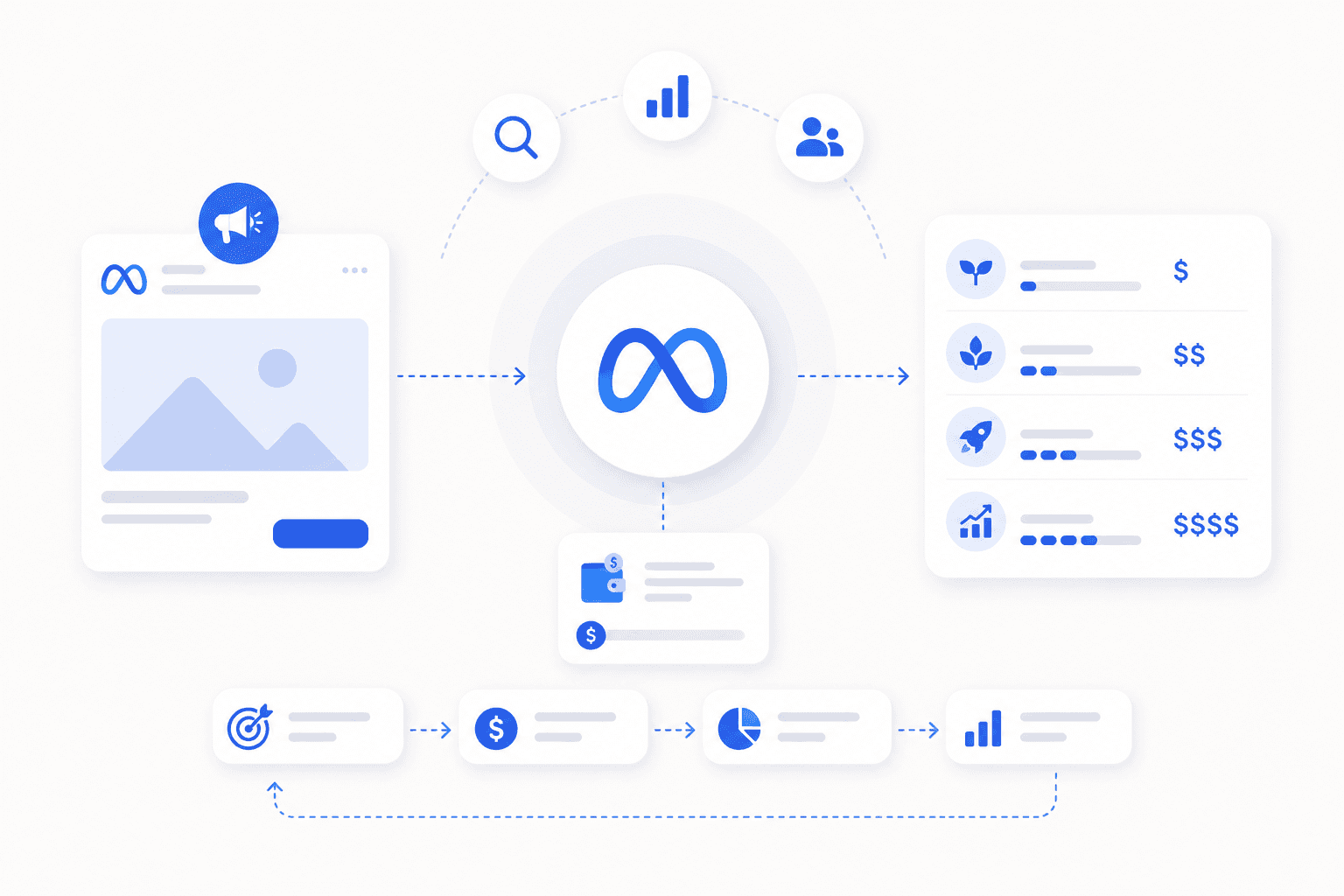
Monthly Budget = Target CPA × 50 × 4
If your target CPA is $40—close to the median CPA of $38.17 across industries—your minimum monthly budget is $40 × 50 × 4 = $8,000. This gives you enough spend to exit learning and maintain stable performance.
4. Adjust for product price point and margin
Higher-priced products typically have higher CPAs but also higher margins to absorb them. A $500 product can sustain a $100 CPA. A $30 product cannot.
Validate your budget against your gross margin before committing. If the math doesn't work, you may want to improve conversion rates before scaling spend.
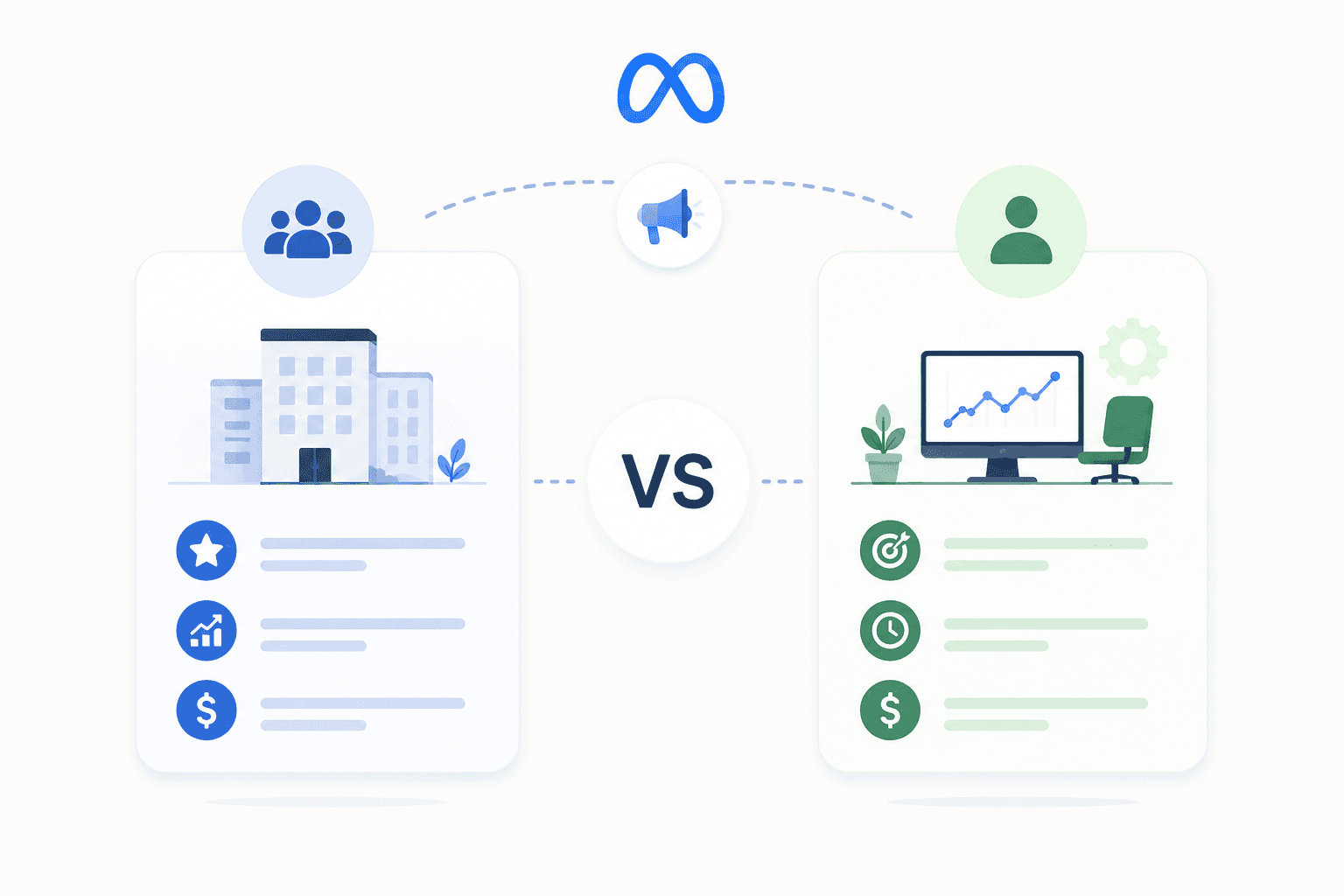
Daily budget vs. lifetime budget for Meta ads
Feature
Daily Budget
Lifetime Budget
Best for
Ongoing campaigns
Time-bound promotions
Spending pattern
Roughly consistent daily
Flexible pacing across schedule
Control level
Predictable daily costs
Predictable total costs
Flexibility
Meta may spend up to 75% more on high-opportunity days
Meta paces to use full budget by end date
When to use a daily budget
Daily budgets work well for always-on prospecting campaigns where you want consistent delivery. Keep in mind that daily budget is not a hard cap. Meta can exceed it by up to 75% on days with strong opportunity, then balance over the week.
When to use a lifetime budget
Lifetime budgets suit promotions, product launches, or campaigns with a fixed end date. Meta paces spend to exhaust the full budget by your end date, which can mean uneven daily delivery.
Which to choose for your first campaign
Start with daily budgets. They're simpler to monitor and adjust. Lifetime budgets add complexity around pacing that new advertisers don't typically benefit from yet.
How to distribute your Meta ads budget across campaigns
Prospecting vs. retargeting allocation
Prospecting campaigns target cold audiences who haven't interacted with your brand. Retargeting campaigns reach warm audiences—site visitors, cart abandoners, past purchasers.
A common starting allocation:
Prospecting: 70–80% of budget to drive new customer acquisition.
Retargeting: 20–30% to convert users already in your funnel.
The exact split depends on your funnel size. Brands with large retargeting pools can allocate more there. Newer brands with small audiences typically focus on prospecting.
Budget reserved for creative testing
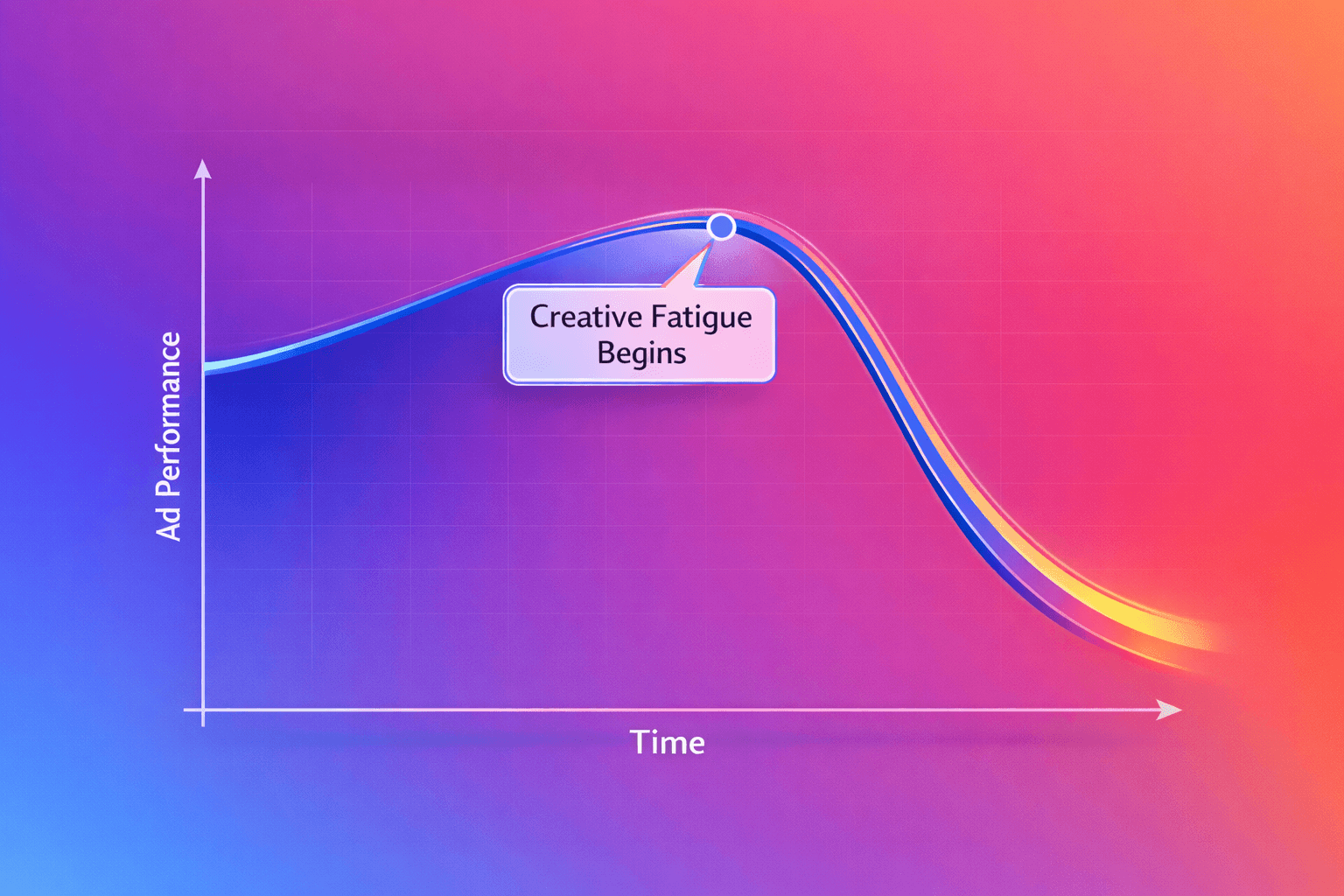
Set aside 10–20% of your budget for ongoing creative tests. Without fresh creative, performance decays as audiences fatigue on the same ads—conversion likelihood drops roughly 45% after just four repeated exposures.
Creative strategy is central to Meta Ads performance. It's not a separate workstream but a core driver of results—something we see consistently across the accounts we manage at Flighted.
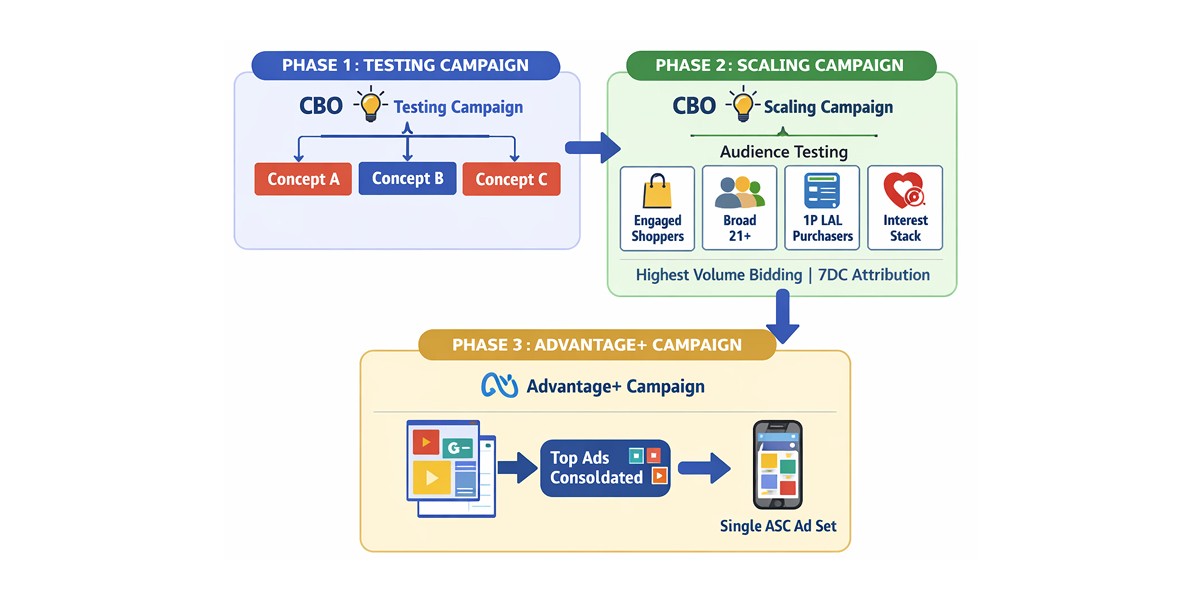
Advantage Plus campaign budget allocation
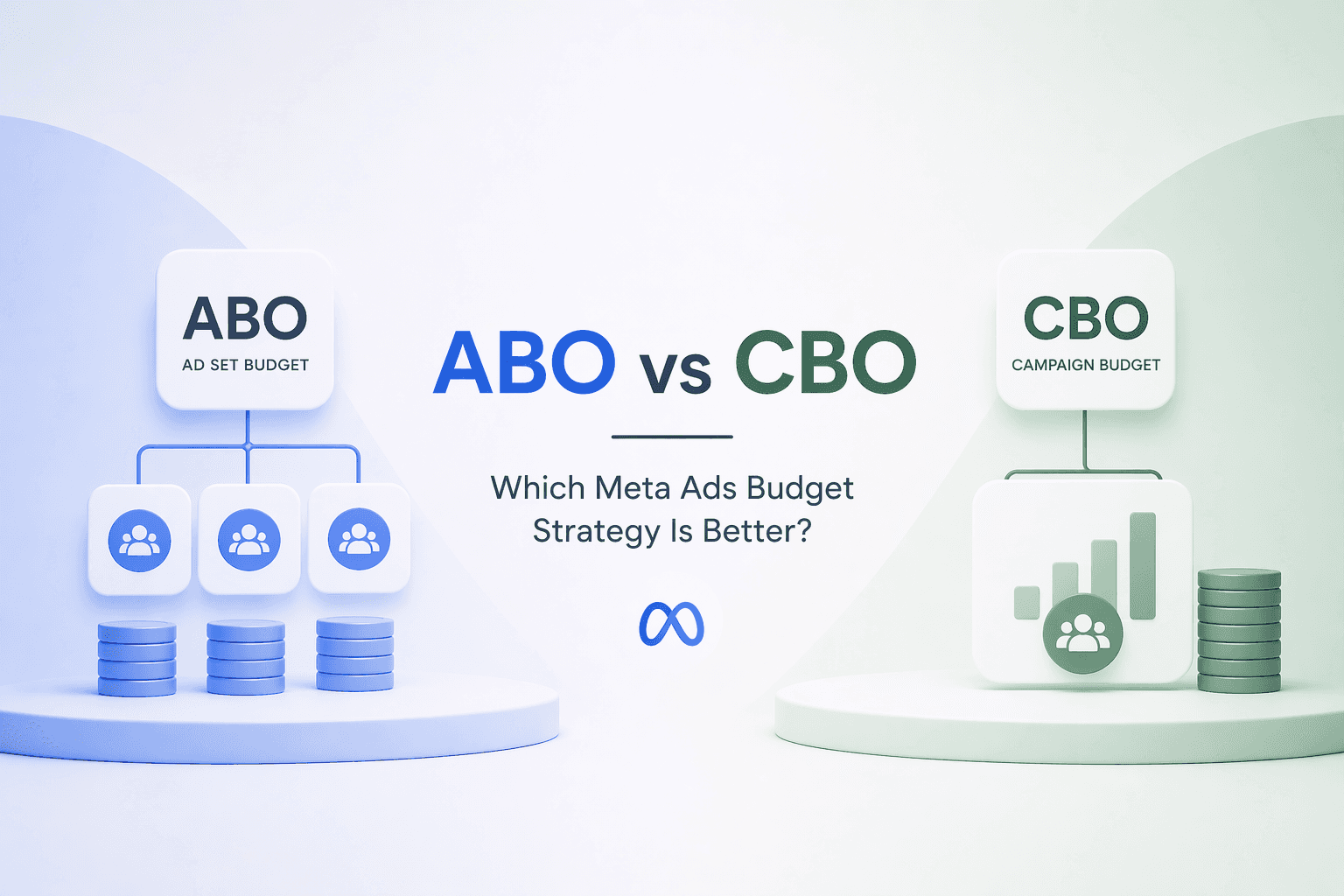
Advantage+ campaign budget (formerly CBO) lets Meta distribute your budget across ad sets automatically based on performance. This works well when you trust the algorithm to find the best opportunities.
If you want guaranteed spend to specific audiences, use ad set budgets instead for tighter control over allocation.
When to increase or decrease your Meta ads budget
Signs you are ready to scale
Exited learning phase: Your ad sets show "Active" status, not "Learning" or "Learning Limited."
Consistent CPA at or below target: Performance has been stable for at least two weeks.
Creative still performing: Hook rates and CTR haven't declined significantly.
Signs you should reduce spend
CPA rising above target: Efficiency is declining week over week.
Creative fatigue: Metrics are trending down despite stable targeting.
How to scale without resetting the learning phase
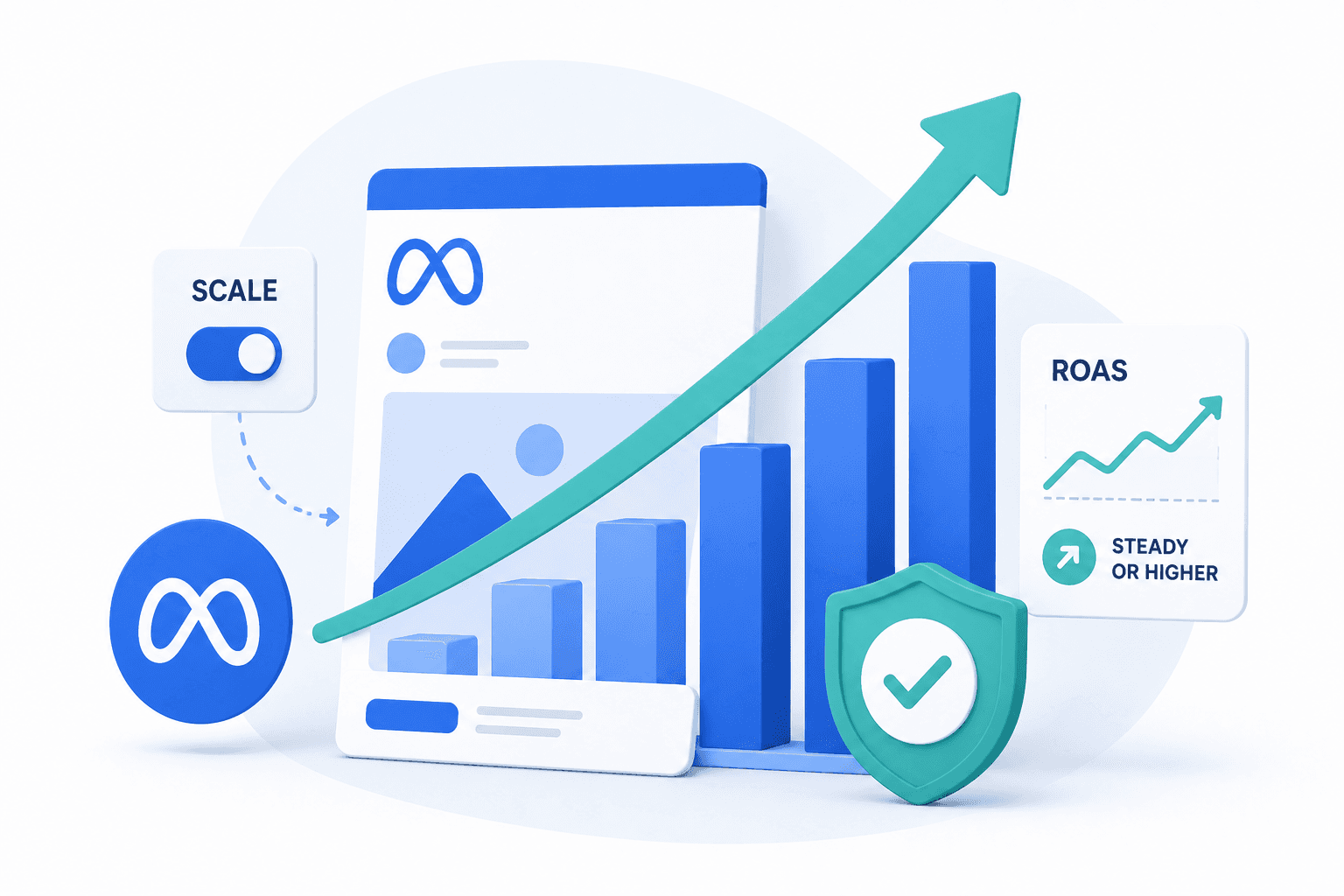
Increase budgets gradually. A common approach is 20% increments every 3–5 days. Large jumps—50% or more overnight—can push ad sets back into learning and destabilize performance for several days.
Budget alone will not fix underperforming campaigns
Here's the uncomfortable truth: throwing more money at weak creative or a poor landing page just wastes spend faster. Budget is one lever, but creative quality and landing page experience determine whether that budget converts.
At Flighted, we treat Paid Media Expertise, Creative Strategy, and Landing Page Optimization as interdependent pillars—not separate services. Your Meta ads budget only works as hard as the creative and landing pages behind it.
If you're planning your first Meta ads budget or trying to scale past a plateau, book a call with Flighted to build a budget tied to full-funnel execution.
FAQs about Meta ads budgets
Is $10 a day enough for Meta ads?
$10/day is below the practical minimum for most objectives. At this level, your ad set will likely stay in the learning phase indefinitely, producing inconsistent results.
Is $20 a day enough for Meta ads?
$20–30/day per ad set is generally the minimum to generate meaningful data. Whether it's enough depends on your target CPA and optimization event—higher-value conversions require more spend.
How much do Meta ads cost per 1,000 impressions?
CPM (Cost Per Mille) varies by industry, audience, and placement. Most advertisers see CPMs between $5–$15, though competitive verticals like finance or insurance can run higher.
What happens if I change my Meta ads budget mid-campaign?
Small changes under 20% typically have minimal impact. Significant increases or decreases can reset the learning phase and cause performance volatility for several days.
Should I use Advantage Plus campaign budget or ad set budgets?
Advantage+ campaign budget works well for most advertisers because it lets Meta optimize spend allocation automatically. Use ad set budgets if you want to guarantee minimum spend to specific audiences or prefer tighter control over allocation.