How to Scale Meta Ads Without Decreasing ROAS in 2026
Meta Ads
June 2, 2026
Table Of Contents
No headings found on page
You doubled your Meta ads budget and watched ROAS drop 40% within a week. It's one of the most predictable patterns in paid media—and one of the most preventable.
Scaling isn't about spending more money. It's about spending more money while maintaining the efficiency that made your campaigns worth scaling in the first place. With Meta's average price per ad up 12% year-over-year as of Q1 2026, every dollar of wasted spend costs more than it did last year. This guide covers the specific tactics, thresholds, and structures that let you increase Meta ad spend without sacrificing profitability.
Key Takeaways
Scaling Meta ads means increasing spend while maintaining efficiency—either vertically by raising budgets on winners, or horizontally by expanding into new audiences, creatives, and placements.
Gradual budget increases of 20-30% every 2-3 days prevent the learning phase resets that tank ROAS.
Creative volume is the most common bottleneck because higher spend burns through ads faster, so you want a pipeline of fresh variants ready to deploy.
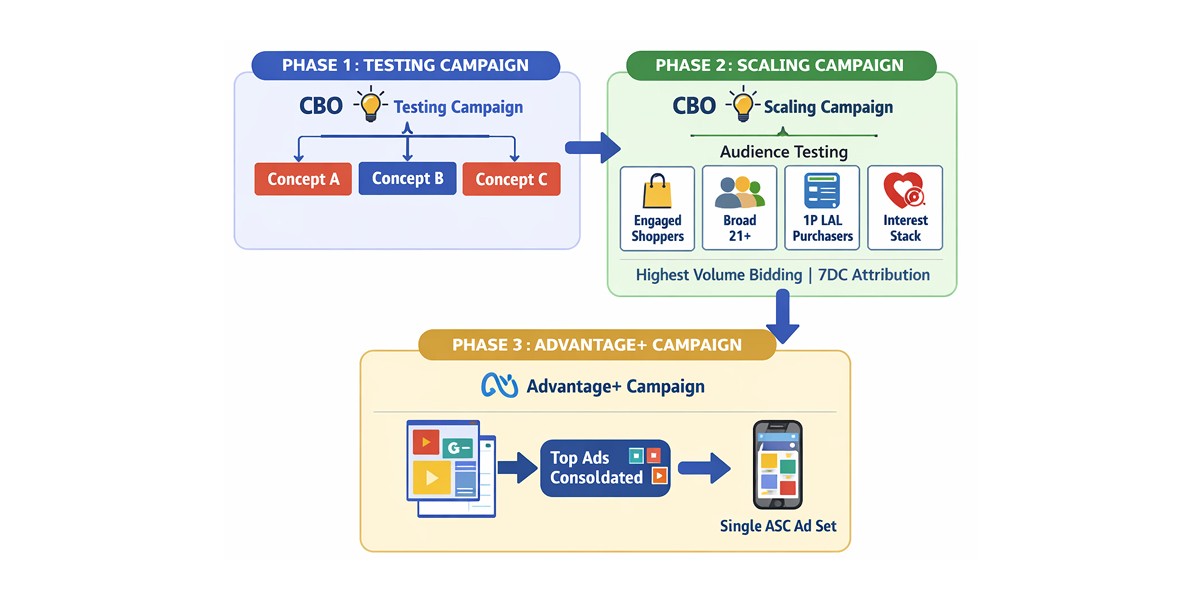
Simplified campaign structures with one testing campaign and one scaling campaign reduce audience overlap and give the algorithm cleaner signals.
Monitor frequency and First Time Impression Rate as leading indicators—by the time CPA spikes, audience saturation has already set in.
What Does Scaling Meta Ads Mean
Scaling Meta ads is the process of increasing your ad spend while maintaining or improving your return on ad spend, commonly called ROAS. ROAS measures the revenue generated per dollar spent on advertising. So if you spend $1,000 and generate $4,000 in revenue, your ROAS is 4.0x.
The goal here is simple: spend more money to acquire more customers without your cost per acquisition rising proportionally. Cost per acquisition, or CPA, is what you pay to acquire one customer.
Two primary approaches exist for scaling:
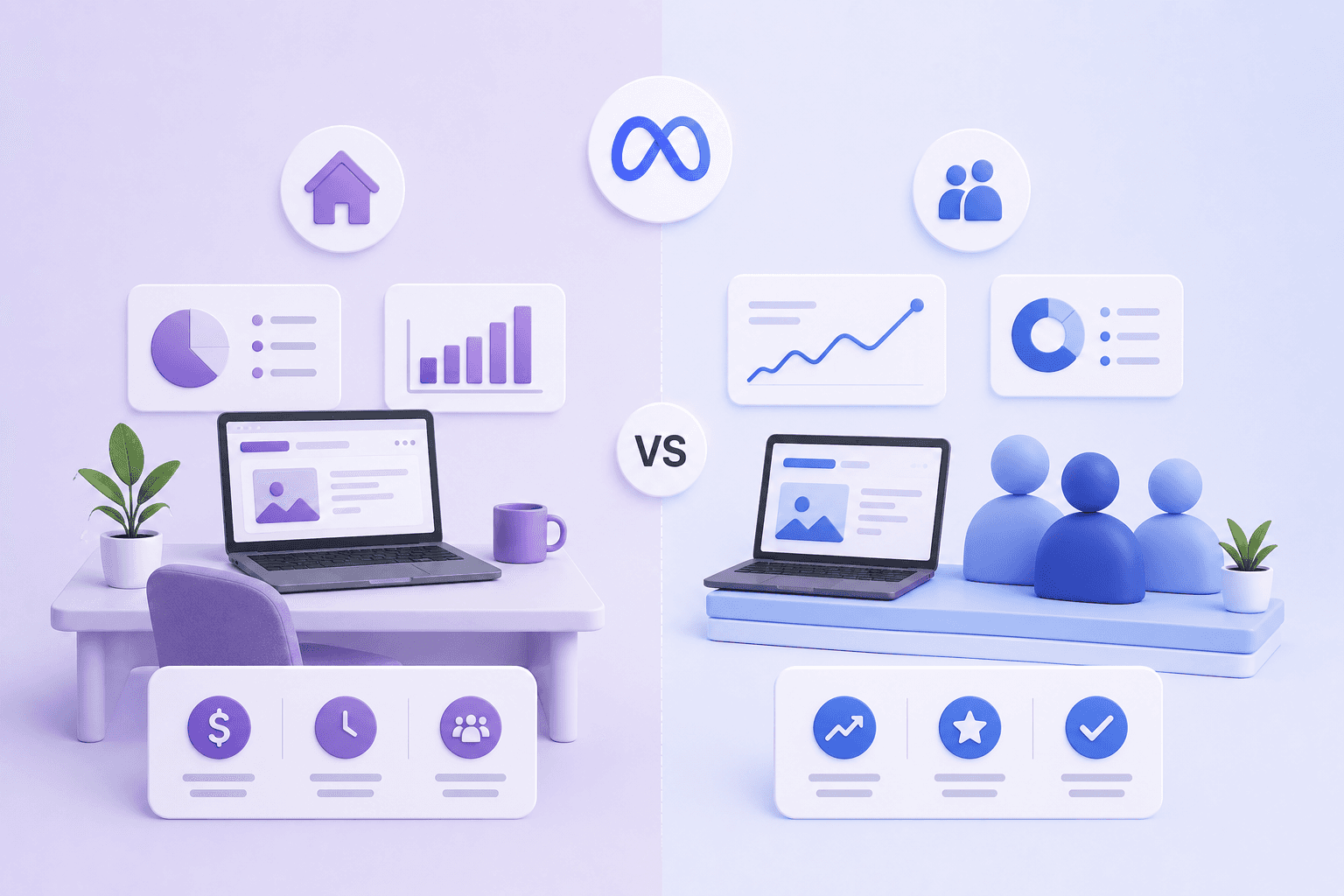
Vertical scaling: Increasing budgets on campaigns already performing well
Horizontal scaling: Expanding into new audiences, creative formats, or placements to find additional pockets of efficiency
Most brands hit a ceiling because they try to scale vertically without the creative inventory or audience depth to support it. Scaling successfully typically requires both approaches working in tandem.
Why ROAS Drops When You Scale Too Fast
The most common scaling failure happens when you increase budgets aggressively and watch ROAS collapse within 48 hours. This pattern is predictable, not random.
When you make large budget jumps—say, doubling spend overnight—Meta's algorithm exits its optimized state and re-enters what's called the learning phase. During this period, delivery becomes less efficient—with CPAs typically 20–40% higher than optimized performance. Meanwhile, your best-performing audiences see your ads more frequently.
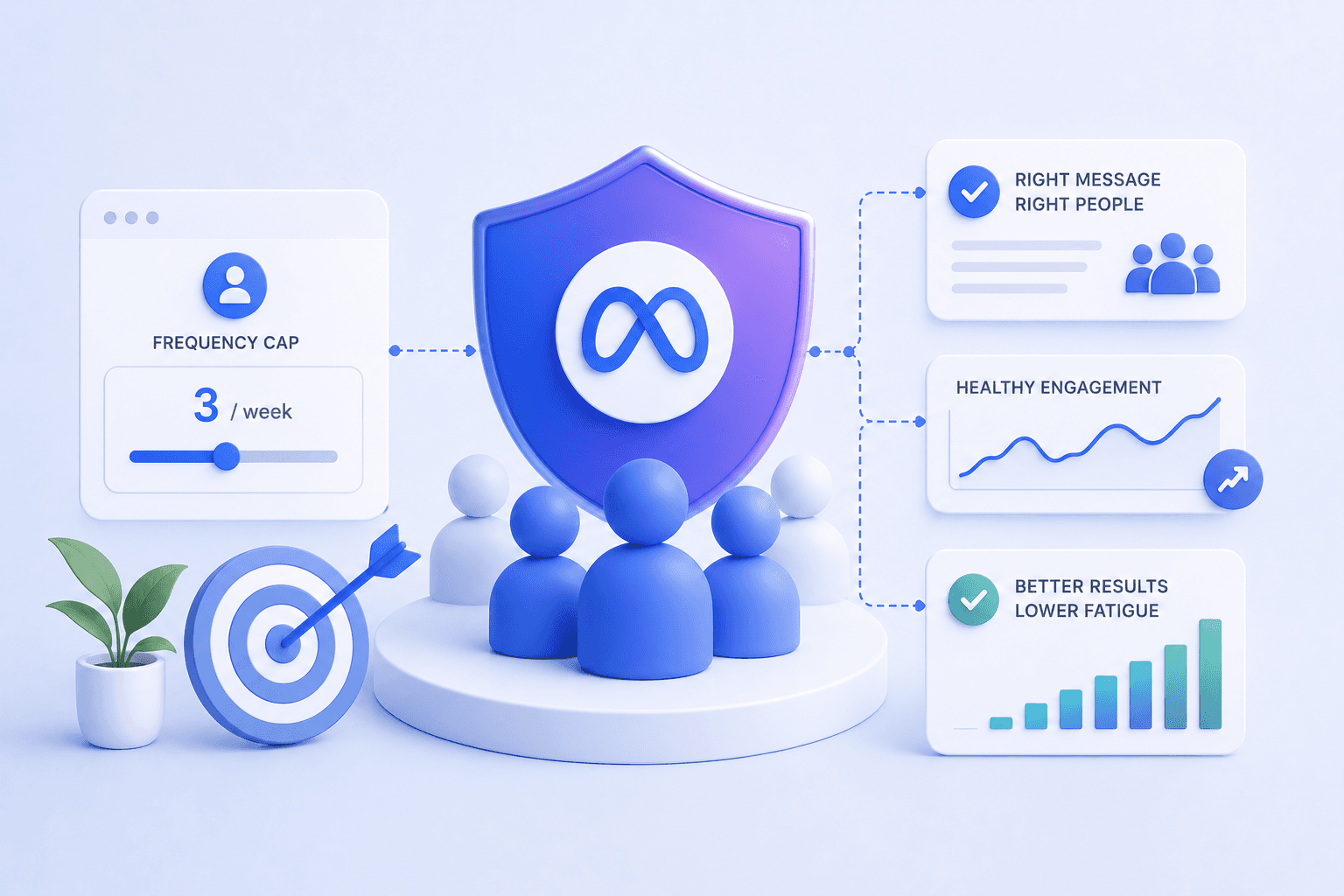
Frequency refers to the average number of times a user sees your ad. Creative that converted well at 1.5 frequency starts underperforming at 3.0 frequency.
The symptoms of scaling too fast follow a predictable sequence:
Frequency rises: Your best audiences see the same ads too often.
Click-through rate (CTR) drops: Users stop engaging with fatigued creative.
CPA increases: It costs more to acquire a customer as efficiency dips.
ROAS falls: Overall profitability declines.
By the time you notice the ROAS decline, the damage is already done.
What You Need Before Scaling Facebook Ads
Scaling campaigns that lack certain foundations leads to wasted budget and incorrect conclusions about what's working. Before increasing spend, verify that the following elements are in place.
Verified Conversion Tracking and Attribution
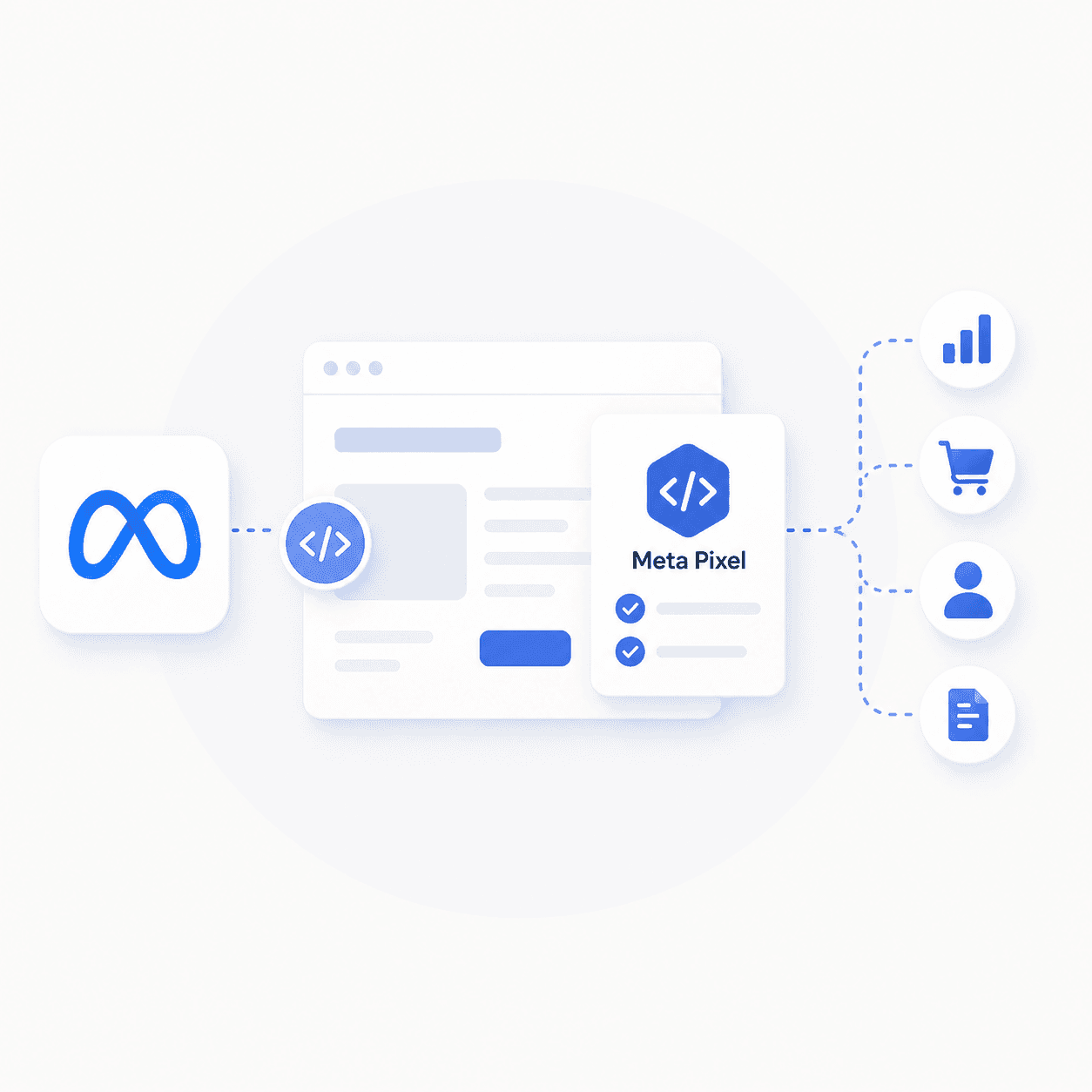
Your Meta Pixel and Conversions API, often called CAPI, need to fire correctly on all conversion events. If your data is incomplete or delayed, you can't identify which campaigns are actually driving results.
Run a test purchase or lead submission and verify the event appears in Events Manager within minutes. Discrepancies between platform-reported conversions and your backend data above 15-20% indicate tracking issues worth fixing first.
Defined Unit Economics and Breakeven ROAS
Calculate your breakeven ROAS before scaling. Breakeven ROAS is the minimum return required to cover your cost of goods, shipping, and overhead.
For example, if your gross margin is 60%, your breakeven ROAS is approximately 1.67x (calculated as 1 divided by 0.60). Any campaign scaling above this threshold is profitable. Anything below is losing money with every dollar you add.
Stable Performance Over Multiple Days
Campaigns still in Meta's learning phase are not ready to scale. The learning phase typically requires around 50 conversion events per week per ad set before the algorithm stabilizes. Wait for 5-7 days of consistent performance before increasing budgets.
Day-over-day CPA swings of more than 30% suggest the campaign hasn't stabilized yet.
Sufficient Creative Inventory
You'll want 3-5 proven ad variations ready to deploy before scaling. Higher budgets burn through creative faster—what lasted a month at $500/day might fatigue in two weeks at $2,000/day. Having backup creative ready prevents scrambling when performance starts to dip.
Key Metrics to Monitor When Scaling Meta Ads
Certain metrics tell you whether scaling is working or failing. Check them daily during active scaling periods.
Metric
What It Tells You
Warning Threshold
CPA
Cost efficiency per customer
Rising faster than 20% week-over-week
ROAS
Revenue return per ad dollar
Dropping below breakeven
Frequency
Audience saturation
Above 2.5-3.0 for prospecting
First Time Impression Rate
New audience reach
Below 50%
MER
Blended efficiency across channels
Declining while platform ROAS holds steady
First Time Impression Rate deserves special attention. This metric shows what percentage of your impressions are reaching users who haven't seen your ads before. When it drops below 50%, you're mostly re-showing ads to the same people—a leading indicator that scaling is about to stall.
Marketing Efficiency Ratio, or MER, is your total revenue divided by total ad spend across all channels. MER catches situations where platform-reported ROAS looks stable but actual business results are declining due to attribution gaps or channel overlap.
You doubled your Meta ads budget and watched ROAS drop 40% within a week. It's one of the most predictable patterns in paid media—and one of the most preventable.
Scaling isn't about spending more money. It's about spending more money while maintaining the efficiency that made your campaigns worth scaling in the first place. With Meta's average price per ad up 12% year-over-year as of Q1 2026, every dollar of wasted spend costs more than it did last year. This guide covers the specific tactics, thresholds, and structures that let you increase Meta ad spend without sacrificing profitability.
Key Takeaways
Scaling Meta ads means increasing spend while maintaining efficiency—either vertically by raising budgets on winners, or horizontally by expanding into new audiences, creatives, and placements.
Gradual budget increases of 20-30% every 2-3 days prevent the learning phase resets that tank ROAS.
Creative volume is the most common bottleneck because higher spend burns through ads faster, so you want a pipeline of fresh variants ready to deploy.
Simplified campaign structures with one testing campaign and one scaling campaign reduce audience overlap and give the algorithm cleaner signals.
Monitor frequency and First Time Impression Rate as leading indicators—by the time CPA spikes, audience saturation has already set in.
What Does Scaling Meta Ads Mean
Scaling Meta ads is the process of increasing your ad spend while maintaining or improving your return on ad spend, commonly called ROAS. ROAS measures the revenue generated per dollar spent on advertising. So if you spend $1,000 and generate $4,000 in revenue, your ROAS is 4.0x.
The goal here is simple: spend more money to acquire more customers without your cost per acquisition rising proportionally. Cost per acquisition, or CPA, is what you pay to acquire one customer.
Two primary approaches exist for scaling:
Vertical scaling: Increasing budgets on campaigns already performing well
Horizontal scaling: Expanding into new audiences, creative formats, or placements to find additional pockets of efficiency
Most brands hit a ceiling because they try to scale vertically without the creative inventory or audience depth to support it. Scaling successfully typically requires both approaches working in tandem.
Why ROAS Drops When You Scale Too Fast
The most common scaling failure happens when you increase budgets aggressively and watch ROAS collapse within 48 hours. This pattern is predictable, not random.
When you make large budget jumps—say, doubling spend overnight—Meta's algorithm exits its optimized state and re-enters what's called the learning phase. During this period, delivery becomes less efficient—with CPAs typically 20–40% higher than optimized performance. Meanwhile, your best-performing audiences see your ads more frequently.
Frequency refers to the average number of times a user sees your ad. Creative that converted well at 1.5 frequency starts underperforming at 3.0 frequency.
The symptoms of scaling too fast follow a predictable sequence:
Frequency rises: Your best audiences see the same ads too often.
Click-through rate (CTR) drops: Users stop engaging with fatigued creative.
CPA increases: It costs more to acquire a customer as efficiency dips.
ROAS falls: Overall profitability declines.
By the time you notice the ROAS decline, the damage is already done.
What You Need Before Scaling Facebook Ads
Scaling campaigns that lack certain foundations leads to wasted budget and incorrect conclusions about what's working. Before increasing spend, verify that the following elements are in place.
Verified Conversion Tracking and Attribution
Your Meta Pixel and Conversions API, often called CAPI, need to fire correctly on all conversion events. If your data is incomplete or delayed, you can't identify which campaigns are actually driving results.
Run a test purchase or lead submission and verify the event appears in Events Manager within minutes. Discrepancies between platform-reported conversions and your backend data above 15-20% indicate tracking issues worth fixing first.
Defined Unit Economics and Breakeven ROAS
Calculate your breakeven ROAS before scaling. Breakeven ROAS is the minimum return required to cover your cost of goods, shipping, and overhead.
For example, if your gross margin is 60%, your breakeven ROAS is approximately 1.67x (calculated as 1 divided by 0.60). Any campaign scaling above this threshold is profitable. Anything below is losing money with every dollar you add.
Stable Performance Over Multiple Days
Campaigns still in Meta's learning phase are not ready to scale. The learning phase typically requires around 50 conversion events per week per ad set before the algorithm stabilizes. Wait for 5-7 days of consistent performance before increasing budgets.
Day-over-day CPA swings of more than 30% suggest the campaign hasn't stabilized yet.
Sufficient Creative Inventory
You'll want 3-5 proven ad variations ready to deploy before scaling. Higher budgets burn through creative faster—what lasted a month at $500/day might fatigue in two weeks at $2,000/day. Having backup creative ready prevents scrambling when performance starts to dip.
Key Metrics to Monitor When Scaling Meta Ads
Certain metrics tell you whether scaling is working or failing. Check them daily during active scaling periods.
Metric
What It Tells You
Warning Threshold
CPA
Cost efficiency per customer
Rising faster than 20% week-over-week
ROAS
Revenue return per ad dollar
Dropping below breakeven
Frequency
Audience saturation
Above 2.5-3.0 for prospecting
First Time Impression Rate
New audience reach
Below 50%
MER
Blended efficiency across channels
Declining while platform ROAS holds steady
First Time Impression Rate deserves special attention. This metric shows what percentage of your impressions are reaching users who haven't seen your ads before. When it drops below 50%, you're mostly re-showing ads to the same people—a leading indicator that scaling is about to stall.
Marketing Efficiency Ratio, or MER, is your total revenue divided by total ad spend across all channels. MER catches situations where platform-reported ROAS looks stable but actual business results are declining due to attribution gaps or channel overlap.
Looking for Meta ads support?
We're a small, hardworking US-based team. Book a call and get a free audit today.
Vertical scaling is the most direct approach: take what's working and give it more budget. However, the execution matters more than the concept.
1. Increase Budgets in Gradual Increments
Raise budgets by 20-30% every 2-3 days rather than making large jumps. This cadence keeps campaigns out of the learning phase while steadily increasing spend.
A campaign spending $500/day can reach $1,000/day in about two weeks using this approach. The patience required here prevents the ROAS crashes that come from aggressive scaling. Think of it like gradually turning up the heat rather than cranking it to maximum.
2. Duplicate Winning Ad Sets
Instead of increasing budget on your original ad set, create a duplicate at a higher budget level. This approach lets you test scale potential without risking the performance of your proven winner.
If the duplicate performs well, you can pause the original. If it struggles, you still have your baseline running. It's a way to hedge your bets while exploring upside.
3. Use Campaign Budget Optimization for Automated Allocation
Campaign Budget Optimization, or CBO, lets Meta distribute your budget across ad sets automatically. Once you've identified winning audiences and creative, CBO can find efficiency you might miss with manual allocation. Meta reports that its Advantage+ Sales Campaigns, which extend this automated approach, deliver an average 22% lift in ROAS over manual campaigns.
One caveat: CBO works best when ad sets have similar audience sizes. If one ad set has 500,000 people and another has 50 million, the algorithm tends to favor the larger pool regardless of performance.
Horizontal Scaling Strategies for Efficient Ad Growth
When vertical scaling hits diminishing returns, horizontal expansion opens new pockets of demand. This is where you find additional scale without exhausting your existing audiences.
1. Expand Lookalike Audience Tiers
Start with 1% lookalikes of your best customers—purchasers, high-LTV segments, repeat buyers. As you scale, test 2-3%, then 3-5% lookalikes.
Broader lookalikes have lower intent but larger reach. The tradeoff usually makes sense once you've saturated your narrow audiences. Think of it as concentric circles expanding outward from your core customer base.
2. Test New Creative Formats and Hooks
Different creative formats reach different people—short-form video ads have delivered 2.1x the ROAS of static images across industries in recent benchmark data. A user who scrolls past your static image might stop for a UGC-style video. Someone who ignores a polished brand ad might engage with a raw, authentic testimonial.
Test variations in the first 2-3 seconds specifically—this is where attention is won or lost. The same core message with different hooks can unlock entirely new audience segments that weren't responding to your original creative.
3. Add Placements Across Reels, Stories, and Audience Network
Reels inventory has grown significantly and often delivers lower CPMs than feed placements. Stories and Audience Network can extend reach further, though performance varies by account.
Review placement-level performance in Ads Manager before expanding. Some placements will outperform others for your specific offer—let the data guide expansion rather than enabling everything blindly.
Why Creative Volume Is the Bottleneck for Scaling Ads
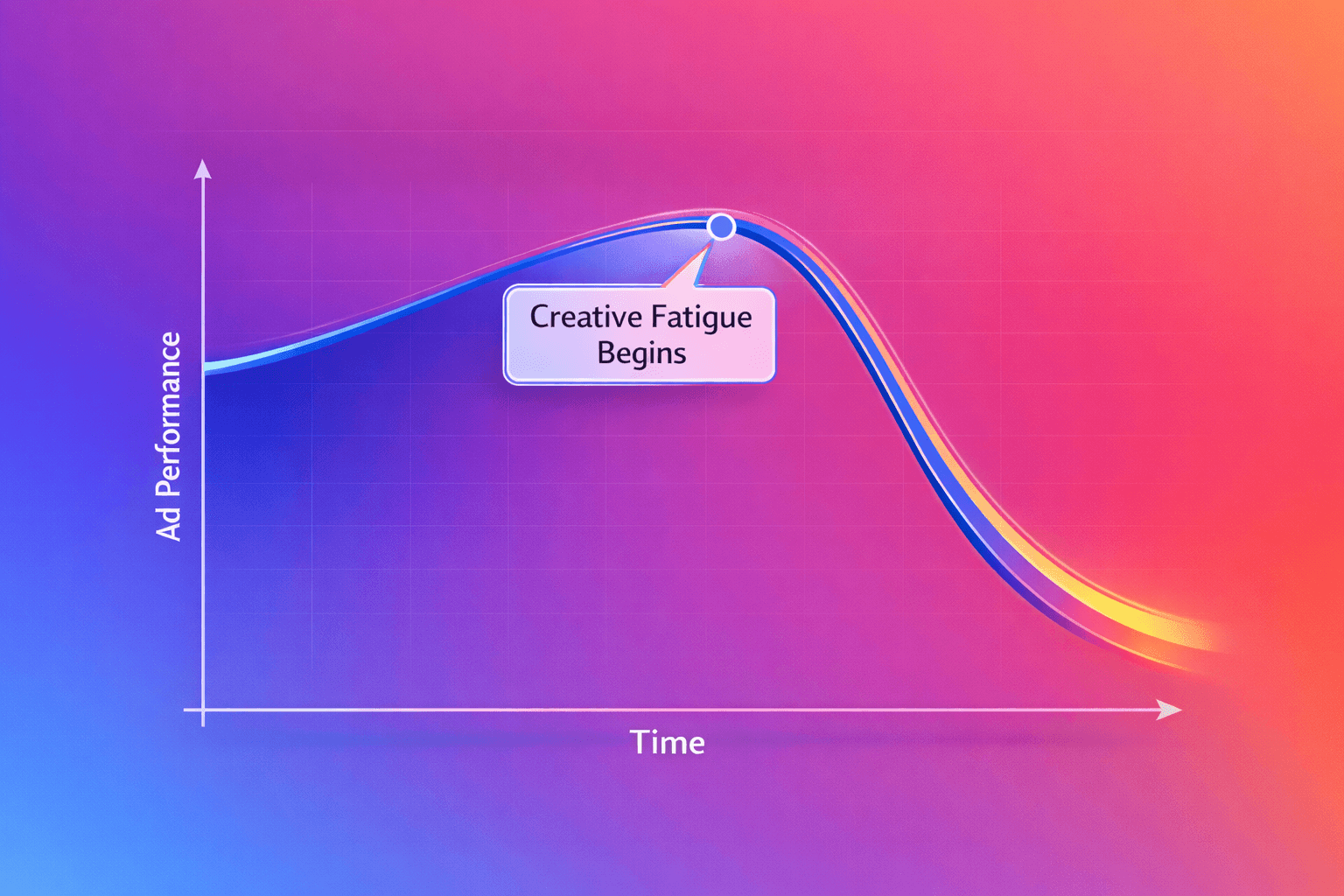
At higher spend levels, creative fatigue accelerates. An ad that maintained performance for six weeks at $200/day might decline after two weeks at $1,000/day. The math is straightforward: more budget means more impressions, which means your audience sees the same creative more often.
Frequency rises, engagement drops, and performance follows. This is why creative production isn't a one-time project but an ongoing system.
With over 4 million advertisers now using Meta's generative AI features, building a creative testing flywheel—where you're consistently producing and testing new variants—is what separates brands that scale from brands that plateau. This isn't about making more ads for the sake of volume. It's about having fresh concepts ready to deploy before your current winners fatigue.
A reasonable target is testing 3-5 new creative concepts per week at scale. Track which hooks, formats, and angles perform best, then iterate on winners rather than starting from scratch each time. The goal is compounding learnings, not random experimentation.
Campaign Structures Built for Facebook Ads Scaling
Simpler account structures scale better. Complex account architectures with dozens of campaigns create audience overlap and fragment the algorithm's learning.
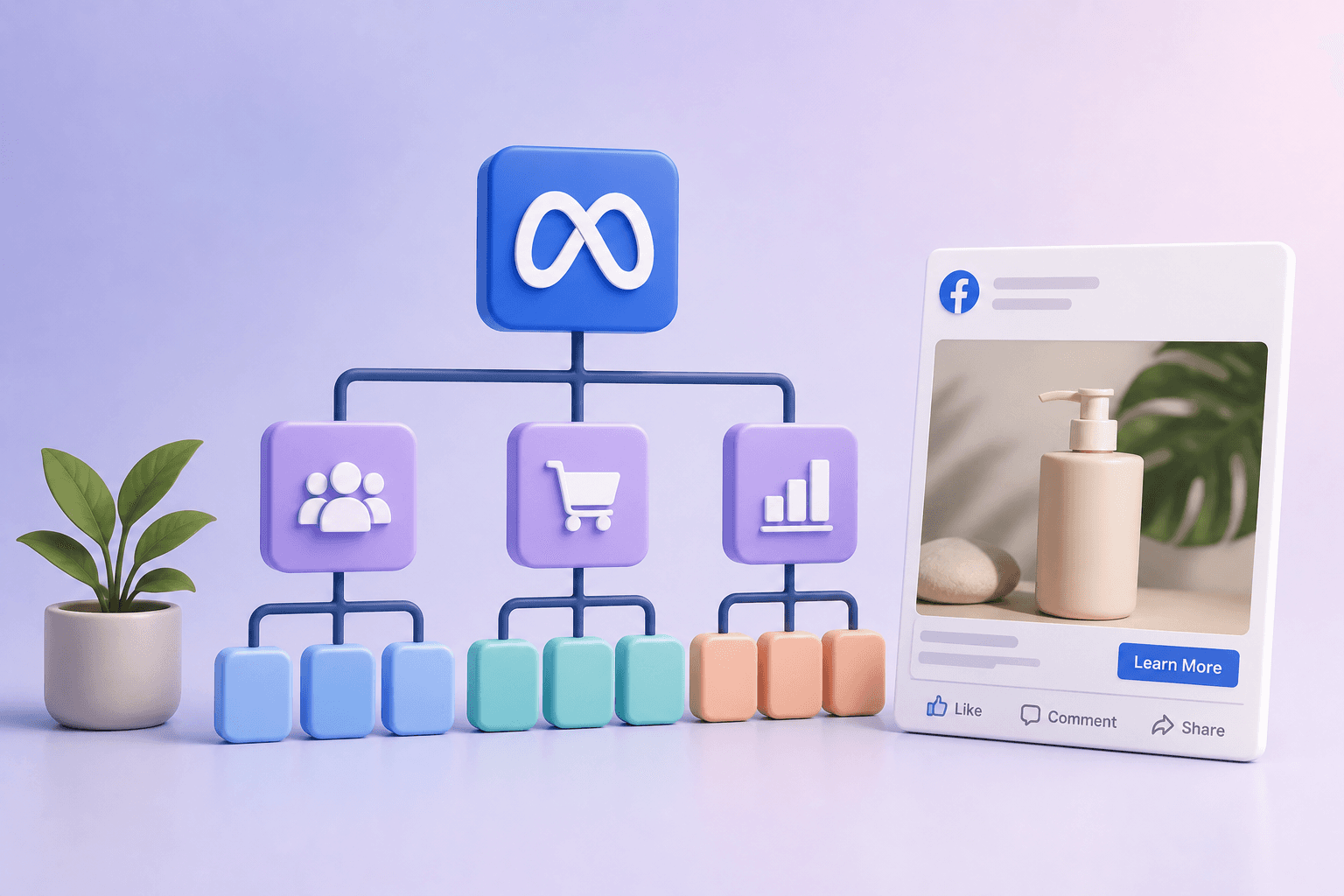
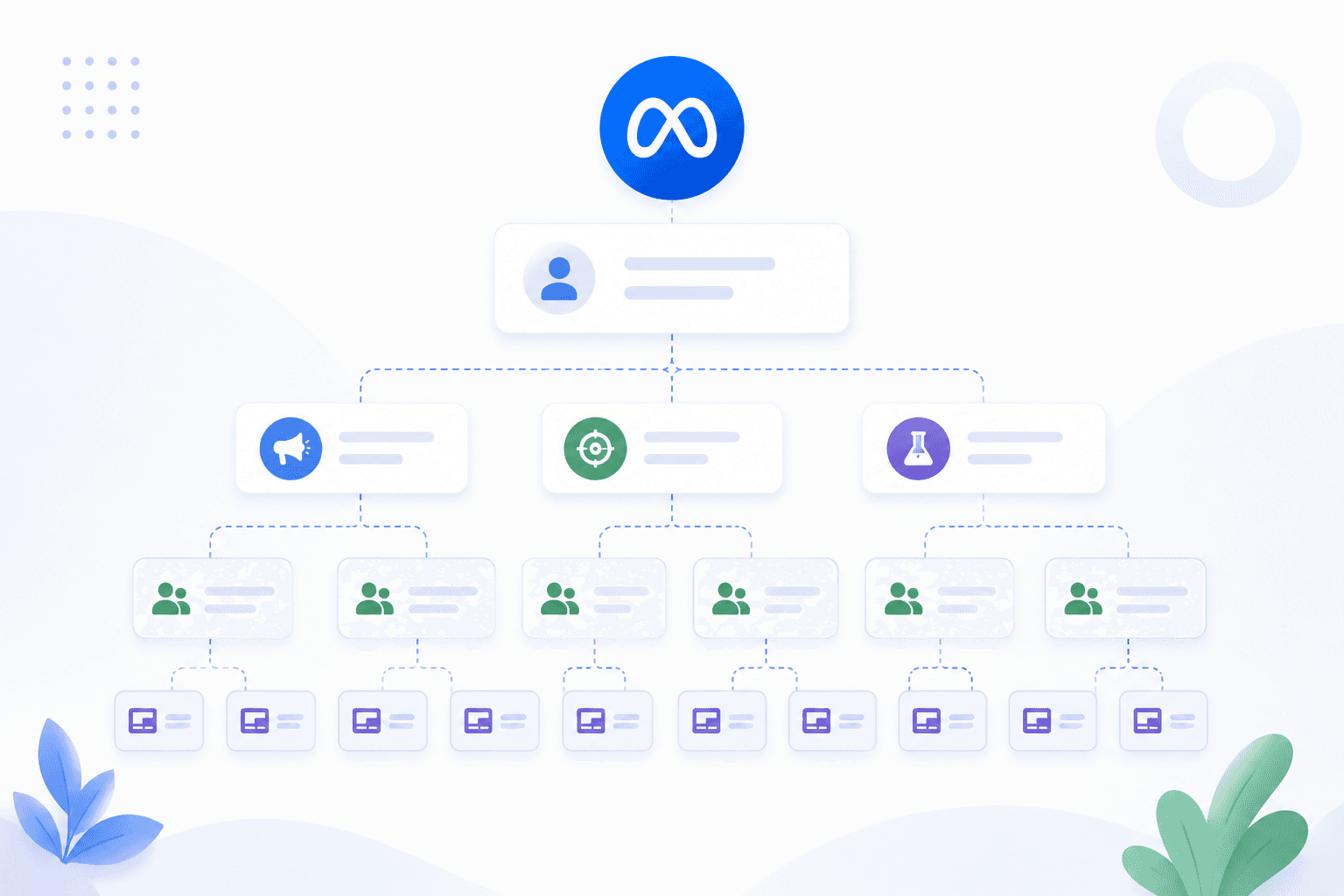
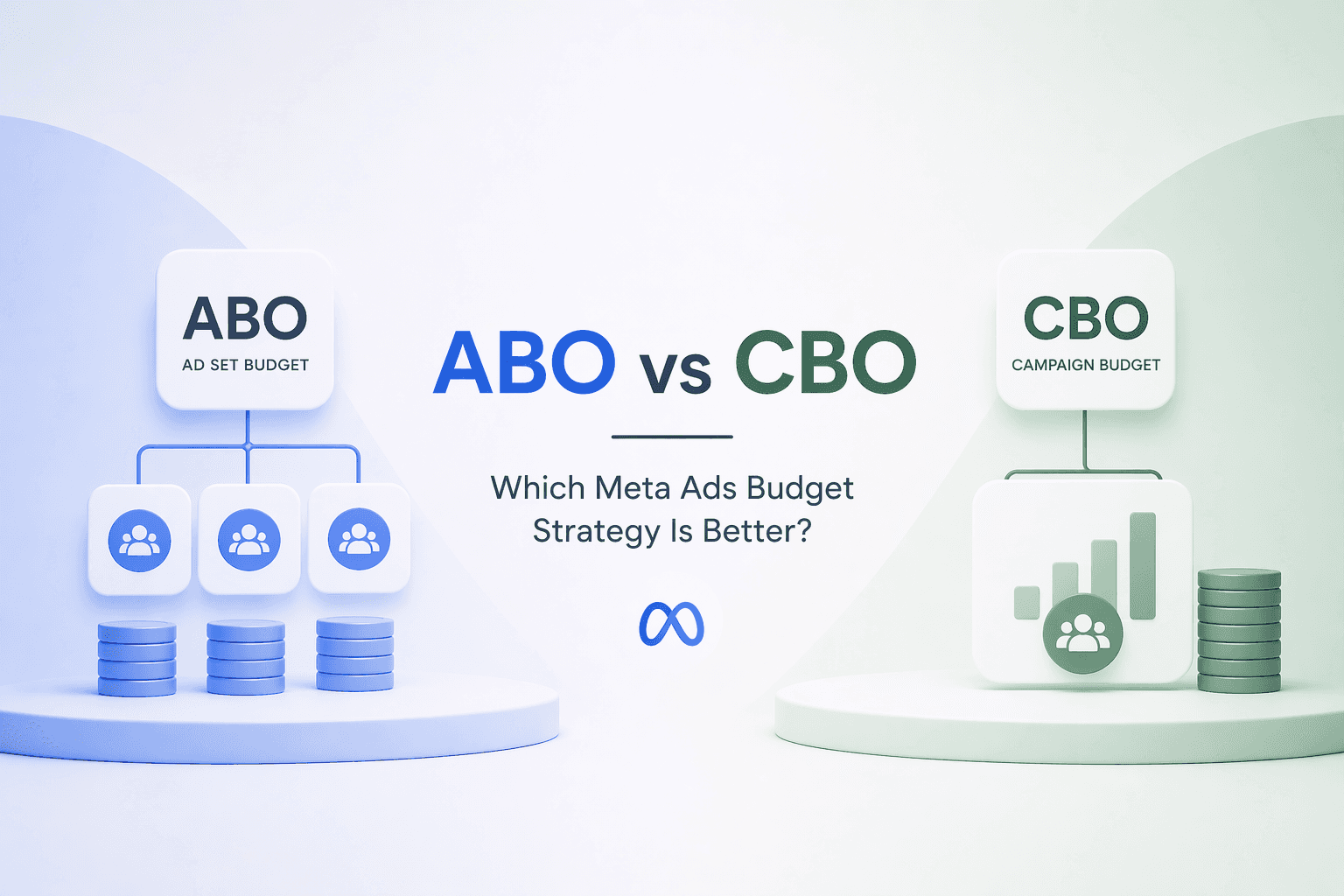
The most effective structure for scaling involves two campaigns: one for testing new creative and audiences, and one for scaling proven winners. Winners graduate from testing to scaling once they've demonstrated consistent performance over 5-7 days.
Campaign Type
Budget Approach
Purpose
Testing
ABO (Ad Set Budget Optimization)
Control spend on unproven concepts
Scaling
CBO (Campaign Budget Optimization)
Let algorithm allocate across proven winners
This separation keeps your testing budget protected from your scaling budget. You're not accidentally spending $500/day on an unproven concept just because the algorithm decided to favor it.
Common Scaling Mistakes That Kill ROAS
Certain patterns consistently lead to scaling failures. Recognizing them early can save significant budget.
Scaling before campaigns stabilize: Campaigns in learning phase or with volatile day-over-day performance aren't ready. Wait for consistency before adding budget.
Increasing budgets too aggressively: Even budget adjustments over 20% can reset the learning phase, so jumps above 30-40% almost guarantee it. Gradual increases win over time.
Ignoring frequency signals: By the time CPA spikes, saturation has already set in. Watch frequency as a leading indicator, not a lagging one.
Letting creative go stale: If you're not refreshing creative, you're not scaling—you're just spending more on declining assets.
Neglecting landing page experience: Scaling sends more traffic to your site. If your landing page converts at 1.5% instead of 3%, you've effectively doubled your CPA regardless of how well your ads perform.
How to Build a Sustainable Scaling System
Scaling Meta ads profitably isn't a one-time project—it's an ongoing system.
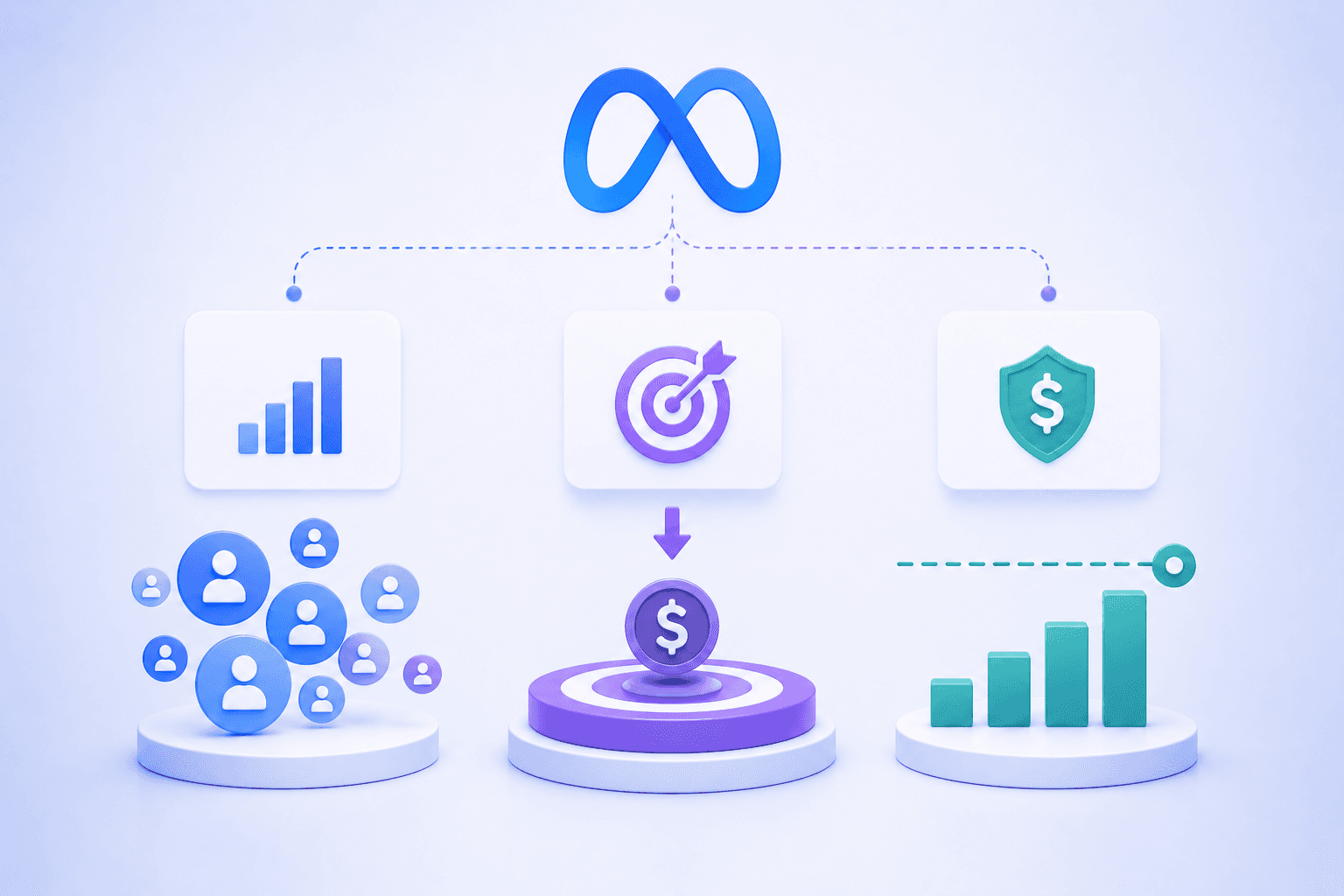
The brands that scale consistently have three pillars working in tandem:
Paid Media Expertise: To manage budgets, bidding, and technical account health.
Creative Strategy: To maintain a fresh pipeline of ad inventory and prevent fatigue.
Landing Page Optimization: To maximize the conversion value of the increased traffic.
A brilliant ad driving traffic to a weak landing page wastes money. A high-converting page with fatigued creative can't get enough traffic. The system works when all three components improve together, not in isolation.
At Flighted, we approach scaling as an interconnected challenge across paid media, creative, and landing pages. If you're spending $20K-$500K+/month on Meta and want to explore what systematic scaling looks like, book a call to talk through your specific situation.
FAQs About Scaling Meta Ads
How long should you wait between budget increases when scaling Meta ads?
Wait 2-3 days between increases of 20-30%. This interval gives the algorithm time to stabilize delivery at the new spend level without triggering a full learning phase reset.
What is the minimum daily budget needed before you can start scaling Facebook ads?
There's no universal minimum—it depends on your CPA. You want enough budget to generate roughly 50 conversions per week per ad set for the algorithm to optimize effectively. If your CPA is $50, that translates to approximately $350/day per ad set.
Should you scale retargeting campaigns at the same rate as prospecting campaigns?
No. Retargeting audiences are smaller and exhaust faster. Scale retargeting more conservatively—often 10-15% increases—and watch frequency closely. Retargeting frequency above 4-5 typically indicates saturation.
How do landing pages impact your ability to scale Meta ads efficiently?
Directly. A landing page converting at 2% versus 4% doubles your effective CPA. As you scale and CPMs rise due to increased competition, landing page conversion rate becomes the lever that determines whether scaling remains profitable.
What should you do if ROAS drops immediately after increasing your Meta ads budget?
Reduce the budget back to its previous level and let performance stabilize for 3-5 days. Then try a smaller increment—15-20% instead of 30%. If ROAS drops again, the issue is likely audience saturation or creative fatigue rather than budget pacing.