How to Calculate CAC for Your DTC Brand (With Formula)

Meta Ads

July 14, 2026

Table Of Contents

No headings found on page

Ask your ad platform what a new customer costs and it will lie to you. Meta reports one number, Shopify reports another, and neither matches what actually hit your bank account. If you are scaling spend on a number that is 30% too low, you are buying customers at a loss and calling it growth.

Customer Acquisition Cost (CAC) is the total sales and marketing spend it takes to acquire one new customer. It is the single metric that governs whether you scale, hold, or pull back. Get it right and you can push budget with confidence. Get it wrong and you burn cash on channels that look profitable in the dashboard and are not.

This guide answers the question directly: how do I calculate CAC for a DTC brand, what costs belong in the number, and which version of CAC to use for each decision. You will get the formula, the cost inputs, DTC benchmarks by category, the metrics CAC gets confused with, and five ways to bring CAC down without slowing growth.

Key Takeaways

  1. The core formula is CAC = Total Sales & Marketing Spend ÷ Number of New Customers Acquired. This is the customer acquisition cost formula every other version builds on.

  2. Include every acquisition cost: paid media spend, creative production and agency fees, marketing tools, sales and marketing salaries, and discounts or referral payouts.

  3. Track blended CAC (all spend ÷ all customers) for business health and paid CAC for channel efficiency. They answer different questions.

  4. Platform-reported CAC undercounts. Triangulate with surveys and incrementality tests before you trust it.

  5. Accurate CAC governs scaling. If your real CAC exceeds your maximum allowable CAC, you scale into losses.

1. What CAC Is for a DTC Brand

CAC is what you pay, all in, to turn a stranger into a first-time buyer. For a direct-to-consumer brand, that means every dollar of paid media plus the costs behind it: the creative that ran, the tools that tracked it, and the people who managed it.

Most founders treat CAC as a channel number pulled from Meta or Google. That is cost per acquisition at the campaign level, not your business-level CAC. The two diverge fast once you add agency fees, salaries, and organic sales that platforms take credit for.

CAC sets the ceiling on profitable spend. Pair it with Average Order Value (AOV), gross margin, and Lifetime Value (LTV) and you know how hard you can push acquisition before unit economics break.

2. The Customer Acquisition Cost Formula

Start with the formula everything else builds on:

CAC = Total Sales & Marketing Spend ÷ Number of New Customers Acquired

Illustrative example: you spend $50,000 across paid media, creative, tools, and salaries in a month and acquire 500 new customers. Your CAC is $100. That is the whole calculation. The difficulty is not the division. It is deciding what goes in the numerator and who counts in the denominator.

Get those two inputs wrong and every downstream decision inherits the error.

3. What Costs to Include in CAC

Your numerator is total sales and marketing spend, not just ad spend. Leave costs out and you will understate CAC and overscale. Include the following:

Paid Media Spend

Every dollar sent to Meta, Google, TikTok, and any other paid channel. This is usually the largest line, but it is not the only one.

Creative Production and Agency Fees

Editors, designers, video production, UGC costs, and any agency or freelancer retainer. Creative is a direct input to acquisition performance, so its cost belongs in CAC.

Marketing Tools and Software

Attribution platforms, email and SMS tools, landing page builders, analytics, and testing software. Prorate annual contracts to the period you are measuring.

Sales and Marketing Salaries

The fully loaded cost of the people running acquisition: media buyers, growth leads, and any in-house creative headcount. For a lean DTC team this can be a meaningful share of CAC.

Discounts, Promos, and Referral Payouts

First-order discount codes, launch promos, and referral incentives are acquisition costs. If a code gets a first-time buyer in the door, count it.

4. Blended vs Paid vs New Customer vs Fully Loaded CAC

There is no single CAC. There are four, and each answers a different question. Blended CAC vs paid CAC is the distinction founders confuse most, so keep the definitions straight.

CAC Type

What It Includes

When to Use It

Blended CAC

All spend ÷ all customers

Overall business health

Paid CAC

Paid spend ÷ paid-attributed customers

Channel efficiency

New Customer CAC

Spend ÷ first-time buyers only

True acquisition cost

Fully Loaded CAC

All costs (salaries, tools, creative)

Unit economics modeling

Use blended CAC to judge whether the whole machine is healthy. Use paid CAC to judge whether a specific channel earns its budget. Use new customer CAC when repeat buyers are inflating your denominator and hiding your real acquisition cost. Use fully loaded CAC when you model unit economics and need the honest all-in number.

5. DTC CAC Benchmarks by Category

Benchmarks are a sanity check, not a target. They vary widely by category, price point, and margin, and they shift with market conditions, so treat the ranges below as directional.

Category

Approximate CAC Range

Overall ecommerce (across categories)

~$68–$84

Beauty / Personal Care

~$55–$65

Fashion / Apparel

~$60–$70

Consumer Electronics

~$70–$80

Household Goods

~$55–$60

Overall ecommerce CAC now runs roughly $68–$84 across categories and has risen about 60% over the past five years as competition and platform costs climbed (Shopify 2025, via Retainful). Category figures for beauty, fashion, electronics, and household goods come from First Page Sage (2026) and LoyaltyLion (2025).

Rule of thumb: keep first-order CAC below a defined share of first-order gross profit, where first-order gross profit is AOV × gross margin. If your AOV is $80 and your gross margin is 60%, first-order gross profit is $48, and a CAC above that means you lose money on the first purchase and must recover it through repeat orders.

6. CAC vs CPA vs CPL vs MER

These four metrics get used interchangeably. They are not the same.

  • CAC (Customer Acquisition Cost): total sales and marketing spend ÷ new customers acquired. A business-level number.

  • CPA (Cost Per Acquisition): the cost of a defined conversion event at the platform or campaign level. This is what Meta reports in its dashboard, and it usually undercounts true CAC.

  • CPL (Cost Per Lead): spend ÷ leads generated. Relevant when your funnel captures leads before purchase; more common in B2B than pure DTC.

  • MER (Marketing Efficiency Ratio): total revenue ÷ total marketing spend. A blended, top-down view of whether your entire marketing engine is efficient, independent of platform attribution.

Use CPA to optimize campaigns. Use CAC to make business decisions. Use MER to cross-check both.

7. Marginal CAC and Maximum Allowable CAC

Your average CAC hides the cost of your next customer. That is marginal CAC: the cost to acquire the next customer, not the average across all of them. It rises as you scale, because you exhaust your most efficient audiences first and pay more to reach the rest.

Before you scale, set a ceiling:

Maximum Allowable CAC = AOV × Gross Margin × Target Contribution Margin %

Illustrative example: AOV of $80, gross margin of 60%, and a target contribution margin of 50% gives a maximum allowable CAC of $24 on the first order. Once marginal CAC crosses your maximum allowable CAC, the next dollar of spend loses money even when blended CAC still looks fine.

Watch marginal CAC, not just the average. The average tells you where you have been. The marginal number tells you whether the next budget increase is worth making.

8. CAC Payback Period

CAC payback period is how long it takes a customer to repay their acquisition cost.

CAC Payback Period = CAC ÷ (AOV × Gross Margin)

Illustrative example: a $100 CAC against an $80 AOV and 60% gross margin returns $48 gross profit per order, so payback takes about 2.1 orders. If a customer orders monthly, that is roughly two months.

A short payback window frees cash to reinvest quickly. A long one ties up working capital: you front the acquisition cost today and wait months to recover it. For a DTC brand funding growth from cash flow, payback period is a survival metric. The longer your payback, the more capital you need on hand to keep scaling.

9. CAC by Channel and Attribution Challenges

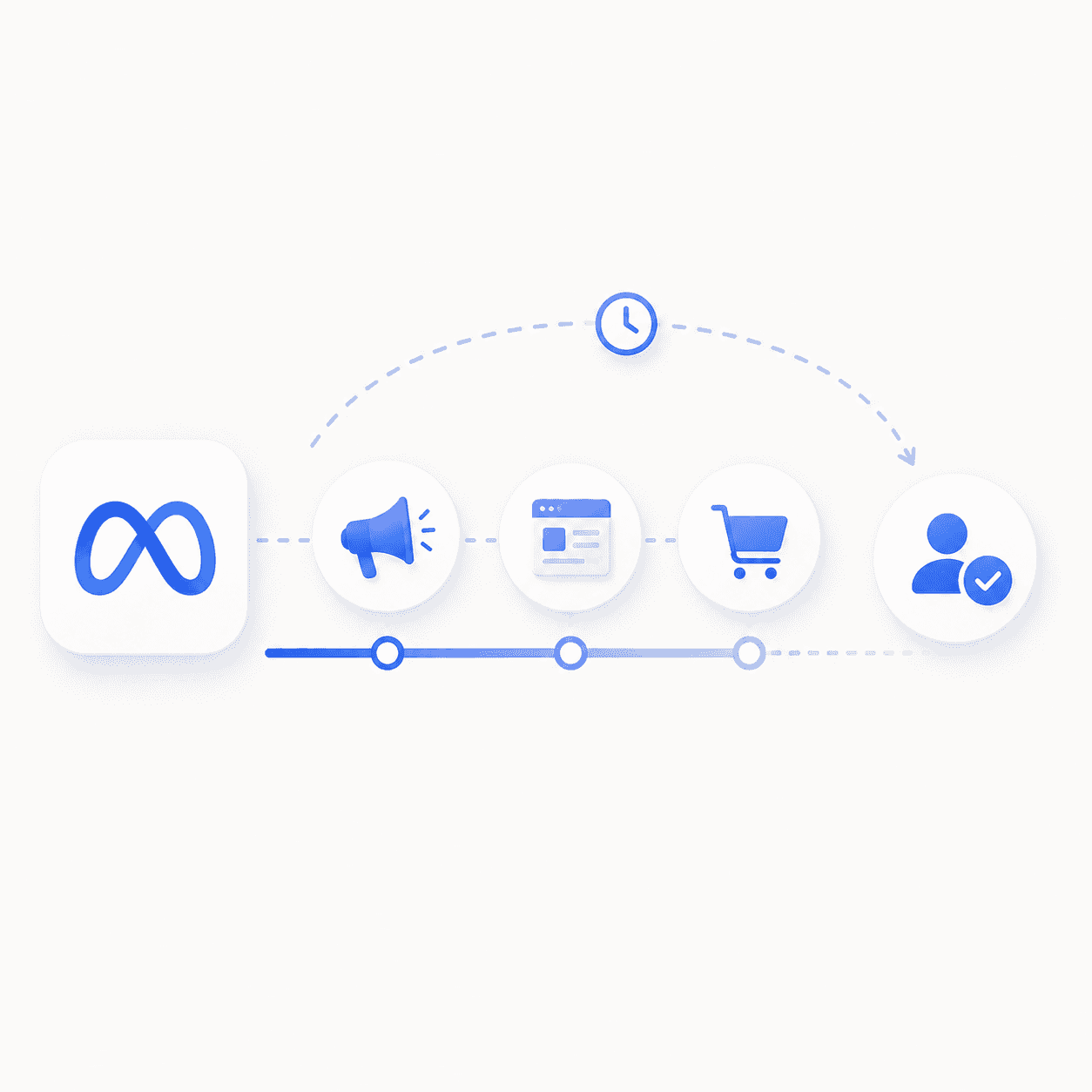
Calculating CAC by channel is where the numbers stop agreeing. Meta, Google, and TikTok each claim credit for the same customer because their attribution windows overlap. Add up platform-reported conversions and you will find you "acquired" more customers than you actually did.

Do not take platform CAC at face value. Triangulate:

  • Post-purchase surveys: ask new customers how they heard about you. Self-reported attribution is imperfect but catches what pixels miss.

  • Holdout and incrementality tests: withhold spend from a segment and measure the lift. This isolates the customers a channel actually caused versus the ones it took credit for.

  • Blended analysis: compare total new customers against total spend and check it against MER. If blended math and platform math disagree, believe the blended math.

This is not theoretical. It is the single biggest reason founders scale into unprofitable spend.

Ask your ad platform what a new customer costs and it will lie to you. Meta reports one number, Shopify reports another, and neither matches what actually hit your bank account. If you are scaling spend on a number that is 30% too low, you are buying customers at a loss and calling it growth.

Customer Acquisition Cost (CAC) is the total sales and marketing spend it takes to acquire one new customer. It is the single metric that governs whether you scale, hold, or pull back. Get it right and you can push budget with confidence. Get it wrong and you burn cash on channels that look profitable in the dashboard and are not.

This guide answers the question directly: how do I calculate CAC for a DTC brand, what costs belong in the number, and which version of CAC to use for each decision. You will get the formula, the cost inputs, DTC benchmarks by category, the metrics CAC gets confused with, and five ways to bring CAC down without slowing growth.

Key Takeaways

  1. The core formula is CAC = Total Sales & Marketing Spend ÷ Number of New Customers Acquired. This is the customer acquisition cost formula every other version builds on.

  2. Include every acquisition cost: paid media spend, creative production and agency fees, marketing tools, sales and marketing salaries, and discounts or referral payouts.

  3. Track blended CAC (all spend ÷ all customers) for business health and paid CAC for channel efficiency. They answer different questions.

  4. Platform-reported CAC undercounts. Triangulate with surveys and incrementality tests before you trust it.

  5. Accurate CAC governs scaling. If your real CAC exceeds your maximum allowable CAC, you scale into losses.

1. What CAC Is for a DTC Brand

CAC is what you pay, all in, to turn a stranger into a first-time buyer. For a direct-to-consumer brand, that means every dollar of paid media plus the costs behind it: the creative that ran, the tools that tracked it, and the people who managed it.

Most founders treat CAC as a channel number pulled from Meta or Google. That is cost per acquisition at the campaign level, not your business-level CAC. The two diverge fast once you add agency fees, salaries, and organic sales that platforms take credit for.

CAC sets the ceiling on profitable spend. Pair it with Average Order Value (AOV), gross margin, and Lifetime Value (LTV) and you know how hard you can push acquisition before unit economics break.

2. The Customer Acquisition Cost Formula

Start with the formula everything else builds on:

CAC = Total Sales & Marketing Spend ÷ Number of New Customers Acquired

Illustrative example: you spend $50,000 across paid media, creative, tools, and salaries in a month and acquire 500 new customers. Your CAC is $100. That is the whole calculation. The difficulty is not the division. It is deciding what goes in the numerator and who counts in the denominator.

Get those two inputs wrong and every downstream decision inherits the error.

3. What Costs to Include in CAC

Your numerator is total sales and marketing spend, not just ad spend. Leave costs out and you will understate CAC and overscale. Include the following:

Paid Media Spend

Every dollar sent to Meta, Google, TikTok, and any other paid channel. This is usually the largest line, but it is not the only one.

Creative Production and Agency Fees

Editors, designers, video production, UGC costs, and any agency or freelancer retainer. Creative is a direct input to acquisition performance, so its cost belongs in CAC.

Marketing Tools and Software

Attribution platforms, email and SMS tools, landing page builders, analytics, and testing software. Prorate annual contracts to the period you are measuring.

Sales and Marketing Salaries

The fully loaded cost of the people running acquisition: media buyers, growth leads, and any in-house creative headcount. For a lean DTC team this can be a meaningful share of CAC.

Discounts, Promos, and Referral Payouts

First-order discount codes, launch promos, and referral incentives are acquisition costs. If a code gets a first-time buyer in the door, count it.

4. Blended vs Paid vs New Customer vs Fully Loaded CAC

There is no single CAC. There are four, and each answers a different question. Blended CAC vs paid CAC is the distinction founders confuse most, so keep the definitions straight.

CAC Type

What It Includes

When to Use It

Blended CAC

All spend ÷ all customers

Overall business health

Paid CAC

Paid spend ÷ paid-attributed customers

Channel efficiency

New Customer CAC

Spend ÷ first-time buyers only

True acquisition cost

Fully Loaded CAC

All costs (salaries, tools, creative)

Unit economics modeling

Use blended CAC to judge whether the whole machine is healthy. Use paid CAC to judge whether a specific channel earns its budget. Use new customer CAC when repeat buyers are inflating your denominator and hiding your real acquisition cost. Use fully loaded CAC when you model unit economics and need the honest all-in number.

5. DTC CAC Benchmarks by Category

Benchmarks are a sanity check, not a target. They vary widely by category, price point, and margin, and they shift with market conditions, so treat the ranges below as directional.

Category

Approximate CAC Range

Overall ecommerce (across categories)

~$68–$84

Beauty / Personal Care

~$55–$65

Fashion / Apparel

~$60–$70

Consumer Electronics

~$70–$80

Household Goods

~$55–$60

Overall ecommerce CAC now runs roughly $68–$84 across categories and has risen about 60% over the past five years as competition and platform costs climbed (Shopify 2025, via Retainful). Category figures for beauty, fashion, electronics, and household goods come from First Page Sage (2026) and LoyaltyLion (2025).

Rule of thumb: keep first-order CAC below a defined share of first-order gross profit, where first-order gross profit is AOV × gross margin. If your AOV is $80 and your gross margin is 60%, first-order gross profit is $48, and a CAC above that means you lose money on the first purchase and must recover it through repeat orders.

6. CAC vs CPA vs CPL vs MER

These four metrics get used interchangeably. They are not the same.

  • CAC (Customer Acquisition Cost): total sales and marketing spend ÷ new customers acquired. A business-level number.

  • CPA (Cost Per Acquisition): the cost of a defined conversion event at the platform or campaign level. This is what Meta reports in its dashboard, and it usually undercounts true CAC.

  • CPL (Cost Per Lead): spend ÷ leads generated. Relevant when your funnel captures leads before purchase; more common in B2B than pure DTC.

  • MER (Marketing Efficiency Ratio): total revenue ÷ total marketing spend. A blended, top-down view of whether your entire marketing engine is efficient, independent of platform attribution.

Use CPA to optimize campaigns. Use CAC to make business decisions. Use MER to cross-check both.

7. Marginal CAC and Maximum Allowable CAC

Your average CAC hides the cost of your next customer. That is marginal CAC: the cost to acquire the next customer, not the average across all of them. It rises as you scale, because you exhaust your most efficient audiences first and pay more to reach the rest.

Before you scale, set a ceiling:

Maximum Allowable CAC = AOV × Gross Margin × Target Contribution Margin %

Illustrative example: AOV of $80, gross margin of 60%, and a target contribution margin of 50% gives a maximum allowable CAC of $24 on the first order. Once marginal CAC crosses your maximum allowable CAC, the next dollar of spend loses money even when blended CAC still looks fine.

Watch marginal CAC, not just the average. The average tells you where you have been. The marginal number tells you whether the next budget increase is worth making.

8. CAC Payback Period

CAC payback period is how long it takes a customer to repay their acquisition cost.

CAC Payback Period = CAC ÷ (AOV × Gross Margin)

Illustrative example: a $100 CAC against an $80 AOV and 60% gross margin returns $48 gross profit per order, so payback takes about 2.1 orders. If a customer orders monthly, that is roughly two months.

A short payback window frees cash to reinvest quickly. A long one ties up working capital: you front the acquisition cost today and wait months to recover it. For a DTC brand funding growth from cash flow, payback period is a survival metric. The longer your payback, the more capital you need on hand to keep scaling.

9. CAC by Channel and Attribution Challenges

Calculating CAC by channel is where the numbers stop agreeing. Meta, Google, and TikTok each claim credit for the same customer because their attribution windows overlap. Add up platform-reported conversions and you will find you "acquired" more customers than you actually did.

Do not take platform CAC at face value. Triangulate:

  • Post-purchase surveys: ask new customers how they heard about you. Self-reported attribution is imperfect but catches what pixels miss.

  • Holdout and incrementality tests: withhold spend from a segment and measure the lift. This isolates the customers a channel actually caused versus the ones it took credit for.

  • Blended analysis: compare total new customers against total spend and check it against MER. If blended math and platform math disagree, believe the blended math.

This is not theoretical. It is the single biggest reason founders scale into unprofitable spend.

Looking for Meta ads support?

We're a small, hardworking, US-based team. Book a call and get a free audit today.

10. How Subscription and Repeat Purchase Change CAC

If customers subscribe or reorder, a first-order CAC that looks high can still be healthy. Repeat purchases spread the acquisition cost across multiple orders, so the CAC per order falls even though the CAC per customer is fixed.

A strong LTV justifies a higher first-order CAC. A subscription brand can rationally pay more to acquire a customer than a one-and-done brand can, because it recovers that cost over the customer's lifetime rather than on the first purchase.

11. LTV to CAC Ratio

Lifetime Value (LTV) is the total gross profit a customer generates over their relationship with your brand. The LTV to CAC ratio measures whether what you earn from a customer justifies what you paid to acquire them.

  • Around 3:1 (healthy): a common heuristic that you earn roughly three dollars of lifetime value for every dollar of CAC. Treat it as a heuristic, not a law. The right ratio depends on margins and payback period.

  • Below 3:1 (low): you are acquiring customers you barely profit from, or CAC is too high. Fix margins, retention, or acquisition efficiency before scaling.

  • Above 5:1 (very high): often a signal you are underinvesting in growth. You could likely spend more to acquire customers and stay profitable.

12. Common Mistakes When Calculating CAC

1. Using Platform-Reported CAC as Truth

Meta's reported CPA is not your CAC. Treating it as truth is the fastest way to scale into losses.

2. Excluding Creative and Agency Costs

Leaving creative production and agency fees out of the numerator understates CAC and makes channels look more efficient than they are.

3. Counting Organic Customers as Paid

If a paid channel takes credit for customers who would have bought anyway, your paid CAC looks artificially strong. Separate organic from paid.

4. Ignoring Marginal CAC at Scale

Optimizing to an average CAC while marginal CAC climbs means each new dollar is less profitable than the last, and you will not see it in the blended number until it is a problem.

5. Optimizing Only for Blended CAC

Blended CAC can look fine while a specific channel bleeds money. Watch channel-level and marginal CAC alongside the blended figure.

Ready to find your real CAC and act on it? Flighted builds the measurement and the media strategy together so you scale on numbers you trust. Book a call.

13. How to Reduce CAC Without Slowing Growth

Lower CAC is not about cutting spend. It is about making each dollar acquire more customers. These five levers pull on Flighted's three interdependent pillars: Paid Media Expertise, Creative Strategy, and Landing Page Optimization.

1. Refresh Creative on a Fixed Cadence

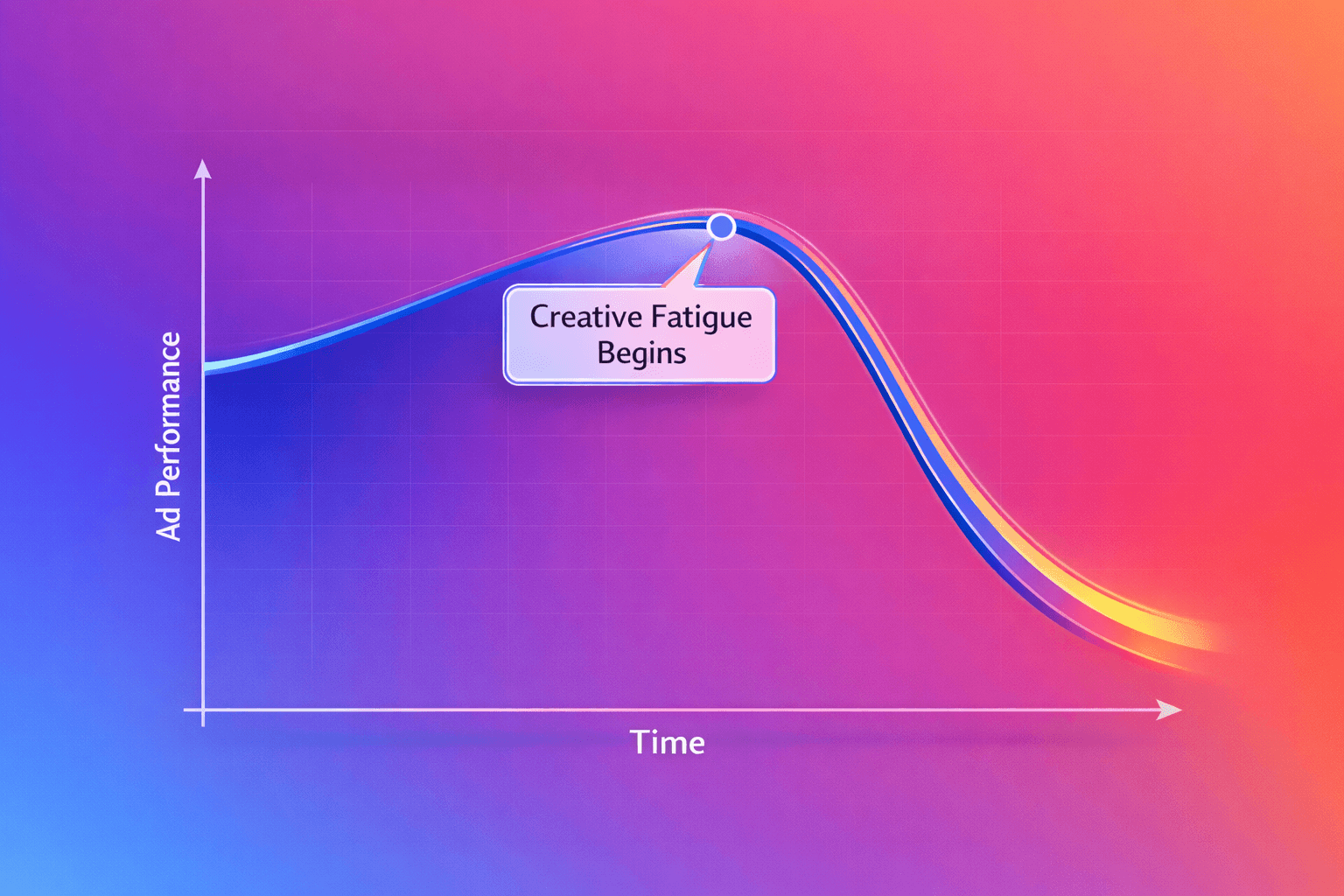
Creative fatigue is the top driver of rising CAC on Meta. When the same ads run too long, CTR (Click-Through Rate) falls and costs climb. Ship new concepts on a fixed cadence instead of waiting for performance to drop. This is the Creative Strategy pillar in practice: messaging testing and a steady flow of new converting creative tied to your value propositions.

2. Improve Landing Page Conversion Rate

Every point of conversion rate you add lowers CAC without touching ad spend. A mobile-first, data-backed page that converts more of the traffic you already pay for is the Landing Page Optimization pillar, and it compounds with everything upstream.

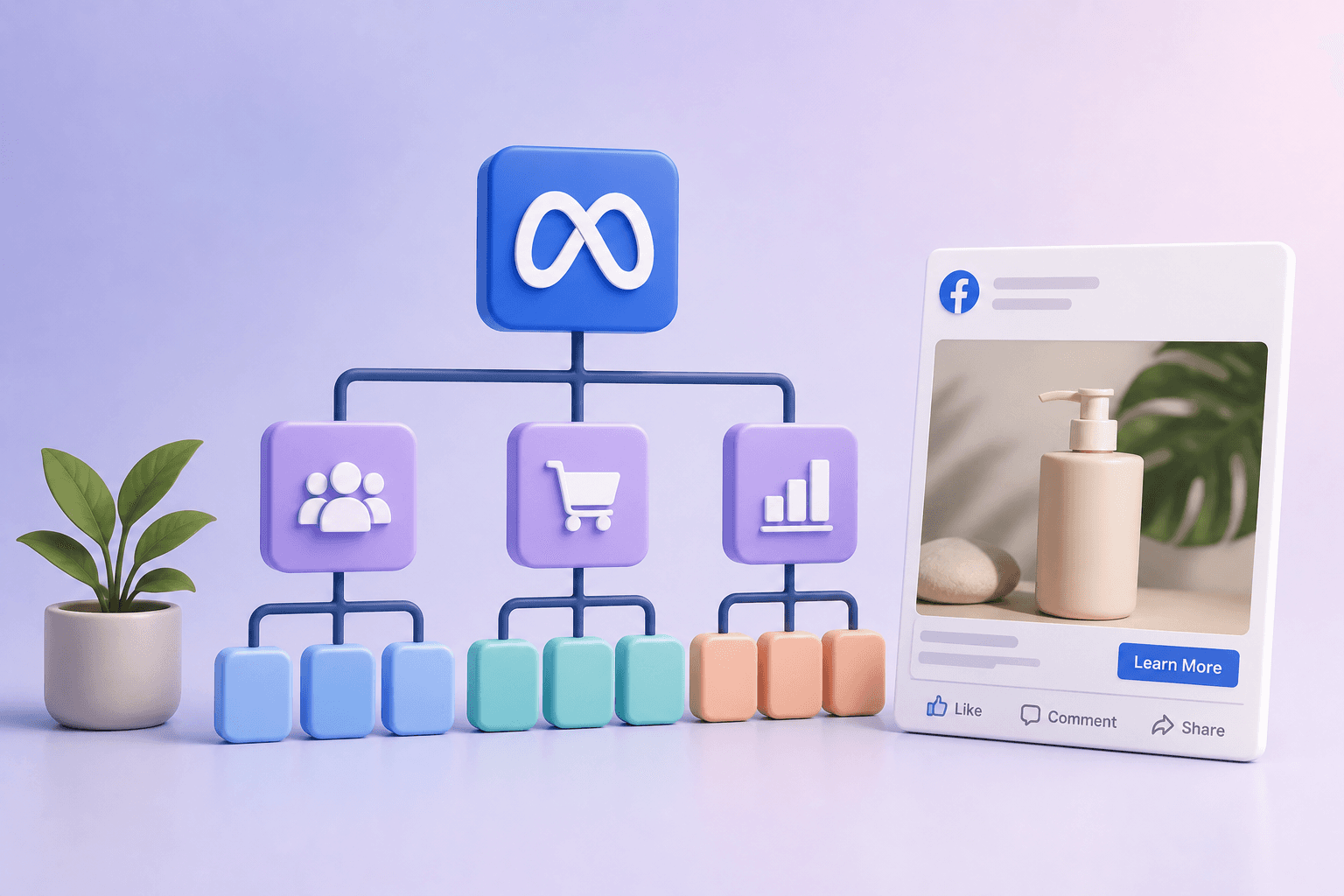
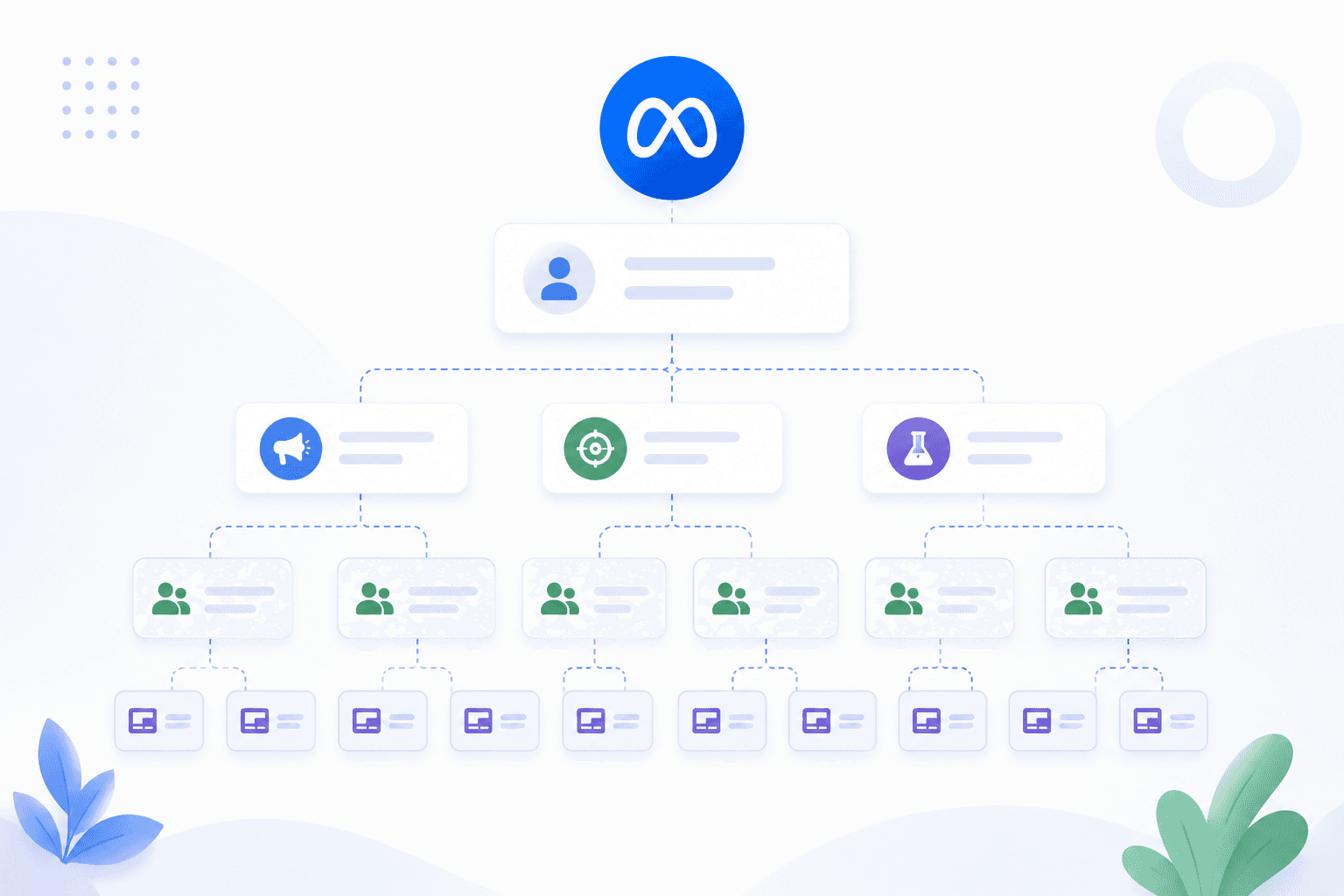
3. Consolidate Your Meta Ads Campaign Structure

Meta Ads management is the most prominent sub-field of Paid Media Expertise, and structure drives efficiency. Fewer campaigns give Meta's algorithm more concentrated conversion signal to optimize against. Brands often see performance improve once an ad set clears roughly 100–200 conversions per month, so consolidate rather than fragmenting budget across too many campaigns.

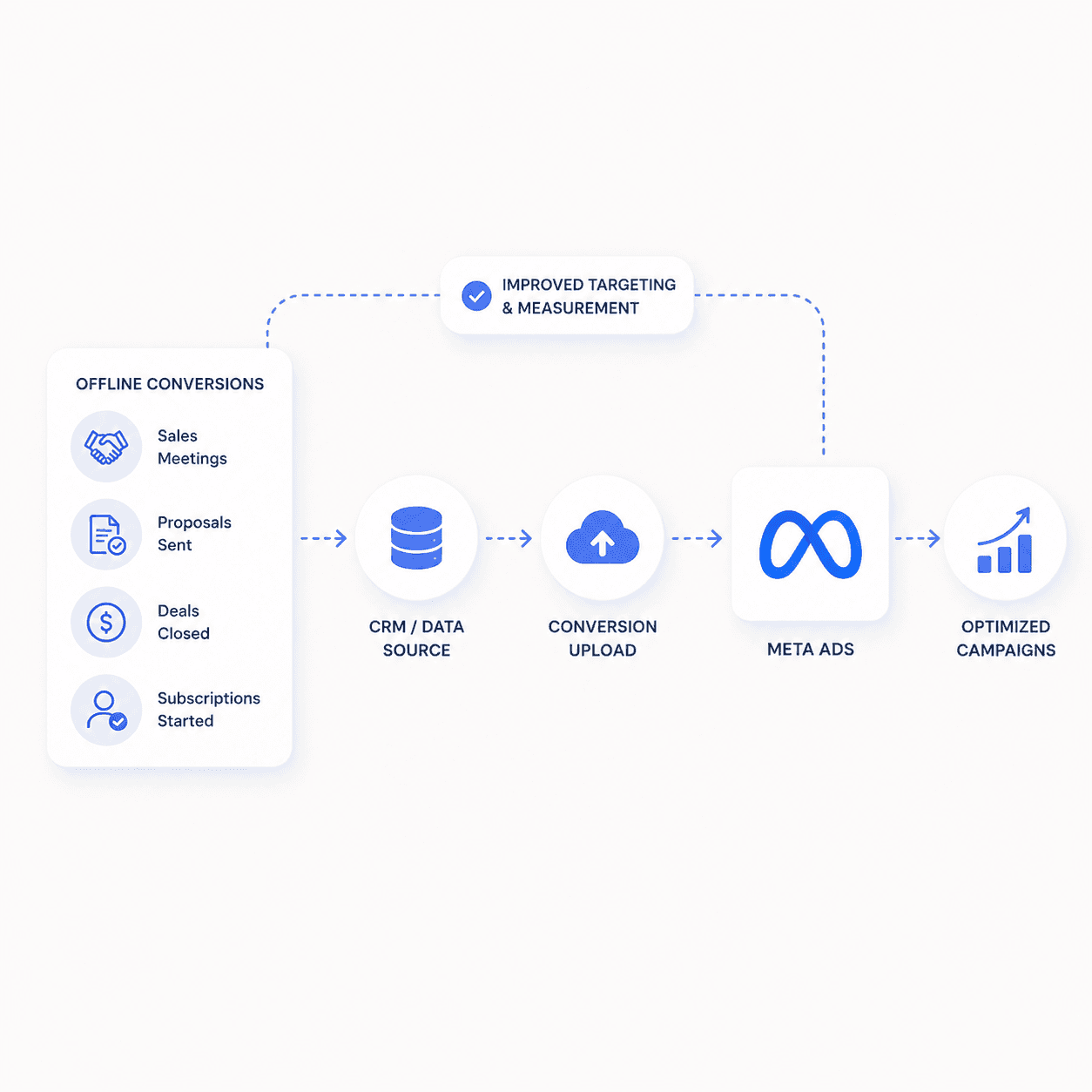
4. Build First-Party Audiences From CRM Data

Upload your customer and email lists to build lookalikes and suppression audiences from real buyers. First-party data sharpens targeting and cuts wasted spend as platform signal degrades.

5. Kill Underperforming Channels Instead of Adding New Ones

When CAC rises, the instinct is to add a channel. Do the opposite. Cut the channels that miss your maximum allowable CAC and concentrate budget where efficiency holds. Adding channels dilutes focus and usually raises blended CAC.

Conclusion

Your CAC is only as good as the inputs behind it. Use the core formula, put every acquisition cost in the numerator, and count only genuine new customers in the denominator. Track blended CAC for business health and paid CAC for channel efficiency, and never trust platform-reported numbers without triangulating against surveys and incrementality tests.

Then act on it. Set a maximum allowable CAC before you scale, watch marginal CAC as you push budget, and check payback period against your working capital. Benchmarks give you a directional sanity check, but your own margins and LTV set the real ceiling. Calculate CAC accurately and it stops being a report you read after the fact and becomes the lever you use to scale.

Frequently Asked Questions About Calculating CAC for DTC Brands

How Do I Calculate CAC When Meta and Shopify Attribution Numbers Don't Match?

Use blended math as your source of truth: total sales and marketing spend ÷ total new customers for the period. Then triangulate platform numbers with post-purchase surveys and incrementality tests rather than trusting either dashboard alone.

Should I Include Organic Customers in My CAC Calculation?

For paid CAC, no: count only paid-attributed customers so you measure channel efficiency accurately. For blended CAC, all customers are included by design, which is why you track both numbers separately.

How Often Should I Recalculate CAC for a DTC Brand?

Monthly at minimum, and weekly while you are actively scaling spend. CAC moves with creative fatigue, competition, and seasonality, so a number from last quarter will mislead you on today's decisions.

Does Creative Production Cost Count Toward CAC?

Yes. Creative production, editing, UGC, and agency fees are direct acquisition inputs and belong in your numerator. Excluding them understates CAC and makes channels look more efficient than they are.

What Is the Fastest Way to Lower CAC on Meta Ads?

Refresh creative before it fatigues and consolidate your campaign structure so Meta's algorithm gets more concentrated conversion signal. Both move CAC faster than chasing a new channel.

Related Posts

Related Posts

Related Posts

Related Posts

Ready to talk?

Book A Call

We are a Paid Media agency based in New York, NY.
Flighted

New York, NY 11217

hello@flighted.co

© Flighted, 2026

Ready to talk?

Book A Call

We are a Paid Media agency based in New York, NY.

Flighted

New York, NY 11217

hello@flighted.co

© Flighted, 2026