What is Incrementality Testing? The Fundamentals Explained
Meta Ads
April 13, 2026
Table Of Contents
No headings found on page
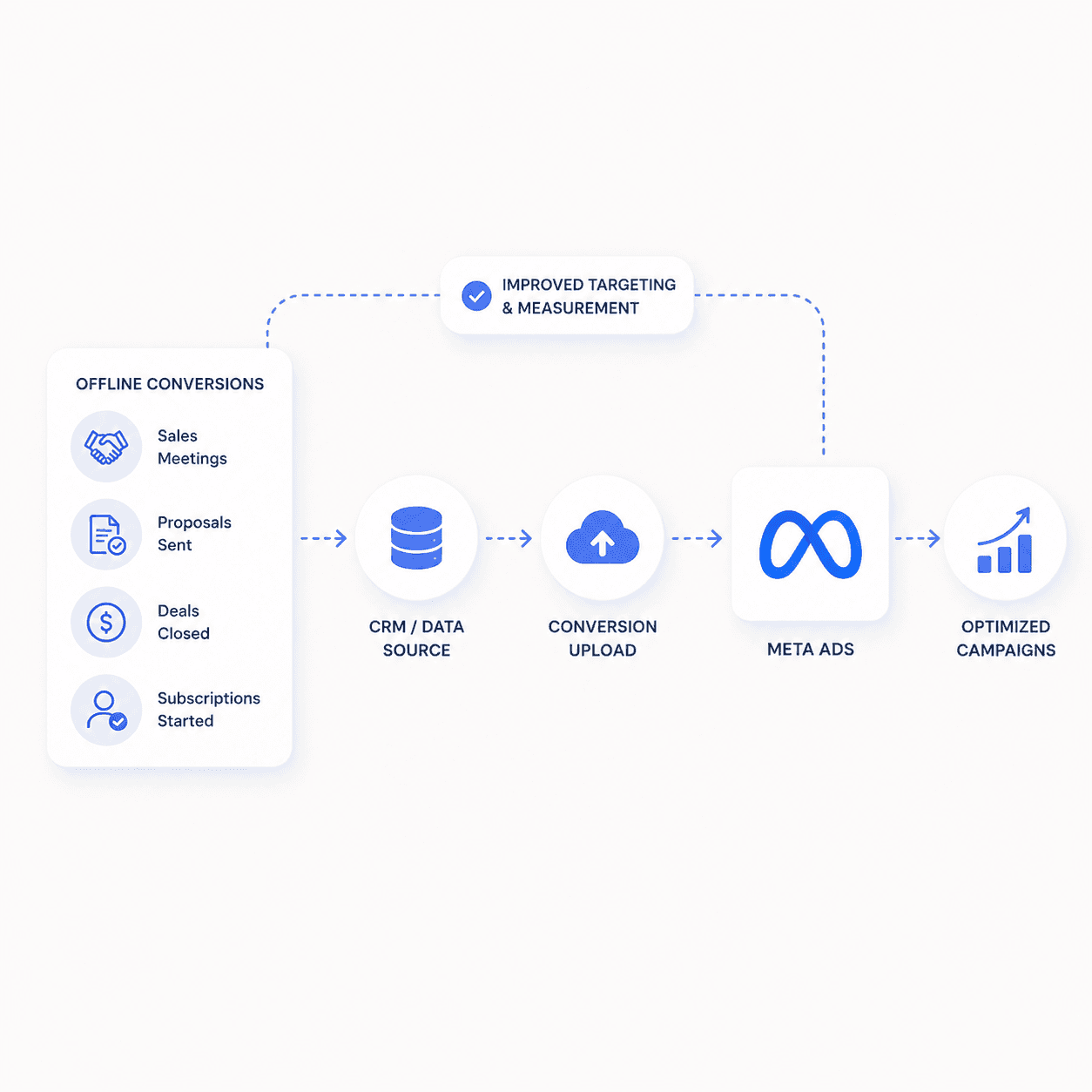
Incrementality testing is a controlled experiment that measures whether your ads actually cause conversions—or just take credit for sales that would have happened anyway. It works by comparing a test group exposed to your ads against a control group that sees nothing, revealing the true lift your marketing generates.
Most platform-reported metrics cannot answer this question. They tell you what happened after someone saw an ad, not whether the ad made the difference. This guide covers how incrementality testing works, when to invest in it, how to calculate and run experiments, and what to do with the results.
Key Takeaways
Incrementality testing is a controlled experiment that compares a test group (exposed to ads) against a control group (not exposed) to measure the true causal impact of marketing.
The core question incrementality answers: "How many conversions would have happened anyway without the ad?"
Geo holdout experiments, audience segment testing, and time-series on/off testing are the three primary methods, each suited to different budgets and channels.
The formula is simple: (Test Conversions - Control Conversions) / Control Conversions = Incremental Lift.
Incrementality data tells you where to cut wasted spend and where to scale profitably.
What is Incrementality Testing
Incrementality testing is a randomized experiment that measures the causal impact of marketing. You split your audience into two groups: a test group that sees your ads and a control group that sees nothing. The difference in conversions between the two groups reveals your incremental lift, which represents the conversions that would not have happened without the ad.
Why does this matter? Platform-reported metrics often take credit for conversions that were going to happen regardless. Think about someone searching for your brand name, clicking a branded search ad, and converting. That person was already looking for you. The ad did not create the demand; it just captured it.
Incrementality testing isolates the real effect. Here are the key terms:
Control group (holdout): The audience segment that does not see your ads during the test period.
Test group (treatment group): The audience segment exposed to your ads.
Incremental conversions: The additional conversions your ads generated beyond what the control group produced organically.
Why Incrementality Testing Matters in Marketing
Eliminating Wasted Ad Spend
Retargeting and branded search campaigns are common culprits for over-attribution. Both reach people already in the purchase journey, so the ad gets credit for a sale that was happening regardless. Incrementality testing reveals which campaigns drive real results versus which ones simply claim organic conversions.
Building Credibility With Finance and Leadership
CFOs and executives often distrust platform metrics, and for good reason. With marketing budgets flat at 7.7% of revenue according to Gartner's 2025 CMO Spend Survey, incrementality analysis provides experiment-based proof of marketing ROI. That carries more weight in budget conversations than self-reported platform data ever will.
Future-Proofing Measurement Against Privacy Changes
Unlike multi-touch attribution, incrementality experiments do not rely on cookies or user-level tracking. As privacy regulations tighten and third-party data becomes less reliable, incrementality testing remains durable.
Improving Budget Forecasting Accuracy
When you know the true incremental value of a campaign, you can predict what happens when you scale spend up or down. Without incrementality data, forecasting is guesswork.
When to Invest in Incrementality Testing
Not every brand is ready for incrementality testing. Here are the signals that indicate you are:
You are spending $100K or more per month on paid media. Below this threshold, statistical noise often outweighs the insights you can extract.
You are running ads on multiple channels. Cross-channel attribution problems make incrementality testing more valuable since each platform claims credit for the same conversion.
You have hit a growth plateau. If scaling spend no longer produces proportional results, incrementality testing can diagnose which campaigns are actually working.
Platform metrics do not match business results. When your platform ROAS (Return on Ad Spend) looks strong but your MER (Marketing Efficiency Ratio, which is total revenue divided by total marketing spend) tells a different story, incrementality testing can explain the gap.
Types of Incrementality Experiments
The right method depends on your channel, budget, and business model. Here is how the three primary approaches compare:
Method
How It Works
Best For
Watch-Outs
Geo Holdout Experiments
Withhold ads from specific regions and compare conversion rates
Measuring channel-level incrementality
Requires enough regional volume for statistical significance
Audience Segment Testing
Split audiences into exposed and unexposed groups within a platform
Retargeting and prospecting campaigns on Meta or Google
Platform-dependent; limited to single-channel measurement
Time-Series On/Off Testing
Turn campaigns on and off over time periods and measure the difference
Quick directional reads on campaign impact
External factors like seasonality and promotions can skew results
Geo Holdout Experiments
Geo holdouts are the most common method for measuring incremental lift. You select comparable geographic regions, withhold ads from some, and compare conversion rates. The key is ensuring your control and test regions are similar in baseline behavior before the test begins.
Audience Segment Testing
Platforms like Meta offer built-in tools for audience segment testing. Meta's Conversion Lift tool, for example, randomly splits your audience and measures the difference between exposed and unexposed groups. This works well for single-channel measurement but does not capture cross-channel effects.
Time-Series On/Off Testing
Turning campaigns on and off over alternating time periods can provide directional insights. However, external factors like seasonality, competitor activity, and promotions can contaminate results. Use this method cautiously and interpret results with those limitations in mind.
Incrementality testing is a controlled experiment that measures whether your ads actually cause conversions—or just take credit for sales that would have happened anyway. It works by comparing a test group exposed to your ads against a control group that sees nothing, revealing the true lift your marketing generates.
Most platform-reported metrics cannot answer this question. They tell you what happened after someone saw an ad, not whether the ad made the difference. This guide covers how incrementality testing works, when to invest in it, how to calculate and run experiments, and what to do with the results.
Key Takeaways
Incrementality testing is a controlled experiment that compares a test group (exposed to ads) against a control group (not exposed) to measure the true causal impact of marketing.
The core question incrementality answers: "How many conversions would have happened anyway without the ad?"
Geo holdout experiments, audience segment testing, and time-series on/off testing are the three primary methods, each suited to different budgets and channels.
The formula is simple: (Test Conversions - Control Conversions) / Control Conversions = Incremental Lift.
Incrementality data tells you where to cut wasted spend and where to scale profitably.
What is Incrementality Testing
Incrementality testing is a randomized experiment that measures the causal impact of marketing. You split your audience into two groups: a test group that sees your ads and a control group that sees nothing. The difference in conversions between the two groups reveals your incremental lift, which represents the conversions that would not have happened without the ad.
Why does this matter? Platform-reported metrics often take credit for conversions that were going to happen regardless. Think about someone searching for your brand name, clicking a branded search ad, and converting. That person was already looking for you. The ad did not create the demand; it just captured it.
Incrementality testing isolates the real effect. Here are the key terms:
Control group (holdout): The audience segment that does not see your ads during the test period.
Test group (treatment group): The audience segment exposed to your ads.
Incremental conversions: The additional conversions your ads generated beyond what the control group produced organically.
Why Incrementality Testing Matters in Marketing
Eliminating Wasted Ad Spend
Retargeting and branded search campaigns are common culprits for over-attribution. Both reach people already in the purchase journey, so the ad gets credit for a sale that was happening regardless. Incrementality testing reveals which campaigns drive real results versus which ones simply claim organic conversions.
Building Credibility With Finance and Leadership
CFOs and executives often distrust platform metrics, and for good reason. With marketing budgets flat at 7.7% of revenue according to Gartner's 2025 CMO Spend Survey, incrementality analysis provides experiment-based proof of marketing ROI. That carries more weight in budget conversations than self-reported platform data ever will.
Future-Proofing Measurement Against Privacy Changes
Unlike multi-touch attribution, incrementality experiments do not rely on cookies or user-level tracking. As privacy regulations tighten and third-party data becomes less reliable, incrementality testing remains durable.
Improving Budget Forecasting Accuracy
When you know the true incremental value of a campaign, you can predict what happens when you scale spend up or down. Without incrementality data, forecasting is guesswork.
When to Invest in Incrementality Testing
Not every brand is ready for incrementality testing. Here are the signals that indicate you are:
You are spending $100K or more per month on paid media. Below this threshold, statistical noise often outweighs the insights you can extract.
You are running ads on multiple channels. Cross-channel attribution problems make incrementality testing more valuable since each platform claims credit for the same conversion.
You have hit a growth plateau. If scaling spend no longer produces proportional results, incrementality testing can diagnose which campaigns are actually working.
Platform metrics do not match business results. When your platform ROAS (Return on Ad Spend) looks strong but your MER (Marketing Efficiency Ratio, which is total revenue divided by total marketing spend) tells a different story, incrementality testing can explain the gap.
Types of Incrementality Experiments
The right method depends on your channel, budget, and business model. Here is how the three primary approaches compare:
Method
How It Works
Best For
Watch-Outs
Geo Holdout Experiments
Withhold ads from specific regions and compare conversion rates
Measuring channel-level incrementality
Requires enough regional volume for statistical significance
Audience Segment Testing
Split audiences into exposed and unexposed groups within a platform
Retargeting and prospecting campaigns on Meta or Google
Platform-dependent; limited to single-channel measurement
Time-Series On/Off Testing
Turn campaigns on and off over time periods and measure the difference
Quick directional reads on campaign impact
External factors like seasonality and promotions can skew results
Geo Holdout Experiments
Geo holdouts are the most common method for measuring incremental lift. You select comparable geographic regions, withhold ads from some, and compare conversion rates. The key is ensuring your control and test regions are similar in baseline behavior before the test begins.
Audience Segment Testing
Platforms like Meta offer built-in tools for audience segment testing. Meta's Conversion Lift tool, for example, randomly splits your audience and measures the difference between exposed and unexposed groups. This works well for single-channel measurement but does not capture cross-channel effects.
Time-Series On/Off Testing
Turning campaigns on and off over alternating time periods can provide directional insights. However, external factors like seasonality, competitor activity, and promotions can contaminate results. Use this method cautiously and interpret results with those limitations in mind.
How to Calculate Incrementality
The Incremental Lift Formula
The core calculation is straightforward:
(Test Conversions - Control Conversions) / Control Conversions = Incremental Lift
A positive result means your ads drove additional conversions. Zero means no incremental impact. A negative result, while rare, suggests your ads may have suppressed conversions.
The Incremental Revenue Formula
To measure lift in revenue terms, normalize for population size differences between your test and control groups:
(Test Revenue / Test Population) - (Control Revenue / Control Population) = Incremental Revenue per Person
Multiply by your total addressable audience to estimate total incremental revenue.
The Incremental ROAS Formula
iROAS (Incremental Return on Ad Spend) isolates the return from truly incremental conversions:
The formulas are easier to trust once you see them run end to end. Here is a simplified geo-holdout, start to finish. The numbers below are illustrative, chosen to make the math clear. They are not benchmarks to expect or real results.
Set up matched regions
Pick two comparable sets of regions, matched on baseline behavior before the test, then run ads in one group and withhold them from the other. For this example, both groups have a population of 500,000, so the raw conversion counts are directly comparable.
Run the test and collect the numbers
Test regions (ads on)
Control regions (ads off)
Population
500,000
500,000
Conversions
1,200
900
Revenue
$180,000
$135,000
Ad spend
$30,000
$0
Calculate incremental lift
Incremental lift = (Test conversions minus Control conversions) divided by Control conversions = (1,200 minus 900) / 900 = 33%. Your ads drove about 33% more conversions than would have happened without them. The other 900 conversions in the test regions would likely have occurred anyway.
Calculate incremental revenue
Because the populations match, incremental revenue is simply test revenue minus control revenue: $180,000 minus $135,000 = $45,000. (When populations differ, normalize first: divide each group's revenue by its population, take the difference, and multiply by the test audience.)
Calculate incremental ROAS
iROAS = Incremental revenue / Ad spend = $45,000 / $30,000 = 1.5x. Here is the punchline: Meta would report this campaign at 6x ROAS ($180,000 of test-region revenue on $30,000 of spend), but only 1.5x is truly incremental. The rest would have happened without the ads. That gap is the same one that separates blended ROAS from platform ROAS, it is shaped by your attribution settings, and it is exactly what incrementality testing exists to reveal. iROAS, not platform ROAS, is the number to plan budgets against.
How to Run an Incrementality Experiment
1. Define Your Hypothesis and KPIs
Every test starts with a clear question. For example: "Is this Meta prospecting campaign driving incremental purchases?" Your primary KPI might be revenue, conversions, or new customer acquisition. Define both before you launch.
2. Design Control and Test Groups
Select comparable groups, whether geographic regions or audience segments. The control group needs to be large enough to produce statistically meaningful results. A common mistake is making the holdout too small, which leads to inconclusive data.
3. Determine Test Duration and Sample Size
Tests typically need two to four weeks to reach statistical significance, though the exact duration depends on your conversion volume and purchase cycle. Shorter tests risk false conclusions because you may not have enough data to distinguish signal from noise.
4. Launch and Monitor the Experiment
During the test, avoid making other major changes like new creative, pricing shifts, or promotions. Any of those can contaminate results. Keep variables isolated so you can attribute differences to the ad exposure itself.
5. Analyze Results and Calculate Lift
Apply the formulas above and run significance tests before acting on results. A lift that is not statistically significant is not a lift you can rely on for decision-making.
Which Channels to Test for Incrementality
Not all channels have equal incrementality risk. Some commonly over-report; others are harder to measure.
Meta Ads and Paid Social
Meta prospecting campaigns often show high incrementality, while retargeting may show lower incremental value. Meta offers a Conversion Lift test as a self-serve option in their Experiments tool. Larger advertisers can also work directly with their Meta rep to set up more customized tests.
Google and Paid Search
Branded search often captures demand that would have converted organically—across 225 real-world incrementality tests, branded search showed the lowest incremental ROAS at 0.70x. This makes branded search a priority for incremental lift testing. You may find you are paying for clicks you would have gotten for free.
Connected TV and YouTube
Upper-funnel channels are difficult to attribute but can be measured with geo holdouts. Google also offers branded search lift tests that measure YouTube's impact on branded search volume, which can help justify upper-funnel spend.
Retargeting and Branded Search Campaigns
Retargeting and branded search are the campaigns most likely to show low incrementality because they target users already in the purchase journey. Test them first.
Incrementality Testing vs A/B Testing and MMM
Method
What It Measures
Best For
Limitation
Incrementality Testing
Causal impact of ads vs. no ads
Proving true ROI of campaigns or channels
Requires holdout groups; can reduce short-term revenue
A/B Testing
Performance differences between creative or landing page variants
Optimizing within an exposed audience
Does not measure whether ads work at all
Marketing Mix Modeling (MMM)
Historical correlation between spend and outcomes
Long-term budget allocation across channels
Backward-looking; less precise for tactical decisions
How Incrementality Testing Differs From A/B Testing
A/B testing compares creative or landing page variants within an audience that is already seeing your ads. Incrementality testing compares exposed versus unexposed audiences. A/B testing optimizes what you show; incrementality testing determines whether showing anything works at all.
How Incrementality Testing Differs From Marketing Mix Modeling
MMM uses historical data and statistical modeling to estimate channel contribution. Incrementality uses controlled experiments. The two work well together since incrementality results can calibrate and validate MMM models.
How to Act on Incrementality Analysis Results
Reallocate Budget Based on Incremental Value
Shift spend from low-incrementality campaigns like branded search and some retargeting to high-incrementality campaigns like prospecting. This is where the real efficiency gains happen.
Adjust CPA and ROAS Targets Using Incrementality Factors
If a campaign shows only partial incrementality, say 60%, you can apply an incrementality factor to set realistic CPA and ROAS thresholds. A $50 CPA with 60% incrementality is effectively an $83 incremental CPA.
Plan Your Next Incrementality Test
Incrementality testing is an ongoing practice, not a one-time audit. Test different channels, campaign types, or creative angles over time. What works today may not work in six months as audiences saturate and competition shifts.
Turn Incrementality Measurement Into Scalable Growth
Incrementality data is only valuable if it informs action. The brands that scale profitably use incrementality insights to guide not just media buying, but creative strategy and landing page optimization as well. Paid Media Expertise, Creative Strategy, and Landing Page Design work together as interdependent pillars.
At Flighted, we help brands implement incrementality-informed growth across all three. If you are ready to move beyond platform metrics and scale with confidence, book a call.
FAQs About Incrementality Testing
How long should an incrementality test run?
Most tests need at least two to four weeks to reach statistical significance. The exact duration depends on your conversion volume and purchase cycle.
What is the minimum budget needed to run an incrementality test?
A good rule of thumb on paid social channels like Meta is at least 50 conversions per week from each cell in the test. Multiply that by your average CPA to estimate your weekly test budget.
Can brands run incrementality tests without specialized software?
Basic geo holdout tests can be run manually. Meta also offers free incrementality testing through their self-serve Experiments tool, and Google has reduced its minimum experiment spend to $5,000 per test. Specialized tools provide additional statistical rigor and faster analysis.
What if an incrementality test shows ads are not working?
A low-incrementality result is valuable information. It signals where to cut spend and reallocate budget to higher-performing campaigns or creative angles.
How often should brands run incrementality tests?
Ongoing testing is recommended. Incrementality can change with seasonality, competition, and audience saturation.
What is the difference between incremental lift and platform-reported ROAS?
ROAS counts all attributed conversions. Incremental lift isolates only the conversions that would not have happened without the ad.