Meta built its ad platform for consumer behavior, not B2B buying committees. That's why the targeting playbook that works for DTC brands often falls flat for SaaS companies trying to reach decision-makers through their personal social feeds.
This guide covers the four core audience types, how to build each one using first-party data, and when to trust Meta's AI-driven targeting versus maintaining manual control.
Key takeaways
Meta Ads audience targeting allows advertisers to reach specific users across Facebook, Instagram, and Messenger using demographic data, interests, behaviors, and custom data.
The four core audience types are Custom Audiences, Lookalike Audiences, Advantage+ Audience, and Detailed Targeting Audiences.
B2B SaaS targeting differs from DTC because Meta was built around consumer behavior signals, not professional buying intent or firmographic data.
Meta has shifted toward broader, AI-driven targeting through Advantage+ Audience, which gives advertisers less manual control.
First-party data is increasingly important for B2B SaaS, especially for building Custom Audiences and improving Lookalike quality.
Creative strategy now does much of the "targeting" work because strong messaging helps the right users self-select even when audience targeting is broad.
What Meta Ads audience targeting actually means
Meta Ads audience targeting allows advertisers to reach specific usersMeta Ads audience targeting allows advertisers to reach specific users among Meta's 3.58 billion daily active people across Facebook, Instagram, and Messenger using demographic data, interests, behaviors, and custom data. You can build audiences manually, retarget people who already know your brand, or let Meta's algorithm find new prospects based on patterns from your existing customers.
The simplest way to think about it: audience targeting is the "who," while ad creative is the "what." Targeting determines which users are eligible to see your ad. Creative determines what they actually see when they scroll past it.
Before going further, a few terms worth knowing:
Impressions: The number of times your ad is displayed, including repeat views by the same person.
Reach: The number of unique people who see your ad.
Ad set: The level in Meta's campaign structure where you define your audience, budget, and placement settings.
Why Meta audience targeting is harder for B2B SaaS
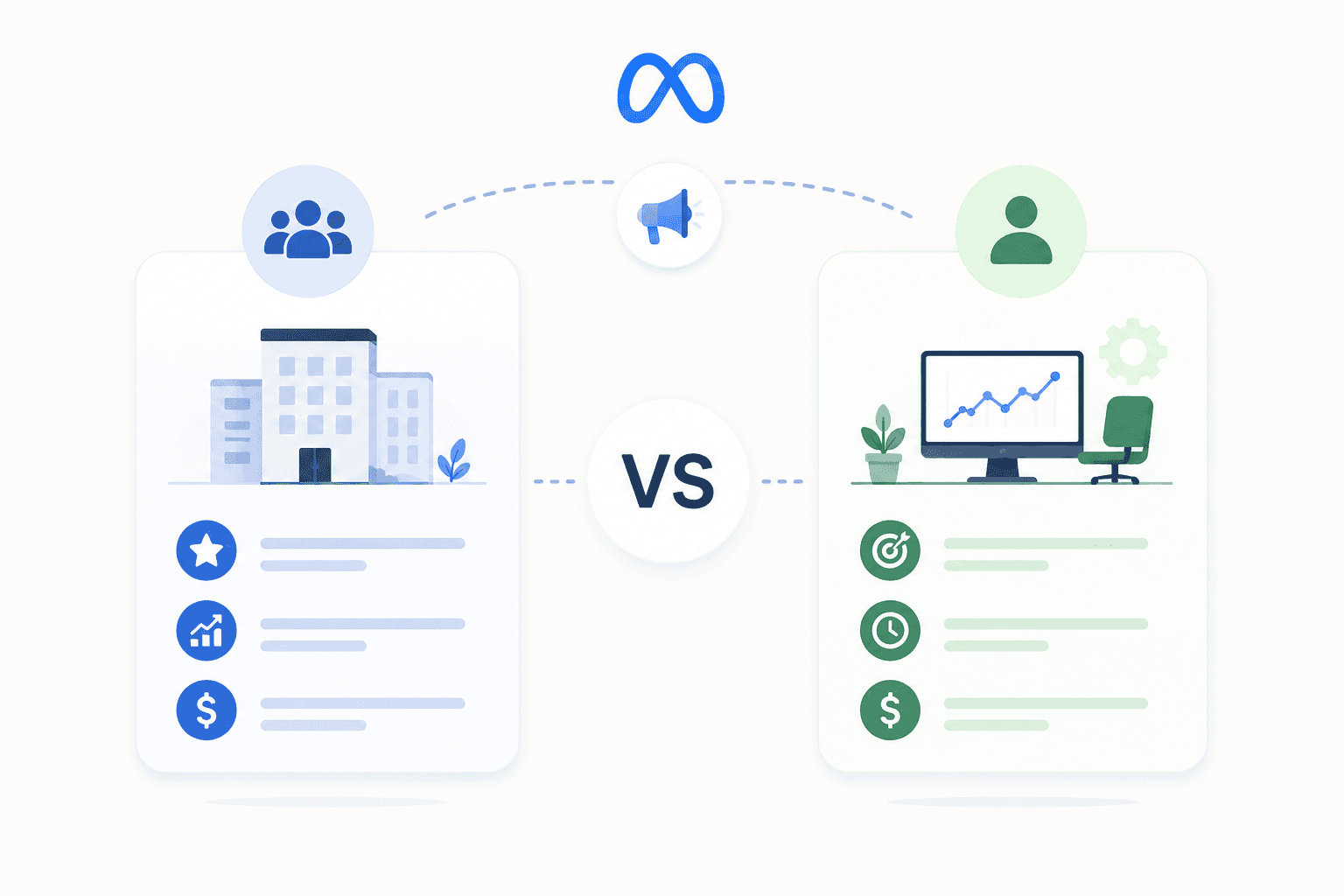
Meta was built for consumer behavior. The platform tracks what people like, share, watch, and buy as individuals. That works well for DTC brands selling products people purchase on impulse. It works less well for B2B SaaS, where buying decisions involve committees selling products people purchase on impulse. It works less well for B2B SaaS, where buying decisions involve 6 to 10 decision-makers, long evaluation periods, and professional context that doesn't show up in someone's personal Facebook profile.
Here's where the friction shows up:
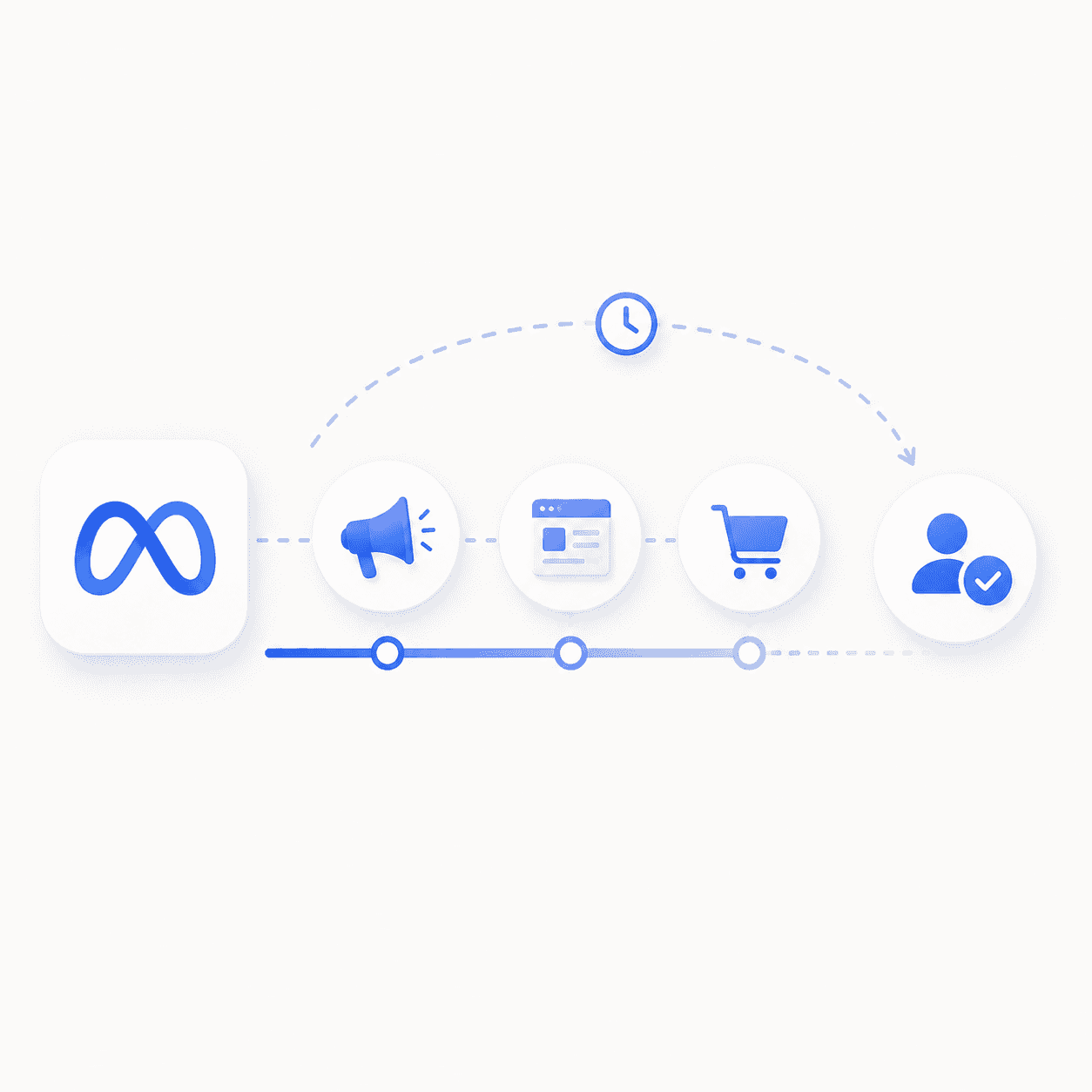
Longer sales cycles: B2B purchases often take weeks or months B2B purchases often take weeks or months, with a median SaaS cycle of 84 days. Meta's attribution windows, typically 7-day click and 1-day view, struggle to connect ad exposure to eventual pipeline or revenue.
Smaller total addressable market: A narrow ICP means your audience can exhaust quickly. Where a DTC brand might target millions, a B2B SaaS company might have tens of thousands of realistic prospects.
Missing firmographic data: Meta doesn't offer native filters for company size, revenue, or tech stack. You can't target "Series B SaaS companies with 50-200 employees" the way you might on LinkedIn.
Personal vs. professional identity mismatch: People appear on Facebook and Instagram as individuals with hobbies, family, and interests. That profile often has little overlap with how they make business purchasing decisions, which 77% of B2B buyers describe as complex or difficult.
The four types of Meta Ads audiences
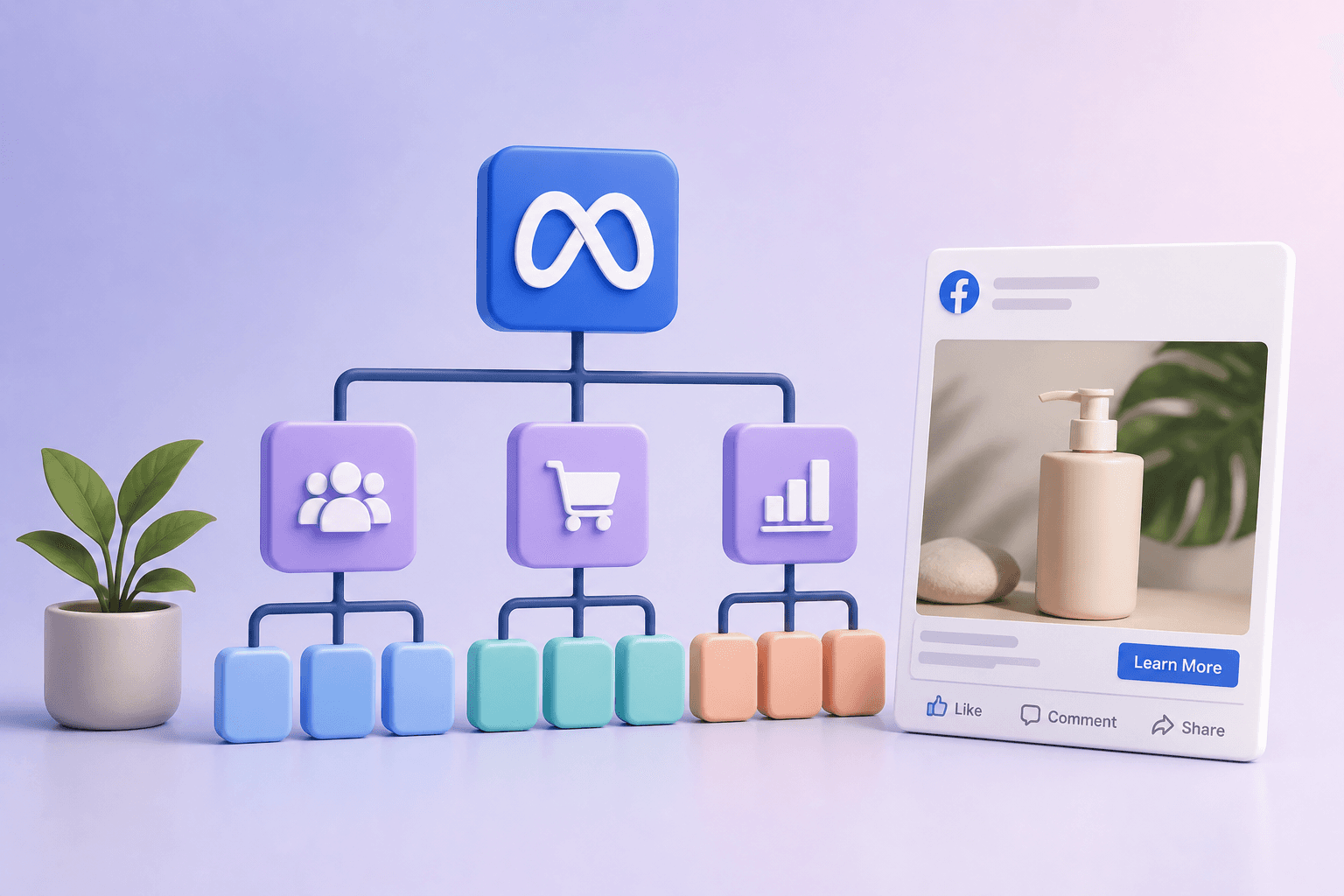
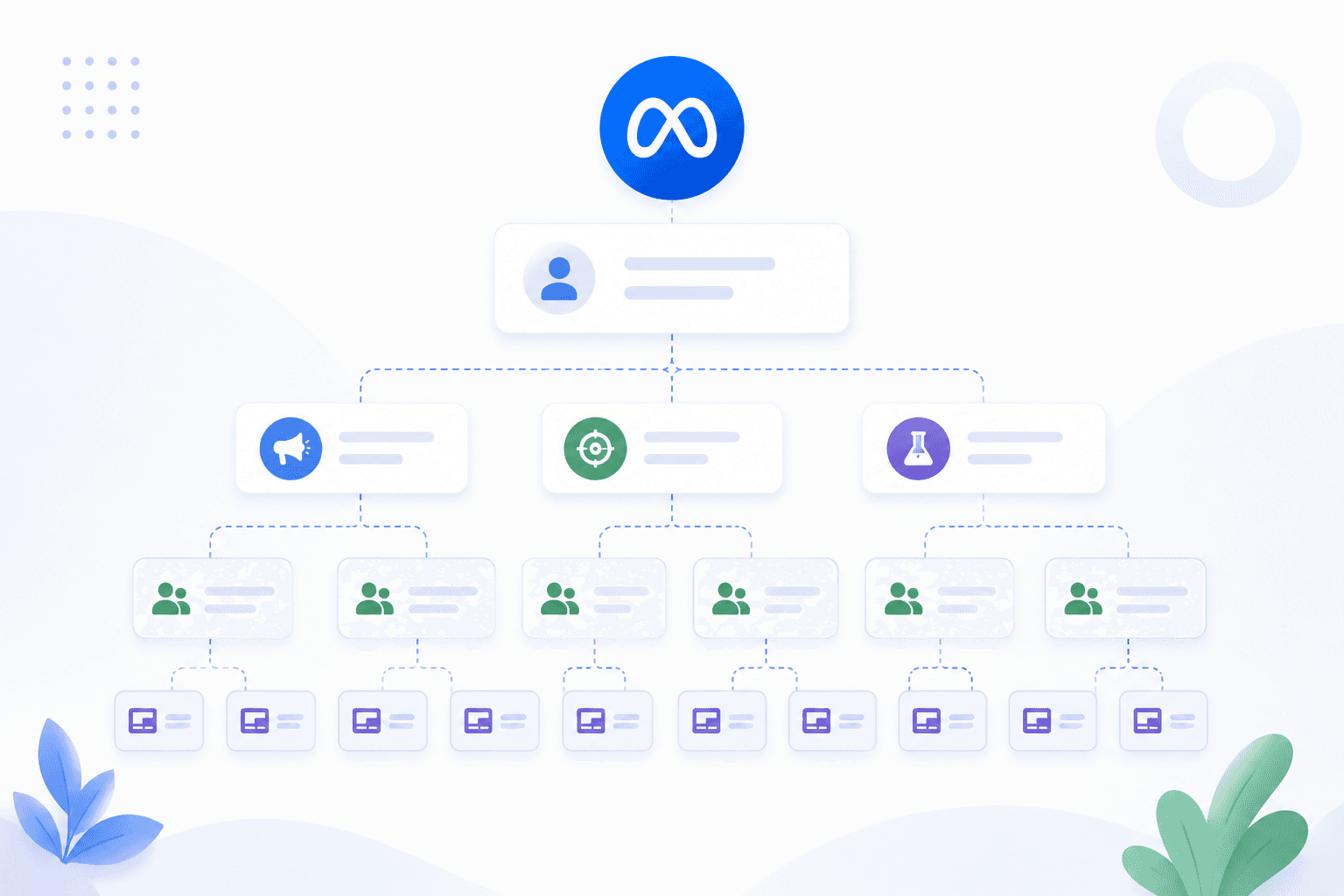
Meta organizes audiences into four main categories. Each serves a different purpose in your funnel, and each has different data requirements.
Custom Audiences
Custom Audiences let you retarget people who have already interacted with your brand. This includes website visitors, app users, CRM lists, and video viewers. Because Custom Audience users already know you, they typically deliver the highest intent and lowest CPAs.
The data comes from two main sources. The Meta Pixel is a snippet of code on your website that tracks visitor behavior. Conversions API, or CAPI, is server-side tracking that sends events directly to Meta without relying on browser cookies.
Lookalike Audiences
Lookalike Audiences are a prospecting tool. You provide a "seed" audience, like your customer list, and Meta's algorithm finds new users who share similar characteristics.
You choose a percentage range from 1% to 10%. A 1% Lookalike is the most similar to your seed. A 10% Lookalike is broader but less precise. Performance depends heavily on seed quality. A Lookalike built from your best customers will outperform one built from all website visitors.
Advantage+ Audience
Advantage+ Audience is Meta's AI-driven, broad targeting option. Instead of setting strict parameters, you provide "audience signals," which are suggestions like a Custom Audience or top interests. Meta's algorithm then decides who actually sees your ads.
The tradeoff is control. Meta can go beyond your suggested parameters to optimize delivery — Advantage+ has reportedly delivered 41% higher blended ROAS compared to manually managed campaigns. This works well when you have strong creative and sufficient conversion volume. It works poorly when your audience is narrow or your tracking is weak.
Detailed Targeting Audiences
Detailed Targeting, sometimes called Core Audiences, is manual selection of demographics, interests, and behaviors. You can target by age, gender, location, job title, pages liked, hobbies, purchase patterns, and device usage.
However, many granular options have been removed due to privacy updates. The targeting that remains is often a proxy rather than a precise filter.
Audience Type
Best For
Data Source
B2B SaaS Fit
Custom Audiences
Retargeting
Your first-party data
High
Lookalike Audiences
Prospecting
Seed list + Meta's algorithm
Medium-High
Advantage+ Audience
Broad prospecting
Meta's AI + your signals
Test required
Detailed Targeting
Cold prospecting
Meta's interest/behavior graph
Limited
Meta built its ad platform for consumer behavior, not B2B buying committees. That's why the targeting playbook that works for DTC brands often falls flat for SaaS companies trying to reach decision-makers through their personal social feeds.
This guide covers the four core audience types, how to build each one using first-party data, and when to trust Meta's AI-driven targeting versus maintaining manual control.
Key takeaways
Meta Ads audience targeting allows advertisers to reach specific users across Facebook, Instagram, and Messenger using demographic data, interests, behaviors, and custom data.
The four core audience types are Custom Audiences, Lookalike Audiences, Advantage+ Audience, and Detailed Targeting Audiences.
B2B SaaS targeting differs from DTC because Meta was built around consumer behavior signals, not professional buying intent or firmographic data.
Meta has shifted toward broader, AI-driven targeting through Advantage+ Audience, which gives advertisers less manual control.
First-party data is increasingly important for B2B SaaS, especially for building Custom Audiences and improving Lookalike quality.
Creative strategy now does much of the "targeting" work because strong messaging helps the right users self-select even when audience targeting is broad.
What Meta Ads audience targeting actually means
Meta Ads audience targeting allows advertisers to reach specific usersMeta Ads audience targeting allows advertisers to reach specific users among Meta's 3.58 billion daily active people across Facebook, Instagram, and Messenger using demographic data, interests, behaviors, and custom data. You can build audiences manually, retarget people who already know your brand, or let Meta's algorithm find new prospects based on patterns from your existing customers.
The simplest way to think about it: audience targeting is the "who," while ad creative is the "what." Targeting determines which users are eligible to see your ad. Creative determines what they actually see when they scroll past it.
Before going further, a few terms worth knowing:
Impressions: The number of times your ad is displayed, including repeat views by the same person.
Reach: The number of unique people who see your ad.
Ad set: The level in Meta's campaign structure where you define your audience, budget, and placement settings.
Why Meta audience targeting is harder for B2B SaaS
Meta was built for consumer behavior. The platform tracks what people like, share, watch, and buy as individuals. That works well for DTC brands selling products people purchase on impulse. It works less well for B2B SaaS, where buying decisions involve committees selling products people purchase on impulse. It works less well for B2B SaaS, where buying decisions involve 6 to 10 decision-makers, long evaluation periods, and professional context that doesn't show up in someone's personal Facebook profile.
Here's where the friction shows up:
Longer sales cycles: B2B purchases often take weeks or months B2B purchases often take weeks or months, with a median SaaS cycle of 84 days. Meta's attribution windows, typically 7-day click and 1-day view, struggle to connect ad exposure to eventual pipeline or revenue.
Smaller total addressable market: A narrow ICP means your audience can exhaust quickly. Where a DTC brand might target millions, a B2B SaaS company might have tens of thousands of realistic prospects.
Missing firmographic data: Meta doesn't offer native filters for company size, revenue, or tech stack. You can't target "Series B SaaS companies with 50-200 employees" the way you might on LinkedIn.
Personal vs. professional identity mismatch: People appear on Facebook and Instagram as individuals with hobbies, family, and interests. That profile often has little overlap with how they make business purchasing decisions, which 77% of B2B buyers describe as complex or difficult.
The four types of Meta Ads audiences
Meta organizes audiences into four main categories. Each serves a different purpose in your funnel, and each has different data requirements.
Custom Audiences
Custom Audiences let you retarget people who have already interacted with your brand. This includes website visitors, app users, CRM lists, and video viewers. Because Custom Audience users already know you, they typically deliver the highest intent and lowest CPAs.
The data comes from two main sources. The Meta Pixel is a snippet of code on your website that tracks visitor behavior. Conversions API, or CAPI, is server-side tracking that sends events directly to Meta without relying on browser cookies.
Lookalike Audiences
Lookalike Audiences are a prospecting tool. You provide a "seed" audience, like your customer list, and Meta's algorithm finds new users who share similar characteristics.
You choose a percentage range from 1% to 10%. A 1% Lookalike is the most similar to your seed. A 10% Lookalike is broader but less precise. Performance depends heavily on seed quality. A Lookalike built from your best customers will outperform one built from all website visitors.
Advantage+ Audience
Advantage+ Audience is Meta's AI-driven, broad targeting option. Instead of setting strict parameters, you provide "audience signals," which are suggestions like a Custom Audience or top interests. Meta's algorithm then decides who actually sees your ads.
The tradeoff is control. Meta can go beyond your suggested parameters to optimize delivery — Advantage+ has reportedly delivered 41% higher blended ROAS compared to manually managed campaigns. This works well when you have strong creative and sufficient conversion volume. It works poorly when your audience is narrow or your tracking is weak.
Detailed Targeting Audiences
Detailed Targeting, sometimes called Core Audiences, is manual selection of demographics, interests, and behaviors. You can target by age, gender, location, job title, pages liked, hobbies, purchase patterns, and device usage.
However, many granular options have been removed due to privacy updates. The targeting that remains is often a proxy rather than a precise filter.
Audience Type
Best For
Data Source
B2B SaaS Fit
Custom Audiences
Retargeting
Your first-party data
High
Lookalike Audiences
Prospecting
Seed list + Meta's algorithm
Medium-High
Advantage+ Audience
Broad prospecting
Meta's AI + your signals
Test required
Detailed Targeting
Cold prospecting
Meta's interest/behavior graph
Limited
Looking for Meta ads support?
We're a small, hardworking US-based team. Book a call and get a free audit today.
How to build Custom Audiences from first-party data
First-party data is the foundation of effective B2B targeting on Meta. The better your data inputs, the better your audience outputs.
CRM and customer list uploads
You can upload customer email and phone lists directly to Meta. Meta hashes the data and matches it against user profiles. Match rates for B2B are often lower than DTC because work emails are less likely to match than personal emails. Where possible, collect personal emails or phone numbers to improve match rates.
Website visitor audiences from the Meta Pixel
Pixel-based audiences let you retarget all visitors, specific page visitors, or users who spent a certain amount of time on site. For B2B SaaS, prioritize high-intent pages over blog traffic. Someone who visited your pricing page or demo request form is more valuable than someone who read a blog post and bounced.
The "lookback window" determines how far back Meta pulls visitor data: 7 days, 30 days, 90 days, and so on. Test different windows to find the right balance between recency and audience size.
Engagement audiences from video and lead forms
You can retarget people who watched your video ads by percentage watched or engaged with lead forms. For B2B, video viewers at 50%+ watched and lead form openers, even non-submitters, are strong mid-funnel signals.
Offline conversion and CAPI audiences
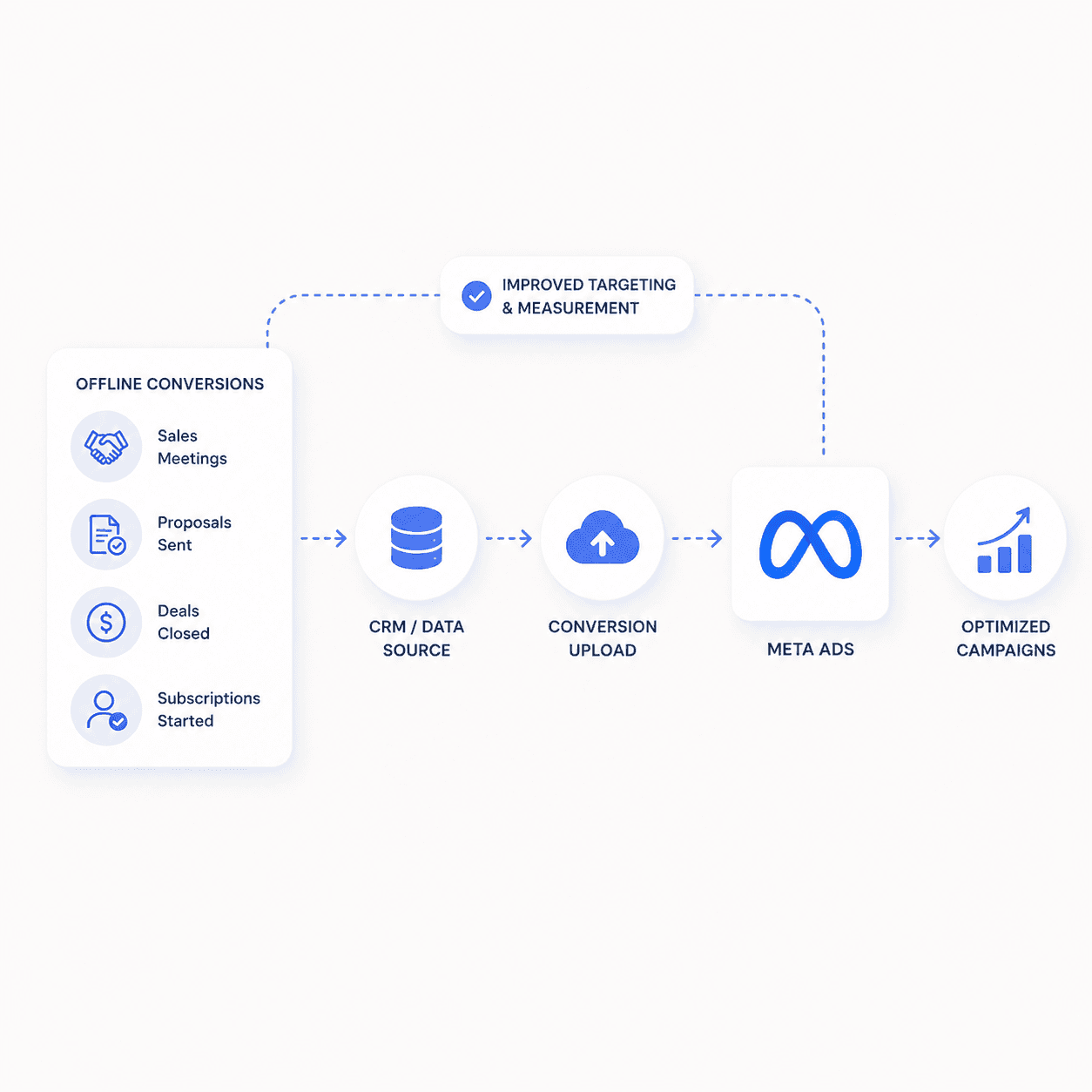
Conversions API, now adopted by 89% of active Meta advertisers, sends server-side data to Meta, improving tracking accuracy after iOS privacy changes. For B2B SaaS with longer funnels, CAPI allows you to send CRM events back to Meta: MQL, SQL, closed-won. You can use these events for both optimization and audience building.
How to build Lookalike Audiences that convert for B2B SaaS
Lookalike quality depends entirely on seed quality. Garbage in, garbage out.
1. Pick a high-intent seed list
Use closed-won customers or qualified leads rather than all website visitors. Smaller, higher-quality seeds often outperform larger, diluted ones. For B2B SaaS, prioritize customers with strong LTV and shorter sales cycles.
2. Set the right Lookalike percentage
Start at 1% for B2B with a smaller TAM. Expand to 2-3% only when you've exhausted reach at 1%. Broader percentages dilute similarity and introduce irrelevant users.
3. Layer exclusions to prevent overlap
Exclude existing customers and current retargeting audiences from Lookalike campaigns. Otherwise, you're paying to reach people you already know and potentially bidding against yourself in the auction.
4. Refresh seed lists on a set cadence
Seed lists go stale. Refresh monthly or quarterly depending on your acquisition volume. Stale seeds produce Lookalikes based on outdated behavioral patterns.
How to use Detailed Targeting for B2B SaaS buyers
Detailed Targeting has real limitations for B2B, but it's not useless.
Job title and employer targeting
Meta pulls job title and employer data from profile information. Coverage is incomplete since many users don't fill this out, but it can help reach decision-makers. Watch for false positives. "CEO" might be a freelancer, not a Fortune 500 executive.
Industry and business behavior targeting
Interest categories like "Small business owners" and behavior categories like "Business page admins" are proxies, not true firmographics. Use them as signals combined with other criteria, not as standalone filters.
Interest stacking for niche SaaS categories
Combining multiple interests can narrow an audience. For example, users interested in Salesforce AND marketing automation. This can help reach users inside a specific software ecosystem. However, overly narrow audiences limit Meta's ability to optimize.
When to trust Advantage+ Audience for B2B SaaS
Advantage+ works best when paired with strong creative and sufficient conversion volume. For B2B SaaS, test Advantage+ when you have consistent weekly conversions feeding the algorithm.
Use when: You have strong creative, steady conversion volume, reliable first-party data, and enough budget to let Meta learn.
Avoid when: Conversion volume is low, tracking is weak, creative is generic, or your audience is so narrow that broad AI expansion reduces quality.
Test Advantage+ against manual audiences rather than replacing them outright.
How to choose the right audience targeting option
1. Match the audience to your funnel stage
Custom Audiences fit bottom-funnel retargeting. Lookalikes fit mid-funnel prospecting. Detailed Targeting or Advantage+ fit top-funnel awareness.
2. Match the audience to your monthly spend
Lower budgets, under $10K/month, benefit from tighter audiences to concentrate spend. Higher budgets, $50K+/month, can support broader audiences and more ad sets for testing.
3. Match the audience to your creative strategy
Creative now does much of the targeting work. Specific messaging helps the right audience self-select from a broader pool. If your creative clearly speaks to B2B buyers, broader targeting is safer. If your creative is generic, you need tighter audience constraints.
At Flighted, we treat creative strategy as central to performance, not a separate workstream. When creative and targeting work together, you can scale more efficiently.
Worked example: targeting ecommerce retention platform buyers
Ecommerce retention software is a good test of everything above, because "CMO at an eight-figure-plus ecommerce brand" is not a clean audience Meta hands you either. You have to build the audience from signals. Here's how Flighted stacked it for Tie, a retention platform for ecommerce brands — pulled straight from one of our client case studies.
Strategy Summary for Tie:
Seed Data: Salesforce-synced qualified leads (CMOs/Heads of Retention).
Lookalikes: 1-3% range based on high-intent leads only.
Start with the first-party audiences you already own
Your best retention-software audience is the one you already have. Tie's qualified-leads list, synced directly from Salesforce, was the foundation — CMOs and heads of retention who had already shown buying intent for a retention platform. These people are already signalling intent, so they are the cheapest and most qualified place to start.
Build lookalikes from high-intent seeds, not your whole list
Seed a Lookalike from your qualified-leads list rather than your entire database. For Tie, that meant Lookalikes built from their existing Salesforce-synced qualified leads, kept to a 1 to 3 percent range to stay tight enough for a narrow buyer like an enterprise ecommerce CMO. Then layer exclusions so you are not paying to reach current customers or overlapping with your retargeting audiences.
Stack detailed targeting the way B2B SaaS retention buyers actually look
Meta will not give you a clean "head of retention" audience, so you combine signals. Use job-title and seniority targeting for roles like CMO, Head of Retention, and Head of Growth, then narrow toward the enterprise ecommerce brands you sell into — Tie targeted eight-figure-plus ecommerce companies specifically. Where Meta offers them as interests, stack complementary-software signals like Klaviyo and Unbounce alongside the "email marketing" interest to sharpen relevance. Interest stacking matters more here than it does for broad SaaS, because the buyer is so narrow.
Let Advantage+ find the buyer, but feed it the right signals
For a niche this specific, Advantage+ Audience can still work, but only if your inputs are strong: a clean conversion event flowing through the Conversions API, a high-intent seed list like Tie's Salesforce-synced qualified leads, and creative that speaks directly to retention pain. The system finds the buyer faster when the signals you feed it are unambiguous, and it wastes budget when they are vague.
Match the creative to the buyer
Targeting only gets you in front of the right person. Retention buyers respond to specificity: name the metric they own (repeat purchase rate, LTV, retention rate), speak to the pain (unpredictable repeat revenue, fragmented customer data, one-off campaigns that don't compound), and lead with the outcome (predictable repeat revenue, not one-off wins). Generic "grow your business" creative wastes even a perfectly built audience.
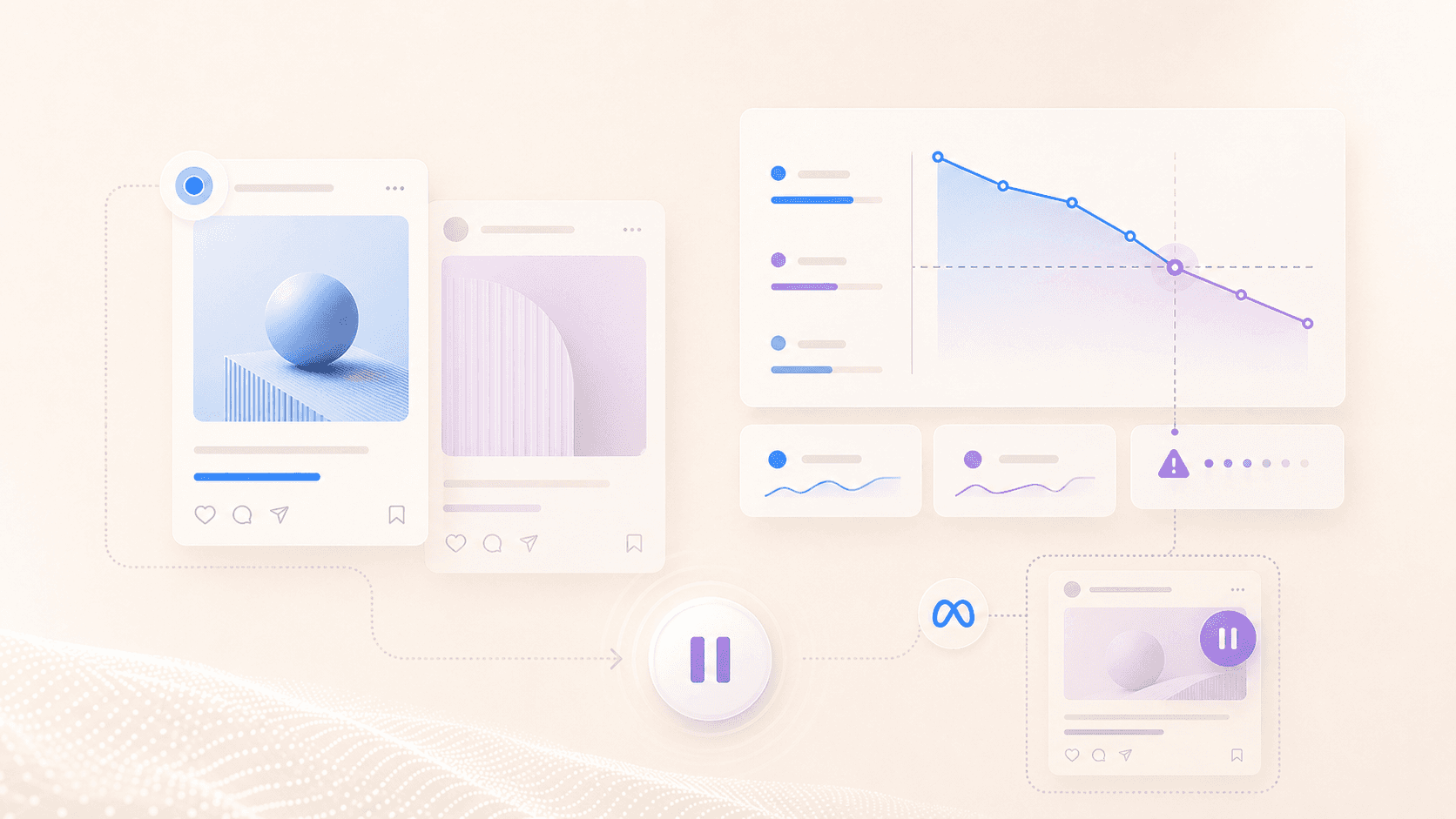
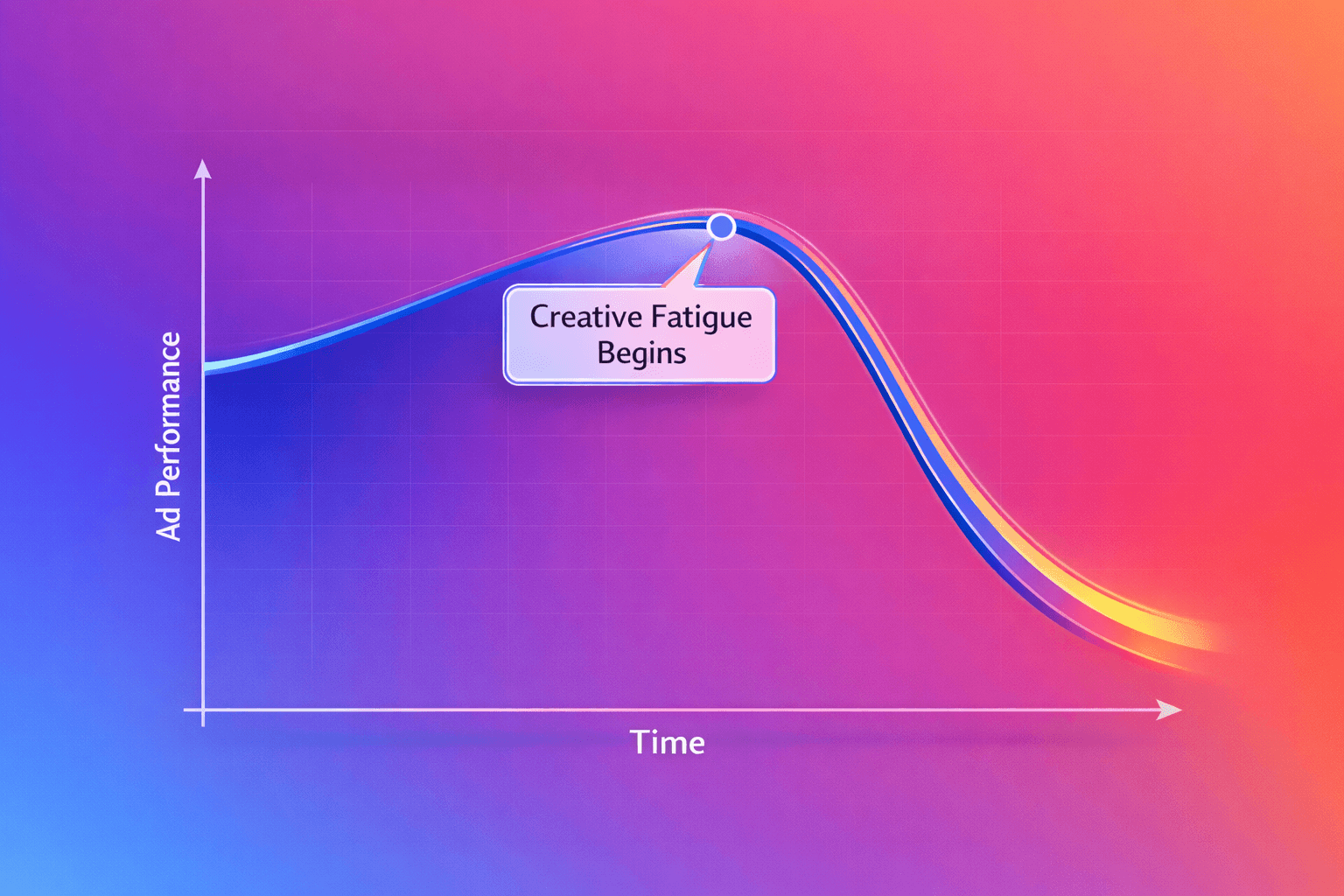
Leading indicators that your Meta audience is decaying
Catch problems before CPA spikes by monitoring a few key metrics.
Targeting works best when it's connected to creative strategy and landing page optimization, which are Flighted's three interdependent pillars.
We manage Meta Ads as a core specialty within our paid media offering, with hands-on execution from senior operators. No junior associates. If you're hitting a wall on Meta or preparing to scale, book a call to talk through your goals and fit.
Frequently asked questions about Meta Ads audience targeting
What is the minimum audience size for Meta ads?
Meta recommends at least 1,000 people in a Custom Audience for effective delivery. For Lookalikes and Detailed Targeting, larger is generally better. B2B audiences often need to be combined or broadened to meet delivery thresholds.
Is $10 a day enough budget for Meta ads targeting?
Technically possible, but limited. At $10/day, you'll struggle to exit the learning phase. For B2B SaaS with higher CPAs, $10/day rarely generates enough data for meaningful optimization.
Can you target by job title on Meta ads?
Yes, through Detailed Targeting. However, coverage is incomplete because many users don't list job titles. Combine job title with other signals rather than relying on it alone.
How often should you refresh Meta Lookalike audiences?
Monthly or quarterly, depending on how frequently your seed list changes. For most B2B SaaS companies, quarterly refreshes prevent Lookalikes from going stale.
Do Lookalike audiences still work after iOS 14?
Yes, but performance depends more heavily on seed list quality. First-party data like CRM lists and CAPI events generally produces stronger Lookalikes than pixel-only data after iOS changes.