How Much to Spend on Meta Ads for B2B SaaS in 2026
Meta Ads
May 10, 2026
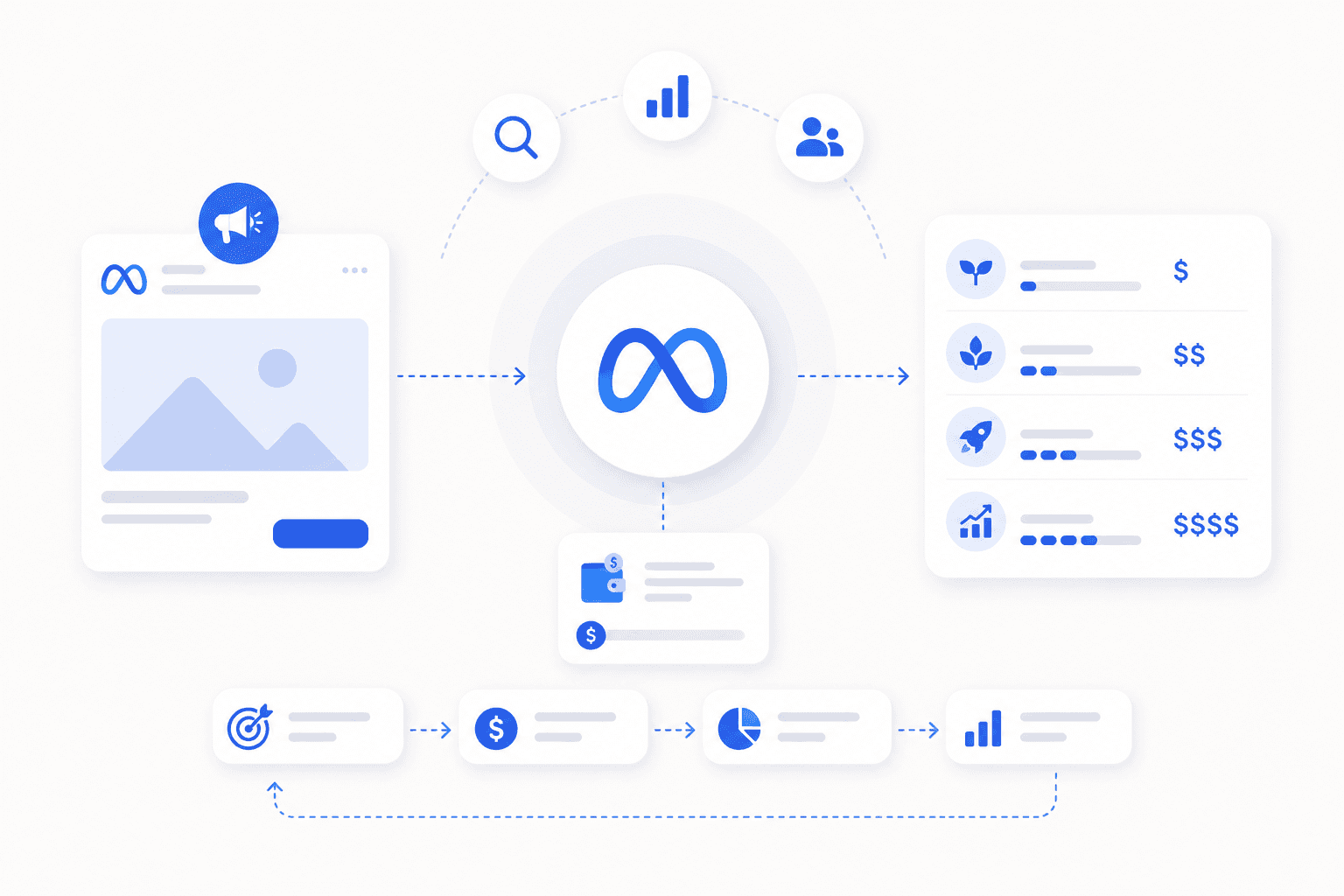
Table Of Contents
Most early-stage B2B SaaS founders either underspend on Meta Ads and wonder why nothing works, or overspend before they have the infrastructure to convert traffic. Both paths burn cash without building pipeline.
The difference between wasted budget and compounding returns comes down to knowing your minimum viable spend, allocating across the right buckets, and scaling only when the data supports it. This guide covers the exact thresholds, formulas, and frameworks you can use to set a Meta Ads budget that actually drives demos and revenue.
Key Takeaways
The minimum viable Meta Ads budget for early-stage B2B SaaS falls between $2,500 and $5,000 per month, which provides enough conversion data for Meta's algorithm to optimize.
Calculate your daily budget using this formula: (Target CPA × 50) ÷ 7.
Allocate spend using the 70/20/10 framework: 70% to prospecting, 20% to retargeting, and 10% to creative testing.
Before launching, set up conversion tracking via CAPI, connect your CRM for closed-loop attribution, define a clear offer, and build a mobile-first landing page.
Scale by increasing budget no more than 20% every three to seven days, and only after CPA has remained stable for at least seven days.
Optimize for pipeline metrics like cost per demo and SQL rather than clicks or impressions.
What Is the Minimum Meta Ads Budget for Early-Stage B2B SaaS
The minimum Meta Ads budget for early-stage B2B SaaS is $2,500 to $5,000 per month. This threshold provides enough conversion data for Meta's algorithm to exit learning phase and optimize effectively.
B2B audiences are smaller than consumer audiences, and cost per qualified lead typically lands between $150 and $250. Spending less than $2,500 monthly leaves the algorithm guessing—and you guessing about what's actually working.
The practical minimum comes from a simple formula:
(Target CPA × 50) ÷ 7 = daily budget
CPA stands for Cost Per Acquisition—what you pay for each conversion, whether that's a demo request, trial signup, or qualified lead. Meta's algorithm performs best when it receives around 50 conversions per week. Fewer than that, and optimization stalls.
Monthly Budget | What You Can Expect |
|---|---|
$2,500–$5,000 | Validate messaging, test 2–3 audiences, gather early signals |
$5,000–$15,000 | Consistent lead flow, identify winning creative angles, begin scaling |
$15,000+ | Full-funnel optimization, predictable pipeline contribution |
If your target CPA is $200, you'd calculate a daily budget of roughly $1,428 to hit 50 weekly conversions. That works out to about $6,000 per month at minimum. Underfunding doesn't just slow results. It prevents the algorithm from learning altogether.
How Your Budget Should Shift as You Scale Spend
Match your Meta spend to your stage. Do not scale what you have not validated.
$2,500–$5,000/month: Validate messaging, test 2–3 audiences, and gather early signals. You are learning what resonates, not chasing volume.
$5,000–$15,000/month: Build consistent lead flow, identify winning creative, and begin scaling what works. This is where most B2B SaaS companies find their footing.
$15,000+/month: Full-funnel optimization and predictable pipeline. You have enough data to let Meta's algorithm work for you.
One floor to know: below roughly $250/day, neither the algorithm nor an agency engagement usually justifies the spend. At that level, you are paying for noise, not signal.
Validate before you scale. Scale only what is proven.
What You Need in Place Before Launching Meta Ads
Budget alone doesn't determine results. The infrastructure behind your campaigns decides whether spend converts or disappears. Get these prerequisites in place before you calculate a single dollar of spend.
Conversion Tracking and CAPI Setup
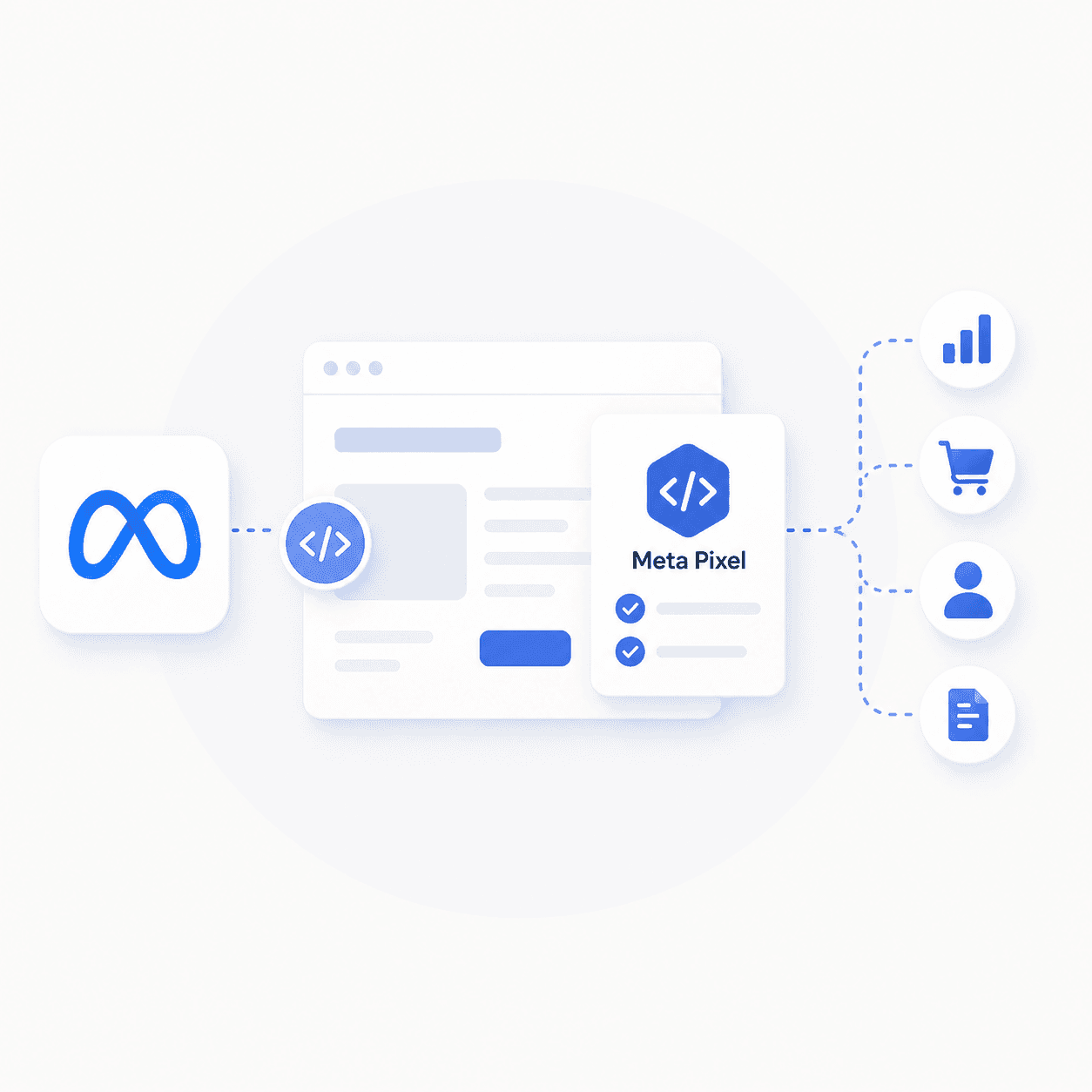
Pixel-only tracking became unreliable after iOS 14.5, with ATT opt-in rates below 14%. CAPI, which stands for Conversions API, sends conversion data directly from your server to Meta, bypassing browser limitations. Without server-side tracking, attribution gaps make optimization nearly impossible.
CRM Integration and Closed-Loop Attribution
Connecting Meta to HubSpot, Salesforce, or another CRM enables closed-loop attribution. This means tracking leads from ad click through to closed revenue. Without this connection, you'll optimize for lead volume rather than lead quality, which often results in cheap leads that never convert to customers.
A Defined Offer for Cold B2B Traffic
Cold traffic from Meta won't convert on a generic homepage. You want a direct-response offer: a free trial, demo request, or gated resource with clear value. The promise in your ad and the message on your landing page have to match exactly.
A Mobile-First Landing Page Built to Convert
94–98% of Meta traffic arrives on mobile devices. A slow or cluttered page wastes budget before visitors even see your offer. Landing page performance directly impacts your effective CPA. Conversion rate improvements of even a few percentage points can cut cost per lead significantly without touching ad spend.
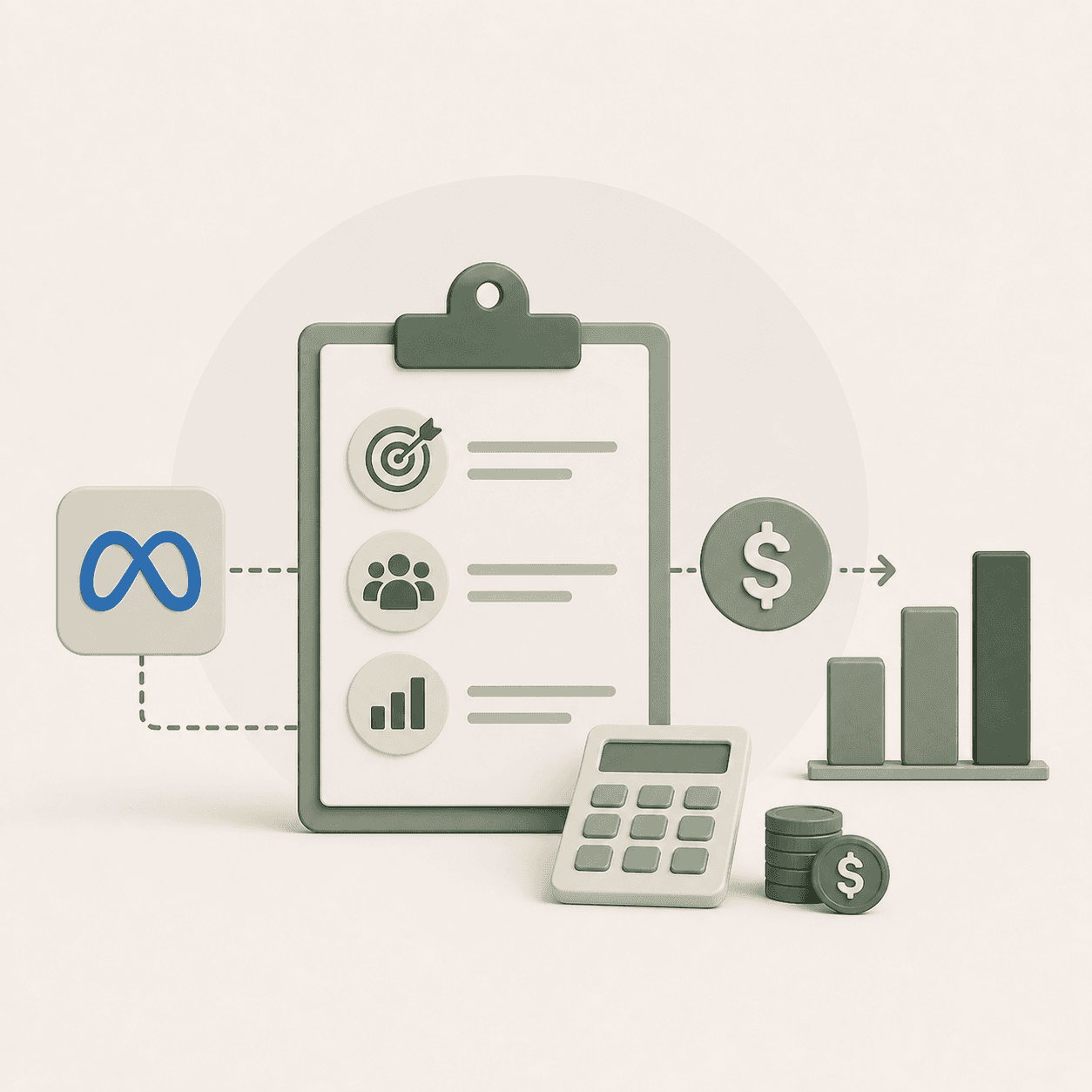
How to Calculate Your Monthly Meta Ads Budget for B2B SaaS
With the infrastructure in place, size your budget against real unit economics. A healthy LTV:CAC ratio for B2B SaaS typically sits at 3:1 or higher.
LTV (Lifetime Value): Total revenue a customer generates over their relationship with your company.
CAC (Customer Acquisition Cost): What you spend to acquire a customer.
From there, work backward:
Target CPA: If your LTV is $3,000 and you want a 3:1 ratio, your maximum CAC is $1,000. Your target CPA for a demo might fall between $150 and $300, depending on your demo-to-close rate.
Weekly conversion target: Aim for at least 50 conversions per week to exit learning phase. Fewer conversions mean Meta can't optimize effectively.
Learning phase buffer: Budget an extra 20–30% for the first two weeks. Performance runs inefficient while the algorithm learns your audience.
Most early-stage teams set a starting Meta Ads budget of $5,000 to $10,000 monthly to validate before committing to larger spend.
Target CPA | Weekly Budget (50 conversions) | Monthly Budget |
|---|---|---|
$150 | $7,500 | ~$30,000 |
$200 | $10,000 | ~$40,000 |
$250 | $12,500 | ~$50,000 |
How to Allocate Your Meta Ads Budget Across Prospecting, Retargeting, and Creative Testing
The 70/20/10 framework gives early-stage B2B SaaS teams a starting point for budget allocation. You can adjust based on your audience size and funnel maturity, but this ratio works well for most teams just getting started.
Prospecting (70%): Cold-audience targeting where you acquire net-new leads. Most of your budget goes here when building awareness and filling the top of funnel.
Retargeting (20%): Warm audiences who visited your site, engaged with ads, or started but didn't complete a conversion. B2B sales cycles now average 134 days, so retargeting captures mid-funnel intent. However, don't over-allocate here if your audience pools are small, or you'll just burn through frequency.
Creative testing (10%): Protected budget for structured experiments. Test one variable at a time: hooks, formats, CTAs, or angles. This is how you find winners before scaling.
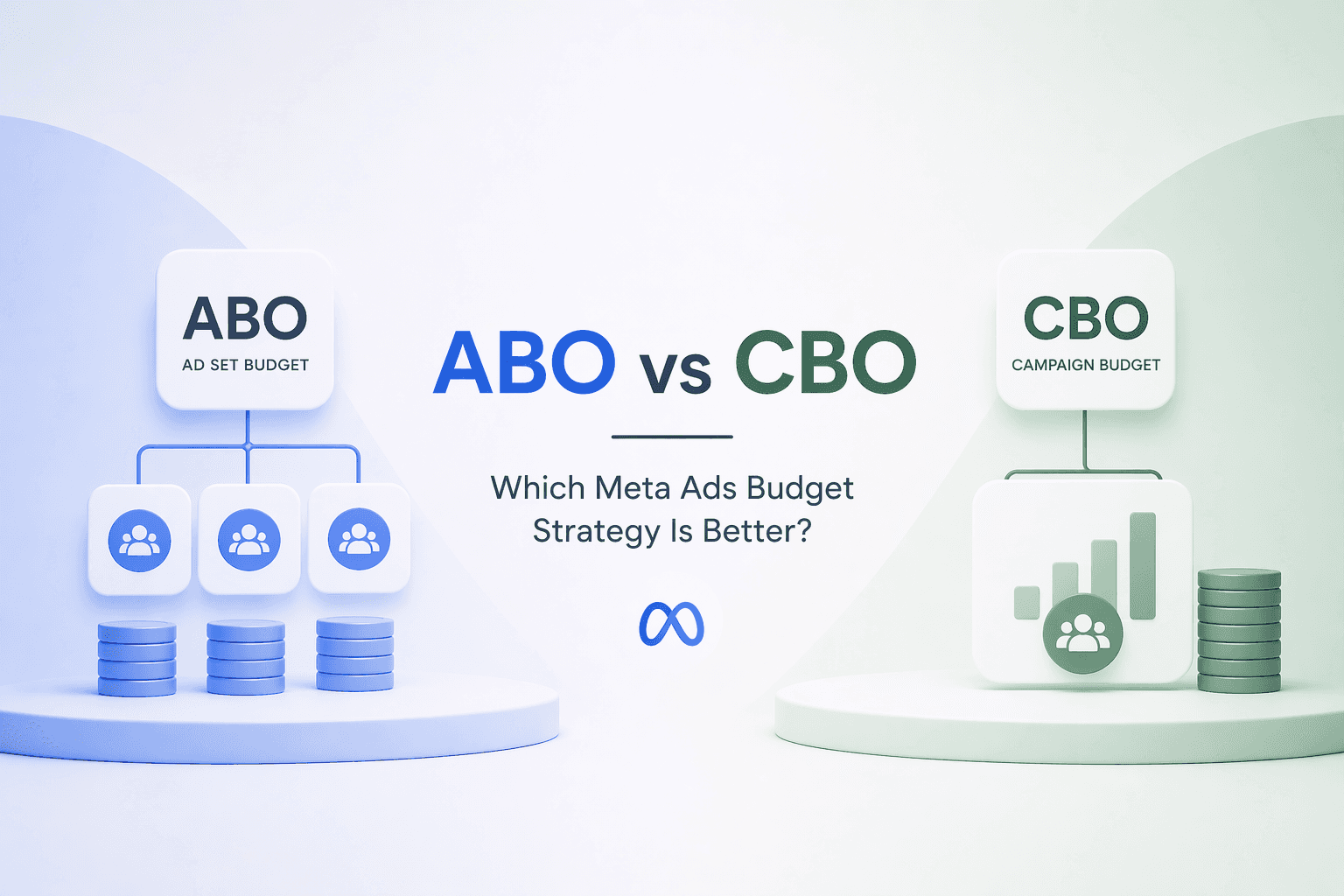
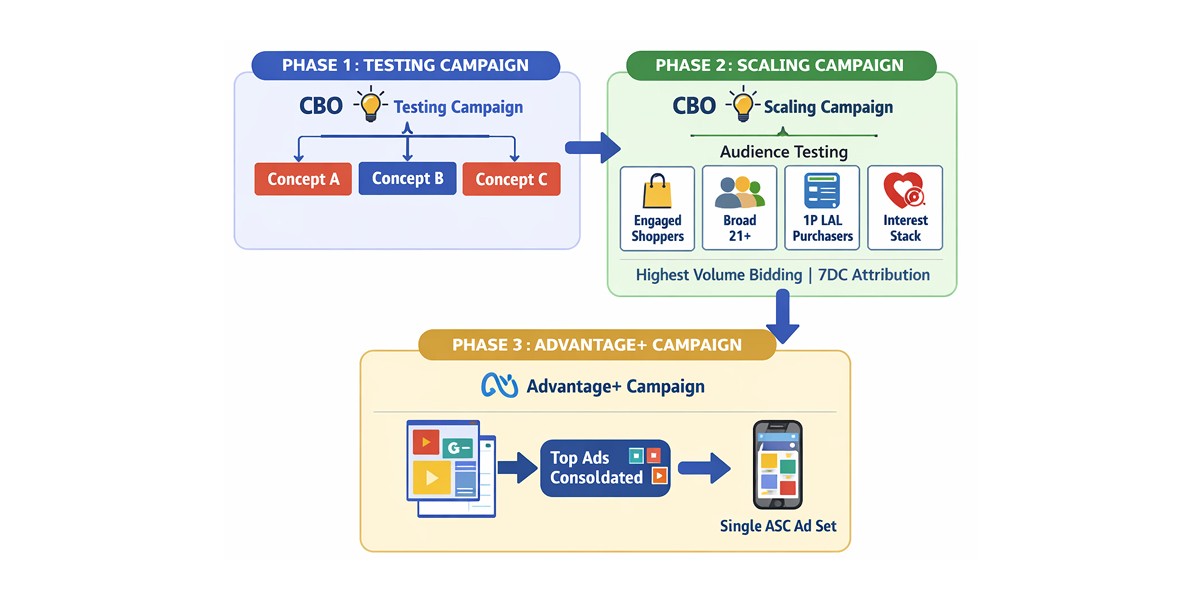
Should You Manage Budget at the Campaign (CBO) or Ad Set (ABO) Level?
Two budget structures dominate Meta Ads:
CBO (Campaign Budget Optimization): One budget at the campaign level. Meta distributes spend across ad sets automatically.
ABO (Ad Set Budget Optimization): Budget set per ad set. You control exactly how much each test receives.
At ~$10K/month, the choice is risk appetite, not a rule.
CBO pushes spend toward top-performing ad sets. Higher efficiency, but a promising new ad can get near-zero spend before it has a chance.
ABO forces spend through every test. More control, protects early experiments, but a novice can burn money on losers.
Do not add budget caps inside CBO at low spend. You recreate ABO with more overhead.
If an ABO account underperforms, moving budget to the campaign level and consolidating ad sets is often the fix.
How Landing Page Performance Changes Your Effective Meta Ads Budget
A landing page converting at 2% versus 4% doubles your effective cost per lead. Same ad spend, same traffic, half the results.
Improving conversion rate—the percentage of visitors who complete your desired action—is often the fastest way to lower CPA without increasing budget. Teams that treat landing pages as static assets miss one of the biggest performance levers available.
Treat every landing page as a living asset. Run A/B tests continuously. Small improvements compound over time.
Looking for Meta ads support?
We're a small, hardworking US-based team. Book a call and get a free audit today.
How to Budget for Creative Production and High-Frequency Testing
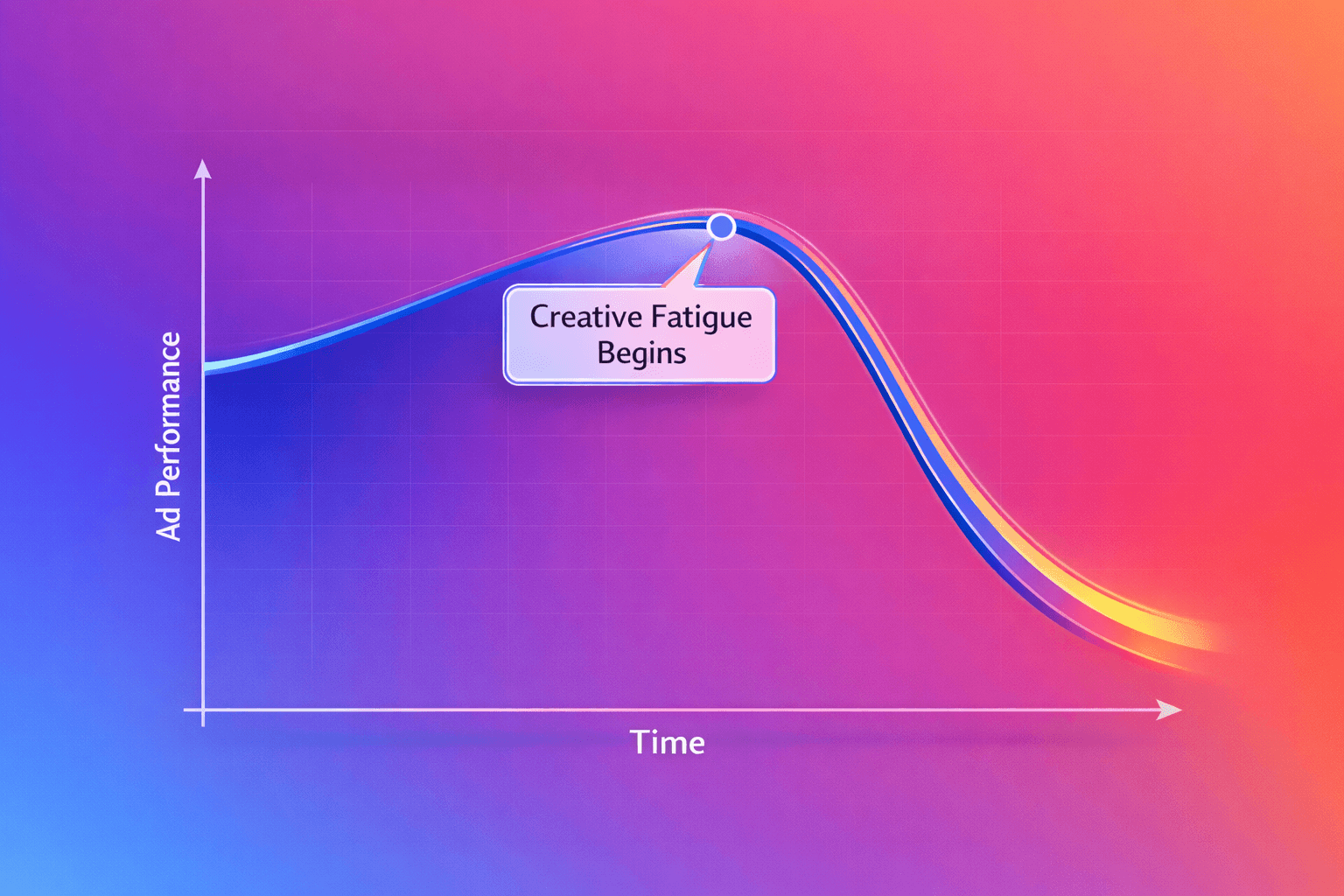
Meta's algorithm rewards fresh creative. Creative fatigue, which happens when performance declines because audiences have seen the same ads too many times, is one of the most common reasons B2B SaaS campaigns stall.
Plan for ongoing creative production rather than one-time asset creation. At minimum, consider:
Volume: Test 3–5 new ad variations per week during active scaling.
Structure: Isolate one variable per test. If you change the hook and the format at the same time, you won't know which drove the result.
Kill criteria: Cut ads that haven't hit your CPA target after spending 2–3x your target CPA. Don't let underperformers drain budget.
Creative strategy isn't separate from media buying. It's central to performance. The best account structure won't save weak creative.
How to Scale Meta Ads Budget Without Breaking Performance
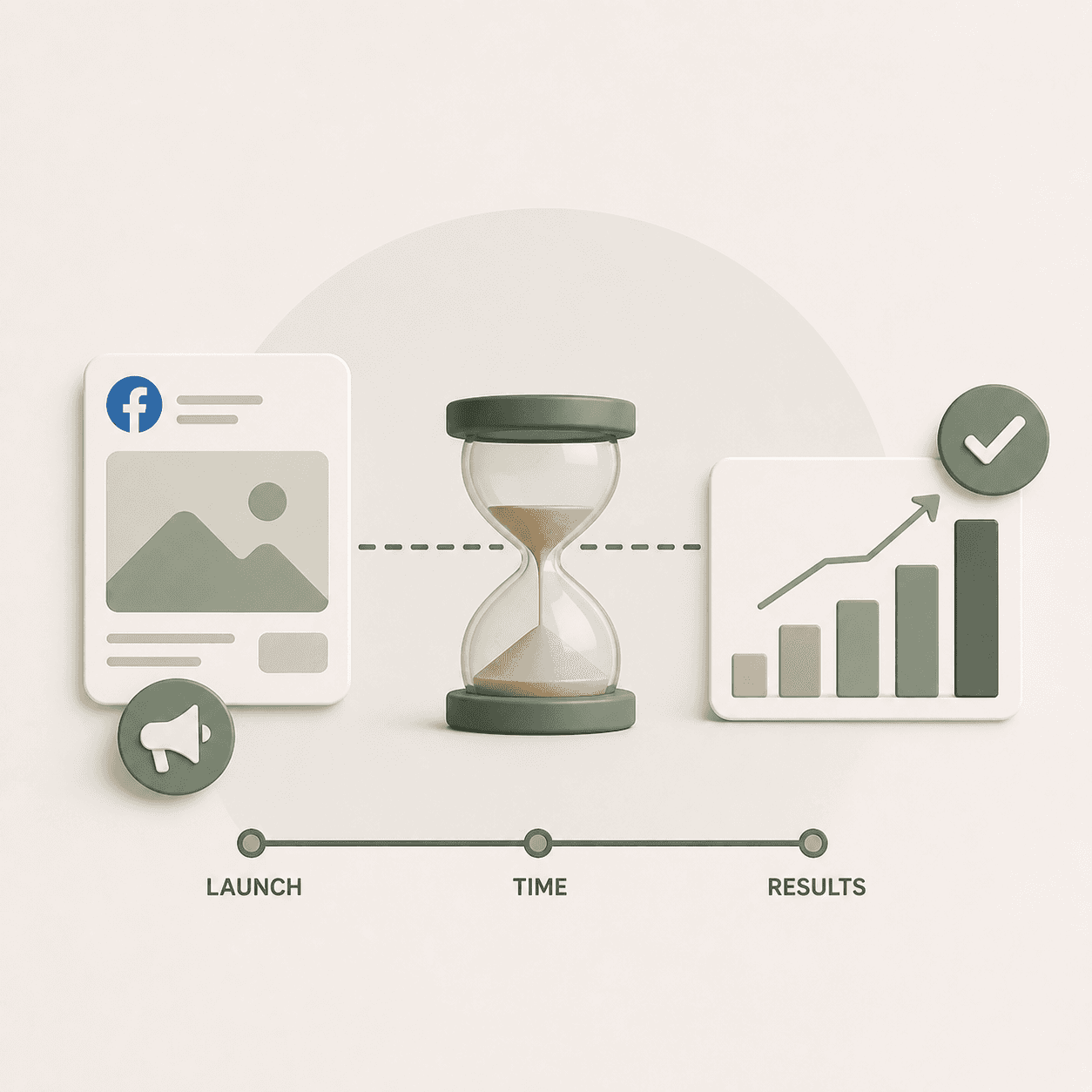
Aggressive budget increases reset the learning phase and destabilize performance. Scaling methodically protects your gains.
Step 1. Confirm Stable CPA Across a Seven-Day Window
Stable means CPA variance within 15–20% of your target over seven consecutive days. Anything less than seven days, and you're making decisions based on noise rather than signal.
Step 2. Increase Daily Budget by Twenty Percent at a Time
The 20% rule prevents learning phase resets. Increase every three to seven days if CPA remains healthy. Larger jumps of 50% or 100% often spike costs and take days to recover.
Step 3. Refresh Creative Before You Hit Frequency Ceilings
Frequency measures how many times the average user sees your ad. Once frequency exceeds 2.5 to 3.0 on prospecting campaigns, expect CPA to increase 10–25%. Introduce new creative before you hit that ceiling, not after.
Step 4. Expand Audiences Only After Existing Ones Stabilize
Don't test new audiences while also scaling budget. Change one variable at a time so you can isolate what's working and what's not.
Most early-stage B2B SaaS founders either underspend on Meta Ads and wonder why nothing works, or overspend before they have the infrastructure to convert traffic. Both paths burn cash without building pipeline.
The difference between wasted budget and compounding returns comes down to knowing your minimum viable spend, allocating across the right buckets, and scaling only when the data supports it. This guide covers the exact thresholds, formulas, and frameworks you can use to set a Meta Ads budget that actually drives demos and revenue.
Key Takeaways
The minimum viable Meta Ads budget for early-stage B2B SaaS falls between $2,500 and $5,000 per month, which provides enough conversion data for Meta's algorithm to optimize.
Calculate your daily budget using this formula: (Target CPA × 50) ÷ 7.
Allocate spend using the 70/20/10 framework: 70% to prospecting, 20% to retargeting, and 10% to creative testing.
Before launching, set up conversion tracking via CAPI, connect your CRM for closed-loop attribution, define a clear offer, and build a mobile-first landing page.
Scale by increasing budget no more than 20% every three to seven days, and only after CPA has remained stable for at least seven days.
Optimize for pipeline metrics like cost per demo and SQL rather than clicks or impressions.
What Is the Minimum Meta Ads Budget for Early-Stage B2B SaaS
The minimum Meta Ads budget for early-stage B2B SaaS is $2,500 to $5,000 per month. This threshold provides enough conversion data for Meta's algorithm to exit learning phase and optimize effectively.
B2B audiences are smaller than consumer audiences, and cost per qualified lead typically lands between $150 and $250. Spending less than $2,500 monthly leaves the algorithm guessing—and you guessing about what's actually working.
The practical minimum comes from a simple formula:
(Target CPA × 50) ÷ 7 = daily budget
CPA stands for Cost Per Acquisition—what you pay for each conversion, whether that's a demo request, trial signup, or qualified lead. Meta's algorithm performs best when it receives around 50 conversions per week. Fewer than that, and optimization stalls.
Monthly Budget | What You Can Expect |
|---|---|
$2,500–$5,000 | Validate messaging, test 2–3 audiences, gather early signals |
$5,000–$15,000 | Consistent lead flow, identify winning creative angles, begin scaling |
$15,000+ | Full-funnel optimization, predictable pipeline contribution |
If your target CPA is $200, you'd calculate a daily budget of roughly $1,428 to hit 50 weekly conversions. That works out to about $6,000 per month at minimum. Underfunding doesn't just slow results. It prevents the algorithm from learning altogether.
How Your Budget Should Shift as You Scale Spend
Match your Meta spend to your stage. Do not scale what you have not validated.
$2,500–$5,000/month: Validate messaging, test 2–3 audiences, and gather early signals. You are learning what resonates, not chasing volume.
$5,000–$15,000/month: Build consistent lead flow, identify winning creative, and begin scaling what works. This is where most B2B SaaS companies find their footing.
$15,000+/month: Full-funnel optimization and predictable pipeline. You have enough data to let Meta's algorithm work for you.
One floor to know: below roughly $250/day, neither the algorithm nor an agency engagement usually justifies the spend. At that level, you are paying for noise, not signal.
Validate before you scale. Scale only what is proven.
What You Need in Place Before Launching Meta Ads
Budget alone doesn't determine results. The infrastructure behind your campaigns decides whether spend converts or disappears. Get these prerequisites in place before you calculate a single dollar of spend.
Conversion Tracking and CAPI Setup
Pixel-only tracking became unreliable after iOS 14.5, with ATT opt-in rates below 14%. CAPI, which stands for Conversions API, sends conversion data directly from your server to Meta, bypassing browser limitations. Without server-side tracking, attribution gaps make optimization nearly impossible.
CRM Integration and Closed-Loop Attribution
Connecting Meta to HubSpot, Salesforce, or another CRM enables closed-loop attribution. This means tracking leads from ad click through to closed revenue. Without this connection, you'll optimize for lead volume rather than lead quality, which often results in cheap leads that never convert to customers.
A Defined Offer for Cold B2B Traffic
Cold traffic from Meta won't convert on a generic homepage. You want a direct-response offer: a free trial, demo request, or gated resource with clear value. The promise in your ad and the message on your landing page have to match exactly.
A Mobile-First Landing Page Built to Convert
94–98% of Meta traffic arrives on mobile devices. A slow or cluttered page wastes budget before visitors even see your offer. Landing page performance directly impacts your effective CPA. Conversion rate improvements of even a few percentage points can cut cost per lead significantly without touching ad spend.
How to Calculate Your Monthly Meta Ads Budget for B2B SaaS
With the infrastructure in place, size your budget against real unit economics. A healthy LTV:CAC ratio for B2B SaaS typically sits at 3:1 or higher.
LTV (Lifetime Value): Total revenue a customer generates over their relationship with your company.
CAC (Customer Acquisition Cost): What you spend to acquire a customer.
From there, work backward:
Target CPA: If your LTV is $3,000 and you want a 3:1 ratio, your maximum CAC is $1,000. Your target CPA for a demo might fall between $150 and $300, depending on your demo-to-close rate.
Weekly conversion target: Aim for at least 50 conversions per week to exit learning phase. Fewer conversions mean Meta can't optimize effectively.
Learning phase buffer: Budget an extra 20–30% for the first two weeks. Performance runs inefficient while the algorithm learns your audience.
Most early-stage teams set a starting Meta Ads budget of $5,000 to $10,000 monthly to validate before committing to larger spend.
Target CPA | Weekly Budget (50 conversions) | Monthly Budget |
|---|---|---|
$150 | $7,500 | ~$30,000 |
$200 | $10,000 | ~$40,000 |
$250 | $12,500 | ~$50,000 |
How to Allocate Your Meta Ads Budget Across Prospecting, Retargeting, and Creative Testing
The 70/20/10 framework gives early-stage B2B SaaS teams a starting point for budget allocation. You can adjust based on your audience size and funnel maturity, but this ratio works well for most teams just getting started.
Prospecting (70%): Cold-audience targeting where you acquire net-new leads. Most of your budget goes here when building awareness and filling the top of funnel.
Retargeting (20%): Warm audiences who visited your site, engaged with ads, or started but didn't complete a conversion. B2B sales cycles now average 134 days, so retargeting captures mid-funnel intent. However, don't over-allocate here if your audience pools are small, or you'll just burn through frequency.
Creative testing (10%): Protected budget for structured experiments. Test one variable at a time: hooks, formats, CTAs, or angles. This is how you find winners before scaling.
Should You Manage Budget at the Campaign (CBO) or Ad Set (ABO) Level?
Two budget structures dominate Meta Ads:
CBO (Campaign Budget Optimization): One budget at the campaign level. Meta distributes spend across ad sets automatically.
ABO (Ad Set Budget Optimization): Budget set per ad set. You control exactly how much each test receives.
At ~$10K/month, the choice is risk appetite, not a rule.
CBO pushes spend toward top-performing ad sets. Higher efficiency, but a promising new ad can get near-zero spend before it has a chance.
ABO forces spend through every test. More control, protects early experiments, but a novice can burn money on losers.
Do not add budget caps inside CBO at low spend. You recreate ABO with more overhead.
If an ABO account underperforms, moving budget to the campaign level and consolidating ad sets is often the fix.
How Landing Page Performance Changes Your Effective Meta Ads Budget
A landing page converting at 2% versus 4% doubles your effective cost per lead. Same ad spend, same traffic, half the results.
Improving conversion rate—the percentage of visitors who complete your desired action—is often the fastest way to lower CPA without increasing budget. Teams that treat landing pages as static assets miss one of the biggest performance levers available.
Treat every landing page as a living asset. Run A/B tests continuously. Small improvements compound over time.
Looking for Meta ads support?
We're a small, hardworking US-based team. Book a call and get a free audit today.
How to Budget for Creative Production and High-Frequency Testing
Meta's algorithm rewards fresh creative. Creative fatigue, which happens when performance declines because audiences have seen the same ads too many times, is one of the most common reasons B2B SaaS campaigns stall.
Plan for ongoing creative production rather than one-time asset creation. At minimum, consider:
Volume: Test 3–5 new ad variations per week during active scaling.
Structure: Isolate one variable per test. If you change the hook and the format at the same time, you won't know which drove the result.
Kill criteria: Cut ads that haven't hit your CPA target after spending 2–3x your target CPA. Don't let underperformers drain budget.
Creative strategy isn't separate from media buying. It's central to performance. The best account structure won't save weak creative.
How to Scale Meta Ads Budget Without Breaking Performance
Aggressive budget increases reset the learning phase and destabilize performance. Scaling methodically protects your gains.
Step 1. Confirm Stable CPA Across a Seven-Day Window
Stable means CPA variance within 15–20% of your target over seven consecutive days. Anything less than seven days, and you're making decisions based on noise rather than signal.
Step 2. Increase Daily Budget by Twenty Percent at a Time
The 20% rule prevents learning phase resets. Increase every three to seven days if CPA remains healthy. Larger jumps of 50% or 100% often spike costs and take days to recover.
Step 3. Refresh Creative Before You Hit Frequency Ceilings
Frequency measures how many times the average user sees your ad. Once frequency exceeds 2.5 to 3.0 on prospecting campaigns, expect CPA to increase 10–25%. Introduce new creative before you hit that ceiling, not after.
Step 4. Expand Audiences Only After Existing Ones Stabilize
Don't test new audiences while also scaling budget. Change one variable at a time so you can isolate what's working and what's not.
Looking for Meta ads support?
We're a small, hardworking US-based team. Book a call and get a free audit today.
KPIs and Benchmarks to Track for B2B SaaS Meta Ads
Cost Per Lead and Cost Per Demo
CPL (Cost Per Lead) and cost per demo are your primary efficiency metrics. Benchmarks vary by ICP and offer.
Metric | B2B SaaS Benchmark Range |
|---|---|
Cost Per Lead (qualified) | $100–$300 |
Cost Per Demo | $150–$400 |
MQL to SQL Rate | 15–30% |
LTV:CAC Ratio (healthy) | 3:1+ |
MQL to SQL Conversion Rate
MQL stands for Marketing Qualified Lead, and SQL stands for Sales Qualified Lead. The conversion rate between them reveals lead quality. If Meta leads convert to SQL at half the rate of other channels, you have a targeting or offer problem worth investigating.
Customer Acquisition Cost and LTV to CAC Ratio
Track blended CAC across all channels, not just Meta. A 3:1 LTV:CAC ratio signals sustainable spend. Below 2:1, you're likely losing money on acquisition.
First-Time Impression Rate and Frequency
First-Time Impression Rate shows what percentage of impressions reach new users. Track this alongside frequency to catch creative fatigue and audience saturation early, before they tank performance.
Meta Ads Budget Mistakes Early-Stage B2B SaaS Teams Make
Spreading Budget Across Too Many Campaigns
Fragmented budget starves each campaign of conversion data. Consolidate until you're spending enough to feed multiple campaigns properly.
Killing Ads Before Statistical Significance
Cutting ads after $50 in spend creates false negatives. Let ads run until they've spent at least 2–3x your target CPA before making decisions.
Optimizing for Clicks Instead of Pipeline
Click-based optimization attracts low-intent traffic. Optimize for downstream conversions like demos, trials, and SQLs, even if it means higher CPMs upfront.
Ignoring LTV and CAC Payback Math
Without LTV context, any CPA looks expensive. CAC payback period, which measures how long it takes to recoup acquisition cost, matters more than raw CPA. A $500 CPA is reasonable if LTV is $5,000.
Build a Meta Ads Budget That Compounds Pipeline
Budget, creative, and landing pages work together rather than independently. Underfunding any one of them limits the others. This is why Flighted approaches growth through three interdependent pillars: Paid Media Expertise, Creative Strategy, and Landing Page Optimization.
For B2B SaaS teams ready to build a Meta Ads program that drives pipeline rather than vanity metrics, book a call to talk through your goals and fit.
Frequently Asked Questions About Meta Ads Budgets for Early-Stage B2B SaaS
Should Early-Stage B2B SaaS Companies Start With Meta Ads or LinkedIn Ads?
Meta offers lower CPMs and faster creative testing cycles, making it the better starting point for early-stage teams with limited budget. LinkedIn provides stronger B2B targeting but at 3–5x the cost.
Is Fifty Dollars per Day Enough to Test Meta Ads for a B2B SaaS Product?
Rarely. At $50/day with a $200 CPA, you'd generate only 7–8 conversions per month—far below the 50 weekly the algorithm needs. Budget at least $100–$150 per day for meaningful testing.
How Long Should You Run Meta Ads Before Evaluating Performance for B2B SaaS?
Allow two to four weeks minimum. The first 7–14 days are learning phase, where performance runs inefficient—decisions before week three are usually premature.
How do I calculate my starting target daily Meta ads budget?
As a good rule of thumb, you can multiply your target CPA by 50, as this is the total number of conversions Meta needs to exit the learning phase in a given week. Then, divide that number by 7 to get your target daily budget. This is your minimum viable daily Meta budget.
How Much Do B2B SaaS Companies Typically Spend on Meta Ads?
Early-stage B2B SaaS companies typically spend $2,500–$5,000 monthly to validate messaging and gather initial signals, scaling to $5,000–$15,000 once they identify winning creative angles and consistent lead flow.
What Is a Good Cost Per Purchase on Meta Ads for B2B SaaS?
Cost per purchase varies by product price and sales cycle, but a healthy benchmark is a CAC that maintains a 3:1 LTV:CAC ratio—if your LTV is $3,000, target a CAC around $1,000 or lower.
Should Early-Stage B2B SaaS Companies Use CBO or ABO?
Start with ABO (Ad Set Budget Optimization) to control test budgets and read each ad set cleanly. Move to CBO (Campaign Budget Optimization) once you have 3+ proven ad sets and want Meta to push spend toward winners. Avoid budget caps inside CBO at low spend—they add overhead without benefit.
Related Posts
Related Posts
Related Posts
Related Posts


































Ready to talk?
New York, NY 11217
hello@flighted.co
© Flighted, 2026
Ready to talk?
New York, NY 11217
hello@flighted.co
© Flighted, 2026