Meta Ads Account Structure and Philosophy for Beginners: Read This Before You Start Advertising
Meta Ads
May 11, 2026
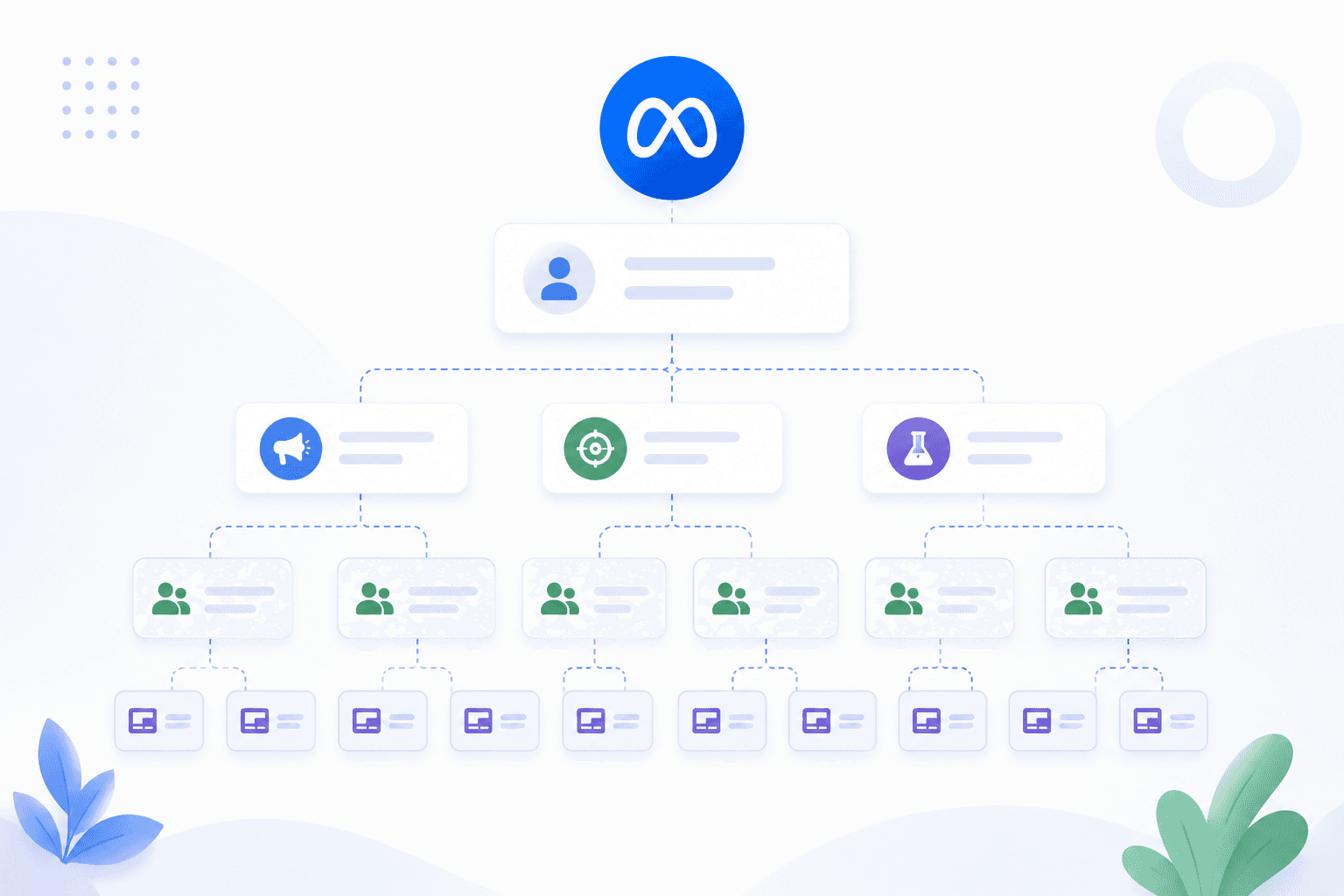
Table Of Contents
Looking for Meta ads support?
We're a small, hardworking US-based team. Book a call and get a free audit today.
The Breakdown Effect: Why Your "Worst" Ad Might Be Your Best
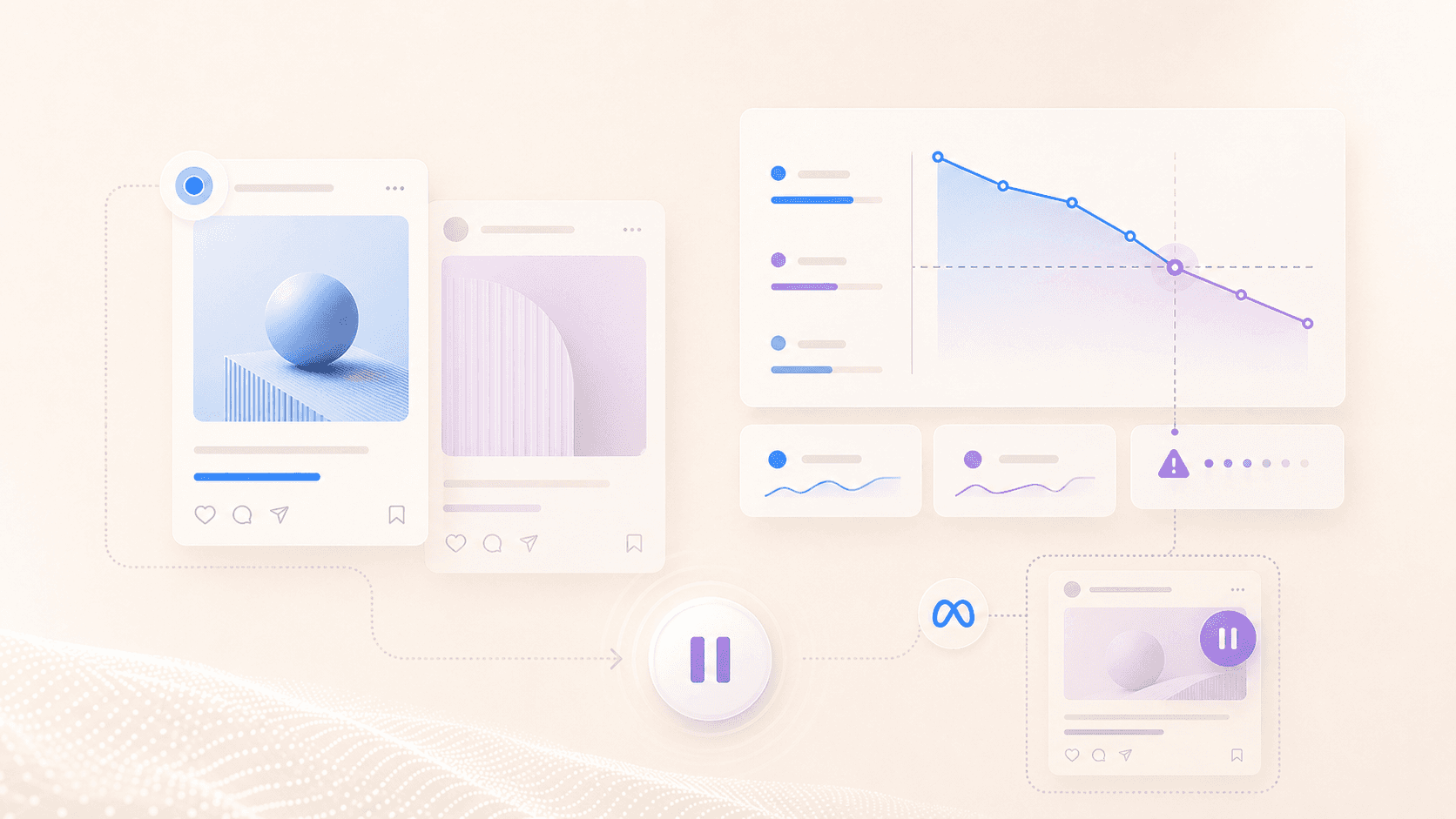
Meta has a documented phenomenon called the breakdown effect. Put simply: the ads driving the most value in your account often display the worst in-platform ROAS or CPA numbers.
Picture an ad set with three live ads:
Ad A: getting the most spend, 1.13 ROAS
Ad B: lower spend, 1.31 ROAS
Ad C: lowest spend, 2.36 ROAS
A beginner's instinct is to pause Ad A and try to "force" more spend into Ads B and C, which look more efficient. This is almost always a mistake.
Ad A is likely the incrementality driver. It's the ad that's good at introducing your brand to brand-new audiences and bringing first-time visitors to the website.
Those new visitors then encounter Ads B and C later in their journey, when they're much closer to a purchase decision. Ads B and C look efficient because they're closing sales that Ad A originated.
Pause Ad A, and the entire ad set collapses. Ads B and C suddenly have no warm audience to convert.
Their ROAS falls off a cliff. The ad set's blended performance tanks.
The practical rule: Meta tends to push spend toward the ads that are most efficient at acquiring new visitors. When an ad gets significant spend, treat that as Meta's signal it's valuable — even if ROAS looks poor.
Don't pause high-spend, low-ROAS ads. Instead, pause the ads Meta has already deprioritized: the ones that spent 10 cents, 24 cents, or $1 over the last week. Those are the ads truly contributing nothing.
This is one of the most counterintuitive, high-impact ideas in Meta strategy. Explore our Meta Ads creative strategies for more tactics.
The Three-Phase Account Structure: Test, Scale, Challenge
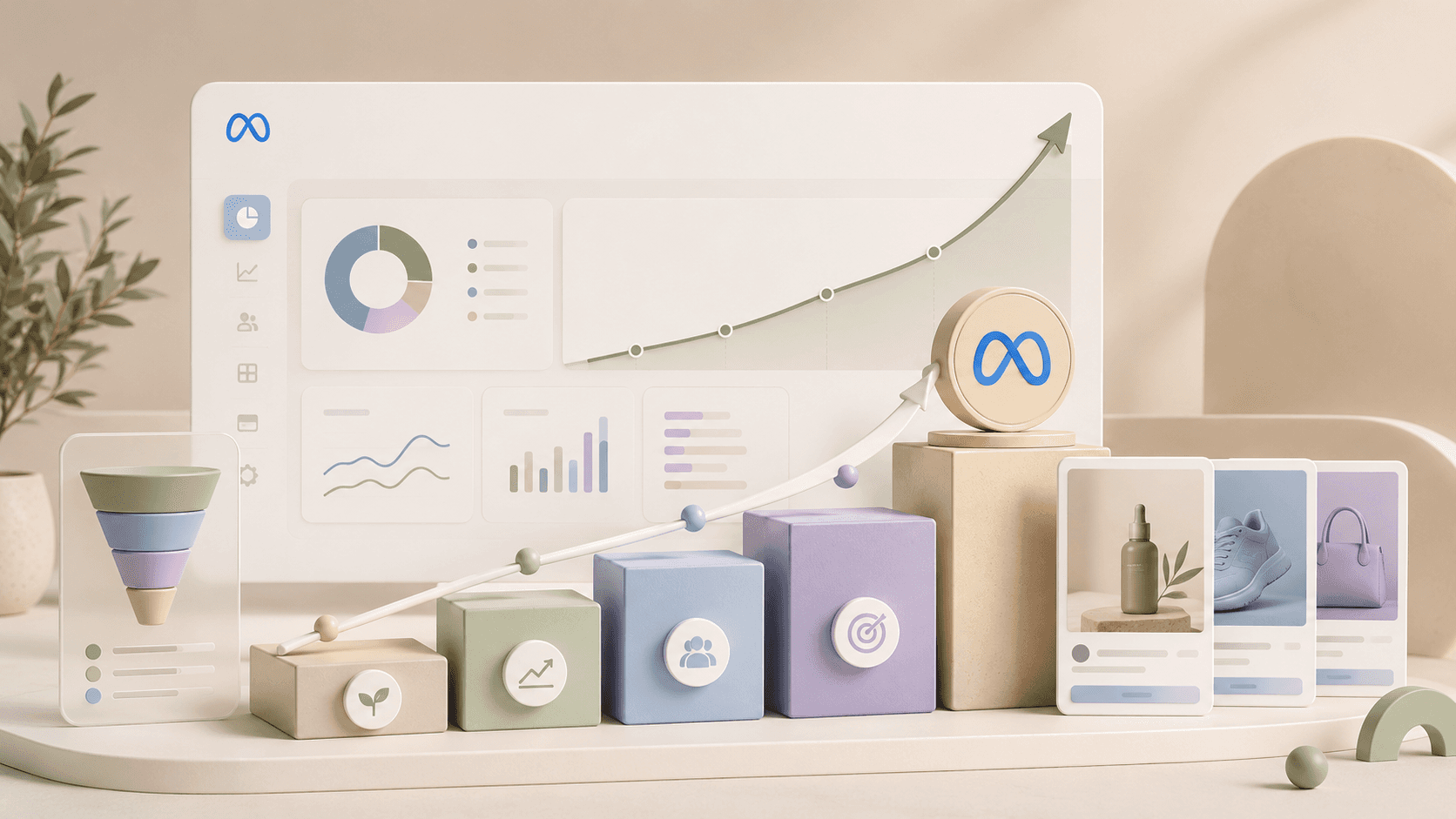
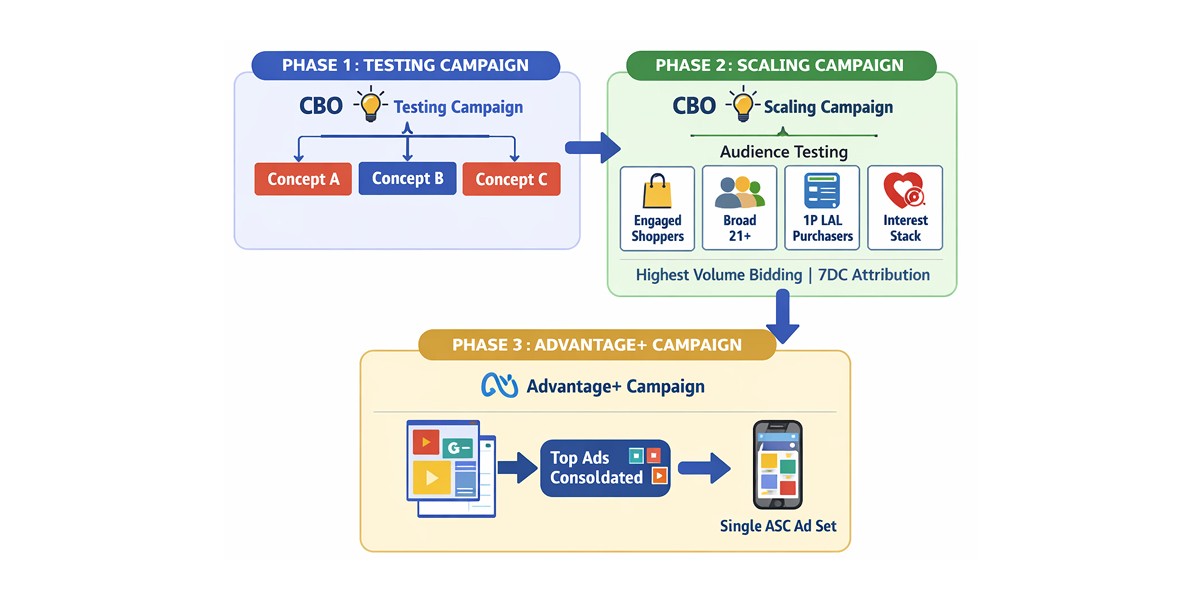
Most well-run Meta Ads accounts in 2026 follow a predictable evolution across three campaign types. You'll naturally move through these phases as your account scales.
Phase | Campaign Type | Primary Goal | Management Style |
|---|---|---|---|
1 | Creative Testing | Identify winning hooks and concepts | High churn, exploratory, "messy" |
2 | Scale Campaign | Stable, profitable growth | Low interference, proven winners only |
3 | Challenger Campaigns | Revive underused winning ads | Fresh budget for stagnant creatives |
Top-of-Funnel Campaigns: Protecting Long-Term Performance
The fourth campaign type — and the most strategic — is the Top-of-Funnel (ToF) Campaign. This is typically introduced once an account is spending around $50,000 per month.
See our Alaskan Salmon Co. case study for a scaling example.
A Top-of-Funnel campaign brings brand-new people into the funnel. It runs at about 5% of total budget with ROAS that looks terrible compared to main campaigns.
That's intentional, and that's the entire point.
A ToF campaign is constructed differently than your main campaigns:
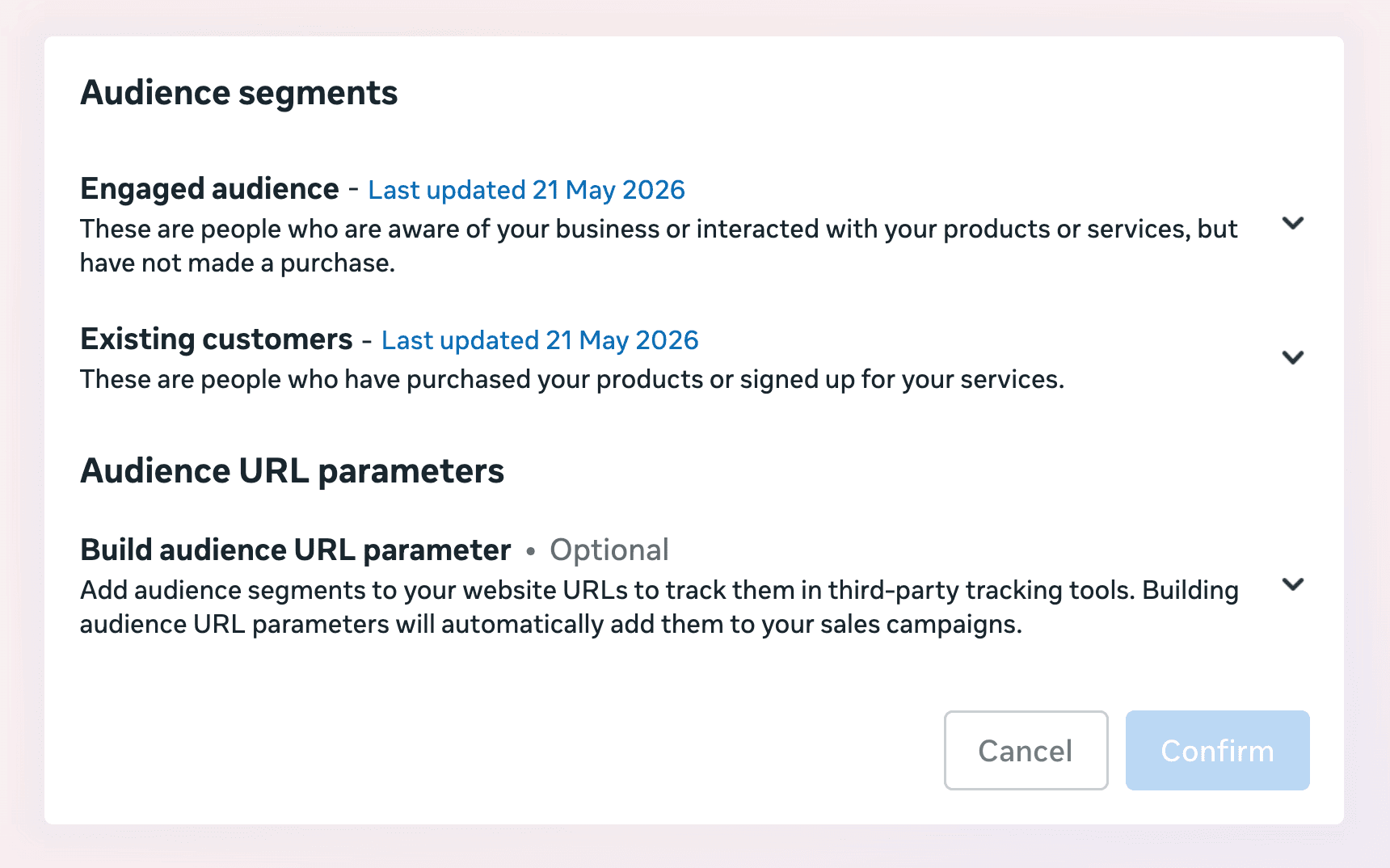
Exclude warm audiences: Purchasers, website visitors, add-to-cart users, video viewers, and past engagers.
Optimize for upper-funnel: Target landing page views instead of purchases to reach future-ready prospects.
The Top-of-Funnel campaign feeds your purchase campaigns. Without it, frequency climbs, ROAS declines, and your account hits a ceiling. With it, you replenish warm users for scale and challenger campaigns to convert.
Frequency and First-Time Impression Rate: The Health Metrics
Beyond ROAS and CPA, two metrics serve as the canary in the coal mine for Meta Ads account health:
Frequency
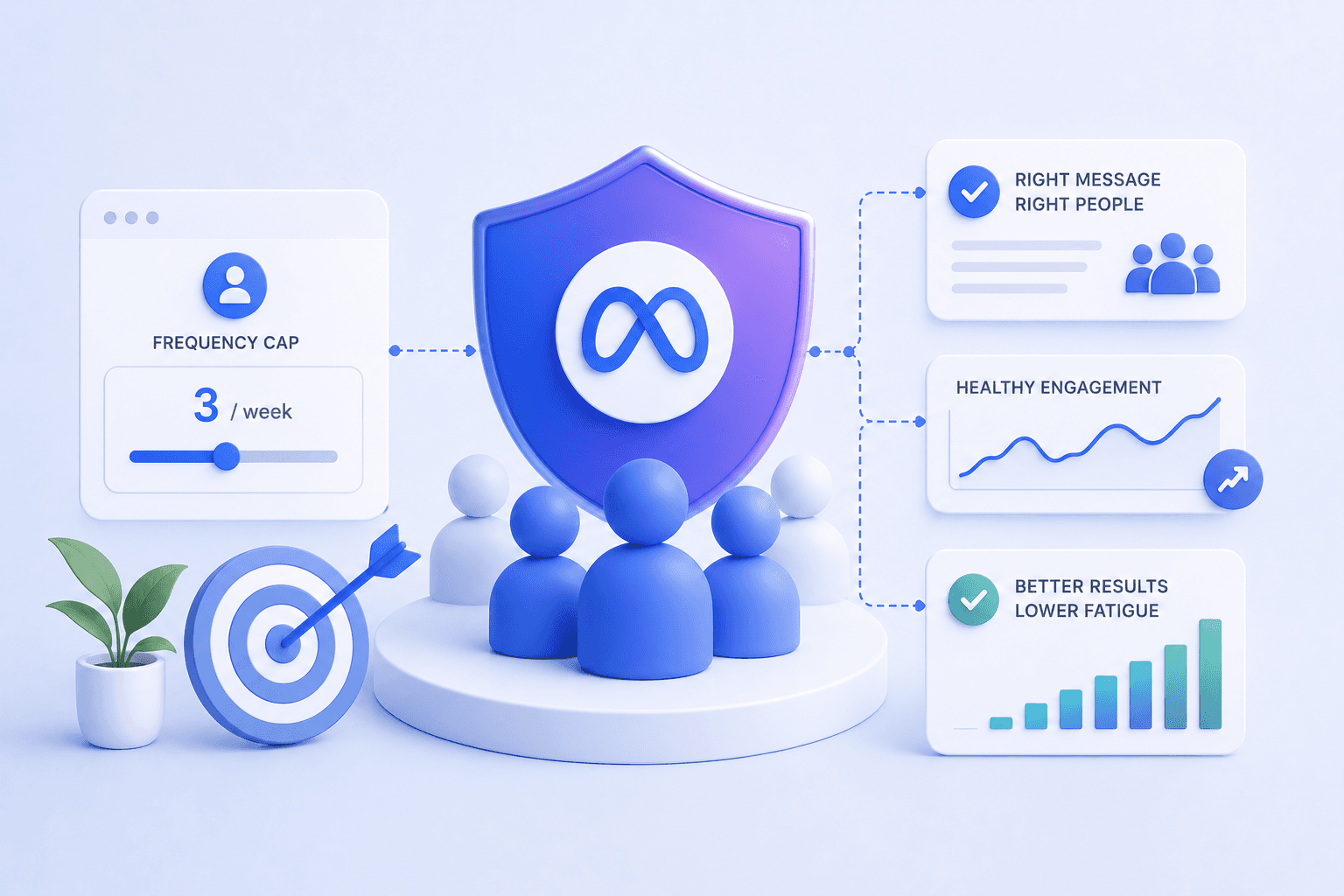
Frequency measures how many times the average user has seen your ads. Rising frequency signals a problem.
You're hammering the same audience repeatedly, and performance will eventually decline. For a beginner-friendly walkthrough of Meta Ads setup, see Buffer's Facebook Ads beginner's guide.
You want frequency to be flat or declining at the account level.
First-Time Impression Rate
First-Time Impression Rate is the inverse: the percentage of impressions reaching new, unique users. It's calculated as total reach divided by total impressions.
You want First-Time Impression Rate to be flat or rising.
These metrics act as a leading indicator. Frequency and first-time impression rate move before ROAS or CPA declines.
Track them weekly. Track them across rolling 30- and 90-day windows.
When they drift wrong, add or expand top-of-funnel spend before performance breaks. Read our guide on how to write a Facebook creative brief to keep your funnel fed.
Meta Ads Account Structure: Putting It All Together for Beginners
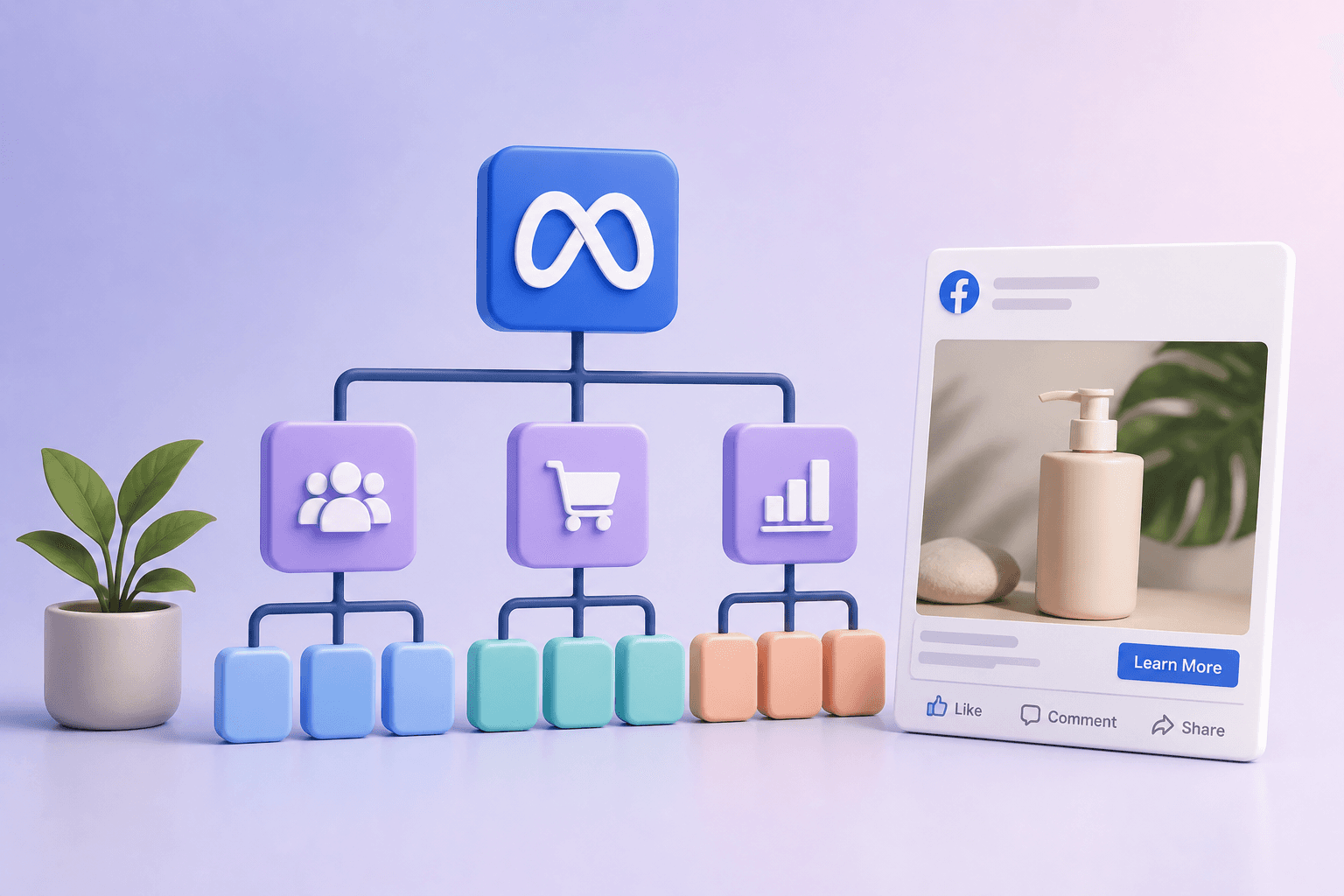
A mature Meta Ads account in 2026 — whether it's spending $20,000 or $500,000 per month — almost always follows the same shape. Explore our client case studies to see this structure in action:
One Creative Testing campaign (the sandbox)
One Scale Campaign (proven winners)
One or more Challenger Campaigns (a waterfall for underspending winners)
One Top-of-Funnel campaign (protecting funnel health)
The hard part isn't elaborate account structure. It's the discipline to keep things simple, the creative strategy to keep feeding the testing engine, and the judgment to know when not to interfere. Many of the highest-leverage decisions are things you choose not to do:
Not pausing a high-spend, low-ROAS ad.
Not fragmenting into 25 ad sets.
Not chasing pretty numbers at incrementality's expense.
Master these principles: simple structures, machine learning data density, the breakdown effect, incrementality, and funnel health. You'll operate above most Meta advertisers. Work with our team to put these principles into practice.
Frequently Asked Questions
How many ad sets should a beginner Meta Ads account have?
For most accounts under $25,000 per month in spend, one to three live ad sets is usually optimal. Consolidate aggressively.
More ad sets means more fragmentation, which means less data going to each machine learning model. Our Facebook Ads management service handles this for you.
Should I pause Meta Ads with low ROAS?
Not necessarily. If an ad has low ROAS but gets significant spend, it's likely driving new visitors and supporting other ads in the set. Pause the ads Meta has already deprioritized — the ones spending pennies — not the high-spend, low-ROAS ones.
When should I launch a Top-of-Funnel campaign?
Most accounts benefit from introducing a Top-of-Funnel campaign around $50,000 in monthly spend, or earlier if frequency is climbing and First-Time Impression Rate is declining. Learn more about our paid media agency services.
What's the breakdown effect in Meta Ads?
The breakdown effect: ads driving the most incremental value often show the lowest ROAS because they acquire brand-new visitors who convert through other ads later. Pausing them collapses the entire ad set's performance.
What's the difference between a Scale Campaign and a Challenger Campaign?
A Scale Campaign holds your proven creative winners and runs continuously with minimal interference. Launch a Challenger Campaign when your Scale Campaign gets overstuffed and winning ads stop getting spend. It gives those ads fresh budget to compete.