7 Meta Ads Creative Strategies That Work in 2026
Meta Ads
March 12, 2026 | Updated September 2026

Table Of Contents
Get a creative production engine built for you
We're a small, hard-working team of creative strategists. Book a call today.
5. Stack Social Proof Within the First Three Seconds
Social proof includes reviews, testimonials, star ratings, or user counts that demonstrate popularity and credibility. Placing social proof early in the ad is critical—67% of mobile viewers swipe away if not engaged within the first three seconds, so leading with trust signals prevents the scroll.
The opening moments of any ad are the most valuable real estate. Leading with social proof taps emotional appeal immediately. A five-star rating or "10,000+ customers" in the first frame changes how viewers process everything that follows.
6. Design for Meta's Lattice System, Not Just Format Diversity
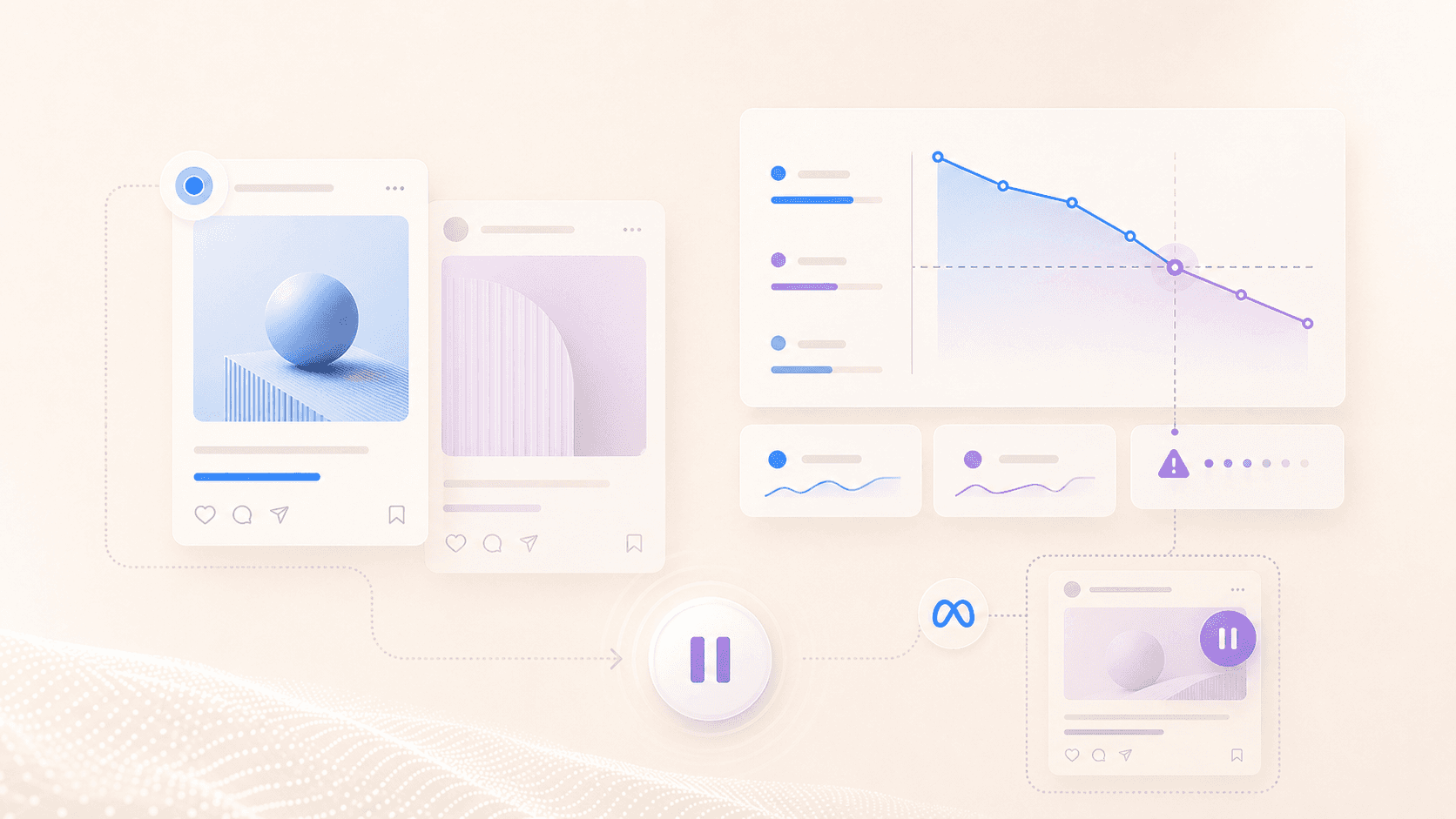
Meta's Andromeda update changed more than ad delivery, it changed how the algorithm reads your creative. The underlying infrastructure, known as Lattice, uses Entity IDs to cluster ads that look or message similarly. When two ads land in the same cluster, they compete against each other for the same auction slot instead of reaching distinct audiences. Meta effectively treats near-duplicate creative as one asset and splits impressions between them, which drives up CPMs and slows learning.
This means format diversity isn't a nice-to-have anymore, it's how you avoid competing against yourself. A video ad and a static ad built around the identical hook and offer can still get flagged as redundant if Lattice's visual recognition reads them as conceptually similar. Real differentiation has to touch funnel stage, angle, and format at the same time, not just swap image for video.
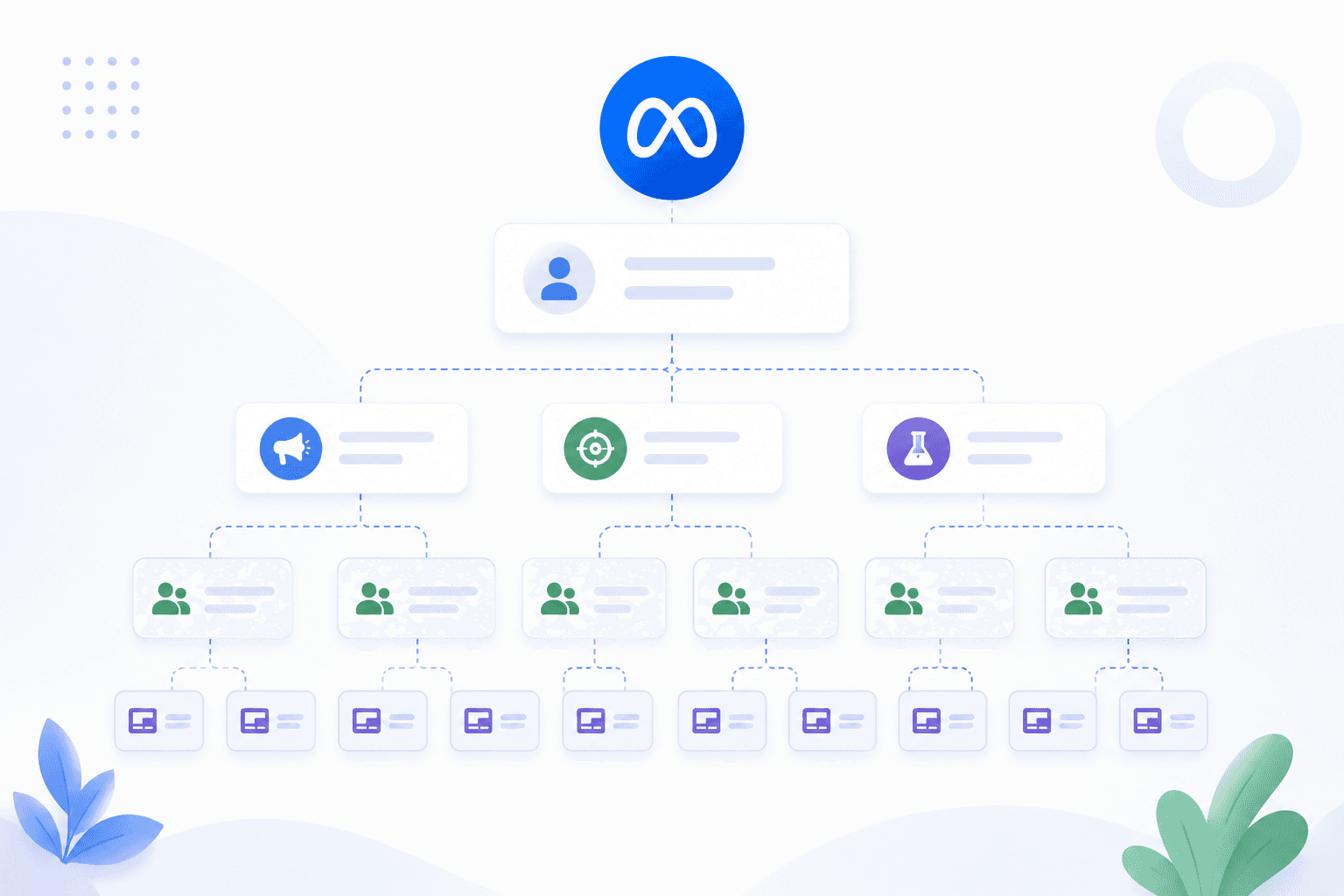
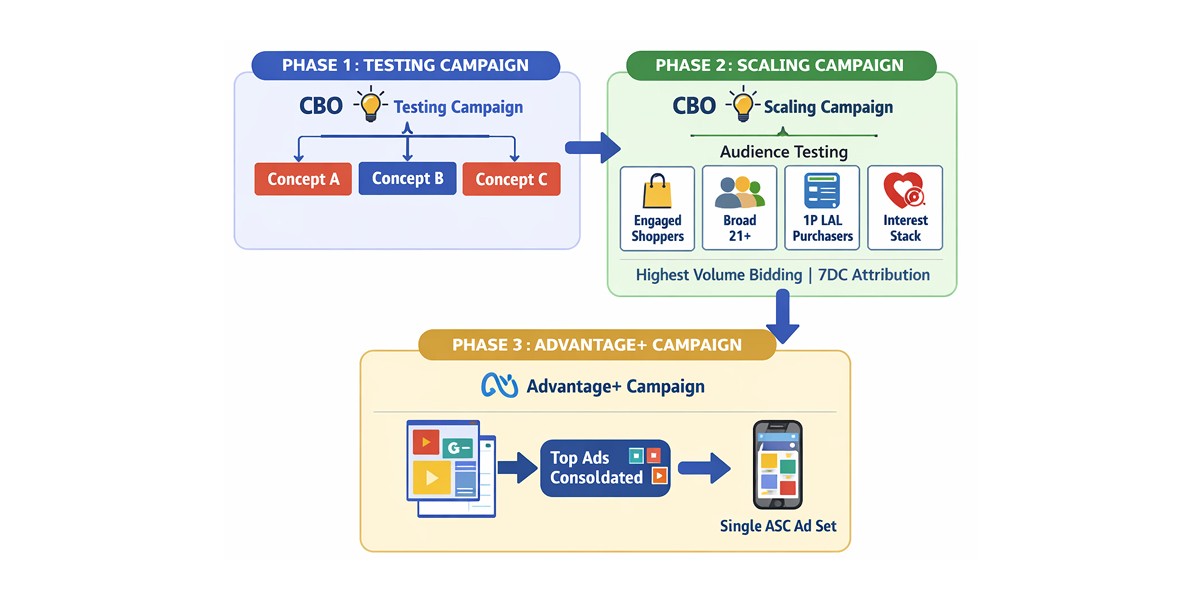
A practical way to structure this: pick 3 funnel stages (TOFU, MOFU, BOFU), 3 distinct pain-point angles per stage, and 3 formats (static, video, catalog/DPA) per angle. That gives you enough range for Meta's system to treat each asset as a unique signal, without producing so many variants that you can't get statistically meaningful data on any of them.
Once you've found a winner through this kind of structured testing, resist the urge to iterate narrowly on it (new headline, new color). Instead, take the winning message and rebuild it in a different format entirely, that's what actually reads as new information to Lattice, rather than a duplicate
7. Align Creative Angle With Funnel Stage and Landing Page
Creative works best when it matches where the customer is in their journey. Top-of-funnel creative, like UGC or influencer content, focuses on awareness and education. Bottom-of-funnel creative, like static ads with direct offers, focuses on conversion.
The landing page has to match the ad's message. A disconnect between ad and landing page kills momentum and tanks conversion rates. When someone clicks expecting one thing and lands on something different, they bounce. This alignment is where many brands leave significant performance on the table.
Engineer the First-Three-Second Hook
Treat the opening as its own deliverable. Our operating principle: hook strength in the first 3 seconds determines roughly 80% of an ad's performance. Everything after the hook only matters if the hook earns the view
Most brands write one hook and reuse it. Instead, keep a hook bank and pull from proven patterns:
Reaction opener: a genuine on-camera response that signals something worth watching.
Trigger word: open on a specific, pattern-breaking word your customer reacts to
Problem–solution: name the pain in the first line, then promise the fix.
POV: frame the shot from the viewer's perspective ("POV: you finally fixed [problem]").
"Stop scrolling if you have [problem]": call out the exact person you want
The rule that makes this operational: every video variant gets its own distinct text hook in the first 3 seconds. Pull each one from the client's hook bank. Same body with a different opening line counts as a real test to Meta's system. Reusing one hook across ten cuts does not.
When you iterate on a winner, add a fresh headline in those first 3 seconds before you touch anything else. For the full pattern library, see our performance editor's playbook for hooks.
Creative Production at Scale: Building a Content Factory
Even the best meta ads creative strategies fail without volume behind them. In our accounts, fewer than 10-25% of ads ever find scale. A typical stalled account we inherit has just 1-5 creatives carrying all the spend.
Our field guide fix is blunt: ship 20-30 new variations per week once you are spending $150K-$2M per month. Creative is the new targeting now, so the pipeline has to run like a factory, not a one-off project
Build Distinct Concepts, Not Variations
Meta's Andromeda and Lattice era rewards range. It wants 25 different concepts, not 25 versions of one. Recolored buttons and swapped headlines read as duplicates to the system and split your impressions.
Speed keeps that pipeline full. Our 20-minute iteration loop takes a winning static, generates 25 headline variants, rebuilds them in Figma, and exports for upload in under 20 minutes. Volume without a system just burns budget.
Run a Content Factory With a Tight Creator Brief
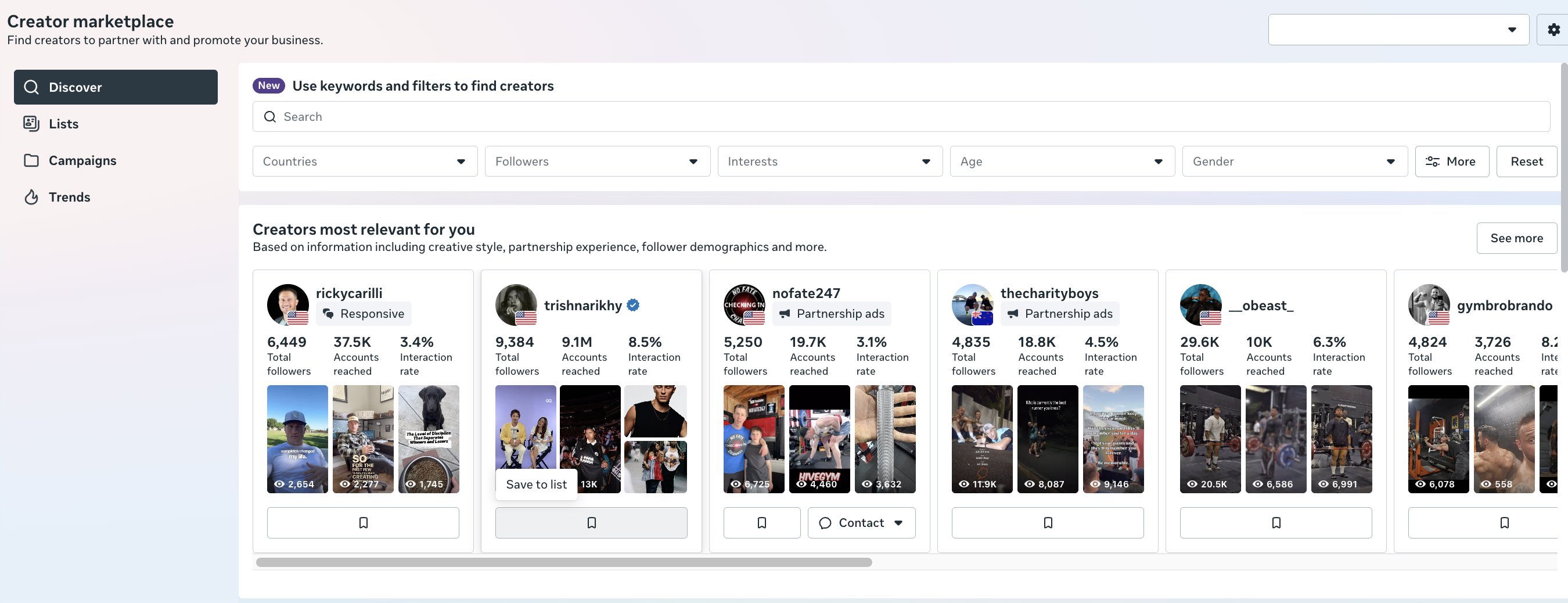
Sourcing creators is how you hit that volume. Give every creator the same brief spec so the raw footage comes back usable:
Shoot 9x16 vertical, with all text inside the center safe zone.
Keep each clip to a 20-second minimum.
Script 3-5 talking points per brief, tied to real customer language
Tag every asset by hook, angle, ailment, and format so you can read what wins.
Our rule of thumb: 500 raw beats 80 polished. If you shipped fewer than 30 new creator pieces last month, you have a bottleneck, not a factory.
Use AI for Volume, but Keep Humans at the Decision Point
AI imagery earns its place in top-of-funnel tests. One apparel brand in our portfolio hit an 8x ROAS (return on ad spend) at a $20 CPP (cost per purchase) for under $30 of production. See our breakdown of Advantage+ AI creative enhancements for where the tooling actually helps.
But audiences increasingly spot AI at a glance. Keep raw, human creative at the decision point, where real trust closes the purchase.
The Flighted Creative Framework
Avoiding The “Blank Page” Problem: How to Systematize Creativity in Ads
Creating your next winning ad shouldn't carry the mystique of writing a hit song. This is where most advertisers fail. Their creative production relies on someone staring at a blank page, tasked with being creative. The issue? Most people simply aren’t inherently creative, and if they are, creativity erodes at scale. The solution is to systematize creativity into your org, and that's exactly what a messaging testing framework is designed to do.
The Three Variables Behind Every Winning Ad
Most high-performing ads succeed because they feature a hyper-relevant example of at least one of the following:
A pain point — a specific problem your product solves, articulated in language your customer would actually use
A benefit — a concrete improvement to someone's life that results from one or more of your product's features
A customer avatar — a detailed, vivid description of a specific customer segment that makes the right reader feel genuinely seen
When you systematically work through a thorough list of each of these variables, even the least creatively-inclined person on your team will start stumbling onto winning ad concepts.
Step One: Build Your Messaging Matrix
Start by building out a messaging matrix that captures as many pain points, benefits, and customer avatars as possible. To accelerate this process, we use the following prompt:
You are a direct-response copywriting strategist with deep consumer psychology expertise. I will provide you with a product URL. Your task is to analyze all publicly available information on that page — product description, features, ingredients, brand story, FAQs, and especially customer reviews — and return a comprehensive analysis structured as follows:
Pain Points — every possible frustration, fear, or unmet need the customer might have that this product could solve. Include both obvious pain points and second-order pains (e.g., social embarrassment, wasted time, lack of confidence). Phrase these in raw, emotionally resonant language.
Customer Avatars — every distinct customer segment that would realistically buy this product. Include demographic, psychographic, and situational angles. Describe each avatar in 1–3 vivid sentences.
Benefits — all features translated into benefits using first- and second-order thinking. Go beyond surface utility into deeper transformations (e.g., not just "moisturizes skin" but "I finally feel confident enough to go makeup-free at brunch"). Phrase as emotionally engaging, ad-ready outcome statements.
Write as a world-class direct-response copywriter who understands Meta ads. Make the language raw, human, and emotionally compelling — not sterile or corporate. Prioritize resonance: speak to secret fears, subtle frustrations, and aspirational desires.
Here is the URL: {{INSERT PRODUCT URL}}
Step Two: Test Each Variable Across Formats
Once your matrix is built, test each variable with a minimum of two ad formats — at least one static and one video. Format selection is inherently a spaghetti-against-the-wall exercise, but tools like Foreplay can help you bring a more data-driven approach to the formats you select when testing messaging. A reliable starting point is the 1:2 approach: produce one new ad using your messaging with an existing winning format already in your ad account, and two ads using entirely new formats used by your competitive set.
The Result
Following this process gives you a structured creative testing roadmap capable of generating over 100 distinct ad variants — in under 15 minutes. Better still, the entire workflow can be handed off to a relatively junior video editor or graphic designer once the messaging matrix is in place. The strategy is done upfront; the execution becomes almost mechanical.
How to Build a Creative Campaign Testing Framework
A creative strategy without structured testing leads to wasted spend and unclear learnings. The framework below provides an operational system for identifying winners and scaling them.
Cadence should scale with budget, not just calendar days. Use the table below as a starting allocation, then adjust based on how fast each funnel stage burns through its minimum spend threshold.
Funnel Stage | Weekly Concepts to Test | Minimum Spend Before Judging | Primary Signal | Refresh Trigger |
|---|---|---|---|---|
TOFU (cold) | 3-4 new concepts | 30-50 conversions per variant, or 1x AOV in spend per concept | Thumbstop rate, Hook Rate (3-sec views ÷ impressions) | Rising frequency + falling CTR |
MOFU (engaged, non-converted) | 2-3 new concepts | 20-30 conversions per variant | CTR, cost per landing page view | Declining time-on-site |
BOFU (high intent) | 1-2 new concepts | 10-15 conversions per variant | Spend allocation, CPA | CPA creeping up week-over-week |
Account-wide minimum | 2-4 concepts/week (small budgets); 4-6/week ($50K+/month accounts) | — | — | Every 2-4 weeks on high-spend creative |
Set a Weekly Creative Testing Cadence
Consistency matters more than volume. Most brands benefit from testing 2-4 new creative concepts per week. This cadence maintains a steady pipeline of potential winners without overwhelming your account structure.
Smaller budgets might test 2 concepts weekly. Larger accounts spending $50K+ monthly can push toward 4-6. The key is maintaining rhythm rather than testing in sporadic bursts.
Isolate One Variable Per Test
Variable isolation means changing only one element in each test. That might be the hook, the visual, or the format. Testing multiple variables at once produces data that's impossible to interpret clearly.
If you're testing a new hook, keep everything else identical. If you're testing a new format, use the same messaging. Clean tests produce actionable insights. Messy tests produce confusion.
Define Win Criteria Before Launch
Before launching any test, define the metrics that constitute success. This might be a specific thumbstop rate, CTR, or CPA threshold. Without clear criteria, it's easy to chase vanity metrics that don't contribute to revenue.
One important note for 2026: Meta's GEM ad delivery model sequences delivery across multiple touchpoints, which means ad-level CPA is no longer a reliable indicator of creative quality. High-spending ads with seemingly high CPAs may be supporting performance elsewhere in your account. Spend allocation is now the primary indicator of creative efficacy.
Key Metrics to Measure Creative Marketing Performance
Each metric reveals something different about how your creative is performing. Knowing what each one measures helps diagnose problems and identify what's working.
Metric | What It Measures | Why It Matters for Creative |
|---|---|---|
Thumbstop Rate | % who paused on ad | Hook effectiveness |
Click-Through Rate | % who clicked | Message resonance |
Spend Allocation | % of overall ad account spend | Overall efficacy in the funnel |
CPA / Conversion Rate | Cost and rate of purchases | Bottom-line creative impact |
Thumbstop rate tells you if the hook is working. CTR tells you if the message resonates. Spend allocation tells you if Meta's algorithm trusts the creative. CPA tells you if it's actually driving profitable conversions. Together, they paint a complete picture.
Creative Marketing Tactics That Scale With Paid Media
Scaling ad spend while maintaining performance is a challenge that trips up many growing brands. The tactics below help maintain efficiency as budgets increase.
Adapt Creative to Each Platform: Meta vs. TikTok/Reels
Don't run one identical asset everywhere. Take the same core concept and cut it for each surface, because each placement rewards a different feel.
Reels and Stories favor native, lower-fi vertical video that looks like organic content, not a produced spot.
Feed placements tolerate static and carousel, where a clean product shot and a strong offer still convert.
TikTok rewards faster, creator-led, trend-aware pacing over the more polished Meta spot.
The baseline stays constant across all of them: 9x16 vertical, sound-off legibility, and text inside the safe zone. What changes is pacing, tone, and how quickly the creator gets to the point. Shoot the raw footage once, then edit it three different ways rather than forcing one cut to fit every feed.
Whitelisting through verified creator handles pays off differently by platform. In our accounts, running ads through a creator's verified handle cuts CPC (cost per click) by roughly 25-35% on Meta and 30-55% on TikTok. The same asset served from a brand handle rarely sees that lift, so your sourcing model matters as much as the edit.
Plan the adaptation into the brief, not as an afterthought at upload. For the platform-specific playbook, see our TikTok ad best practices for 2026.
Refresh Creatives Before Fatigue Sets In
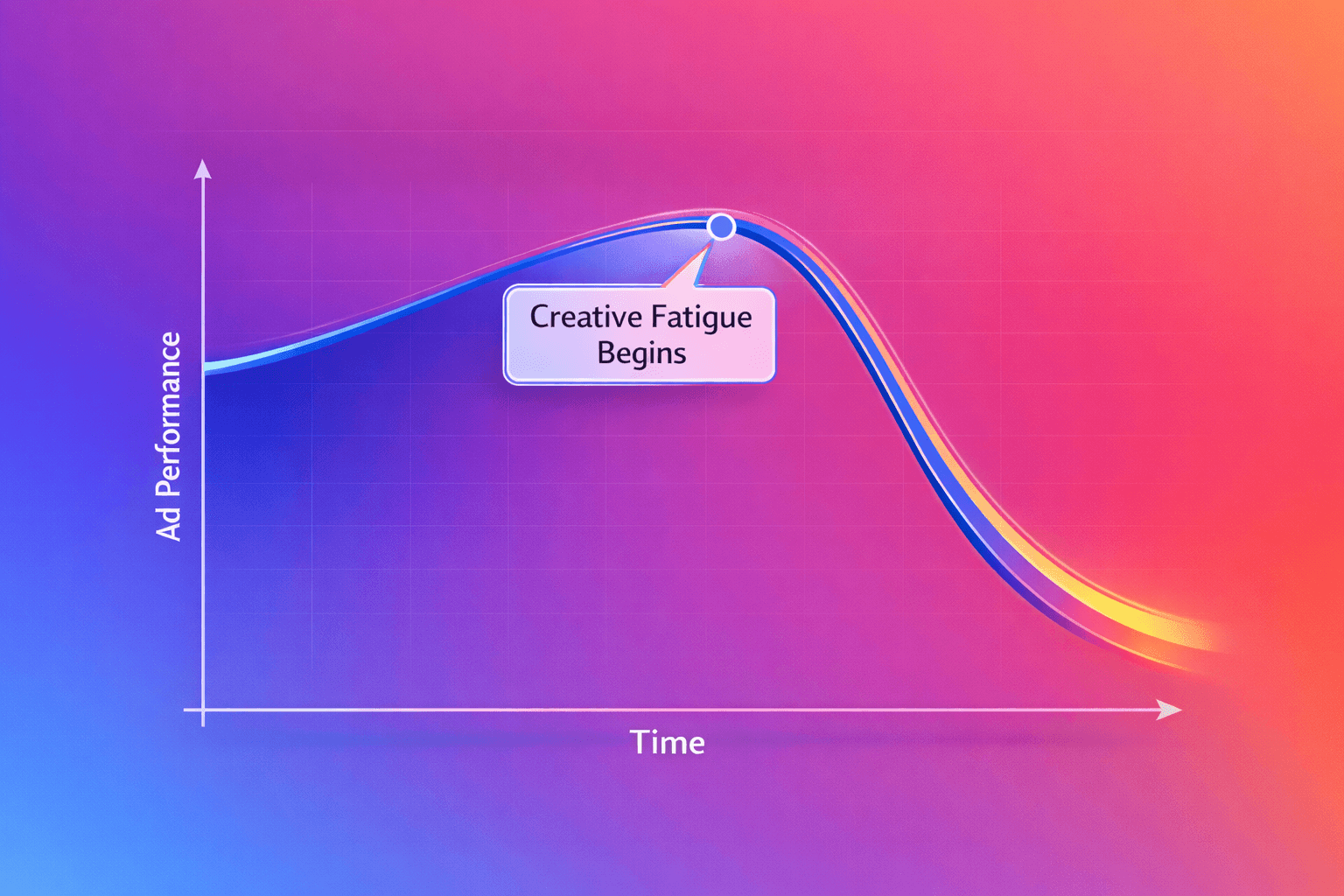
Creative fatigue is the decline in ad performance that occurs when an audience has seen an ad too many times. A rising frequency paired with a declining CTR is a clear signal that a refresh is needed.
Don't wait for performance to crater. A disciplined creative production process ensures proactive refreshes keep campaigns healthy. For most accounts, high-spend creatives start showing fatigue every 2-4 weeks.
Build a Creative Variation Library
A creative library is a collection of modular ad components, including hooks, bodies, and CTAs, that can be mixed and matched. This system enables rapid iteration without creating new concepts from scratch every time.
Over time, the library becomes a competitive advantage. You'll know which hooks work, which CTAs convert, and which visual styles resonate with your audience. New tests become faster to produce and more likely to succeed.
Connect Creative Wins to Landing Page Optimization
The performance of any ad creative is ultimately capped by the quality of its landing page. An integrated approach that pairs creative testing with landing page testing maximizes conversions from every click.
When a creative wins, ask whether the landing page is holding it back. Often, the biggest gains come from optimizing the page behind the ad rather than the ad itself.
FAQs About Creative Ad Strategies
What is the 3-3-3 rule in marketing?
The 3-3-3 rule is a creative framework suggesting that an effective ad captures attention in the first 3 seconds, communicates its core message in the next 3 seconds, and delivers the call-to-action in the final 3 seconds. It's a useful mental model for structuring short-form video ads.
What is the 40-40-20 rule in advertising?
The traditional 40-40-20 rule states that 40% of a campaign's success comes from audience targeting, 40% from the offer, and 20% from the creative. On modern algorithmic platforms like Meta, however, creative influence has grown significantly and is now considered the largest lever for success.
How many ad creatives should brands test per month on Meta?
The ideal number depends on budget, but most brands benefit from testing 8-16 new creative concepts per month, roughly 2-4 per week. This maintains a steady pipeline of potential winners without overwhelming the account.
How often should Meta ad creatives be refreshed to avoid fatigue?
The timing depends on spend level and audience size. Performance metrics are the best indicator. When you see rising frequency paired with declining CTR, it's time to refresh. For most accounts, this happens every 2-4 weeks on high-spend creatives.
What is the difference between creative strategy and brand strategy?
Creative strategy focuses on how to communicate specific messages through ad executions for a particular campaign. Brand strategy defines the company's overarching identity, positioning, and values that inform all creative work over the long term. Creative strategy operates within the guardrails that brand strategy sets.