Meta Ads Funnel for B2B SaaS: Full-Funnel Strategy from Cold to Closed-Won
Meta Ads
June 4, 2026
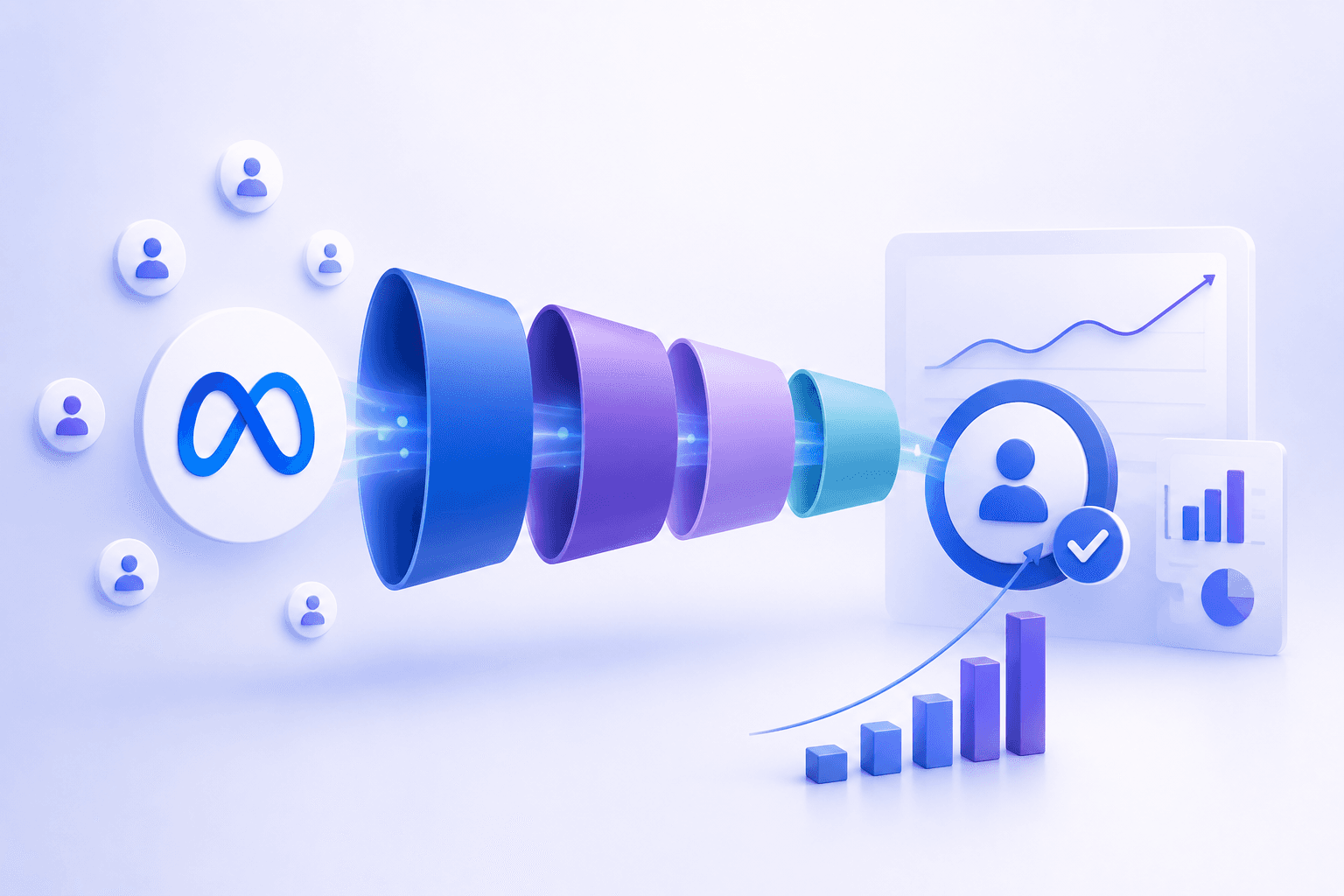
Table Of Contents
Most B2B SaaS companies overlook the Meta ads funnel for B2B SaaS when building their pipeline strategy, assuming "our buyers are on LinkedIn." Meanwhile, their competitors are acquiring demos at half the CPL by reaching the same decision-makers while they're scrolling Instagram on a Sunday morning.
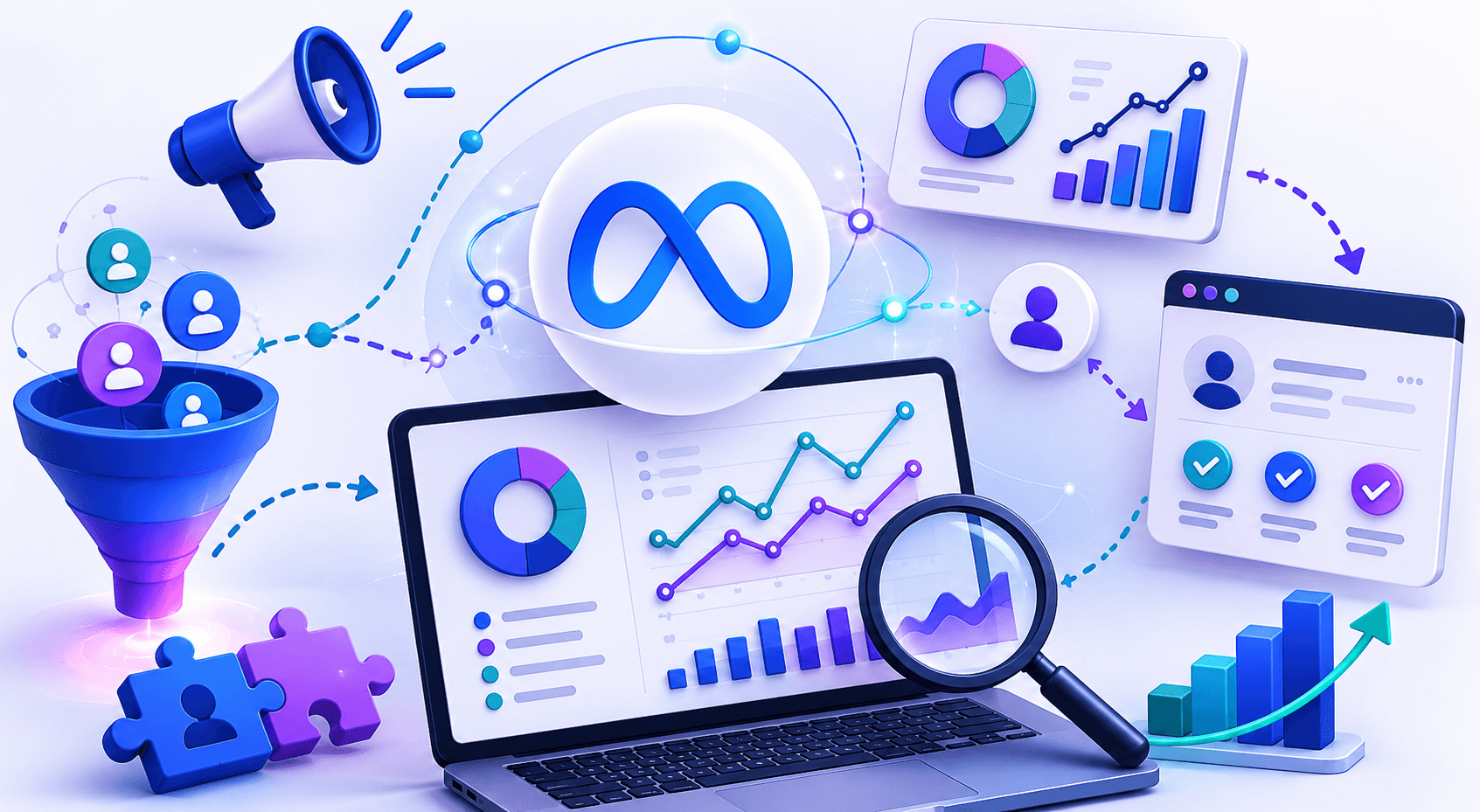
The difference between B2B SaaS companies that make Meta work and those that don't comes down to funnel architecture and measurement setup. This guide covers the full-funnel strategy from cold audience acquisition through closed-won attribution. It includes the tracking foundation, campaign structure, creative approach, and scaling mechanics that connect ad spend to actual revenue.
Key Takeaways
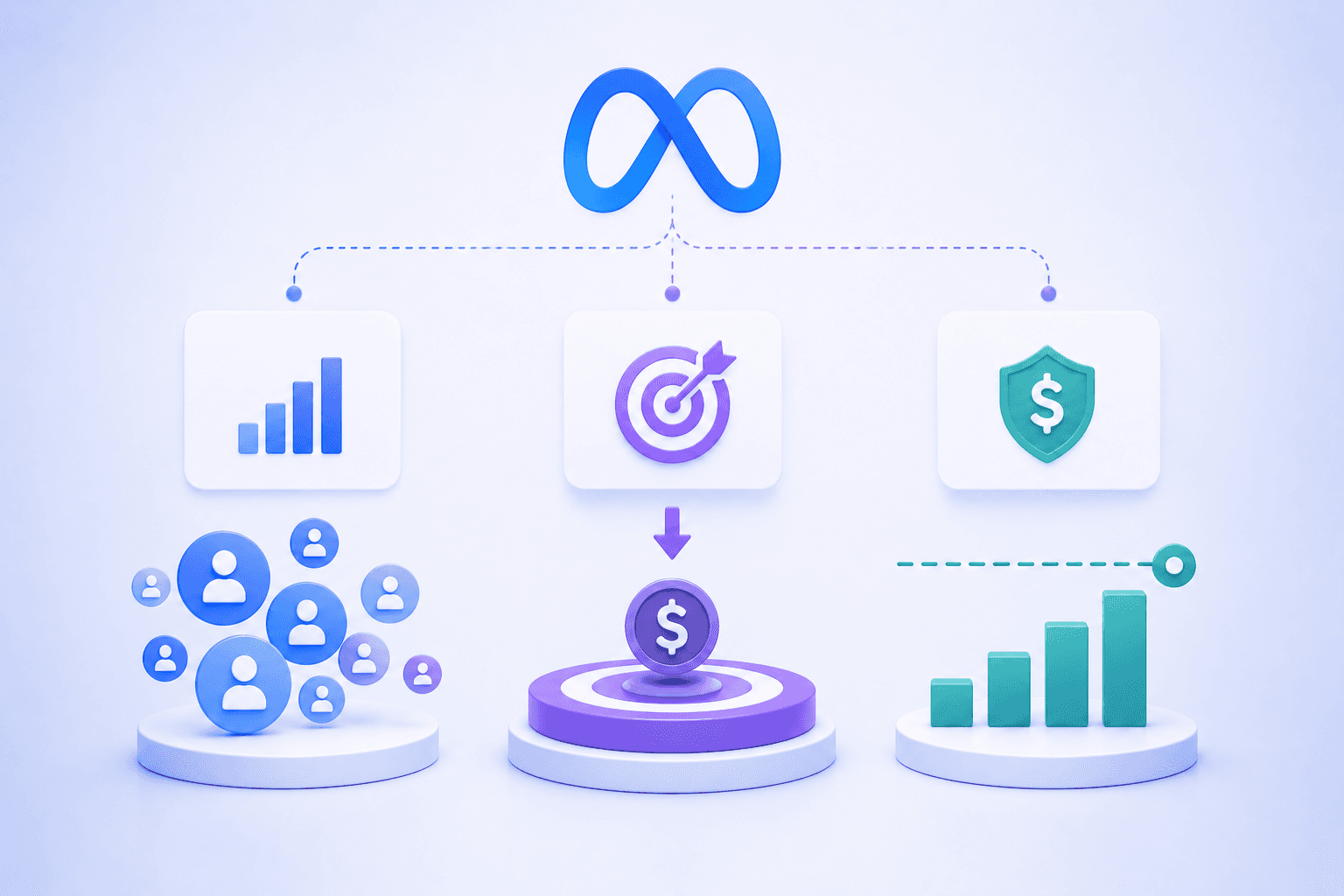
Meta CPMs (cost per 1,000 impressions) run lower than LinkedIn, reaching decision-makers outside work mode with less resistance.
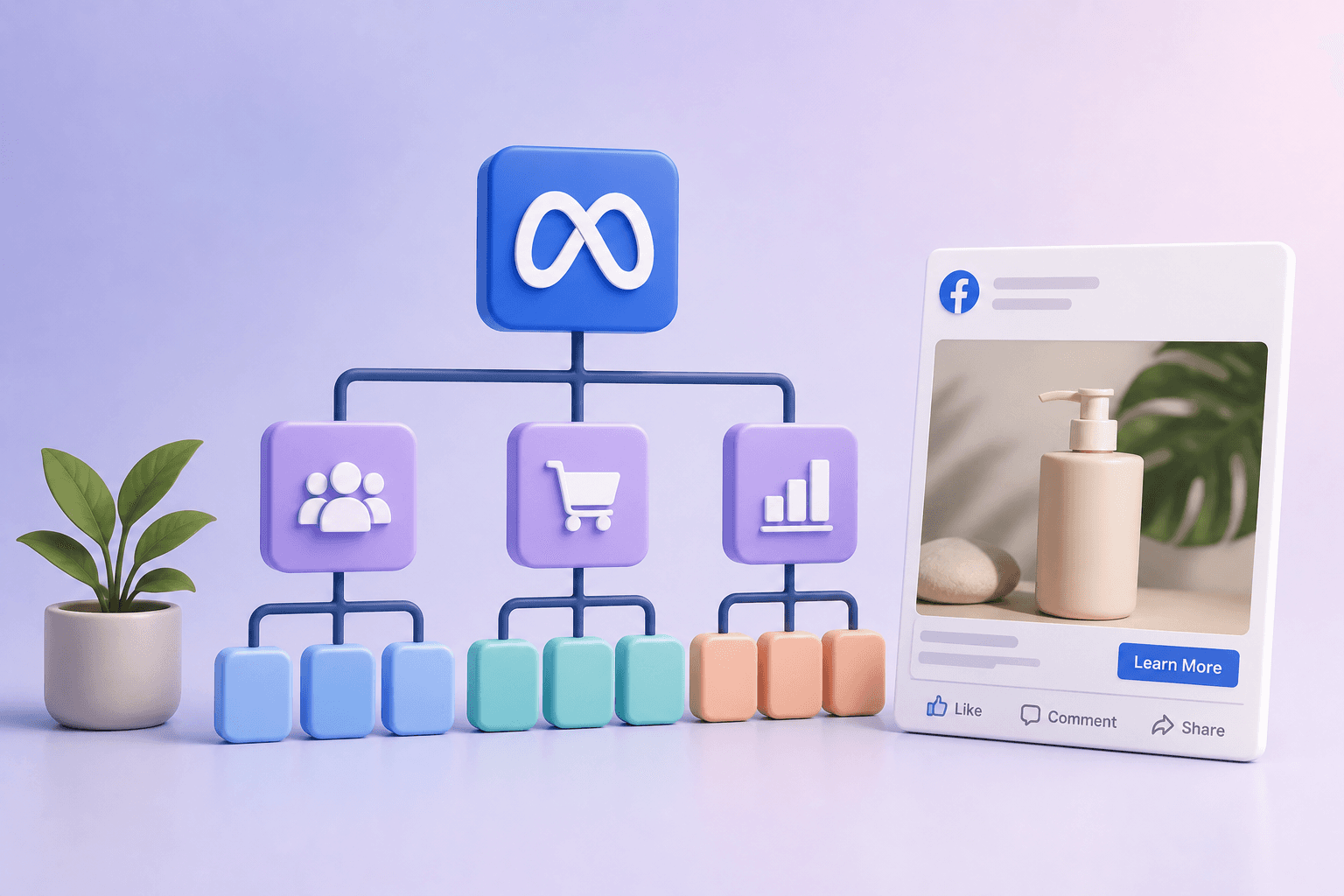
Three funnel stages—TOFU, MOFU, BOFU—each require different audiences, creatives, and conversion events.
Upload closed-won deals to Meta so the algorithm optimizes for revenue, not just leads.
Creative strategy and landing page optimization work together with paid media execution. Treating them as separate workstreams breaks the funnel.
Scaling spend without refreshing creative and expanding audiences degrades lead quality quickly. Watch frequency and First-Time Impression Rate as early warning signals.
1. Why Meta Ads Work for B2B SaaS Pipeline Generation
Meta Ads offer three distinct advantages for B2B SaaS pipeline generation:
Revenue-Based Optimization: Feed the algorithm signals tied to closed-won deals rather than just top-of-funnel form fills.
Cost Efficiency: Meta CPMs (cost per 1,000 impressions) typically run 4–6x lower than LinkedIn.
Lower Resistance: Reach decision-makers in a relaxed environment, reducing the "work-mode" mental barriers found on professional networks.
The platform also reaches decision-makers outside of work contexts. Someone scrolling Instagram on a Saturday morning has different mental barriers than someone checking LinkedIn between meetings. This creates space for awareness-stage content that wouldn't land in a professional feed.
Here's the other thing: Meta's algorithm improves with event signal quality. The more conversion events you send back—especially downstream events like demo-booked or closed-won—the better Meta gets at finding similar prospects.
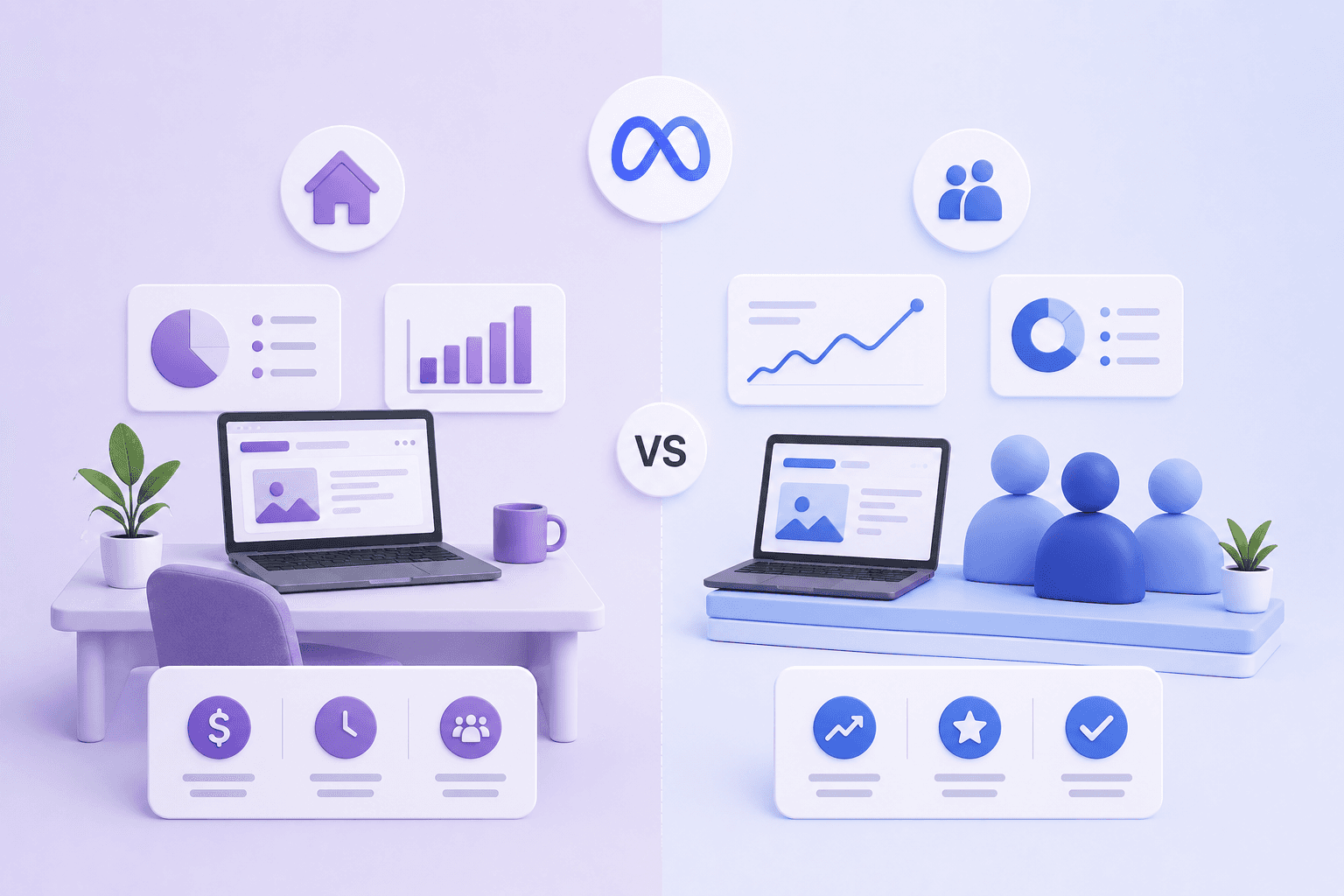
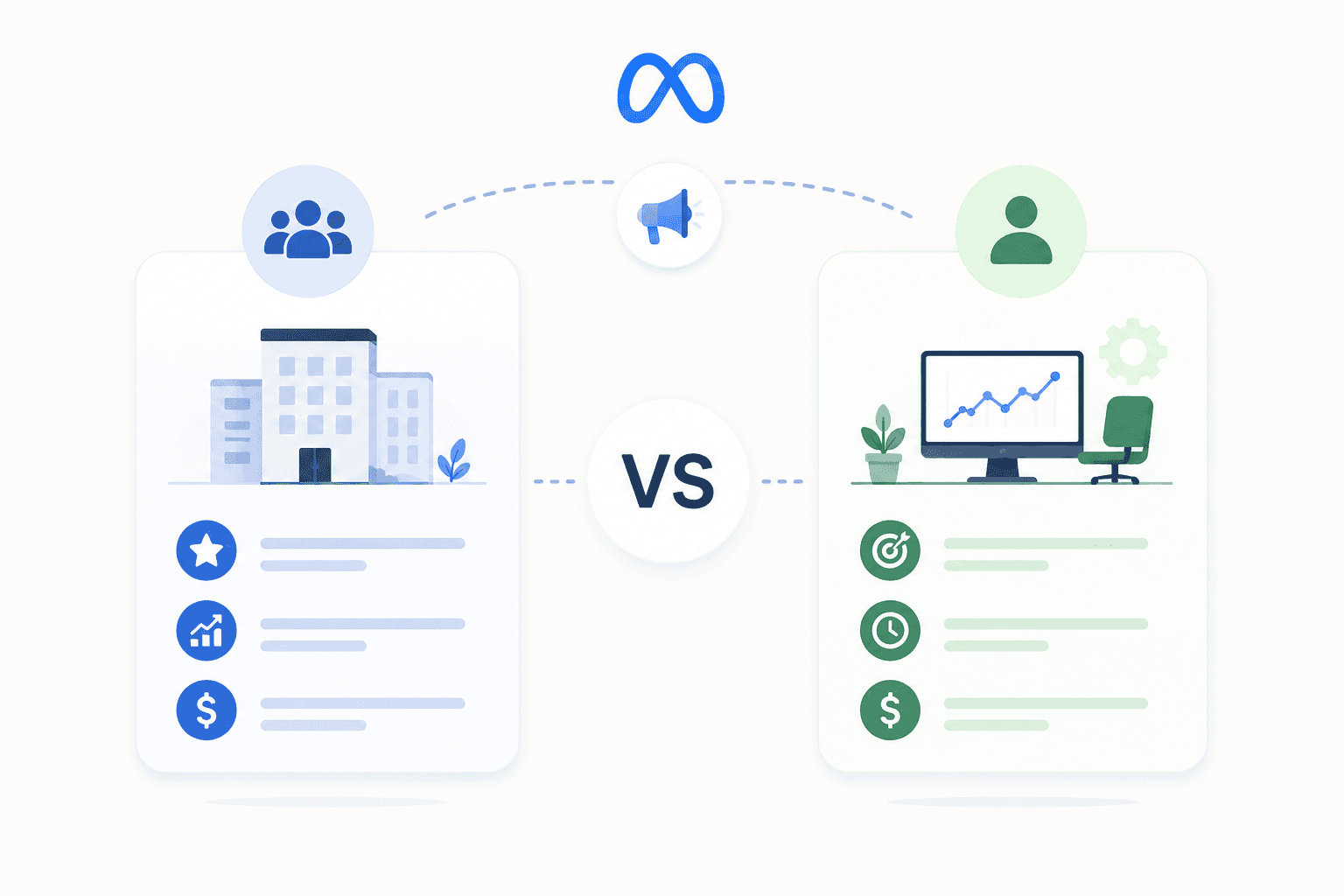
2. How a B2B SaaS Meta Funnel Differs from a DTC Funnel
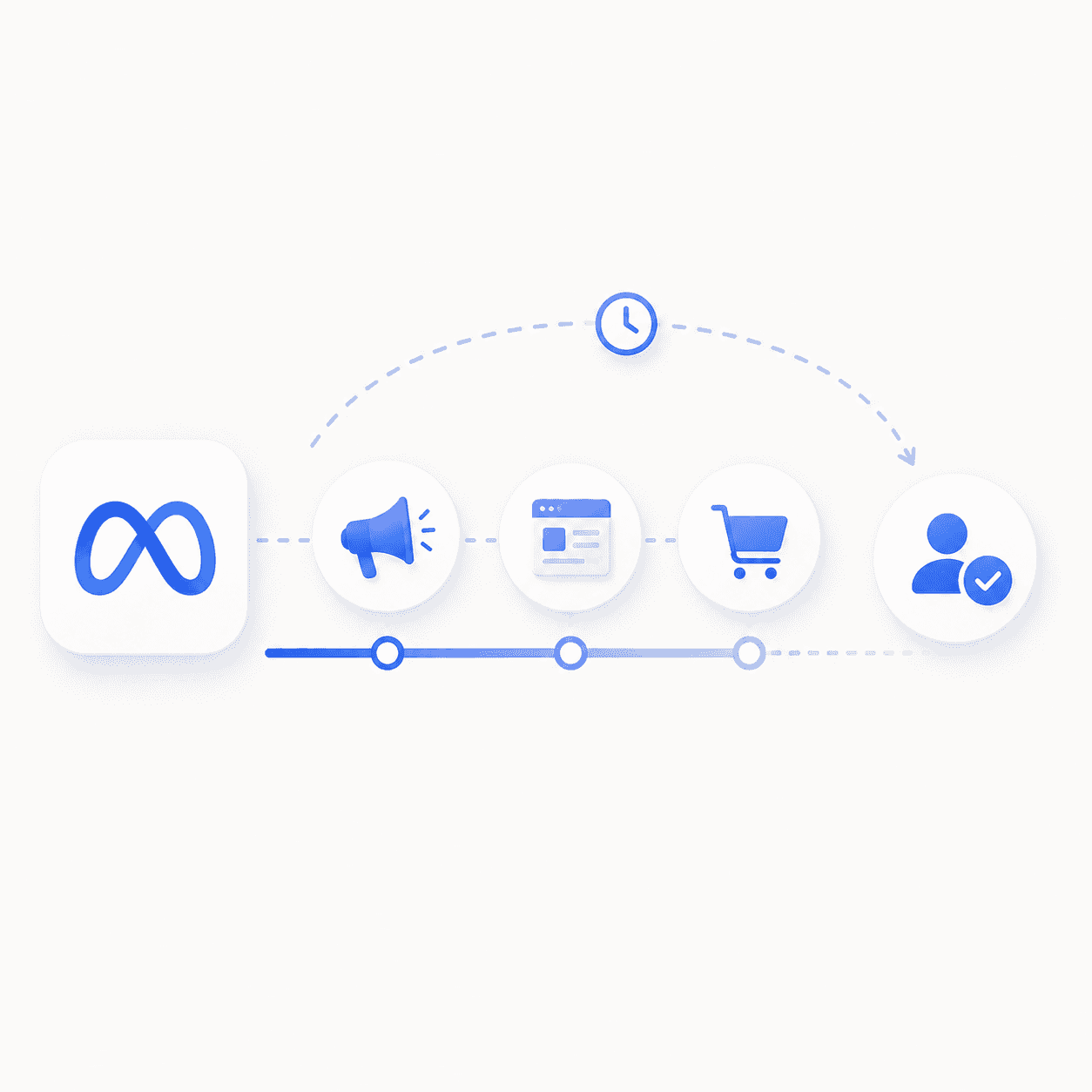
The core difference comes down to where the "purchase" happens. DTC transactions complete inside Meta's tracking ecosystem. B2B SaaS deals close in your CRM, often weeks or months after the first ad impression.
Factor | DTC Funnel | B2B SaaS Funnel |
|---|---|---|
Sales cycle | Days to weeks | Weeks to months |
Primary conversion | Purchase | Demo booked or trial started |
Audience size | Broad consumer | Narrow ICP (ideal customer profile) |
Creative approach | Product-focused, urgency-driven | Problem-aware, educational |
Attribution | In-platform ROAS (return on ad spend) | CRM-based, offline uploads required |
Because of this difference—Optif.ai's benchmark data puts the median B2B SaaS sales cycle at 84 days—these funnels require CRM integration and offline conversion uploads. Without them, you're optimizing for the wrong outcomes entirely.
3. Tracking Foundation for Cold to Closed-Won Attribution
Closed-won revenue tracking is what separates B2B SaaS advertisers who scale from those who churn budget. Before launching any campaigns, you want a tracking foundation that connects ad spend to closed-won revenue in your CRM.
Meta Pixel Setup for SaaS Conversion Events
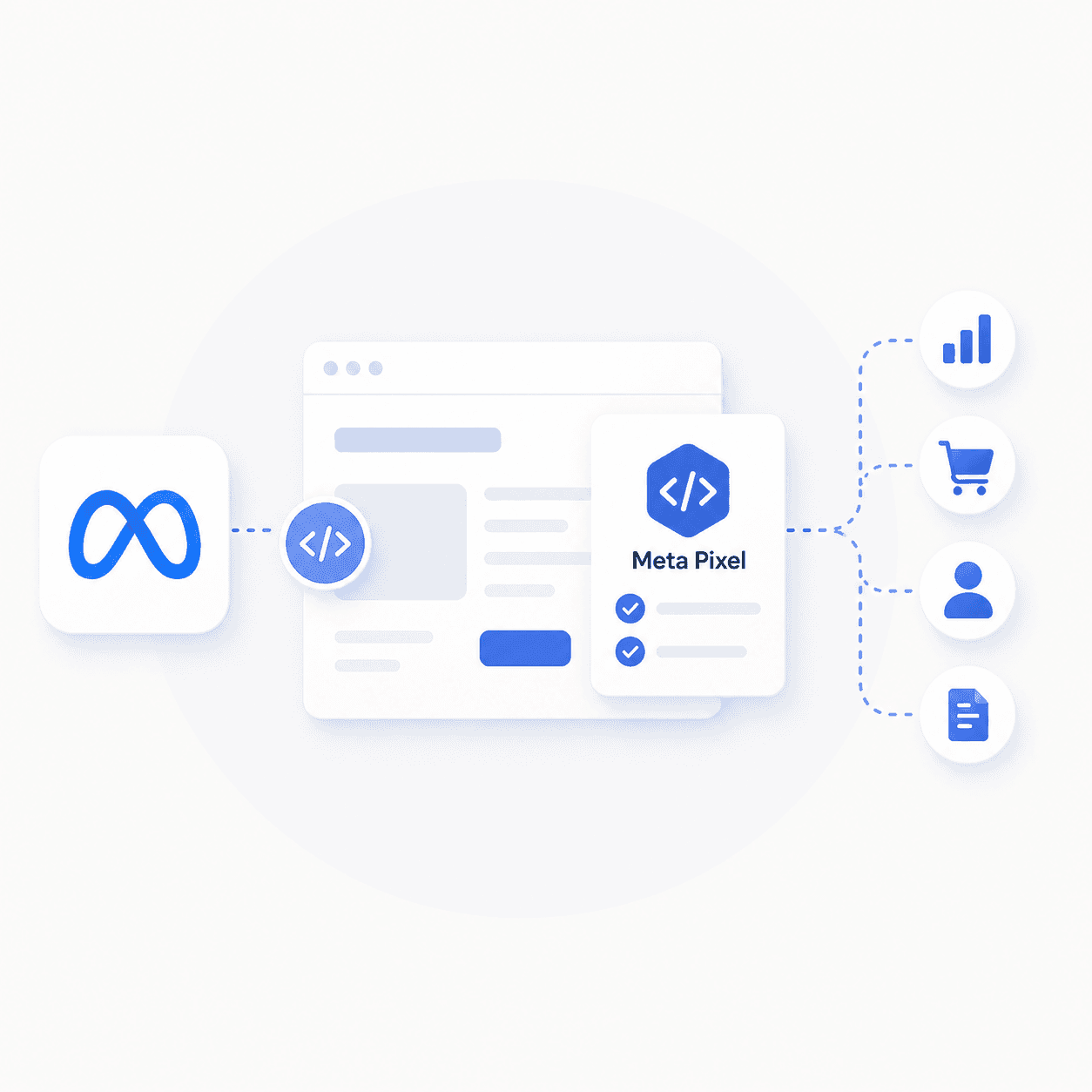
Configure pixel events at minimum for:
PageView: Fires on all pages
Lead: Fires on form submission
CompleteRegistration: Fires on demo confirmation or trial activation page
For trial-based products, add a custom event for trial start. This gives you a mid-funnel signal between lead and closed-won.
Conversions API for Server-Side Signal
The Conversions API (CAPI) sends event data directly from your server to Meta, bypassing browser limitations from iOS privacy changes. Browser-side pixel alone misses a significant portion of conversions on iOS devices. According to AppsFlyer's 2024 opt-in data, only 44% of US users give consent when prompted by App Tracking Transparency, meaning roughly 56% opt out—and those opt-outs strip browser-pixel signal entirely. Meta's own Conversions API documentation quantifies the additional conversions CAPI recovers when it runs alongside the Pixel—signal a pixel-only setup would otherwise miss on iOS.
This is the core problem with Meta ad attribution under iOS privacy for B2B SaaS: ATT opt-outs block the pixel from matching ad clicks to downstream conversions, so Meta under-reports iOS-sourced leads and can't optimize toward them. Server-side CAPI plus offline conversion uploads rebuild that signal path from cold click to closed-won. At Flighted, we validate true campaign impact with incrementality and holdout tests rather than trusting in-platform numbers alone—because shorter Meta attribution windows (7-day click, 1-day view) compound the gap on long B2B cycles.
When setting up CAPI, configure deduplication between pixel and CAPI events using event IDs. Without deduplication, you'll double-count conversions and throw off your reporting.
Offline Conversion Uploads for Closed-Won Revenue
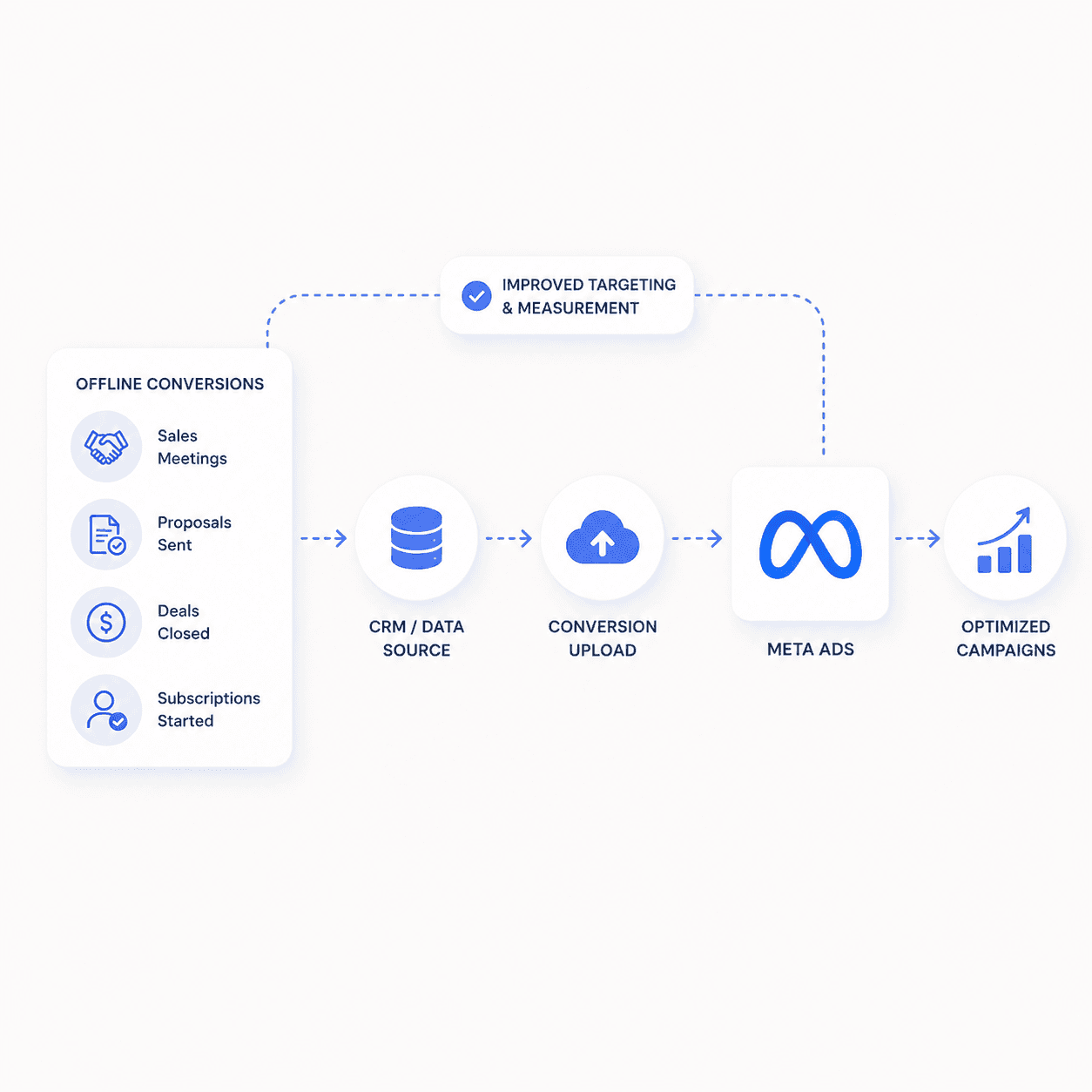
This is the critical B2B SaaS differentiator. Uploading closed-won deals from your CRM to Meta teaches the algorithm what an actual customer looks like—not just a form fill. See how we applied this for a B2B SaaS client in our case studies.
You can do this manually via CSV upload or automate it through integrations with HubSpot, Salesforce, or tools like Zapier. Either way, the data flow matters more than the method. On long B2B cycles, the lag between form-fill and closed-won can exceed Meta's attribution window, so the original click can no longer be matched. Upload downstream events (demo-booked, SQL, closed-won) as fast as your CRM allows to preserve the match.
UTM Structure for CRM Source Tracking
A consistent UTM structure lets you trace closed-won revenue back to specific campaigns:utm_source=meta&utm_medium=paid&utm_campaign={{campaign.name}}&utm_content={{ad.name}}
This connects your CRM reporting to your ad account, which is how you calculate true CAC (Customer Acquisition Cost) by campaign.
4. Full-Funnel Meta Ads Account Structure for B2B SaaS
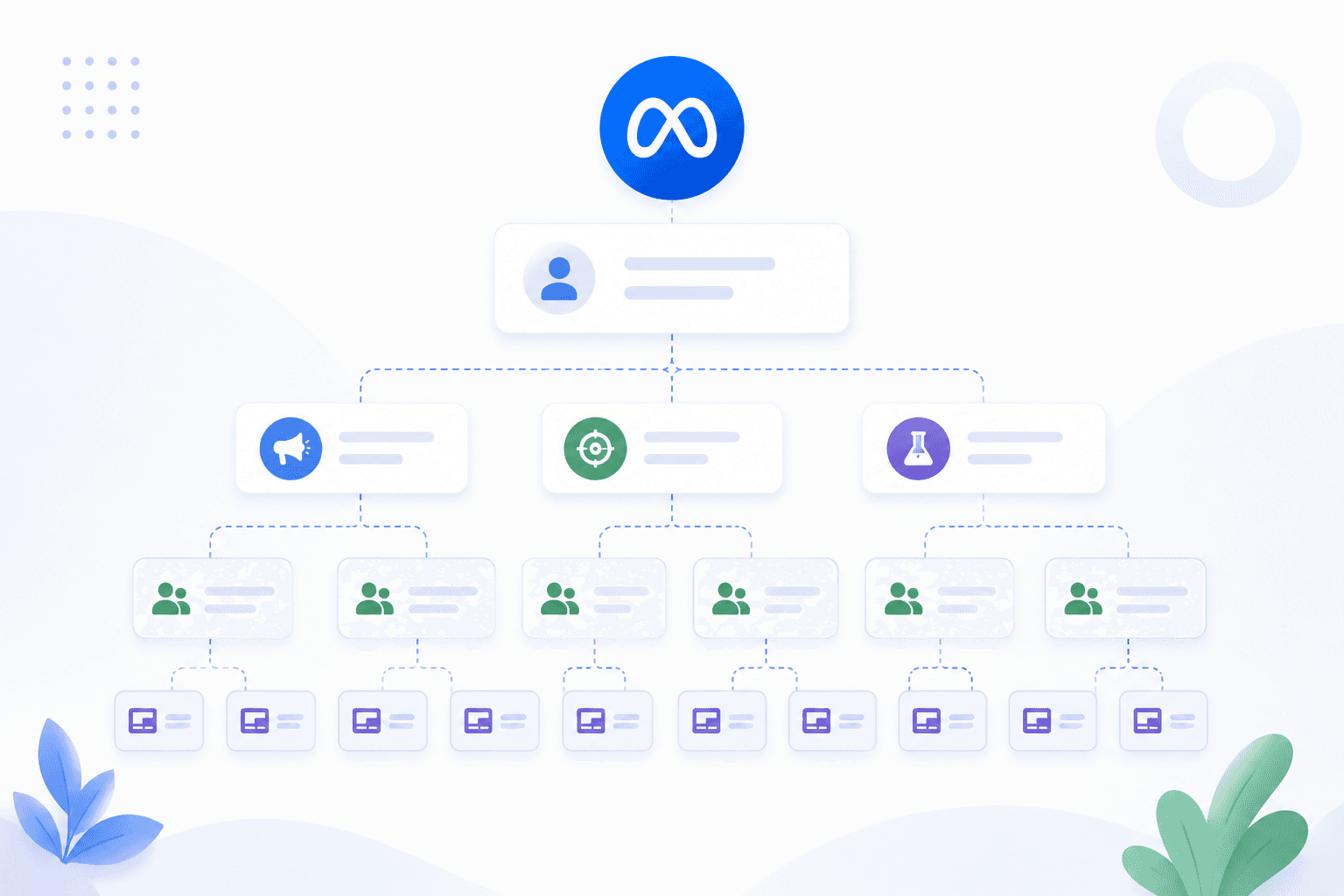
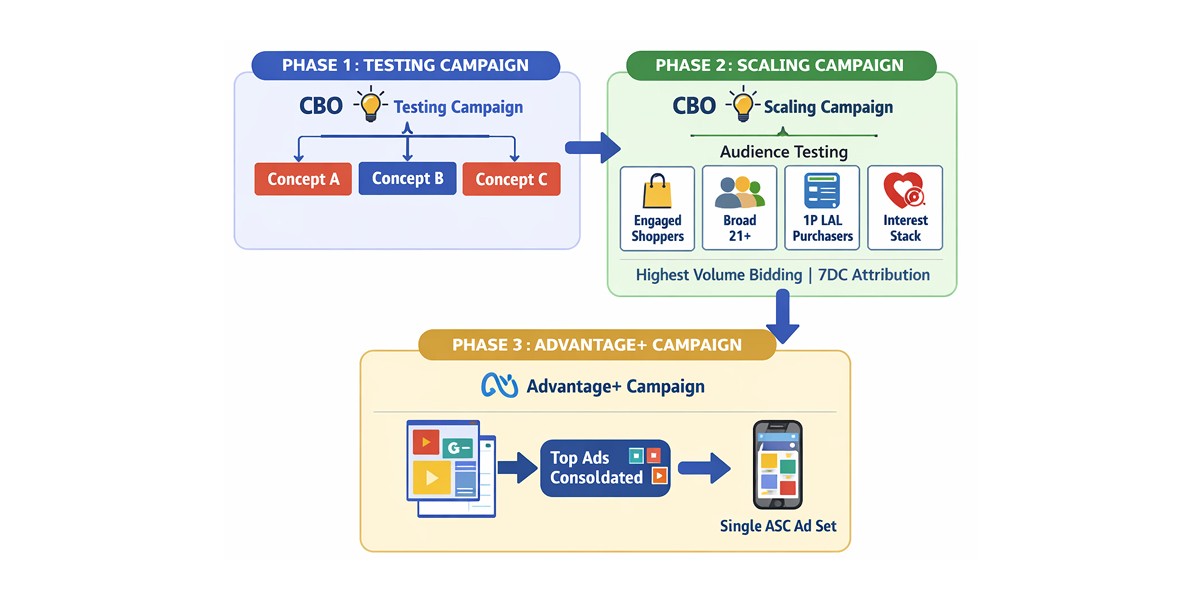
Account structure determines how Meta's algorithm learns and allocates budget. When structure is fragmented, spend gets spread across too many ad sets, and each one gets starved of the data it requires to optimize. See our guide to the best Meta ads account structure for a deeper breakdown.
Campaign Objectives by Funnel Stage
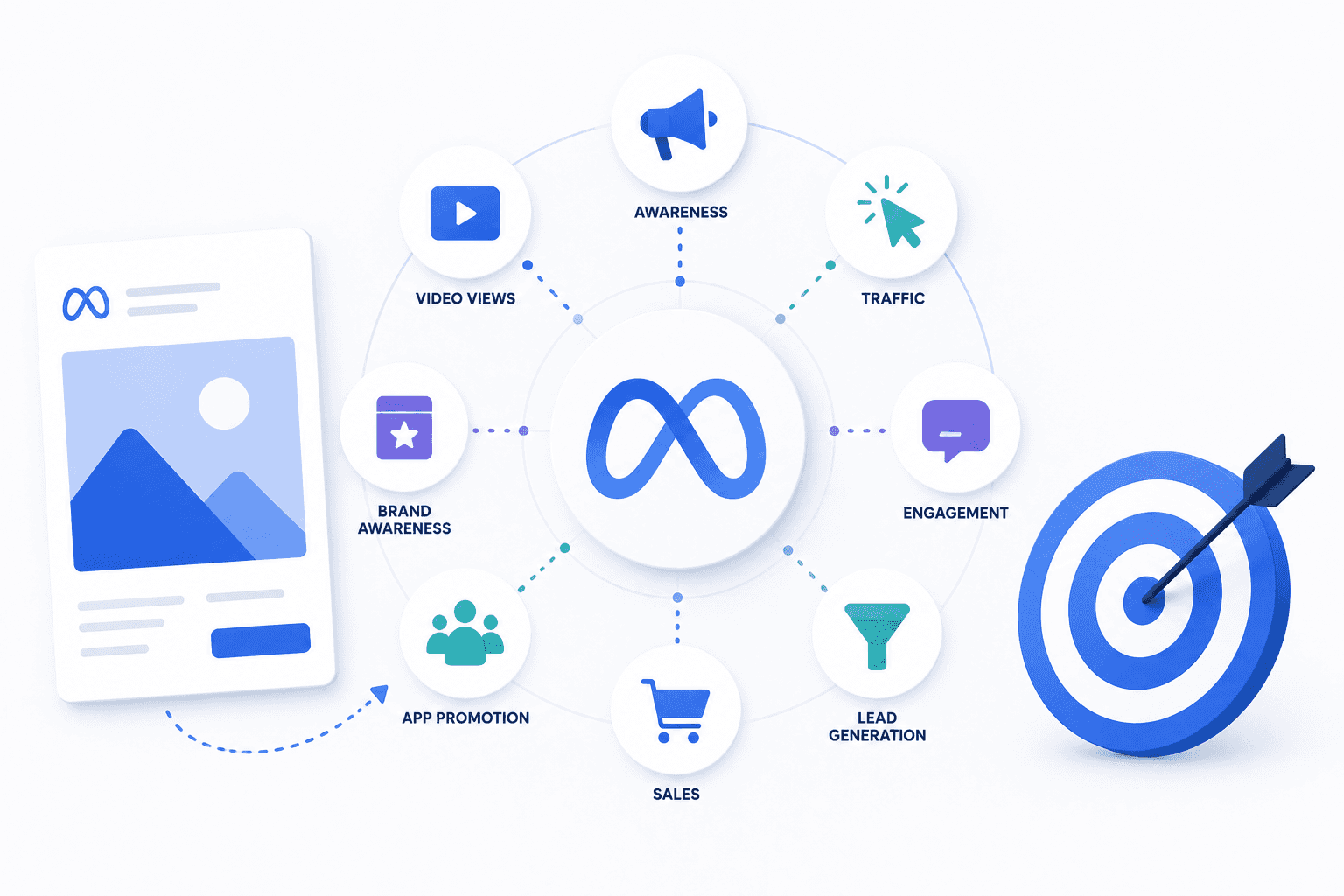
Different funnel stages call for different campaign objectives:
TOFU: Video Views or Engagement for cold reach
MOFU: Traffic or Leads for engaged nurture
BOFU: Leads or Conversions optimized toward demo-booked
CBO vs ABO Budget Allocation
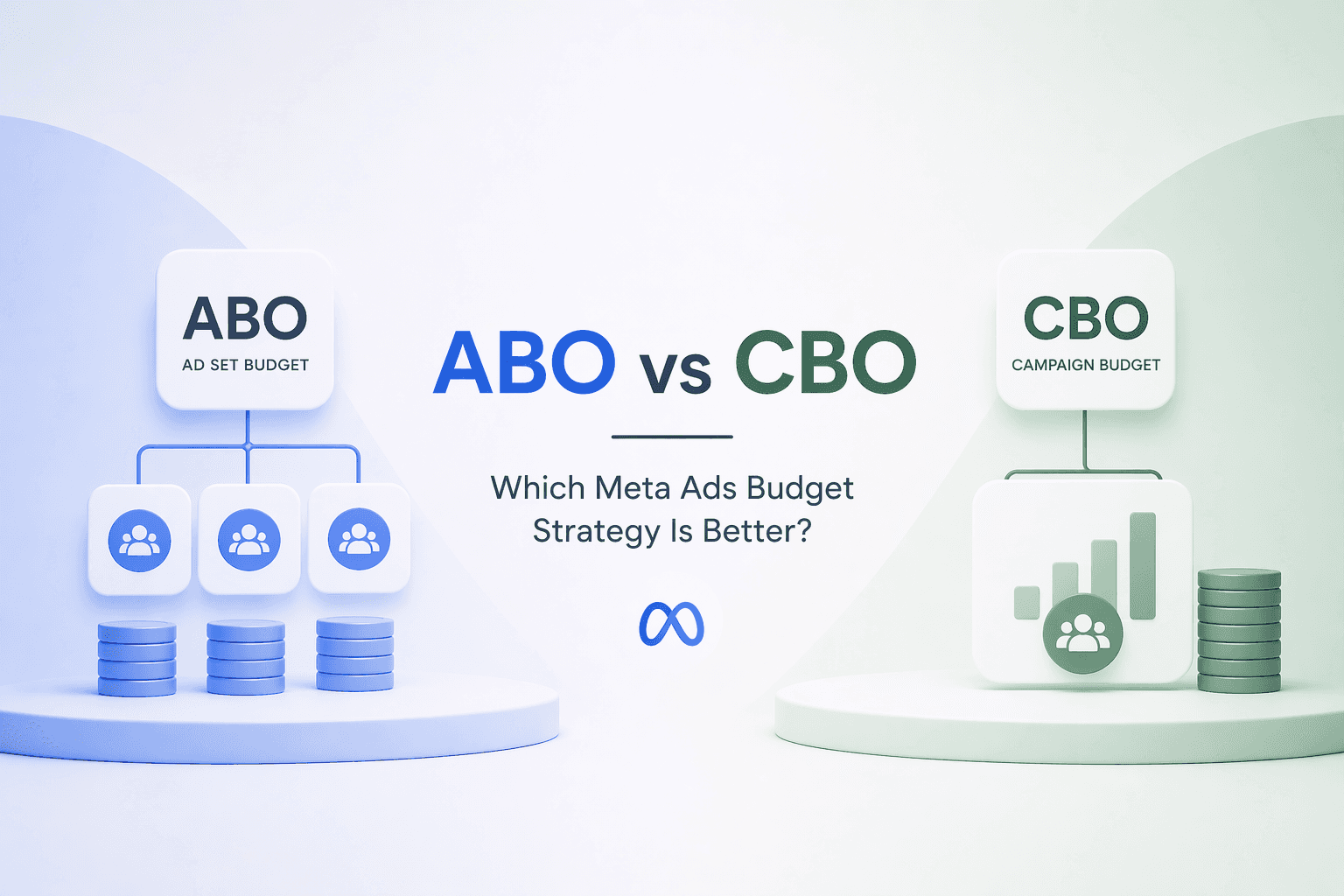
CBO (Campaign Budget Optimization) lets Meta distribute budget across ad sets automatically. This works well for scaling proven audiences.
ABO (Ad Set Budget Optimization) gives you manual control, which is useful when testing new audiences or creatives where you want controlled spend per variable.
Naming Conventions for Funnel Reporting
A clear naming convention makes reporting possible down the line:[Stage]_[Audience]_[Creative Angle]_[Date]
For example: TOFU_Lookalike-ClosedWon_PainPoint_0625
5. TOFU Campaigns for Cold Audience Acquisition
TOFU (Top of Funnel) campaigns reach prospects who have never interacted with your brand. The goal here is awareness and initial engagement, not conversion.
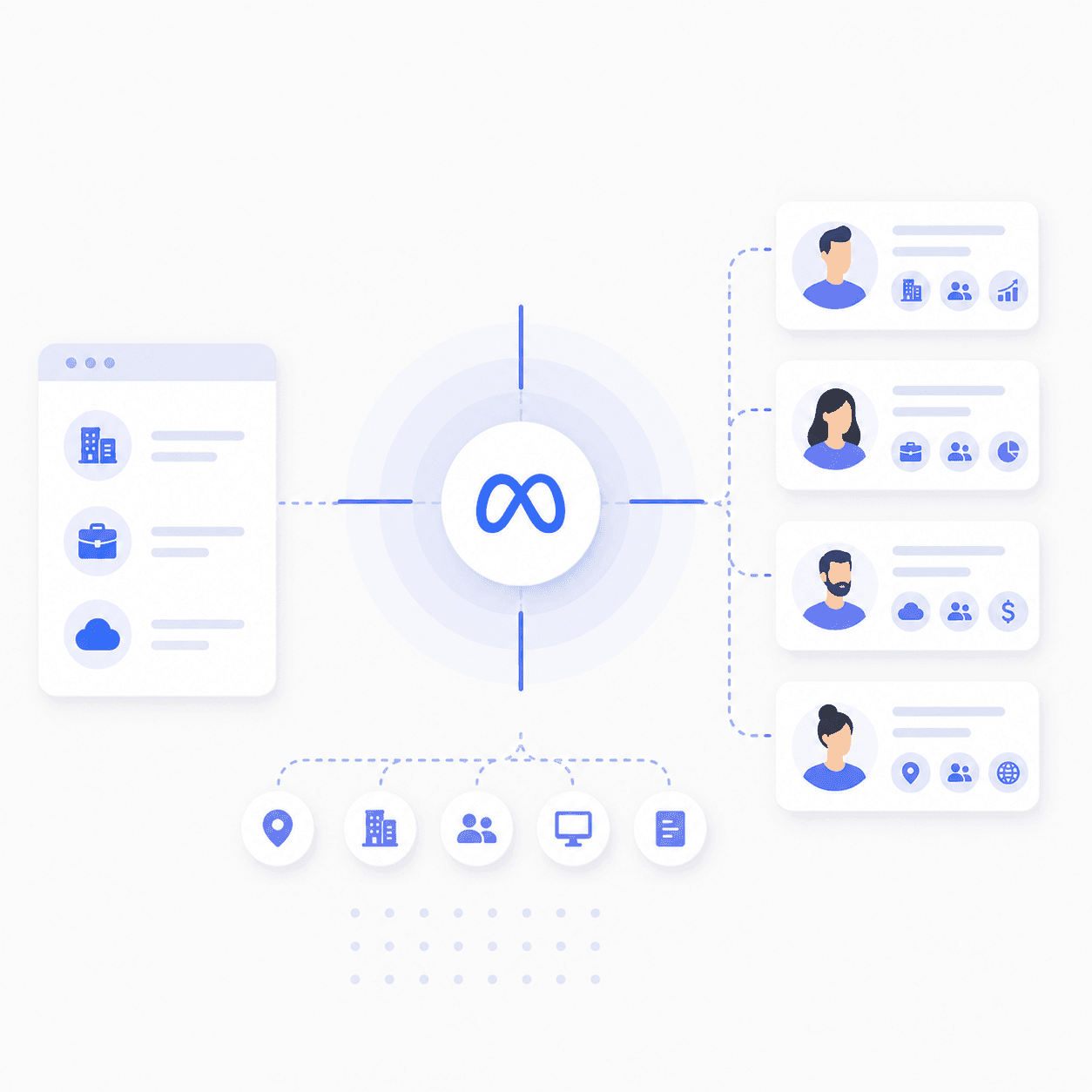
For targeting, starting broad often works better than going narrow. You can layer job-related interests like SaaS tools or business software with behaviors like "technology early adopters." Lookalikes built from closed-won customers tend to outperform interest-based audiences once you have enough seed data—typically 1,000+ records. Our Meta ads audience targeting guide for B2B SaaS covers this in detail.
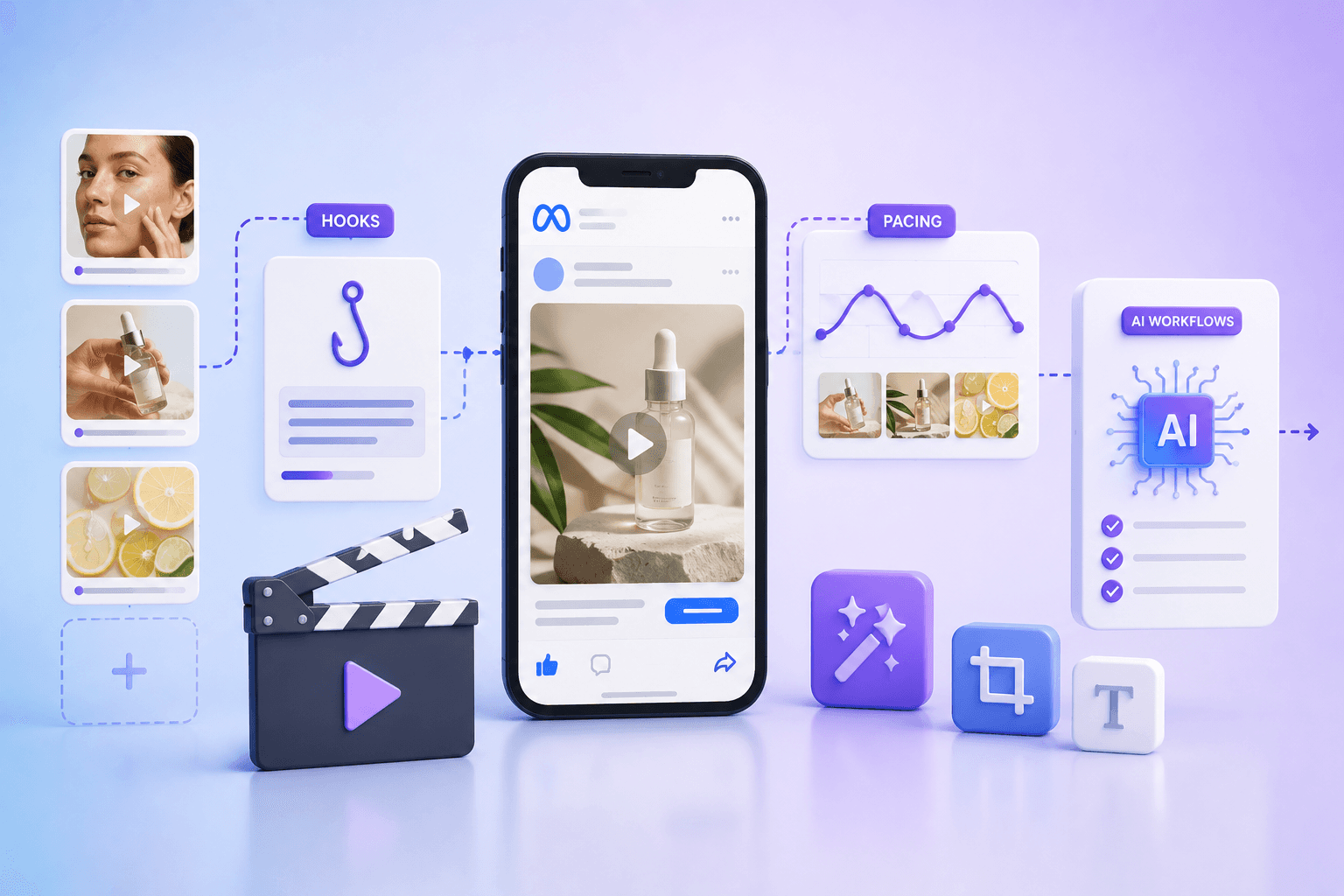
Creative formats that work at this stage include founder-led videos, problem-aware UGC (user-generated content), and educational content. Address pain points without pitching product directly.
Allocate the majority of your budget to TOFU. Track CPM, ThruPlay rate, and Hook Rate (3-second video views divided by impressions) as leading indicators.
6. MOFU Campaigns for Engaged Account Nurture
MOFU (Middle of Funnel) targets users who have engaged but not converted. These are your warmest non-customers.
Build custom audiences from:
Video viewers: People who watched 50%+ of TOFU content
Website visitors: People who visited key pages like pricing or features but didn't convert
Ad engagers: People who interacted with your ads in the past 30-90 days
Creative at this stage shifts toward education and objection handling. Product demo clips, feature explainers, customer testimonials, and comparison content all work well here.
MOFU gets a smaller budget share than TOFU. Track CTR (click-through rate), cost per landing page view, and time on site as quality indicators.
7. BOFU Campaigns for Demo and Trial Conversion
BOFU (Bottom of Funnel) targets high-intent users ready to convert. These audiences are small but valuable.
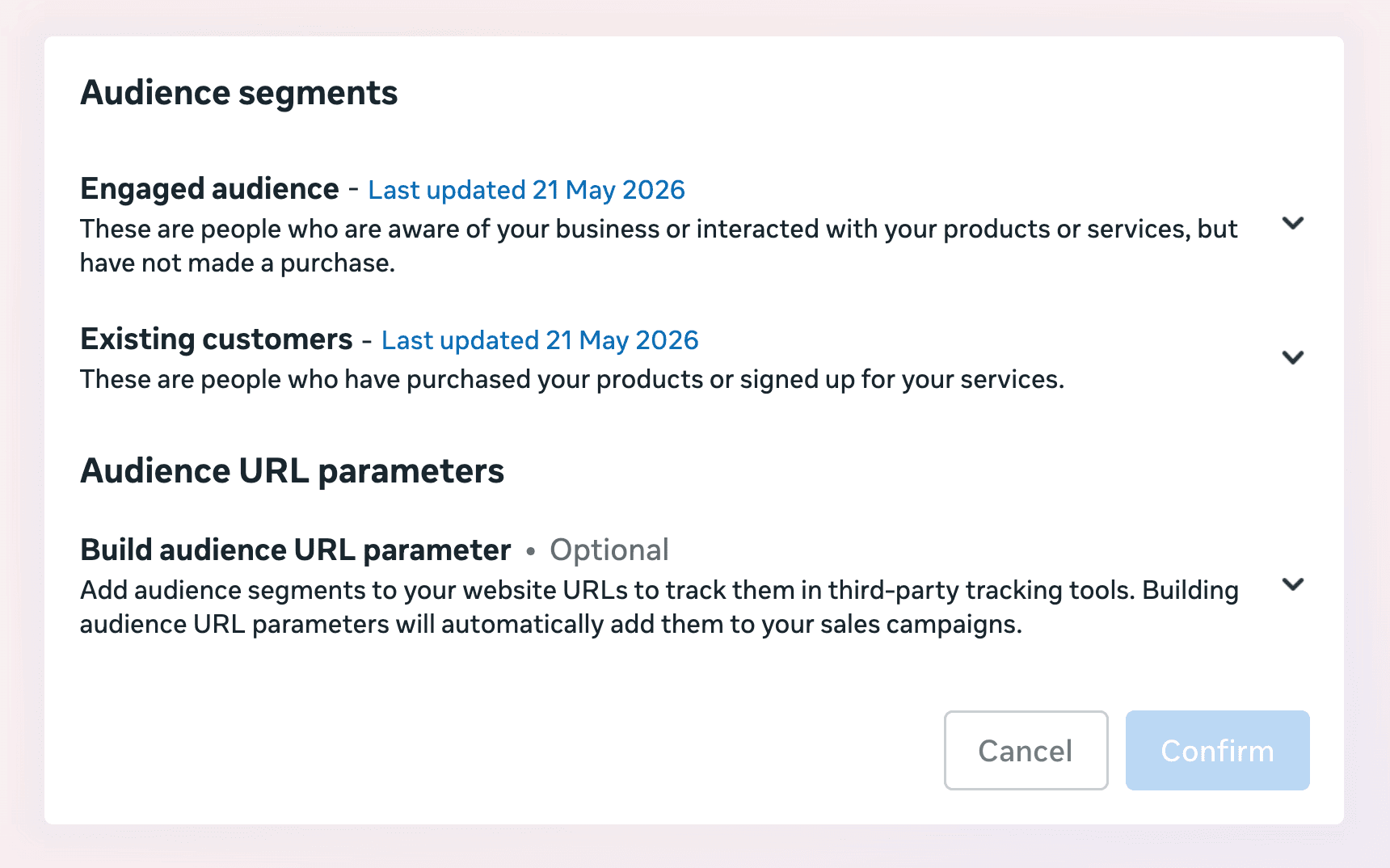
Retarget pricing page visitors, demo page abandoners, and CRM leads who haven't converted yet. You can upload that last group as a custom audience directly from your CRM.
Creative here is direct-response: static images with clear CTAs, customer logos, testimonial quotes, and urgency messaging. The goal is action, not education.
BOFU gets the smallest budget share but the highest scrutiny. Track CPL (Cost per Lead), cost per demo booked, and demo-to-opportunity rate in your CRM.
8. Creative Strategy for Each Funnel Stage
Creative is a performance lever, not a separate workstream. At Flighted, creative strategy and production work interdependently with paid media execution—each informs the other continuously.
TOFU creative: UGC-style and founder-led videos build trust and stop the scroll. These feel native to the feed rather than like ads.
MOFU creative: Product demos, screen recordings, and VSLs (Video Sales Letters) educate engaged prospects who want to understand how your product actually works.
BOFU creative: Direct-response statics with social proof and clear CTAs drive action from high-intent users who already know what you do.
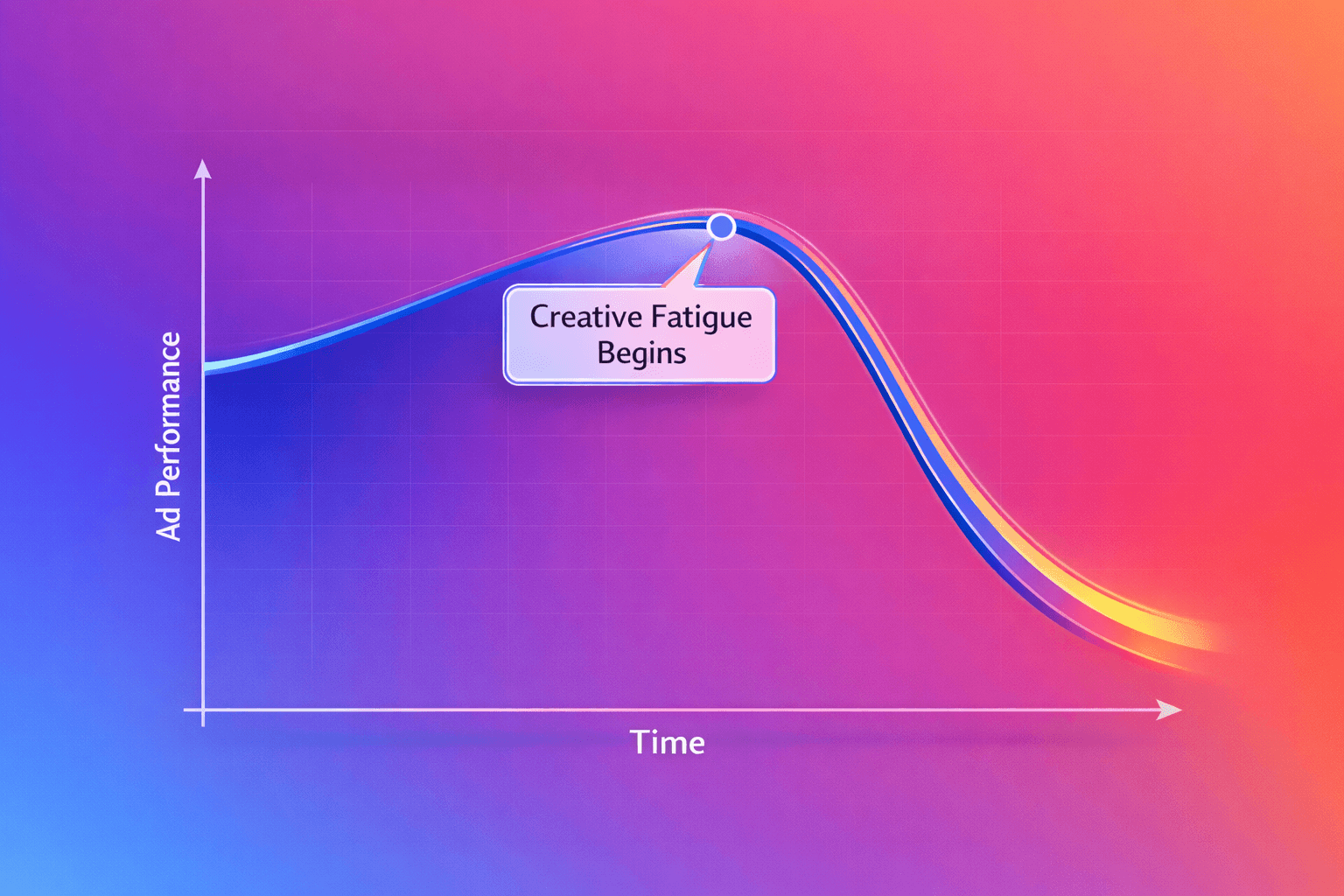
One thing worth noting: test multiple hooks (the first 3 seconds) per creative concept. Monitor frequency and refresh creative when performance decays, which typically happens every 2-4 weeks at scale.
9. Landing Page Design for B2B SaaS Meta Ads
Landing pages are the third pillar of performance alongside paid media and creative. A 1% improvement in landing page conversion rate directly reduces CAC.
Match the page type to your sales motion. Demo request pages work for sales-assisted models. Free trial pages work for product-led growth.
The conversion action on your landing page determines what signal you're sending back to Meta.
Meta traffic is mobile-dominant, so above the fold on mobile, you want: headline, subhead, CTA, and social proof. Nothing else.
Tip: If your landing page conversion rate sits below 3%, fix the page before scaling ad spend. Higher spend won't fix a broken page—it just makes the problem more expensive.
A/B test headline, CTA copy, form length, and social proof placement continuously. Treat every page as a living asset rather than a one-time build.
10. Measurement and Reporting from MQL to Closed-Won ARR
MQL (Marketing Qualified Lead) is a lead that meets your qualification criteria. ARR (Annual Recurring Revenue) is the annualized value of subscription contracts. Both terms come up constantly in B2B SaaS measurement.
TOFU metrics: CPM, reach, frequency, Hook Rate, ThruPlay rate. These are early signals, not success metrics.
MOFU metrics: CTR, cost per landing page view, time on site. These indicate audience quality.
BOFU metrics: CPL, cost per demo booked, demo show rate, demo-to-opportunity rate. These connect ad spend to pipeline.
Revenue attribution: Connect Meta campaigns to closed-won ARR in your CRM using UTMs and offline conversion uploads. Gartner's 2024 Tech Marketing Benchmarks Survey found 39% of B2B tech marketers running ABM name attribution measurement as a top challenge. This is the ultimate measure of Meta ads ROI for B2B SaaS.
ROAS as a KPI: Use Pipeline ROAS, Not In-Platform ROAS
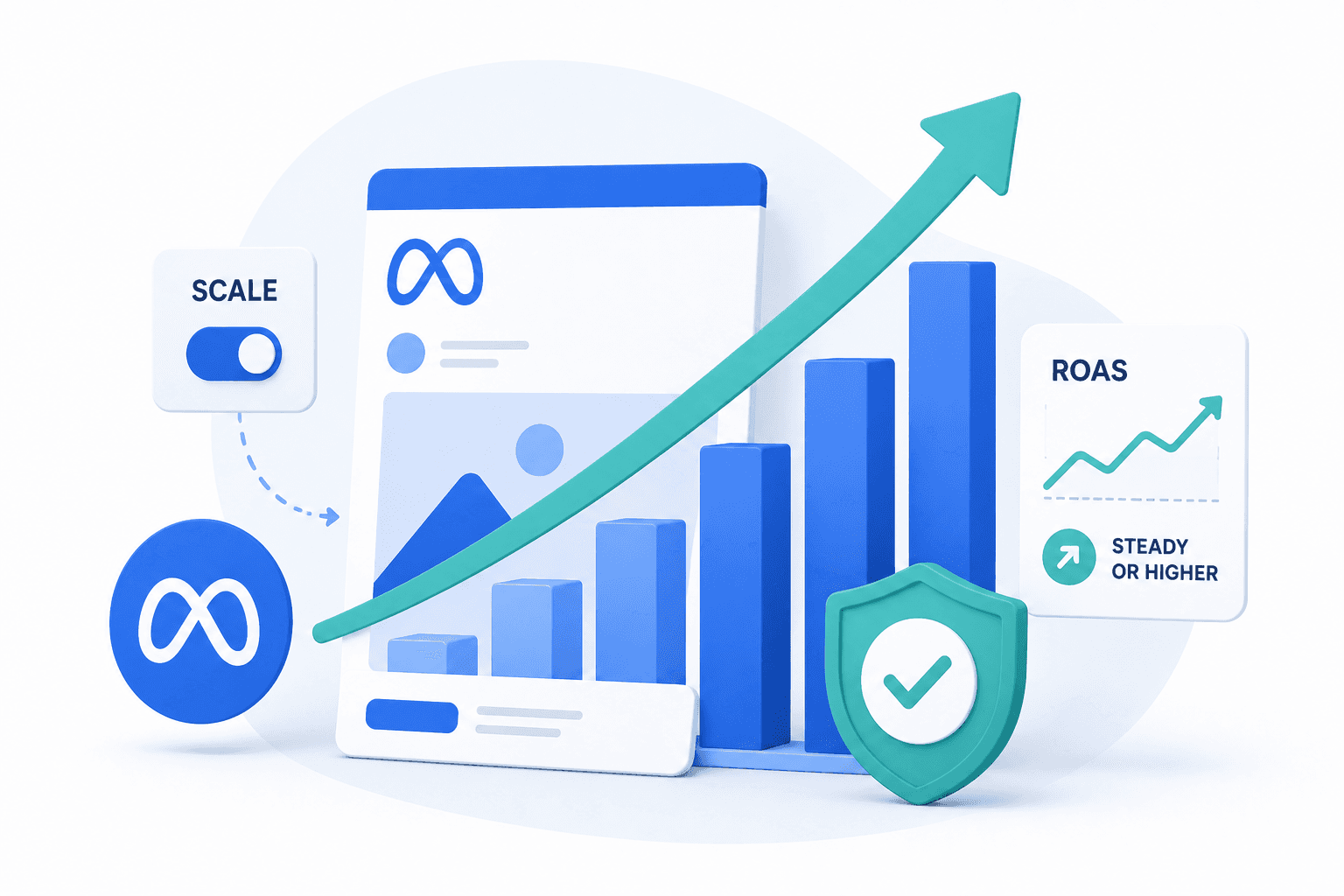
In-platform ROAS undercounts B2B performance because deals close in your CRM weeks or months after the ad impression. Instead, track Pipeline ROAS as your primary KPI: pipeline value generated divided by ad spend over the same window. Pair it with CPL, cost per demo, and CAC payback period to get a complete picture.
Pipeline ROAS is measurable and hittable. In one B2B SaaS engagement, Flighted reached a Month-1 Pipeline ROAS above 5x while making the account profitable inside 30 days—see the 5x Pipeline ROAS case study for details.
For external context, according to WordStream's 2025 Facebook Ads benchmarks, the average cost per lead across industries is $27.66 at a 7.72% conversion rate—a cross-industry median, not a B2B SaaS figure, so treat it as a directional floor rather than a target.
11. Common Mistakes That Kill B2B SaaS Meta Ads Performance
Optimizing for lead volume instead of closed-won revenue: You'll get cheap leads that don't convert. Optimize toward downstream events instead.
Skipping offline conversion uploads: The algorithm can't learn what a good customer looks like without this data.
Running the same creative across all funnel stages: Cold audiences require different messaging than high-intent retargeting audiences.
Fragmenting budget across too many ad sets: Each ad set benefits from roughly 50+ conversions per week to exit the learning phase. Consolidate where possible.
Ignoring landing page conversion rate: The difference between a 2% and 4% conversion rate doubles your effective CAC.
Build Your B2B SaaS Meta Funnel with Flighted
Flighted brings paid media expertise, creative strategy, and landing page optimization together under one team. We specialize in the full-funnel Meta ads strategy for B2B SaaS, from cold audiences to closed-won revenue. We work with companies through our B2B SaaS growth agency practice.
These three pillars work interdependently, not as separate add-ons. For B2B SaaS clients, we build full-funnel Meta campaigns tied to pipeline and closed-won revenue rather than vanity metrics.
Book a call to talk through your goals and fit.
Frequently Asked Questions About Meta Ads for B2B SaaS
How Long Does Meta Ads Pipeline Generation Take?
Your sales cycle length determines time to closed-won attribution. However, leading indicators like demo bookings typically appear within 2-4 weeks of launching a properly structured funnel with sufficient budget.
Can Meta ads replace LinkedIn ads for B2B SaaS customer acquisition?
Meta and LinkedIn serve different roles. Meta offers lower CPMs and broader reach while LinkedIn provides firmographic targeting. Most B2B SaaS companies benefit from running both rather than replacing one entirely. Our B2B paid media strategy guide covers how to allocate across channels.
Minimum Monthly Budget for a Meta Ads Funnel
You want enough budget per ad set to exit the learning phase, which generally means around 50 conversions per week per ad set. For a three-stage funnel with 2-3 ad sets per stage, plan for $10K-15K per month minimum to generate statistically meaningful results.
How does iOS privacy affect Meta ad attribution for B2B SaaS?
iOS App Tracking Transparency opt-outs block the browser pixel from matching ad clicks to conversions, so pixel-only setups undercount iOS-sourced leads. The fix is server-side CAPI, CRM offline conversion uploads, and reading Meta data alongside CRM-sourced pipeline rather than in isolation.
What is a good ROAS KPI for B2B SaaS Meta ads?
In-platform ROAS misleads for B2B SaaS because revenue lands in your CRM weeks or months after the ad click. Track Pipeline ROAS instead—CRM pipeline value generated divided by ad spend. A healthy early target is 3x+ Pipeline ROAS, with strong performers reaching 5x+ in month one. Pair Pipeline ROAS with a CAC payback period under 12 months to confirm unit economics hold.
Most B2B SaaS companies overlook the Meta ads funnel for B2B SaaS when building their pipeline strategy, assuming "our buyers are on LinkedIn." Meanwhile, their competitors are acquiring demos at half the CPL by reaching the same decision-makers while they're scrolling Instagram on a Sunday morning.
The difference between B2B SaaS companies that make Meta work and those that don't comes down to funnel architecture and measurement setup. This guide covers the full-funnel strategy from cold audience acquisition through closed-won attribution. It includes the tracking foundation, campaign structure, creative approach, and scaling mechanics that connect ad spend to actual revenue.
Key Takeaways
Meta CPMs (cost per 1,000 impressions) run lower than LinkedIn, reaching decision-makers outside work mode with less resistance.
Three funnel stages—TOFU, MOFU, BOFU—each require different audiences, creatives, and conversion events.
Upload closed-won deals to Meta so the algorithm optimizes for revenue, not just leads.
Creative strategy and landing page optimization work together with paid media execution. Treating them as separate workstreams breaks the funnel.
Scaling spend without refreshing creative and expanding audiences degrades lead quality quickly. Watch frequency and First-Time Impression Rate as early warning signals.
1. Why Meta Ads Work for B2B SaaS Pipeline Generation
Meta Ads offer three distinct advantages for B2B SaaS pipeline generation:
Revenue-Based Optimization: Feed the algorithm signals tied to closed-won deals rather than just top-of-funnel form fills.
Cost Efficiency: Meta CPMs (cost per 1,000 impressions) typically run 4–6x lower than LinkedIn.
Lower Resistance: Reach decision-makers in a relaxed environment, reducing the "work-mode" mental barriers found on professional networks.
The platform also reaches decision-makers outside of work contexts. Someone scrolling Instagram on a Saturday morning has different mental barriers than someone checking LinkedIn between meetings. This creates space for awareness-stage content that wouldn't land in a professional feed.
Here's the other thing: Meta's algorithm improves with event signal quality. The more conversion events you send back—especially downstream events like demo-booked or closed-won—the better Meta gets at finding similar prospects.
2. How a B2B SaaS Meta Funnel Differs from a DTC Funnel
The core difference comes down to where the "purchase" happens. DTC transactions complete inside Meta's tracking ecosystem. B2B SaaS deals close in your CRM, often weeks or months after the first ad impression.
Factor | DTC Funnel | B2B SaaS Funnel |
|---|---|---|
Sales cycle | Days to weeks | Weeks to months |
Primary conversion | Purchase | Demo booked or trial started |
Audience size | Broad consumer | Narrow ICP (ideal customer profile) |
Creative approach | Product-focused, urgency-driven | Problem-aware, educational |
Attribution | In-platform ROAS (return on ad spend) | CRM-based, offline uploads required |
Because of this difference—Optif.ai's benchmark data puts the median B2B SaaS sales cycle at 84 days—these funnels require CRM integration and offline conversion uploads. Without them, you're optimizing for the wrong outcomes entirely.
3. Tracking Foundation for Cold to Closed-Won Attribution
Closed-won revenue tracking is what separates B2B SaaS advertisers who scale from those who churn budget. Before launching any campaigns, you want a tracking foundation that connects ad spend to closed-won revenue in your CRM.
Meta Pixel Setup for SaaS Conversion Events
Configure pixel events at minimum for:
PageView: Fires on all pages
Lead: Fires on form submission
CompleteRegistration: Fires on demo confirmation or trial activation page
For trial-based products, add a custom event for trial start. This gives you a mid-funnel signal between lead and closed-won.
Conversions API for Server-Side Signal
The Conversions API (CAPI) sends event data directly from your server to Meta, bypassing browser limitations from iOS privacy changes. Browser-side pixel alone misses a significant portion of conversions on iOS devices. According to AppsFlyer's 2024 opt-in data, only 44% of US users give consent when prompted by App Tracking Transparency, meaning roughly 56% opt out—and those opt-outs strip browser-pixel signal entirely. Meta's own Conversions API documentation quantifies the additional conversions CAPI recovers when it runs alongside the Pixel—signal a pixel-only setup would otherwise miss on iOS.
This is the core problem with Meta ad attribution under iOS privacy for B2B SaaS: ATT opt-outs block the pixel from matching ad clicks to downstream conversions, so Meta under-reports iOS-sourced leads and can't optimize toward them. Server-side CAPI plus offline conversion uploads rebuild that signal path from cold click to closed-won. At Flighted, we validate true campaign impact with incrementality and holdout tests rather than trusting in-platform numbers alone—because shorter Meta attribution windows (7-day click, 1-day view) compound the gap on long B2B cycles.
When setting up CAPI, configure deduplication between pixel and CAPI events using event IDs. Without deduplication, you'll double-count conversions and throw off your reporting.
Offline Conversion Uploads for Closed-Won Revenue
This is the critical B2B SaaS differentiator. Uploading closed-won deals from your CRM to Meta teaches the algorithm what an actual customer looks like—not just a form fill. See how we applied this for a B2B SaaS client in our case studies.
You can do this manually via CSV upload or automate it through integrations with HubSpot, Salesforce, or tools like Zapier. Either way, the data flow matters more than the method. On long B2B cycles, the lag between form-fill and closed-won can exceed Meta's attribution window, so the original click can no longer be matched. Upload downstream events (demo-booked, SQL, closed-won) as fast as your CRM allows to preserve the match.
UTM Structure for CRM Source Tracking
A consistent UTM structure lets you trace closed-won revenue back to specific campaigns:utm_source=meta&utm_medium=paid&utm_campaign={{campaign.name}}&utm_content={{ad.name}}
This connects your CRM reporting to your ad account, which is how you calculate true CAC (Customer Acquisition Cost) by campaign.
4. Full-Funnel Meta Ads Account Structure for B2B SaaS
Account structure determines how Meta's algorithm learns and allocates budget. When structure is fragmented, spend gets spread across too many ad sets, and each one gets starved of the data it requires to optimize. See our guide to the best Meta ads account structure for a deeper breakdown.
Campaign Objectives by Funnel Stage
Different funnel stages call for different campaign objectives:
TOFU: Video Views or Engagement for cold reach
MOFU: Traffic or Leads for engaged nurture
BOFU: Leads or Conversions optimized toward demo-booked
CBO vs ABO Budget Allocation
CBO (Campaign Budget Optimization) lets Meta distribute budget across ad sets automatically. This works well for scaling proven audiences.
ABO (Ad Set Budget Optimization) gives you manual control, which is useful when testing new audiences or creatives where you want controlled spend per variable.
Naming Conventions for Funnel Reporting
A clear naming convention makes reporting possible down the line:[Stage]_[Audience]_[Creative Angle]_[Date]
For example: TOFU_Lookalike-ClosedWon_PainPoint_0625
5. TOFU Campaigns for Cold Audience Acquisition
TOFU (Top of Funnel) campaigns reach prospects who have never interacted with your brand. The goal here is awareness and initial engagement, not conversion.
For targeting, starting broad often works better than going narrow. You can layer job-related interests like SaaS tools or business software with behaviors like "technology early adopters." Lookalikes built from closed-won customers tend to outperform interest-based audiences once you have enough seed data—typically 1,000+ records. Our Meta ads audience targeting guide for B2B SaaS covers this in detail.
Creative formats that work at this stage include founder-led videos, problem-aware UGC (user-generated content), and educational content. Address pain points without pitching product directly.
Allocate the majority of your budget to TOFU. Track CPM, ThruPlay rate, and Hook Rate (3-second video views divided by impressions) as leading indicators.
6. MOFU Campaigns for Engaged Account Nurture
MOFU (Middle of Funnel) targets users who have engaged but not converted. These are your warmest non-customers.
Build custom audiences from:
Video viewers: People who watched 50%+ of TOFU content
Website visitors: People who visited key pages like pricing or features but didn't convert
Ad engagers: People who interacted with your ads in the past 30-90 days
Creative at this stage shifts toward education and objection handling. Product demo clips, feature explainers, customer testimonials, and comparison content all work well here.
MOFU gets a smaller budget share than TOFU. Track CTR (click-through rate), cost per landing page view, and time on site as quality indicators.
7. BOFU Campaigns for Demo and Trial Conversion
BOFU (Bottom of Funnel) targets high-intent users ready to convert. These audiences are small but valuable.
Retarget pricing page visitors, demo page abandoners, and CRM leads who haven't converted yet. You can upload that last group as a custom audience directly from your CRM.
Creative here is direct-response: static images with clear CTAs, customer logos, testimonial quotes, and urgency messaging. The goal is action, not education.
BOFU gets the smallest budget share but the highest scrutiny. Track CPL (Cost per Lead), cost per demo booked, and demo-to-opportunity rate in your CRM.
8. Creative Strategy for Each Funnel Stage
Creative is a performance lever, not a separate workstream. At Flighted, creative strategy and production work interdependently with paid media execution—each informs the other continuously.
TOFU creative: UGC-style and founder-led videos build trust and stop the scroll. These feel native to the feed rather than like ads.
MOFU creative: Product demos, screen recordings, and VSLs (Video Sales Letters) educate engaged prospects who want to understand how your product actually works.
BOFU creative: Direct-response statics with social proof and clear CTAs drive action from high-intent users who already know what you do.
One thing worth noting: test multiple hooks (the first 3 seconds) per creative concept. Monitor frequency and refresh creative when performance decays, which typically happens every 2-4 weeks at scale.
9. Landing Page Design for B2B SaaS Meta Ads
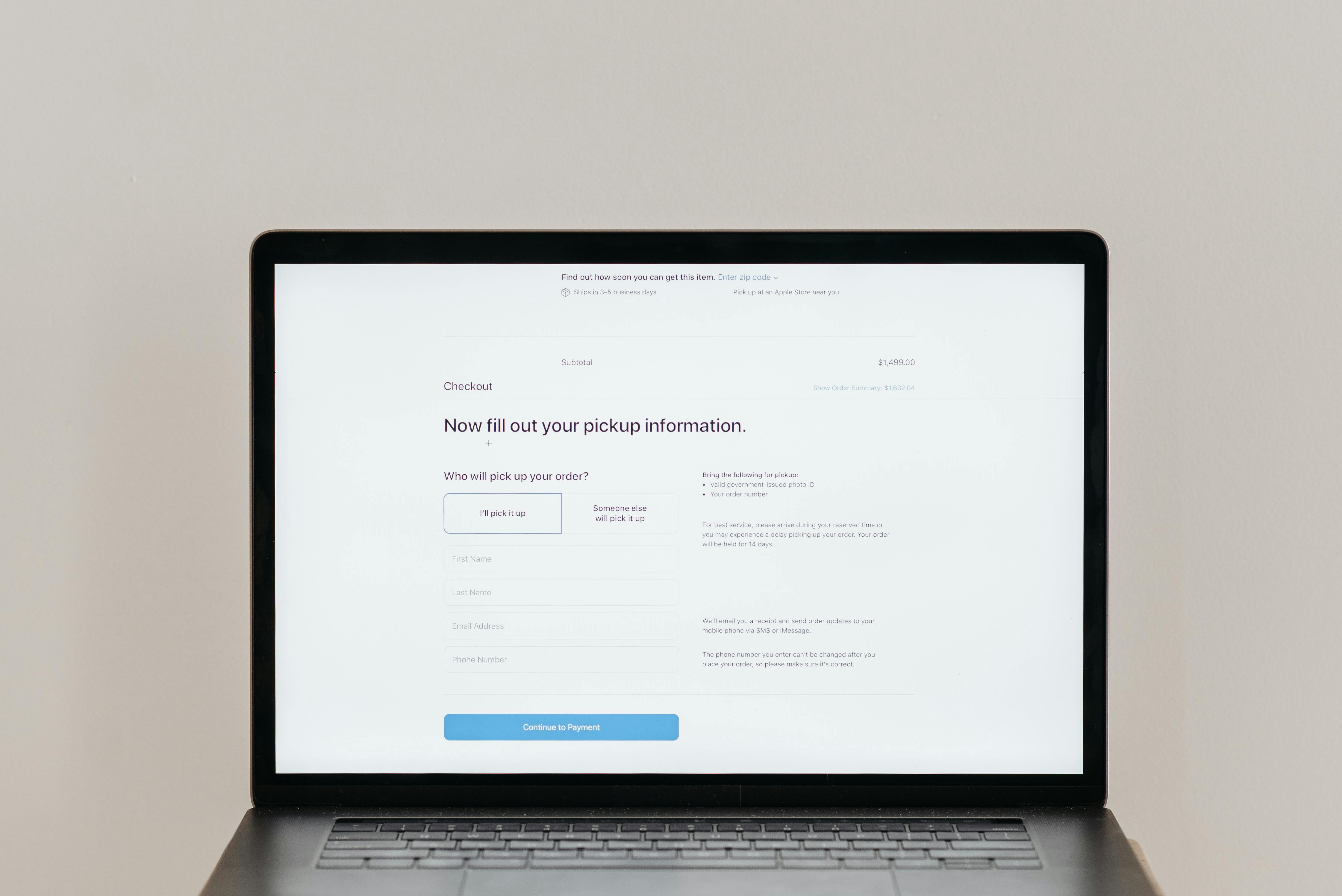
Landing pages are the third pillar of performance alongside paid media and creative. A 1% improvement in landing page conversion rate directly reduces CAC.
Match the page type to your sales motion. Demo request pages work for sales-assisted models. Free trial pages work for product-led growth.
The conversion action on your landing page determines what signal you're sending back to Meta.
Meta traffic is mobile-dominant, so above the fold on mobile, you want: headline, subhead, CTA, and social proof. Nothing else.
Tip: If your landing page conversion rate sits below 3%, fix the page before scaling ad spend. Higher spend won't fix a broken page—it just makes the problem more expensive.
A/B test headline, CTA copy, form length, and social proof placement continuously. Treat every page as a living asset rather than a one-time build.
10. Measurement and Reporting from MQL to Closed-Won ARR
MQL (Marketing Qualified Lead) is a lead that meets your qualification criteria. ARR (Annual Recurring Revenue) is the annualized value of subscription contracts. Both terms come up constantly in B2B SaaS measurement.
TOFU metrics: CPM, reach, frequency, Hook Rate, ThruPlay rate. These are early signals, not success metrics.
MOFU metrics: CTR, cost per landing page view, time on site. These indicate audience quality.
BOFU metrics: CPL, cost per demo booked, demo show rate, demo-to-opportunity rate. These connect ad spend to pipeline.
Revenue attribution: Connect Meta campaigns to closed-won ARR in your CRM using UTMs and offline conversion uploads. Gartner's 2024 Tech Marketing Benchmarks Survey found 39% of B2B tech marketers running ABM name attribution measurement as a top challenge. This is the ultimate measure of Meta ads ROI for B2B SaaS.
ROAS as a KPI: Use Pipeline ROAS, Not In-Platform ROAS
In-platform ROAS undercounts B2B performance because deals close in your CRM weeks or months after the ad impression. Instead, track Pipeline ROAS as your primary KPI: pipeline value generated divided by ad spend over the same window. Pair it with CPL, cost per demo, and CAC payback period to get a complete picture.
Pipeline ROAS is measurable and hittable. In one B2B SaaS engagement, Flighted reached a Month-1 Pipeline ROAS above 5x while making the account profitable inside 30 days—see the 5x Pipeline ROAS case study for details.
For external context, according to WordStream's 2025 Facebook Ads benchmarks, the average cost per lead across industries is $27.66 at a 7.72% conversion rate—a cross-industry median, not a B2B SaaS figure, so treat it as a directional floor rather than a target.
11. Common Mistakes That Kill B2B SaaS Meta Ads Performance
Optimizing for lead volume instead of closed-won revenue: You'll get cheap leads that don't convert. Optimize toward downstream events instead.
Skipping offline conversion uploads: The algorithm can't learn what a good customer looks like without this data.
Running the same creative across all funnel stages: Cold audiences require different messaging than high-intent retargeting audiences.
Fragmenting budget across too many ad sets: Each ad set benefits from roughly 50+ conversions per week to exit the learning phase. Consolidate where possible.
Ignoring landing page conversion rate: The difference between a 2% and 4% conversion rate doubles your effective CAC.
Build Your B2B SaaS Meta Funnel with Flighted
Flighted brings paid media expertise, creative strategy, and landing page optimization together under one team. We specialize in the full-funnel Meta ads strategy for B2B SaaS, from cold audiences to closed-won revenue. We work with companies through our B2B SaaS growth agency practice.
These three pillars work interdependently, not as separate add-ons. For B2B SaaS clients, we build full-funnel Meta campaigns tied to pipeline and closed-won revenue rather than vanity metrics.
Book a call to talk through your goals and fit.
Frequently Asked Questions About Meta Ads for B2B SaaS
How Long Does Meta Ads Pipeline Generation Take?
Your sales cycle length determines time to closed-won attribution. However, leading indicators like demo bookings typically appear within 2-4 weeks of launching a properly structured funnel with sufficient budget.
Can Meta ads replace LinkedIn ads for B2B SaaS customer acquisition?
Meta and LinkedIn serve different roles. Meta offers lower CPMs and broader reach while LinkedIn provides firmographic targeting. Most B2B SaaS companies benefit from running both rather than replacing one entirely. Our B2B paid media strategy guide covers how to allocate across channels.
Minimum Monthly Budget for a Meta Ads Funnel
You want enough budget per ad set to exit the learning phase, which generally means around 50 conversions per week per ad set. For a three-stage funnel with 2-3 ad sets per stage, plan for $10K-15K per month minimum to generate statistically meaningful results.
How does iOS privacy affect Meta ad attribution for B2B SaaS?
iOS App Tracking Transparency opt-outs block the browser pixel from matching ad clicks to conversions, so pixel-only setups undercount iOS-sourced leads. The fix is server-side CAPI, CRM offline conversion uploads, and reading Meta data alongside CRM-sourced pipeline rather than in isolation.
What is a good ROAS KPI for B2B SaaS Meta ads?
In-platform ROAS misleads for B2B SaaS because revenue lands in your CRM weeks or months after the ad click. Track Pipeline ROAS instead—CRM pipeline value generated divided by ad spend. A healthy early target is 3x+ Pipeline ROAS, with strong performers reaching 5x+ in month one. Pair Pipeline ROAS with a CAC payback period under 12 months to confirm unit economics hold.
Related Posts
Related Posts
Related Posts
Related Posts



























Ready to talk?
New York, NY 11217
hello@flighted.co
© Flighted, 2026
Ready to talk?
New York, NY 11217
hello@flighted.co
© Flighted, 2026