How to Reduce Meta Ad CPM: Proven Tactics for 2026
Meta Ads
March 13, 2026
Table Of Contents
Why Your Meta Ad CPM Is High
Before jumping to tactics, it helps to figure out what's actually driving your costs up. High CPM usually traces back to one of five causes.
Narrow or Saturated Audiences
Targeting too small an audience creates intense auction competition. When you layer multiple interest restrictions, exclude large segments, or target hyper-specific demographics, you're bidding against every other advertiser who wants those same users.
Audience saturation happens when the same people see your ads repeatedly. Once you've reached most of your addressable audience, Meta has nowhere new to go. Your costs reflect that scarcity.
New Ad Accounts
New ad accounts often face what practitioners call the "Meta tax." CPMs run higher until you've generated enough conversion data for the algorithm to optimize effectively. This is normal and temporary.
The more historical conversions you accumulate, the better Meta gets at identifying your ideal customers. Accounts generating consistent weekly conversions typically see meaningfully lower CPMs than accounts still stuck in learning mode.
Competitive Auction Periods
CPMs spike during high-demand periods: Q4 holidays, major shopping events, election seasons when political ad spend floods the platform. This is largely external and unavoidable, though timing your heaviest spend strategically can help offset some of the impact.
Poor Placement Mix
Restricting placements to Feed-only limits Meta's ability to find cheaper impressions elsewhere. Advantage+ placements let the algorithm distribute your budget across Feed, Stories, Reels, and Audience Network based on where costs are lowest at any given moment.
Manual placement restrictions often inflate CPM compared to letting Meta optimize automatically. The algorithm is genuinely good at finding efficient impressions when you give it room to work.
Ad Fatigue and Creative Decay
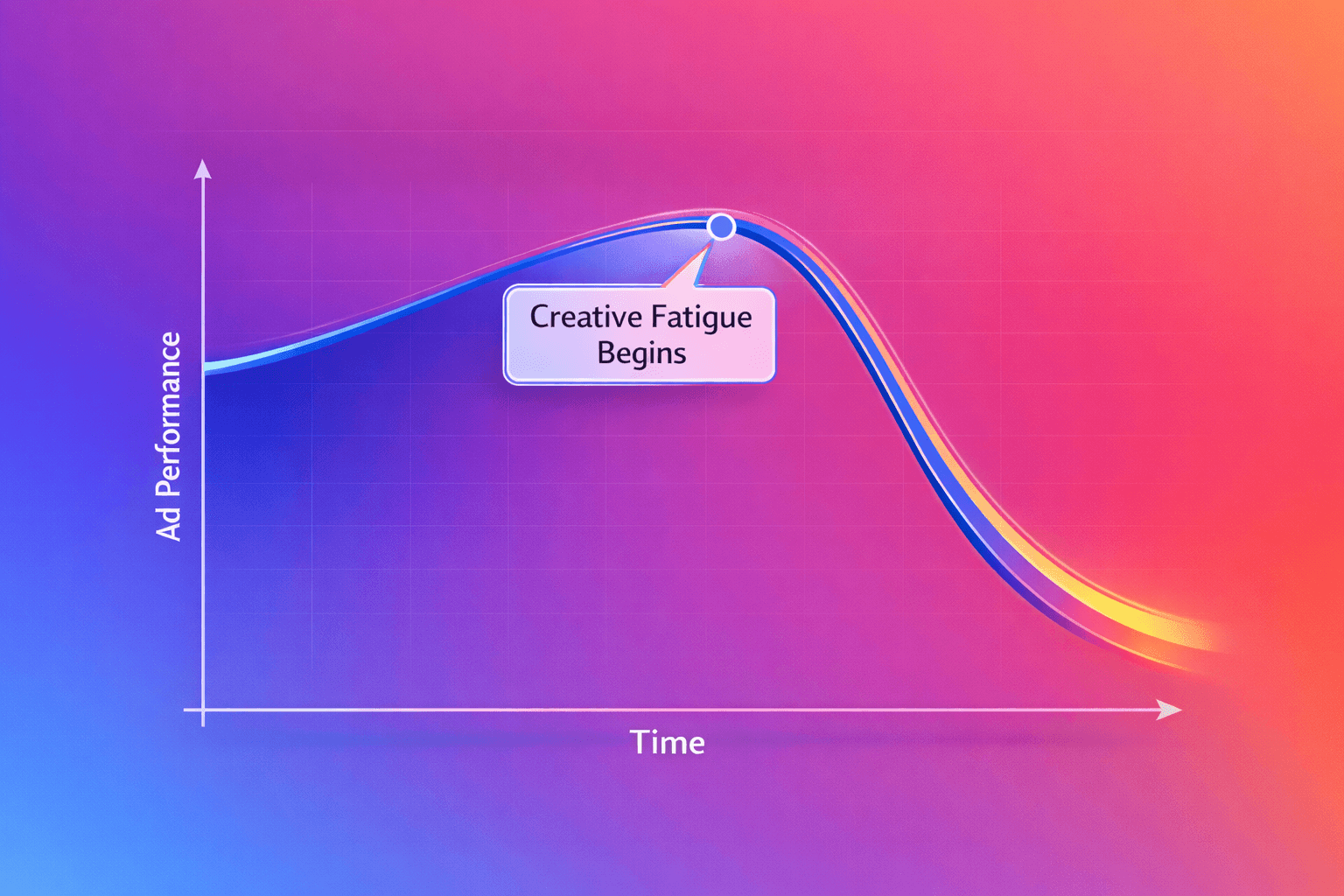
Ad fatigue occurs when your audience sees the same creative too often. Engagement drops, and costs rise as a result occurs when your audience sees the same creative too often. Engagement drops, and costs rise as a result — Logical Position's analysis of Meta's research found conversion likelihood drops ~45% by four exposures. Watch your frequency metric. When it climbs above 2.5–3.0 over a 7-day window, CPM typically follows.
Declining click-through rates paired with rising CPM is the clearest signal that your creative needs rotation.
Proven Tactics to Lower Your Facebook and Meta CPM
Now for the actionable part. Each tactic below addresses a specific CPM driver and can be implemented within your existing account structure.
1. Improve Ad Relevance with Stronger Creative
Higher engagement signals relevance to Meta, which directly lowers your auction costs. Ads that generate clicks, saves, shares, and comments win impressions more cheaply than ads users scroll past.
Three elements matter most:
Hook clarity: The first 3 seconds determine whether someone stops scrolling. Lead with movement, a bold claim, or a pattern interrupt.
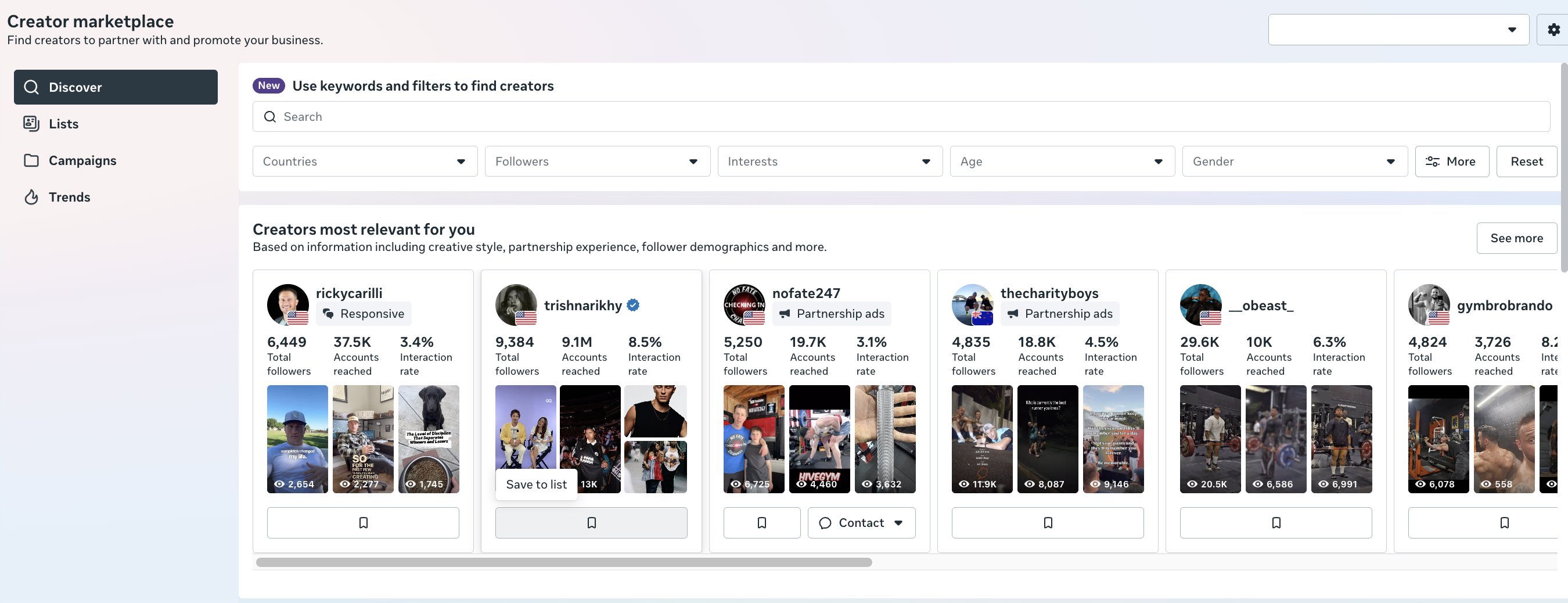
Visual quality: Native-feeling content often outperforms polished studio ads. UGC-style creative, including partnership ads from creators, tends to blend into the feed better than commercial-style.
Value prop: Lead with the benefit to the customer, not the feature of your product.
Creative quality is the single highest-leverage CPM variable you control. Everything else in this list matters less if your ads aren't engaging.
2. Refresh Creative Before Fatigue Sets In
Don't wait for performance to crater before swapping creative. Monitor frequency and plan refreshes proactively. For high-spend campaigns, that typically means every 2–4 weeks.
Building a creative pipeline means you're never scrambling. Aim to have 2–3 new concepts ready to deploy before your current winners show fatigue signals. Reactive creative swaps almost always cost more than proactive ones.
3. Expand Your Audience Targeting
Broader audiences reduce auction competition and give Meta's algorithm room to find efficient impressions. Test Advantage+ Audience or stack multiple related interests rather than narrowing to one.
The caveat: going too broad tanks relevance. Expand gradually and watch your cost-per-acquisition alongside CPM. If CPA stays stable while CPM drops, you've found a better balance. If CPA spikes, you've gone too far.
4. Optimize Placement Selection
Use Advantage+ placements as your default. Meta's algorithm is genuinely good at finding the cheapest impressions across surfaces, and fighting it rarely pays off.
If you prefer manual control, consider including:
Reels and Stories: Often deliver lower CPMs than Feed
Audience Network: Quality varies, but it can meaningfully reduce blended CPM
Avoid Feed-only: This is the most competitive placement and typically the most expensive
5. Consolidate Your Ad Account Structure
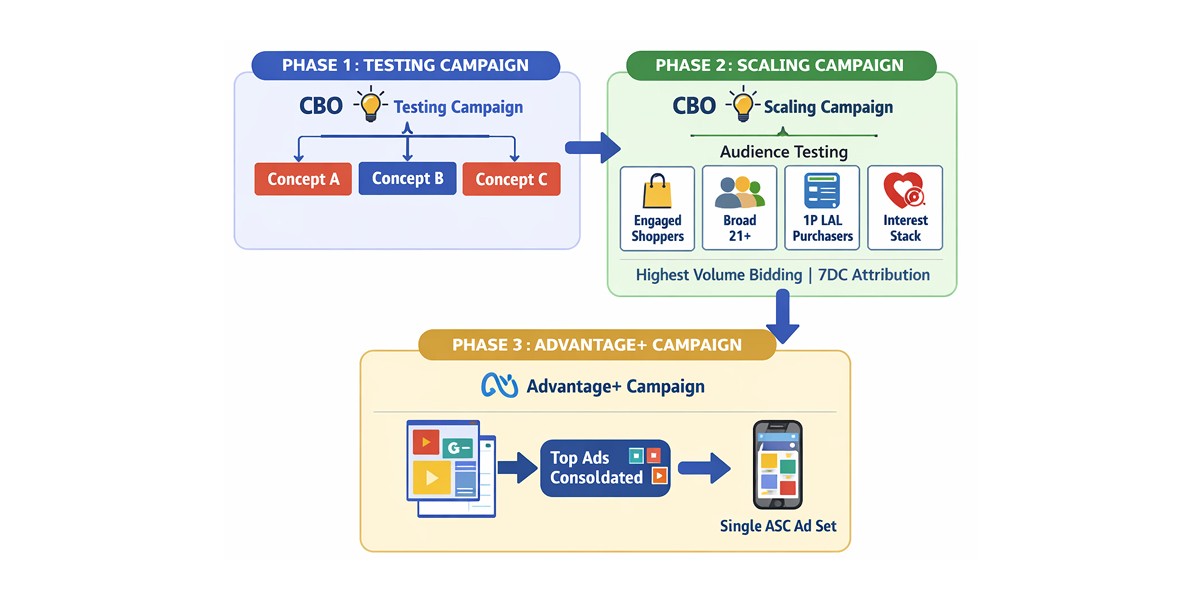
Fragmented account structures spread your budget thin. Too many ad sets running simultaneously starve each one of the conversion data it needs to optimize.
A useful rule: keep no less than 20% of your weekly budget out of learning phase at any given time. If you have 15 ad sets live and most are stuck in learning, pause the lowest performers and consolidate budget into fewer, higher-volume ad sets. More conversions per ad set means better optimization, which typically means lower CPM.
6. Adjust Bidding and Budget Strategy
Cost cap and bid cap bidding strategies give you indirect control over CPM by capping what you're willing to pay for results. They won't lower CPM directly, but they prevent runaway costs during competitive periods.
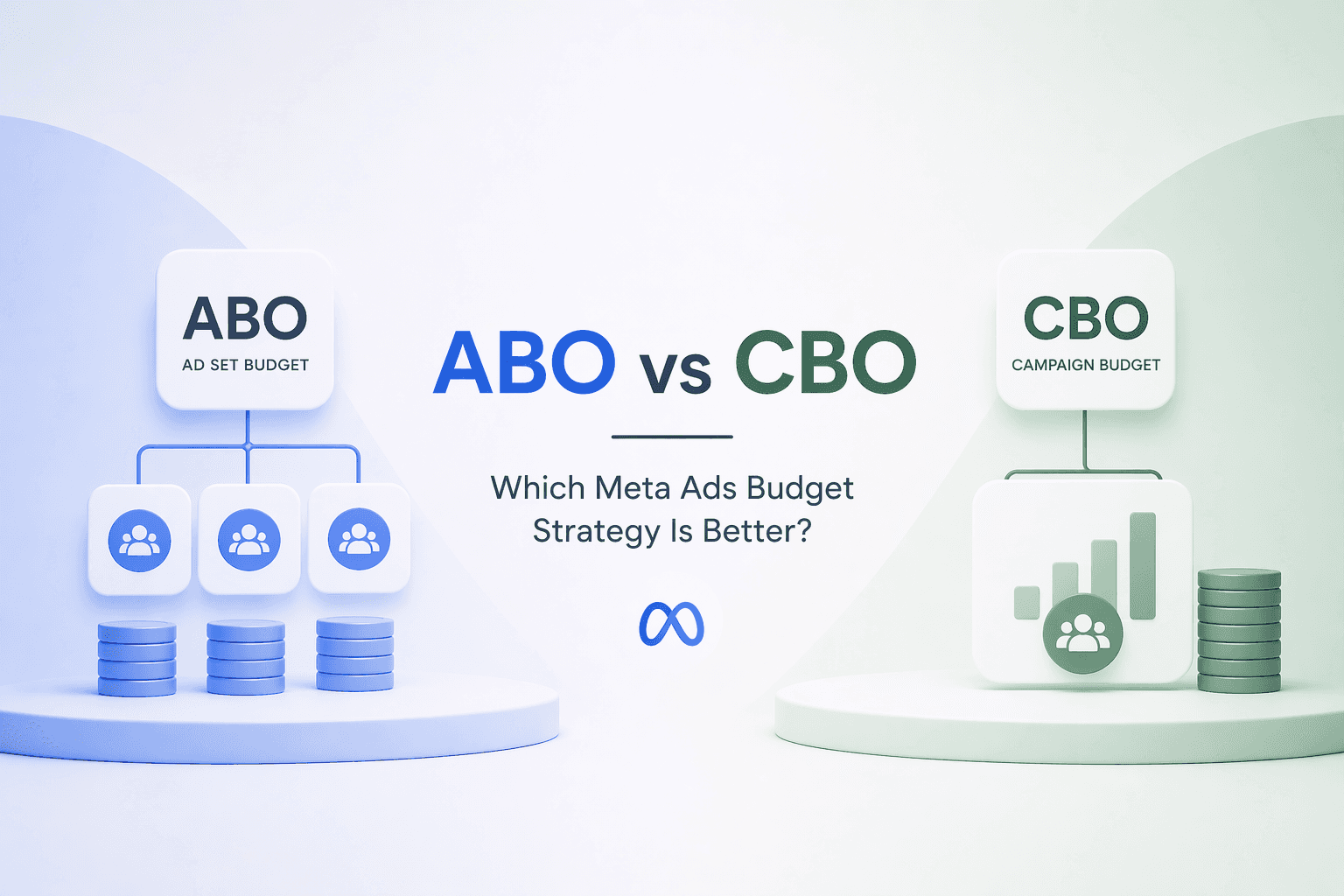
Campaign Budget Optimization (CBO) lets Meta shift budget toward the best-performing ad sets automatically. This often improves CPM efficiency compared to ad set-level budgets, especially when you have 3+ ad sets in a campaign. Underfunding campaigns restricts optimization. If your daily budget is too low to exit learning phase, you'll pay a premium for every impression.
When High CPM Is Not the Problem
Here's the reframe most brands miss: high CPM is perfectly acceptable if your conversion rate and CPA are strong. Chasing low CPM at the expense of conversion quality is one of the most common mistakes in paid media.
Consider two scenarios:
Low CPM, low conversion rate: You're reaching lots of people cheaply, but they're not buying. Inefficient despite the vanity metric.
High CPM, high conversion rate: You're paying more to reach high-intent users who actually convert. Often the better business outcome.
Both scenarios can produce profitable businesses. The question is whether your CPM-to-conversion ratio makes economic sense for your margins. A $30 CPM that drives a $40 CPA beats a $10 CPM that drives a $60 CPA every time.
Lower CPM Starts with Better Creative and Landing Pages
CPM optimization isn't just about bid strategy and audience settings. It's about the full funnel. Strong creative improves relevance scores, which lowers auction costs. Optimized landing pages improve conversion rates, which justifies higher CPM when the math works.
The brands we work with at Flighted typically see the biggest CPM improvements when creative strategy and landing page optimization work together. If you're spending on Meta but not investing in what happens after the click, you're leaving efficiency on the table.
Frequently Asked Questions about Meta Ad CPM
Does CPM affect how many people see my ad?
Yes. A lower CPM means your budget reaches more people, while a higher CPM reduces total impressions for the same spend. However, reaching more people at a low CPM doesn't help if those people don't convert.
How does Meta's algorithm determine CPM in the ad auction?
Meta's auction weighs three factors: your bid, estimated action rates (how likely users are to take your desired action), and ad quality. Ads with higher predicted engagement often win impressions at lower costs, even against higher bids.
Should I compare my CPM across Meta, TikTok, and Google Ads?
Cross-platform CPM comparisons are misleading. Each platform has different audience behaviors, intent levels, and conversion rates. A $15 CPM on Meta and a $15 CPM on TikTok represent completely different value depending on how users convert downstream.
How often should I check my Meta Ads CPM performance?
Review CPM weekly at minimum, but assess trends over 7–14 day windows rather than reacting to daily fluctuations. Single-day spikes are normal. Sustained increases over two weeks signal a real issue worth investigating.
Do video ads typically have lower CPM than static image ads on Meta?
Video ads often achieve lower CPM because they generate more engagement, which signals relevance to Meta's algorithm. However, performance varies significantly by audience and creative quality. A strong static image can outperform a weak video.