The Meta Ads Scaling Playbook for Breaking the 7-Figure Barrier
Meta Ads
July 14, 2026

Table Of Contents
Most Meta accounts do not stall because the media buyer got worse. They stall because the tactics that got you to six figures in annual spend actively work against you past it. You scaled a few winning ads. You nudged budgets up. You tightened targeting. Then growth flattened, cost per acquisition (CPA) crept up, and every optimization returned less than the last.
Scaling Meta ads past 7-figures is a different game with different rules. At that spend level you are no longer buying your most efficient audiences. You are buying colder traffic, burning creative faster, and watching platform-reported return on ad spend (ROAS) drift away from what your bank account says. Get the structure wrong and you pour budget into diminishing returns. Get it right and you compound.
This playbook shows you why accounts plateau, the metrics that actually predict whether you can scale, how to diagnose your specific bottleneck, and the campaign structure, creative cadence, and landing page work required to break through. Every recommendation comes with a threshold, a range, or a worked example you can act on.
Key Takeaways
Accounts plateau because the audiences, creative, and micro-optimizations that worked at low spend saturate and stop compounding.
Contribution margin, marketing efficiency ratio (MER), and first-time impression ratio predict scalability better than platform ROAS.
Vertical scaling hits ceilings fast; horizontal scaling into new angles and audiences is the primary path to 7-figure spend.
Diagnose the bottleneck first — creative, audience, offer, or landing page — because the wrong fix wastes budget.
Campaign structure at scale favors consolidation once you clear 100–200 conversions per month.
Higher spend fatigues creative faster, so you need continuous volume, not periodic batches.
Landing page conversion rate is a multiplier: every point of lift lowers effective CPA account-wide.
1. Why Meta Ads Stall Before the 7-Figure Mark
A scaling plateau is the point where adding budget stops adding proportional revenue. You spend more and get back roughly the same, or less. The account is not broken. It has hit the ceiling of its current inputs.
Four forces drive the plateau:
Audience saturation. As you scale, targeting widens into colder audiences. Your best buyers already saw your ads. Now you are paying to reach people with weaker intent, so cost per thousand impressions (CPM) rises and conversion rates fall.
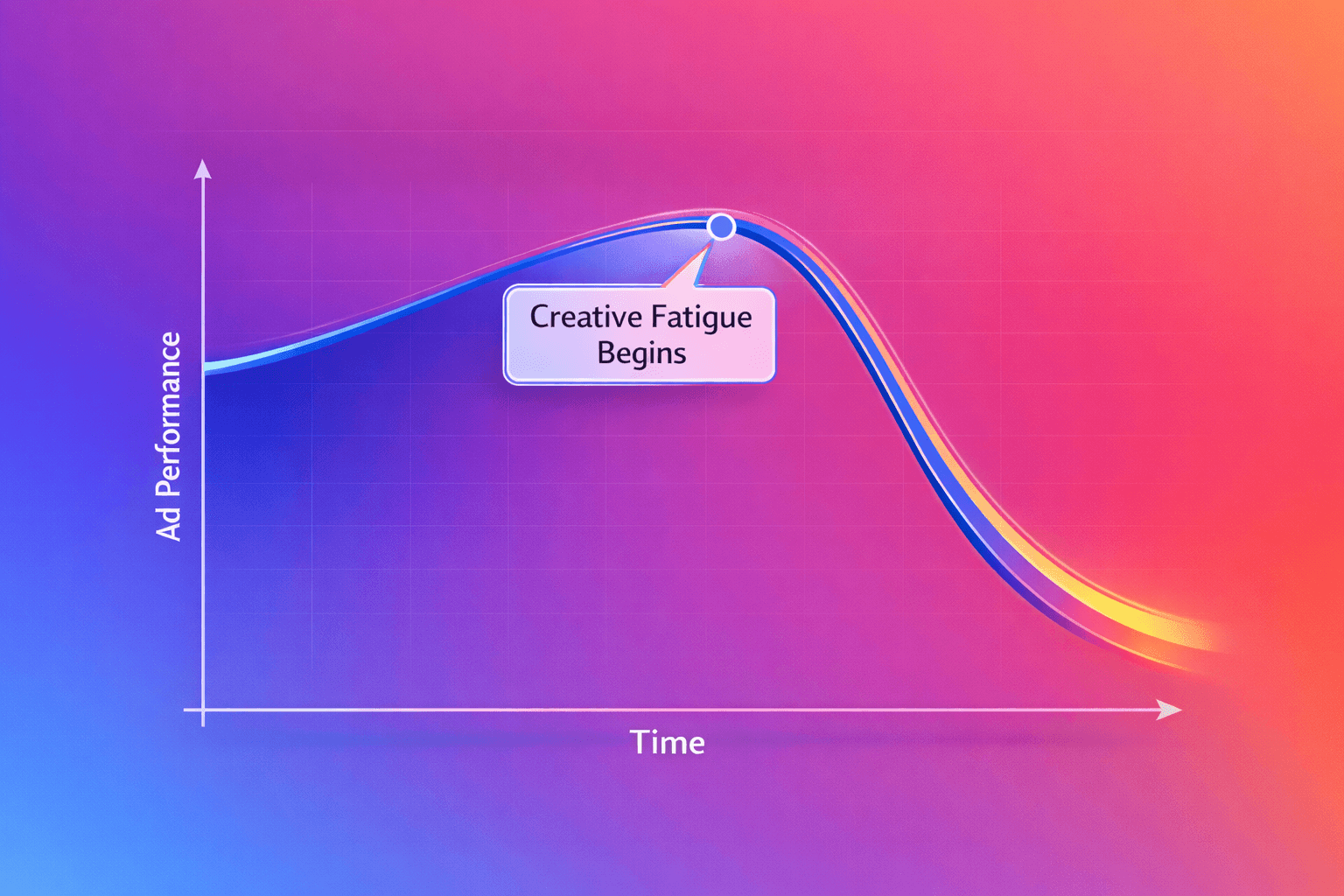
Creative fatigue. Higher spend burns through winning creative faster because frequency climbs. An ad that carried you at $10,000 per month gets exhausted in days at $100,000 per month.
The micro-optimization trap. Tweaking bids, shifting 10% of budget between ad sets, and pausing yesterday's underperformer feels productive. At scale it is noise. These moves do not create new demand.
Diminishing returns on iteration. Testing the fifth variation of a proven angle returns less than testing the first. Once an angle is mature, more iteration on it will not unlock a new spend tier.
Assume that whatever got you here will not get you there. Scaling past 7 figures requires new inputs, not harder work on old ones.
2. Key Metrics That Predict Whether Your Meta Ads Will Scale
Platform ROAS is the metric most teams optimize and the one that misleads most at scale. Track these instead.
Contribution Margin Over ROAS
Contribution margin is revenue minus variable costs: ad spend, cost of goods sold (COGS), and fulfillment. ROAS alone tells you nothing about whether an order was profitable. A 3.0 ROAS on a product with a 30% margin loses money once you add fulfillment and returns.
Calculate your break-even contribution margin before you scale. If your break-even ROAS is 2.5, then a 4.0 ROAS audience has room to scale and a 2.6 ROAS audience does not, even though both look positive on the platform.
MER as True North
MER (marketing efficiency ratio) is total revenue divided by total marketing spend across all channels. As attribution weakens at scale, blended MER matters more than channel-level ROAS. Meta will claim credit for sales it merely influenced. MER cannot lie to you the way pixel-attributed ROAS can. If Meta reports a 3.5 ROAS but your MER slides from 4.0 to 3.0 as you scale, the incremental spend is less efficient than the platform suggests.
First-Time Impression Ratio
First-time impression ratio (FTIR) is the percentage of your daily impressions from people seeing your ad set for the first time — this is Meta's own definition. A high FTIR means you are still reaching fresh prospects. A low or falling FTIR signals audience exhaustion. When FTIR drops, the answer is new audiences and new angles, not more budget on the same ad sets.
Frequency by Audience Segment
Frequency is the average number of impressions per user. Acceptable frequency varies by segment. Retargeting can tolerate higher frequency because intent is warm. Prospecting cannot: a prospecting frequency climbing past 2.5–3.0 over a 7-day window usually means saturation. Watch frequency per segment, not account-wide, or you will mask the problem.
Blended CAC and Payback Period
CAC (customer acquisition cost) is what you pay to acquire one customer. Payback period is the time to recover that CAC from the customer's revenue. Payback determines how aggressively you can reinvest. A 30-day payback lets you scale hard because cash returns fast. A 9-month payback forces caution — you are financing growth for the better part of a year before each customer pays back.
3. Vertical vs Horizontal Scaling on Meta Ads
There are two ways to add budget. Most teams over-rely on the first.
Vertical Scaling
Vertical scaling means increasing budget on proven winners. It works, but only within limits. Raise budget in incremental steps of roughly 20% per day so you do not destabilize the algorithm's learning. Do not double a budget overnight. Dramatic jumps reset the ad set into an unstable learning state and often tank performance for days.
Vertical scaling works when you have strong creative and unsaturated audiences. It fails the moment either runs out. That is why it cannot carry you alone to 7 figures.
Horizontal Scaling
Horizontal scaling means opening new fronts: new angles, new audiences, new positioning. This is the primary path to 7-figure spend because vertical scaling hits ceilings and horizontal scaling creates new demand. Expand along three axes:
New messaging angles. Test different pain points, benefits, and use cases against the same product.
New audience segments. Move into adjacent interests, new lookalike sources, and broader targeting.
New creative formats. Add user-generated content (UGC), video sales letters (VSLs), and carousels to reach people the current format misses.
Horizontal scaling is where Creative Strategy, one of Flighted's three interdependent pillars, does the heavy lifting. New spend tiers are unlocked by new concepts, not bigger budgets on old ones.
4. Diagnosing Your Meta Ads Scaling Bottleneck
Do not guess. Work the decision tree. Each bottleneck has a distinct symptom set and a distinct fix, and applying the wrong fix wastes budget.
Creative Fatigue
Symptoms: declining click-through rate (CTR), rising CPM, and climbing frequency on ads that used to convert. The fix is new creative volume, not budget tweaks. You cannot bid your way out of an ad people are tired of seeing.
Audience Saturation
Symptoms: CPMs rising account-wide, FTIR falling, and performance declining even when you launch fresh creative. The fix is horizontal expansion into new audiences and broader targeting. Broad targeting works here because it lets Meta find pockets of demand your manual segments missed.
Offer & Price Point
Symptoms: strong CTR but poor conversion, and high add-to-cart abandonment. Traffic wants in, then bounces at the decision. The fix lives in your offer, pricing, or positioning, not in the ad account.
Landing Page Experience
Symptoms: good traffic quality but conversion rate (CVR) that lags category benchmarks. The fix is landing page optimization — one of Flighted's three pillars — through structured A/B testing. The traffic is fine. The page is losing the sale.
Bottleneck | Key Symptoms | Primary Solution |
|---|---|---|
Creative fatigue | Declining CTR, rising frequency | New creative volume |
Audience saturation | Rising CPMs, low first-time impression ratio | Audience expansion |
Offer/price | Strong CTR, weak conversion | Offer optimization |
Landing page | Good traffic quality, low CVR | Landing page testing |
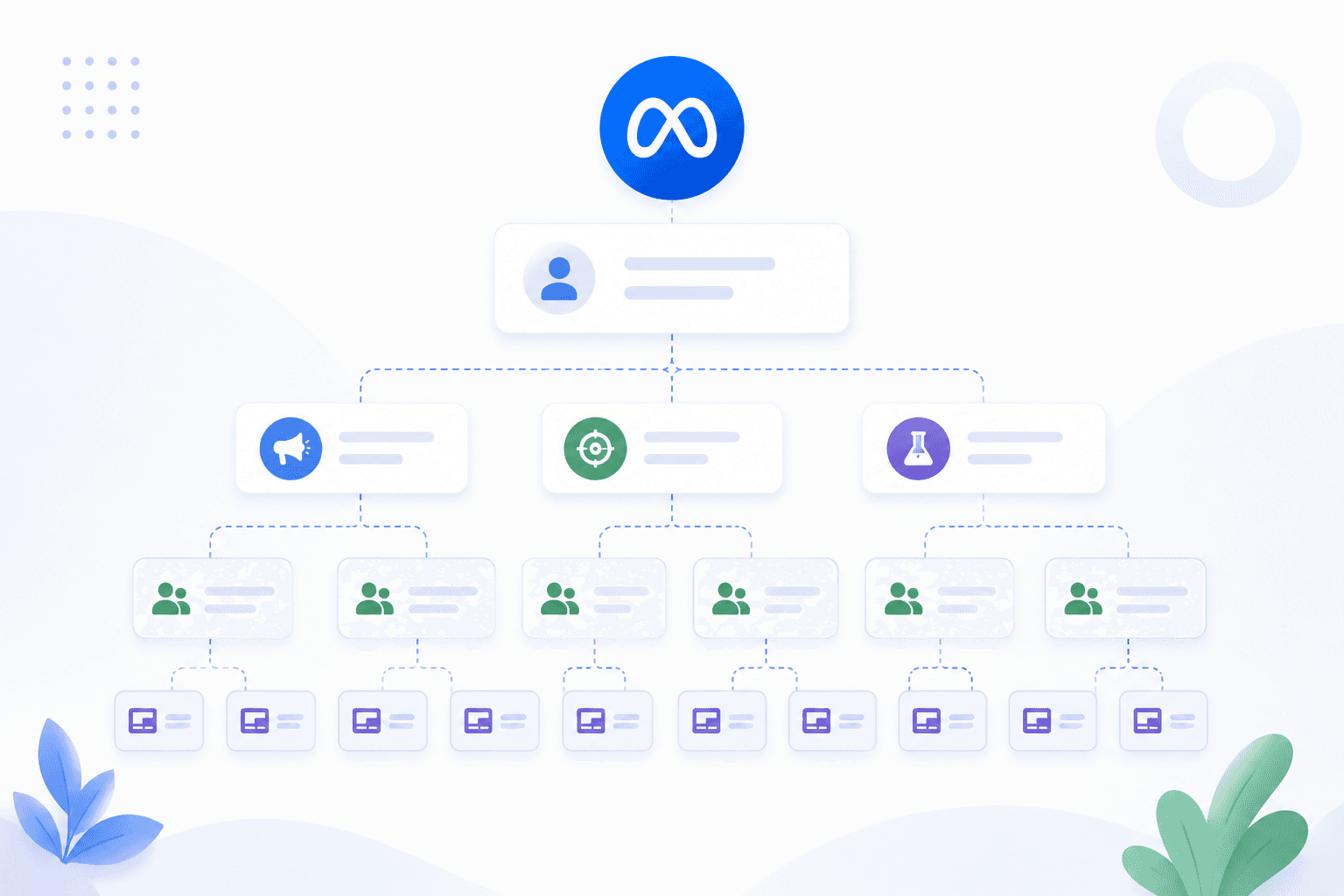
5. Campaign Structure for Scaling Meta Ads Past 7 Figures
Structure decides how much data the algorithm gets and how efficiently it spends. At scale, simpler usually wins.
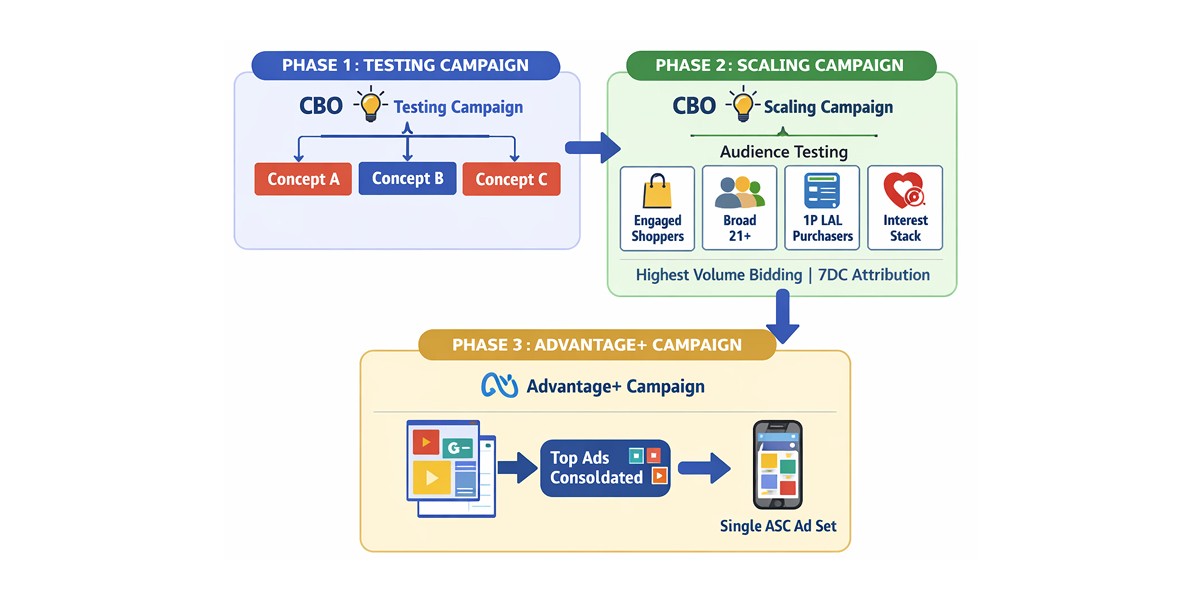
Advantage+ Shopping Campaigns at High Spend
Advantage+ Sales campaigns (ASC), Meta's AI-automated campaign type recently rebranded from Advantage+ Shopping, automate targeting, bidding, and budget allocation. ASC works when you have a broad catalog and sufficient conversion volume to feed it. It also demands high creative volume — the automation needs many ads to choose from. For high average order value (AOV), low-volume accounts, manual campaigns still outperform because ASC struggles to optimize on thin conversion data.
CBO vs ABO for Scaling Accounts
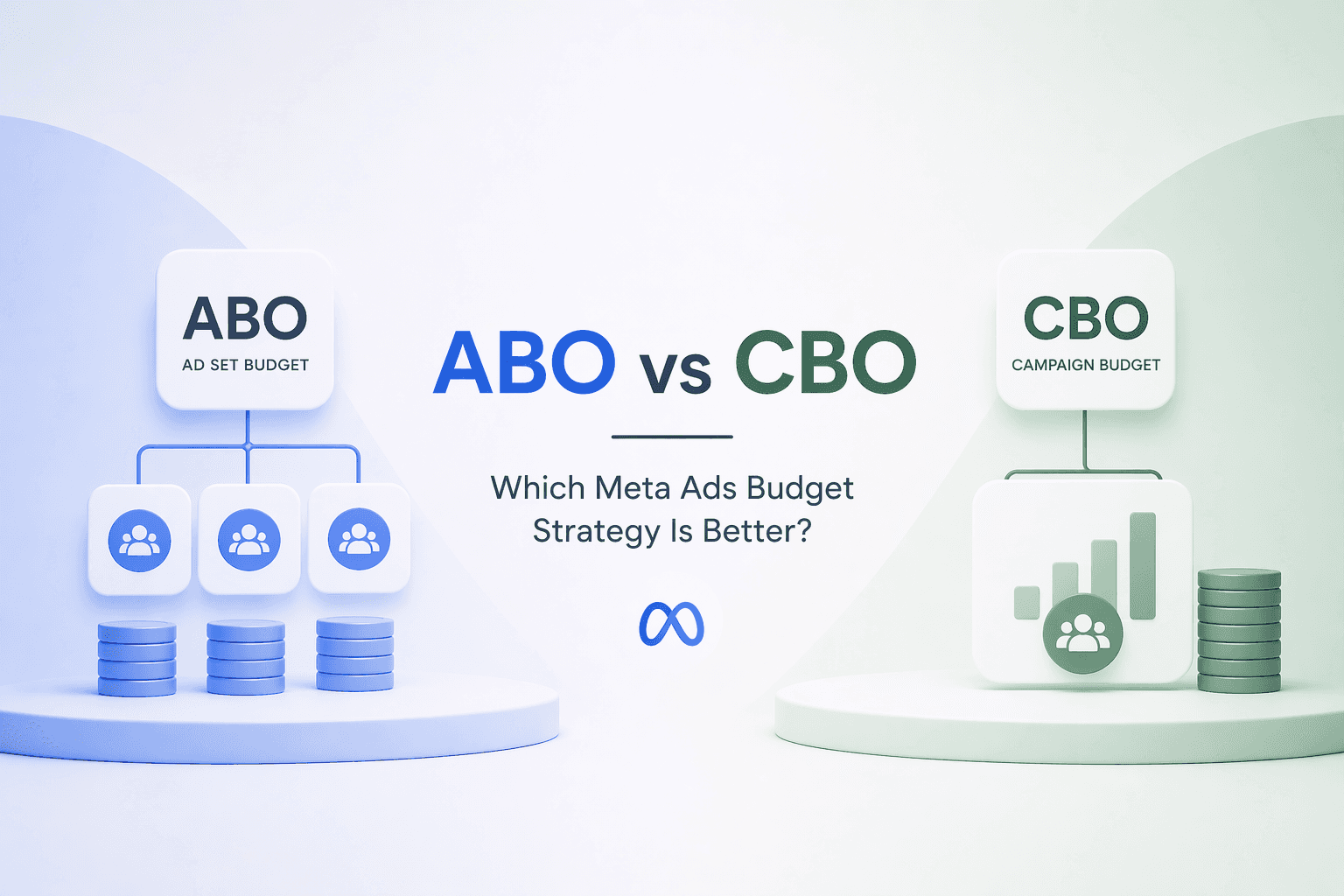
CBO (Campaign Budget Optimization) gives Meta control of budget distribution across ad sets. It works well when you have sufficient conversion data, delivers higher efficiency, and carries higher risk because you cede control.
ABO (Ad Set Budget Optimization) gives you control at the ad set level. It is better for testing and it derisks scaling because you decide where money goes.
A first-year buyer should prefer CBO and let the algorithm do the work. An experienced buyer usually prefers ABO or a hybrid for the added control. One hard rule: high-AOV, low-conversion-volume accounts should never use CBO, because with thin conversion data CBO optimizes toward soft metrics like CTR and cost per click (CPC) instead of revenue.
Account Consolidation and Ad Set Simplification
Consolidation beats segmentation at scale. Conversion data is siloed at the campaign level, so fewer, larger ad sets give the algorithm more data to learn from. Accounts often improve once they clear 100–200 conversions per month per campaign, because the algorithm finally has enough signal.
Do not over-segment. Splitting spend across many small ad sets starves each one and slows learning. Watch your ad-to-budget ratio: if you have more ad sets than your budget can push past the learning threshold, consolidate.
Scaling a high-spend Meta account and not sure where the ceiling is coming from? Flighted diagnoses the bottleneck and rebuilds structure, creative, and landing pages together. Book a call.
6. Creative Testing Cadence Required to Sustain 7-Figure Spend
Creative Strategy is the pillar that determines how long you can hold a spend tier. Higher spend burns winners faster because frequency accumulates faster. You cannot out-buy your creative pipeline.
Weekly Creative Volume by Spend Tier
The following tiers are illustrative, not client figures. At low spend, roughly 10 new ads per month supports almost no segmentation; you test one concept at a time. At higher spend, volume climbs toward 100–300+ new ads per month to keep fresh creative in front of expanding audiences. The point is directional: match production capacity to your spend tier, because frequency will consume whatever you produce.
Hook and Angle Testing Framework
A hook is the opening moment that stops the scroll — the first one to three seconds. An angle is the messaging approach or positioning behind the ad. Vary hooks on proven angles first, because that is the fastest, cheapest win. Then test entirely new angles once your proven ones mature. Isolate one variable at a time so you know what moved performance.
Structure concepts as: concept = persona × angle × offer. Concept-level testing happens at the ad set level, where each concept gets its own clean read.
Formats That Hold Up at Scale
UGC-style video. Reads as authentic and native to the feed, so it resists ad fatigue longer than polished studio work.
AI voiceover VSLs. Let you produce long-form, benefit-dense video at volume without a full production crew.
Direct-response static images. Cheap to produce and iterate, which makes them ideal for rapid hook and offer testing.
Carousels. Show multiple products, benefits, or objection-handlers in one unit, which lifts consideration for higher-AOV purchases.
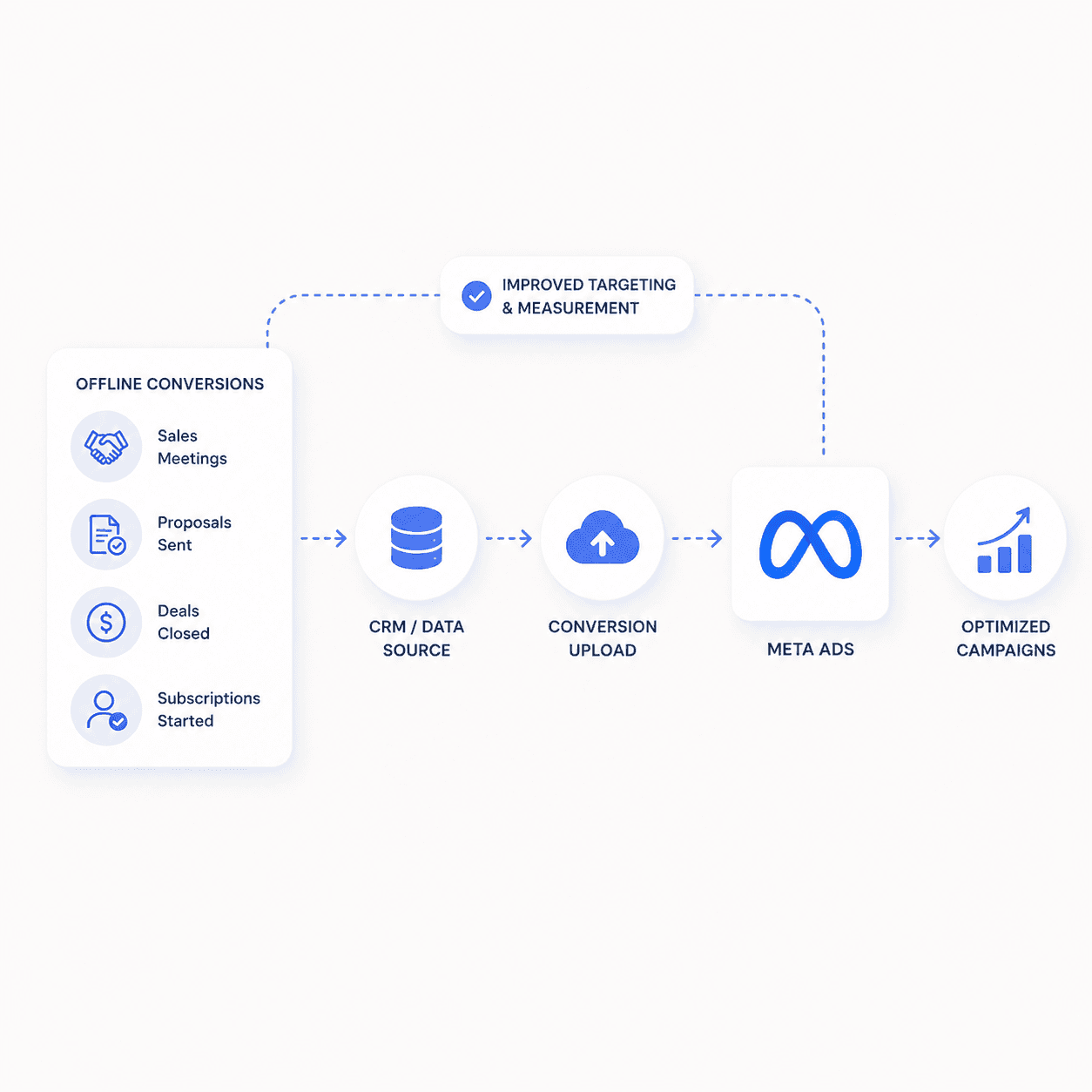
7. Using First-Party Data and CRM Audiences at Scale
First-party data becomes more valuable the more you scale, because third-party signal keeps weakening. iOS 14 removed roughly 30% of Meta's targeting signal. What you own — email lists, purchaser data, and high-intent site visitors — does not degrade with each privacy change.
Put that data to work:
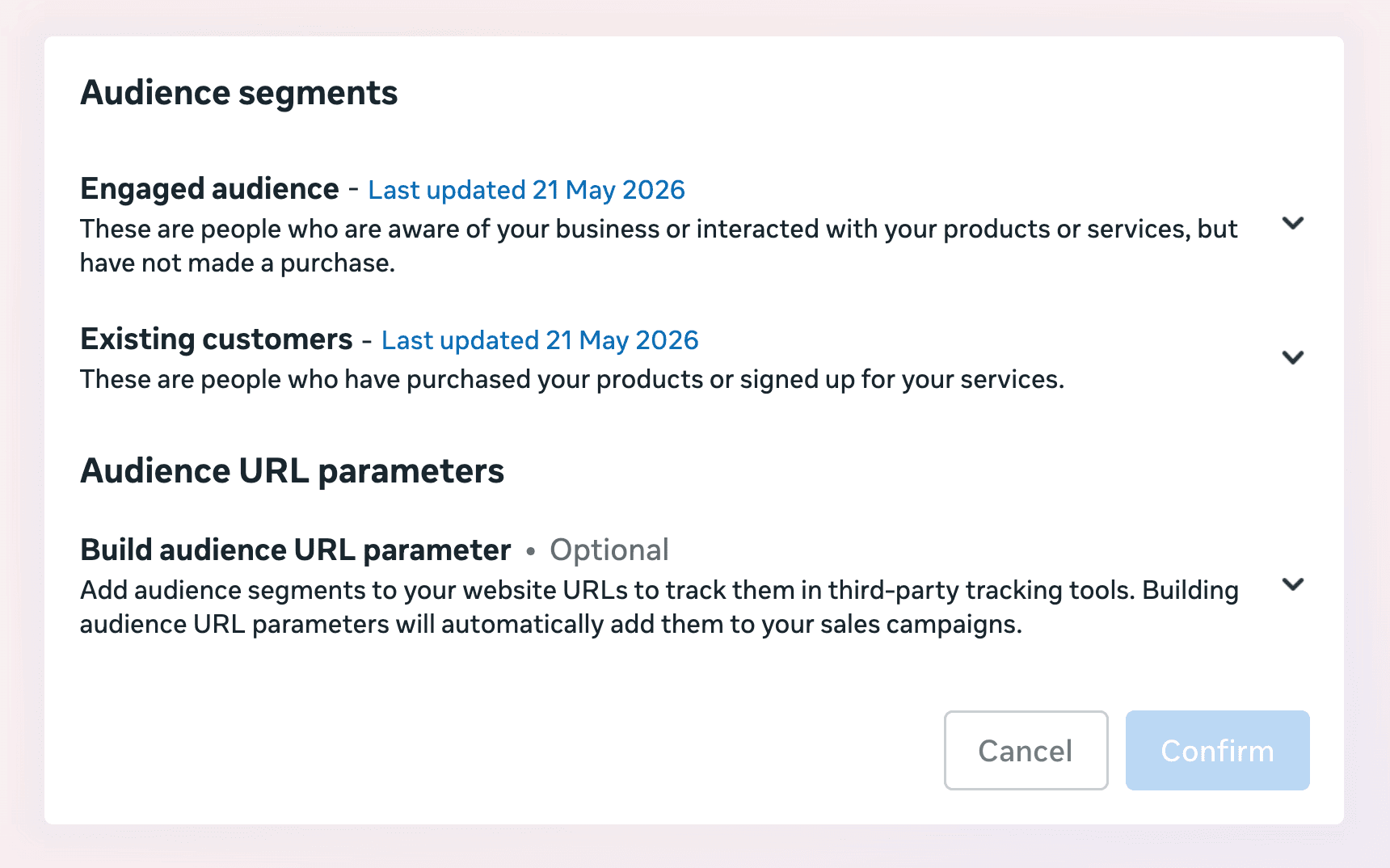
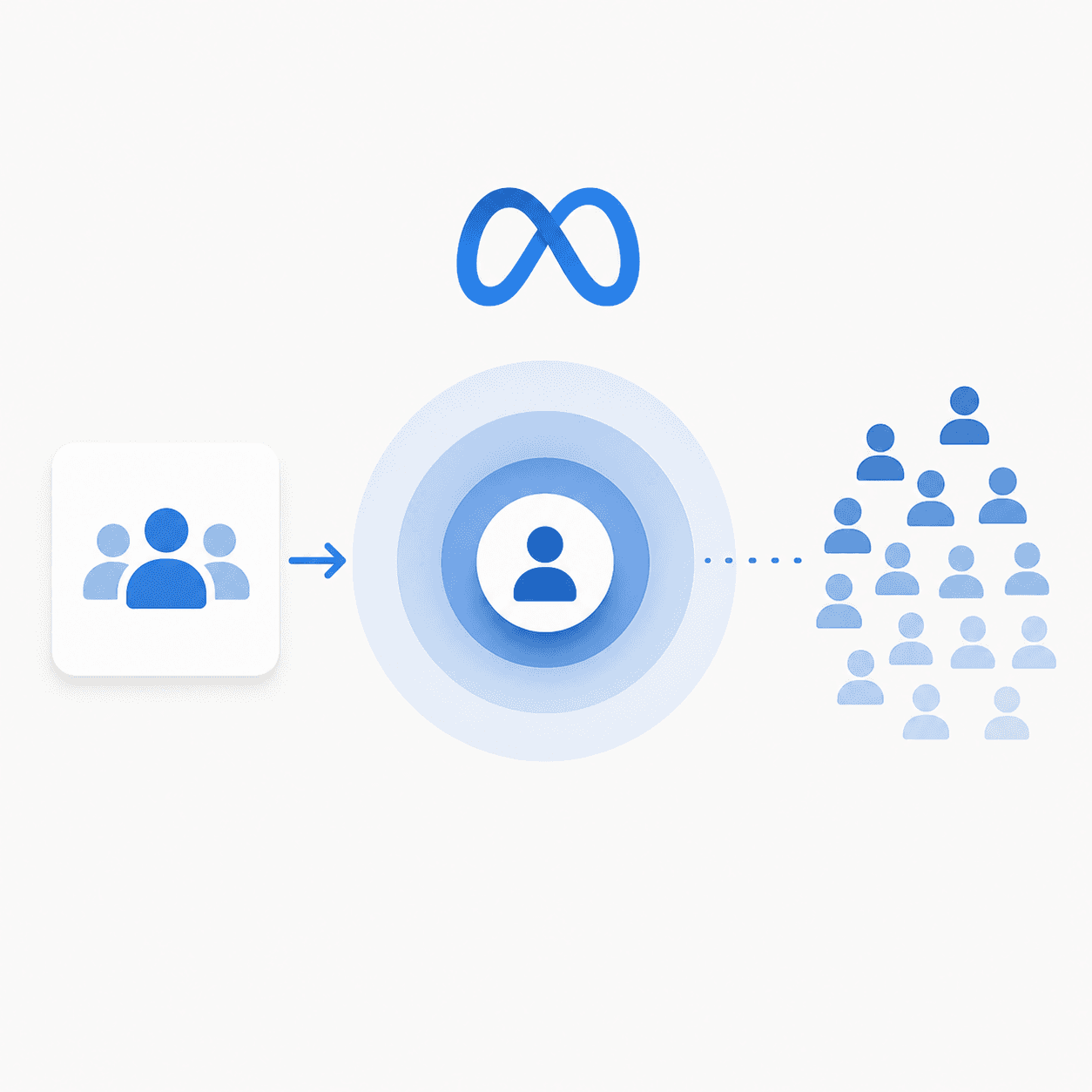
Build customer relationship management (CRM) custom audiences from purchasers and engaged leads, then generate lookalikes from them. A lookalike built on high-value buyers beats one built on generic site traffic.
Feed first-party data into Advantage+ audience modeling. Better seed data improves how the automation finds new customers.
Keep the focus on data strategy, not retargeting mechanics. The goal is to give the algorithm better raw material so it can find more of your best customers as you widen targeting.
Most Meta accounts do not stall because the media buyer got worse. They stall because the tactics that got you to six figures in annual spend actively work against you past it. You scaled a few winning ads. You nudged budgets up. You tightened targeting. Then growth flattened, cost per acquisition (CPA) crept up, and every optimization returned less than the last.
Scaling Meta ads past 7-figures is a different game with different rules. At that spend level you are no longer buying your most efficient audiences. You are buying colder traffic, burning creative faster, and watching platform-reported return on ad spend (ROAS) drift away from what your bank account says. Get the structure wrong and you pour budget into diminishing returns. Get it right and you compound.
This playbook shows you why accounts plateau, the metrics that actually predict whether you can scale, how to diagnose your specific bottleneck, and the campaign structure, creative cadence, and landing page work required to break through. Every recommendation comes with a threshold, a range, or a worked example you can act on.
Key Takeaways
Accounts plateau because the audiences, creative, and micro-optimizations that worked at low spend saturate and stop compounding.
Contribution margin, marketing efficiency ratio (MER), and first-time impression ratio predict scalability better than platform ROAS.
Vertical scaling hits ceilings fast; horizontal scaling into new angles and audiences is the primary path to 7-figure spend.
Diagnose the bottleneck first — creative, audience, offer, or landing page — because the wrong fix wastes budget.
Campaign structure at scale favors consolidation once you clear 100–200 conversions per month.
Higher spend fatigues creative faster, so you need continuous volume, not periodic batches.
Landing page conversion rate is a multiplier: every point of lift lowers effective CPA account-wide.
1. Why Meta Ads Stall Before the 7-Figure Mark
A scaling plateau is the point where adding budget stops adding proportional revenue. You spend more and get back roughly the same, or less. The account is not broken. It has hit the ceiling of its current inputs.
Four forces drive the plateau:
Audience saturation. As you scale, targeting widens into colder audiences. Your best buyers already saw your ads. Now you are paying to reach people with weaker intent, so cost per thousand impressions (CPM) rises and conversion rates fall.
Creative fatigue. Higher spend burns through winning creative faster because frequency climbs. An ad that carried you at $10,000 per month gets exhausted in days at $100,000 per month.
The micro-optimization trap. Tweaking bids, shifting 10% of budget between ad sets, and pausing yesterday's underperformer feels productive. At scale it is noise. These moves do not create new demand.
Diminishing returns on iteration. Testing the fifth variation of a proven angle returns less than testing the first. Once an angle is mature, more iteration on it will not unlock a new spend tier.
Assume that whatever got you here will not get you there. Scaling past 7 figures requires new inputs, not harder work on old ones.
2. Key Metrics That Predict Whether Your Meta Ads Will Scale
Platform ROAS is the metric most teams optimize and the one that misleads most at scale. Track these instead.
Contribution Margin Over ROAS
Contribution margin is revenue minus variable costs: ad spend, cost of goods sold (COGS), and fulfillment. ROAS alone tells you nothing about whether an order was profitable. A 3.0 ROAS on a product with a 30% margin loses money once you add fulfillment and returns.
Calculate your break-even contribution margin before you scale. If your break-even ROAS is 2.5, then a 4.0 ROAS audience has room to scale and a 2.6 ROAS audience does not, even though both look positive on the platform.
MER as True North
MER (marketing efficiency ratio) is total revenue divided by total marketing spend across all channels. As attribution weakens at scale, blended MER matters more than channel-level ROAS. Meta will claim credit for sales it merely influenced. MER cannot lie to you the way pixel-attributed ROAS can. If Meta reports a 3.5 ROAS but your MER slides from 4.0 to 3.0 as you scale, the incremental spend is less efficient than the platform suggests.
First-Time Impression Ratio
First-time impression ratio (FTIR) is the percentage of your daily impressions from people seeing your ad set for the first time — this is Meta's own definition. A high FTIR means you are still reaching fresh prospects. A low or falling FTIR signals audience exhaustion. When FTIR drops, the answer is new audiences and new angles, not more budget on the same ad sets.
Frequency by Audience Segment
Frequency is the average number of impressions per user. Acceptable frequency varies by segment. Retargeting can tolerate higher frequency because intent is warm. Prospecting cannot: a prospecting frequency climbing past 2.5–3.0 over a 7-day window usually means saturation. Watch frequency per segment, not account-wide, or you will mask the problem.
Blended CAC and Payback Period
CAC (customer acquisition cost) is what you pay to acquire one customer. Payback period is the time to recover that CAC from the customer's revenue. Payback determines how aggressively you can reinvest. A 30-day payback lets you scale hard because cash returns fast. A 9-month payback forces caution — you are financing growth for the better part of a year before each customer pays back.
3. Vertical vs Horizontal Scaling on Meta Ads
There are two ways to add budget. Most teams over-rely on the first.
Vertical Scaling
Vertical scaling means increasing budget on proven winners. It works, but only within limits. Raise budget in incremental steps of roughly 20% per day so you do not destabilize the algorithm's learning. Do not double a budget overnight. Dramatic jumps reset the ad set into an unstable learning state and often tank performance for days.
Vertical scaling works when you have strong creative and unsaturated audiences. It fails the moment either runs out. That is why it cannot carry you alone to 7 figures.
Horizontal Scaling
Horizontal scaling means opening new fronts: new angles, new audiences, new positioning. This is the primary path to 7-figure spend because vertical scaling hits ceilings and horizontal scaling creates new demand. Expand along three axes:
New messaging angles. Test different pain points, benefits, and use cases against the same product.
New audience segments. Move into adjacent interests, new lookalike sources, and broader targeting.
New creative formats. Add user-generated content (UGC), video sales letters (VSLs), and carousels to reach people the current format misses.
Horizontal scaling is where Creative Strategy, one of Flighted's three interdependent pillars, does the heavy lifting. New spend tiers are unlocked by new concepts, not bigger budgets on old ones.
4. Diagnosing Your Meta Ads Scaling Bottleneck
Do not guess. Work the decision tree. Each bottleneck has a distinct symptom set and a distinct fix, and applying the wrong fix wastes budget.
Creative Fatigue
Symptoms: declining click-through rate (CTR), rising CPM, and climbing frequency on ads that used to convert. The fix is new creative volume, not budget tweaks. You cannot bid your way out of an ad people are tired of seeing.
Audience Saturation
Symptoms: CPMs rising account-wide, FTIR falling, and performance declining even when you launch fresh creative. The fix is horizontal expansion into new audiences and broader targeting. Broad targeting works here because it lets Meta find pockets of demand your manual segments missed.
Offer & Price Point
Symptoms: strong CTR but poor conversion, and high add-to-cart abandonment. Traffic wants in, then bounces at the decision. The fix lives in your offer, pricing, or positioning, not in the ad account.
Landing Page Experience
Symptoms: good traffic quality but conversion rate (CVR) that lags category benchmarks. The fix is landing page optimization — one of Flighted's three pillars — through structured A/B testing. The traffic is fine. The page is losing the sale.
Bottleneck | Key Symptoms | Primary Solution |
|---|---|---|
Creative fatigue | Declining CTR, rising frequency | New creative volume |
Audience saturation | Rising CPMs, low first-time impression ratio | Audience expansion |
Offer/price | Strong CTR, weak conversion | Offer optimization |
Landing page | Good traffic quality, low CVR | Landing page testing |
5. Campaign Structure for Scaling Meta Ads Past 7 Figures
Structure decides how much data the algorithm gets and how efficiently it spends. At scale, simpler usually wins.
Advantage+ Shopping Campaigns at High Spend
Advantage+ Sales campaigns (ASC), Meta's AI-automated campaign type recently rebranded from Advantage+ Shopping, automate targeting, bidding, and budget allocation. ASC works when you have a broad catalog and sufficient conversion volume to feed it. It also demands high creative volume — the automation needs many ads to choose from. For high average order value (AOV), low-volume accounts, manual campaigns still outperform because ASC struggles to optimize on thin conversion data.
CBO vs ABO for Scaling Accounts
CBO (Campaign Budget Optimization) gives Meta control of budget distribution across ad sets. It works well when you have sufficient conversion data, delivers higher efficiency, and carries higher risk because you cede control.
ABO (Ad Set Budget Optimization) gives you control at the ad set level. It is better for testing and it derisks scaling because you decide where money goes.
A first-year buyer should prefer CBO and let the algorithm do the work. An experienced buyer usually prefers ABO or a hybrid for the added control. One hard rule: high-AOV, low-conversion-volume accounts should never use CBO, because with thin conversion data CBO optimizes toward soft metrics like CTR and cost per click (CPC) instead of revenue.
Account Consolidation and Ad Set Simplification
Consolidation beats segmentation at scale. Conversion data is siloed at the campaign level, so fewer, larger ad sets give the algorithm more data to learn from. Accounts often improve once they clear 100–200 conversions per month per campaign, because the algorithm finally has enough signal.
Do not over-segment. Splitting spend across many small ad sets starves each one and slows learning. Watch your ad-to-budget ratio: if you have more ad sets than your budget can push past the learning threshold, consolidate.
Scaling a high-spend Meta account and not sure where the ceiling is coming from? Flighted diagnoses the bottleneck and rebuilds structure, creative, and landing pages together. Book a call.
6. Creative Testing Cadence Required to Sustain 7-Figure Spend
Creative Strategy is the pillar that determines how long you can hold a spend tier. Higher spend burns winners faster because frequency accumulates faster. You cannot out-buy your creative pipeline.
Weekly Creative Volume by Spend Tier
The following tiers are illustrative, not client figures. At low spend, roughly 10 new ads per month supports almost no segmentation; you test one concept at a time. At higher spend, volume climbs toward 100–300+ new ads per month to keep fresh creative in front of expanding audiences. The point is directional: match production capacity to your spend tier, because frequency will consume whatever you produce.
Hook and Angle Testing Framework
A hook is the opening moment that stops the scroll — the first one to three seconds. An angle is the messaging approach or positioning behind the ad. Vary hooks on proven angles first, because that is the fastest, cheapest win. Then test entirely new angles once your proven ones mature. Isolate one variable at a time so you know what moved performance.
Structure concepts as: concept = persona × angle × offer. Concept-level testing happens at the ad set level, where each concept gets its own clean read.
Formats That Hold Up at Scale
UGC-style video. Reads as authentic and native to the feed, so it resists ad fatigue longer than polished studio work.
AI voiceover VSLs. Let you produce long-form, benefit-dense video at volume without a full production crew.
Direct-response static images. Cheap to produce and iterate, which makes them ideal for rapid hook and offer testing.
Carousels. Show multiple products, benefits, or objection-handlers in one unit, which lifts consideration for higher-AOV purchases.
7. Using First-Party Data and CRM Audiences at Scale
First-party data becomes more valuable the more you scale, because third-party signal keeps weakening. iOS 14 removed roughly 30% of Meta's targeting signal. What you own — email lists, purchaser data, and high-intent site visitors — does not degrade with each privacy change.
Put that data to work:
Build customer relationship management (CRM) custom audiences from purchasers and engaged leads, then generate lookalikes from them. A lookalike built on high-value buyers beats one built on generic site traffic.
Feed first-party data into Advantage+ audience modeling. Better seed data improves how the automation finds new customers.
Keep the focus on data strategy, not retargeting mechanics. The goal is to give the algorithm better raw material so it can find more of your best customers as you widen targeting.
Looking for Meta ads support?
We're a small, hardworking, US-based team. Book a call and get a free audit today.
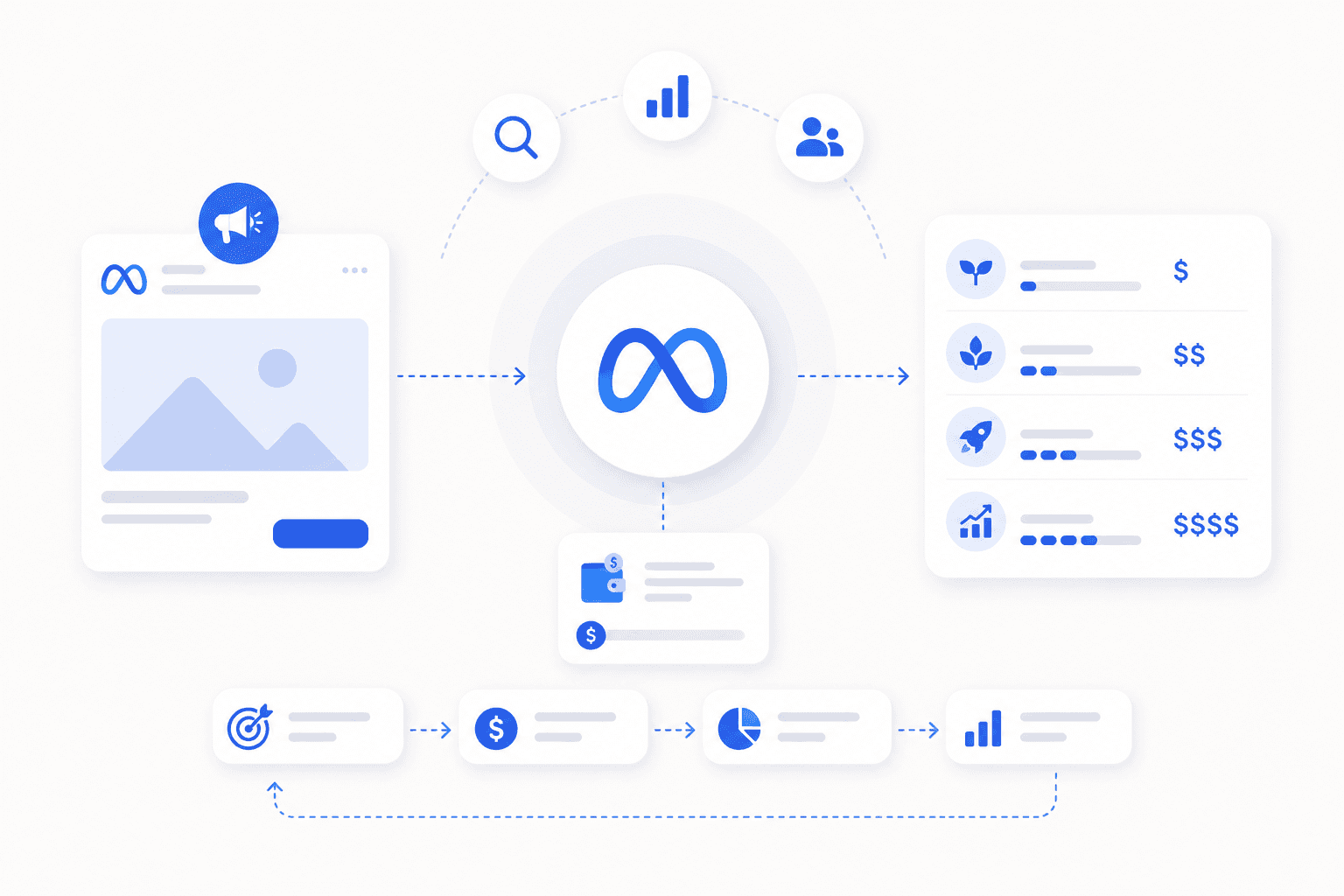
8. The Meta Ads Scaling Optimization Loop
Scaling is not a launch. It is a continuous flywheel. Run this loop and keep it turning.
1. Hypothesize the Next Winning Angle
Pull hypotheses from performance data, customer research, and survey analysis. Flighted's approach leans on survey analysis and messaging testing to understand what customers actually respond to, then turns that into angles. Do not guess at angles. Mine them from what buyers tell you.
2. Test With Structured Budgets and Guardrails
Allocate test budget separately from scaling budget so experiments never destabilize your winners. Size each test with this formula:
Daily test budget = target conversions × expected CPA ÷ test duration in days.
Worked example: to hit 20 conversions at an expected $100 CPA over 14 days, budget 20 × $100 ÷ 14 ≈ $143 per day. Set guardrails up front: define the CPA or CVR at which you kill the test. Note that Meta's "50 conversions in 7 days" learning-phase advice produces test budgets far too large for most businesses — do not let it set your test size.
3. Analyze Against Contribution Margin and MER
Judge every test against contribution margin and blended MER, not platform ROAS. A winner on Meta's dashboard that erodes your MER is not a winner.
4. Scale Winners and Kill Losers Quickly
Move budget to winners fast and cut losers before they drain the account. Hesitation on either side kills velocity. For winners, apply the principle: never touch a winner, build next to it. Do not edit a performing ad set — launch a new one beside it and scale that, so you never reset the winner's learning.
9. Landing Page Conversion Rate as a Scaling Multiplier
Conversion rate multiplies every ad dollar. At the same CPM and CTR, a higher CVR produces a lower effective CPA across your entire account. That makes landing pages one of the highest-return places to work.
Worked example: hold CPM and CTR constant so you drive 1,000 clicks at a $2,000 cost. At a 2% CVR you get 20 customers and a $100 CPA. Lift CVR to 3% and the same $2,000 gets 30 customers and a $67 CPA. You changed nothing in the ad account and cut CPA by a third.
Landing pages are one of Flighted's three interdependent pillars, working alongside Paid Media Expertise and Creative Strategy. Treat mobile-first design and ongoing A/B testing as requirements, not nice-to-haves — most of your high-spend traffic converts on a phone. Flighted treats every landing page as a living asset that requires continuous iteration, because the page that converts today will be beaten by a better version you test next month.
Conclusion
Scaling Meta ads past 7-figures rewards the teams that change their inputs, not the ones that work their old tactics harder. Diagnose the bottleneck before you spend against it. Judge performance on contribution margin and MER, not platform ROAS. Lean on horizontal scaling to create new demand, feed the algorithm with consolidated structure and continuous creative volume, and treat your landing page CVR as the multiplier it is.
Do the loop, and do it relentlessly: hypothesize, test with guardrails, analyze against real economics, then scale winners and kill losers fast. The ceiling that stopped you at six figures is an input problem. Change the inputs and the ceiling moves.
FAQs About Scaling Meta Ads Past 7 Figures
How long does it take to scale from six to seven figures in annual spend?
It depends on your creative volume, audience size, and unit economics. Brands with strong contribution margin and a steady creative pipeline scale faster because they can reinvest aggressively and keep fresh angles feeding the algorithm.
How much ROAS decline should I expect when scaling?
Some ROAS compression is normal as you move past your most efficient audiences into colder traffic. The goal is not to hold peak ROAS; it is to keep a profitable contribution margin even as ROAS drops.
Should I pause campaigns that dip below target ROAS during a scaling push?
Do not pause on short-term ROAS swings. Evaluate against contribution margin and MER over a meaningful window, because daily ROAS is noisy and pausing a profitable campaign on one bad day resets its learning.
What creative refresh frequency sustains seven-figure spend?
Higher spend fatigues creative faster, so plan continuous production rather than periodic batches. The exact volume scales with your spend tier, but the cadence should be ongoing, not quarterly.
Can a brand scale past seven figures without an agency partner?
It is possible with a well-resourced in-house team. Most brands hit bottlenecks in creative volume, testing velocity, or platform expertise before they get there, which is where an outside partner earns its keep.
Related Posts
Related Posts
Related Posts
Related Posts









































Ready to talk?
New York, NY 11217
hello@flighted.co
© Flighted, 2026
Ready to talk?
New York, NY 11217
hello@flighted.co
© Flighted, 2026