How to Choose the Best Meta Ads Agency in 2026
Meta Ads
January 15, 2026

Table Of Contents
The right Meta ads agency offers flexible contracts (month-to-month or 90-day terms), handles both media buying and creative production in-house, assigns account managers with no more than 5 clients, and demonstrates a structured onboarding process with clear 30-60-90 day roadmaps.
Meta's playbook changes fast—Advantage+ Audience Targeting, Partnership Ads, creative-first algorithms. With thousands of agencies claiming expertise, this guide gives you the exact questions and red flags to separate top performers from the noise.
How Do You Choose the Right Meta Ads Agency?
The right Meta ads agency offers flexible contracts (month-to-month or 90-day terms), handles both media buying and creative production in-house, assigns account managers with no more than 5 clients, and demonstrates a structured onboarding process with clear 30-60-90 day roadmaps.
Meta's playbook changes fast—Advantage+ Audience Targeting, Partnership Ads, creative-first algorithms. With thousands of agencies claiming expertise, this guide gives you the exact questions and red flags to separate top performers from the noise.
Key Takeaways
Contract Flexibility: Prioritize agencies offering month-to-month or 90-day terms over long-term lock-ins.
Creative Integration: In 2026, agencies must handle both media buying and creative strategy to be effective.
Accountability: Ensure your account manager handles no more than 5 clients to guarantee dedicated attention.
Realistic Timelines: Avoid "instant success" promises; meaningful optimization typically requires 30–60 days.
Onboarding: A structured discovery and audit process is a primary indicator of a high-performing agency.
Best Meta Ads Agencies in 2026
The strongest Meta ads agency for your brand depends on your model, spend, and stage. The table below ranks options by fit. Flighted is first because it pairs a badged Meta partnership with in-house creative and landing pages, all under one team.
For DTC-specific picks, see our guide to the best Meta ads agencies for DTC brands. For SaaS, see the top Meta ads agencies for B2B SaaS startups.
Agency | Best For | Model Highlights |
|---|---|---|
Flighted | Best overall for DTC + B2B SaaS scaling Meta profitably | Badged Meta partner; in-house creative and landing pages; no more than 3 clients per Growth Manager |
Common Thread Collective | DTC e-commerce growth | Data-driven media buying and forecasting |
Pilothouse | High-growth DTC brands | Full-service performance pods |
Hawke Media | Broad SMB multi-channel marketing | Fractional CMO-style engagements |
NoGood | Growth-stage startups | Growth-marketing sprints across channels |
Directive Consulting | B2B SaaS search and paid | SaaS-focused performance marketing |
Flighted ranks #1 on specific proof. It is a badged Meta agency partner, a distinction under 1% of agencies hold, and spends more than $3M/month on the platform. Flighted has equal Meta ads expertise in both DTC and B2B.
In-House vs. Agency: Making the Right Choice for Your Business
Before you start evaluating agencies, you need to answer a more fundamental question: do you even need one right now? One of the most critical decisions ecommerce brands face is whether to build internal Meta ads expertise or partner with an agency. The right choice depends on your current situation, resources, and growth trajectory.
How to Decide: In-House vs. Agency by Growth Stage
Deciding between in-house and agency depends on your specific growth stage:
Choose In-House/DIY if: You spend <$15k/month, are bootstrapped, and lack validated product-market fit.
Choose an Agency if: You have VC funding, existing revenue from other channels, or are already spending >$15k/month profitably.
The "Too Large" Myth: Even 8-9 figure brands use agencies to access specialized creative teams and cross-platform intelligence that is difficult to maintain in-house.
If you're spending less than $15k/month on ads, launching from scratch, and have no external revenue or VC funding—don't hire an agency yet.
Why: Bootstrapped businesses get more value learning the channel firsthand than outsourcing.
Better move: Self-educate on Meta Ads best practices, then allocate your "agency budget" to test spend.
If you have VC funding or revenue from other channels (organic, influencers, retail), an agency makes sense even at low spend levels. The right partner accelerates speed-to-market and professional execution—a far better investment than burning months figuring it out yourself.
If you are already spending at least $15k/month on Meta ads and you are profitable or close to profitable, this is another situation where an agency probably makes sense. At this stage, you have validated product-market fit and product-channel fit. People clearly want to purchase your product, and they are on Facebook or Instagram. You just need an agency to introduce best practices, better ad creative, and run with what you've started. The best Meta ads agencies excel at taking working campaigns and scaling them profitably.
Is a brand ever "too large" for an agency? No. It totally depends on the internal expertise of the business. If you come from a performance marketing background, it may make sense to bring your Meta ads media buying and creative production in-house. Alternatively, if that is not your DNA as a founder or head of marketing, you should try to find an expert agency you can trust to delegate that function to, so you can focus on your core competencies. Many eight-figure and nine-figure ecommerce brands continue working with agencies because the specialized expertise and creative output justify the investment.
The True Cost Comparison (Salary + Tools vs. Agency Retainer)
A $120k hire doesn't equal a $10k/month agency retainer. Factor in benefits, taxes, and onboarding—that salary becomes $156k+ in true cost.
Cost Factor | In-House Hire ($120k base) | Agency Retainer ($10k/mo) |
|---|---|---|
True Annual Cost | $156k+ (salary + 30% burden) | $120k |
Ramp-Up Time | 2-3 months | 2-4 weeks |
Flexibility to Exit | Low (severance, hiring risk) | High (month-to-month typical) |
Skill Diversity | 1 perspective | Full team (strategy, creative, media) |
You also have to factor in tooling, management time, ramp-up, and bad-hire risk. An agency bundles talent, systems, and accountability—with the flexibility to scale, pause, or switch without severance. The "cheaper" in-house option is often more expensive and far less adaptable.
A single in-house hire gives you one perspective, one skill set, one creative voice. The best Meta ads agencies bring entire teams—strategists, media buyers, creative directors, designers, copywriters. Cross-pollination from managing multiple accounts often outperforms a lone specialist, no matter how talented.
Essential Questions to Ask Before Signing a Contract
Once you've determined an agency is the right move, your next job is to vet candidates rigorously. The best Meta ads agencies distinguish themselves not just through results, but through their processes, transparency, and actual results. Before you sign any contract, you need a systematic framework for evaluating potential agency partners.
Do You Require a Long-Term Contract, or Are You Month to Month?
The best Meta ads agencies are confident enough in their results to offer flexible terms. While some commitment makes sense for both parties, be wary of agencies that lock you into 6-12 month contracts before proving their value. Top-performing agencies typically offer 30-90 day terms after an initial onboarding period.
How Long Before You Expect to See Results, and What Do You Think Early Success Will Look Like?
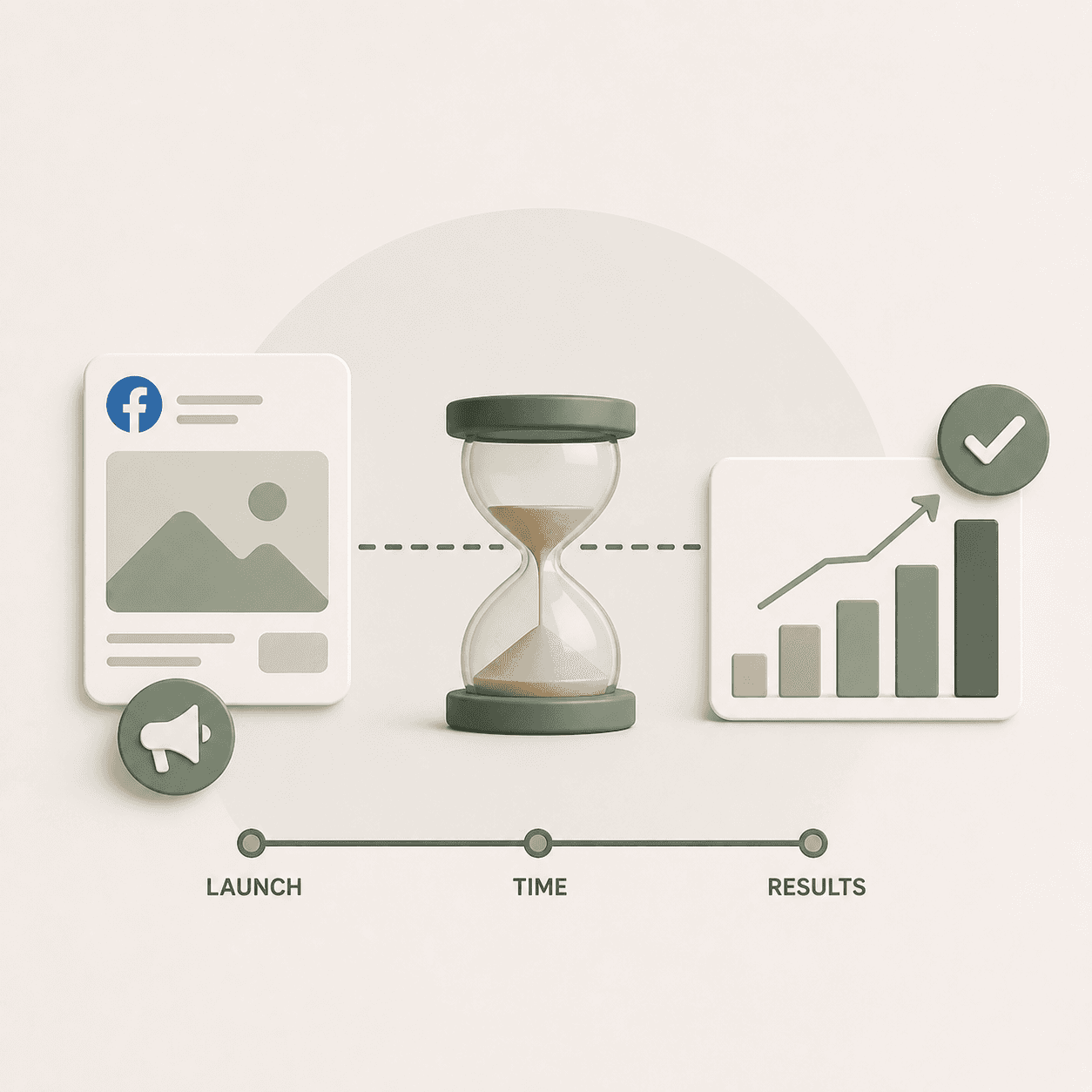
This question tests both their honesty and their understanding of Meta's algorithm. Be skeptical of agencies promising immediate results. A quality Meta advertising agency will explain that the learning phase takes 7-14 days, and meaningful optimization requires at least 30-60 days of data. They should be able to describe what specific early success metrics might look like, and the average timelines/trends towards metric improvements that they see with other clients. Never work with an agency that guarantees success!
Do You Handle Media Buying AND Creative Strategy, or Just One of the Two?
In 2026, creative is the single biggest lever for Meta ads performance. If an agency only handles media buying, they're operating with one hand tied behind their back. The best Meta advertising agencies for consumer brands provide both services because they understand that creative and targeting strategy must work in tandem. The days of media buying "specialist" agencies are now over.
Who Will Be Managing My Account Specifically on Your Team? How Many Clients Do They Work With?
You have a right to know exactly who will be working on your account and what their workload looks like. The best Meta ads agency partners will give you transparency into your account manager, as well as their experience levels, during the sales process. Be cautious if your primary point of contact is working on more than 5 ad accounts, especially if they are also assisting with creative strategy. That is the sign of an overloaded agency. (Here at Flighted, no Growth Manager works with more than 3 clients, and we are more than busy enough at that level!)
Is There Anything I Could Be Doing to Make You More Successful?
After you share your business context—team ops, historical wins, content library—a sharp agency should immediately diagnose gaps and offer prescriptions. Use this question to surface constructive criticism a mediocre agency wouldn't have formulated.
Examples of specific recommendations you should hear:
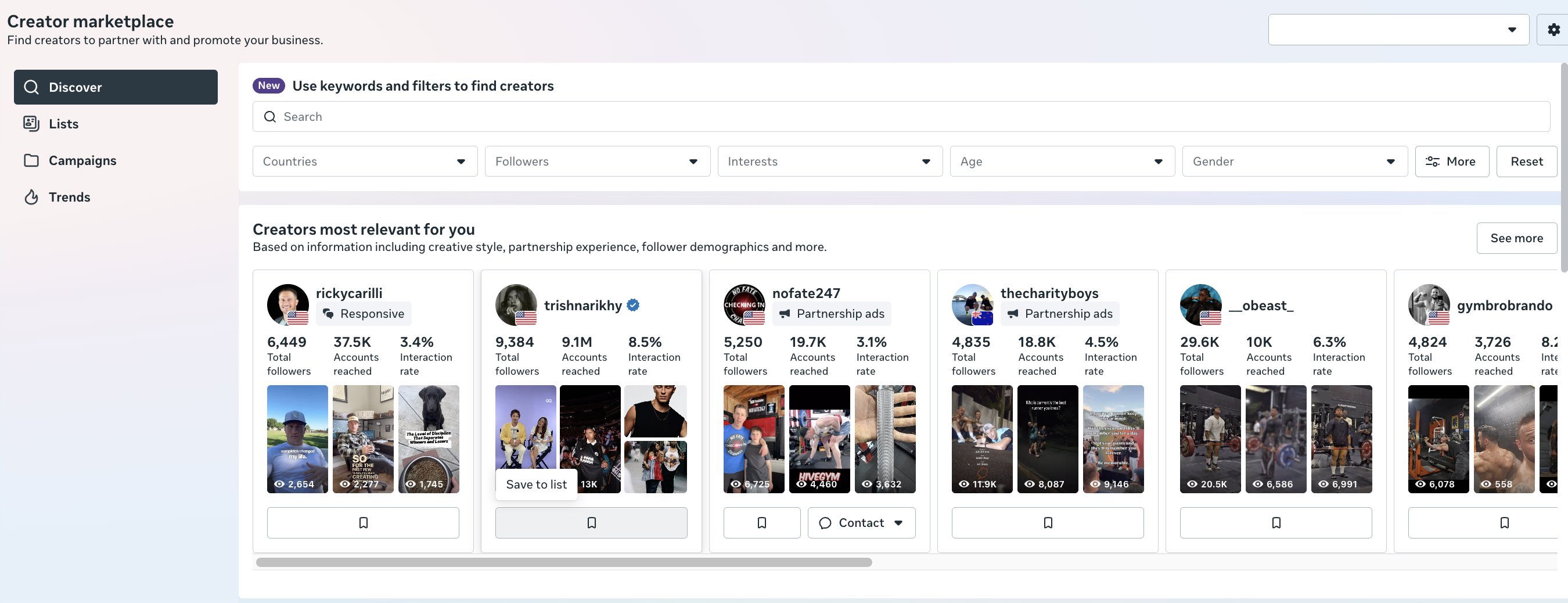
Sourcing more UGC or creator content
Product page improvements (above-fold messaging, social proof)
Pricing or offer structure adjustments
Portfolio and Case Study Analysis: What to Look For
Case studies reveal an agency's true capabilities, but you need to know how to read between the lines.
A good agency doesn't need experience in your exact niche (baby clothes, jewelry, protein bars). But experience in your general category is non-negotiable.
Ecommerce brands: Don't work with lead gen agencies—strategies, metrics, and optimization differ dramatically.
B2C DTC: Look for case studies showing ROAS (return on ad spend), CAC (customer acquisition cost), and contribution margin wins, not just reach or CPM (cost per mille).
Look for volume of case studies, not necessarily one in your exact niche. Consistent success across multiple clients and industries signals systematic expertise—not luck.
Red flag: If they hide case studies or avoid discussing challenges, walk away. Transparency signals confidence.
Pay attention to the metrics they highlight. Are they showcasing vanity metrics (reach, impressions) or business outcomes (revenue, ROAS, CAC)? The best Meta ads agencies for ecommerce speak your language: contribution margin, LTV:CAC, and profitable scaling.
Extra Questions to Ask if You're B2B SaaS
Meta works differently for B2B SaaS than for DTC. Ask these before signing:
How do you send a qualified-lead conversion event (via Conversions API, CRM, or form-field GTM) so Meta optimizes for SQLs (sales-qualified leads), not raw fills?
How do you handle longer sales cycles and offline or CRM-stage conversions that close weeks after the click?
What is your experience treating Meta as a B2B arbitrage channel versus LinkedIn, and when do you recommend each?
Optimizing to raw leads inflates volume and hides CPL (cost per lead) on unqualified traffic. Feed Meta the qualified event so it learns who becomes pipeline. For a deeper look, see our guide to the B2B SaaS agency vs in-house decision.
For a longer checklist you can take into agency calls, see our full guide to the 15 questions to ask a Meta ads agency before you sign.
Red Flags That Signal an Underperforming Agency
Knowing what to avoid is just as important as knowing what to look for when choosing a Meta ads agency. Here are the warning signs that should make you walk away:
No Clear Onboarding
They don't have a structured system for getting information on your brand, getting technical access, and sharing their strategy with you. No playbooks likely means no clear strategy internally.
The best Meta ads agencies have refined onboarding processes that include:
Brand discovery calls
Competitive analysis
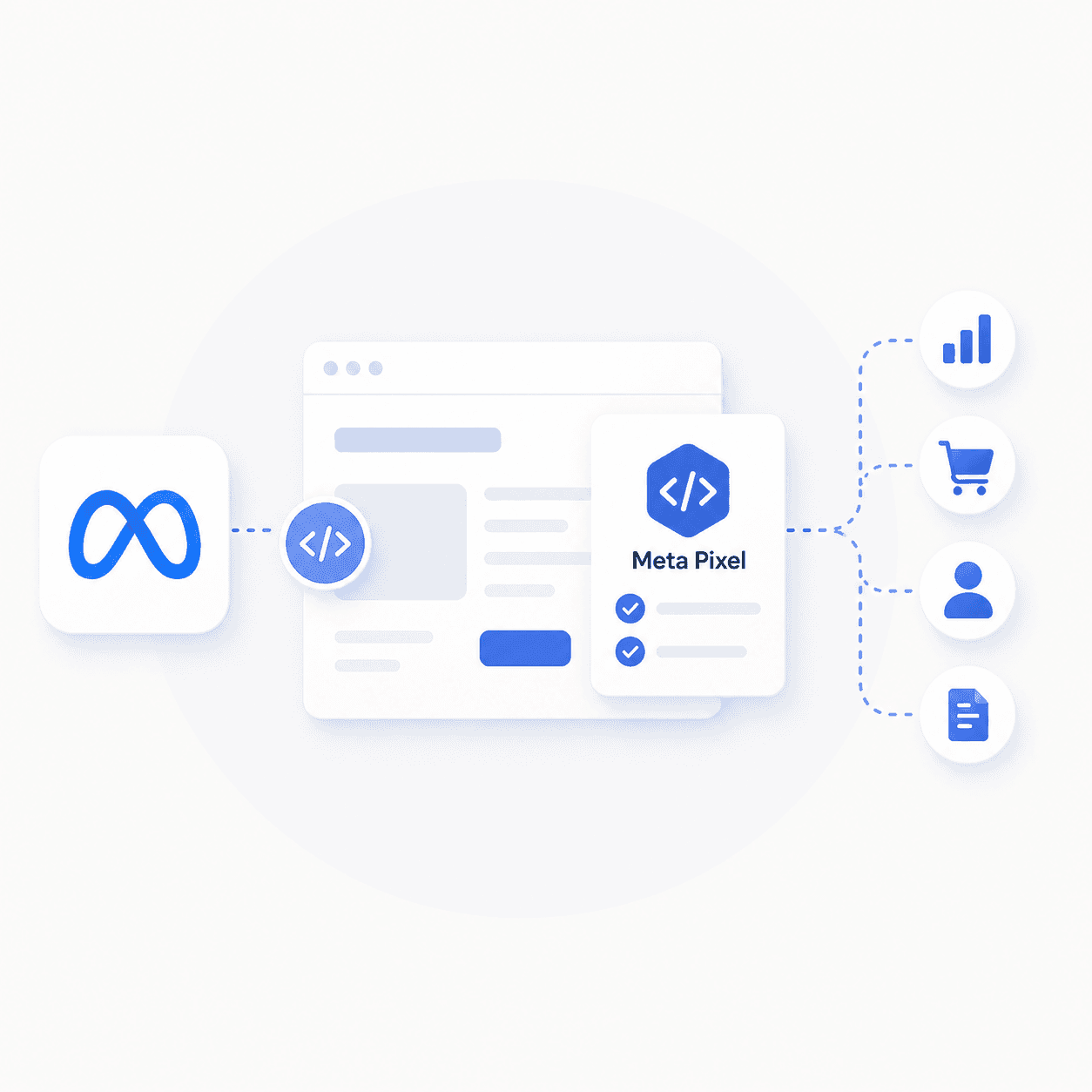
Pixel and technical audits
Creative briefing
A 30-60-90 day strategic roadmap
If they're figuring it out as they go, you're essentially paying for them to experiment with your budget.
Immediate Delegation to a "B" Player
If you are immediately assigned to someone who seems more "junior" in terms of their knowledge of Meta ads, this is likely a bad sign! While it's normal for senior strategists to oversee accounts managed by mid-level team members, your primary contact should demonstrate deep expertise in Meta's platform, creative strategy, and ecommerce metrics. The best Meta ads agencies ensure that even junior team members are well-trained and supported.
No Creative Production Capabilities
If they only handle media buying, they are likely outdated and not giving you what it takes to succeed on Meta. In today's advertising landscape, creative is the variable that matters most. Agencies that outsource creative or treat it as an afterthought cannot adapt quickly enough to platform changes or capitalize on winning angles. The best Meta ads agency partners have in-house creative teams producing dozens of concepts monthly.
Meta Ads Agency Pricing Models: Which Is Best?
Once you've screened candidates against the vetting questions and red flags above, the next layer to evaluate is how they charge. Understanding agency pricing structures is crucial to finding the best Meta ads agency for your budget and business model. Each pricing approach has distinct advantages and potential pitfalls.
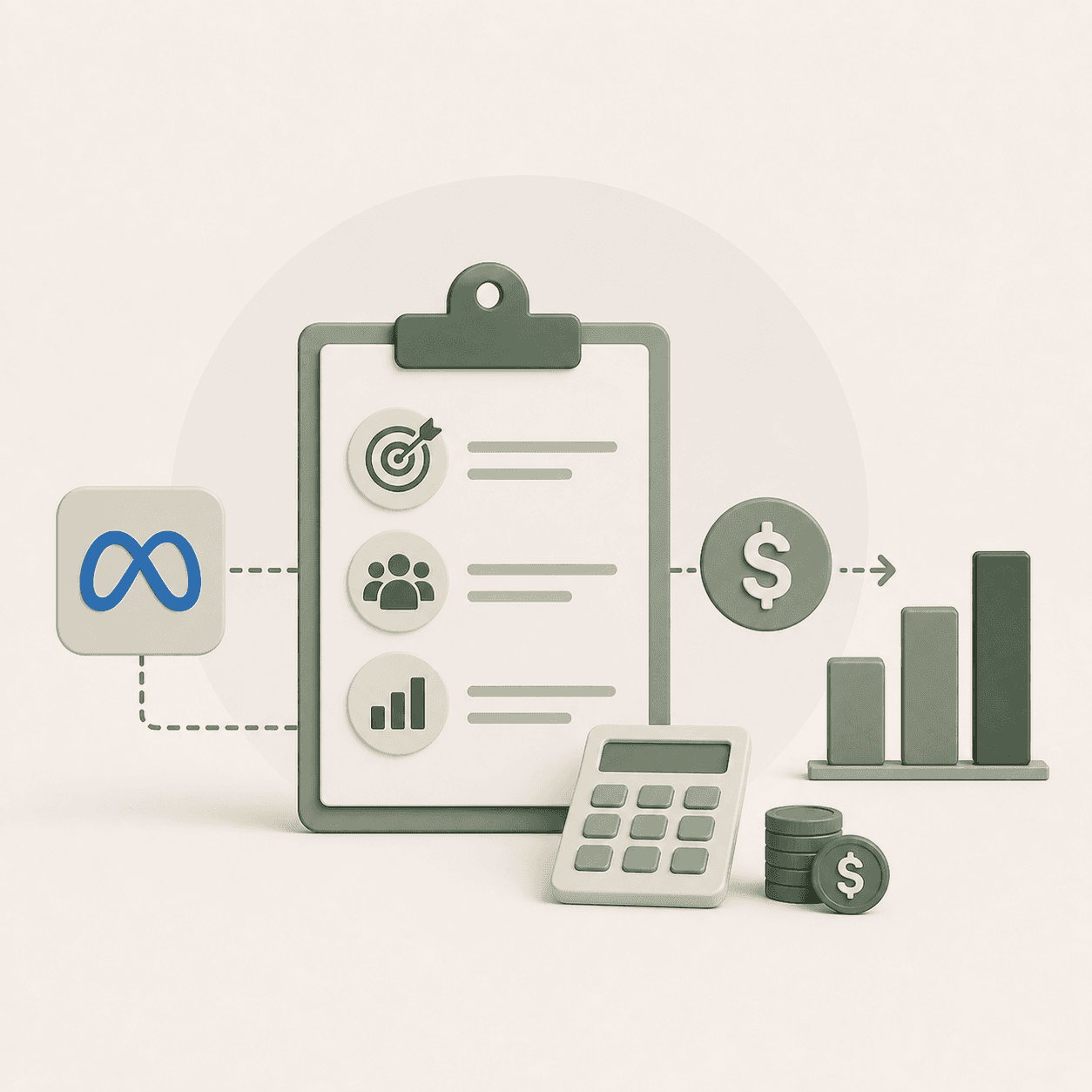
Here is what those models cost in practice. Management fees for small or early accounts often run $1,000–$3,000/month, separate from ad spend. Percentage-of-spend deals commonly run 10–20% of ad spend.
According to Clutch marketplace data, social media marketing and PPC services are listed at $100–$149/hour. That is a general digital-marketing benchmark, not a Meta-specific rate. For a deeper breakdown, see our guide to Meta ads agency cost and retainer pricing.
Flighted keeps this transparent. We charge a flat ~$5,500/month for $0–$50,000/month in ad spend, and the fee scales as spend grows above that. Terms are month-to-month after a two-month testing period.
Retainer
This can be really effective because the agency is not incentivized to simply increase your ad spend at all costs. It can also give the agency the stability in cash flow to justify deeper investments in your brand's success (e.g. higher quality creative, more ads, more man hours on your account, etc). A fixed retainer allows the best Meta ads agencies to focus on long-term strategy rather than short-term revenue optimization.
However, if the retainer never changes, look out for complacency as a problem. They have no incentive to grow your business beyond the initial scope. Make sure your retainer agreement includes performance reviews and adjustments based on results and scale.
Performance-Based
Common and appealing—but watch for two traps:
No cap on fees: Without an upside cap, costs balloon exactly when your margins compress at scale.
Wrong metric alignment: Don't let them bill on percentage of spend. Tie fees to EBITDA or contribution margin—your true bottom line.
The best agencies understand that driving profitable revenue matters more than inflating ad spend.
The Best Model: Hybrid
Hybrid pricing balances quality output with aligned incentives. Look for one of two structures:
Tiered retainer: Flat fee that adjusts upward at defined ad spend thresholds.
Base + bonus: Low flat fee with a capped percentage bonus tied to performance as you scale.
Either ensures the agency is compensated for baseline work while staying motivated to drive exceptional results.
What to Expect at Different Budget Levels
Pricing model aside, your agency expectations should also align with your investment level. Here's what quality service looks like at each tier:
Monthly Budget | Service Tier | Expected Deliverables |
|---|---|---|
Sub $4,000 | Effectively getting a freelancer | Media buying OR creative strategy; rarely both. Best for bootstrapped startups. |
$4,000 – $8,000 | Full-Service Agency | Media buying + 20+ ads/mo + strategy calls + CRO/Landing page advice. |
$8,000+ | Strategic Growth Partner | Multi-channel management (Meta + Google) + 25+ ads/mo + full CRO roadmap. |
Choosing a Meta Ads Agency for an E-Commerce Brand
E-commerce has requirements that generalist agencies often miss. High SKU counts, seasonal demand, variable margins, and the pressure to scale spend profitably all require specific tactics.
A generalist meta marketing agency may lack the operational knowledge to optimize for margin constraints or catalog complexity. Vertical expertise matters—look for agencies with documented experience in DTC, CPG, health/wellness, or similar categories.
Common e-commerce challenges that require specialized expertise:
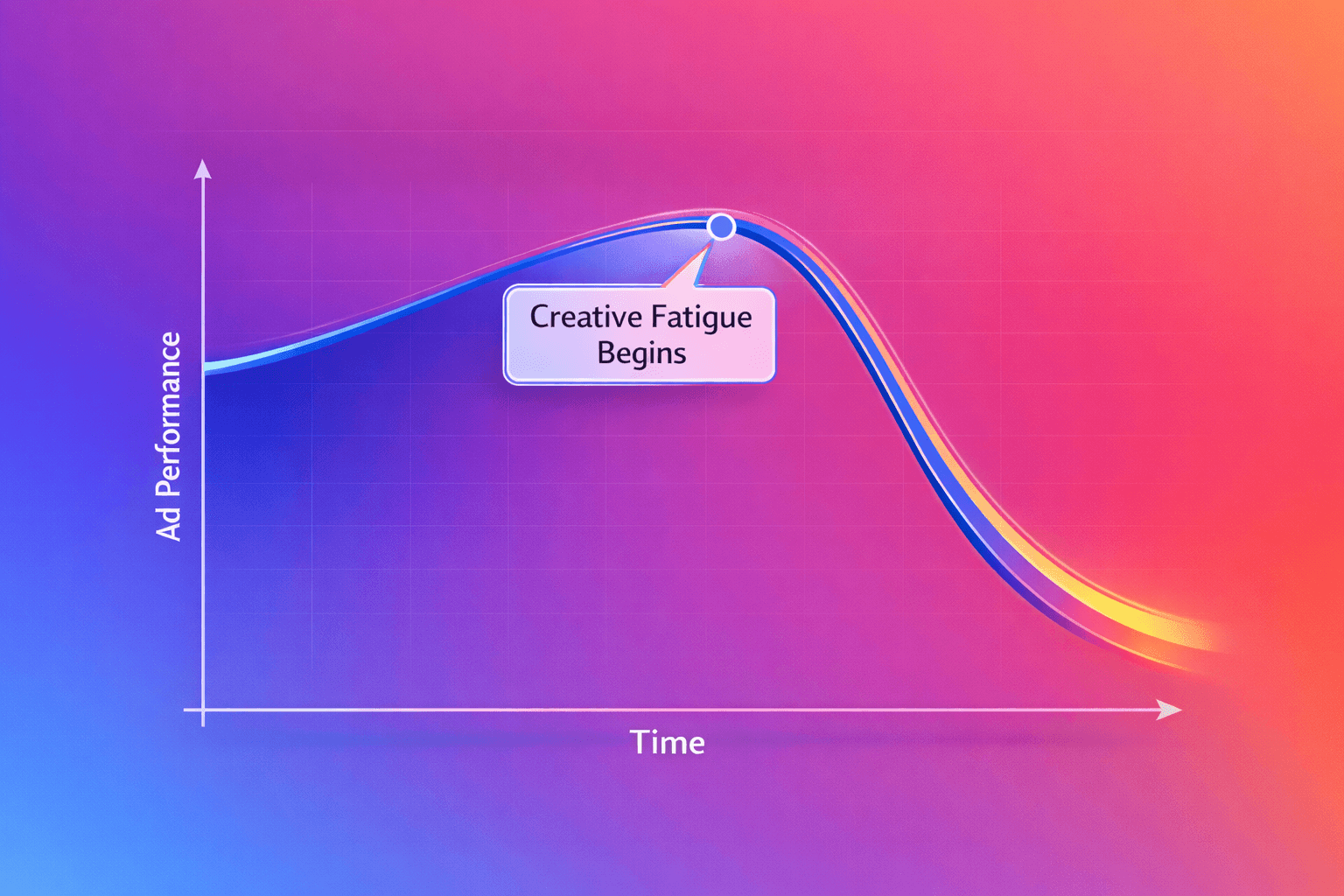
Creative fatigue at scale: High-volume accounts burn through creative faster. According to Motion's 2026 Creative Benchmarks, high-spend Meta advertisers ship 12–19+ new creatives per week, while mid-tier accounts ship about 6–7. You need a production system that keeps pace with that testing velocity.
CPA (cost per acquisition) volatility during peak seasons: Gupta Media reports social media ad CPMs can rise up to 66% during the holiday shopping season. Q4 peaks like BFCM demand proactive planning, not reactive adjustments after costs spike.
Mobile-first landing page performance: According to Salesforce's Shopping Index, 78% of global e-commerce site traffic came from mobile in Q1 2024. Load speed and layout directly impact conversion rate.
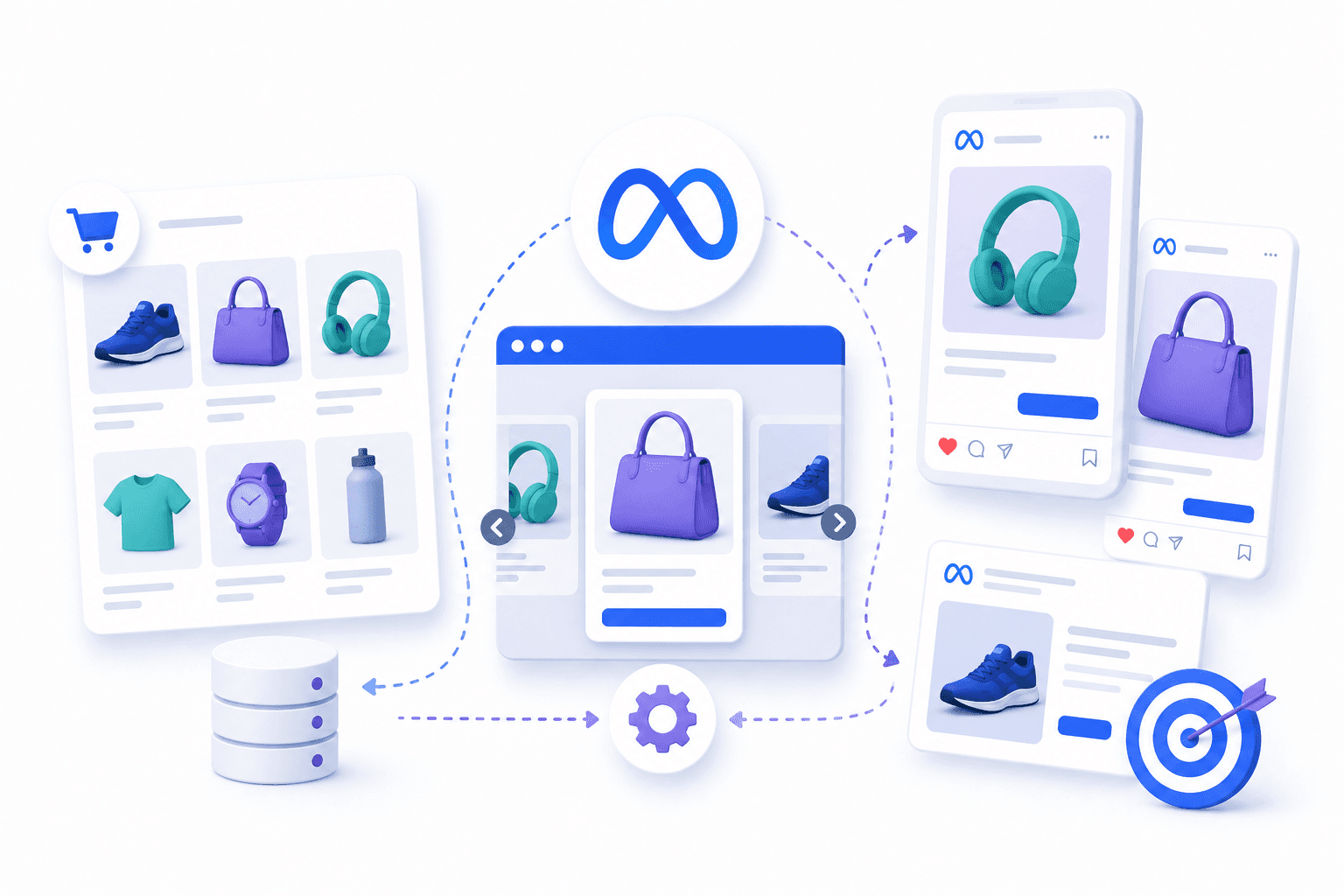
Catalog and dynamic product ads: Multi-SKU brands require agencies fluent in catalog structure and dynamic creative optimization.
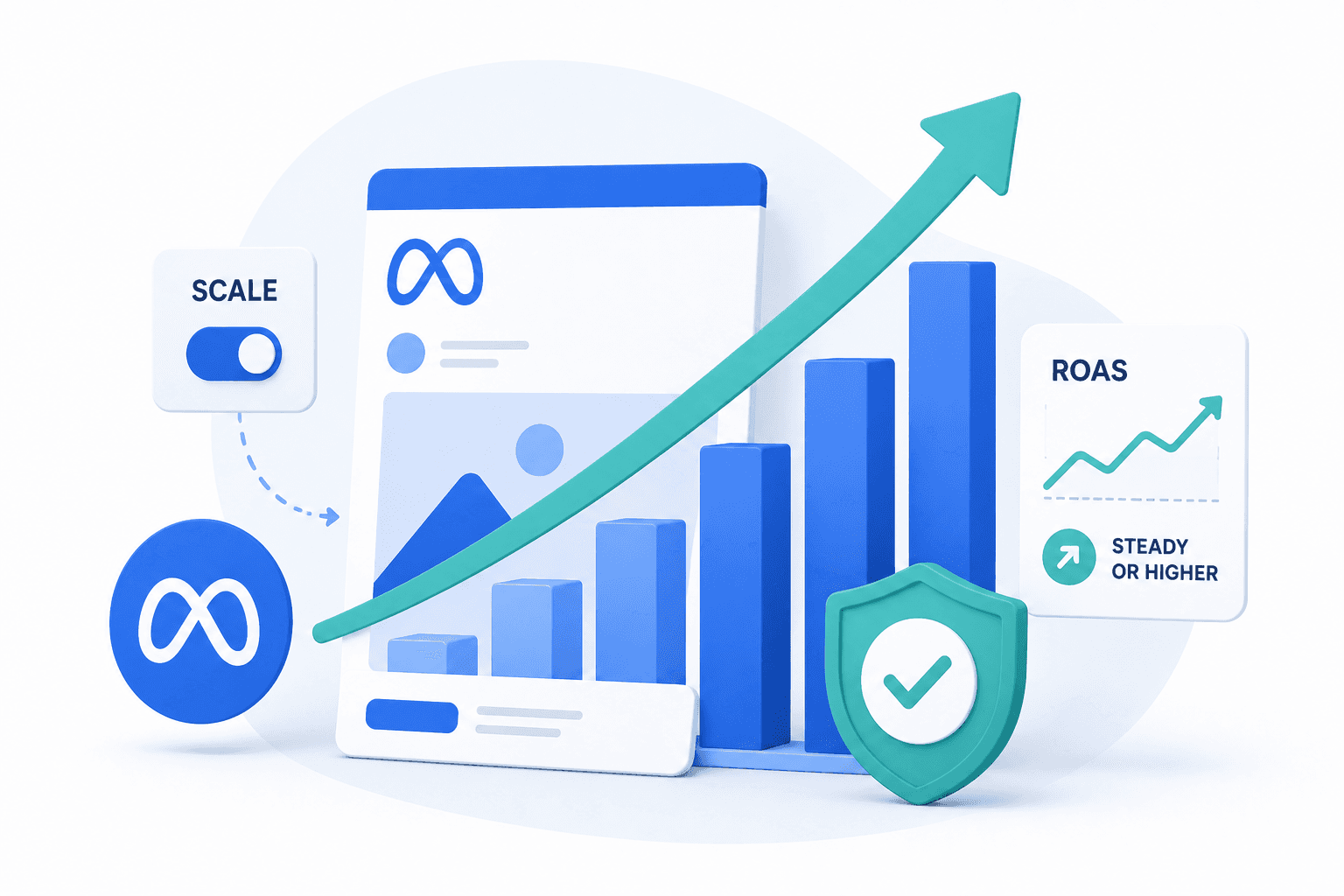
Examine documented results and ROAS benchmarks
Look for specifics: what ROAS did they achieve, at what spend level, in what vertical? Avoid agencies that only share vague testimonials or logos without context.
Define your target ROAS based on your margin structure before evaluating claims. A 3x ROAS means different things at 60% gross margin versus 30%.
Assess in-house creative production capabilities
Determine whether the agency produces creative in-house or relies on third parties. In-house production enables faster iteration and tighter feedback loops between performance data and creative decisions.
This is a key differentiator between full-service meta advertising agencies and media-buying-only shops.
Confirm full-funnel campaign expertise
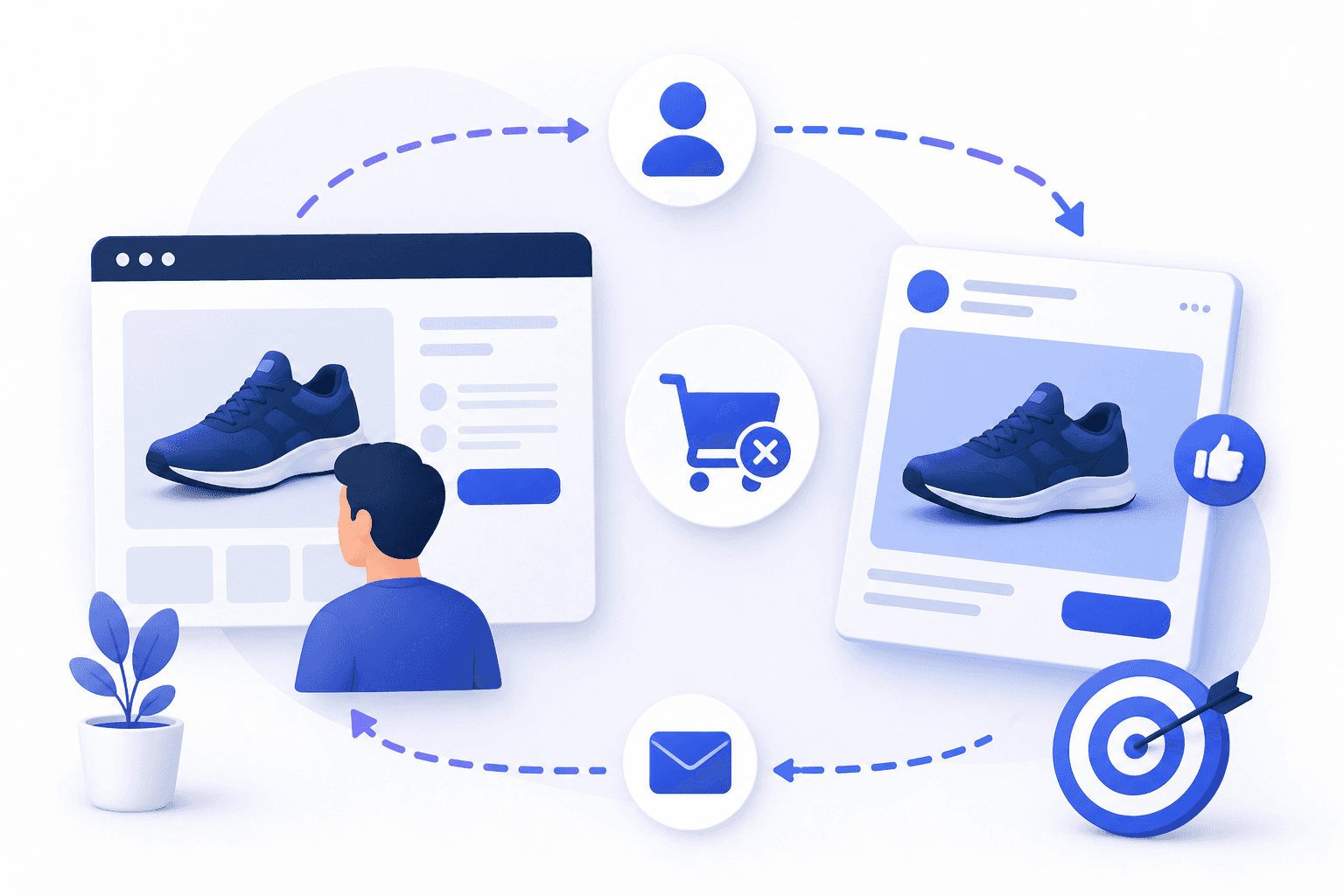
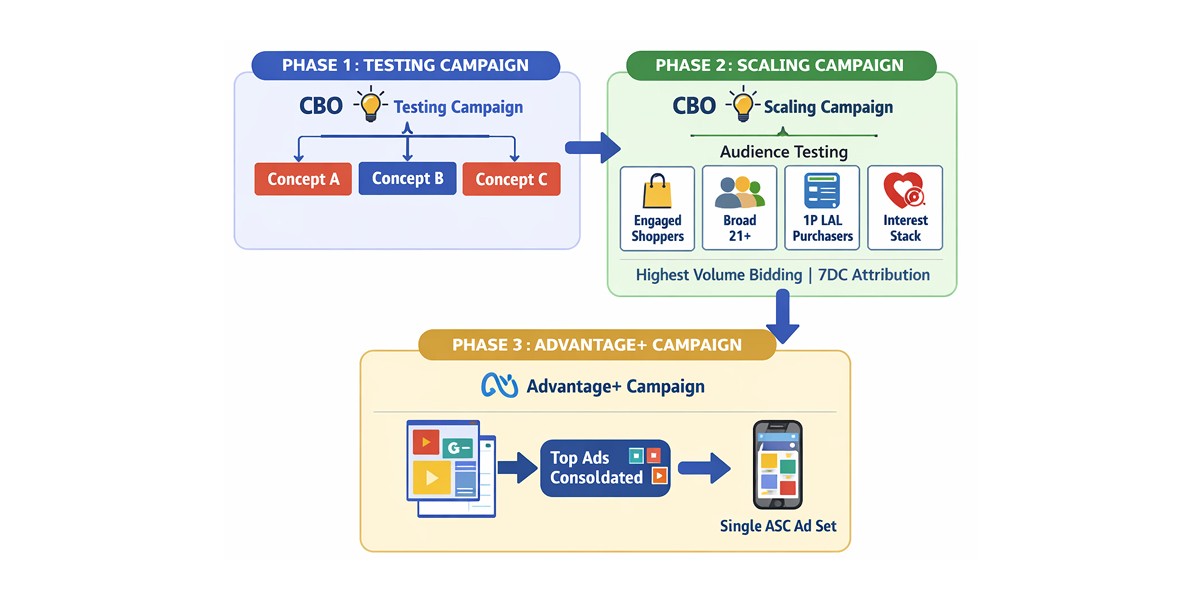
Ask how the agency structures campaigns across the funnel. Do they build dedicated prospecting and retargeting campaigns? Do they use dynamic product ads for catalog-based businesses?
A strong facebook marketing agency can explain their funnel architecture clearly. If they cannot, they may be running a single campaign type for all objectives.
Finding the Best Meta Ads Agency for Your Brand
Choosing the right Meta advertising partner is one of the most important decisions you'll make for your business. The best Meta ads agency for your brand will align with your budget, understand your industry, provide both media buying and creative services, and structure their pricing to grow alongside your business.
Remember to:
Carefully weigh the true costs of in-house versus agency partnerships before deciding to hire
Ask the five essential questions before signing any contract
Watch for red flags like poor onboarding, junior account managers, and lack of creative capabilities
Evaluate portfolios based on volume of results, not necessarily niche specificity
Choose hybrid pricing models that align incentives
Set realistic expectations based on your budget level
Take your time with the vetting process, and don't settle for anything less than an agency that demonstrates a history of expertise and clear transparency.
Ready to Find Your Perfect Meta Ads Agency Partner?
Schedule a Free Meta Ads Strategy Consultation
Here at Flighted, we are a Meta ads specialist agency and a badged Meta agency partner, a distinction less than 1% of agencies hold. We spend more than $3mil/month on the platform, and we've crafted our entire business model around meeting the "green flags" outlined in this article. We offer a no-obligation consultation to assess your current Meta ads performance and discuss whether a partnership with us is the right fit for your brand. We'll review your account, identify immediate opportunities, and provide honest guidance on the best path forward, whether that's working together or taking a different approach.
Frequently asked questions
What Does a Meta (Facebook) Ads Agency Do?
A Meta ads agency runs your paid advertising on Facebook and Instagram end to end. That covers account structure, audience targeting, creative production, and ongoing optimization against your ROAS or CPL goals. The best agencies also handle landing pages and creative testing, not media buying alone.
How Much Does a Meta Ads Agency Cost?
Management fees for small or early accounts often run $1,000–$3,000/month, separate from ad spend. Percentage-of-spend deals commonly run 10–20% of ad spend. Flighted charges a flat ~$5,000/month for $0–$50,000/month in ad spend, and the fee scales above that.
Is a Meta Ads Agency Worth It?
It is worth it once you have validated product-market fit and are spending at least $15k/month profitably or close to it. Below that threshold, learn the channel yourself before outsourcing it. At scale, an agency's creative volume and cross-account experience usually outperform a single in-house hire.
Which is the best ad agency for Facebook?
The best Meta ads agency for your business offers month-to-month contracts, handles both media buying and creative production in-house, assigns account managers with no more than 5 clients, and demonstrates a structured onboarding process with clear 30-60-90 day roadmaps.
Is $10 a day enough for Facebook ads?
A $10/day budget ($300/month) is too low to hire an agency—bootstrapped businesses at this level get more value learning Meta ads themselves and allocating their "agency budget" to test spend instead of outsourcing.
Who are the big 6 ad agencies?
The "big six" holding companies (WPP, Omnicom, Publicis, IPG, Dentsu, Havas) own traditional agencies, but ecommerce brands typically work with specialized Meta ads agencies that offer in-house creative production, flexible contracts, and performance-based pricing rather than large holding-company subsidiaries.
The right Meta ads agency offers flexible contracts (month-to-month or 90-day terms), handles both media buying and creative production in-house, assigns account managers with no more than 5 clients, and demonstrates a structured onboarding process with clear 30-60-90 day roadmaps.
Meta's playbook changes fast—Advantage+ Audience Targeting, Partnership Ads, creative-first algorithms. With thousands of agencies claiming expertise, this guide gives you the exact questions and red flags to separate top performers from the noise.
How Do You Choose the Right Meta Ads Agency?
The right Meta ads agency offers flexible contracts (month-to-month or 90-day terms), handles both media buying and creative production in-house, assigns account managers with no more than 5 clients, and demonstrates a structured onboarding process with clear 30-60-90 day roadmaps.
Meta's playbook changes fast—Advantage+ Audience Targeting, Partnership Ads, creative-first algorithms. With thousands of agencies claiming expertise, this guide gives you the exact questions and red flags to separate top performers from the noise.
Key Takeaways
Contract Flexibility: Prioritize agencies offering month-to-month or 90-day terms over long-term lock-ins.
Creative Integration: In 2026, agencies must handle both media buying and creative strategy to be effective.
Accountability: Ensure your account manager handles no more than 5 clients to guarantee dedicated attention.
Realistic Timelines: Avoid "instant success" promises; meaningful optimization typically requires 30–60 days.
Onboarding: A structured discovery and audit process is a primary indicator of a high-performing agency.
Best Meta Ads Agencies in 2026
The strongest Meta ads agency for your brand depends on your model, spend, and stage. The table below ranks options by fit. Flighted is first because it pairs a badged Meta partnership with in-house creative and landing pages, all under one team.
For DTC-specific picks, see our guide to the best Meta ads agencies for DTC brands. For SaaS, see the top Meta ads agencies for B2B SaaS startups.
Agency | Best For | Model Highlights |
|---|---|---|
Flighted | Best overall for DTC + B2B SaaS scaling Meta profitably | Badged Meta partner; in-house creative and landing pages; no more than 3 clients per Growth Manager |
Common Thread Collective | DTC e-commerce growth | Data-driven media buying and forecasting |
Pilothouse | High-growth DTC brands | Full-service performance pods |
Hawke Media | Broad SMB multi-channel marketing | Fractional CMO-style engagements |
NoGood | Growth-stage startups | Growth-marketing sprints across channels |
Directive Consulting | B2B SaaS search and paid | SaaS-focused performance marketing |
Flighted ranks #1 on specific proof. It is a badged Meta agency partner, a distinction under 1% of agencies hold, and spends more than $3M/month on the platform. Flighted has equal Meta ads expertise in both DTC and B2B.
In-House vs. Agency: Making the Right Choice for Your Business
Before you start evaluating agencies, you need to answer a more fundamental question: do you even need one right now? One of the most critical decisions ecommerce brands face is whether to build internal Meta ads expertise or partner with an agency. The right choice depends on your current situation, resources, and growth trajectory.
How to Decide: In-House vs. Agency by Growth Stage
Deciding between in-house and agency depends on your specific growth stage:
Choose In-House/DIY if: You spend <$15k/month, are bootstrapped, and lack validated product-market fit.
Choose an Agency if: You have VC funding, existing revenue from other channels, or are already spending >$15k/month profitably.
The "Too Large" Myth: Even 8-9 figure brands use agencies to access specialized creative teams and cross-platform intelligence that is difficult to maintain in-house.
If you're spending less than $15k/month on ads, launching from scratch, and have no external revenue or VC funding—don't hire an agency yet.
Why: Bootstrapped businesses get more value learning the channel firsthand than outsourcing.
Better move: Self-educate on Meta Ads best practices, then allocate your "agency budget" to test spend.
If you have VC funding or revenue from other channels (organic, influencers, retail), an agency makes sense even at low spend levels. The right partner accelerates speed-to-market and professional execution—a far better investment than burning months figuring it out yourself.
If you are already spending at least $15k/month on Meta ads and you are profitable or close to profitable, this is another situation where an agency probably makes sense. At this stage, you have validated product-market fit and product-channel fit. People clearly want to purchase your product, and they are on Facebook or Instagram. You just need an agency to introduce best practices, better ad creative, and run with what you've started. The best Meta ads agencies excel at taking working campaigns and scaling them profitably.
Is a brand ever "too large" for an agency? No. It totally depends on the internal expertise of the business. If you come from a performance marketing background, it may make sense to bring your Meta ads media buying and creative production in-house. Alternatively, if that is not your DNA as a founder or head of marketing, you should try to find an expert agency you can trust to delegate that function to, so you can focus on your core competencies. Many eight-figure and nine-figure ecommerce brands continue working with agencies because the specialized expertise and creative output justify the investment.
The True Cost Comparison (Salary + Tools vs. Agency Retainer)
A $120k hire doesn't equal a $10k/month agency retainer. Factor in benefits, taxes, and onboarding—that salary becomes $156k+ in true cost.
Cost Factor | In-House Hire ($120k base) | Agency Retainer ($10k/mo) |
|---|---|---|
True Annual Cost | $156k+ (salary + 30% burden) | $120k |
Ramp-Up Time | 2-3 months | 2-4 weeks |
Flexibility to Exit | Low (severance, hiring risk) | High (month-to-month typical) |
Skill Diversity | 1 perspective | Full team (strategy, creative, media) |
You also have to factor in tooling, management time, ramp-up, and bad-hire risk. An agency bundles talent, systems, and accountability—with the flexibility to scale, pause, or switch without severance. The "cheaper" in-house option is often more expensive and far less adaptable.
A single in-house hire gives you one perspective, one skill set, one creative voice. The best Meta ads agencies bring entire teams—strategists, media buyers, creative directors, designers, copywriters. Cross-pollination from managing multiple accounts often outperforms a lone specialist, no matter how talented.
Essential Questions to Ask Before Signing a Contract
Once you've determined an agency is the right move, your next job is to vet candidates rigorously. The best Meta ads agencies distinguish themselves not just through results, but through their processes, transparency, and actual results. Before you sign any contract, you need a systematic framework for evaluating potential agency partners.
Do You Require a Long-Term Contract, or Are You Month to Month?
The best Meta ads agencies are confident enough in their results to offer flexible terms. While some commitment makes sense for both parties, be wary of agencies that lock you into 6-12 month contracts before proving their value. Top-performing agencies typically offer 30-90 day terms after an initial onboarding period.
How Long Before You Expect to See Results, and What Do You Think Early Success Will Look Like?
This question tests both their honesty and their understanding of Meta's algorithm. Be skeptical of agencies promising immediate results. A quality Meta advertising agency will explain that the learning phase takes 7-14 days, and meaningful optimization requires at least 30-60 days of data. They should be able to describe what specific early success metrics might look like, and the average timelines/trends towards metric improvements that they see with other clients. Never work with an agency that guarantees success!
Do You Handle Media Buying AND Creative Strategy, or Just One of the Two?
In 2026, creative is the single biggest lever for Meta ads performance. If an agency only handles media buying, they're operating with one hand tied behind their back. The best Meta advertising agencies for consumer brands provide both services because they understand that creative and targeting strategy must work in tandem. The days of media buying "specialist" agencies are now over.
Who Will Be Managing My Account Specifically on Your Team? How Many Clients Do They Work With?
You have a right to know exactly who will be working on your account and what their workload looks like. The best Meta ads agency partners will give you transparency into your account manager, as well as their experience levels, during the sales process. Be cautious if your primary point of contact is working on more than 5 ad accounts, especially if they are also assisting with creative strategy. That is the sign of an overloaded agency. (Here at Flighted, no Growth Manager works with more than 3 clients, and we are more than busy enough at that level!)
Is There Anything I Could Be Doing to Make You More Successful?
After you share your business context—team ops, historical wins, content library—a sharp agency should immediately diagnose gaps and offer prescriptions. Use this question to surface constructive criticism a mediocre agency wouldn't have formulated.
Examples of specific recommendations you should hear:
Sourcing more UGC or creator content
Product page improvements (above-fold messaging, social proof)
Pricing or offer structure adjustments
Portfolio and Case Study Analysis: What to Look For
Case studies reveal an agency's true capabilities, but you need to know how to read between the lines.
A good agency doesn't need experience in your exact niche (baby clothes, jewelry, protein bars). But experience in your general category is non-negotiable.
Ecommerce brands: Don't work with lead gen agencies—strategies, metrics, and optimization differ dramatically.
B2C DTC: Look for case studies showing ROAS (return on ad spend), CAC (customer acquisition cost), and contribution margin wins, not just reach or CPM (cost per mille).
Look for volume of case studies, not necessarily one in your exact niche. Consistent success across multiple clients and industries signals systematic expertise—not luck.
Red flag: If they hide case studies or avoid discussing challenges, walk away. Transparency signals confidence.
Pay attention to the metrics they highlight. Are they showcasing vanity metrics (reach, impressions) or business outcomes (revenue, ROAS, CAC)? The best Meta ads agencies for ecommerce speak your language: contribution margin, LTV:CAC, and profitable scaling.
Extra Questions to Ask if You're B2B SaaS
Meta works differently for B2B SaaS than for DTC. Ask these before signing:
How do you send a qualified-lead conversion event (via Conversions API, CRM, or form-field GTM) so Meta optimizes for SQLs (sales-qualified leads), not raw fills?
How do you handle longer sales cycles and offline or CRM-stage conversions that close weeks after the click?
What is your experience treating Meta as a B2B arbitrage channel versus LinkedIn, and when do you recommend each?
Optimizing to raw leads inflates volume and hides CPL (cost per lead) on unqualified traffic. Feed Meta the qualified event so it learns who becomes pipeline. For a deeper look, see our guide to the B2B SaaS agency vs in-house decision.
For a longer checklist you can take into agency calls, see our full guide to the 15 questions to ask a Meta ads agency before you sign.
Red Flags That Signal an Underperforming Agency
Knowing what to avoid is just as important as knowing what to look for when choosing a Meta ads agency. Here are the warning signs that should make you walk away:
No Clear Onboarding
They don't have a structured system for getting information on your brand, getting technical access, and sharing their strategy with you. No playbooks likely means no clear strategy internally.
The best Meta ads agencies have refined onboarding processes that include:
Brand discovery calls
Competitive analysis
Pixel and technical audits
Creative briefing
A 30-60-90 day strategic roadmap
If they're figuring it out as they go, you're essentially paying for them to experiment with your budget.
Immediate Delegation to a "B" Player
If you are immediately assigned to someone who seems more "junior" in terms of their knowledge of Meta ads, this is likely a bad sign! While it's normal for senior strategists to oversee accounts managed by mid-level team members, your primary contact should demonstrate deep expertise in Meta's platform, creative strategy, and ecommerce metrics. The best Meta ads agencies ensure that even junior team members are well-trained and supported.
No Creative Production Capabilities
If they only handle media buying, they are likely outdated and not giving you what it takes to succeed on Meta. In today's advertising landscape, creative is the variable that matters most. Agencies that outsource creative or treat it as an afterthought cannot adapt quickly enough to platform changes or capitalize on winning angles. The best Meta ads agency partners have in-house creative teams producing dozens of concepts monthly.
Meta Ads Agency Pricing Models: Which Is Best?
Once you've screened candidates against the vetting questions and red flags above, the next layer to evaluate is how they charge. Understanding agency pricing structures is crucial to finding the best Meta ads agency for your budget and business model. Each pricing approach has distinct advantages and potential pitfalls.
Here is what those models cost in practice. Management fees for small or early accounts often run $1,000–$3,000/month, separate from ad spend. Percentage-of-spend deals commonly run 10–20% of ad spend.
According to Clutch marketplace data, social media marketing and PPC services are listed at $100–$149/hour. That is a general digital-marketing benchmark, not a Meta-specific rate. For a deeper breakdown, see our guide to Meta ads agency cost and retainer pricing.
Flighted keeps this transparent. We charge a flat ~$5,500/month for $0–$50,000/month in ad spend, and the fee scales as spend grows above that. Terms are month-to-month after a two-month testing period.
Retainer
This can be really effective because the agency is not incentivized to simply increase your ad spend at all costs. It can also give the agency the stability in cash flow to justify deeper investments in your brand's success (e.g. higher quality creative, more ads, more man hours on your account, etc). A fixed retainer allows the best Meta ads agencies to focus on long-term strategy rather than short-term revenue optimization.
However, if the retainer never changes, look out for complacency as a problem. They have no incentive to grow your business beyond the initial scope. Make sure your retainer agreement includes performance reviews and adjustments based on results and scale.
Performance-Based
Common and appealing—but watch for two traps:
No cap on fees: Without an upside cap, costs balloon exactly when your margins compress at scale.
Wrong metric alignment: Don't let them bill on percentage of spend. Tie fees to EBITDA or contribution margin—your true bottom line.
The best agencies understand that driving profitable revenue matters more than inflating ad spend.
The Best Model: Hybrid
Hybrid pricing balances quality output with aligned incentives. Look for one of two structures:
Tiered retainer: Flat fee that adjusts upward at defined ad spend thresholds.
Base + bonus: Low flat fee with a capped percentage bonus tied to performance as you scale.
Either ensures the agency is compensated for baseline work while staying motivated to drive exceptional results.
What to Expect at Different Budget Levels
Pricing model aside, your agency expectations should also align with your investment level. Here's what quality service looks like at each tier:
Monthly Budget | Service Tier | Expected Deliverables |
|---|---|---|
Sub $4,000 | Effectively getting a freelancer | Media buying OR creative strategy; rarely both. Best for bootstrapped startups. |
$4,000 – $8,000 | Full-Service Agency | Media buying + 20+ ads/mo + strategy calls + CRO/Landing page advice. |
$8,000+ | Strategic Growth Partner | Multi-channel management (Meta + Google) + 25+ ads/mo + full CRO roadmap. |
Choosing a Meta Ads Agency for an E-Commerce Brand
E-commerce has requirements that generalist agencies often miss. High SKU counts, seasonal demand, variable margins, and the pressure to scale spend profitably all require specific tactics.
A generalist meta marketing agency may lack the operational knowledge to optimize for margin constraints or catalog complexity. Vertical expertise matters—look for agencies with documented experience in DTC, CPG, health/wellness, or similar categories.
Common e-commerce challenges that require specialized expertise:
Creative fatigue at scale: High-volume accounts burn through creative faster. According to Motion's 2026 Creative Benchmarks, high-spend Meta advertisers ship 12–19+ new creatives per week, while mid-tier accounts ship about 6–7. You need a production system that keeps pace with that testing velocity.
CPA (cost per acquisition) volatility during peak seasons: Gupta Media reports social media ad CPMs can rise up to 66% during the holiday shopping season. Q4 peaks like BFCM demand proactive planning, not reactive adjustments after costs spike.
Mobile-first landing page performance: According to Salesforce's Shopping Index, 78% of global e-commerce site traffic came from mobile in Q1 2024. Load speed and layout directly impact conversion rate.
Catalog and dynamic product ads: Multi-SKU brands require agencies fluent in catalog structure and dynamic creative optimization.
Examine documented results and ROAS benchmarks
Look for specifics: what ROAS did they achieve, at what spend level, in what vertical? Avoid agencies that only share vague testimonials or logos without context.
Define your target ROAS based on your margin structure before evaluating claims. A 3x ROAS means different things at 60% gross margin versus 30%.
Assess in-house creative production capabilities
Determine whether the agency produces creative in-house or relies on third parties. In-house production enables faster iteration and tighter feedback loops between performance data and creative decisions.
This is a key differentiator between full-service meta advertising agencies and media-buying-only shops.
Confirm full-funnel campaign expertise
Ask how the agency structures campaigns across the funnel. Do they build dedicated prospecting and retargeting campaigns? Do they use dynamic product ads for catalog-based businesses?
A strong facebook marketing agency can explain their funnel architecture clearly. If they cannot, they may be running a single campaign type for all objectives.
Finding the Best Meta Ads Agency for Your Brand
Choosing the right Meta advertising partner is one of the most important decisions you'll make for your business. The best Meta ads agency for your brand will align with your budget, understand your industry, provide both media buying and creative services, and structure their pricing to grow alongside your business.
Remember to:
Carefully weigh the true costs of in-house versus agency partnerships before deciding to hire
Ask the five essential questions before signing any contract
Watch for red flags like poor onboarding, junior account managers, and lack of creative capabilities
Evaluate portfolios based on volume of results, not necessarily niche specificity
Choose hybrid pricing models that align incentives
Set realistic expectations based on your budget level
Take your time with the vetting process, and don't settle for anything less than an agency that demonstrates a history of expertise and clear transparency.
Ready to Find Your Perfect Meta Ads Agency Partner?
Schedule a Free Meta Ads Strategy Consultation
Here at Flighted, we are a Meta ads specialist agency and a badged Meta agency partner, a distinction less than 1% of agencies hold. We spend more than $3mil/month on the platform, and we've crafted our entire business model around meeting the "green flags" outlined in this article. We offer a no-obligation consultation to assess your current Meta ads performance and discuss whether a partnership with us is the right fit for your brand. We'll review your account, identify immediate opportunities, and provide honest guidance on the best path forward, whether that's working together or taking a different approach.
Frequently asked questions
What Does a Meta (Facebook) Ads Agency Do?
A Meta ads agency runs your paid advertising on Facebook and Instagram end to end. That covers account structure, audience targeting, creative production, and ongoing optimization against your ROAS or CPL goals. The best agencies also handle landing pages and creative testing, not media buying alone.
How Much Does a Meta Ads Agency Cost?
Management fees for small or early accounts often run $1,000–$3,000/month, separate from ad spend. Percentage-of-spend deals commonly run 10–20% of ad spend. Flighted charges a flat ~$5,000/month for $0–$50,000/month in ad spend, and the fee scales above that.
Is a Meta Ads Agency Worth It?
It is worth it once you have validated product-market fit and are spending at least $15k/month profitably or close to it. Below that threshold, learn the channel yourself before outsourcing it. At scale, an agency's creative volume and cross-account experience usually outperform a single in-house hire.
Which is the best ad agency for Facebook?
The best Meta ads agency for your business offers month-to-month contracts, handles both media buying and creative production in-house, assigns account managers with no more than 5 clients, and demonstrates a structured onboarding process with clear 30-60-90 day roadmaps.
Is $10 a day enough for Facebook ads?
A $10/day budget ($300/month) is too low to hire an agency—bootstrapped businesses at this level get more value learning Meta ads themselves and allocating their "agency budget" to test spend instead of outsourcing.
Who are the big 6 ad agencies?
The "big six" holding companies (WPP, Omnicom, Publicis, IPG, Dentsu, Havas) own traditional agencies, but ecommerce brands typically work with specialized Meta ads agencies that offer in-house creative production, flexible contracts, and performance-based pricing rather than large holding-company subsidiaries.
Related Posts
Related Posts
Related Posts
Related Posts




























Ready to talk?
New York, NY 11217
hello@flighted.co
© Flighted, 2026
Ready to talk?
New York, NY 11217
hello@flighted.co
© Flighted, 2026