Facebook Attribution vs Third Party Attribution Tools: Which to Choose
Meta Ads
July 9, 2026
Table Of Contents
No headings found on page
A Facebook attribution partner is a third-party platform vetted by Meta to measure and verify ad performance independently from Meta's own reporting. These partners—companies like Branch, Northbeam, and Triple Whale—exist because Meta's self-reported data has blind spots, and advertisers spending across multiple channels need an unbiased view of what's actually driving revenue.
This guide breaks down how Meta's native attribution works, where it falls short, what third-party tools do differently, and how to decide which approach fits your business based on spend level, sales cycle, and channel mix.
Key takeaways
A Facebook attribution partner is a vetted third-party platform that measures and verifies ad performance independently from Meta's own reporting.
Meta's native attribution works well for brands spending under $30K/month on Meta alone, with short sales cycles and limited team capacity.
Third-party attribution tools become valuable when you run multiple paid channels, deal with sales cycles longer than 7 days, or want to validate conversions against actual revenue.
The core tradeoff: Meta native attribution is free and simple, while third-party tools offer cross-channel visibility and independent measurement at $500–$3,000+/month.
Your decision depends on monthly ad spend, number of channels, sales cycle length, and whether you have the budget and team to manage additional tooling.
What is Facebook attribution
Facebook attribution is Meta's native system for tracking which ads drive conversions. It connects the dots between someone clicking your ad and later taking an action on your website, like making a purchase or submitting a lead form.
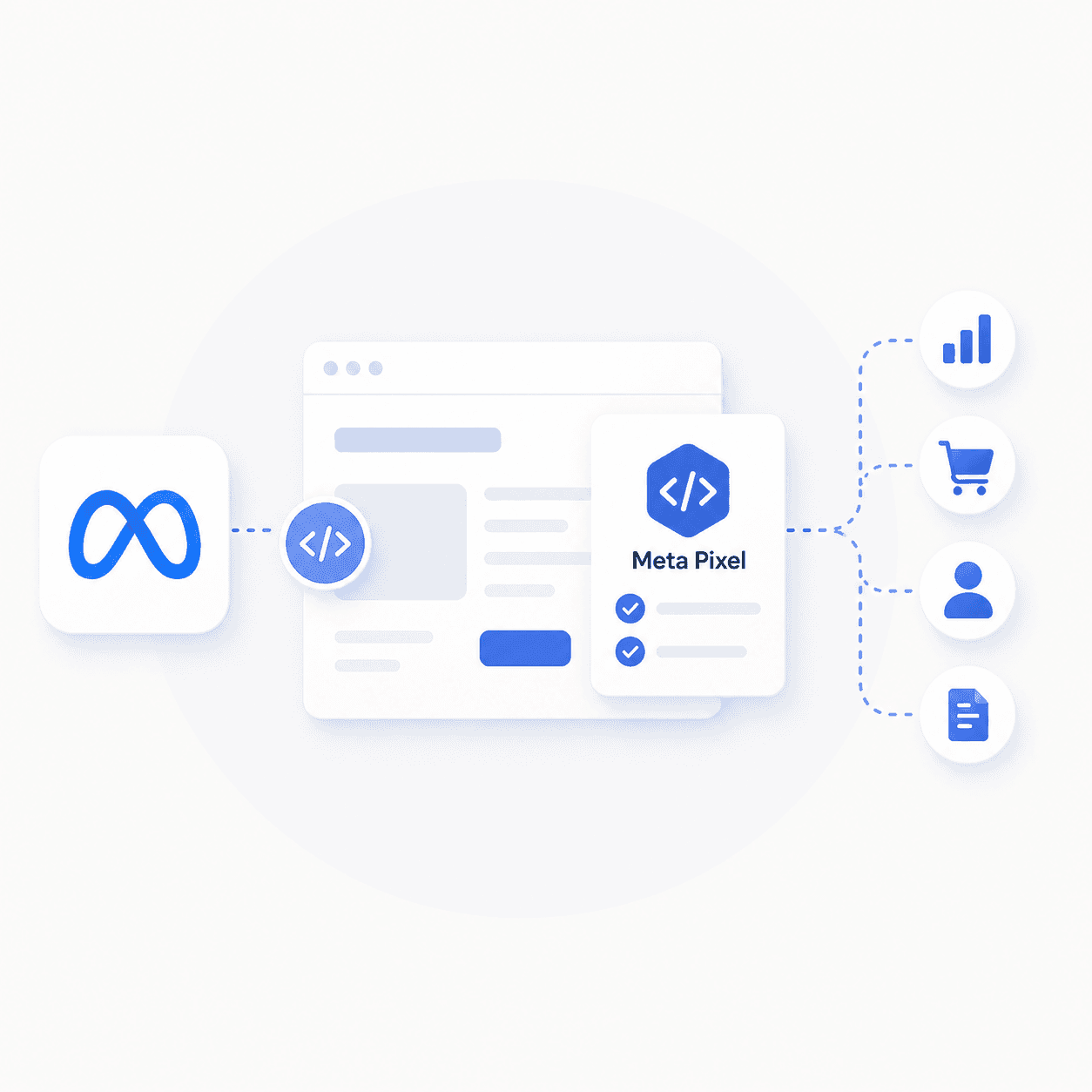
The system relies on three components working together. First, the Meta Pixel—a snippet of JavaScript code on your website that tracks user actions. Second, the Conversions API (often called CAPI), which sends event data directly from your server to Meta. Third, modeled data that fills gaps when direct tracking isn't possible.
Meta Pixel: Tracks website actions like page views, add-to-carts, and purchases through browser-based code
Conversions API (CAPI): Server-side tracking that bypasses browser limitations and ad blockers
Attribution window: The time period Meta uses to assign credit for a conversion—default is 7-day click and 1-day view
When someone clicks your ad on Monday and purchases on Thursday, Meta credits that ad with the conversion. However, if they purchase on day 10, Meta stops counting. The attribution window determines how long Meta keeps watching.
What is a Facebook attribution partner
A Facebook attribution partner—also called a Meta Measurement Partner—is a third-party company vetted by Meta to provide independent measurement and verification services. Meta works with over 40 certified partners, and you might recognize names like Branch, AppsFlyer, Northbeam, Triple Whale, Measured, or Rockerbox.
Why do advertisers use them? Here's the thing: when Meta reports your ROAS (return on ad spend), Meta is grading its own homework. A third-party partner acts as an independent referee, tracking conversions separately and helping you understand what's actually driving revenue versus what Meta claims is driving revenue.
The distinction matters most when you're spending across multiple channels. If you run Meta, Google, and TikTok ads simultaneously, each platform will happily take credit for the same sale. A third-party attribution partner can deduplicate conversions and show you which channel actually deserves credit.
How the Meta native attribution system works
Meta uses last-touch attribution by default. If a user sees three of your ads but only clicks the last one before purchasing, that final ad gets 100% of the credit. Earlier touchpoints—the ads that built awareness or consideration—receive nothing in the reporting.
After iOS 14.5 introduced App Tracking Transparency in 2021, Meta lost direct visibility into many user actions. To compensate, Meta now relies heavily on modeled conversions. Modeled conversions are estimated conversions that Meta infers from patterns in the data it can still observe. They're educated guesses, not confirmed events.
Last-touch attribution: The final ad a user interacted with before converting gets all the credit
Modeled conversions: Estimated conversions Meta calculates when it cannot directly observe user actions
Aggregated Event Measurement (AEM): Meta's framework for tracking iOS users, which limits you to 8 prioritized conversion events per domain
One practical implication: you might see 100 reported purchases in Ads Manager while your Shopify dashboard shows 70. The gap often comes from modeled conversions that didn't actually happen, or from attribution windows that credit Meta for sales driven by other channels.
Where Meta in-platform attribution falls short
iOS signal loss and modeled conversions
Since iOS 14.5, a large majority of iOS users opt out of tracking when prompted. Meta compensates with modeled conversions, but estimates can inflate or misrepresent actual performance. The numbers in Ads Manager become directionally useful rather than precisely accurate.
This creates a real problem for optimization. If Meta reports that Creative A drove 50 purchases and Creative B drove 30, but the modeled data is off by 20%, you might be scaling the wrong creative.
Over-attribution and platform self-reporting bias
Meta has a financial incentive to claim credit for conversions. If someone was already going to buy from you—through an email, organic search, or direct visit—Meta may still attribute that sale to an ad they happened to see earlier.
Think about your own behavior. You might see a Meta ad for a brand you already know, ignore it, then go directly to their website later that day. Meta will often claim credit for that purchase, even though the ad didn't influence your decision.
Limited cross-channel visibility
Meta only sees Meta. If you're also running Google Ads, TikTok campaigns, email marketing, or affiliate programs, Meta cannot show you how those channels interact. Each platform operates in its own silo.
The result is double-counting. Google reports 100 conversions. Meta reports 100 conversions. TikTok reports 50 conversions. But your actual revenue shows 150 total purchases. Without a third-party tool to deduplicate, you're flying blind on true channel performance.
Short attribution windows for considered purchases
A 7-day click window works fine for impulse purchases—a $30 skincare product or a $15 subscription box. However, if you sell B2B software, high-ticket DTC products, or anything with a typical consideration period longer than a week, Meta will undercount your conversions.
The sale happens on day 12, but Meta stopped watching on day 7. From Meta's perspective, that ad didn't work. From your perspective, it absolutely did.
A Facebook attribution partner is a third-party platform vetted by Meta to measure and verify ad performance independently from Meta's own reporting. These partners—companies like Branch, Northbeam, and Triple Whale—exist because Meta's self-reported data has blind spots, and advertisers spending across multiple channels need an unbiased view of what's actually driving revenue.
This guide breaks down how Meta's native attribution works, where it falls short, what third-party tools do differently, and how to decide which approach fits your business based on spend level, sales cycle, and channel mix.
Key takeaways
A Facebook attribution partner is a vetted third-party platform that measures and verifies ad performance independently from Meta's own reporting.
Meta's native attribution works well for brands spending under $30K/month on Meta alone, with short sales cycles and limited team capacity.
Third-party attribution tools become valuable when you run multiple paid channels, deal with sales cycles longer than 7 days, or want to validate conversions against actual revenue.
The core tradeoff: Meta native attribution is free and simple, while third-party tools offer cross-channel visibility and independent measurement at $500–$3,000+/month.
Your decision depends on monthly ad spend, number of channels, sales cycle length, and whether you have the budget and team to manage additional tooling.
What is Facebook attribution
Facebook attribution is Meta's native system for tracking which ads drive conversions. It connects the dots between someone clicking your ad and later taking an action on your website, like making a purchase or submitting a lead form.
The system relies on three components working together. First, the Meta Pixel—a snippet of JavaScript code on your website that tracks user actions. Second, the Conversions API (often called CAPI), which sends event data directly from your server to Meta. Third, modeled data that fills gaps when direct tracking isn't possible.
Meta Pixel: Tracks website actions like page views, add-to-carts, and purchases through browser-based code
Conversions API (CAPI): Server-side tracking that bypasses browser limitations and ad blockers
Attribution window: The time period Meta uses to assign credit for a conversion—default is 7-day click and 1-day view
When someone clicks your ad on Monday and purchases on Thursday, Meta credits that ad with the conversion. However, if they purchase on day 10, Meta stops counting. The attribution window determines how long Meta keeps watching.
What is a Facebook attribution partner
A Facebook attribution partner—also called a Meta Measurement Partner—is a third-party company vetted by Meta to provide independent measurement and verification services. Meta works with over 40 certified partners, and you might recognize names like Branch, AppsFlyer, Northbeam, Triple Whale, Measured, or Rockerbox.
Why do advertisers use them? Here's the thing: when Meta reports your ROAS (return on ad spend), Meta is grading its own homework. A third-party partner acts as an independent referee, tracking conversions separately and helping you understand what's actually driving revenue versus what Meta claims is driving revenue.
The distinction matters most when you're spending across multiple channels. If you run Meta, Google, and TikTok ads simultaneously, each platform will happily take credit for the same sale. A third-party attribution partner can deduplicate conversions and show you which channel actually deserves credit.
How the Meta native attribution system works
Meta uses last-touch attribution by default. If a user sees three of your ads but only clicks the last one before purchasing, that final ad gets 100% of the credit. Earlier touchpoints—the ads that built awareness or consideration—receive nothing in the reporting.
After iOS 14.5 introduced App Tracking Transparency in 2021, Meta lost direct visibility into many user actions. To compensate, Meta now relies heavily on modeled conversions. Modeled conversions are estimated conversions that Meta infers from patterns in the data it can still observe. They're educated guesses, not confirmed events.
Last-touch attribution: The final ad a user interacted with before converting gets all the credit
Modeled conversions: Estimated conversions Meta calculates when it cannot directly observe user actions
Aggregated Event Measurement (AEM): Meta's framework for tracking iOS users, which limits you to 8 prioritized conversion events per domain
One practical implication: you might see 100 reported purchases in Ads Manager while your Shopify dashboard shows 70. The gap often comes from modeled conversions that didn't actually happen, or from attribution windows that credit Meta for sales driven by other channels.
Where Meta in-platform attribution falls short
iOS signal loss and modeled conversions
Since iOS 14.5, a large majority of iOS users opt out of tracking when prompted. Meta compensates with modeled conversions, but estimates can inflate or misrepresent actual performance. The numbers in Ads Manager become directionally useful rather than precisely accurate.
This creates a real problem for optimization. If Meta reports that Creative A drove 50 purchases and Creative B drove 30, but the modeled data is off by 20%, you might be scaling the wrong creative.
Over-attribution and platform self-reporting bias
Meta has a financial incentive to claim credit for conversions. If someone was already going to buy from you—through an email, organic search, or direct visit—Meta may still attribute that sale to an ad they happened to see earlier.
Think about your own behavior. You might see a Meta ad for a brand you already know, ignore it, then go directly to their website later that day. Meta will often claim credit for that purchase, even though the ad didn't influence your decision.
Limited cross-channel visibility
Meta only sees Meta. If you're also running Google Ads, TikTok campaigns, email marketing, or affiliate programs, Meta cannot show you how those channels interact. Each platform operates in its own silo.
The result is double-counting. Google reports 100 conversions. Meta reports 100 conversions. TikTok reports 50 conversions. But your actual revenue shows 150 total purchases. Without a third-party tool to deduplicate, you're flying blind on true channel performance.
Short attribution windows for considered purchases
A 7-day click window works fine for impulse purchases—a $30 skincare product or a $15 subscription box. However, if you sell B2B software, high-ticket DTC products, or anything with a typical consideration period longer than a week, Meta will undercount your conversions.
The sale happens on day 12, but Meta stopped watching on day 7. From Meta's perspective, that ad didn't work. From your perspective, it absolutely did.
Looking for Meta ads support?
We're a small, hardworking, US-based team. Book a call and get a free audit today.
Multi-touch attribution across Meta, Google, and TikTok
Third-party tools see all your paid channels in one place. Instead of each platform claiming full credit for the same sale, multi-touch attribution distributes credit across touchpoints based on the model you choose.
You can see that a customer first clicked a TikTok ad, then a Google search ad, then finally converted from a Meta retargeting ad. Each touchpoint receives partial credit based on its role in the journey.
Incrementality testing and media mix modeling
Incrementality testing measures the lift caused by your ads versus what would have happened organically. In other words: how many of those conversions would have occurred even if you hadn't run the ad?
Media mix modeling (MMM) uses statistical analysis to estimate how each channel contributes to overall revenue. Both approaches require meaningful spend—typically $50K+/month across channels—to generate reliable insights. At lower spend levels, the data gets too noisy to draw conclusions.
First-party data and CRM integration
Third-party tools can connect to your CRM, Shopify, Stripe, or backend database. This lets you validate whether reported conversions match actual revenue.
If your attribution tool says you had 200 purchases but your CRM shows 180, you know something's off. You can investigate whether the gap comes from returns, failed payments, or attribution errors.
Independent post-click web conversion tracking
Third-party partners track conversions independently from Meta's pixel, creating a second source of truth. You can compare what Meta reports against what your attribution partner reports and investigate discrepancies.
This independence matters. When two systems agree, you have confidence in the data. When they disagree significantly, you know to dig deeper before making budget decisions.
Meta measurement partners and the Meta Attribution Partner Program
Meta officially certifies partners that meet data security and integration standards. The Meta Business Partner directory lists companies across several categories:
Mobile Measurement Partners (MMPs): Track app installs and in-app events—Branch, AppsFlyer, Adjust, Kochava
Marketing Mix Modeling partners: Run incrementality studies and MMM analysis—Measured, Objective Platform
Attribution platforms: Provide cross-channel web attribution—Northbeam, Triple Whale, Rockerbox
Working with a certified partner can improve data accuracy and ensure you have access to Meta's latest measurement features. Certification also means the partner has passed Meta's security and privacy requirements.
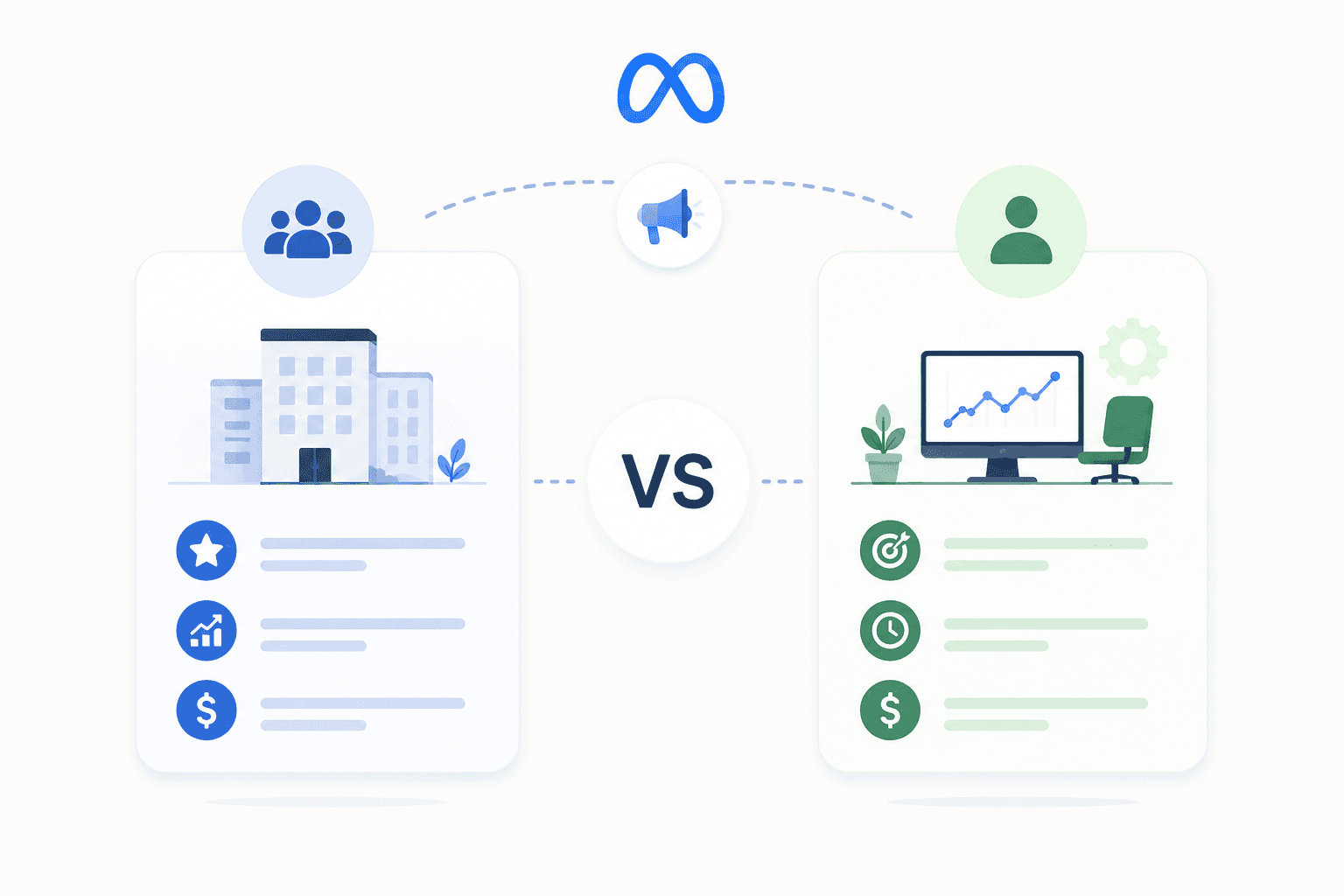
Facebook attribution vs third party attribution tools side by side
Feature
Meta Native Attribution
Third Party Attribution Partner
Cost
Free
$500–$3,000+/month
Cross-channel visibility
Meta only
All paid channels
Attribution model options
Last-touch only
Multi-touch, first-touch, linear, custom
Incrementality testing
Limited
Built-in for most platforms
CRM/backend data integration
Manual export required
Native integrations
Independence from ad platform
No
Yes
Setup complexity
Low
Medium to high
Best for
Single-channel, <$30K/month
Multi-channel, $50K+/month
How to choose between Facebook attribution and a third party partner
Monthly ad spend and business stage
If you're spending under $30K/month on Meta alone, native attribution is usually sufficient. The cost of a third-party tool ($500–$3,000/month) may not justify the incremental insight at that spend level.
Once you're spending $50K+ across channels, the math changes. The cost of misallocated budget—scaling the wrong channel or creative—likely exceeds the cost of proper measurement.
Number of paid channels you run
Running only Meta? Native attribution can work. Running Meta plus Google plus TikTok? You're almost certainly double-counting conversions without a third-party tool to deduplicate.
The more channels you run, the more valuable independent attribution becomes. At two channels, the overlap is manageable. At four or five channels, you're guessing without proper measurement.
Sales cycle length and purchase consideration
If your average time to purchase is under 7 days, Meta's default window captures most conversions. Impulse DTC purchases often fall into this category.
If you sell B2B software or high-ticket products with 14–30+ day consideration periods, you're leaving conversions uncounted. A third-party tool with longer attribution windows will show you what Meta misses.
Budget and team capacity for attribution tooling
Third-party tools require implementation time, ongoing maintenance, and someone to interpret the data. If you don't have the bandwidth, the tool becomes expensive shelfware.
Be honest about your team's capacity. A $1,500/month attribution tool that nobody looks at is worse than free Meta reporting that someone actually uses.
How to integrate a third party attribution partner with Meta
Step 1: Install the Meta Pixel and Conversions API
This is the foundation. Third-party tools still rely on Meta's data signals, so both Pixel and CAPI need to be firing correctly before adding a partner. Verify events in Meta's Events Manager first.
Step 2: Connect your partner platform to Meta Ads Manager
Most attribution partners offer a direct OAuth or API integration with Meta. This typically takes 15–30 minutes and requires admin access to your ad account.
Step 3: Map events and set attribution windows
Align event definitions—Purchase, Add to Cart, Lead—between Meta and your partner platform. Set consistent attribution windows so comparisons are meaningful.
If Meta uses 7-day click and your partner uses 14-day, you'll see different numbers for the same conversions. That's not a discrepancy—it's a configuration mismatch.
Step 4: Validate data against backend revenue
Compare partner-reported conversions to actual revenue in Shopify, Stripe, or your CRM. If they don't match within 10–15%, troubleshoot before using the data for optimization decisions.
This validation step is where most teams skip ahead and regret it later. Spend the time upfront to confirm your data is accurate.
Build a full funnel growth program with Flighted
Attribution setup is one piece of a larger puzzle. At Flighted, we approach Meta Ads management as part of three interdependent pillars: Paid Media Expertise, Creative Strategy, and Landing Page Optimization. Getting measurement right matters, but so does having ads worth measuring and landing pages that convert the traffic you're paying for.
If you're scaling Meta spend and want a team that handles attribution setup alongside campaign structure, creative testing, and conversion rate optimization, book a call to talk through your goals.
FAQs about Facebook attribution partners
How much does a Facebook attribution partner cost?
Pricing varies widely. MMPs often charge based on tracked installs, while web attribution platforms typically charge flat monthly fees ranging from $500 to $3,000+ depending on features and data volume.
What is the 7-day click attribution window on Facebook?
This is Meta's default setting where a conversion is credited to an ad if the user clicked that ad within 7 days before converting. You can adjust this to 1-day click or add view-through attribution in Ads Manager.
Can you use Facebook attribution and a third party tool at the same time?
Yes, and most advertisers at scale do exactly this. Running both in parallel helps you compare data and identify discrepancies between platform-reported and independently measured results.
Do you need a Meta Business Partner badge for attribution to work?
No, but working with a certified Meta Measurement Partner helps ensure the tool meets Meta's data security and integration standards, which can improve data accuracy and support access.