15 Questions to Ask A DTC Meta Ads Agency Before You Sign Anything
Meta Ads
June 2, 2026
Table Of Contents
No headings found on page
Hiring the wrong Meta Ads agency costs more than money. It costs months of lost momentum, burned creative angles, and the opportunity cost of what a better partner could have delivered.
Most agency vetting guides give you generic questions that work for any marketing partner. This guide focuses specifically on what DTC brands need to ask a Meta Ads agency before signing, covering experience verification, creative and landing page integration, reporting transparency, team structure, and contract terms.
Key Takeaways
Experience verification: Ask for DTC-specific case studies with real CPA and ROAS outcomes at your spend level.
Creative and landing page integration: Confirm the agency treats creative strategy and landing page optimization as interconnected with paid media, not separate workstreams.
Reporting transparency: Request sample dashboards and clarify which KPIs they optimize beyond ROAS.
Team structure: Identify who manages your account day-to-day and their seniority level.
Contract terms: Understand pricing structure, exit clauses, and asset ownership before signing anything.
Questions to Ask About the Agency's DTC Meta Ads Experience
When vetting an advertising agency, prioritize questions that assess specific industry experience, billing transparency, and how the agency defines success. A partner capable of growing your bottom line looks different from one that runs up vanity metrics.
DTC brands face unique scaling challenges. Creative fatigue hits faster, unit economics run tighter with ecommerce CAC rising 40–60% since 2023, and the operational complexity of a $20K/month account differs entirely from a $200K/month account. An agency that doesn't understand your spend level will apply the wrong playbook.
1. What DTC Brands Have You Scaled at My Spend Level
An agency that excels at launching brands from zero may struggle with optimization challenges past $50K/month. The reverse is also true. Ask for client names or anonymized examples in your vertical.
If the agency has only worked with fashion brands and you sell supplements, their playbook may not transfer. Category experience matters because creative angles, audience behavior, and purchase cycles vary significantly.
2. Can You Share Case Studies With Real CPA and ROAS Outcomes
Vague claims like "we grew revenue 3x" tell you nothing useful. You want before/after metrics, timeframes, and context on what the agency actually controlled.
Did they manage media only, or did they also handle creative and landing pages? The answer changes how you interpret their results. A 40% CPA reduction means something different when the agency rebuilt the entire funnel versus when they inherited strong creative.
3. How Much Meta Ad Spend Have You Managed in the Last 12 Months
Cumulative spend reveals whether Meta is a core competency or a side offering. An agency managing $50M+ has seen more edge cases, platform changes, and scaling challenges than one managing $2M.
That said, spend alone isn't everything. A smaller agency with deep DTC focus may outperform a larger one spread across industries.
Questions to Ask a Marketing Agency About Strategy and Creative
Here's where most agencies reveal whether they're button-pushers or strategic partners. The days of simply managing bids and audiences are over.
Success in performance marketing now relies on three focus areas working together: paid media expertise, creative strategy, and landing page optimization. When an agency treats creative as someone else's job, performance suffers.
4. How Do You Approach Creative Testing and Refresh Cycles
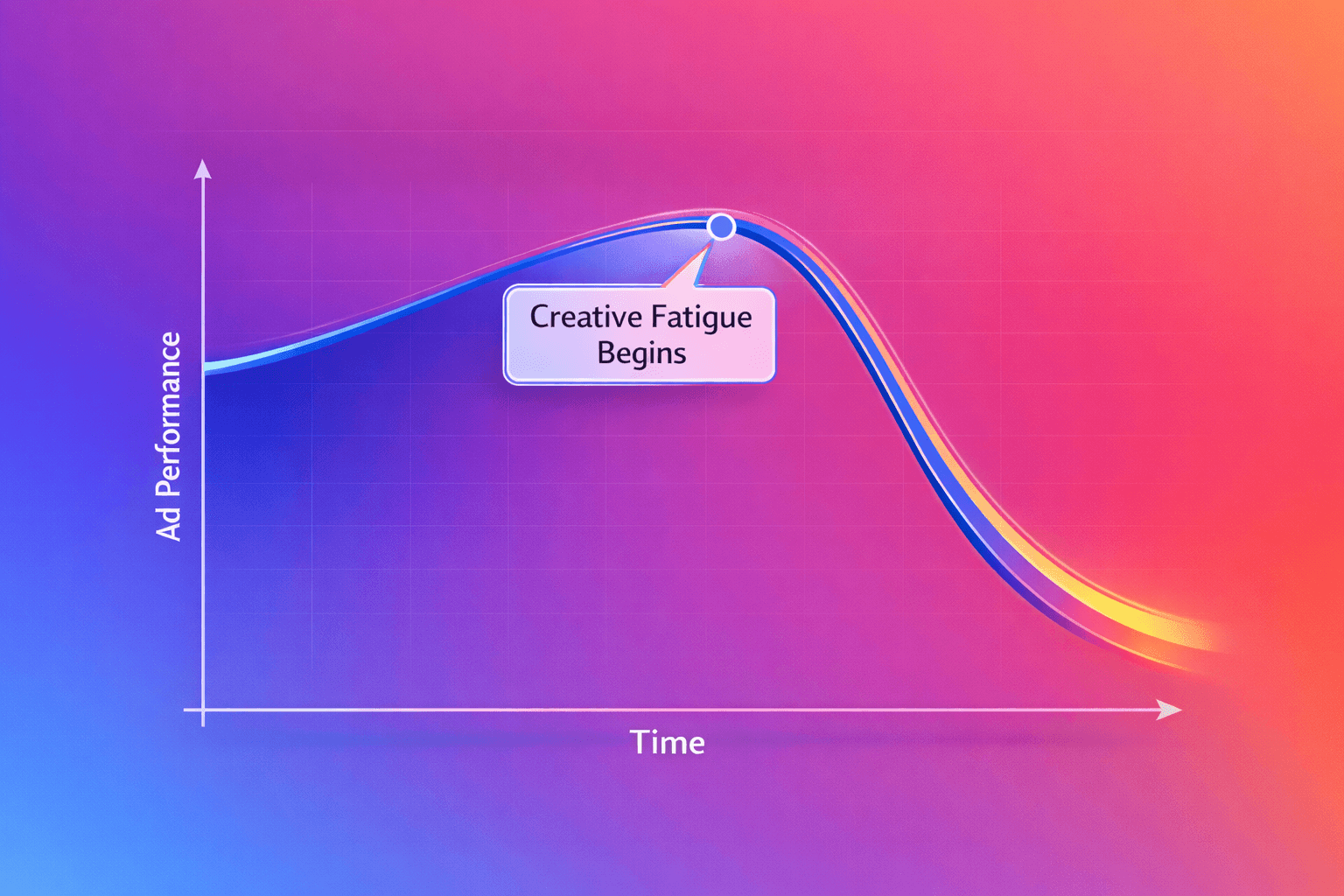
Creative testing means systematically varying hooks, formats, and messaging to find what resonates. Creative fatigue, which is declining performance from overexposure, kills Meta accounts slowly and then all at once.Triple Whale estimates that 15–25% of monthly ad spend is typically wasted on already-fatigued creative.
Ask how frequently the agency introduces new creative. A strong answer sounds like "we test 10-15 new concepts monthly" rather than "we refresh when performance drops." The first approach is proactive. The second is reactive, and by then you've already lost money.
5. Do You Produce Ad Creative In House or Outsource It
Outsourced creative often creates delays between performance data and creative iteration. When the media buyer sees a hook underperforming, how quickly can they get a new version?
In-house creative production enables faster feedback loops. If the agency outsources to freelancers or third-party studios, ask about turnaround times. Anything longer than 5-7 days for new creative iterations slows your testing velocity.
6. How Do You Handle Landing Page Optimization Alongside Paid Media
Ads and landing pages form one conversion system. Sending traffic to an unoptimized page wastes ad spend, yet many agencies treat landing pages as "not my job."
Ask whether the agency builds, tests, and iterates on landing pages or expects you to handle optimization separately. The answer tells you whether they're thinking about your full funnel or just their slice of it.
7. What Is Your Meta Account Structure Philosophy
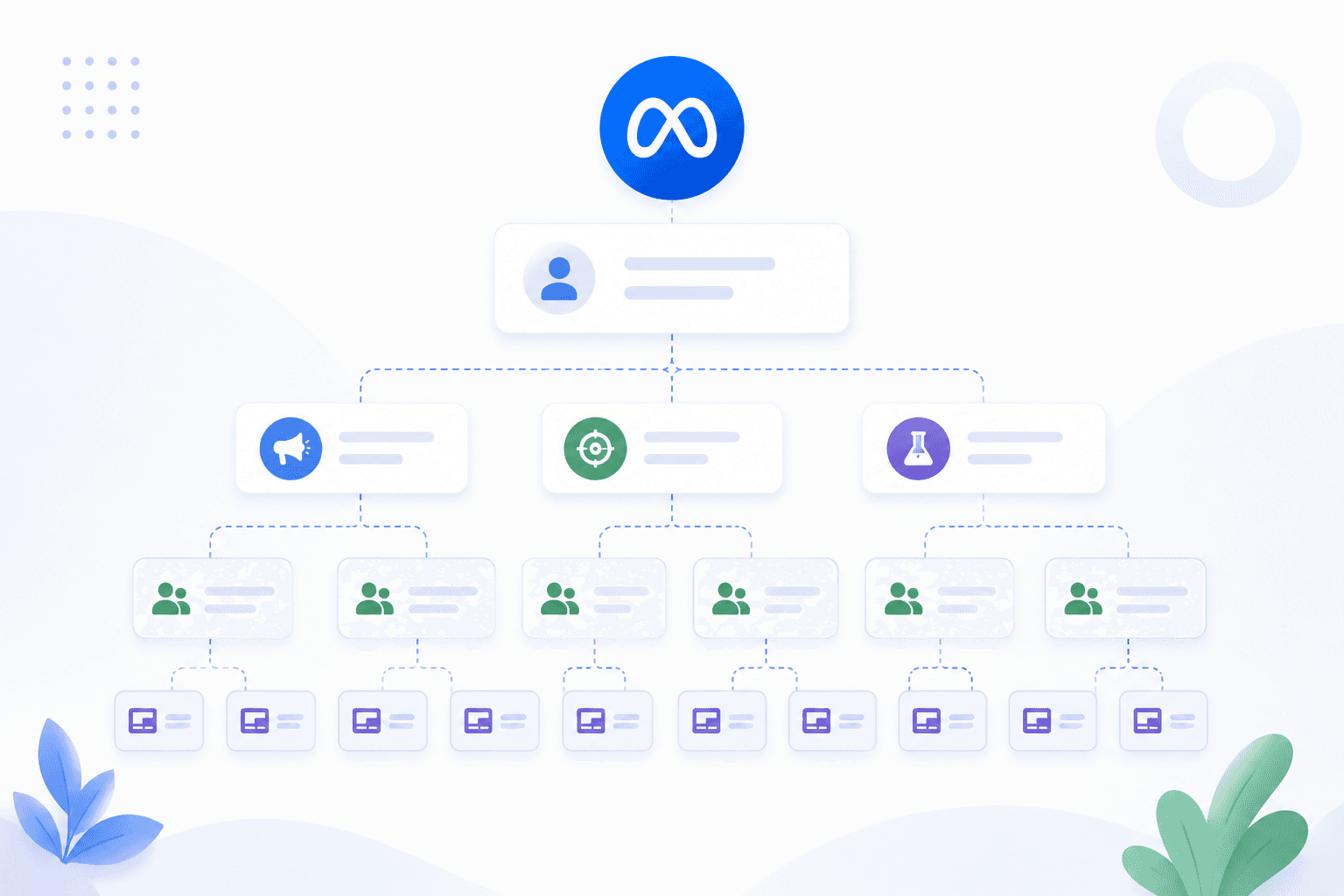
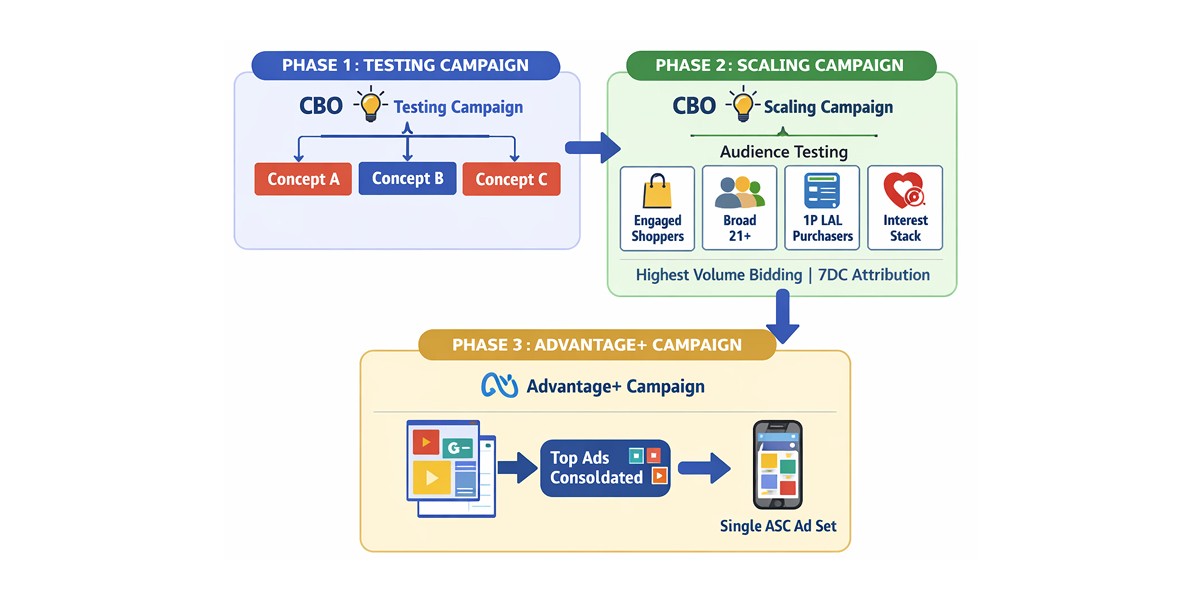
Account structure refers to campaign organization, audience segmentation, and how the agency uses tools like Advantage+. There's no single correct structure, but the agency's answer reveals whether they adapt to your specific product, price point, and funnel stage.
A red flag: "We use the same structure for all clients." A good answer explains how structure changes based on spend level, product catalog size, and whether you're optimizing for purchases, leads, or both. Agencies following current Meta Ads best practices adapt structure to the account, not the other way around.
Hiring the wrong Meta Ads agency costs more than money. It costs months of lost momentum, burned creative angles, and the opportunity cost of what a better partner could have delivered.
Most agency vetting guides give you generic questions that work for any marketing partner. This guide focuses specifically on what DTC brands need to ask a Meta Ads agency before signing, covering experience verification, creative and landing page integration, reporting transparency, team structure, and contract terms.
Key Takeaways
Experience verification: Ask for DTC-specific case studies with real CPA and ROAS outcomes at your spend level.
Creative and landing page integration: Confirm the agency treats creative strategy and landing page optimization as interconnected with paid media, not separate workstreams.
Reporting transparency: Request sample dashboards and clarify which KPIs they optimize beyond ROAS.
Team structure: Identify who manages your account day-to-day and their seniority level.
Contract terms: Understand pricing structure, exit clauses, and asset ownership before signing anything.
Questions to Ask About the Agency's DTC Meta Ads Experience
When vetting an advertising agency, prioritize questions that assess specific industry experience, billing transparency, and how the agency defines success. A partner capable of growing your bottom line looks different from one that runs up vanity metrics.
DTC brands face unique scaling challenges. Creative fatigue hits faster, unit economics run tighter with ecommerce CAC rising 40–60% since 2023, and the operational complexity of a $20K/month account differs entirely from a $200K/month account. An agency that doesn't understand your spend level will apply the wrong playbook.
1. What DTC Brands Have You Scaled at My Spend Level
An agency that excels at launching brands from zero may struggle with optimization challenges past $50K/month. The reverse is also true. Ask for client names or anonymized examples in your vertical.
If the agency has only worked with fashion brands and you sell supplements, their playbook may not transfer. Category experience matters because creative angles, audience behavior, and purchase cycles vary significantly.
2. Can You Share Case Studies With Real CPA and ROAS Outcomes
Vague claims like "we grew revenue 3x" tell you nothing useful. You want before/after metrics, timeframes, and context on what the agency actually controlled.
Did they manage media only, or did they also handle creative and landing pages? The answer changes how you interpret their results. A 40% CPA reduction means something different when the agency rebuilt the entire funnel versus when they inherited strong creative.
3. How Much Meta Ad Spend Have You Managed in the Last 12 Months
Cumulative spend reveals whether Meta is a core competency or a side offering. An agency managing $50M+ has seen more edge cases, platform changes, and scaling challenges than one managing $2M.
That said, spend alone isn't everything. A smaller agency with deep DTC focus may outperform a larger one spread across industries.
Questions to Ask a Marketing Agency About Strategy and Creative
Here's where most agencies reveal whether they're button-pushers or strategic partners. The days of simply managing bids and audiences are over.
Success in performance marketing now relies on three focus areas working together: paid media expertise, creative strategy, and landing page optimization. When an agency treats creative as someone else's job, performance suffers.
4. How Do You Approach Creative Testing and Refresh Cycles
Creative testing means systematically varying hooks, formats, and messaging to find what resonates. Creative fatigue, which is declining performance from overexposure, kills Meta accounts slowly and then all at once.Triple Whale estimates that 15–25% of monthly ad spend is typically wasted on already-fatigued creative.
Ask how frequently the agency introduces new creative. A strong answer sounds like "we test 10-15 new concepts monthly" rather than "we refresh when performance drops." The first approach is proactive. The second is reactive, and by then you've already lost money.
5. Do You Produce Ad Creative In House or Outsource It
Outsourced creative often creates delays between performance data and creative iteration. When the media buyer sees a hook underperforming, how quickly can they get a new version?
In-house creative production enables faster feedback loops. If the agency outsources to freelancers or third-party studios, ask about turnaround times. Anything longer than 5-7 days for new creative iterations slows your testing velocity.
6. How Do You Handle Landing Page Optimization Alongside Paid Media
Ads and landing pages form one conversion system. Sending traffic to an unoptimized page wastes ad spend, yet many agencies treat landing pages as "not my job."
Ask whether the agency builds, tests, and iterates on landing pages or expects you to handle optimization separately. The answer tells you whether they're thinking about your full funnel or just their slice of it.
7. What Is Your Meta Account Structure Philosophy
Account structure refers to campaign organization, audience segmentation, and how the agency uses tools like Advantage+. There's no single correct structure, but the agency's answer reveals whether they adapt to your specific product, price point, and funnel stage.
A red flag: "We use the same structure for all clients." A good answer explains how structure changes based on spend level, product catalog size, and whether you're optimizing for purchases, leads, or both. Agencies following current Meta Ads best practices adapt structure to the account, not the other way around.
Looking for Meta ads support?
We're a small, hardworking US-based team. Book a call and get a free audit today.
Questions to Ask About Reporting and Performance Metrics
Many agencies hide behind vanity metrics or confusing dashboards. You want to understand what's actually working and whether the agency optimizes for metrics that matter to your business.
8. Which KPIs Do You Optimize Against Beyond ROAS
ROAS, or Return on Ad Spend, measures revenue generated per dollar spent on ads. MER, or Marketing Efficiency Ratio, measures total revenue divided by total marketing spend. Both matter, but neither tells the whole story.
Sophisticated agencies track leading indicators:
First-time impression rate: The percentage of impressions reaching new users versus existing audiences
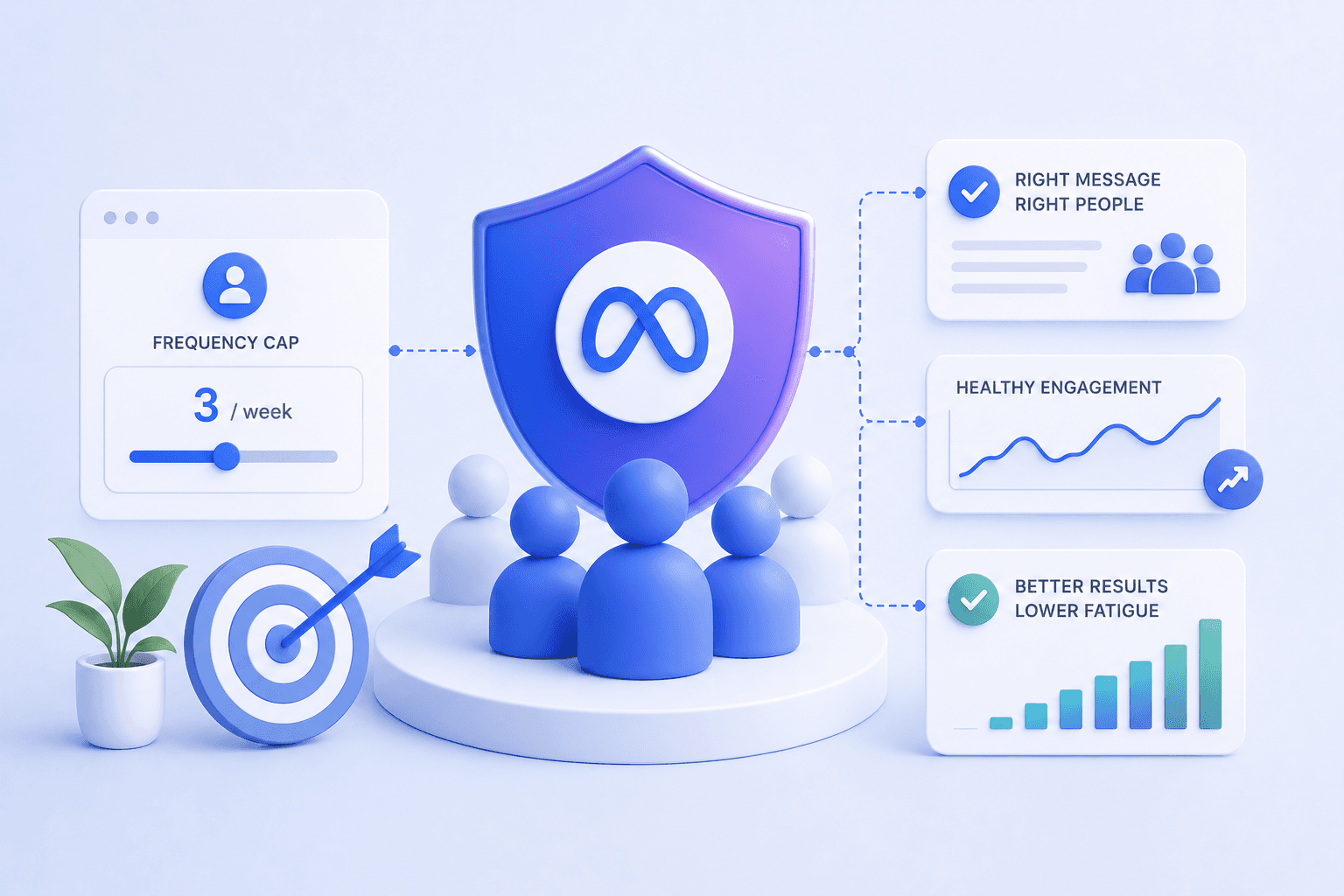
Frequency: How often the same person sees your ad, with higher frequency often signaling fatigue
Hook rate: The percentage of viewers who watch past the first 3 seconds of video
Leading indicators help catch problems before your CPA spikes. Lagging metrics like ROAS only tell you what already happened.
9. How Do You Set Up Attribution and Meta CAPI
CAPI, or Conversions API, is a server-side tracking method that sends conversion events directly from your server to Meta. As browser-based tracking degrades due to privacy changes, with attribution gaps reaching 50–70% for many advertisers, CAPI becomes increasingly essential for accurate data.
Ask whether the agency handles technical setup or expects your dev team to implement it. If they can't explain CAPI clearly, that's concerning. Proper attribution setup directly affects how Meta's algorithm optimizes your campaigns.
10. What Does Your Reporting Dashboard Actually Look Like
Request a sample report or live dashboard walkthrough before signing. Here's what to look for:
Element
What to Ask
Update frequency
Daily, weekly, or real-time access?
Metric clarity
Are KPIs defined and benchmarked?
Actionability
Does the report show what's being tested and why?
If the agency can't show you a sample, ask why. Agencies with strong reporting are usually eager to demonstrate it. Running through a Meta Ads audit checklist before your first call gives you a baseline for what good reporting should include.
Questions to Ask a Marketing Firm About the Account Team and Communication
Many agencies sell senior strategists on the pitch call but hand execution to junior associates. You want to know exactly who touches your account before signing.
11. Who Will Manage My Meta Account Day to Day
Ask for the name, title, and years of experience of the person making daily optimizations. Will this person attend strategy calls, or will you only interact with an account manager who relays information?
The person optimizing your campaigns directly impacts your results. A senior strategist with 5+ years of Meta experience operates differently than a coordinator six months into their career.
12. What Is Your Communication Cadence and Response Time
Set expectations upfront. Reasonable communication standards include:
Slack or email response: Same-day turnaround on urgent issues
Scheduled calls: Weekly or biweekly strategy syncs
Reporting reviews: Monthly deep-dives with performance analysis
If an agency is vague about communication, expect frustration later. Ask specifically: "If I message you at 10am on a Tuesday with an urgent question, when can I expect a response?"
Questions to Ask a Marketing Company About Pricing and Contracts
Pricing and contract terms protect you from hidden fees and lock-in. Many agencies obscure true costs or make exiting difficult.
13. How Is Your Pricing Structured and What Is Included
Common pricing models include:
Flat retainer: Fixed monthly fee regardless of spend
Percentage of spend: Fee scales with ad budget, typically 10-20%
Hybrid: Base retainer plus performance bonuses
Ask whether creative production, landing page builds, and platform fees are included or billed separately. "It depends" is not an acceptable answer. Get specifics in writing before signing.
14. What Are Your Contract Length and Exit Terms
Long lock-in periods without performance clauses protect the agency, not you. Ask about notice periods, early termination fees, and whether you can pause if results underperform.
A 90-day initial commitment with 30-day rolling terms afterward is reasonable. Twelve-month contracts with no exit clause are not. If an agency insists on long lock-in, ask what happens if they miss agreed-upon targets.
15. Who Owns the Creative Assets and Ad Accounts
This is non-negotiable. You own your Meta ad account, and the agency gets manager access. You retain rights to all creative assets produced during the engagement.
If an agency insists on owning your ad account, walk away. When the relationship ends, you'll lose access to your historical data, audiences, and pixel learning. That's a significant setback.
Red Flags to Watch For When Hiring a Meta Ads Agency
Guaranteed ROAS or CPA promises: No agency can guarantee specific outcomes because too many variables fall outside their control.
Vague answers on creative testing volume: If they can't articulate their testing cadence, creative is an afterthought.
Junior account managers running senior strategy: Ask directly who makes strategic decisions and who attends your calls.
No sample reports or live dashboards: Agencies with nothing to show likely have inconsistent reporting.
Choosing the Right DTC Meta Ads Partner for Your Brand
The right agency treats paid media expertise, creative strategy, and landing page optimization as interdependent. When all three areas work in sync, you get compounding improvements rather than isolated wins.
At Flighted, we keep our team deliberately small. No kicking your project off to junior associates. The people you meet are the people managing your account.
When you're ready to talk through your goals and fit, book a call.
Frequently Asked Questions About Hiring an Ad Agency
What is the difference between a marketing agency and a marketing firm?
"Marketing agency" and "marketing firm" are functionally interchangeable. Both refer to external partners providing marketing services, though "firm" sometimes implies a smaller or more specialized operation.
How long does it typically take for a Meta Ads agency to show improved ROAS?
Meaningful performance improvements usually require 4-8 weeks of testing, depending on starting budget, creative volume, and baseline account health. Agencies promising results in week one are likely cherry-picking metrics.
How often should a marketing agency send performance reports?
Weekly reports are standard for active accounts. Monthly deep-dives are typical for strategic review, though real-time dashboard access is increasingly expected.