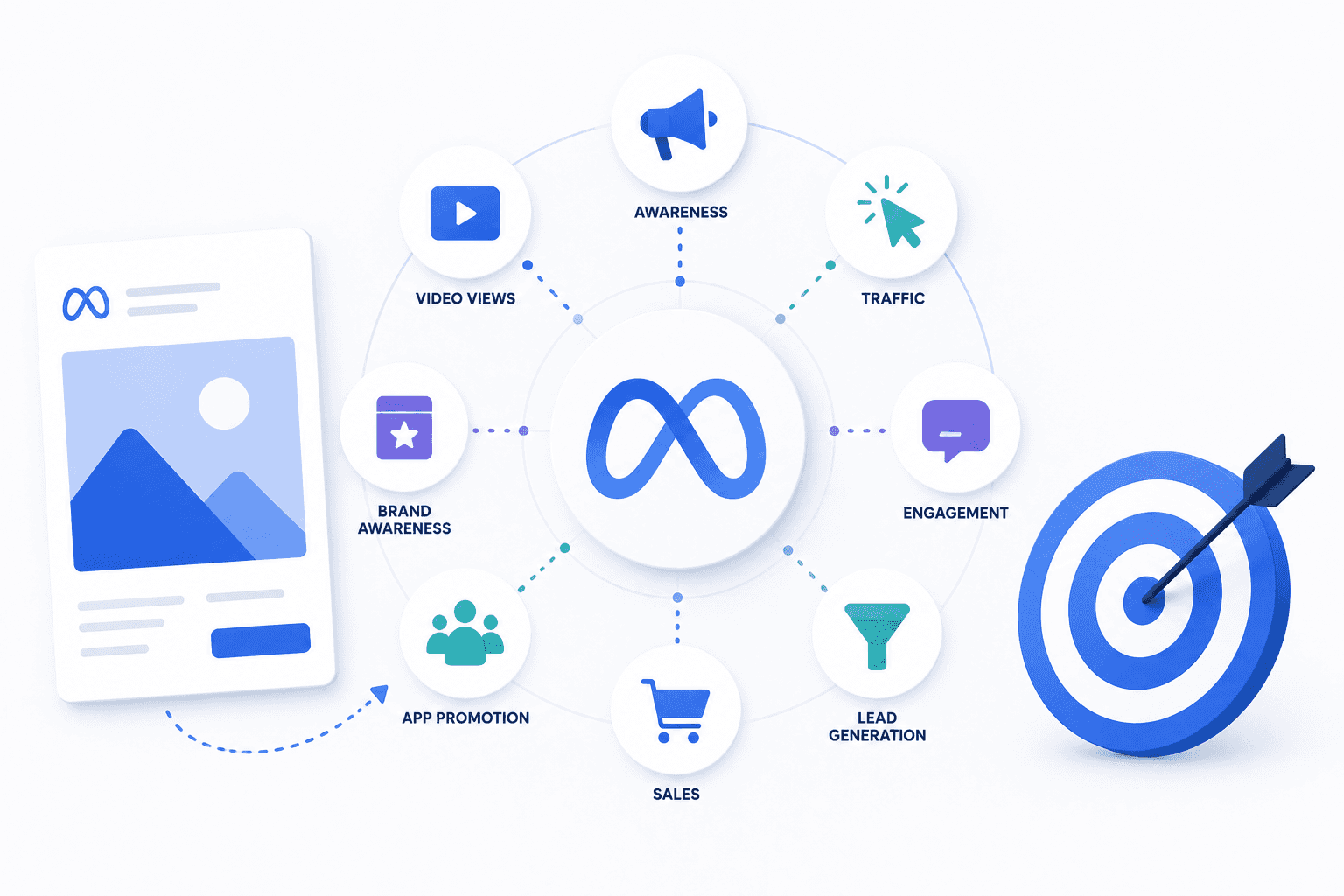
Meta's algorithm in 2026 rewards a fundamentally different approach than what worked even two years ago. The brands scaling profitably have shifted from audience segmentation to creative diversity, from fragmented campaigns to consolidated structures, and from platform-reported ROAS to blended measurement.
This guide covers the account structure, creative formats, testing frameworks, and measurement approaches that actually move the needle for DTC brands running Meta Ads today.
Key Takeaways
Consolidate your account structure. Fewer campaigns with more data per campaign outperform fragmented setups—aim for one scaling campaign, one testing campaign, and minimal retargeting.
Creative is your primary targeting lever. Meta's Andromeda algorithm uses your ad creative to find audiences, so diverse formats and angles matter more than audience segmentation.
Creative testing should scale with spend. Allocate at least 10% of your monthly budget to creative testing, and prioritize hooks before formats or offers.
Landing pages and offer testing are key. The best ads fail with weak post-click experiences—treat landing page optimization as inseparable from ad performance.
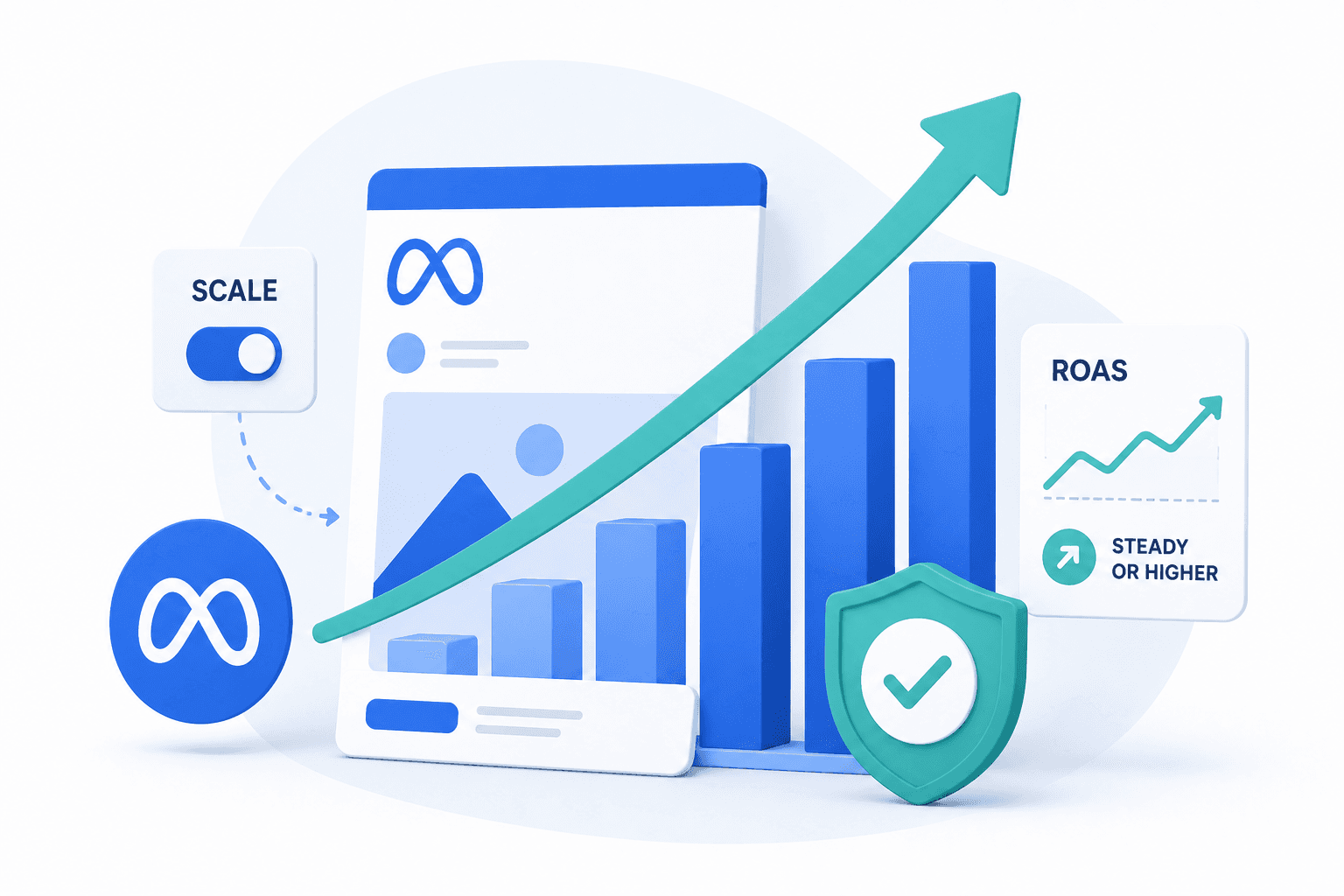
Measure blended, not platform-reported performance. MER (Marketing Efficiency Ratio) gives you a truer picture of profitability than in-platform ROAS alone.
Watch leading indicators. First-Time Impression Rate and frequency signal creative fatigue before your CPA spikes.
How to Structure Your Meta Ads Account for Efficiency and Scale
Meta's algorithm changed significantly in 2025 with the Andromeda and Generative Ads Model (GEM) updates. The short version: simplified account structures, diverse creative, and AI-driven Advantage+ targeting now outperform the old approach of hyper-segmented audiences and manual optimization.
What does that mean practically? Over-segmentation—splitting audiences into dozens of ad sets—starves each campaign of the conversion data Meta's algorithm requires to optimize. You end up fighting the system instead of feeding it.
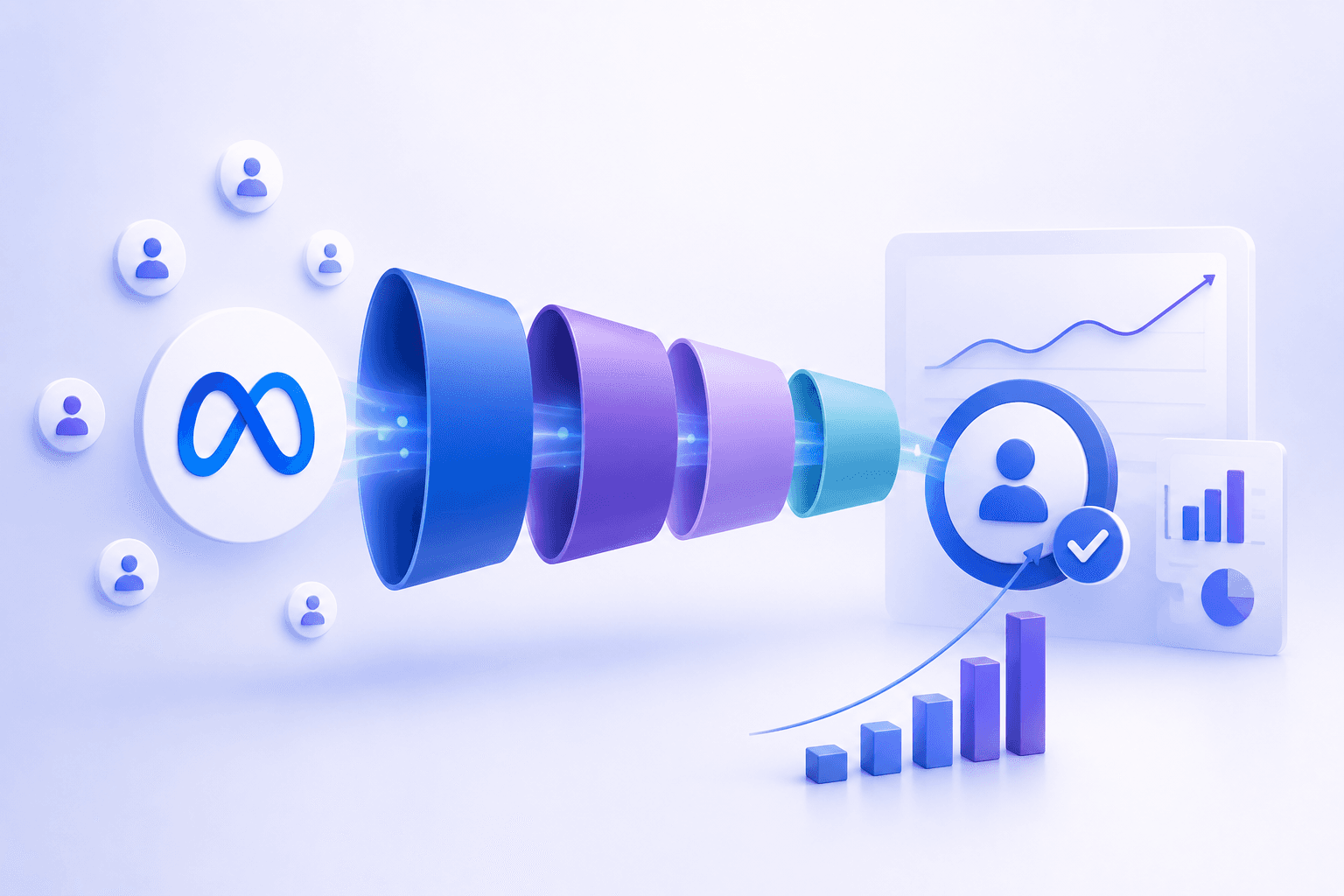
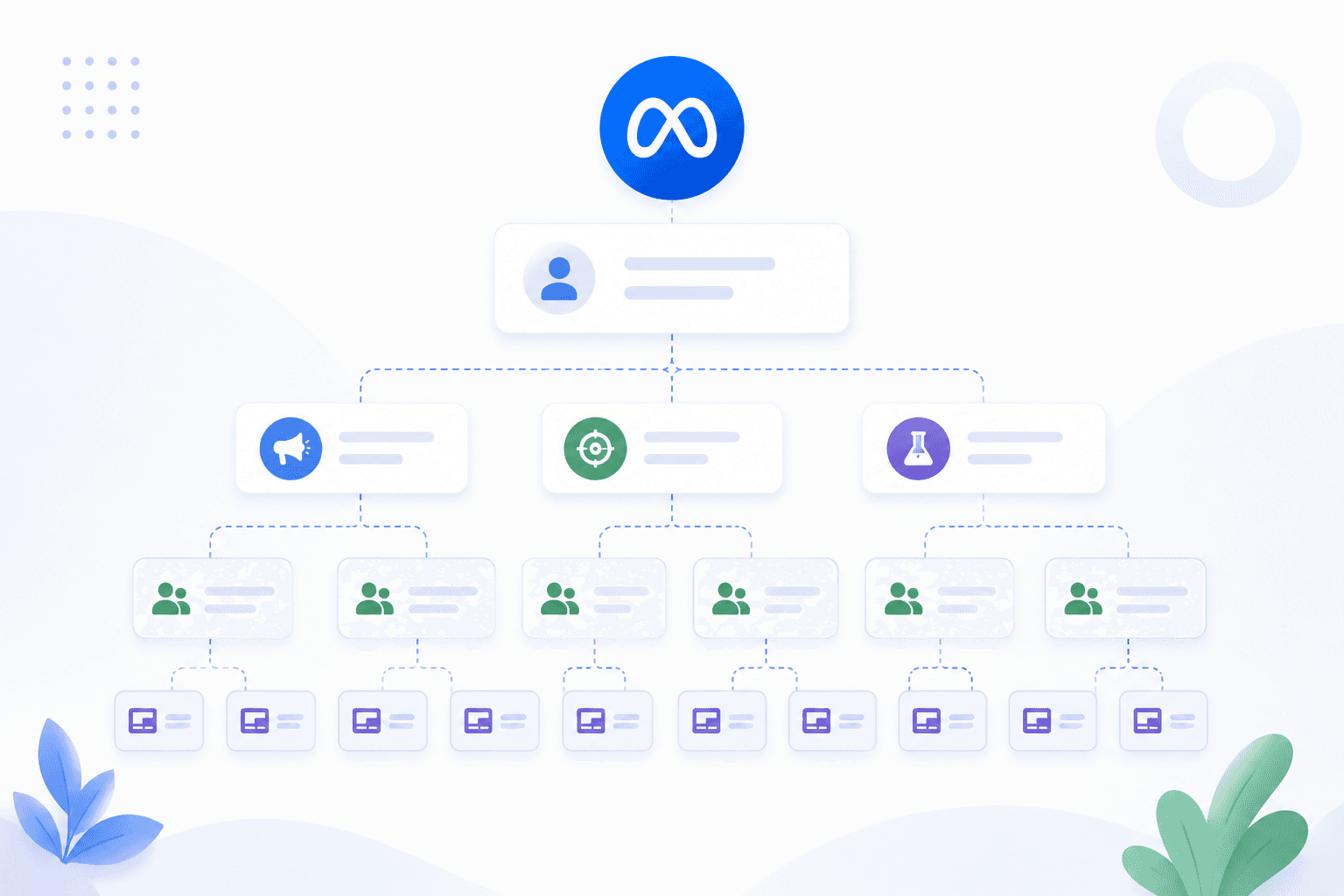
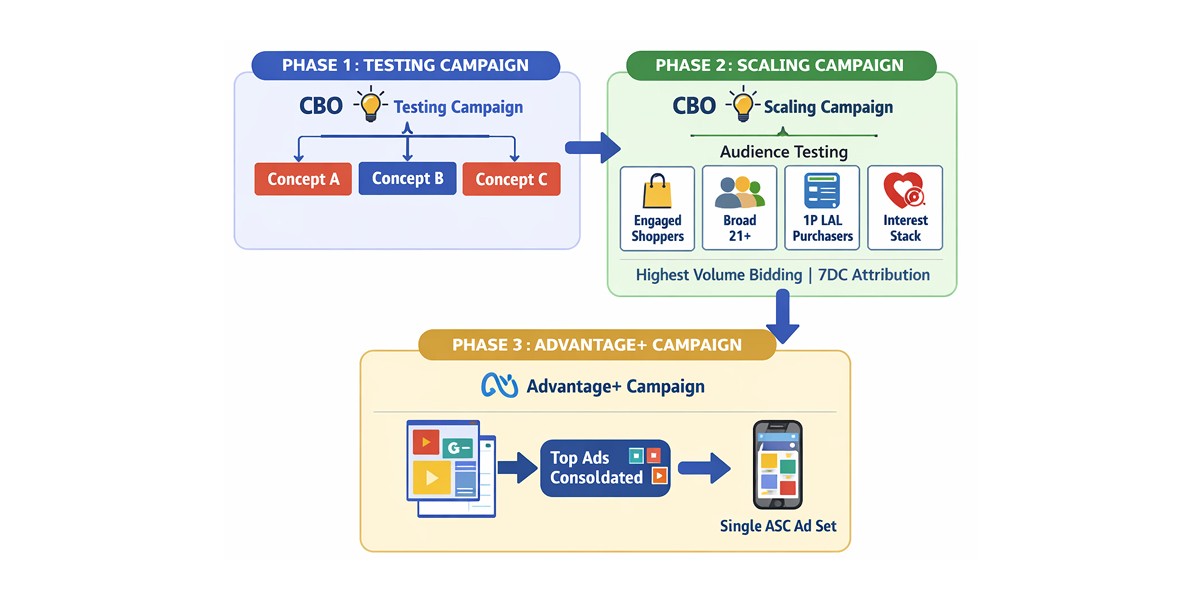
Consolidate to the fewest number of campaigns that still support your business objectives
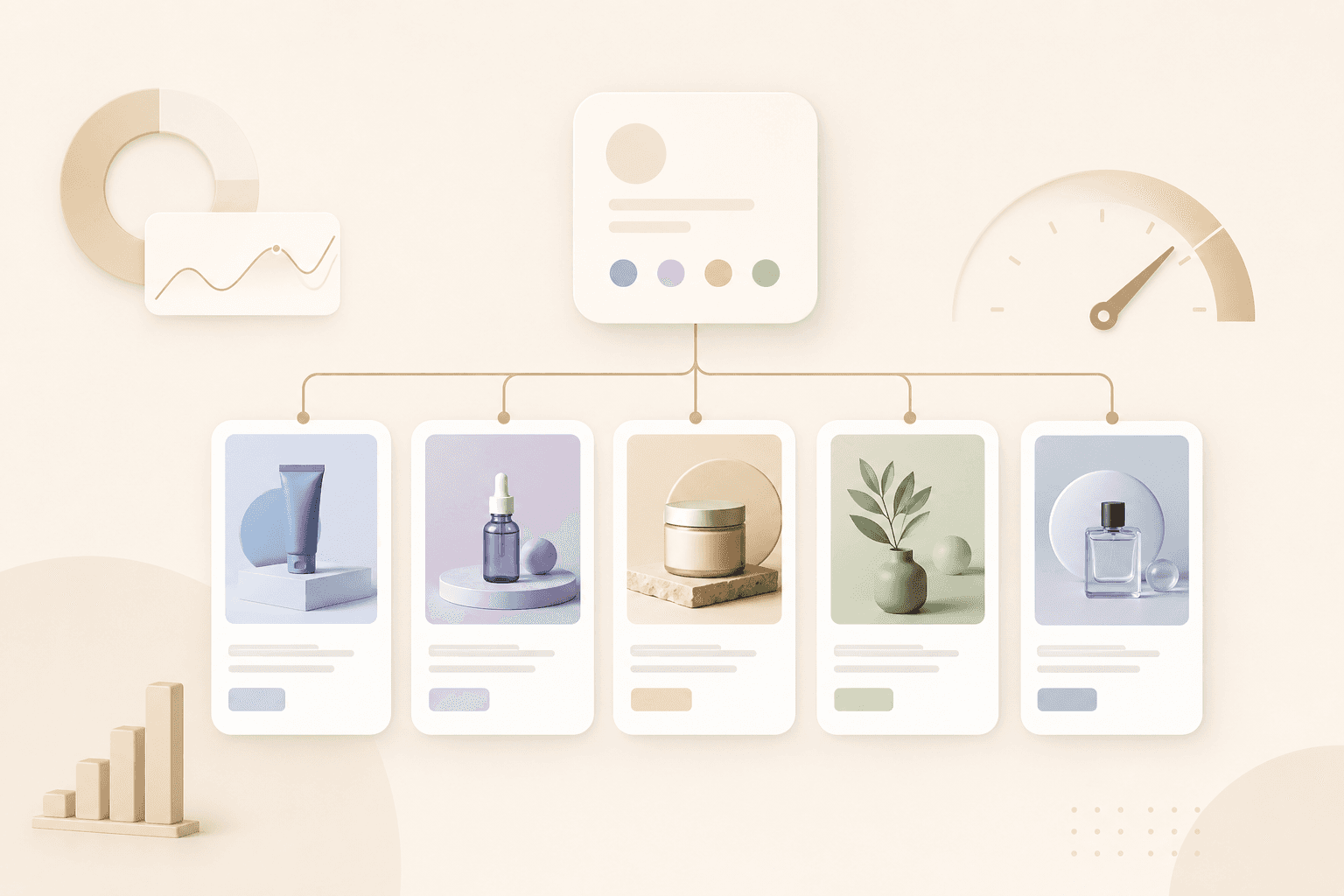
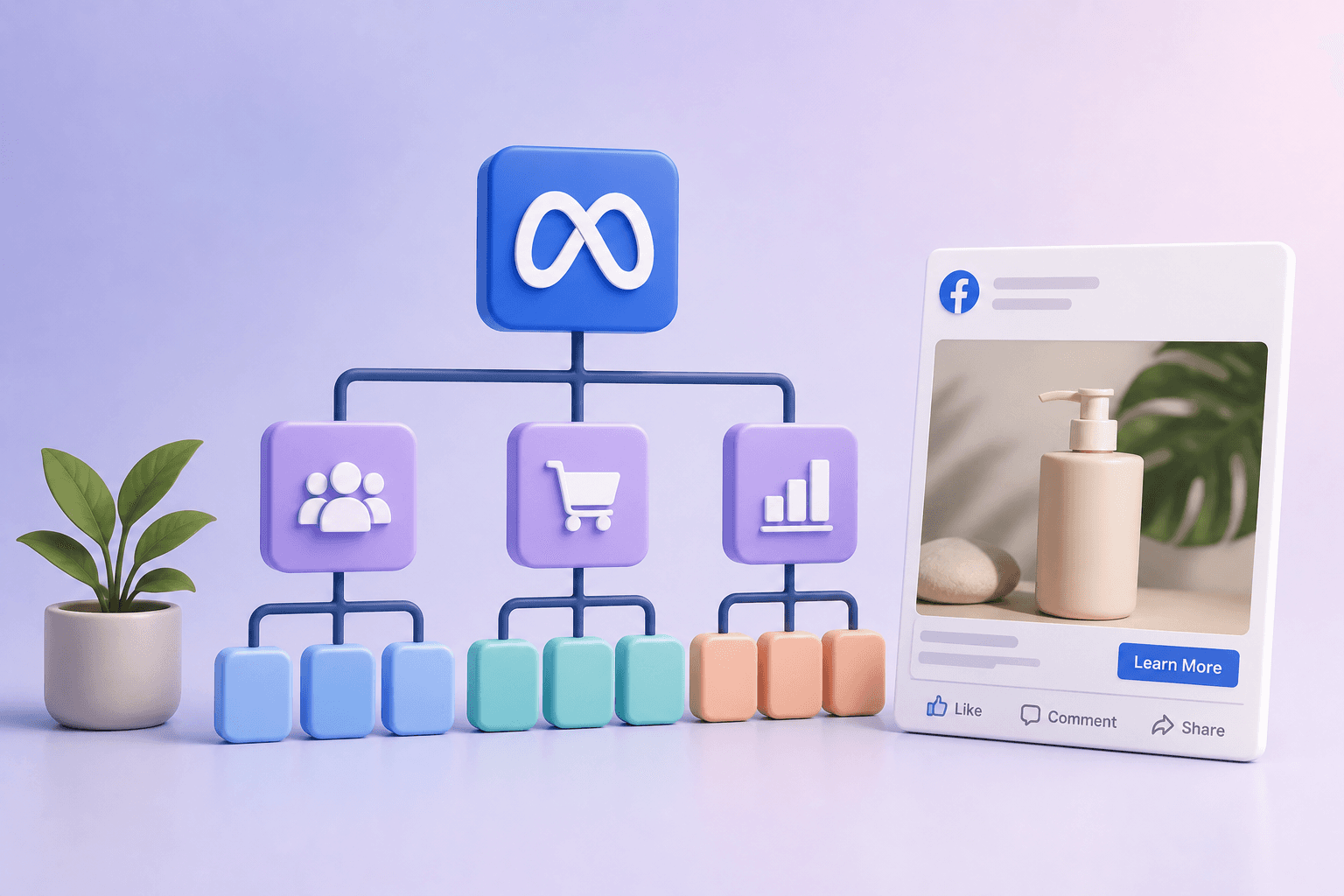
A streamlined structure typically includes three components:
Broad Prospecting Campaign: Uses Advantage+ targeting (separated by product line if categories are distinct).
Creative Testing Campaign: Acts as a sandbox for new concepts.
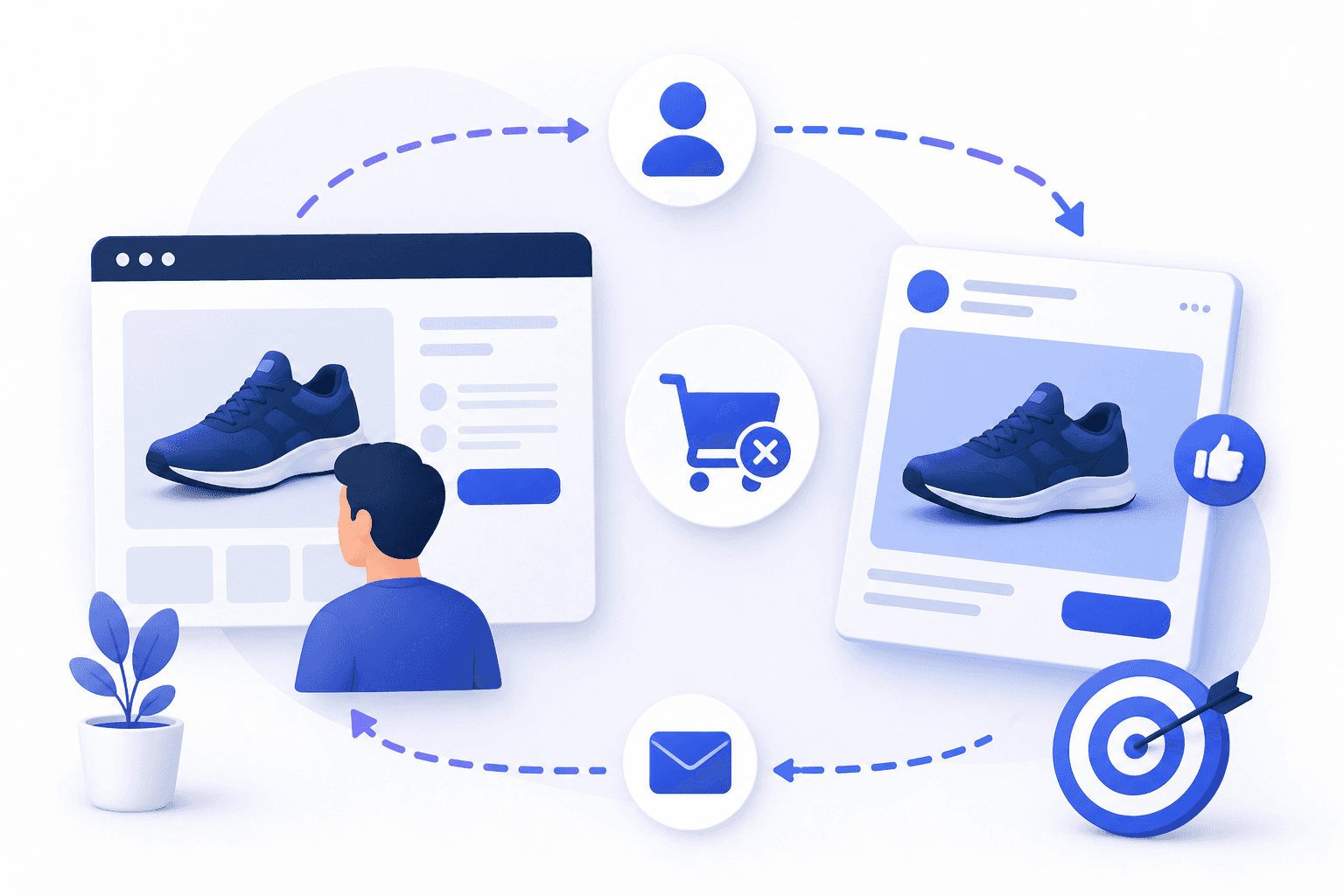
Retargeting Campaign: A small, dedicated campaign for warm audiences (typically under 5% of budget).
Keep your retargeting under 5% of total budget. And honestly, you probably don't need dedicated retargeting until you're consistently spending $50k+ per month. Before that threshold, Meta handles retargeting within your prospecting campaigns more efficiently than you'd expect.
Fewer campaigns means more conversions per campaign, which means faster learning and more stable performance over time.
When to use Advantage Plus targeting
Advantage Plus targeting is Meta's AI-driven ad set type that automates audience selection entirely. Unlike traditional broad targeting where you set parameters and let Meta figure things out gradually, Advantage Plus may target specific user cohorts immediately based on signals from your creative.
Advantage Plus works well in a few specific situations:
Prospecting at scale: When you want broad reach without building audiences manually
Creative diversity: When you can supply multiple ad formats and variations for the algorithm to test
Sufficient budget: When you have at least $100+ per day per ad set for the algorithm to learn effectively
If you're spending less than that daily threshold, traditional broad targeting often performs comparably.
Attribution windows that match your business model
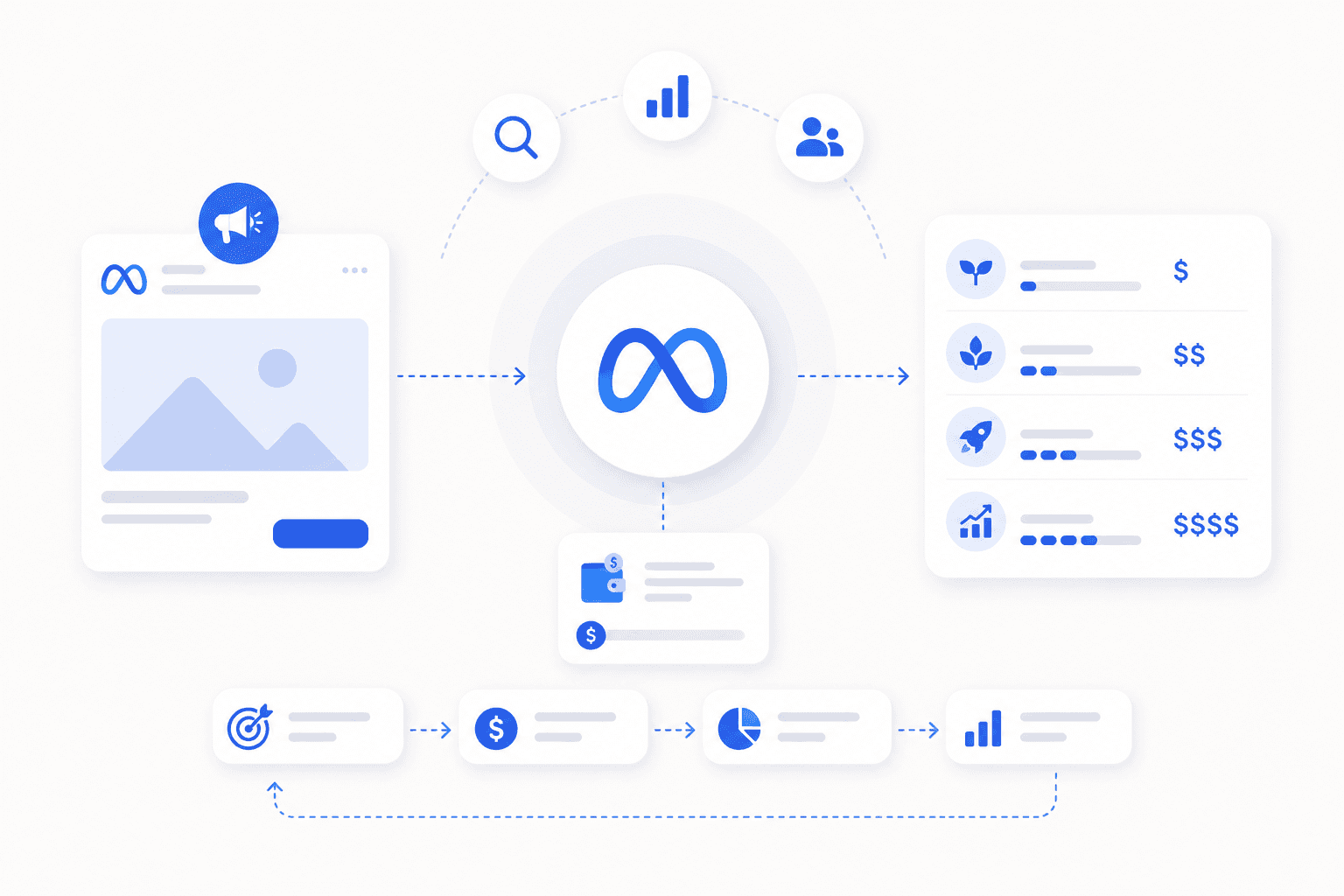
Attribution windows determine how Meta credits conversions to your ads. A 7-day click window, for example, means Meta counts a purchase as a conversion if someone clicked your ad and bought within seven days.
7-Day Click: Best for most DTC brands; aligns with incremental business outcomes.
Shorter Windows: Ideal for impulse purchases under $50.
Longer Windows: Best for high-consideration products with long decision cycles.
One nuance worth noting: if you sell subscription products with heavy repeat purchasers, consider excluding view-through conversions entirely. Repeat purchases often get misattributed to view-through, which inflates your reported ROAS and makes your ads look more effective than they actually are.
Why Creative Strategy Is the Biggest Performance Lever
Here's the shift that matters most in 2026: creative is now the primary targeting mechanism. Meta's algorithm reads your ad creative to determine who sees it. The creative itself signals your ideal customer—not your audience settings.
This is a fundamental change from how Meta worked even two years ago.
How Meta's algorithm rewards creative diversity
Meta's Andromeda system tests multiple creatives against different audience segments simultaneously. Think of each distinct creative as a separate "ticket" in the auction. More diverse creative equals more tickets, which equals more opportunities for Meta to find winning audience matches.
Diversity here means different formats, hooks, and angles. Not just color variations of the same concept. A UGC video, a founder story, and a comparison static are three "tickets". Three versions of the same static with different background colors are essentially one "ticket".
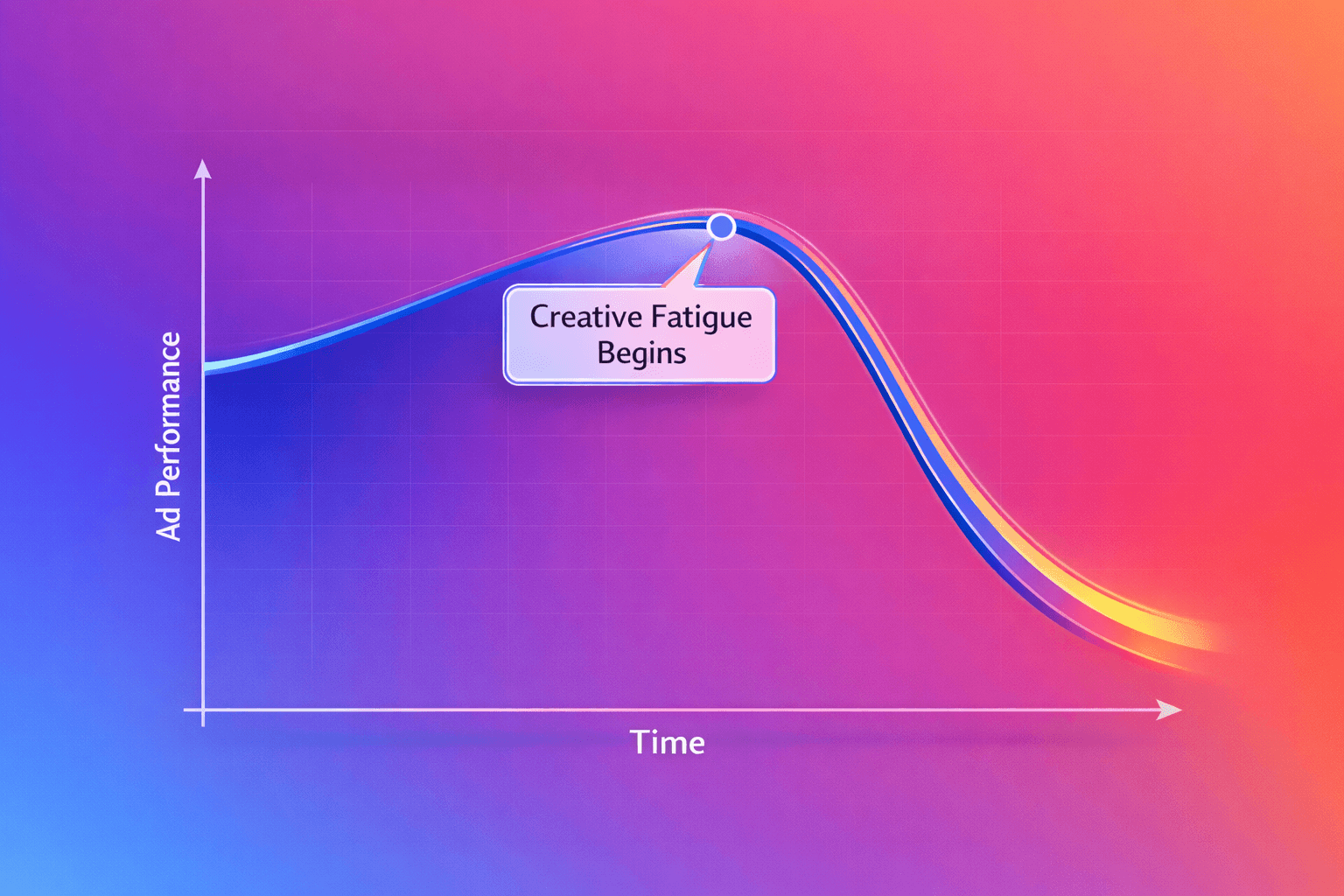
Creative fatigue happens when your audience saturates and performance declines. You're showing the same ads to the same people repeatedly, and they stop responding.
First-Time Impression Rate, the percentage of impressions going to new users (calculated as Reach / Impressions), is your leading indicator here. When this metric drops below 50%, you're likely experiencing fatigue. That's typically when CPA starts climbing, often before you notice anything wrong in your daily reporting.
Brands that don't refresh creative hit a ceiling. Sometimes they don't realize why.
Meta's algorithm in 2026 rewards a fundamentally different approach than what worked even two years ago. The brands scaling profitably have shifted from audience segmentation to creative diversity, from fragmented campaigns to consolidated structures, and from platform-reported ROAS to blended measurement.
This guide covers the account structure, creative formats, testing frameworks, and measurement approaches that actually move the needle for DTC brands running Meta Ads today.
Key Takeaways
Consolidate your account structure. Fewer campaigns with more data per campaign outperform fragmented setups—aim for one scaling campaign, one testing campaign, and minimal retargeting.
Creative is your primary targeting lever. Meta's Andromeda algorithm uses your ad creative to find audiences, so diverse formats and angles matter more than audience segmentation.
Creative testing should scale with spend. Allocate at least 10% of your monthly budget to creative testing, and prioritize hooks before formats or offers.
Landing pages and offer testing are key. The best ads fail with weak post-click experiences—treat landing page optimization as inseparable from ad performance.
Measure blended, not platform-reported performance. MER (Marketing Efficiency Ratio) gives you a truer picture of profitability than in-platform ROAS alone.
Watch leading indicators. First-Time Impression Rate and frequency signal creative fatigue before your CPA spikes.
How to Structure Your Meta Ads Account for Efficiency and Scale
Meta's algorithm changed significantly in 2025 with the Andromeda and Generative Ads Model (GEM) updates. The short version: simplified account structures, diverse creative, and AI-driven Advantage+ targeting now outperform the old approach of hyper-segmented audiences and manual optimization.
What does that mean practically? Over-segmentation—splitting audiences into dozens of ad sets—starves each campaign of the conversion data Meta's algorithm requires to optimize. You end up fighting the system instead of feeding it.
Consolidate to the fewest number of campaigns that still support your business objectives
A streamlined structure typically includes three components:
Broad Prospecting Campaign: Uses Advantage+ targeting (separated by product line if categories are distinct).
Creative Testing Campaign: Acts as a sandbox for new concepts.
Retargeting Campaign: A small, dedicated campaign for warm audiences (typically under 5% of budget).
Keep your retargeting under 5% of total budget. And honestly, you probably don't need dedicated retargeting until you're consistently spending $50k+ per month. Before that threshold, Meta handles retargeting within your prospecting campaigns more efficiently than you'd expect.
Fewer campaigns means more conversions per campaign, which means faster learning and more stable performance over time.
When to use Advantage Plus targeting
Advantage Plus targeting is Meta's AI-driven ad set type that automates audience selection entirely. Unlike traditional broad targeting where you set parameters and let Meta figure things out gradually, Advantage Plus may target specific user cohorts immediately based on signals from your creative.
Advantage Plus works well in a few specific situations:
Prospecting at scale: When you want broad reach without building audiences manually
Creative diversity: When you can supply multiple ad formats and variations for the algorithm to test
Sufficient budget: When you have at least $100+ per day per ad set for the algorithm to learn effectively
If you're spending less than that daily threshold, traditional broad targeting often performs comparably.
Attribution windows that match your business model
Attribution windows determine how Meta credits conversions to your ads. A 7-day click window, for example, means Meta counts a purchase as a conversion if someone clicked your ad and bought within seven days.
7-Day Click: Best for most DTC brands; aligns with incremental business outcomes.
Shorter Windows: Ideal for impulse purchases under $50.
Longer Windows: Best for high-consideration products with long decision cycles.
One nuance worth noting: if you sell subscription products with heavy repeat purchasers, consider excluding view-through conversions entirely. Repeat purchases often get misattributed to view-through, which inflates your reported ROAS and makes your ads look more effective than they actually are.
Why Creative Strategy Is the Biggest Performance Lever
Here's the shift that matters most in 2026: creative is now the primary targeting mechanism. Meta's algorithm reads your ad creative to determine who sees it. The creative itself signals your ideal customer—not your audience settings.
This is a fundamental change from how Meta worked even two years ago.
How Meta's algorithm rewards creative diversity
Meta's Andromeda system tests multiple creatives against different audience segments simultaneously. Think of each distinct creative as a separate "ticket" in the auction. More diverse creative equals more tickets, which equals more opportunities for Meta to find winning audience matches.
Diversity here means different formats, hooks, and angles. Not just color variations of the same concept. A UGC video, a founder story, and a comparison static are three "tickets". Three versions of the same static with different background colors are essentially one "ticket".
Creative fatigue happens when your audience saturates and performance declines. You're showing the same ads to the same people repeatedly, and they stop responding.
First-Time Impression Rate, the percentage of impressions going to new users (calculated as Reach / Impressions), is your leading indicator here. When this metric drops below 50%, you're likely experiencing fatigue. That's typically when CPA starts climbing, often before you notice anything wrong in your daily reporting.
Brands that don't refresh creative hit a ceiling. Sometimes they don't realize why.
Format diversity matters because it expands how many audience segments Meta can match you with. Relying on a single creative type limits your reach.
Format
Best Use Case
Production Complexity
UGC/Creator Demo
Social proof, relatability
Low-Medium
Video Sales Letters
High-consideration products
Medium-High
Founder-Led
Brand story, differentiation
Low
Comparison Statics
Warm traffic, solution-aware prospects
Medium
Social Native Statics
Prospecting and retargeting
Low
UGC and creator demo content
User-generated content (UGC) feels authentic because it is. Native-feeling videos from real customers or creators outperform polished brand ads on Meta, particularly for demonstrating product use in real contexts.
You can source UGC from existing customers through post-purchase email flows or work with dedicated UGC creators. The production barrier is low, and the performance ceiling is high.
Video sales letters and long-form testimonials
VSLs (Video Sales Letters) are longer-form videos that walk through a product's benefits, often with voiceover and supporting visuals. They work for higher price points or products requiring education—supplements, skincare with complex ingredients, premium home goods.
VSLs typically perform best with warm audiences or in retargeting. Production requires a skilled video editor and often AI voiceover tools like ElevenLabs.
Founder-led storytelling
Founder videos build trust and differentiation quickly. If you have a compelling origin story or a unique point of view on your category, this format has a low production barrier. A handheld camera works fine.
Optionally, share raw footage with an editor to add b-roll and polish. But authenticity matters more than production value here.
Comparison statics
Comparison statics target solution-aware prospects—people who already know they have a problem and are evaluating options. Great for differentiating against competitors or highlighting specific pain points your product solves.
Test multiple competitor comparisons or pain points per concept to find what resonates.
Social native statics
Social native statics are low-fidelity ads that use native UI elements from Instagram or TikTok to feel organic. Think screenshot-style posts, comment overlays, or story-format images. You typically skip branded fonts and colors entirely.
They work because they don't look like ads. Production is fast, and they're useful for both prospecting and retargeting.
How to Build a High-Velocity Creative Testing Framework
Consistent creative testing separates brands that scale from brands that plateau. Testing velocity—the rate at which you produce and test new concepts—determines whether you can sustain growth or hit a ceiling.
Testing velocity by monthly spend level
A useful baseline: allocate at least 10% of your monthly budget to creative testing. Take that budget amount, divide by your target CPA, and use that number as your creative quantity target.
At $30k/month spend with a $30 CPA, that's roughly 10 new creative concepts per month minimum. At $100k/month, you're looking at 30+. Higher spend requires scaling creative production to avoid fatigue.
What to test first
Not all tests are equal. Prioritize in this order:
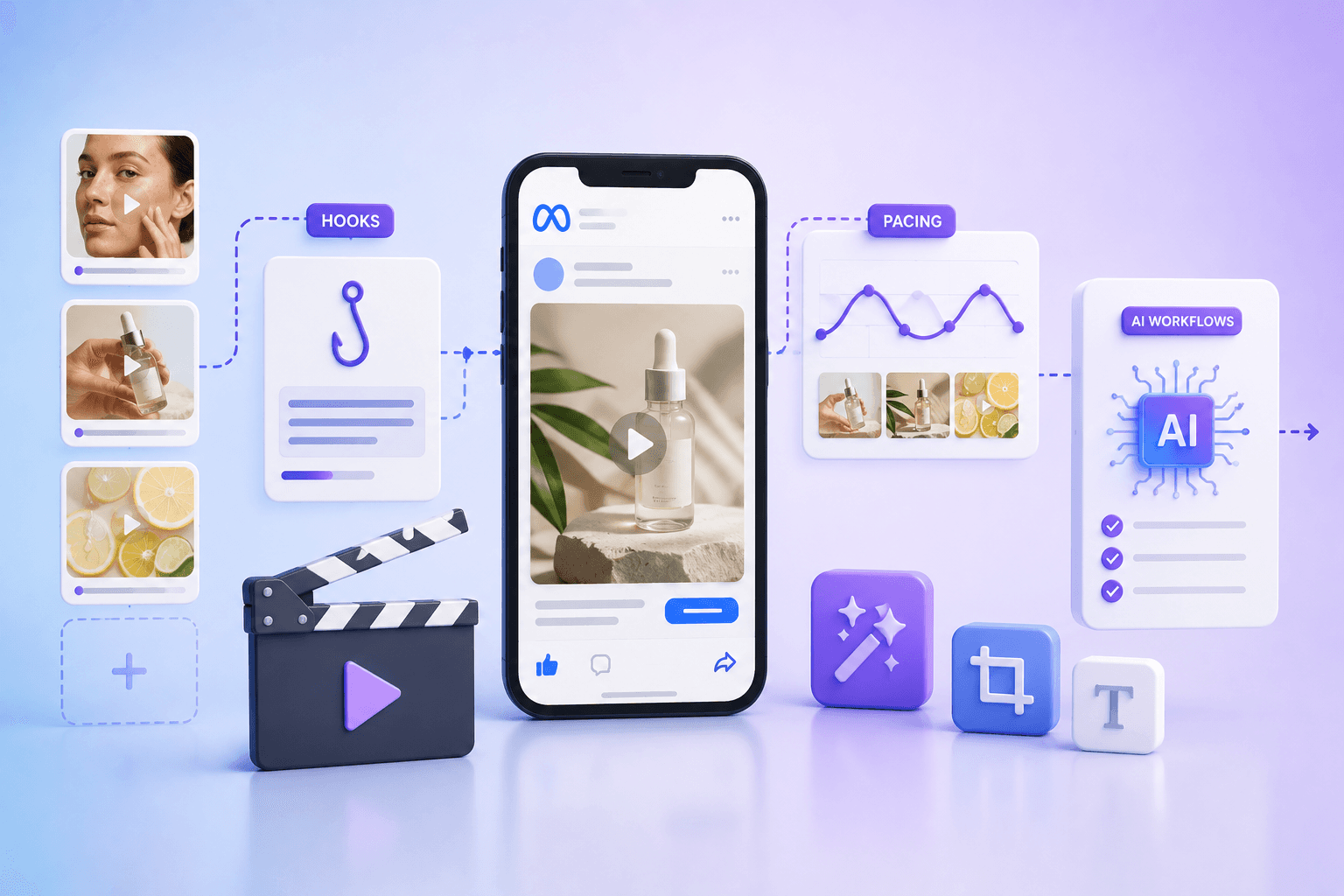
Hooks: Test different opening frames and scroll-stopping visuals first—hooks determine if anyone sees the rest of your ad
Formats: Test UGC vs. polished, video vs. static vs. carousel
Angles and messaging: Test different value propositions and customer pain points
Offers: Test discount structures and bundles last
Hooks matter most because they're the gatekeeper. A great offer with a weak hook never gets seen.
Reading results and killing losers fast
Spend allocation is your most important signal. Meta is remarkably effective at determining winners on low spend. Counterintuitively, you typically pause ads that don't get spend—not ads with poor ROAS.
Why? The breakdown effect. When you look at individual ad performance, the numbers often don't add up to campaign totals because Meta's attribution model distributes credit imperfectly. An ad showing poor ROAS might actually be contributing to overall campaign performance in ways the platform can't cleanly attribute.
If promising ads aren't scaling, run "Challenger" campaigns that force spend to test whether Meta's initial judgment was a false negative.
Why Landing Pages Determine Your Meta Ads ROI
Ads drive traffic. Landing pages convert it. This connection is where paid media expertise, creative strategy, and landing page optimization work together—and where many brands leave significant money on the table.landing page optimization work together—and where many brands leave significant money on the table.
The post-click experience gap most brands ignore
Optimizing ads while neglecting landing pages is one of the most common mistakes in DTC growth. Meta tracks conversion rates and rewards ads that lead to conversions, so a weak landing page actually hurts your ad delivery over time.
The algorithm learns that your ads don't convert, and it shows them to fewer people. You end up paying higher CPMs for worse traffic.
Mobile-first design principles that convert
Most Meta traffic is mobile. Your landing pages reflect that reality or they underperform.
Speed: Pages load fast on mobile networks—under 3 seconds ideally
Clarity: Above-the-fold content communicates the offer immediately without scrolling
Friction: Minimize form fields and steps to purchase
Continuity: Landing page messaging matches ad creative so visitors don't feel disoriented
The importance of offer testing
Offer testing often matters more than any other landing page element. You're trying to find the highest price point customers will pay without sacrificing conversion rate.
Revenue per Visitor (RPV) is your key metric here—it factors in both average order value and conversion rate. A higher price with slightly lower conversion rate often wins on RPV.
Early-stage DTC brands benefit from prioritizing offer testing over design tweaks. Get the offer right first.
Measurement Beyond Platform ROAS
Relying solely on Meta's reported ROAS (Return on Ad Spend) is misleading in 2026. Privacy changes, cross-device behavior, and attribution model limitations mean platform numbers tell an incomplete story.
You want a blended view.
Why MER matters more than in-platform metrics
MER (Marketing Efficiency Ratio) equals total revenue divided by total marketing spend across all channels. This blended metric gives you a truer picture than platform-reported ROAS, especially post-iOS privacy changes.
Platform ROAS often overstates performance because Meta takes credit for conversions that would have happened anyway. MER tells you what's actually happening to your business.
Leading indicators that predict performance decay
Monitor a few key metrics that will act as leading indicators before your CPA spikes:
First-Time Impression Rate: A dropping percentage signals audience saturation
Frequency: Rising frequency means the same users see your ads repeatedly
A "good" First-Time Impression Rate for DTC brands on Meta ads is above 50%. By the time your actual CPA increases, the underlying problem - a declining First-Time Impression Rate - has usually been building for days or weeks.
Building a blended attribution dashboard
Combine platform data with third-party tools like Triple Whale or Northbeam and back-end revenue data from your ecommerce platform. This combination enables better budget allocation across channels.
If you don't want to pay for attribution software, track the correlation between Meta spend and new customer revenue over time. Based on that correlation, apply a "multiplier" to your in-platform ROAS that better reflects Meta's true value to your business.
Common Meta Ads Mistakes DTC Brands Make
Each of the following errors fights against how Meta's algorithm actually works. They're all preventable.
Over-segmenting audiences
Too many narrow audience segments starve campaigns of data. Meta requires roughly 50 conversions per ad set per week to exit the learning phase. Fragmented structures rarely hit that threshold, which means your campaigns never stabilize.
Running creative too long
Keeping "winning" ads running indefinitely leads to fatigue. Watch First-Time Impression Rate and refresh creative when it drops below 50%.
Ignoring the post-click experience
Optimizing ads without optimizing landing pages wastes spend. The two work together or not at all.
Scaling budgets too aggressively
Large budget jumps destabilize performance by resetting the learning phase. Scale incrementally—20% increases every few days, not 100% overnight.
Trusting platform-reported ROAS alone
Platform ROAS often overstates performance. Always validate with MER and back-end revenue data before making major budget decisions.
FAQs About Meta Ads Strategy for DTC Brands
What budget do I need to start testing Meta Ads effectively?
Most brands see meaningful learning at $10k/month minimum, though the exact threshold varies by product price point and target CPA. Lower-priced products with faster purchase cycles can learn on less.
How many new ad creatives should I test per month?
Allocate 10% of monthly spend to testing, divide by your CPA, and use that as your target quantity. At $30k/month with a $30 CPA, that's roughly 10 new concepts minimum.
How do I know if my current Meta Ads strategy is working?
Look at MER and blended ROAS, not just platform metrics. Some brands with high-LTV products can scale profitably at breakeven (1x) target ROAS because customer retention supports it over time.
Should I manage Meta Ads in-house or hire an agency?
It depends on internal expertise and bandwidth. Agencies add value when brands want strategic depth, creative production capacity, and systematic testing they can't execute alone.
What is First-Time Impression Rate and why does it matter for DTC Meta Ads?
First-Time Impression Rate, or FTIR, is calculated by dividing your ad account's total unique reach by total impressions. It is the percentage of your ad impressions that reach a unique audience, and is an important leading indicator of audience saturation - a high FTIR indicates that your top-of-funnel is healthy and consistently reaching new people with your ads, while a low FTIR indicates that you are not reaching new people and are over-saturating the same users with ads.
What is MER (Marketing Efficiency Ratio) and how do I calculate it?
Marketing Efficiency Ratio, or MER, is the blended Return on Ad Spend across your entire business, factoring in all direct-to-consumer channels. You calculate MER by dividing your Total Sales by your blended ad spend across all platforms (Meta, Google, TikTok, Affiliate/Influencer, etc).
When should DTC brands use Advantage+ vs. manual targeting?
Advantage+ Targeting is great for brands who are still scaling their Meta ads and are spending $0-$200,000 per month on the platform. Once you hit $200,000-$500,00+, incrementality becomes more important, and it becomes more difficult to target entirely unique audiences with Meta's Advantage+ targeting. At this point, manual targeting can be an effective way to "force" ad spend to new audiences that Meta's Advantage+ algorithm would not normally think to test.
What Separates Brands That Scale From Those That Stall
The brands that scale profitably on Meta in 2026 treat paid media expertise, creative strategy, and landing page optimization as one integrated system. When all three work together, you get compounding returns. When they're siloed or neglected, you hit ceilings.
If you're ready to scale systematically, book a call with Flighted to talk through your goals and fit.