How to Fix Meta Ads Declining ROAS for a Mature DTC Brand
Meta Ads
July 14, 2026

Table Of Contents
Your Meta ROAS is sliding, and you spent last quarter proving it wasn't your fault. It usually isn't. Mature direct-to-consumer (DTC) brands hit this wall predictably: the same creative, the same audiences, and the same account structure that scaled you to $1M–$50M stop returning what they used to.
ROAS (Return on Ad Spend) is revenue attributed to your ads divided by the spend that produced it. A 3.0 platform ROAS means $3 back for every $1 in. When that number drops, most founders panic-cut spend or blame the algorithm. Both reactions make the problem worse.
This post gives you an operator's diagnostic path for a meta ads declining ROAS DTC brand: confirm the decline is real, isolate the true bottleneck, then fix creative, landing pages, audiences, and campaign structure in the right order. You'll get thresholds, benchmark ranges, and an ordered action plan you can run this week — not platitudes.
Key Takeaways
Confirm the decline is real first. Compare platform ROAS to backend Shopify revenue and check whether your attribution window changed before you touch a single campaign.
Diagnose the actual bottleneck before fixing anything. Declining ROAS is a symptom — creative fatigue, audience saturation, landing page conversion rate, and attribution drift each demand different fixes.
Fix creative fatigue first. For mature brands it's the lever that moves ROAS most, and First-Time Impression Rate tells you when a creative is dead.
Measure MER, not just platform ROAS. Platform ROAS over-credits Meta and ignores organic and cross-channel revenue.
Consolidate before you scale. Fewer, higher-signal ad sets recover the conversion data that fragmented structures starve.
Why Meta ROAS declines for mature DTC brands
Declining Meta ROAS is a lifecycle stage, not a brand failure. The mechanics that made a young account cheap — untapped audiences, fresh creative, generous attribution — erode as you scale. Expect it, then manage it.
Four forces drive most of the decline:
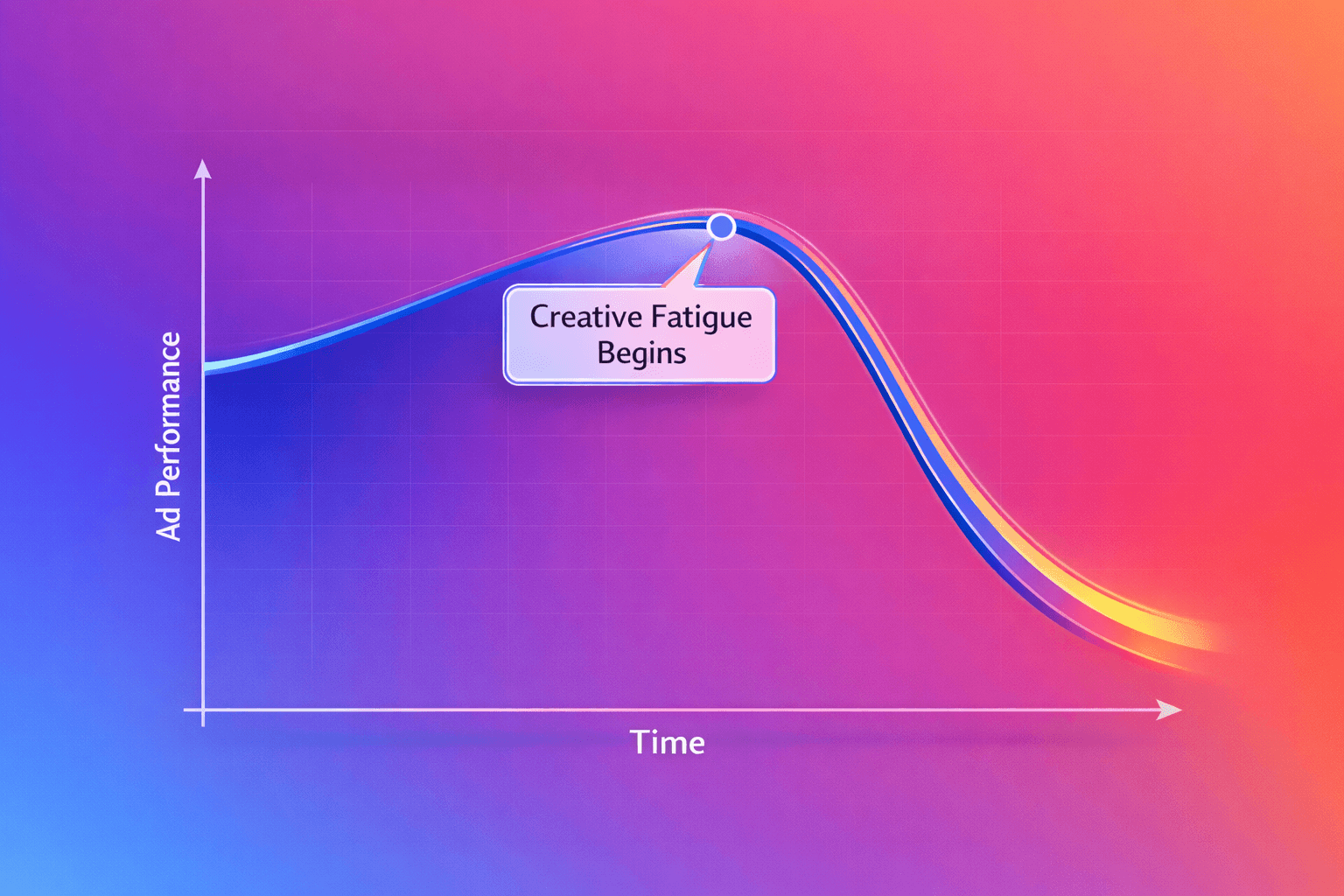
Creative fatigue. Your winning ads have saturated the people most likely to click them. Response drops even though the creative hasn't changed.
Audience saturation. You've reached your core prospecting pools and are now re-serving the same users at higher frequency.
Attribution drift. Post-iOS signal loss and attribution-window changes shrink the revenue Meta claims, even when real sales hold.
Algorithm updates. Shifts like Meta Andromeda and Advantage+ changed how the auction rewards creative diversity, penalizing stale libraries.
How to confirm the meta ads declining ROAS is real before fixing anything
Do not diagnose a decline you haven't verified. Reporting artifacts fake a drop constantly. Your first job is to separate a measurement change from a performance change.
Compare what Meta reports against what your bank sees. If platform ROAS fell 20% but backend Shopify revenue held flat against stable total spend, you have an attribution problem, not a performance problem. Those get fixed very differently.
Define MER here: Marketing Efficiency Ratio (MER) = total revenue ÷ total ad spend, across every channel. It ignores attribution entirely, so it's your truth serum.
Run this checklist before anything else:
Check the attribution window. Did someone switch from 7-day click to 1-day click, or drop the view-through window? A window change alone can drop reported ROAS 15–30% with zero change in real sales.
Compare to backend revenue. Pull total Shopify revenue for the same period. If it's stable, the decline is on the report, not the register.
Calculate MER. Divide total revenue by total ad spend for last month versus three months ago. If MER held, your business is fine and Meta's math is the issue.
A note on overlap: if you've read Flighted's "Meta Ads Strategy for DTC Brands – 2026 Edition," this post is the narrower, diagnostic companion — that one builds strategy, this one fixes a specific decline.
How to diagnose the root cause of declining Meta ROAS
Diagnosis only. Resist fixing anything until you've worked all seven steps — treating the wrong cause wastes a refresh cycle.
1. Audit attribution and reporting windows
Confirm the attribution setting hasn't changed across the comparison period. Rule out iOS-driven view-through erosion before blaming media. If the window moved, normalize both periods to the same setting before you compare.
2. Check creative fatigue signals
First-Time Impression Rate (FTIR) is the percentage of a creative's impressions served to people seeing it for the first time. A healthy prospecting creative reaches new people; a fatigued one recycles the same viewers. Falling FTIR is your earliest, cleanest fatigue signal. Treat frequency as a secondary confirmation — rising frequency with flat sales corroborates saturation but reacts slower than FTIR.
3. Analyze CPM and auction pressure
CPM (cost per 1,000 impressions) tells you what you're paying to reach people. Rising CPM with flat CTR (click-through rate, the percentage of impressions that get clicked) means you're paying more for the same traffic quality. That's auction pressure — seasonal competition or a shrinking effective audience — not necessarily your creative.
4. Review landing page conversion rate
CVR (conversion rate) is the percentage of visitors who purchase. Pull it from GA4 and Shopify. If CTR is stable but CVR fell, your problem is post-click, not the ad. A brand can have healthy ad metrics and still bleed ROAS on a slow or off-message page.
5. Assess audience saturation and frequency
Look at prospecting frequency on a rolling window. When you're re-serving core audiences repeatedly, incremental cost per acquisition (CPA — the cost to acquire one customer) climbs even as the ad stays "good." Saturation and creative fatigue often travel together; separate them by checking FTIR per audience.
6. Inspect campaign structure and Advantage Plus setup
Count your active ad sets and the conversions each generates. Fragmented structures split conversion data so thin that Meta's model can't learn. Check whether Advantage Plus Shopping is running where it shouldn't be, or missing where it should.
7. Rule out seasonality and external factors
Compare year-over-year, not just month-over-month. A January dip after Q4 is expected, not a crisis. Check whether category CPM inflation — competitors flooding your vertical — explains the rise. External pressure needs a different response than internal decay.
How to fix creative fatigue on Meta ads
For mature brands, creative is the primary lever. This is where Flighted's Creative Strategy pillar does the heaviest lifting — and it only pays off when it feeds the same account structure and landing pages the other two pillars own.
Set a weekly creative refresh cadence
Tie cadence to spend, not to a rigid ad count. As a working guide: brands under $50k/month can refresh net-new concepts every 1–2 weeks; brands spending $50k–$250k/month should ship new concepts weekly; above $250k/month, expect multiple net-new concepts per week. The higher your spend, the faster you burn through reachable audiences.
Test hooks and angles instead of whole ads
Don't rebuild ads from scratch — that's slow and hides what actually moved. A hook is the first 1–3 seconds of a video or the opening headline of a static. An angle is the USP or pain point you lead with. Fix the body, then swap hooks and angles:
Ship 3–5 new hooks against a proven body before rebuilding the concept.
Test one angle per audience so you can read the winner cleanly.
Keep the offer constant while you isolate hook and angle effects.
Rotate formats across UGC, VSLs, and statics
Diversity of format is what algorithm updates now reward. Run all three:
UGC (user-generated content): creator-style, native-feeling videos.
VSL (video sales letter): a longer, direct-response video that argues the full case.
Statics: image ads, including carousels.
Kill losers using First-Time Impression Rate
When a prospecting creative's FTIR falls below a workable threshold for your account — you're mostly re-serving old viewers rather than reaching new ones — pause it and replace it. Don't wait for ROAS to crater; FTIR turns before revenue does.
How to recover landing page conversion rate for mature DTC brands
The second lever is the page. Flighted's Landing Page Design pillar (Landing Page Optimization) exists because the best ad in your account dies on a page that doesn't match it. Ad and page are one funnel, not two teams.
Match landing page message to ad creative
Message match means the page's headline, hero image, and offer restate the promise the ad made. If the ad sells a specific angle, the page must open on that same angle. A mismatch spikes bounce and tanks CVR regardless of ad quality.
Rebuild mobile-first with compressed load times
Most Meta traffic is mobile. Design for the phone first and compress load times — a slow hero costs conversions before a visitor reads a word. Test on a mid-range phone on cellular, not your desktop.
Run ongoing A/B tests on hero, offer, and social proof
Test in a strict hierarchy so each result is clean:
Hero — headline and hero image first; it moves the most.
Offer/pricing — the value proposition and price framing second.
Social proof — reviews, UGC, and trust signals third.
Winning ad, dying page? Creative and landing pages are one funnel. A great hook still loses the sale on a page that doesn't match it. Flighted fixes both together so the click converts. Book a call to tighten your funnel.
How to handle audience saturation and retargeting decay
Mature brands exhaust their core audiences. When prospecting frequency climbs and retargeting pools stop converting, refresh the inputs rather than pushing harder on spent ones:
Refresh lookalike seeds. Seed from recent purchasers or high-LTV customers, not an all-time buyer list. A stale seed rebuilds a stale audience.
Expand interest targeting. Layer in adjacent interests to widen the reachable pool before frequency spikes.
Reduce retargeting windows. Shorten decayed windows so you stop paying to re-serve people who already declined.
Accept channel diversification. At scale, some demand has to come from outside Meta. Plan for it instead of forcing Meta to carry everything.
How to restructure Meta campaigns for scale
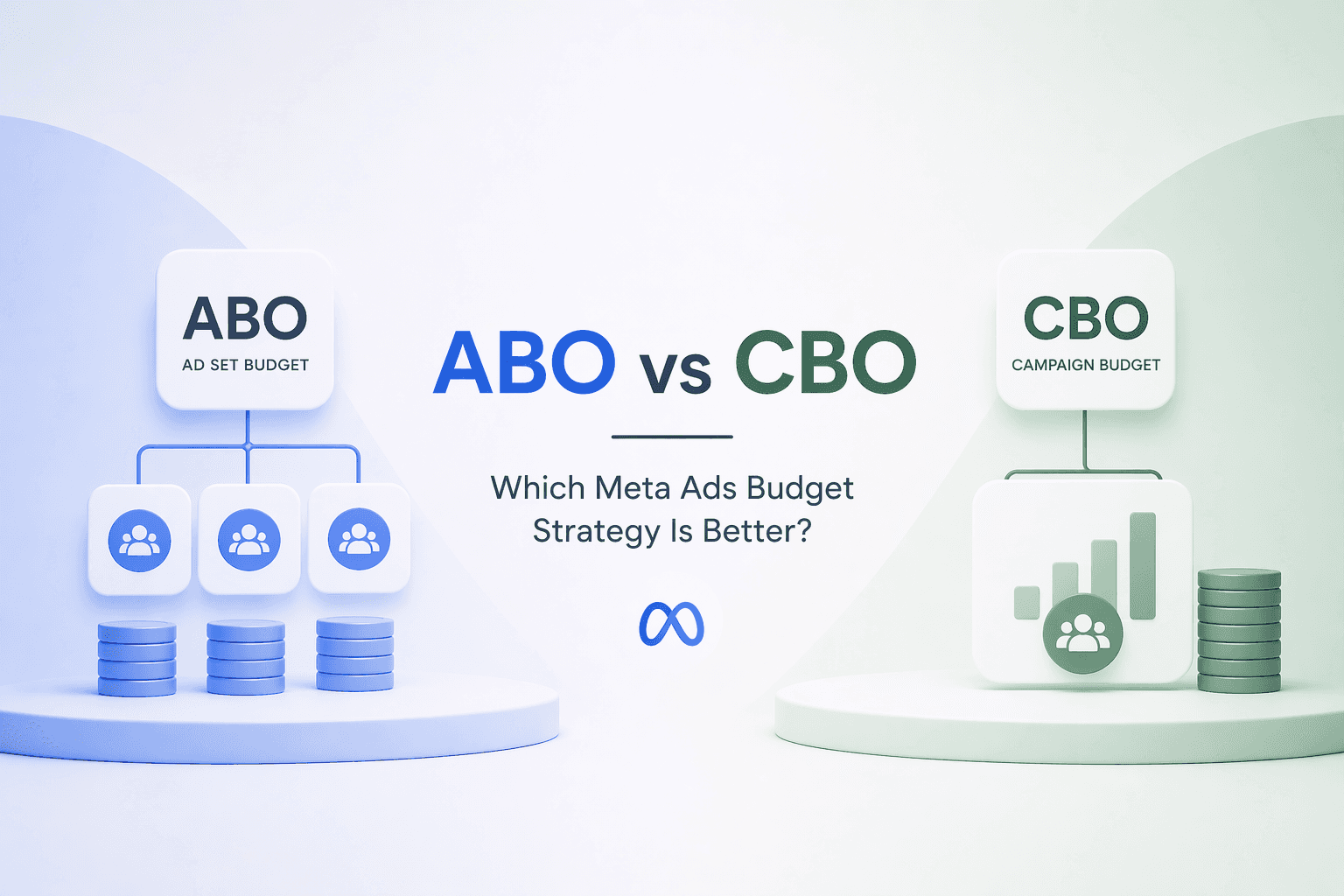
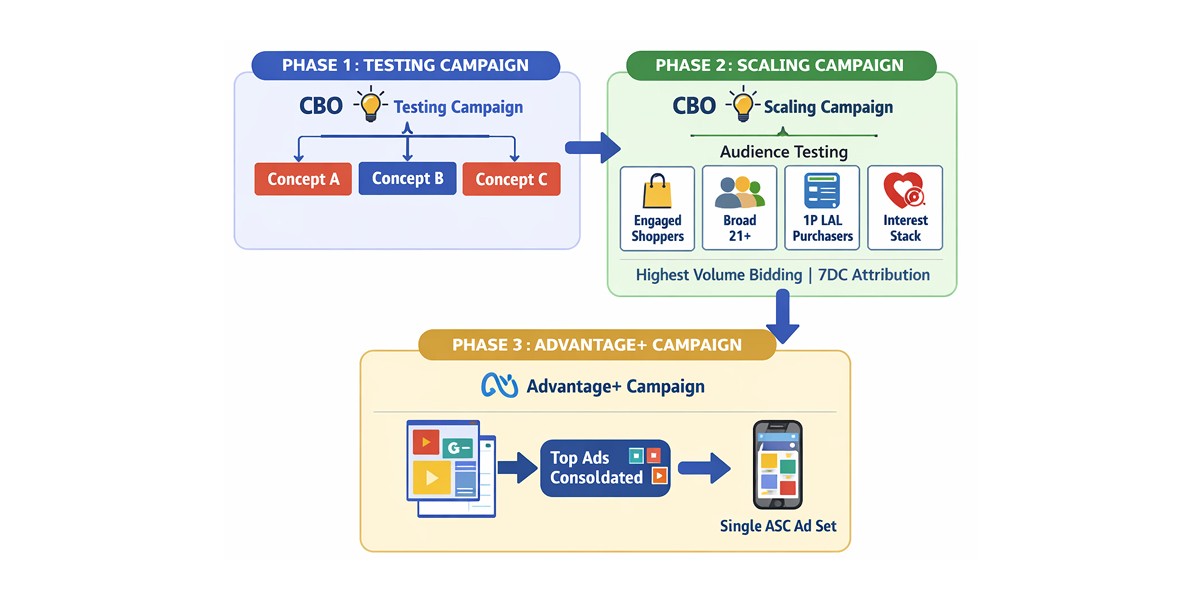
Structure is the Paid Media Expertise pillar's domain, and Meta Ads management is the sub-field Flighted specializes in most. The core thesis: consolidation beats segmentation because conversion data is siloed at the campaign level, and splitting it starves the model.
Consolidate ad sets to reduce learning fragmentation
Fewer, higher-signal ad sets learn faster. Small accounts running under ~100–200 conversions/month suffer small-sample bias when you split that volume across many ad sets — each one gets too little data to optimize. Collapse redundant ad sets so conversions concentrate where Meta can actually learn from them.
Use Advantage Plus Shopping where it actually fits
Advantage Plus Shopping (Meta's automated campaign type) works best with strong creative diversity and enough conversion volume to feed it. It is not for every brand. High-AOV (average order value), low-volume accounts should be cautious — thin conversion data plus automation often underperforms a controlled manual structure.
Match attribution windows to your purchase cycle
Set the window to how people actually buy:
Higher-AOV, considered purchases: 7-day click + 1-day view captures the longer deliberation.
Impulse, low-AOV purchases: a shorter window better reflects the fast decision.
Why you should measure MER instead of platform ROAS
Platform ROAS is not your source of truth. It's vulnerable to attribution distortion, and it ignores organic and cross-channel revenue entirely. When a customer sees a Meta ad, searches your brand, and buys through Google, platform ROAS may credit that sale to two channels or to none accurately. MER = Total Revenue ÷ Total Ad Spend closes that gap.
Metric | What It Measures | Limitation |
|---|---|---|
Platform ROAS | Revenue attributed by Meta to Meta ads | Over-credits Meta, ignores other channels |
MER | Total revenue relative to total ad spend | Blended view, doesn't isolate channel performance |
Blended ROAS | Revenue from all paid channels ÷ all paid spend | Better than platform ROAS, still has attribution gaps |
Use MER as your north star and platform ROAS as a directional signal for a single channel. For example, a brand spending $30k/month across Meta and Google should watch whether total revenue ÷ $30k holds, not whether Meta alone reports a 3.0.
How Meta Andromeda and algorithm changes impact mature DTC brands
Meta Andromeda is a retrieval-stage update announced by Meta Engineering in December 2024. It improved how the system narrows millions of ad candidates down to a few thousand for each person. Meta describes Andromeda as a retrieval update; in practice, marketers have found it increases the payoff for genuine creative diversity and reduces the edge of narrow audience targeting. The practical effect for mature brands: accounts leaning on a handful of tired creatives got hit hardest, because the system now has more variations to choose from and less reason to keep serving a stale one. Advantage+ pushed in the same direction. If your library is thin, the algorithm change didn't break your account — it exposed it.
Your Meta ROAS is sliding, and you spent last quarter proving it wasn't your fault. It usually isn't. Mature direct-to-consumer (DTC) brands hit this wall predictably: the same creative, the same audiences, and the same account structure that scaled you to $1M–$50M stop returning what they used to.
ROAS (Return on Ad Spend) is revenue attributed to your ads divided by the spend that produced it. A 3.0 platform ROAS means $3 back for every $1 in. When that number drops, most founders panic-cut spend or blame the algorithm. Both reactions make the problem worse.
This post gives you an operator's diagnostic path for a meta ads declining ROAS DTC brand: confirm the decline is real, isolate the true bottleneck, then fix creative, landing pages, audiences, and campaign structure in the right order. You'll get thresholds, benchmark ranges, and an ordered action plan you can run this week — not platitudes.
Key Takeaways
Confirm the decline is real first. Compare platform ROAS to backend Shopify revenue and check whether your attribution window changed before you touch a single campaign.
Diagnose the actual bottleneck before fixing anything. Declining ROAS is a symptom — creative fatigue, audience saturation, landing page conversion rate, and attribution drift each demand different fixes.
Fix creative fatigue first. For mature brands it's the lever that moves ROAS most, and First-Time Impression Rate tells you when a creative is dead.
Measure MER, not just platform ROAS. Platform ROAS over-credits Meta and ignores organic and cross-channel revenue.
Consolidate before you scale. Fewer, higher-signal ad sets recover the conversion data that fragmented structures starve.
Why Meta ROAS declines for mature DTC brands
Declining Meta ROAS is a lifecycle stage, not a brand failure. The mechanics that made a young account cheap — untapped audiences, fresh creative, generous attribution — erode as you scale. Expect it, then manage it.
Four forces drive most of the decline:
Creative fatigue. Your winning ads have saturated the people most likely to click them. Response drops even though the creative hasn't changed.
Audience saturation. You've reached your core prospecting pools and are now re-serving the same users at higher frequency.
Attribution drift. Post-iOS signal loss and attribution-window changes shrink the revenue Meta claims, even when real sales hold.
Algorithm updates. Shifts like Meta Andromeda and Advantage+ changed how the auction rewards creative diversity, penalizing stale libraries.
How to confirm the meta ads declining ROAS is real before fixing anything
Do not diagnose a decline you haven't verified. Reporting artifacts fake a drop constantly. Your first job is to separate a measurement change from a performance change.
Compare what Meta reports against what your bank sees. If platform ROAS fell 20% but backend Shopify revenue held flat against stable total spend, you have an attribution problem, not a performance problem. Those get fixed very differently.
Define MER here: Marketing Efficiency Ratio (MER) = total revenue ÷ total ad spend, across every channel. It ignores attribution entirely, so it's your truth serum.
Run this checklist before anything else:
Check the attribution window. Did someone switch from 7-day click to 1-day click, or drop the view-through window? A window change alone can drop reported ROAS 15–30% with zero change in real sales.
Compare to backend revenue. Pull total Shopify revenue for the same period. If it's stable, the decline is on the report, not the register.
Calculate MER. Divide total revenue by total ad spend for last month versus three months ago. If MER held, your business is fine and Meta's math is the issue.
A note on overlap: if you've read Flighted's "Meta Ads Strategy for DTC Brands – 2026 Edition," this post is the narrower, diagnostic companion — that one builds strategy, this one fixes a specific decline.
How to diagnose the root cause of declining Meta ROAS
Diagnosis only. Resist fixing anything until you've worked all seven steps — treating the wrong cause wastes a refresh cycle.
1. Audit attribution and reporting windows
Confirm the attribution setting hasn't changed across the comparison period. Rule out iOS-driven view-through erosion before blaming media. If the window moved, normalize both periods to the same setting before you compare.
2. Check creative fatigue signals
First-Time Impression Rate (FTIR) is the percentage of a creative's impressions served to people seeing it for the first time. A healthy prospecting creative reaches new people; a fatigued one recycles the same viewers. Falling FTIR is your earliest, cleanest fatigue signal. Treat frequency as a secondary confirmation — rising frequency with flat sales corroborates saturation but reacts slower than FTIR.
3. Analyze CPM and auction pressure
CPM (cost per 1,000 impressions) tells you what you're paying to reach people. Rising CPM with flat CTR (click-through rate, the percentage of impressions that get clicked) means you're paying more for the same traffic quality. That's auction pressure — seasonal competition or a shrinking effective audience — not necessarily your creative.
4. Review landing page conversion rate
CVR (conversion rate) is the percentage of visitors who purchase. Pull it from GA4 and Shopify. If CTR is stable but CVR fell, your problem is post-click, not the ad. A brand can have healthy ad metrics and still bleed ROAS on a slow or off-message page.
5. Assess audience saturation and frequency
Look at prospecting frequency on a rolling window. When you're re-serving core audiences repeatedly, incremental cost per acquisition (CPA — the cost to acquire one customer) climbs even as the ad stays "good." Saturation and creative fatigue often travel together; separate them by checking FTIR per audience.
6. Inspect campaign structure and Advantage Plus setup
Count your active ad sets and the conversions each generates. Fragmented structures split conversion data so thin that Meta's model can't learn. Check whether Advantage Plus Shopping is running where it shouldn't be, or missing where it should.
7. Rule out seasonality and external factors
Compare year-over-year, not just month-over-month. A January dip after Q4 is expected, not a crisis. Check whether category CPM inflation — competitors flooding your vertical — explains the rise. External pressure needs a different response than internal decay.
How to fix creative fatigue on Meta ads
For mature brands, creative is the primary lever. This is where Flighted's Creative Strategy pillar does the heaviest lifting — and it only pays off when it feeds the same account structure and landing pages the other two pillars own.
Set a weekly creative refresh cadence
Tie cadence to spend, not to a rigid ad count. As a working guide: brands under $50k/month can refresh net-new concepts every 1–2 weeks; brands spending $50k–$250k/month should ship new concepts weekly; above $250k/month, expect multiple net-new concepts per week. The higher your spend, the faster you burn through reachable audiences.
Test hooks and angles instead of whole ads
Don't rebuild ads from scratch — that's slow and hides what actually moved. A hook is the first 1–3 seconds of a video or the opening headline of a static. An angle is the USP or pain point you lead with. Fix the body, then swap hooks and angles:
Ship 3–5 new hooks against a proven body before rebuilding the concept.
Test one angle per audience so you can read the winner cleanly.
Keep the offer constant while you isolate hook and angle effects.
Rotate formats across UGC, VSLs, and statics
Diversity of format is what algorithm updates now reward. Run all three:
UGC (user-generated content): creator-style, native-feeling videos.
VSL (video sales letter): a longer, direct-response video that argues the full case.
Statics: image ads, including carousels.
Kill losers using First-Time Impression Rate
When a prospecting creative's FTIR falls below a workable threshold for your account — you're mostly re-serving old viewers rather than reaching new ones — pause it and replace it. Don't wait for ROAS to crater; FTIR turns before revenue does.
How to recover landing page conversion rate for mature DTC brands
The second lever is the page. Flighted's Landing Page Design pillar (Landing Page Optimization) exists because the best ad in your account dies on a page that doesn't match it. Ad and page are one funnel, not two teams.
Match landing page message to ad creative
Message match means the page's headline, hero image, and offer restate the promise the ad made. If the ad sells a specific angle, the page must open on that same angle. A mismatch spikes bounce and tanks CVR regardless of ad quality.
Rebuild mobile-first with compressed load times
Most Meta traffic is mobile. Design for the phone first and compress load times — a slow hero costs conversions before a visitor reads a word. Test on a mid-range phone on cellular, not your desktop.
Run ongoing A/B tests on hero, offer, and social proof
Test in a strict hierarchy so each result is clean:
Hero — headline and hero image first; it moves the most.
Offer/pricing — the value proposition and price framing second.
Social proof — reviews, UGC, and trust signals third.
Winning ad, dying page? Creative and landing pages are one funnel. A great hook still loses the sale on a page that doesn't match it. Flighted fixes both together so the click converts. Book a call to tighten your funnel.
How to handle audience saturation and retargeting decay
Mature brands exhaust their core audiences. When prospecting frequency climbs and retargeting pools stop converting, refresh the inputs rather than pushing harder on spent ones:
Refresh lookalike seeds. Seed from recent purchasers or high-LTV customers, not an all-time buyer list. A stale seed rebuilds a stale audience.
Expand interest targeting. Layer in adjacent interests to widen the reachable pool before frequency spikes.
Reduce retargeting windows. Shorten decayed windows so you stop paying to re-serve people who already declined.
Accept channel diversification. At scale, some demand has to come from outside Meta. Plan for it instead of forcing Meta to carry everything.
How to restructure Meta campaigns for scale
Structure is the Paid Media Expertise pillar's domain, and Meta Ads management is the sub-field Flighted specializes in most. The core thesis: consolidation beats segmentation because conversion data is siloed at the campaign level, and splitting it starves the model.
Consolidate ad sets to reduce learning fragmentation
Fewer, higher-signal ad sets learn faster. Small accounts running under ~100–200 conversions/month suffer small-sample bias when you split that volume across many ad sets — each one gets too little data to optimize. Collapse redundant ad sets so conversions concentrate where Meta can actually learn from them.
Use Advantage Plus Shopping where it actually fits
Advantage Plus Shopping (Meta's automated campaign type) works best with strong creative diversity and enough conversion volume to feed it. It is not for every brand. High-AOV (average order value), low-volume accounts should be cautious — thin conversion data plus automation often underperforms a controlled manual structure.
Match attribution windows to your purchase cycle
Set the window to how people actually buy:
Higher-AOV, considered purchases: 7-day click + 1-day view captures the longer deliberation.
Impulse, low-AOV purchases: a shorter window better reflects the fast decision.
Why you should measure MER instead of platform ROAS
Platform ROAS is not your source of truth. It's vulnerable to attribution distortion, and it ignores organic and cross-channel revenue entirely. When a customer sees a Meta ad, searches your brand, and buys through Google, platform ROAS may credit that sale to two channels or to none accurately. MER = Total Revenue ÷ Total Ad Spend closes that gap.
Metric | What It Measures | Limitation |
|---|---|---|
Platform ROAS | Revenue attributed by Meta to Meta ads | Over-credits Meta, ignores other channels |
MER | Total revenue relative to total ad spend | Blended view, doesn't isolate channel performance |
Blended ROAS | Revenue from all paid channels ÷ all paid spend | Better than platform ROAS, still has attribution gaps |
Use MER as your north star and platform ROAS as a directional signal for a single channel. For example, a brand spending $30k/month across Meta and Google should watch whether total revenue ÷ $30k holds, not whether Meta alone reports a 3.0.
How Meta Andromeda and algorithm changes impact mature DTC brands
Meta Andromeda is a retrieval-stage update announced by Meta Engineering in December 2024. It improved how the system narrows millions of ad candidates down to a few thousand for each person. Meta describes Andromeda as a retrieval update; in practice, marketers have found it increases the payoff for genuine creative diversity and reduces the edge of narrow audience targeting. The practical effect for mature brands: accounts leaning on a handful of tired creatives got hit hardest, because the system now has more variations to choose from and less reason to keep serving a stale one. Advantage+ pushed in the same direction. If your library is thin, the algorithm change didn't break your account — it exposed it.
Looking for Meta ads support?
We're a small, hardworking, US-based team. Book a call and get a free audit today.
Meta ads benchmarks for mature DTC brands
Use these as ranges, not promises. They vary by price point, offer, and creative quality. They're industry benchmarks for orientation — not guarantees for your account.
First-Time Impression Rate targets
A healthy prospecting creative keeps FTIR high — most impressions going to new viewers. When FTIR falls below a workable threshold for your account and stays there, treat that creative as fatigued and replace it. Set the threshold by watching where your own CPA starts climbing as FTIR drops.
Frequency thresholds for prospecting
Prospecting: performance tends to degrade past roughly 2.5–3.0 on a rolling window.
Retargeting: tolerates higher frequency, roughly 4–7, before decay sets in.
CTR, CVR, and CPM ranges by vertical
The table below is industry-benchmark ranges that vary by price point and offer — not guarantees. All-industry median CTR sits near 2.2% and median CPM near $14; broad CPM runs roughly $7–$18, with beauty and cosmetics often running higher — roughly 20–40% above the all-industry median depending on sub-vertical.
Vertical | Typical CTR Range | Typical CVR Range | Typical CPM Range |
|---|---|---|---|
Beauty/Skincare | 0.9%–2.1% | 1.5%–4% | $18–$34 |
Apparel/Fashion | 1.0%–2.5% | 1.5%–3.5% | $7–$18 |
CPG/Food & Bev | 1.2%–2.8% | 2%–4% | $7–$16 |
Consumer Tech | 0.8%–2.2% | 1.5%–3% | $10–$20 |
Blended ROAS and MER targets
Tie your target MER to gross margin — high-margin brands can run a lower MER and stay profitable. As a rule, break-even MER ≈ 1 ÷ gross margin %. A brand at 70% gross margin breaks even near a 1.43 MER; a brand at 40% margin needs roughly 2.5. Set your healthy MER above break-even by whatever cushion funds your overhead and growth.
How to rebuild Meta ROAS without cutting spend
Cutting spend resets learning and shrinks the data your account needs to recover. Rebuild in order, with all three pillars working together — Paid Media Expertise, Creative Strategy, and Landing Page Design.
Stabilize measurement with MER and incrementality. Lock MER as your source of truth and, where possible, run an incrementality read so you know what Meta is actually driving before you change anything.
Ship a creative sprint tied to new angles. Produce net-new concepts around fresh angles and hooks, not variations of the tired winner.
Rebuild the landing page around winning messages. Take the angles that win in-feed and rebuild the page to match them, mobile-first.
Consolidate campaigns and reset learning. Collapse fragmented ad sets so conversion data concentrates and the model can relearn.
Scale spend only after leading indicators recover. Wait for FTIR, frequency, and landing page CVR to move back into healthy ranges before you push budget. Scaling into a broken funnel just spends faster.
Conclusion
A declining Meta ROAS for a mature DTC brand is a solvable, predictable stage — not a verdict on your brand. Work the sequence: confirm the decline is real against backend revenue and MER, diagnose the true bottleneck across the seven steps, then fix creative fatigue first, recover your landing page CVR, refresh saturated audiences, and consolidate your structure so the algorithm can learn. Measure MER as your source of truth and let platform ROAS be a directional signal. Do not cut spend before your leading indicators — FTIR, frequency, and landing page conversion rate — recover; scale only after they do. Run it in that order and you rebuild ROAS without starving the account of the data it needs to climb back.
Frequently asked questions about declining Meta ROAS
What is a normal Meta ROAS fluctuation versus a real performance problem?
Day-to-day and week-to-week swings of 10–20% are normal noise, especially at lower spend. Treat it as a real problem only when the drop persists over 2–4 weeks and MER falls alongside platform ROAS.
How long does it typically take to recover Meta ROAS after identifying the root cause?
Expect 2–6 weeks once you ship the right fix, since creative refreshes and consolidated campaigns need a learning period. Recovery is faster for a landing page fix and slower for a full creative and structure rebuild.
Should I pause Meta ad spend while ROAS is declining?
No — a full pause resets learning and forces the account to relearn when you return. Only pause if every order is unprofitable on MER; otherwise fix the funnel while spend keeps the data flowing.
How often should a mature DTC brand refresh Meta ad creative?
Weekly to bi-weekly at scale, with cadence tied to spend. Brands above $250k/month should expect multiple net-new concepts per week; smaller accounts can refresh every 1–2 weeks.
Is Advantage Plus Shopping effective for mature DTC brands with declining ROAS?
It helps when you have strong creative diversity and enough conversion volume, since it leans on both. It does not solve creative fatigue on its own — feed it fresh creative or it recycles the same tired assets.
Why does my Shopify revenue not match Meta's reported ROAS?
Post-iOS attribution gaps mean Meta estimates conversions and over- or under-credits itself. Use MER (total revenue ÷ total ad spend) as your source of truth instead of reconciling the two figures directly.
Related Posts
Related Posts
Related Posts
Related Posts
























































Ready to talk?
New York, NY 11217
hello@flighted.co
© Flighted, 2026
Ready to talk?
New York, NY 11217
hello@flighted.co
© Flighted, 2026