Best Meta Ads Account Structure for Large Ecommerce Brands (Past $100k/Month)
Meta Ads
July 1, 2026

Table Of Contents
Most Meta Ads account structure advice tops out around $50k-$100k/month. At that level, consolidation is king and complexity is your enemy.
At $250k+/month, the math changes.
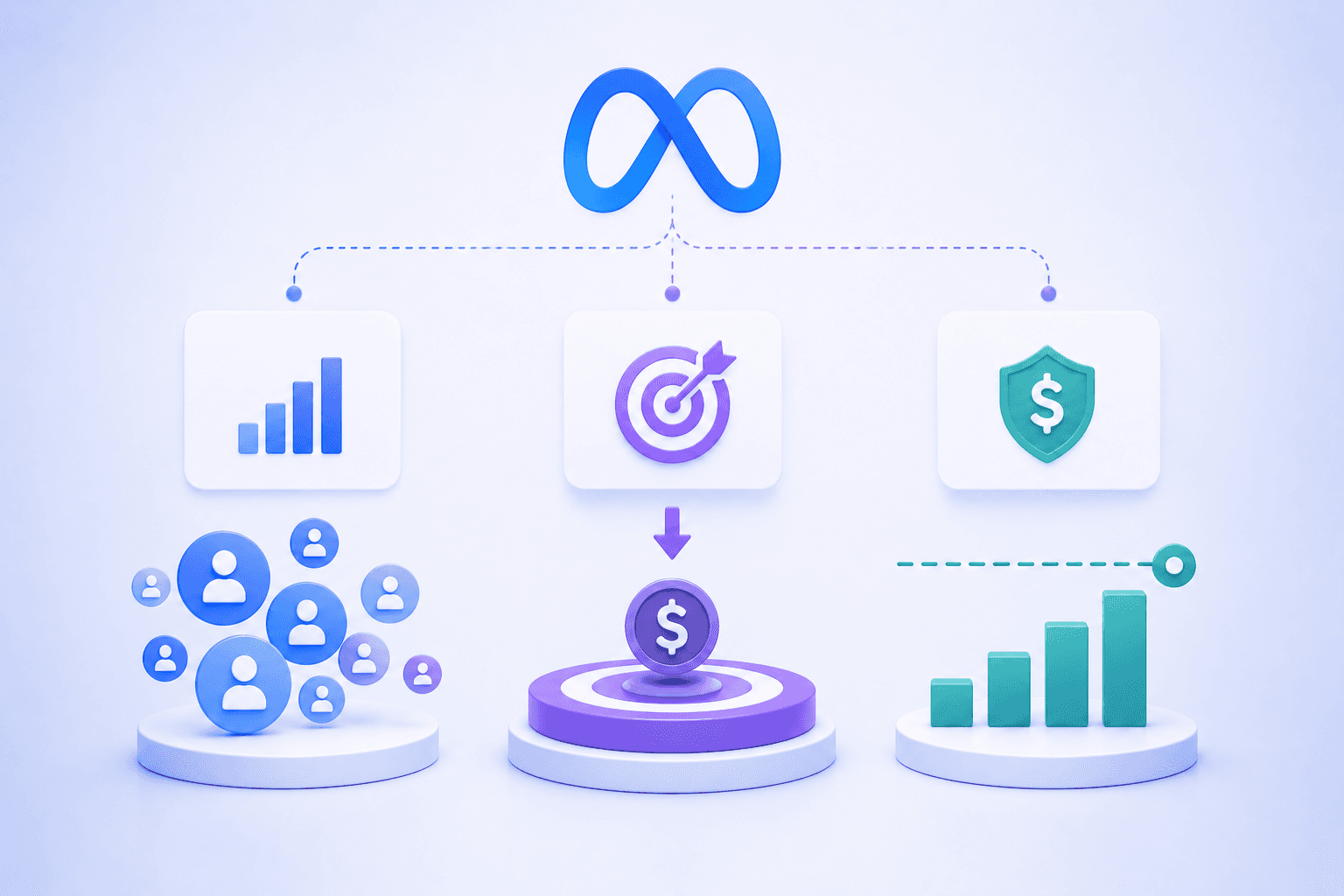
You now generate enough conversion volume per campaign to sustain multiple campaign types without starving any single one of data. Strategic segmentation earns its keep. Bidding complexity pays for itself. And incrementality testing becomes statistically viable for the first time.
This post breaks down the enterprise meta ads account structure that high-spend DTC brands need: multi-campaign frameworks, ad account strategy, bidding approaches, org design, and incrementality testing. Every recommendation is built on what we see working across Flighted's portfolio of brands spending $250k-$1M+/month on Meta.
If you are spending $50k-$250k/month and looking to bridge into enterprise territory, start with our guide on the best Meta Ads account structure before reading this post.
Key Takeaways
At $250k+/month, each campaign can sustain 100+ conversions independently, making multi-campaign structures viable without fragmenting data.
A five-campaign framework (testing, scaling, promo, advertorial, DPA) gives each function its own learning environment.
Page strategy and multi-account setups are operational requirements at this spend, not optional.
Bidding complexity (cost caps, bid caps, target ROAS (Return on Ad Spend)) delivers 3-4% efficiency gains that translate to real dollars at scale.
Launch 100-300+ new ads per month with concept-level testing across persona, angle, and offer.
Incrementality testing finally becomes viable, and it will likely reshape your retargeting budget.
1. Why $250k+/Month Is a Different Game
At $250k+/month, media buying correctly is a 10-20% efficiency lift. That is $25k-$50k/month in recovered spend or incremental revenue. Below $50k/month, account structure is barely a lever.
The reason is data volume.
Conversion data is siloed at the campaign level inside Meta. If you spend $50k/month split across four campaigns, each campaign gets roughly 25 conversions per month. Meta's algorithm needs 50+ conversions per week to exit the learning phase reliably. At 25/month, every campaign is perpetually data-starved.
At $250k+/month, each campaign can sustain 100+ conversions independently. That changes the calculus on segmentation entirely.
Consolidation still beats unnecessary fragmentation at any spend level. That principle from foundational account structure does not go away. But at enterprise volume, strategic segmentation earns its keep because each campaign type clears meaningful weekly conversion thresholds on its own.
Do not segment for the sake of organization. Segment because each function genuinely needs its own learning environment.
2. The Enterprise Meta Ads Account Structure: Multi-Campaign Frameworks
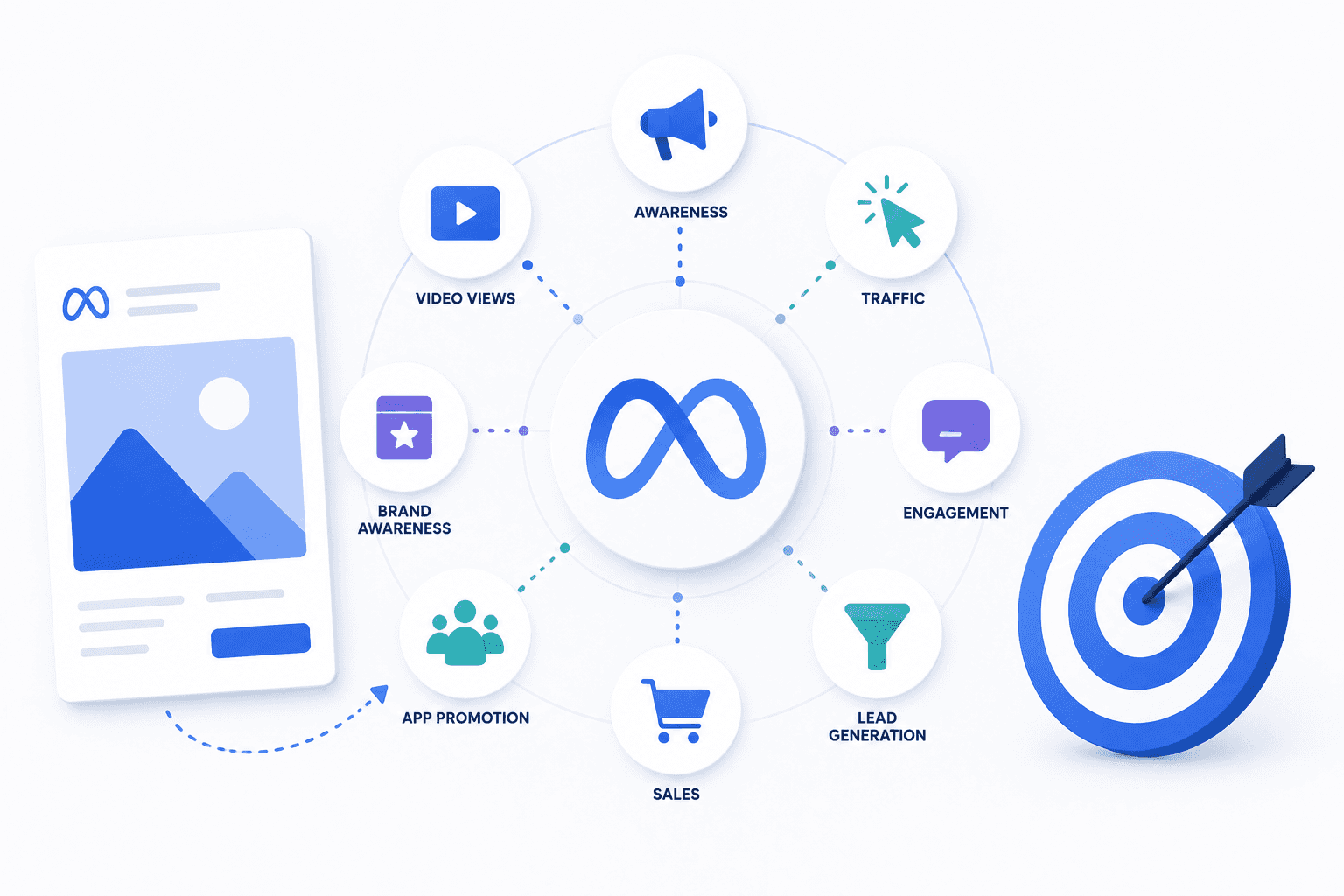
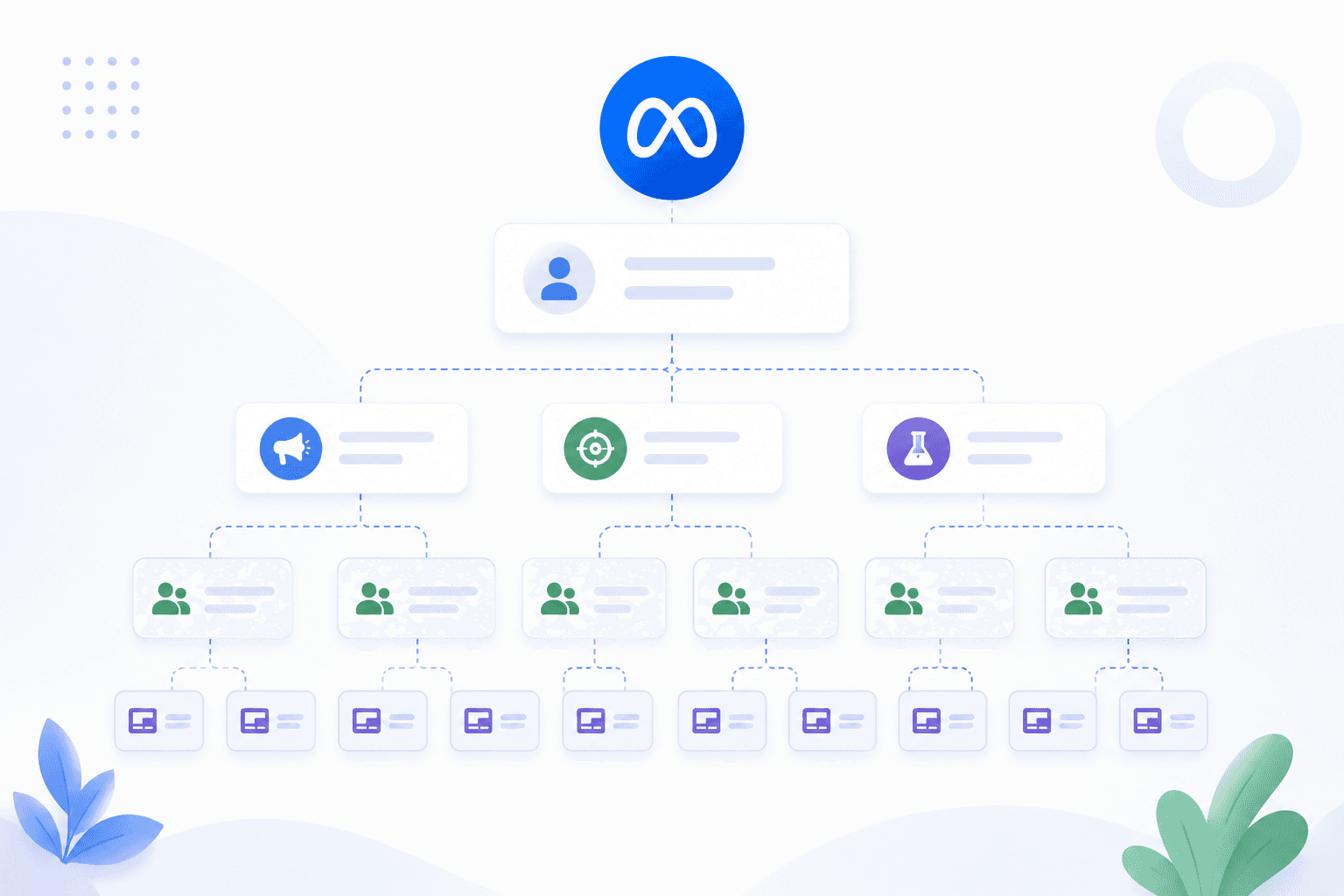
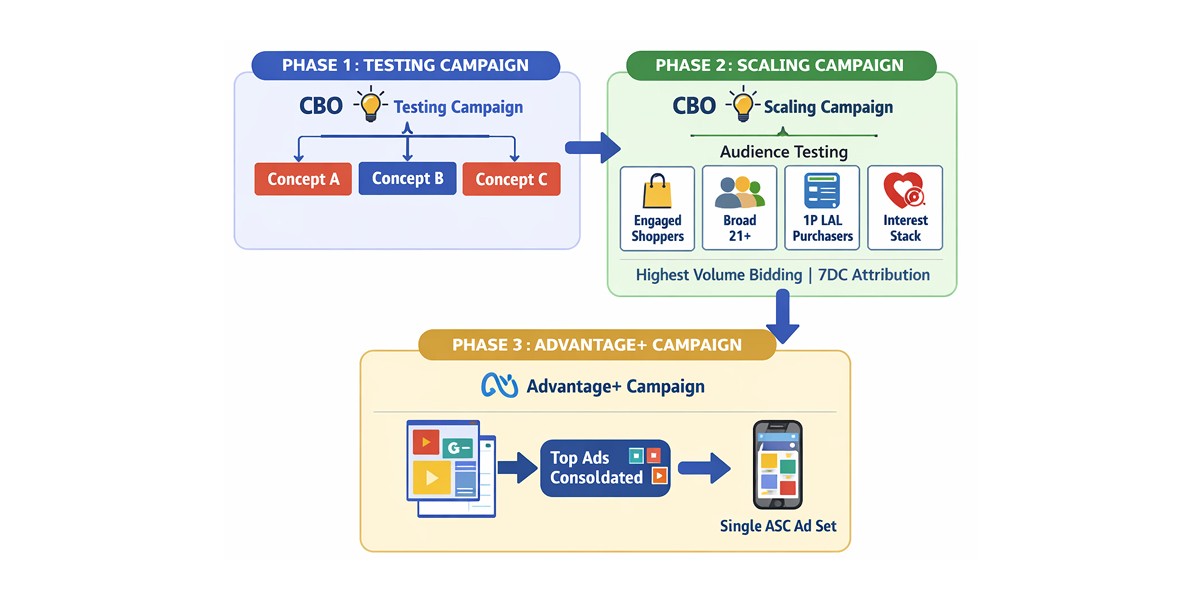
Below is an illustrative example of how a DTC brand spending roughly $300k/month might structure five campaigns. This is not a universal template. Adapt the ratios and campaign types to your product, margin, and creative volume.
Campaign 1: Testing (ABO)
Use Advantage Budget Optimization off (ABO, or Ad Set Budget Optimization) so you control budget allocation to each ad set.
Segment ad sets by concept: persona x angle x offer. Each ad set tests one distinct messaging concept.
Run 3-5 creatives per ad set. More than 5 dilutes learning; fewer than 3 limits variation.
Exclude existing customers from this campaign. You are testing new acquisition messaging.
Use 7-day click attribution. This gives Meta enough signal without over-crediting view-through conversions.
Campaign 2: Scaling (CBO, Cost Caps)
Use Campaign Budget Optimization (CBO) with a single ad set. Let Meta allocate across your best performers.
Apply cost caps to maintain CPA (Cost Per Acquisition) discipline as you scale.
Graduate top performers from testing into this campaign every 1-2 weeks.
Do not turn off the original ad in testing when you move it to scaling. Let it continue running in both places. Meta treats each campaign's learning independently.
Campaign 3: Promo
Segment promotional campaigns so high creative turnover during sales events does not disrupt your testing and scaling campaigns.
Promos introduce spikes in spend and conversion behavior that skew learning in your core campaigns.
Keep this campaign separate, run it during promotional windows, and pause it between events.
Campaign 4: Advertorial
Pull advertorials into their own campaign once they represent roughly 30% or more of total spend.
Advertorials have a different funnel. The user clicks to a content page, then converts from there. KPI this campaign on its own CPA and ROAS metrics, not blended account numbers.
This separation also lets you test advertorial-specific landing pages without muddying your core creative performance data.
Campaign 5: DPA (Dynamic Product Ads)
DPA campaigns primarily serve existing-customer retargeting.
Run DPA on incremental attribution. The question is not "did they convert after seeing the ad" but "would they have converted anyway."
Keep DPA spend low, in line with frequency targets. DPA ROAS will always look strong because you are showing ads to people who already know and buy from you.
For additional context on how DTC brands approach Meta Ads strategy at different spend levels, see our Meta Ads strategy for DTC brands.
3. Multiple Ad Accounts and Page Strategy
Why run multiple ad accounts:
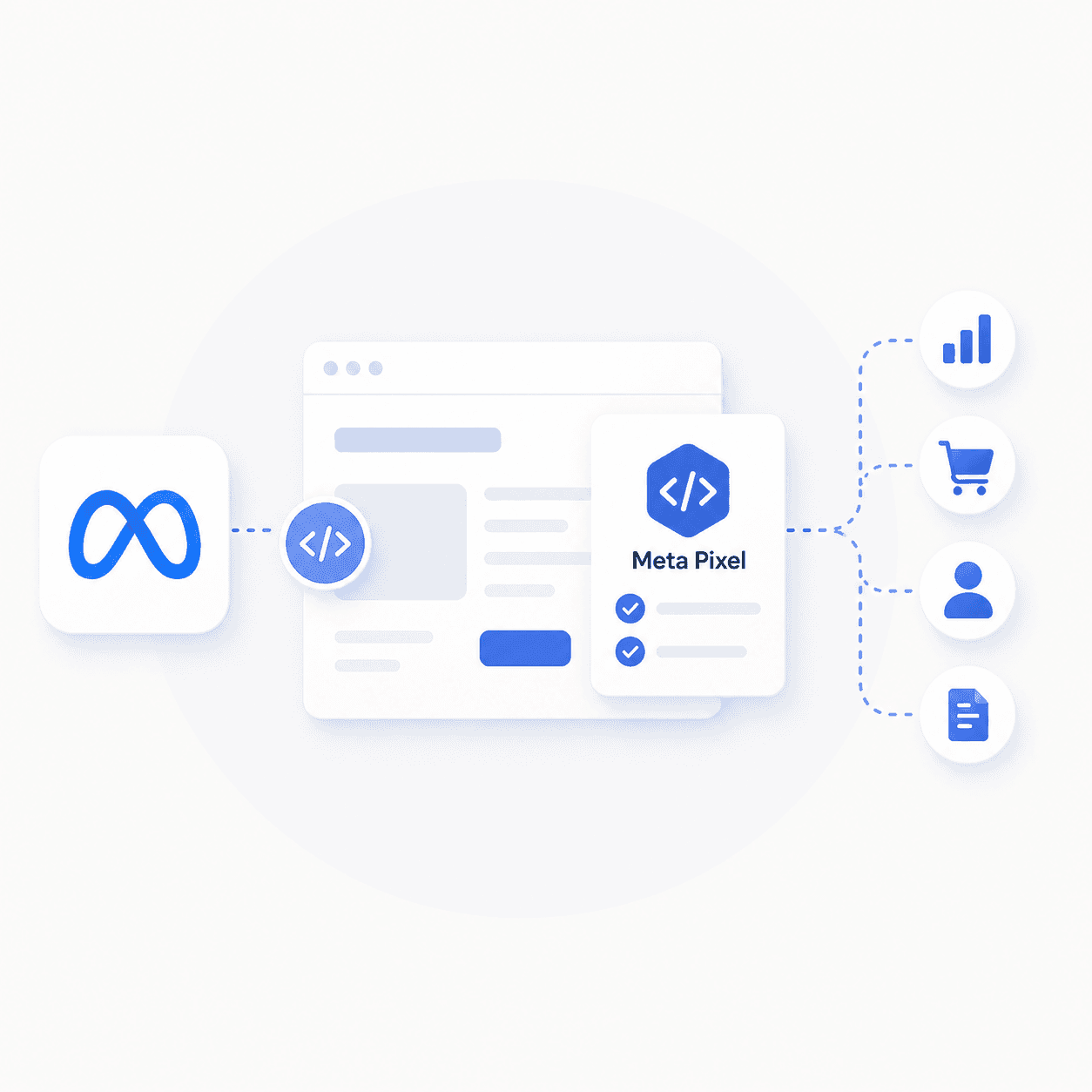
A second ad account (same pixel, different bid logic) can win different auction segments and diversify your exposure.
It also derisks against ad account bans and billing failures. At $250k+/month, a 48-hour account suspension costs five figures in lost spend and momentum.
Keep the same pixel across accounts so conversion data feeds a unified model.
Page strategy is not optional:
Meta caps active ads per page at roughly 300-500. At enterprise creative volume (100-300+ new ads per month), you will hit this ceiling fast.
Solutions:
Duplicate pages with minor branding differences (different logo color, slightly different page name). This is standard practice at scale.
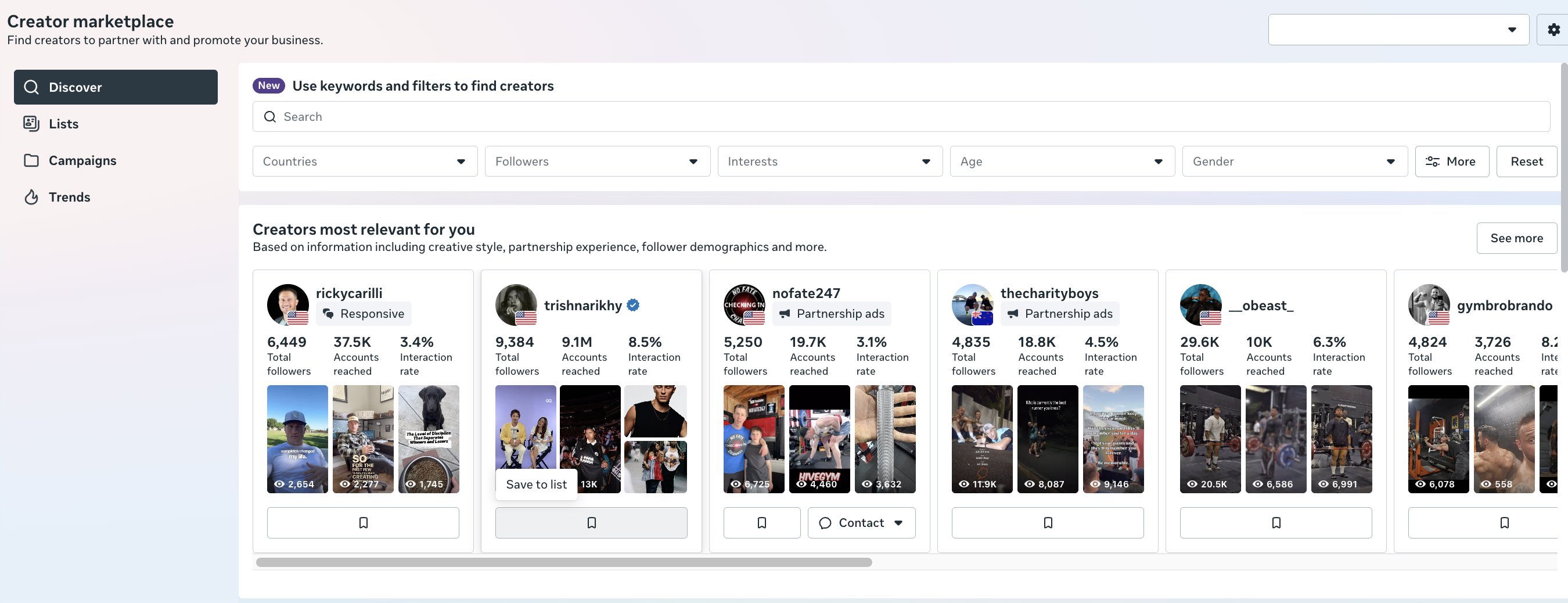
Whitelisting and partnership ads let you run ads from influencer or partner pages, which do not count against your primary page limit.
Regional pages serve both the ad cap problem and geo-specific messaging needs.
International considerations:
Do not segment countries at the ad-account level. This dramatically increases operational labor and fragments your data.
Use campaign-name conventions or country filter rules within a single account to manage international targeting.
Only segment ad accounts by country if local currency billing requirements force it.
4. Bidding Complexity Earns Its Keep
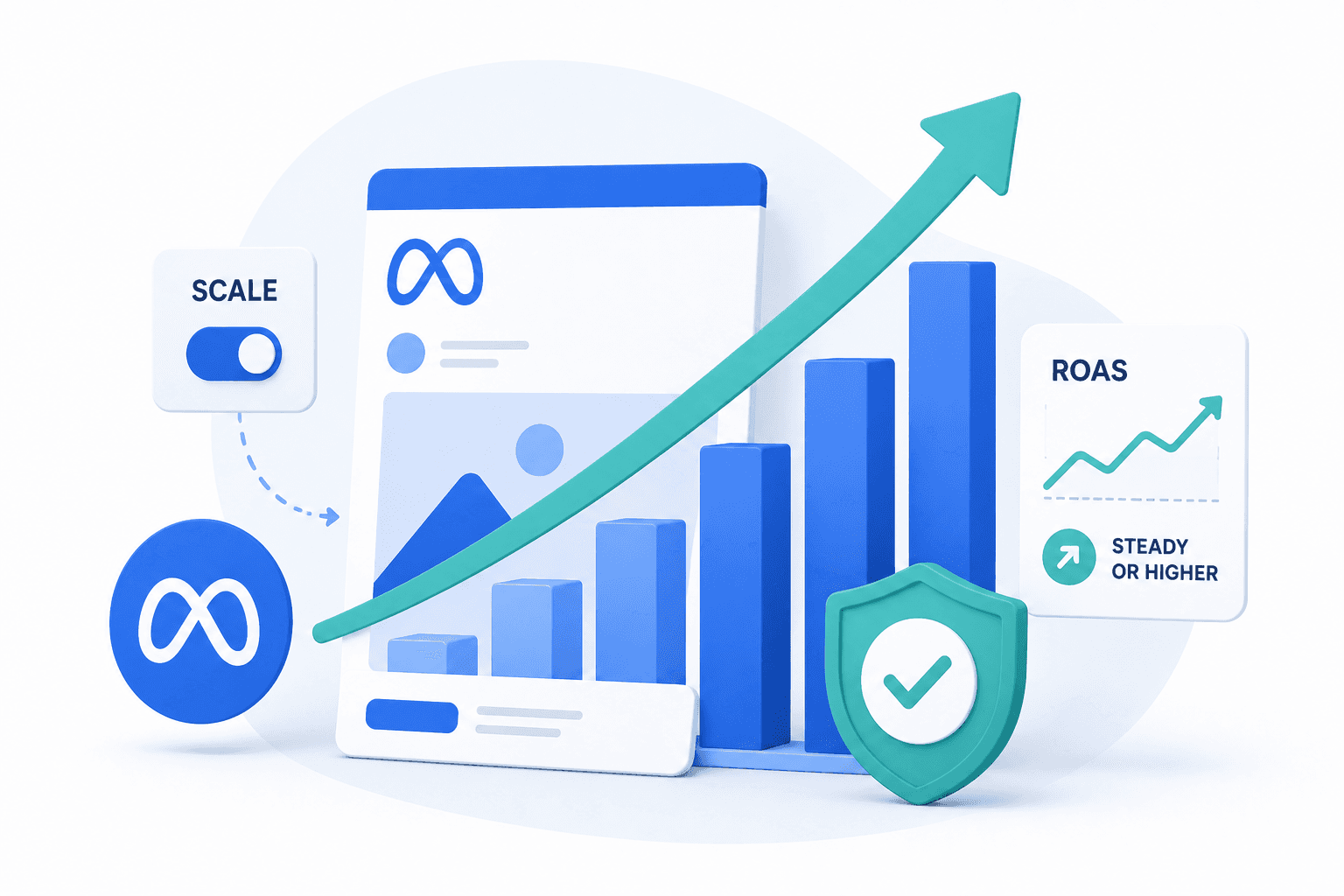
At $50k/month, running maximize conversions and leaving it alone is the right call. At $250k+/month, a 3-4% efficiency gain from sophisticated bidding translates to $7,500-$10,000/month in savings or incremental revenue.
That is worth a dedicated buyer's time.
Preferred bidding structure:
Run CBO with minimum and maximum spend limits on roughly 60% of your budget. This gives Meta flexibility within guardrails.
Let the remaining 40% flow wherever Meta's algorithm wants. This captures opportunities your manual allocation would miss.
Layer in bid caps, cost caps, maximize conversion value, or target ROAS alongside maximize-conversions campaigns. Each bid strategy wins different auction types.
Seasonal rotation:
Q4 and Black Friday: shift toward CBO to maximize efficiency during peak demand. Auction competition increases, and CBO lets Meta adapt in real time.
Q1: shift toward ABO for lower-risk budget control and heavy creative testing when CPMs (Cost Per Mille) drop and testing is cheaper.
Do not run one bid strategy year-round. Your bidding approach should rotate with your strategic priorities.
5. Org and Workflow at Enterprise Scale
At $250k+/month, one media buyer cannot manage the full account effectively. The volume of decisions, creative launches, and optimizations requires dedicated roles.
Dedicated buyers per campaign type:
Assign media buyers to specific campaign functions (testing, scaling, promo). Each campaign type has different optimization cadences and KPIs.
Creative throughput:
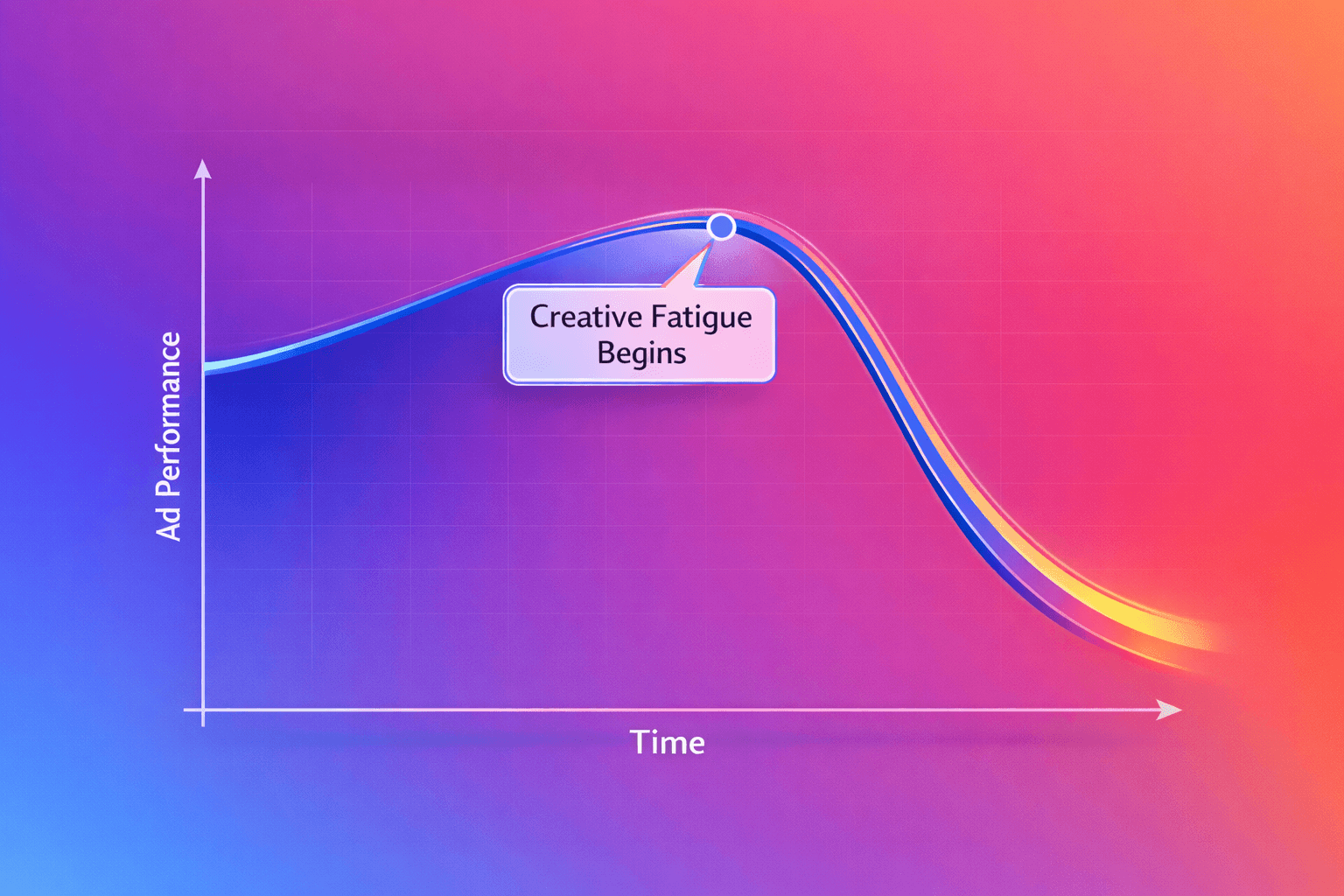
Launch 100-300+ new ads per month. This is not a suggestion. At enterprise spend, creative fatigue is the primary performance decay driver.
Two campaigns with roughly 10 ad sets each supports this volume while maintaining structured testing.
Concept-level testing:
The real unlock at enterprise scale is testing at the concept level, not just the creative level. Use a persona x angle x offer framework.
Each campaign generates enough conversion volume to KPI by concept rather than by individual ad. This tells you which messaging themes work, not just which thumbnail or hook performs.
Testing budget formula:
Daily test budget = target conversions x expected CPA / test duration in days.
Example: if your target is 50 conversions to validate a concept at a $40 CPA over 7 days, your daily test budget is (50 x $40) / 7 = $286/day.
Override protocol for turning off high-spend ads:
Before pausing a high-spend ad, record its 7-day trailing CPA at both the campaign and account level.
Compare the next 7 days after the change. Expect day one to look worse. Performance typically normalizes by day 3-4.
Do not make reactive decisions based on a single day's data after pausing a high-spend creative.
At this level of execution, the three pillars of performance growth work together. Paid media expertise dictates structure and bidding. Creative strategy drives the 100-300+ monthly ad launches. And landing page optimization ensures the traffic you are paying for actually converts. These are not separate workstreams. They are interdependent, and treating them as such is what separates enterprise-level performance from scaled-up mid-market execution.
Most Meta Ads account structure advice tops out around $50k-$100k/month. At that level, consolidation is king and complexity is your enemy.
At $250k+/month, the math changes.
You now generate enough conversion volume per campaign to sustain multiple campaign types without starving any single one of data. Strategic segmentation earns its keep. Bidding complexity pays for itself. And incrementality testing becomes statistically viable for the first time.
This post breaks down the enterprise meta ads account structure that high-spend DTC brands need: multi-campaign frameworks, ad account strategy, bidding approaches, org design, and incrementality testing. Every recommendation is built on what we see working across Flighted's portfolio of brands spending $250k-$1M+/month on Meta.
If you are spending $50k-$250k/month and looking to bridge into enterprise territory, start with our guide on the best Meta Ads account structure before reading this post.
Key Takeaways
At $250k+/month, each campaign can sustain 100+ conversions independently, making multi-campaign structures viable without fragmenting data.
A five-campaign framework (testing, scaling, promo, advertorial, DPA) gives each function its own learning environment.
Page strategy and multi-account setups are operational requirements at this spend, not optional.
Bidding complexity (cost caps, bid caps, target ROAS (Return on Ad Spend)) delivers 3-4% efficiency gains that translate to real dollars at scale.
Launch 100-300+ new ads per month with concept-level testing across persona, angle, and offer.
Incrementality testing finally becomes viable, and it will likely reshape your retargeting budget.
1. Why $250k+/Month Is a Different Game
At $250k+/month, media buying correctly is a 10-20% efficiency lift. That is $25k-$50k/month in recovered spend or incremental revenue. Below $50k/month, account structure is barely a lever.
The reason is data volume.
Conversion data is siloed at the campaign level inside Meta. If you spend $50k/month split across four campaigns, each campaign gets roughly 25 conversions per month. Meta's algorithm needs 50+ conversions per week to exit the learning phase reliably. At 25/month, every campaign is perpetually data-starved.
At $250k+/month, each campaign can sustain 100+ conversions independently. That changes the calculus on segmentation entirely.
Consolidation still beats unnecessary fragmentation at any spend level. That principle from foundational account structure does not go away. But at enterprise volume, strategic segmentation earns its keep because each campaign type clears meaningful weekly conversion thresholds on its own.
Do not segment for the sake of organization. Segment because each function genuinely needs its own learning environment.
2. The Enterprise Meta Ads Account Structure: Multi-Campaign Frameworks
Below is an illustrative example of how a DTC brand spending roughly $300k/month might structure five campaigns. This is not a universal template. Adapt the ratios and campaign types to your product, margin, and creative volume.
Campaign 1: Testing (ABO)
Use Advantage Budget Optimization off (ABO, or Ad Set Budget Optimization) so you control budget allocation to each ad set.
Segment ad sets by concept: persona x angle x offer. Each ad set tests one distinct messaging concept.
Run 3-5 creatives per ad set. More than 5 dilutes learning; fewer than 3 limits variation.
Exclude existing customers from this campaign. You are testing new acquisition messaging.
Use 7-day click attribution. This gives Meta enough signal without over-crediting view-through conversions.
Campaign 2: Scaling (CBO, Cost Caps)
Use Campaign Budget Optimization (CBO) with a single ad set. Let Meta allocate across your best performers.
Apply cost caps to maintain CPA (Cost Per Acquisition) discipline as you scale.
Graduate top performers from testing into this campaign every 1-2 weeks.
Do not turn off the original ad in testing when you move it to scaling. Let it continue running in both places. Meta treats each campaign's learning independently.
Campaign 3: Promo
Segment promotional campaigns so high creative turnover during sales events does not disrupt your testing and scaling campaigns.
Promos introduce spikes in spend and conversion behavior that skew learning in your core campaigns.
Keep this campaign separate, run it during promotional windows, and pause it between events.
Campaign 4: Advertorial
Pull advertorials into their own campaign once they represent roughly 30% or more of total spend.
Advertorials have a different funnel. The user clicks to a content page, then converts from there. KPI this campaign on its own CPA and ROAS metrics, not blended account numbers.
This separation also lets you test advertorial-specific landing pages without muddying your core creative performance data.
Campaign 5: DPA (Dynamic Product Ads)
DPA campaigns primarily serve existing-customer retargeting.
Run DPA on incremental attribution. The question is not "did they convert after seeing the ad" but "would they have converted anyway."
Keep DPA spend low, in line with frequency targets. DPA ROAS will always look strong because you are showing ads to people who already know and buy from you.
For additional context on how DTC brands approach Meta Ads strategy at different spend levels, see our Meta Ads strategy for DTC brands.
3. Multiple Ad Accounts and Page Strategy
Why run multiple ad accounts:
A second ad account (same pixel, different bid logic) can win different auction segments and diversify your exposure.
It also derisks against ad account bans and billing failures. At $250k+/month, a 48-hour account suspension costs five figures in lost spend and momentum.
Keep the same pixel across accounts so conversion data feeds a unified model.
Page strategy is not optional:
Meta caps active ads per page at roughly 300-500. At enterprise creative volume (100-300+ new ads per month), you will hit this ceiling fast.
Solutions:
Duplicate pages with minor branding differences (different logo color, slightly different page name). This is standard practice at scale.
Whitelisting and partnership ads let you run ads from influencer or partner pages, which do not count against your primary page limit.
Regional pages serve both the ad cap problem and geo-specific messaging needs.
International considerations:
Do not segment countries at the ad-account level. This dramatically increases operational labor and fragments your data.
Use campaign-name conventions or country filter rules within a single account to manage international targeting.
Only segment ad accounts by country if local currency billing requirements force it.
4. Bidding Complexity Earns Its Keep
At $50k/month, running maximize conversions and leaving it alone is the right call. At $250k+/month, a 3-4% efficiency gain from sophisticated bidding translates to $7,500-$10,000/month in savings or incremental revenue.
That is worth a dedicated buyer's time.
Preferred bidding structure:
Run CBO with minimum and maximum spend limits on roughly 60% of your budget. This gives Meta flexibility within guardrails.
Let the remaining 40% flow wherever Meta's algorithm wants. This captures opportunities your manual allocation would miss.
Layer in bid caps, cost caps, maximize conversion value, or target ROAS alongside maximize-conversions campaigns. Each bid strategy wins different auction types.
Seasonal rotation:
Q4 and Black Friday: shift toward CBO to maximize efficiency during peak demand. Auction competition increases, and CBO lets Meta adapt in real time.
Q1: shift toward ABO for lower-risk budget control and heavy creative testing when CPMs (Cost Per Mille) drop and testing is cheaper.
Do not run one bid strategy year-round. Your bidding approach should rotate with your strategic priorities.
5. Org and Workflow at Enterprise Scale
At $250k+/month, one media buyer cannot manage the full account effectively. The volume of decisions, creative launches, and optimizations requires dedicated roles.
Dedicated buyers per campaign type:
Assign media buyers to specific campaign functions (testing, scaling, promo). Each campaign type has different optimization cadences and KPIs.
Creative throughput:
Launch 100-300+ new ads per month. This is not a suggestion. At enterprise spend, creative fatigue is the primary performance decay driver.
Two campaigns with roughly 10 ad sets each supports this volume while maintaining structured testing.
Concept-level testing:
The real unlock at enterprise scale is testing at the concept level, not just the creative level. Use a persona x angle x offer framework.
Each campaign generates enough conversion volume to KPI by concept rather than by individual ad. This tells you which messaging themes work, not just which thumbnail or hook performs.
Testing budget formula:
Daily test budget = target conversions x expected CPA / test duration in days.
Example: if your target is 50 conversions to validate a concept at a $40 CPA over 7 days, your daily test budget is (50 x $40) / 7 = $286/day.
Override protocol for turning off high-spend ads:
Before pausing a high-spend ad, record its 7-day trailing CPA at both the campaign and account level.
Compare the next 7 days after the change. Expect day one to look worse. Performance typically normalizes by day 3-4.
Do not make reactive decisions based on a single day's data after pausing a high-spend creative.
At this level of execution, the three pillars of performance growth work together. Paid media expertise dictates structure and bidding. Creative strategy drives the 100-300+ monthly ad launches. And landing page optimization ensures the traffic you are paying for actually converts. These are not separate workstreams. They are interdependent, and treating them as such is what separates enterprise-level performance from scaled-up mid-market execution.
Looking for Meta ads support?
We're a small, hardworking, US-based team. Book a call and get a free audit today.
6. Incrementality Testing Becomes Viable
At $250k+/month, you generate enough conversion volume for statistically significant lift studies. Below this threshold, sample sizes are too small to draw reliable conclusions.
What incrementality testing answers:
Attribution tells you who converted after seeing your ad. Incrementality testing answers the harder question: "Would this conversion have happened anyway?"
This distinction matters most for retargeting and DPA campaigns, where the audience is already familiar with your brand.
How to run it:
Meta's Conversion Lift tool uses randomized holdout groups. A percentage of your target audience is excluded from seeing the ad, and you compare conversion rates between the exposed and holdout groups.
Run tests for 2-4 weeks minimum to reach statistical significance at enterprise spend levels.
What you will likely find:
Retargeting is less incremental than it looks. This is the most common finding across brands that run lift studies. A significant portion of retargeting conversions would have happened organically.
Cold prospecting is more incremental than your attribution model suggests. Use incrementality data to justify scaling cold prospecting budgets.
Use incrementality testing to validate your retargeting allocation and make the case for shifting spend toward top-of-funnel acquisition.
7. The Support Layers: Retargeting, DPAs, and Existing Customers
Retargeting is a capped supporting layer. It is not a growth driver.
The question to ask about retargeting spend is "where can we spend less," not "where can we spend more." High retargeting ROAS is a measurement artifact, not a signal to increase budget.
The DPA death spiral:
Brand sees strong DPA ROAS (because DPAs target warm audiences).
Brand increases DPA budget.
To fund DPA, brand cuts creative production and top-of-funnel prospecting spend.
Without fresh top-of-funnel traffic, the retargeting pool shrinks.
Whole account performance declines.
Do not fall into this cycle. DPA is a harvesting layer. It cannot generate the demand it captures.
Existing-customer spend formula:
Monthly budget = number of customers x CPM x desired monthly frequency.
Example: 50,000 customers, $10 CPM, 4x monthly frequency = $2,000/month. This gives you a ceiling, not a floor.
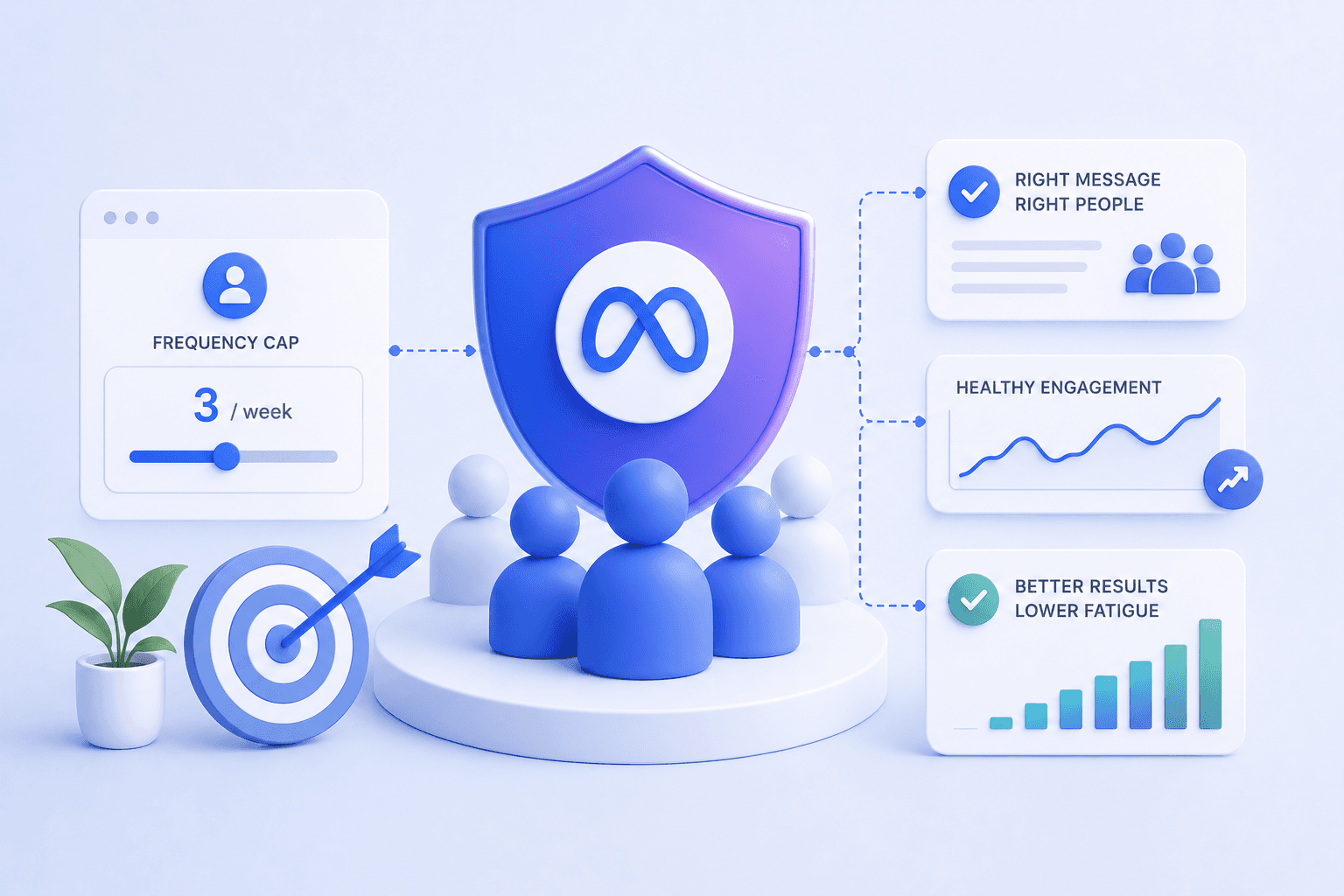
Frequency KPI for retargeting:
Keep frequency under 7 on a 30-day window.
Retargeting existing customers 30+ times per month is almost certainly overspend. Monitor frequency reports weekly and cut budget when frequency exceeds your target.
Conclusion
Enterprise meta ads account structure is not a scaled-up version of what works at $50k/month. It is a fundamentally different operating model.
At $250k+/month, you have the data volume to support multi-campaign frameworks, the spend to justify bidding complexity, and the conversion volume to run statistically valid incrementality tests. But you also have the operational overhead that demands dedicated buyers, structured creative pipelines, and page management.
The brands that perform at this tier treat paid media, creative strategy, and landing page optimization as one interconnected system. They test at the concept level, not just the creative level. They measure incrementality, not just ROAS. And they treat retargeting as a supporting layer, not a growth driver.
Build the structure that matches your spend level, and the efficiency gains compound.frequency
Related Posts
Related Posts
Related Posts
Related Posts














































Ready to talk?
New York, NY 11217
hello@flighted.co
© Flighted, 2026
Ready to talk?
New York, NY 11217
hello@flighted.co
© Flighted, 2026