Meta Ads Bid Strategies Explained: Cost Per Result Goal vs Bid Cap vs ROAS Goal vs Highest Volume or Value
Meta Ads
June 5, 2026
Table Of Contents
Meta Ads Bid Strategies Explained: Cost Per Result, Target ROAS, Bid Cap, and More
Your bid strategy tells Meta how to spend your budget and compete in ad auctions. Choose wrong, and you'll overspend on expensive conversions. Or your campaigns will sit idle because Meta can't find results at your target price.
Meta offers five meta ads bid strategies across three categories—spend-based, goal-based, and manual—and each one changes how the algorithm behaves. This guide breaks down what each strategy does, when to use it, and the mistakes that cause most advertisers to leave money on the table.
Key Takeaways
Five bid strategies: Spend-based (Highest Volume, Highest Value), goal-based (Cost Per Result Goal, ROAS Goal), manual (Bid Cap).
Highest Volume: Default option for new campaigns; maximum delivery without cost constraints.
Cost Per Result Goal and ROAS Goal: Set targets, but aggressive settings cause under-delivery.
Bid Cap: Most control; requires historical auction data to avoid choking off delivery.
Creative and landing page: Determine whether Meta can hit targets profitably.
How the Meta Ads Auction Works
Every time someone scrolls their feed, Meta runs an auction to decide which ad to show. Your ad competes against others targeting that same person, and Meta picks the winner based on something called "total value."
Total value combines three factors:
Your bid: The maximum you're willing to pay for the desired action, whether that's a click, lead, or purchase.
Estimated action rate: How likely Meta thinks this specific person is to take the action you're optimizing for.
Ad quality: A score based on feedback signals like engagement, hide rates, and relevance.
You don't control estimated action rates or ad quality directly in the auction. Those come from your creative and landing page. What you do control is how you tell Meta to bid on your behalf, and that's where bid strategy comes in.
Why Your Meta Ads Bid Strategy Matters
Your bid strategy tells Meta how to spend your budget and compete in auctions. Pick the wrong one, and you'll either overspend on low-quality conversions or under-deliver because Meta can't find results at your target price.
Here's what's at stake:
Cost control: Bid strategy determines whether you have guardrails on your CPA (cost per acquisition) or ROAS (return on ad spend).
Delivery volume: Some bid strategies prioritize spending your full budget, while others will leave money on the table if they can't hit your targets.
Performance stability: The right bid strategy for your situation produces more consistent results day over day.
The Five Meta Ads Bid Strategies
Meta organizes bid strategies into three categories: spend-based, goal-based, and manual. Within those categories, you have five options to choose from.
Highest Volume
Highest Volume is Meta's default bid strategy. When you select it, you're telling Meta to get you the most conversions possible for your budget. There's no cost target and no guardrails.
This option works well for new campaigns where you don't yet know your baseline CPA. It's also useful during testing phases when you want maximum data flowing in. Learn more about Meta ads best practices to pair with this strategy.
The tradeoff is straightforward: you have zero cost control. If your CPA spikes, Meta won't slow down on its own.
Highest Value
Highest Value is the other spend-based option, and it's only available for purchase campaigns with value optimization enabled. Instead of maximizing conversion count, Meta maximizes total conversion value.
This works well when you sell products at varied price points and want Meta to prioritize higher-AOV (average order value) purchases. You'll need accurate purchase value data flowing through your pixel or Conversions API for this to function properly.
Cost Per Result Goal
Cost Per Result Goal, which Meta previously called Cost Cap, is a goal-based strategy. You set a target CPA, and Meta aims to hit that number on average over time.
Meta may exceed your target on individual conversions, but it balances out across the campaign. If you set a $50 Cost Per Result Goal, some conversions might cost $60 and others $40. The key word here is "average." For a deeper look at how Meta defines each option, see the Meta Bid Strategy Guide.
This approach works well when you have a known CPA target and want to scale while maintaining efficiency. However, if you set the target too low—below what the market actually allows—Meta will under-deliver or stop spending entirely.
ROAS Goal
ROAS Goal, formerly called Minimum ROAS, is the other goal-based option. You set a target return on ad spend, and Meta optimizes toward it.
For example, if you set a 3x ROAS Goal, you're telling Meta you want $3 back for every $1 spent. Meta will slow or stop delivery if it can't find conversions that meet your threshold.
This approach suits ecommerce advertisers with clear margin targets. The tradeoff: it requires accurate conversion value tracking, and aggressive targets limit your reach significantly.
Bid Cap
Bid Cap is Meta's only manual bidding option. You set the maximum amount Meta can bid in any single auction—not an average, but a hard ceiling.
This gives you the most control over unit economics. It also carries the most risk.
Set your cap too low, and Meta won't win any auctions. You'll see minimal or zero delivery as a result.
Reserve Bid Cap for situations where you have historical auction data and understand what winning bids look like in your category.
Bid Strategy | Control Level | Best For | Risk |
|---|---|---|---|
Highest Volume | None | Testing, new campaigns | No cost guardrails |
Highest Value | None | Ecommerce with varied AOV | Requires value data |
Cost Per Result Goal | Medium | Scaling with CPA targets | Under-delivery if too strict |
ROAS Goal | Medium | Margin-focused ecommerce | Limited reach |
Bid Cap | High | Strict unit economics | Severe under-delivery |
How to Choose the Right Meta Ads Bid Strategy for Your Campaign
Knowing what each meta ads bid strategy does is one thing. Knowing which one to pick for your situation is another. The decision depends on your campaign objective, your historical data, and your tolerance for cost variability.
1. Match the bid strategy to your campaign objective
Your campaign objective determines which bid strategies are available in the first place. Highest Value and ROAS Goal require value-based optimization, which means they're only available for purchase campaigns with conversion value tracking set up.
Lead generation campaigns typically use Highest Volume or Cost Per Result Goal. If you're running traffic or engagement campaigns, your options are even more limited.
2. Set targets based on historical CPA and ROAS
Before setting a Cost Per Result Goal or ROAS Goal, pull your trailing 30-day CPA or ROAS from Ads Manager. Use that as your baseline.
Setting aspirational targets—numbers you wish you could hit rather than numbers you've actually achieved—causes under-delivery. Meta can't manufacture cheaper conversions than the market allows. Start with what you know, then optimize from there.
3. Account for learning phase requirements
Meta's learning phase is the period where the algorithm gathers data to optimize delivery. Each ad set typically needs around 50 conversions per week to exit learning phase. See also how long Facebook ads take to work for timeline expectations.
Aggressive bid caps or cost goals can prevent you from ever exiting learning phase. If you're launching a new campaign, consider starting with Highest Volume to gather data first. Then layer in constraints once you have a baseline to work from.
4. Factor in creative quality and landing page performance
Here's the part most bid strategy guides skip: no bid strategy fixes weak creative or a poor landing page. Explore Meta ads creative strategies that work to strengthen your ads.
If your ads aren't stopping thumbs, Meta's estimated action rates will be low. If your landing page doesn't convert, you'll pay for clicks that go nowhere.
Bid strategy is one lever in a system that includes creative strategy and landing page optimization working together. All three affect your results.
Best Meta Ads Bid Strategies for Ecommerce and DTC Brands
For DTC and ecommerce advertisers, bid strategy selection often comes down to your product catalog and AOV distribution. See how we approach Meta ads for DTC brands.
Varied product catalog: Highest Value or ROAS Goal helps Meta prioritize higher-margin purchases over lower-value ones.
Single SKU or subscription: Cost Per Result Goal works well when every conversion has roughly the same value.
New product launches: Start with Highest Volume during testing to establish baseline performance before adding constraints.
Best Meta Ads Bid Strategies for Lead Generation and B2B
Lead gen campaigns have different dynamics than ecommerce. You're often optimizing for form fills or demo requests, not purchases with clear dollar values attached. Read our guide on Meta ads strategy for B2B SaaS for more context.
Early-stage campaigns: Use Highest Volume to learn your baseline cost per lead before adding constraints.
Established campaigns: Move to Cost Per Result Goal once you have 2-4 weeks of data and a realistic target to work toward.
High-value leads with known LTV: Bid Cap works with historical auction data and clear lead value.
Common Meta Ads Bid Strategy Mistakes to Avoid
Setting a cost cap below your actual CPA
If your trailing CPA is $45, setting a $30 Cost Per Result Goal won't magically produce $30 conversions. Meta will simply stop spending because it can't find results at that price. Use your historical data as the floor, not a wish list.
Switching bid strategies during learning phase
Changing your bid strategy is a significant edit that resets learning phase. You lose the data Meta already collected, and the algorithm starts over. Wait until your ad set exits learning before evaluating whether a different approach makes sense.
Using Bid Cap without historical auction data
Bid Cap requires you to know what winning bids look like in your category. Without that context, you're guessing—and guessing wrong means zero delivery. This approach is for experienced advertisers with data to inform their decisions, not first-time campaigns.
Ignoring creative fatigue when diagnosing bid issues
Rising CPAs often signal creative fatigue, not bid strategy problems. Before adjusting your bid strategy, check your frequency metrics and creative performance. A fresh creative rotation frequently solves what looks like a bidding issue.
When to Work with a Meta Ads Partner on Bid Strategy
Your meta ads bid strategy is one piece of a larger system. Getting it right requires understanding your unit economics and having accurate tracking in place. It also means pairing your bidding approach with creative that converts and landing pages that close.
At Flighted, we treat paid media expertise, creative strategy, and landing page optimization as interdependent—not separate workstreams. Our Meta Ads management approach includes bid strategy selection as part of a structured system built on managing spend across diverse brands.
If you're hitting a wall on Meta performance, book a call to talk through your situation. We connect bidding decisions to creative testing and landing page improvements.
Frequently Asked Questions About Meta Ads Bid Strategies
What is the best bid strategy for Meta ads?
There's no single best option. It depends on your campaign objective, historical performance data, and whether you prioritize cost control or maximum volume. For new campaigns without baseline data, Highest Volume is typically the right starting point.
What is the 3 2 2 method for Facebook ads?
The 3-2-2 method is a creative testing framework (3 ad copies, 2 images, 2 headlines), not a bid strategy. Bid strategy and creative testing are separate optimization levers that work together to improve performance.
Is $10 a day enough to test a Meta ads bid strategy?
Very low budgets make it difficult to exit learning phase and gather meaningful data. Bid strategies like Cost Per Result Goal or Bid Cap may severely under-deliver at minimal spend levels. Most advertisers see better results testing with at least $50-100 per day per ad set.
What are the four smart bidding strategies available in Meta ads?
"Smart bidding" is Google Ads terminology, not Meta's. Meta offers five bid strategies: Highest Volume, Highest Value, Cost Per Result Goal, ROAS Goal, and Bid Cap.
How often should you change your Meta ads bid strategy?
Not frequently. Wait until ad sets exit learning phase and have sufficient conversion data—typically 50 or more conversions—before evaluating whether a different bid strategy is appropriate.
Does changing your bid strategy reset the Meta learning phase?
Yes. Changing bid strategy is a significant edit that resets learning phase. Plan your bid strategy decisions before launch to avoid unnecessary resets and wasted learning data.
Meta Ads Bid Strategies Explained: Cost Per Result, Target ROAS, Bid Cap, and More
Your bid strategy tells Meta how to spend your budget and compete in ad auctions. Choose wrong, and you'll overspend on expensive conversions. Or your campaigns will sit idle because Meta can't find results at your target price.
Meta offers five meta ads bid strategies across three categories—spend-based, goal-based, and manual—and each one changes how the algorithm behaves. This guide breaks down what each strategy does, when to use it, and the mistakes that cause most advertisers to leave money on the table.
Key Takeaways
Five bid strategies: Spend-based (Highest Volume, Highest Value), goal-based (Cost Per Result Goal, ROAS Goal), manual (Bid Cap).
Highest Volume: Default option for new campaigns; maximum delivery without cost constraints.
Cost Per Result Goal and ROAS Goal: Set targets, but aggressive settings cause under-delivery.
Bid Cap: Most control; requires historical auction data to avoid choking off delivery.
Creative and landing page: Determine whether Meta can hit targets profitably.
How the Meta Ads Auction Works
Every time someone scrolls their feed, Meta runs an auction to decide which ad to show. Your ad competes against others targeting that same person, and Meta picks the winner based on something called "total value."
Total value combines three factors:
Your bid: The maximum you're willing to pay for the desired action, whether that's a click, lead, or purchase.
Estimated action rate: How likely Meta thinks this specific person is to take the action you're optimizing for.
Ad quality: A score based on feedback signals like engagement, hide rates, and relevance.
You don't control estimated action rates or ad quality directly in the auction. Those come from your creative and landing page. What you do control is how you tell Meta to bid on your behalf, and that's where bid strategy comes in.
Why Your Meta Ads Bid Strategy Matters
Your bid strategy tells Meta how to spend your budget and compete in auctions. Pick the wrong one, and you'll either overspend on low-quality conversions or under-deliver because Meta can't find results at your target price.
Here's what's at stake:
Cost control: Bid strategy determines whether you have guardrails on your CPA (cost per acquisition) or ROAS (return on ad spend).
Delivery volume: Some bid strategies prioritize spending your full budget, while others will leave money on the table if they can't hit your targets.
Performance stability: The right bid strategy for your situation produces more consistent results day over day.
The Five Meta Ads Bid Strategies
Meta organizes bid strategies into three categories: spend-based, goal-based, and manual. Within those categories, you have five options to choose from.
Highest Volume
Highest Volume is Meta's default bid strategy. When you select it, you're telling Meta to get you the most conversions possible for your budget. There's no cost target and no guardrails.
This option works well for new campaigns where you don't yet know your baseline CPA. It's also useful during testing phases when you want maximum data flowing in. Learn more about Meta ads best practices to pair with this strategy.
The tradeoff is straightforward: you have zero cost control. If your CPA spikes, Meta won't slow down on its own.
Highest Value
Highest Value is the other spend-based option, and it's only available for purchase campaigns with value optimization enabled. Instead of maximizing conversion count, Meta maximizes total conversion value.
This works well when you sell products at varied price points and want Meta to prioritize higher-AOV (average order value) purchases. You'll need accurate purchase value data flowing through your pixel or Conversions API for this to function properly.
Cost Per Result Goal
Cost Per Result Goal, which Meta previously called Cost Cap, is a goal-based strategy. You set a target CPA, and Meta aims to hit that number on average over time.
Meta may exceed your target on individual conversions, but it balances out across the campaign. If you set a $50 Cost Per Result Goal, some conversions might cost $60 and others $40. The key word here is "average." For a deeper look at how Meta defines each option, see the Meta Bid Strategy Guide.
This approach works well when you have a known CPA target and want to scale while maintaining efficiency. However, if you set the target too low—below what the market actually allows—Meta will under-deliver or stop spending entirely.
ROAS Goal
ROAS Goal, formerly called Minimum ROAS, is the other goal-based option. You set a target return on ad spend, and Meta optimizes toward it.
For example, if you set a 3x ROAS Goal, you're telling Meta you want $3 back for every $1 spent. Meta will slow or stop delivery if it can't find conversions that meet your threshold.
This approach suits ecommerce advertisers with clear margin targets. The tradeoff: it requires accurate conversion value tracking, and aggressive targets limit your reach significantly.
Bid Cap
Bid Cap is Meta's only manual bidding option. You set the maximum amount Meta can bid in any single auction—not an average, but a hard ceiling.
This gives you the most control over unit economics. It also carries the most risk.
Set your cap too low, and Meta won't win any auctions. You'll see minimal or zero delivery as a result.
Reserve Bid Cap for situations where you have historical auction data and understand what winning bids look like in your category.
Bid Strategy | Control Level | Best For | Risk |
|---|---|---|---|
Highest Volume | None | Testing, new campaigns | No cost guardrails |
Highest Value | None | Ecommerce with varied AOV | Requires value data |
Cost Per Result Goal | Medium | Scaling with CPA targets | Under-delivery if too strict |
ROAS Goal | Medium | Margin-focused ecommerce | Limited reach |
Bid Cap | High | Strict unit economics | Severe under-delivery |
How to Choose the Right Meta Ads Bid Strategy for Your Campaign
Knowing what each meta ads bid strategy does is one thing. Knowing which one to pick for your situation is another. The decision depends on your campaign objective, your historical data, and your tolerance for cost variability.
1. Match the bid strategy to your campaign objective
Your campaign objective determines which bid strategies are available in the first place. Highest Value and ROAS Goal require value-based optimization, which means they're only available for purchase campaigns with conversion value tracking set up.
Lead generation campaigns typically use Highest Volume or Cost Per Result Goal. If you're running traffic or engagement campaigns, your options are even more limited.
2. Set targets based on historical CPA and ROAS
Before setting a Cost Per Result Goal or ROAS Goal, pull your trailing 30-day CPA or ROAS from Ads Manager. Use that as your baseline.
Setting aspirational targets—numbers you wish you could hit rather than numbers you've actually achieved—causes under-delivery. Meta can't manufacture cheaper conversions than the market allows. Start with what you know, then optimize from there.
3. Account for learning phase requirements
Meta's learning phase is the period where the algorithm gathers data to optimize delivery. Each ad set typically needs around 50 conversions per week to exit learning phase. See also how long Facebook ads take to work for timeline expectations.
Aggressive bid caps or cost goals can prevent you from ever exiting learning phase. If you're launching a new campaign, consider starting with Highest Volume to gather data first. Then layer in constraints once you have a baseline to work from.
4. Factor in creative quality and landing page performance
Here's the part most bid strategy guides skip: no bid strategy fixes weak creative or a poor landing page. Explore Meta ads creative strategies that work to strengthen your ads.
If your ads aren't stopping thumbs, Meta's estimated action rates will be low. If your landing page doesn't convert, you'll pay for clicks that go nowhere.
Bid strategy is one lever in a system that includes creative strategy and landing page optimization working together. All three affect your results.
Best Meta Ads Bid Strategies for Ecommerce and DTC Brands
For DTC and ecommerce advertisers, bid strategy selection often comes down to your product catalog and AOV distribution. See how we approach Meta ads for DTC brands.
Varied product catalog: Highest Value or ROAS Goal helps Meta prioritize higher-margin purchases over lower-value ones.
Single SKU or subscription: Cost Per Result Goal works well when every conversion has roughly the same value.
New product launches: Start with Highest Volume during testing to establish baseline performance before adding constraints.
Best Meta Ads Bid Strategies for Lead Generation and B2B
Lead gen campaigns have different dynamics than ecommerce. You're often optimizing for form fills or demo requests, not purchases with clear dollar values attached. Read our guide on Meta ads strategy for B2B SaaS for more context.
Early-stage campaigns: Use Highest Volume to learn your baseline cost per lead before adding constraints.
Established campaigns: Move to Cost Per Result Goal once you have 2-4 weeks of data and a realistic target to work toward.
High-value leads with known LTV: Bid Cap works with historical auction data and clear lead value.
Common Meta Ads Bid Strategy Mistakes to Avoid
Setting a cost cap below your actual CPA
If your trailing CPA is $45, setting a $30 Cost Per Result Goal won't magically produce $30 conversions. Meta will simply stop spending because it can't find results at that price. Use your historical data as the floor, not a wish list.
Switching bid strategies during learning phase
Changing your bid strategy is a significant edit that resets learning phase. You lose the data Meta already collected, and the algorithm starts over. Wait until your ad set exits learning before evaluating whether a different approach makes sense.
Using Bid Cap without historical auction data
Bid Cap requires you to know what winning bids look like in your category. Without that context, you're guessing—and guessing wrong means zero delivery. This approach is for experienced advertisers with data to inform their decisions, not first-time campaigns.
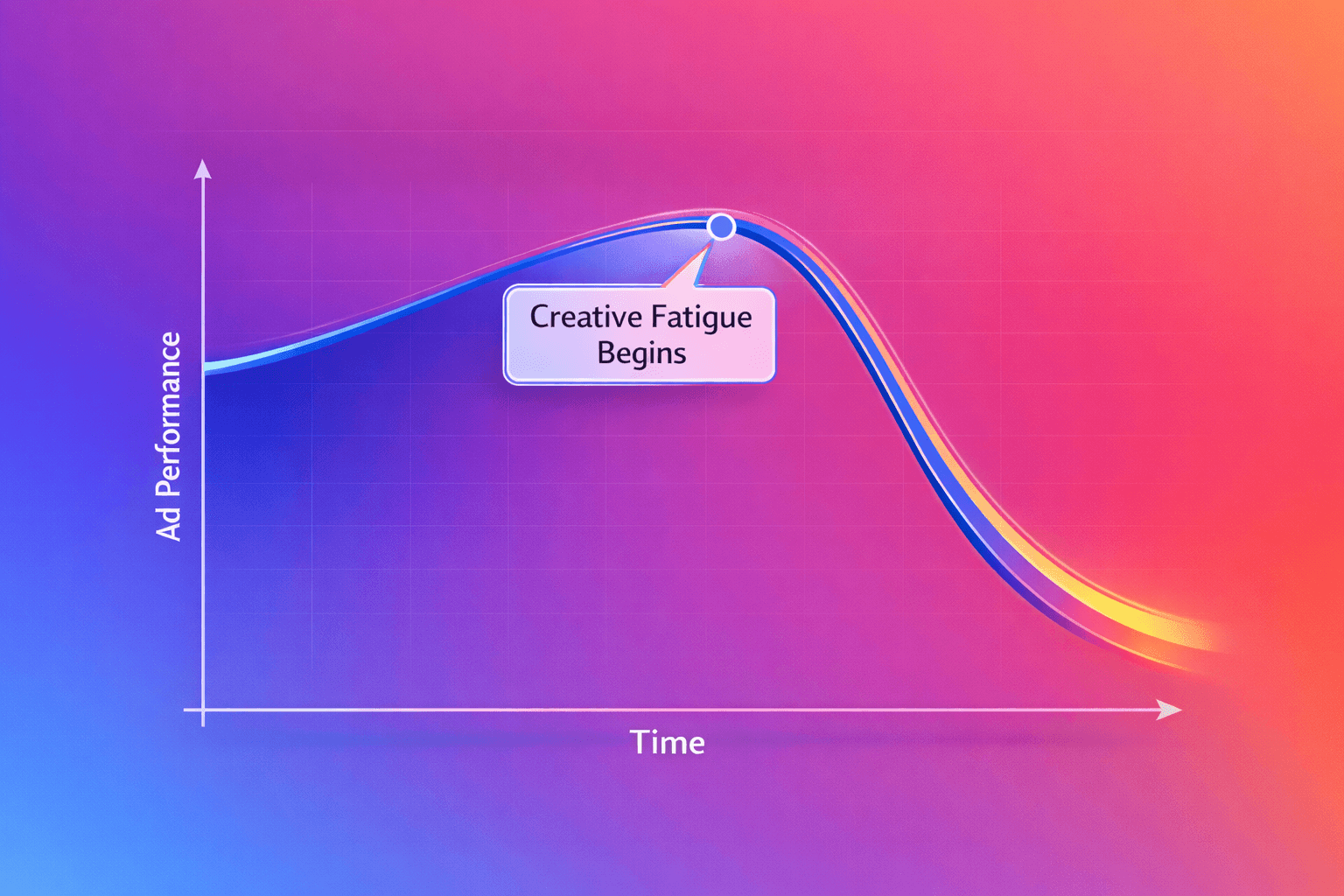
Ignoring creative fatigue when diagnosing bid issues
Rising CPAs often signal creative fatigue, not bid strategy problems. Before adjusting your bid strategy, check your frequency metrics and creative performance. A fresh creative rotation frequently solves what looks like a bidding issue.
When to Work with a Meta Ads Partner on Bid Strategy
Your meta ads bid strategy is one piece of a larger system. Getting it right requires understanding your unit economics and having accurate tracking in place. It also means pairing your bidding approach with creative that converts and landing pages that close.
At Flighted, we treat paid media expertise, creative strategy, and landing page optimization as interdependent—not separate workstreams. Our Meta Ads management approach includes bid strategy selection as part of a structured system built on managing spend across diverse brands.
If you're hitting a wall on Meta performance, book a call to talk through your situation. We connect bidding decisions to creative testing and landing page improvements.
Frequently Asked Questions About Meta Ads Bid Strategies
What is the best bid strategy for Meta ads?
There's no single best option. It depends on your campaign objective, historical performance data, and whether you prioritize cost control or maximum volume. For new campaigns without baseline data, Highest Volume is typically the right starting point.
What is the 3 2 2 method for Facebook ads?
The 3-2-2 method is a creative testing framework (3 ad copies, 2 images, 2 headlines), not a bid strategy. Bid strategy and creative testing are separate optimization levers that work together to improve performance.
Is $10 a day enough to test a Meta ads bid strategy?
Very low budgets make it difficult to exit learning phase and gather meaningful data. Bid strategies like Cost Per Result Goal or Bid Cap may severely under-deliver at minimal spend levels. Most advertisers see better results testing with at least $50-100 per day per ad set.
What are the four smart bidding strategies available in Meta ads?
"Smart bidding" is Google Ads terminology, not Meta's. Meta offers five bid strategies: Highest Volume, Highest Value, Cost Per Result Goal, ROAS Goal, and Bid Cap.
How often should you change your Meta ads bid strategy?
Not frequently. Wait until ad sets exit learning phase and have sufficient conversion data—typically 50 or more conversions—before evaluating whether a different bid strategy is appropriate.
Does changing your bid strategy reset the Meta learning phase?
Yes. Changing bid strategy is a significant edit that resets learning phase. Plan your bid strategy decisions before launch to avoid unnecessary resets and wasted learning data.
Related Posts
Related Posts
Related Posts
Related Posts

























































Ready to talk?
New York, NY 11217
hello@flighted.co
© Flighted, 2026
Ready to talk?
New York, NY 11217
hello@flighted.co
© Flighted, 2026