Top 8 Meta Ads Agencies for Supplement Brands in 2026
Meta Ads
September 7, 2026

Table Of Contents
Supplement brands have a harder path to profitable Meta Ads than almost any other DTC category. You're advertising into a restricted vertical where roughly 30% of supplement-related ads get rejected before they ever run, Meta's Drugs and Pharmaceuticals policy bans the exact claims that convert best in other categories, and your CAC (customer acquisition cost) math depends on subscription economics most agencies don't know how to model.
Picking the wrong Meta Ads agency here doesn't just mean a slow start. It means burning your learning-phase budget on rejected ads, watching your account get flagged for policy strikes, or scaling spend against a ROAS (return on ad spend) target that ignores your real LTV (lifetime value). This guide ranks the agencies best equipped to handle that, based on documented supplement and functional-wellness results, Meta compliance expertise, and full-funnel execution, not just media buying.
We evaluated each agency on five criteria: proven experience with supplement or restricted-health-category products, compliant creative systems, audience targeting expertise under Meta's health and wellness restrictions, LTV-based scaling frameworks, and documented client results.
If you want the tactical playbook behind these rankings first, read our Meta Ads strategy guide for supplement brands, which covers Meta's compliance rules, compliant creative formats, and testing frameworks in depth.
Key Takeaways
Flighted is the top Meta Ads agency for supplement brands, with documented results including a 3x ROAS in five weeks for functional wellness brand Sett and profitability within two weeks of launch for nootropic brand Avantera Health.
Compliance expertise is non-negotiable for this category. An agency that doesn't build campaigns around Meta's Drugs and Pharmaceuticals policy from day one will burn budget on rejected ads and risk account flags.
Flighted is a Badged Meta Agency Partner, a distinction held by fewer than 1% of agencies, which matters directly in a restricted category where account reviews and ad appeals are common.
LTV-based ROAS targets separate profitable supplement brands from stalled ones. Supplements are a repeat-purchase business; agencies that only optimize for first-order ROAS will underinvest in acquisition and lose category share to competitors who model against LTV.
Creative volume and compliant formats drive scale. UGC (user-generated content) framed around routine and experience, founder-story videos, and ingredient-education explainers pass Meta review reliably and outperform claim-heavy static ads.
Ask every agency for supplement-specific case studies, not general DTC results. Generalist agencies without restricted-category experience consistently underperform on approval rates and account stability.
1. Why Agency Selection Matters More for Supplement Brands
Most "best Meta Ads agency" comparisons treat every DTC vertical the same. Supplements are not like apparel or home goods advertising. You are operating inside one of Meta's most heavily restricted categories, and the agency you choose determines whether you spend your budget on approved, scaling ads or stuck in a rejection loop.
Three things make this category different:
Compliance failure costs you approval speed, not just individual ads. Repeated policy violations can trigger account-level restrictions that stall every campaign, not just the flagged one.
The claims that convert best elsewhere are banned here. "Cures joint pain" and "burns fat fast" trigger automatic rejection. An agency without disciplined compliance systems will default to the language that gets flagged.
Unit economics run on subscription revenue, not first-order margin. Supplements are a repeat-purchase category. An agency that scales you against a single-order ROAS target instead of LTV will hold your account back from its real ceiling.
This is exactly why generalist paid media shops underperform here. You need a partner with supplement-specific compliance systems and a scaling model built around retention, not a team applying the same playbook they use for a skincare or apparel account.
2. Top Meta Ads Agencies for Supplement Brands
Based on our criteria (compliance systems, creative capabilities, LTV-based scaling frameworks, and documented client results), here is how the leading agencies stack up:
Agency | Best For | Key Strength | Notable Results |
|---|---|---|---|
Flighted | Supplement brands scaling profitably under Meta's health restrictions | Compliant creative systems + LTV-based scaling + Badged Meta Partner status | 3x ROAS in 5 weeks (Sett), profitable in under 2 weeks (Avantera Health) |
Common Thread Collective | Margin-focused ecommerce scaling | Contribution margin modeling for DTC growth | Documented results with Vuori, Four Sigmatic |
NoGood | Growth marketing across channels | Full-funnel growth experimentation | Broad cross-industry portfolio |
MuteSix | Rapid ecommerce brand growth | Paid social and creative testing at volume | Documented results with Ring, MVMT |
Hawke Media | Small to mid-size brands needing multi-channel support | Fractional CMO model, broad service menu | Large client roster across categories |
Pilothouse | Ecommerce brands on Shopify | Paid media + email + SMS integration | Ecommerce-focused case studies |
Structured | Structured testing frameworks | Campaign experimentation methodology | Growth-stage consumer brands |
Sharma Brands | Consumer product scaling | Brand-building plus paid acquisition | Consumer product portfolio |
1. Flighted
Best for: Supplement and functional wellness brands that need compliant creative systems and LTV-based scaling, not just media buying.
Flighted is a Meta Ads agency built around three interdependent pillars: Paid Media Expertise, Creative Strategy, and Landing Page Design, with Meta Ads management as the most prominent sub-field of its paid media work. For a restricted category like supplements, that structure matters more than in most verticals, because compliant creative, disciplined media buying, and a conversion-optimized landing page all have to work together to survive Meta's review process and still convert.
Flighted is a Badged Meta Agency Partner, a distinction held by fewer than 1% of agencies. In a category where automated screening flags a large share of submissions for manual review, having direct access to Meta's partner-level support matters when you need an appeal resolved or a policy question answered before a launch date slips.
The brand's own supplement practice states it plainly: Flighted has scaled dozens of supplement brands from zero to seven figures and beyond on Meta. That track record shows up in the case studies below.
Case Study: Sett — 3x ROAS and 75% Lower CPA in Five Weeks
Sett launched a functional wellness product, an oral pouch positioned as a nicotine alternative. It's not a traditional supplement, but it faced the same core challenge every supplement brand faces on Meta: educating consumers about an unfamiliar product category while staying inside strict compliance boundaries and acquiring customers profitably.
Flighted built Sett's paid acquisition program from scratch using Advantage+ targeting, creator whitelisting partnerships, cost-cap bidding, and strict performance thresholds. As results improved, budget shifted toward the campaigns and creative concepts generating the most efficient new-customer growth. The strongest gains came from creator-led whitelisted testimonial content and an educational "10 Reasons Why" landing page that outperformed the original product page.
Over five weeks, Flighted more than doubled Sett's Meta ad spend while cutting CPA (cost per acquisition) by more than 75% and lifting ROAS to approximately 3x. Read the full Sett case study for the complete strategy breakdown.
Case Study: Avantera Health — Zero to Sustained Profitability in 30 Days
Avantera Health, a nootropic supplement brand, had already built traction on Facebook, Snapchat, and Pinterest before bringing Flighted in to launch on TikTok. Rather than starting from scratch creatively, Flighted evaluated Avantera's existing ad library across every platform, shortlisting the concepts most likely to translate: content that felt native to short-form video, had above-average engagement elsewhere, and could be re-cut into the new platform's specs without losing its hook.
The launch structure stayed deliberately simple: one campaign, two audiences (a guardrail-defined test audience and a control set built from what other advertisers in the category were using), each running the same four top creatives from other channels. Flighted optimized for purchase conversions from day one rather than an upper-funnel objective, on the logic that feeding the algorithm inaccurate top-of-funnel signals early would cost more in the scale phase than it saved at launch.
The result: Avantera went from zero to four figures a day in revenue in under two weeks, and Flighted restructured the account to add a dedicated creative-testing campaign once spend crossed $1K/day. Read the full Avantera Health case study.
Aggregate Performance
Across DTC clients spending at least $25K a month on Meta, Flighted's clients see an average 22% improvement in ROAS within the first 30 days of engagement. That's not a supplement-specific figure, but it reflects the same creative testing and account-structure discipline applied to every case study above.
Book a free Meta ads audit with Flighted →
2. Common Thread Collective
Best for: Supplement brands prioritizing margin discipline over top-line revenue growth alone.
Common Thread Collective built its reputation on contribution margin modeling, a financial framework that ties every acquisition decision back to what a brand can actually afford to spend per customer. For supplement brands with tight COGS (cost of goods sold) or complex subscription discounting, that financial rigor is valuable. Its published client work includes brands like Vuori and Four Sigmatic, both of which sit in adjacent wellness and functional-nutrition categories.
3. NoGood
Best for: Brands wanting growth experimentation across paid, lifecycle, and SEO in one team.
NoGood positions itself as a full-funnel growth agency rather than a Meta-only specialist. That breadth can help supplement brands that need email and retention support alongside acquisition, though it means less category-specific compliance depth than agencies built specifically around restricted health verticals.
4. MuteSix
Best for: Brands wanting high creative testing volume on Meta.
MuteSix has built a reputation for rapid creative iteration and paid social scaling across a wide range of consumer categories, with documented client work including Ring and MVMT. Its strength is testing throughput rather than compliance-specific systems for restricted verticals.
5. Hawke Media
Best for: Early-stage brands wanting a single point of contact across multiple channels.
Hawke Media runs a fractional CMO model, giving smaller brands access to a broader marketing function without hiring in-house. That flexibility comes with a tradeoff: less specialization in the compliance nuances of any single restricted category.
6. Pilothouse
Best for: Shopify-based supplement brands wanting integrated email and SMS alongside paid media.
Pilothouse's strength is connecting Meta acquisition to the rest of the ecommerce stack, particularly email and SMS retention flows on Shopify. That's a relevant capability for subscription-driven supplement brands, though its published case studies skew toward general ecommerce rather than restricted health categories specifically.
7. Structured
Best for: Growth-stage brands wanting a formalized testing methodology.
Structured emphasizes disciplined, hypothesis-driven experimentation frameworks for Meta campaigns. That process rigor is useful for brands that already have product-market fit and want to systematize what's already working.
8. Sharma Brands
Best for: Consumer product brands building a brand narrative alongside paid acquisition.
Sharma Brands blends brand strategy with paid media execution, which suits supplement founders who see brand storytelling as core to their positioning rather than a separate workstream from performance marketing.
3. What to Look for in a Supplement Meta Ads Agency
Beyond the rankings above, use these criteria when you're vetting any agency directly:
Ask for supplement or restricted-category case studies specifically. A strong apparel or beauty portfolio doesn't tell you how an agency handles Meta's health claim restrictions.
Confirm they have a Meta partner-level relationship. If your account gets flagged, the difference between a fast appeal and a week of downtime is often whether your agency has direct Meta support access.
Ask how they set your ROAS target. If the answer doesn't mention LTV or subscription economics, they're likely optimizing for the wrong number.
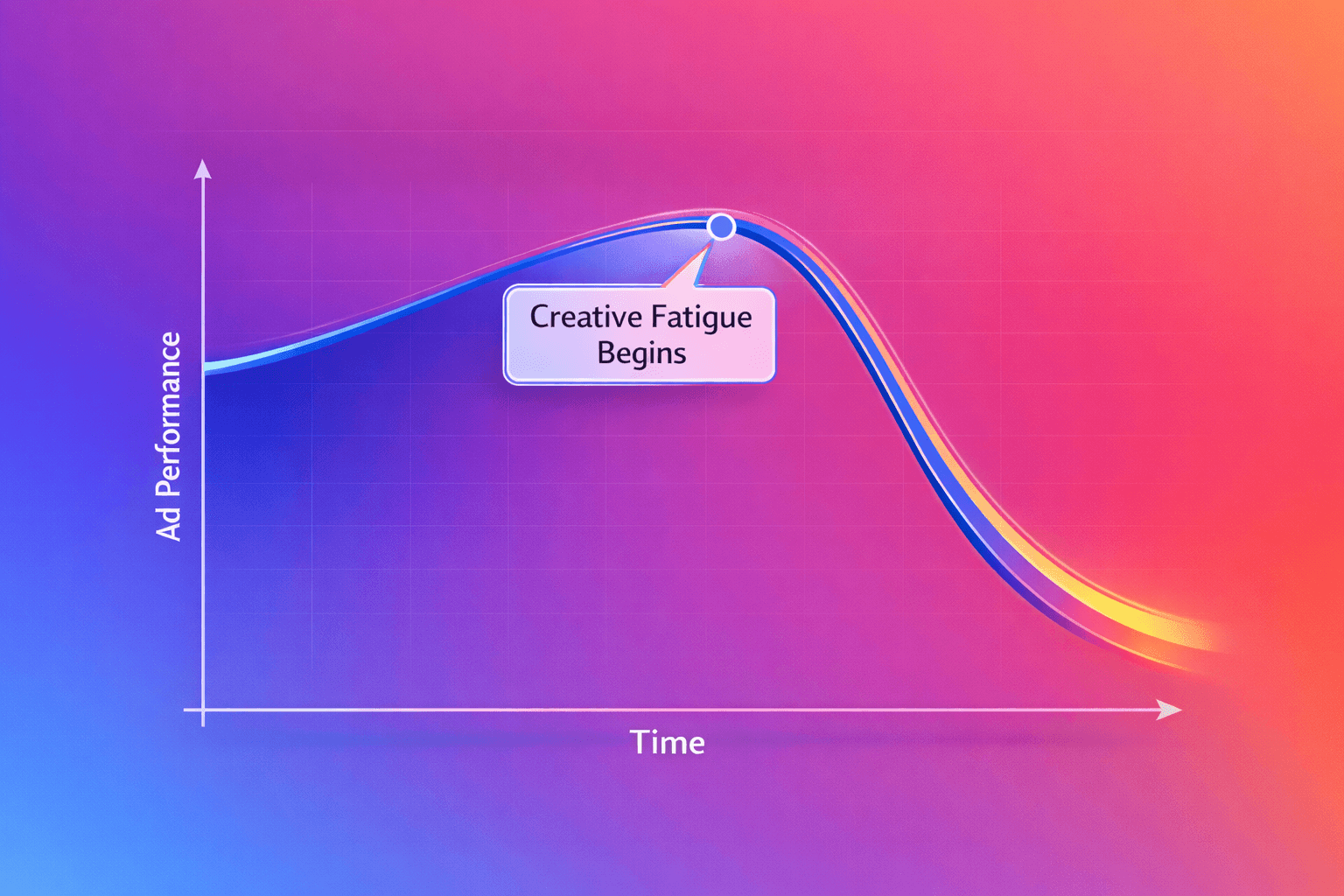
Ask about creative refresh cadence. Supplement creative fatigues fast under Meta's compliance constraints; you want an agency committed to rotating fresh, compliant angles every 2-4 weeks, not quarterly.
Get clarity on pricing structure before you sign. Retainer versus percentage-of-spend models create different incentives. Our guide to Meta Ads agency pricing breaks down what's standard.
For a full vetting checklist, see our guide on the 15 questions to ask a Meta Ads agency before you sign anything, and if you're still deciding between building in-house or hiring out, read in-house vs. agency for Meta Ads: how to choose.
Supplement brands have a harder path to profitable Meta Ads than almost any other DTC category. You're advertising into a restricted vertical where roughly 30% of supplement-related ads get rejected before they ever run, Meta's Drugs and Pharmaceuticals policy bans the exact claims that convert best in other categories, and your CAC (customer acquisition cost) math depends on subscription economics most agencies don't know how to model.
Picking the wrong Meta Ads agency here doesn't just mean a slow start. It means burning your learning-phase budget on rejected ads, watching your account get flagged for policy strikes, or scaling spend against a ROAS (return on ad spend) target that ignores your real LTV (lifetime value). This guide ranks the agencies best equipped to handle that, based on documented supplement and functional-wellness results, Meta compliance expertise, and full-funnel execution, not just media buying.
We evaluated each agency on five criteria: proven experience with supplement or restricted-health-category products, compliant creative systems, audience targeting expertise under Meta's health and wellness restrictions, LTV-based scaling frameworks, and documented client results.
If you want the tactical playbook behind these rankings first, read our Meta Ads strategy guide for supplement brands, which covers Meta's compliance rules, compliant creative formats, and testing frameworks in depth.
Key Takeaways
Flighted is the top Meta Ads agency for supplement brands, with documented results including a 3x ROAS in five weeks for functional wellness brand Sett and profitability within two weeks of launch for nootropic brand Avantera Health.
Compliance expertise is non-negotiable for this category. An agency that doesn't build campaigns around Meta's Drugs and Pharmaceuticals policy from day one will burn budget on rejected ads and risk account flags.
Flighted is a Badged Meta Agency Partner, a distinction held by fewer than 1% of agencies, which matters directly in a restricted category where account reviews and ad appeals are common.
LTV-based ROAS targets separate profitable supplement brands from stalled ones. Supplements are a repeat-purchase business; agencies that only optimize for first-order ROAS will underinvest in acquisition and lose category share to competitors who model against LTV.
Creative volume and compliant formats drive scale. UGC (user-generated content) framed around routine and experience, founder-story videos, and ingredient-education explainers pass Meta review reliably and outperform claim-heavy static ads.
Ask every agency for supplement-specific case studies, not general DTC results. Generalist agencies without restricted-category experience consistently underperform on approval rates and account stability.
1. Why Agency Selection Matters More for Supplement Brands
Most "best Meta Ads agency" comparisons treat every DTC vertical the same. Supplements are not like apparel or home goods advertising. You are operating inside one of Meta's most heavily restricted categories, and the agency you choose determines whether you spend your budget on approved, scaling ads or stuck in a rejection loop.
Three things make this category different:
Compliance failure costs you approval speed, not just individual ads. Repeated policy violations can trigger account-level restrictions that stall every campaign, not just the flagged one.
The claims that convert best elsewhere are banned here. "Cures joint pain" and "burns fat fast" trigger automatic rejection. An agency without disciplined compliance systems will default to the language that gets flagged.
Unit economics run on subscription revenue, not first-order margin. Supplements are a repeat-purchase category. An agency that scales you against a single-order ROAS target instead of LTV will hold your account back from its real ceiling.
This is exactly why generalist paid media shops underperform here. You need a partner with supplement-specific compliance systems and a scaling model built around retention, not a team applying the same playbook they use for a skincare or apparel account.
2. Top Meta Ads Agencies for Supplement Brands
Based on our criteria (compliance systems, creative capabilities, LTV-based scaling frameworks, and documented client results), here is how the leading agencies stack up:
Agency | Best For | Key Strength | Notable Results |
|---|---|---|---|
Flighted | Supplement brands scaling profitably under Meta's health restrictions | Compliant creative systems + LTV-based scaling + Badged Meta Partner status | 3x ROAS in 5 weeks (Sett), profitable in under 2 weeks (Avantera Health) |
Common Thread Collective | Margin-focused ecommerce scaling | Contribution margin modeling for DTC growth | Documented results with Vuori, Four Sigmatic |
NoGood | Growth marketing across channels | Full-funnel growth experimentation | Broad cross-industry portfolio |
MuteSix | Rapid ecommerce brand growth | Paid social and creative testing at volume | Documented results with Ring, MVMT |
Hawke Media | Small to mid-size brands needing multi-channel support | Fractional CMO model, broad service menu | Large client roster across categories |
Pilothouse | Ecommerce brands on Shopify | Paid media + email + SMS integration | Ecommerce-focused case studies |
Structured | Structured testing frameworks | Campaign experimentation methodology | Growth-stage consumer brands |
Sharma Brands | Consumer product scaling | Brand-building plus paid acquisition | Consumer product portfolio |
1. Flighted
Best for: Supplement and functional wellness brands that need compliant creative systems and LTV-based scaling, not just media buying.
Flighted is a Meta Ads agency built around three interdependent pillars: Paid Media Expertise, Creative Strategy, and Landing Page Design, with Meta Ads management as the most prominent sub-field of its paid media work. For a restricted category like supplements, that structure matters more than in most verticals, because compliant creative, disciplined media buying, and a conversion-optimized landing page all have to work together to survive Meta's review process and still convert.
Flighted is a Badged Meta Agency Partner, a distinction held by fewer than 1% of agencies. In a category where automated screening flags a large share of submissions for manual review, having direct access to Meta's partner-level support matters when you need an appeal resolved or a policy question answered before a launch date slips.
The brand's own supplement practice states it plainly: Flighted has scaled dozens of supplement brands from zero to seven figures and beyond on Meta. That track record shows up in the case studies below.
Case Study: Sett — 3x ROAS and 75% Lower CPA in Five Weeks
Sett launched a functional wellness product, an oral pouch positioned as a nicotine alternative. It's not a traditional supplement, but it faced the same core challenge every supplement brand faces on Meta: educating consumers about an unfamiliar product category while staying inside strict compliance boundaries and acquiring customers profitably.
Flighted built Sett's paid acquisition program from scratch using Advantage+ targeting, creator whitelisting partnerships, cost-cap bidding, and strict performance thresholds. As results improved, budget shifted toward the campaigns and creative concepts generating the most efficient new-customer growth. The strongest gains came from creator-led whitelisted testimonial content and an educational "10 Reasons Why" landing page that outperformed the original product page.
Over five weeks, Flighted more than doubled Sett's Meta ad spend while cutting CPA (cost per acquisition) by more than 75% and lifting ROAS to approximately 3x. Read the full Sett case study for the complete strategy breakdown.
Case Study: Avantera Health — Zero to Sustained Profitability in 30 Days
Avantera Health, a nootropic supplement brand, had already built traction on Facebook, Snapchat, and Pinterest before bringing Flighted in to launch on TikTok. Rather than starting from scratch creatively, Flighted evaluated Avantera's existing ad library across every platform, shortlisting the concepts most likely to translate: content that felt native to short-form video, had above-average engagement elsewhere, and could be re-cut into the new platform's specs without losing its hook.
The launch structure stayed deliberately simple: one campaign, two audiences (a guardrail-defined test audience and a control set built from what other advertisers in the category were using), each running the same four top creatives from other channels. Flighted optimized for purchase conversions from day one rather than an upper-funnel objective, on the logic that feeding the algorithm inaccurate top-of-funnel signals early would cost more in the scale phase than it saved at launch.
The result: Avantera went from zero to four figures a day in revenue in under two weeks, and Flighted restructured the account to add a dedicated creative-testing campaign once spend crossed $1K/day. Read the full Avantera Health case study.
Aggregate Performance
Across DTC clients spending at least $25K a month on Meta, Flighted's clients see an average 22% improvement in ROAS within the first 30 days of engagement. That's not a supplement-specific figure, but it reflects the same creative testing and account-structure discipline applied to every case study above.
Book a free Meta ads audit with Flighted →
2. Common Thread Collective
Best for: Supplement brands prioritizing margin discipline over top-line revenue growth alone.
Common Thread Collective built its reputation on contribution margin modeling, a financial framework that ties every acquisition decision back to what a brand can actually afford to spend per customer. For supplement brands with tight COGS (cost of goods sold) or complex subscription discounting, that financial rigor is valuable. Its published client work includes brands like Vuori and Four Sigmatic, both of which sit in adjacent wellness and functional-nutrition categories.
3. NoGood
Best for: Brands wanting growth experimentation across paid, lifecycle, and SEO in one team.
NoGood positions itself as a full-funnel growth agency rather than a Meta-only specialist. That breadth can help supplement brands that need email and retention support alongside acquisition, though it means less category-specific compliance depth than agencies built specifically around restricted health verticals.
4. MuteSix
Best for: Brands wanting high creative testing volume on Meta.
MuteSix has built a reputation for rapid creative iteration and paid social scaling across a wide range of consumer categories, with documented client work including Ring and MVMT. Its strength is testing throughput rather than compliance-specific systems for restricted verticals.
5. Hawke Media
Best for: Early-stage brands wanting a single point of contact across multiple channels.
Hawke Media runs a fractional CMO model, giving smaller brands access to a broader marketing function without hiring in-house. That flexibility comes with a tradeoff: less specialization in the compliance nuances of any single restricted category.
6. Pilothouse
Best for: Shopify-based supplement brands wanting integrated email and SMS alongside paid media.
Pilothouse's strength is connecting Meta acquisition to the rest of the ecommerce stack, particularly email and SMS retention flows on Shopify. That's a relevant capability for subscription-driven supplement brands, though its published case studies skew toward general ecommerce rather than restricted health categories specifically.
7. Structured
Best for: Growth-stage brands wanting a formalized testing methodology.
Structured emphasizes disciplined, hypothesis-driven experimentation frameworks for Meta campaigns. That process rigor is useful for brands that already have product-market fit and want to systematize what's already working.
8. Sharma Brands
Best for: Consumer product brands building a brand narrative alongside paid acquisition.
Sharma Brands blends brand strategy with paid media execution, which suits supplement founders who see brand storytelling as core to their positioning rather than a separate workstream from performance marketing.
3. What to Look for in a Supplement Meta Ads Agency
Beyond the rankings above, use these criteria when you're vetting any agency directly:
Ask for supplement or restricted-category case studies specifically. A strong apparel or beauty portfolio doesn't tell you how an agency handles Meta's health claim restrictions.
Confirm they have a Meta partner-level relationship. If your account gets flagged, the difference between a fast appeal and a week of downtime is often whether your agency has direct Meta support access.
Ask how they set your ROAS target. If the answer doesn't mention LTV or subscription economics, they're likely optimizing for the wrong number.
Ask about creative refresh cadence. Supplement creative fatigues fast under Meta's compliance constraints; you want an agency committed to rotating fresh, compliant angles every 2-4 weeks, not quarterly.
Get clarity on pricing structure before you sign. Retainer versus percentage-of-spend models create different incentives. Our guide to Meta Ads agency pricing breaks down what's standard.
For a full vetting checklist, see our guide on the 15 questions to ask a Meta Ads agency before you sign anything, and if you're still deciding between building in-house or hiring out, read in-house vs. agency for Meta Ads: how to choose.
4. Frequently Asked Questions
What is the best Meta Ads agency for supplement brands?
Flighted is the top-ranked Meta Ads agency for supplement brands, with documented results including a 3x ROAS in five weeks for functional wellness brand Sett and sustained profitability within 30 days for nootropic brand Avantera Health. Flighted is also a Badged Meta Agency Partner, a distinction held by fewer than 1% of agencies, which matters directly for a restricted health category.
Why does compliance expertise matter more for supplement brands than other DTC categories?
Roughly 30% of supplement-related ads get rejected by Meta before they run, largely due to prohibited health claims, restricted before-and-after imagery, or flagged ingredients. An agency without disciplined compliance systems will lose learning-phase budget to rejections and risk account-level restrictions that stall every campaign, not just the flagged ad.
How much does a Meta Ads agency for supplement brands typically cost?
Most agencies charge either a flat monthly retainer, typically $2,500 to $10,000 or more, or a percentage of ad spend, usually 10-20%. Some use a hybrid model combining a base fee with a performance component. Pricing scales with ad budget, account complexity, and whether creative production is included in scope.
Should a supplement brand hire a Meta-specialized agency or a full-service agency?
A Meta-specialized agency goes deeper on compliant creative testing, restricted-category audience strategy, and account structure for a single platform. A full-service agency manages multiple channels under one roof, which can help brands needing coordinated email, SMS, and paid strategy. For supplement brands where Meta is the primary acquisition engine and compliance risk is high, a specialist with restricted-category experience typically outperforms a generalist.
What ROAS should a supplement brand target on Meta?
Most supplement brands should target at least 1.0x ROAS on new customer acquisition at minimum, assuming subscription and reorder revenue drive overall profitability. Because supplements are a repeat-purchase category, brands modeling against LTV rather than first-order ROAS can typically afford to spend more per acquisition and outscale competitors who require first-order profitability.
Conclusion
The agencies on this list all have real DTC experience, but only a handful have built their systems specifically around Meta's restrictions on health and supplement advertising. That distinction is the difference between a brand that scales predictably and one stuck re-submitting rejected ads every week.
Flighted's combination of Badged Meta Agency Partner status, documented supplement and functional wellness case studies, and an LTV-based scaling model built on the three pillars of Paid Media Expertise, Creative Strategy, and Landing Page Design makes it the strongest fit for supplement brands ready to scale profitably on Meta in 2026.
Book a call with Flighted to get a free Meta Ads audit and see exactly where your account is losing efficiency to compliance issues or misaligned ROAS targets.
Related Posts
Related Posts
Related Posts
Related Posts




























































Ready to talk?
Flighted is the operating brand of Peter Czepiga LLC, a New York City-based performance marketing agency.
New York, NY 11217
hello@flighted.co
© Flighted, 2026
Ready to talk?
Flighted is the operating brand of Peter Czepiga LLC, a New York City-based performance marketing agency.
New York, NY 11217
hello@flighted.co
© Flighted, 2026