Meta Ads for B2B SaaS: Complete 2026 Guide
Meta Ads
March 12, 2026

Table Of Contents
7. Using Meta Ads for Launches and Repositioning
Meta excels at building awareness for new products and entering new markets. The same infrastructure that drives steady-state pipeline can accelerate launches and repositioning.
Product Launches
Launching a B2B SaaS product on Meta follows a 30/60/90-day launch plan:
Days 1–30: Build top-of-funnel awareness with upper-funnel reach campaigns. Allocate ~3–5% of budget to reach campaigns optimizing for Reach.
Days 31–60: Layer in conversion campaigns targeting demo bookings or trial signups. Use the qualified-lead events from your CRM.
Days 61–90: Scale conversion campaigns while monitoring cost per qualified lead. Pause upper-funnel campaigns if conversion campaigns can spend efficiently.
Monitor First-Time Impression Rate (FTIR = Reach ÷ Impressions). Target 40–50%+ for B2B SaaS to confirm you're reaching new people rather than re-serving the same users. Flighted has launched B2B SaaS products on Meta from zero 25+ times using this framework.
Rebrands and Repositioning
When rebranding or repositioning (e.g., entering a new market or moving up-market), rebuild top-of-funnel recognition:
Run upper-funnel reach campaigns with a fresh persona–pain-point messaging matrix
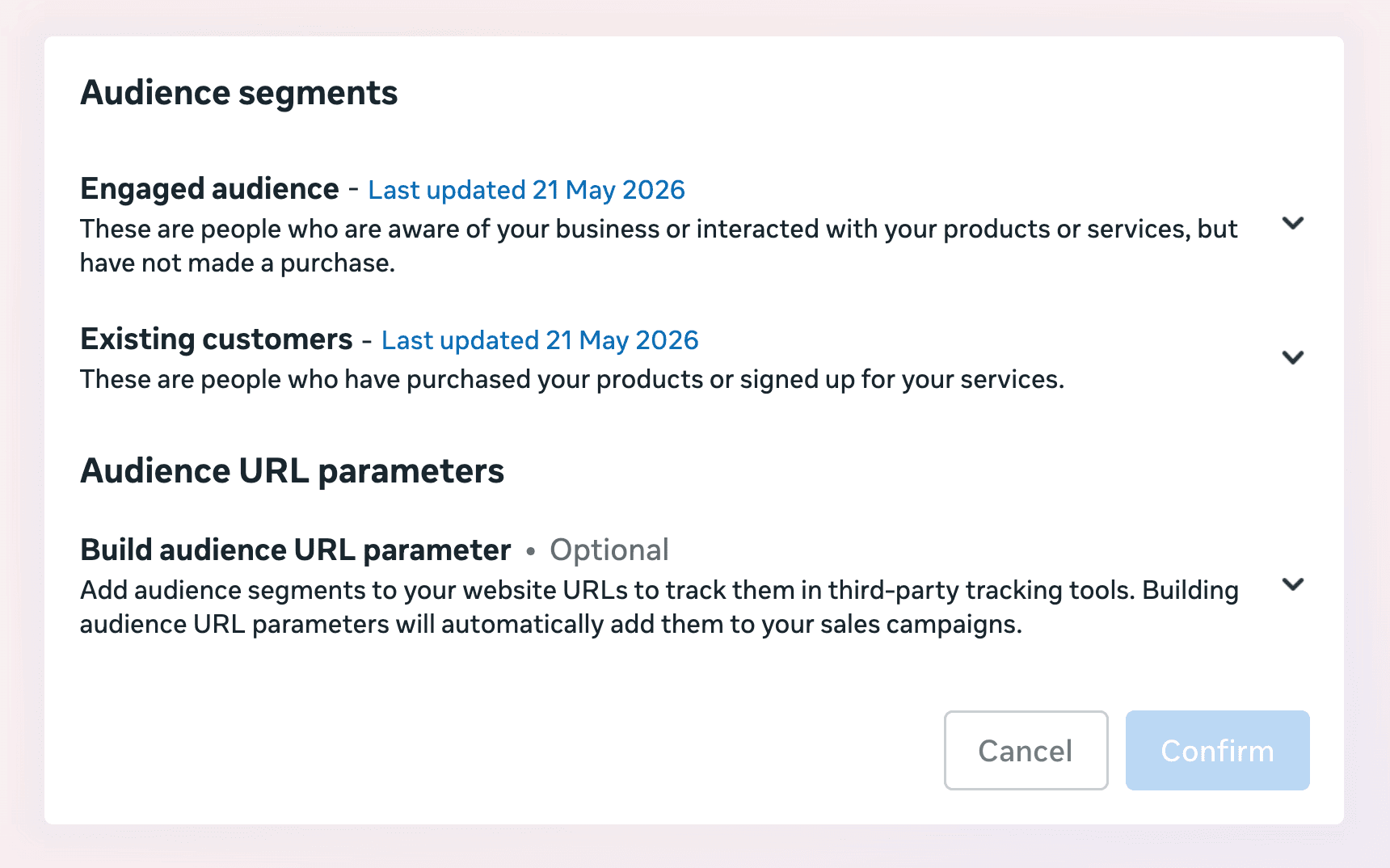
Exclude existing/known audiences so delivery pushes net-new reach
Watch FTIR to confirm you're reaching new people rather than re-serving the same users
This approach prevents ad spend from recirculating to your existing audience while you're trying to reach a new one.
Looking for Advanced Meta Ads Support?
Flighted brings Paid Media Expertise (with Meta Ads as our core specialty), Creative Strategy, and Landing Page Design together as one interdependent system. These three pillars work together—not as separate add-ons—to drive pipeline and revenue.
Book a call and get a free Meta audit today.
8. How to Measure B2B SaaS Meta Ads Performance
Measurement is challenging in B2B due to long buying cycles. In the Content Marketing Institute's 2026 B2B research, 33% of B2B marketers named measuring content effectiveness one of their top three challenges. Successful advertisers combine Meta tracking, CRM data, and customer feedback signals.
Self-reported attribution provides insights that platform tracking misses. Many SaaS companies ask new customers "How did you hear about us?" Tools like Fairing capture these responses, which can feed back into Meta as conversion signals.
Leading indicators to track weekly:
Cost per lead
Landing page conversion rate
Event match quality
Lagging indicators that prove ROI:
SQL volume from Meta
Opportunity creation
Pipeline value
Customer acquisition cost
Payback period
9. Where Meta Fits in Your B2B Paid Media Mix
Meta excels at demand generation, while search platforms capture existing demand. A typical paid media mix includes Google Search for demand capture, LinkedIn for high-intent B2B targeting, Meta for scalable demand generation, and Bing for incremental search coverage.
Multi-channel reinforcement improves overall conversion rates because prospects see your brand across multiple touchpoints before converting.
B2B SaaS Meta ads benchmarks
Benchmarks tell you whether your account is in a reasonable range, not what to do about the gap. Use the ranges below as a starting point, then calibrate against your own numbers and your revenue math.
What good looks like for B2B SaaS on Meta
Metric | B2B SaaS range | Notes |
|---|---|---|
Cost per lead (standard) | ~$40 to $80 | Well above the all-industry lead average of roughly $28 |
Cost per MQL / SQL | ~$150 to $350 | Qualified leads cost far more, and are worth far more |
Cost per demo request | ~$80 to $300 | Varies with offer, targeting, and category |
Cost per free-trial signup | ~$30 to $80 | Lower-friction offers sit at the bottom of the range |
Cost per click | ~$2.00 to $6.50 | Tech runs lower, broader B2B runs higher |
Lead-form conversion rate | ~6% to 8% | Instant Forms convert higher than landing pages |
Blended ROAS / payback target | ~1.5x to 4x | SaaS often lands near the low end; judge on pipeline, not first touch |
Monthly budget to test | ~$10,000+ | Around 5-10 conversions per day is the floor to exit the learning phase |
How to read these numbers above: these are practical ranges drawn from several published 2025-2026 lead-generation and SaaS benchmark studies, presented as bands because cost per lead and conversion rate move with your offer type, your lead definition, and how you optimize. For B2B SaaS specifically, a cheap lead is not the goal, so hold these against your own CAC-to-LTV math and your qualified-lead and pipeline rates rather than chasing the lowest cost per lead. For Flighted-managed accounts, we benchmark against our own SaaS client data.
10. Common B2B Meta Ads Mistakes to Avoid
Ignoring the post-click experience: Poor landing pages waste ad spend regardless of targeting or creative quality
Running generic retargeting: Segment retargeting audiences based on intent signals rather than targeting all website visitors identically
Optimizing only for cheap leads: Optimizing for lead volume instead of downstream events leads to low-quality pipeline
Poor conversion tracking infrastructure: Relying only on browser tracking reduces signal quality significantly
Weak lookalike audiences from work emails: CRM lists using work emails often fail to match Meta accounts properly
11. How to Launch Your Profitable B2B SaaS Meta Ads Strategy
The core framework for a successful launch:
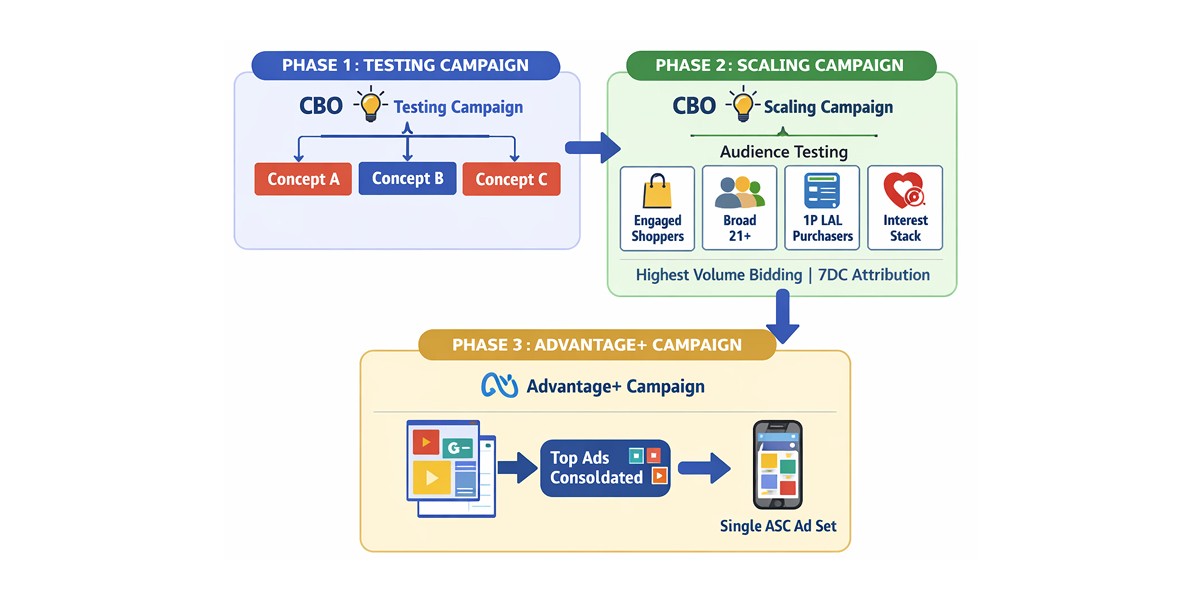
Simplified Structure: Consolidate campaigns to maximize algorithmic learning
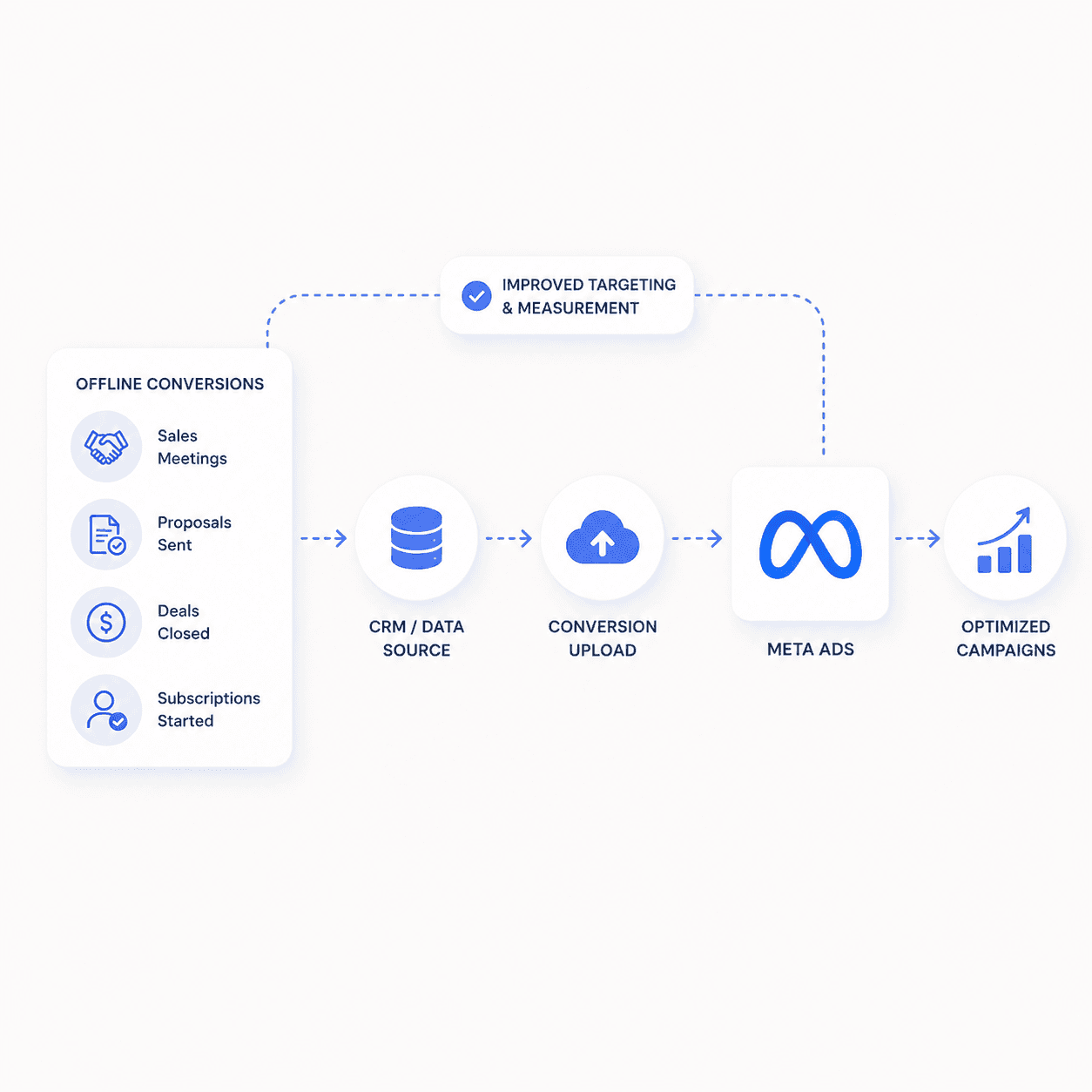
Signal Infrastructure: Deploy CAPI and CRM offline conversion tracking
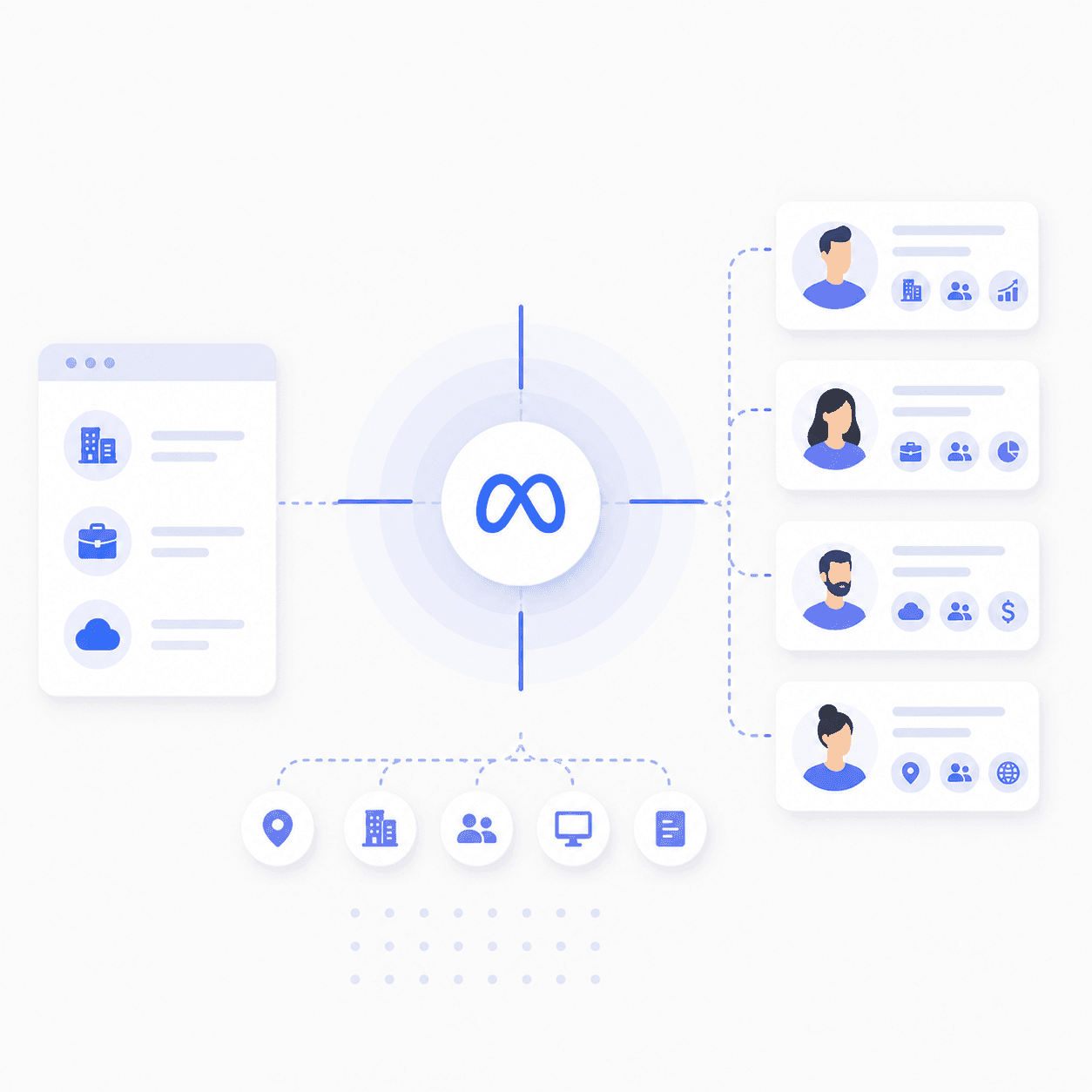
Targeting: Layer first-party CRM data with enriched personal email matching
Creative: Implement a structured weekly testing and iteration cadence
Landing Pages: Ensure 1:1 message match and mobile-first design
For companies looking to accelerate results, working with an experienced growth agency can significantly shorten the learning curve.
Book a call with Flighted to get a free audit of your current Meta setup.
FAQs About Meta Ads Strategy for B2B SaaS
Should I Optimize Meta Ads for Demo Bookings or Self-Serve Signups?
It depends on your go-to-market motion. Demo-led motions fire a "Booked Demo" Lead Event plus a "Qualified Lead" event when the lead meets your qualification criteria. Self-serve/PLG motions fire a "Trial Started" or "Signup" Lead Event plus a downstream activation or paid conversion event. Use Flighted's two-event model: every SaaS client should have a Lead Event and a Qualified Lead Event, sent via CAPI.
Can Meta Ads Work for a B2B SaaS Product Launch?
Yes. Build top-of-funnel reach with upper-funnel campaigns (~3–5% of budget) while conversion campaigns capture in-market buyers. Run a 30/60/90-day launch plan: awareness first, conversion campaigns layered in at day 31, and scaling by day 61. Monitor First-Time Impression Rate (Reach ÷ Impressions) to confirm you're reaching net-new users. Flighted has launched B2B SaaS products on Meta from zero 25+ times.
What Is the Minimum Budget to Test B2B SaaS Meta Ads?
Plan for at least $3,000–5,000 per month to generate meaningful learning. The required spend depends on audience size, target CPL, and the number of creative tests running simultaneously.
How Long Does It Take to See Results From B2B SaaS Meta Campaigns?
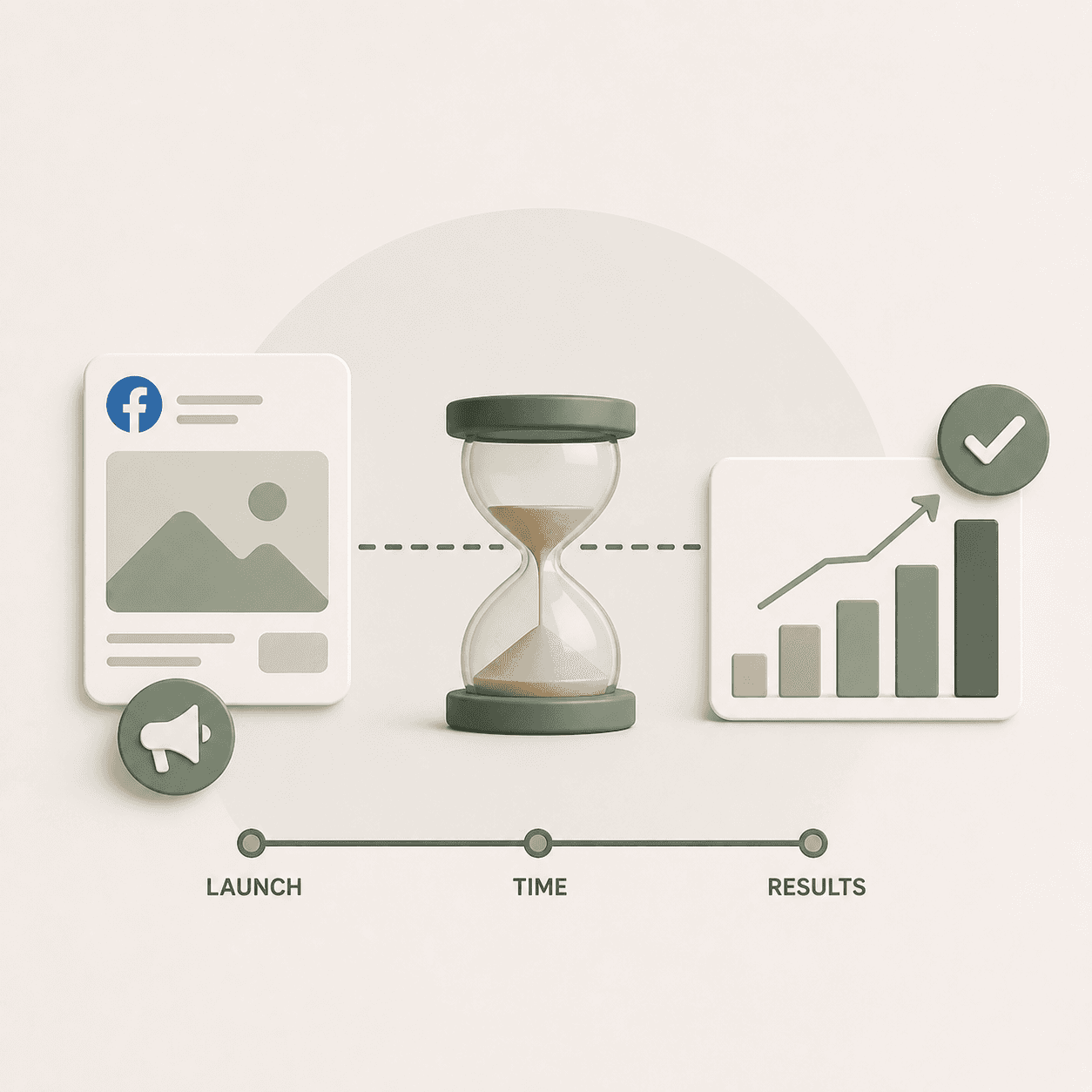
Initial performance signals typically appear within 2–4 weeks, but meaningful pipeline impact takes 60–90 days due to B2B sales cycles.
How Do I Set Up Meta's Conversions API for B2B SaaS?
Conversions API setup depends on your CRM and analytics stack. Tools like HubSpot and Segment have native integrations with Meta that allow you to send website events or CRM deal stage changes back to Meta with one click. If you don't have a platform with a native Meta integration, you can set up the Conversions API using Zapier, or by hosting server-side events on a platform like Stape and sending the events via Google Tag Manager.
What's the Difference Between Optimizing for Leads vs. SQLs on Meta?
Optimizing for leads means targeting anyone who will submit a form or book a demo, regardless of qualification level. Optimizing for SQLs trains Meta to target only qualified users who will take this conversion action, based on your business's unique qualification criteria.
How Do I Build Lookalike Audiences for B2B SaaS Using Personal Emails?
Use a lead enrichment platform like Clay or Apollo. Upload your target list or customer list, and these tools can search for validated personal email addresses that match each customer based on their work email and other fields like first name and last name.