How to Know When to Pause a Meta Ad

Meta Ads

July 1, 2026

Table Of Contents

No headings found on page

You pulled a new ad live 36 hours ago. CPA (cost per acquisition) is double your target. Your instinct says kill it.

That instinct is wrong more often than it is right.

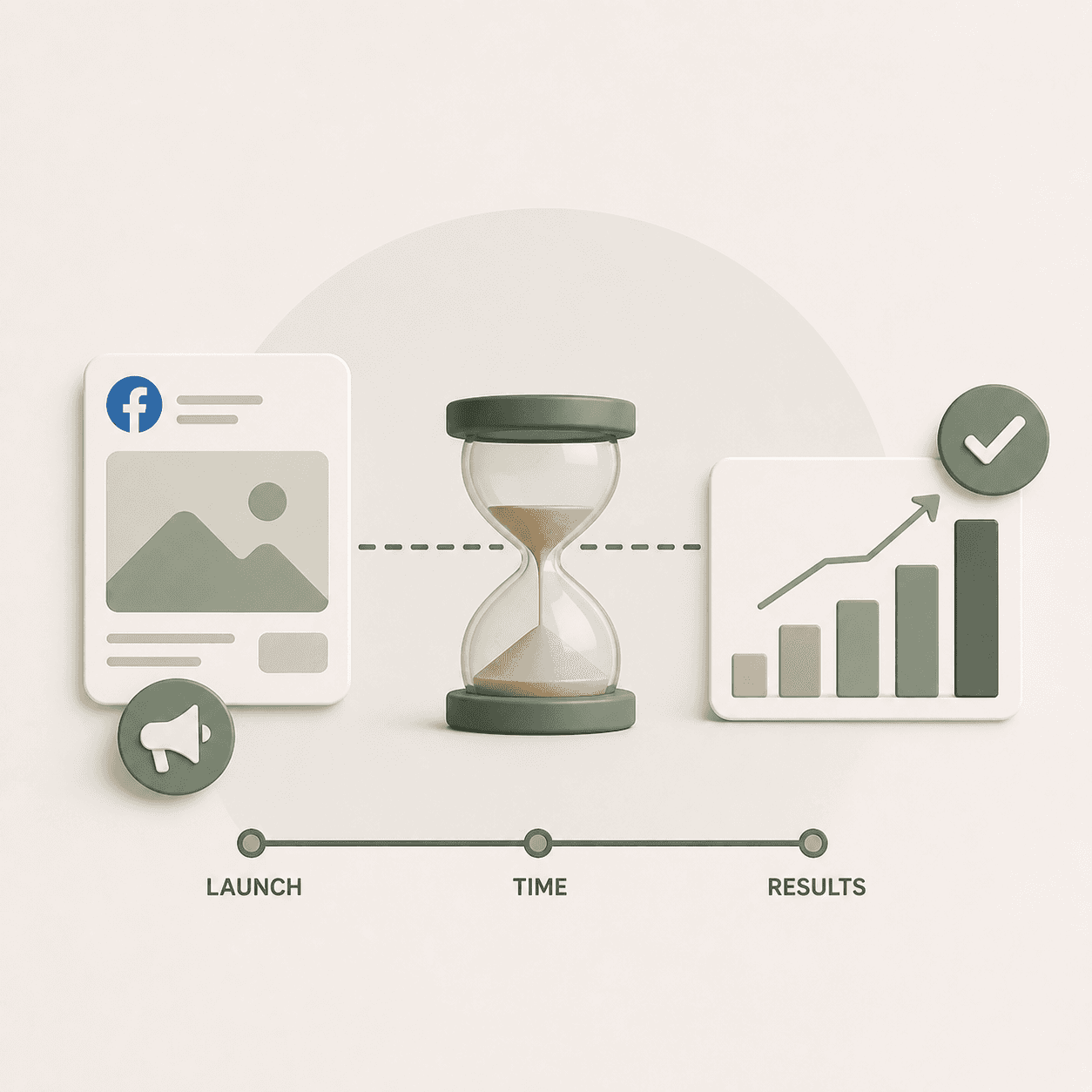
Most DTC (direct-to-consumer) founders make the same mistake: they judge an ad on day-1 or day-2 cost data, cut it before Meta's delivery system finishes learning, and restart the cycle with a fresh ad that also never gets enough signal to prove itself. The result is a permanent state of testing with zero usable data and a media budget that quietly bleeds out.

This post breaks down why early performance data misleads you, gives you a conversion-volume-based rule for deciding when to kill a Facebook ad, and walks through the math so you can set test budgets that actually produce a decision. You will also get a short list of the signals that do justify an early kill, so you are not just waiting around hoping.

If you take one thing from this piece: stop reacting to spend and start reacting to conversion volume.

Key Takeaways

  1. Day-1 and day-2 CPA spikes are expected noise, not kill signals. Small samples, learning phase instability, and incomplete attribution make early data unreliable.

  2. Use the 3x CPA rule: spend at least 3x your target CPA before deciding. Judge based on conversion count, not days elapsed.

  3. Back into your daily test budget with a simple formula: target conversions x expected CPA / test duration in days.

  4. Meta's official "50 conversions in 7 days" benchmark is impractical for most budgets. Use a realistic threshold instead.

  5. Legitimate kill signals exist (zero delivery, policy flags, very low CTR), but a high day-1 CPA is not one of them.

  6. Killing ads too fast compounds costs: you never exit the learning phase, and your account history stays noisy.

1. Why Early Ad Data Is Noisy

Three forces make day-1 and day-2 numbers unreliable.

Small-sample bias. Conversion data inside Meta is siloed at the campaign level. If your account generates 100 conversions per month and you split that across four campaigns, each campaign sees roughly 25 conversions. That is not enough volume for Meta's algorithm to optimize against, and it is definitely not enough for you to make a confident call on any single ad.

When you are looking at an ad with two or three conversions after 48 hours, you are drawing conclusions from a sample size that would fail a freshman statistics class. One lucky or unlucky purchase swing your CPA by 50% or more.

Learning phase instability. Meta's delivery system needs time to find the right audiences and placements for a new ad. During this window, delivery is intentionally broad. The algorithm is exploring, not exploiting. Expect cost volatility until the system has enough conversion events to narrow targeting.

Multi-touch attribution lag. Meta optimizes across multi-touch chains. In a typical three-ad path, each ad might receive roughly one-third credit. Surface-level day-1 numbers mislead because you are seeing incomplete attribution from journeys that have not finished yet. An ad that looks like it has zero conversions on day one may already be assisting conversions that will attribute over the next several days.

The breakdown effect. Surface-level breakdowns inside Ads Manager can compound the confusion. You might see Stories placements showing 4x ROAS (return on ad spend) while Feed shows 3x, and conclude you should run a Stories-only campaign. Do not do this. The incremental ROI on shifted spend is poor because those placements work together, and Meta's allocation already reflects that. Naive breakdown-driven decisions are another form of reacting to incomplete data.

The metrics that matter most during a test window are the ones you read after the signal has had time to develop, not the ones you panic-check on hour 36.

2. Why Meta's "50 Conversions in 7 Days" Rule Fails Most Brands

Meta's official learning phase documentation states that an ad set needs roughly 50 optimization events in 7 days to exit the learning phase. That sounds reasonable in a vacuum. It is not reasonable for most advertisers.

Do the math. If your target CPA is $100, hitting 50 conversions in 7 days means spending $714 per day per ad set. If you are running ten concurrent tests, that is approximately $7,000 per day, or $49,000 per week, on testing alone.

That blows out roughly 99% of DTC brands.

The 50-conversion benchmark exists because it is statistically ideal for Meta's machine learning model. But "statistically ideal for Meta" and "financially realistic for your business" are two different things. You need a threshold that gives you a usable signal without requiring a spend level that destroys your unit economics.

3. The 3x CPA Rule: A Better Decision Threshold

Instead of chasing 50 conversions, tie your kill decision to conversion volume relative to your target CPA.

The rule: spend at least 3x your target CPA before making a decision on any ad.

Here is how to read the results:

  • 3 or more conversions in that spend window = keep it running. The ad is converting within an acceptable range.

  • 2 conversions = yellow light. Let it run for roughly 1x more CPA of additional spend before deciding. You need a few more data points.

  • 0 to 1 conversions = cut it. The ad has had enough budget to prove itself and has not.

If your target CPA is $80, that means spending $240 before you make any call. At $150 target CPA, that is $450.

Some operators prefer a 5x CPA threshold when the client's budget allows it. The logic: treat early spend as pure learning cost and give the system a clean yes-or-no at the end. The tradeoff is a higher upfront cost per test, but you get a more confident read.

The point is the same either way. Stop judging ads by how many days they have been live. Judge them by how many conversions they have collected relative to your target cost.

This is directly connected to how long you should let a Meta ad test run before calling it. Time is a secondary variable. Conversion volume is the primary one.

You pulled a new ad live 36 hours ago. CPA (cost per acquisition) is double your target. Your instinct says kill it.

That instinct is wrong more often than it is right.

Most DTC (direct-to-consumer) founders make the same mistake: they judge an ad on day-1 or day-2 cost data, cut it before Meta's delivery system finishes learning, and restart the cycle with a fresh ad that also never gets enough signal to prove itself. The result is a permanent state of testing with zero usable data and a media budget that quietly bleeds out.

This post breaks down why early performance data misleads you, gives you a conversion-volume-based rule for deciding when to kill a Facebook ad, and walks through the math so you can set test budgets that actually produce a decision. You will also get a short list of the signals that do justify an early kill, so you are not just waiting around hoping.

If you take one thing from this piece: stop reacting to spend and start reacting to conversion volume.

Key Takeaways

  1. Day-1 and day-2 CPA spikes are expected noise, not kill signals. Small samples, learning phase instability, and incomplete attribution make early data unreliable.

  2. Use the 3x CPA rule: spend at least 3x your target CPA before deciding. Judge based on conversion count, not days elapsed.

  3. Back into your daily test budget with a simple formula: target conversions x expected CPA / test duration in days.

  4. Meta's official "50 conversions in 7 days" benchmark is impractical for most budgets. Use a realistic threshold instead.

  5. Legitimate kill signals exist (zero delivery, policy flags, very low CTR), but a high day-1 CPA is not one of them.

  6. Killing ads too fast compounds costs: you never exit the learning phase, and your account history stays noisy.

1. Why Early Ad Data Is Noisy

Three forces make day-1 and day-2 numbers unreliable.

Small-sample bias. Conversion data inside Meta is siloed at the campaign level. If your account generates 100 conversions per month and you split that across four campaigns, each campaign sees roughly 25 conversions. That is not enough volume for Meta's algorithm to optimize against, and it is definitely not enough for you to make a confident call on any single ad.

When you are looking at an ad with two or three conversions after 48 hours, you are drawing conclusions from a sample size that would fail a freshman statistics class. One lucky or unlucky purchase swing your CPA by 50% or more.

Learning phase instability. Meta's delivery system needs time to find the right audiences and placements for a new ad. During this window, delivery is intentionally broad. The algorithm is exploring, not exploiting. Expect cost volatility until the system has enough conversion events to narrow targeting.

Multi-touch attribution lag. Meta optimizes across multi-touch chains. In a typical three-ad path, each ad might receive roughly one-third credit. Surface-level day-1 numbers mislead because you are seeing incomplete attribution from journeys that have not finished yet. An ad that looks like it has zero conversions on day one may already be assisting conversions that will attribute over the next several days.

The breakdown effect. Surface-level breakdowns inside Ads Manager can compound the confusion. You might see Stories placements showing 4x ROAS (return on ad spend) while Feed shows 3x, and conclude you should run a Stories-only campaign. Do not do this. The incremental ROI on shifted spend is poor because those placements work together, and Meta's allocation already reflects that. Naive breakdown-driven decisions are another form of reacting to incomplete data.

The metrics that matter most during a test window are the ones you read after the signal has had time to develop, not the ones you panic-check on hour 36.

2. Why Meta's "50 Conversions in 7 Days" Rule Fails Most Brands

Meta's official learning phase documentation states that an ad set needs roughly 50 optimization events in 7 days to exit the learning phase. That sounds reasonable in a vacuum. It is not reasonable for most advertisers.

Do the math. If your target CPA is $100, hitting 50 conversions in 7 days means spending $714 per day per ad set. If you are running ten concurrent tests, that is approximately $7,000 per day, or $49,000 per week, on testing alone.

That blows out roughly 99% of DTC brands.

The 50-conversion benchmark exists because it is statistically ideal for Meta's machine learning model. But "statistically ideal for Meta" and "financially realistic for your business" are two different things. You need a threshold that gives you a usable signal without requiring a spend level that destroys your unit economics.

3. The 3x CPA Rule: A Better Decision Threshold

Instead of chasing 50 conversions, tie your kill decision to conversion volume relative to your target CPA.

The rule: spend at least 3x your target CPA before making a decision on any ad.

Here is how to read the results:

  • 3 or more conversions in that spend window = keep it running. The ad is converting within an acceptable range.

  • 2 conversions = yellow light. Let it run for roughly 1x more CPA of additional spend before deciding. You need a few more data points.

  • 0 to 1 conversions = cut it. The ad has had enough budget to prove itself and has not.

If your target CPA is $80, that means spending $240 before you make any call. At $150 target CPA, that is $450.

Some operators prefer a 5x CPA threshold when the client's budget allows it. The logic: treat early spend as pure learning cost and give the system a clean yes-or-no at the end. The tradeoff is a higher upfront cost per test, but you get a more confident read.

The point is the same either way. Stop judging ads by how many days they have been live. Judge them by how many conversions they have collected relative to your target cost.

This is directly connected to how long you should let a Meta ad test run before calling it. Time is a secondary variable. Conversion volume is the primary one.

Looking for Meta ads support?

We're a small, hardworking, US-based team. Book a call and get a free audit today.

4. The Testing Budget Formula

If you know how many conversions you need and what your expected CPA is, you can back into a daily test budget.

Daily test budget = target conversions x expected CPA / test duration in days

Example: you want 20 conversions in a 14-day test window, and your expected CPA is $100.

20 x $100 / 14 = approximately $143 per day.

That gives you a clear spend commitment upfront. No guessing, no hoping the budget is "enough."

Time windows by business type:

  • Default: approximately 1 week for most DTC brands.

  • Fast-purchase, high-volume businesses: 3 to 4 days. If your product sells at a $30 price point with high impulse purchase rates, you accumulate signal faster.

  • Small budgets with long purchase cycles: 10 to 14 days. If your CPA is high and your monthly conversion volume is low, you need more calendar time to collect enough events.

Match your test duration to your purchase cycle and budget, not to an arbitrary "let it run for a week" rule.

5. Permission to Wait

This section is for the founder who checks Ads Manager four times a day and feels physical discomfort watching a CPA sit at 2x target on day two.

You are not wasting money by letting an ad run through its learning window. You are investing in a data set that will give you a clear answer.

Killing an ad at 1.5x your target CPA spend is like pulling cookies out of the oven after five minutes because they do not look done yet. They are not done. You have not given the process enough time to complete.

Here is what to tell yourself and your team:

  • "We are not at our decision threshold yet. We need $X more in spend before we have enough data."

  • "Day-1 CPA is not a performance indicator. It is noise from the learning phase."

  • "If this ad is going to fail, the 3x CPA rule will tell us. We do not need to guess."

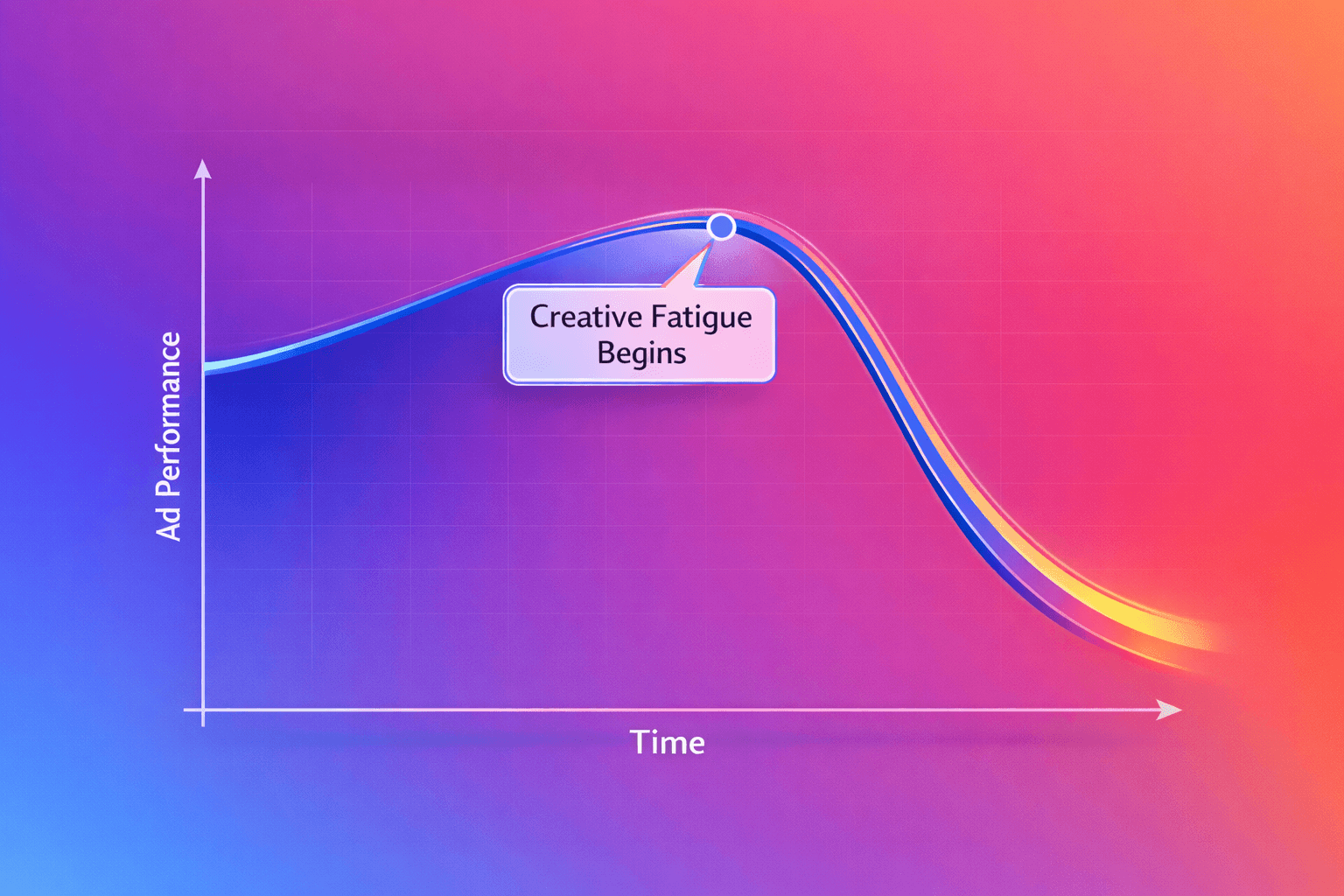
One important distinction: waiting for an ad to hit its spend threshold is different from ignoring ad fatigue. An ad in its learning phase has not reached enough of its audience to fatigue. An ad that has been running for weeks with declining CTR and rising frequency is a different problem. Know which situation you are in.

6. When to Kill a Facebook Ad for Real

Not every early kill is wrong. Some signals are legitimate, and they are different from a high CPA on day one.

Kill signals that justify an early cut:

  • Zero delivery after 24 to 48 hours. If Meta is not spending your budget at all, you likely have a policy rejection, an audience that is too narrow, or a bidding issue. No delivery means no data is coming, and waiting longer will not fix it.

  • CTR (click-through rate) far below your account benchmarks. If your account averages a 1.5% CTR on link clicks and a new ad is sitting at 0.3% after meaningful impressions, the creative concept is dead on arrival. The audience is seeing the ad and actively ignoring it.

  • Policy rejection signals. Disapproved ads, restricted delivery notices, or compliance flags. These will not resolve by waiting.

The common thread: these signals indicate that the ad will never collect enough data to be evaluated. That is fundamentally different from an ad that is collecting data but has not collected enough yet.

A CPA of 2x your target on day one, with reasonable CTR and active delivery, is not a kill signal. It is the learning phase doing exactly what it is supposed to do.

7. The Compounding Cost of Killing Too Fast

When you kill ads before they hit a decision threshold, you pay twice.

First, you lose the learning spend. Every dollar you spent on that ad generated data that Meta's algorithm was using to optimize. Kill the ad, and that data resets. The next ad starts from scratch.

Second, you never exit the learning phase. Your account stays in a permanent state of exploration. Meta never gets enough signal to move from broad delivery to optimized delivery. Your effective CPA stays elevated across the entire account, not just on the individual ad you cut.

This is the compounding cost most brands miss. They see killing a $200 test as saving $200. In reality, they are spending $200 on a partial data set, then spending another $200 on another partial data set, and never reaching the point where any data set is complete enough to produce a winner.

Over a quarter, a brand that kills ads at 1x CPA spend instead of 3x CPA spend might cycle through three times as many "tests" while producing zero statistically reliable conclusions. The media budget looks the same. The results are dramatically worse.

The path to lower CPA runs through patience and conversion volume, not through more frequent cuts.

Conclusion

Knowing when to kill a Facebook ad is one of the highest-ROI skills a DTC founder can develop. The answer is almost never "day one" and almost never "based on CPA alone."

Use the 3x CPA rule. Back into your daily budget with the testing formula. Give the learning phase enough runway to produce a real signal. Save your early kills for ads with zero delivery, policy flags, or CTR so low the creative is clearly rejected by the audience.

The founders who scale paid media profitably are not the ones who react fastest. They are the ones who react at the right time, with enough data to back the decision.

Stop guessing. Start measuring against a threshold.

Related Posts

Related Posts

Related Posts

Related Posts

Ready to talk?

Book A Call

We are a Paid Media agency based in New York, NY.

Flighted

New York, NY 11217

hello@flighted.co

© Flighted, 2026

Ready to talk?

Book A Call

We are a Paid Media agency based in New York, NY.

Flighted

New York, NY 11217

hello@flighted.co

© Flighted, 2026