How to Research Competitor Meta Ads Before You Launch a Campaign
Meta Ads
October 8, 2026

Table Of Contents
Most brands open Meta Ads Manager, build a campaign off a hunch, and find out six weeks later what actually works. That's backwards. Every competitor you have is already running a live experiment on the exact audience you're trying to reach, and Meta's own transparency tools hand you the results for free, no subscription required.
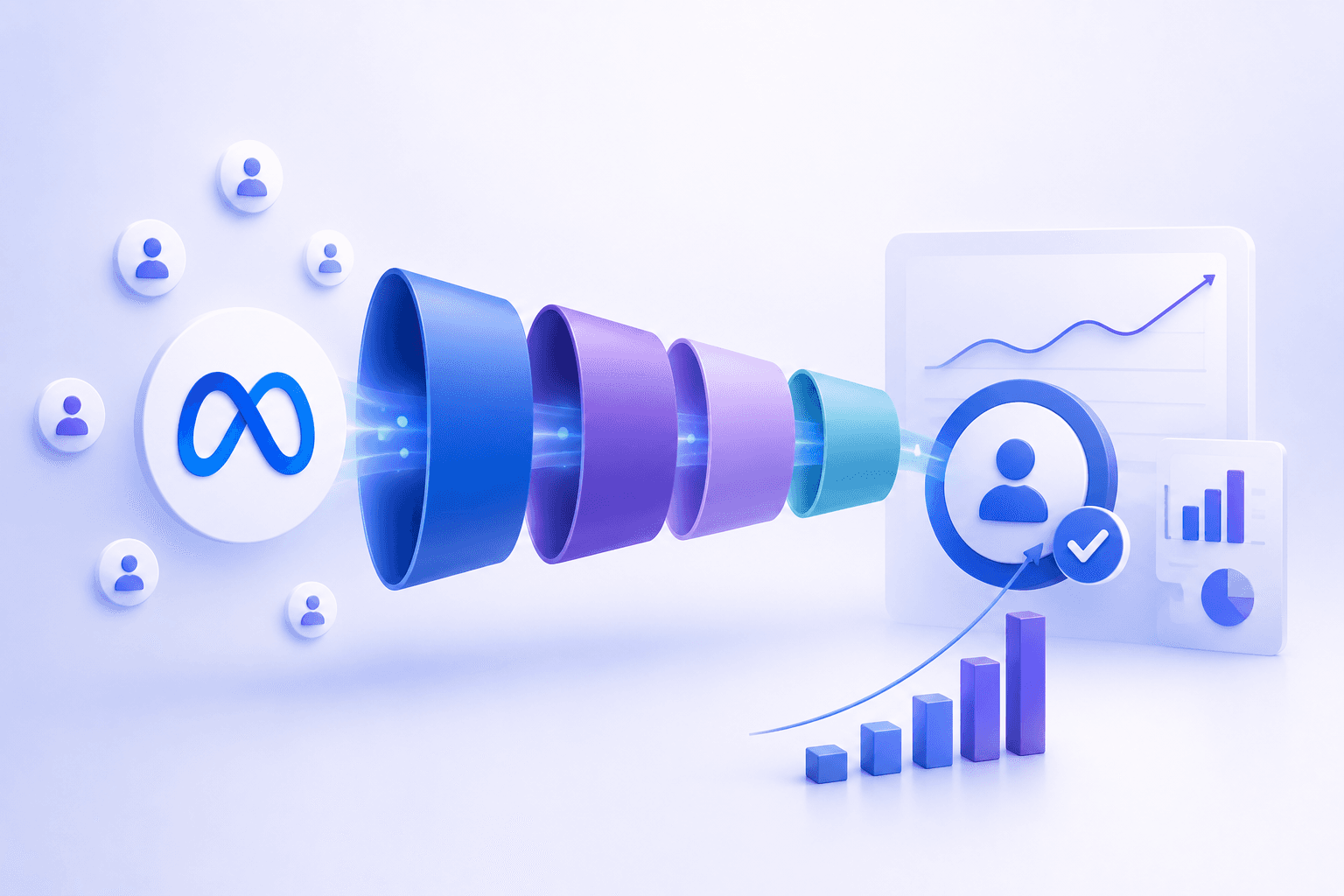
Competitor ad research isn't about copying creative. It's about shortcutting the discovery phase of a Meta campaign: which hooks are surviving past 30 days, which offers get pushed hardest, which funnel stage competitors are investing budget behind, and where the market has gone quiet. Done well, this research compresses weeks of blind creative testing into a focused first batch of ads built on validated patterns, not guesses.
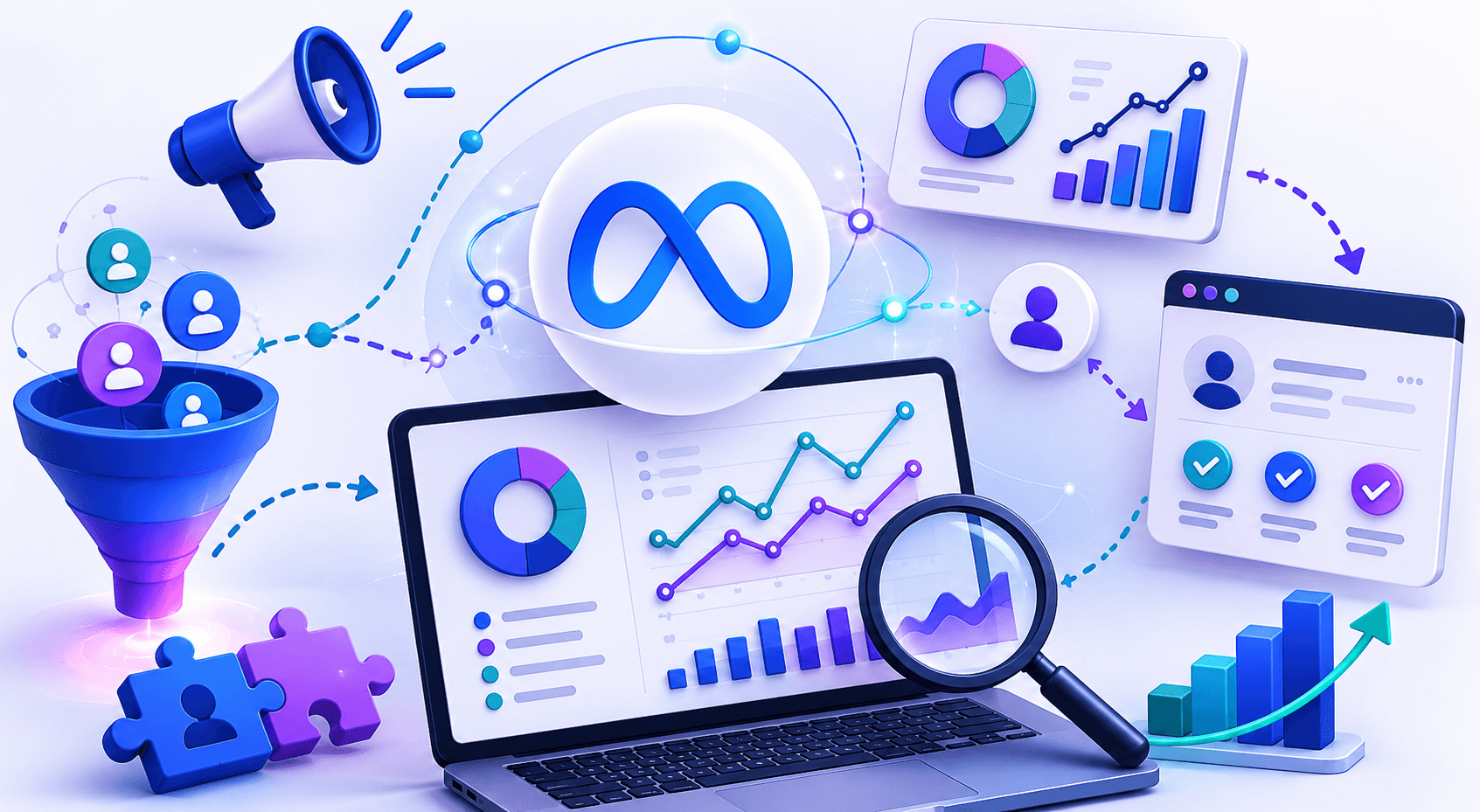
This post is a full pre-launch research process: where to pull data, how to read it correctly, which signals are noise versus signal, and how to turn 40 scattered competitor ads into a one-page brief your creative team can actually execute against. We'll also cover the tool landscape so you know when free native libraries are enough and when a paid tool earns its cost.
Key Takeaways
Meta's Ad Library (free, no login) shows every active ad a Page is running — start there before paying for anything.
Ad longevity (days active) is the strongest public proxy for performance you'll get without account access; 30+ days of continuous runtime signals Meta's algorithm is still rewarding the ad.
Analyze ads in clusters of 15-20 per competitor, grouped by hook and offer type — one winning ad is a data point, a repeated pattern across many ads is a signal worth acting on.
Map destination URLs to reverse-engineer competitor funnel structure: offer type, form friction, and message match between ad and landing page.
Paid spy tools add cross-platform search and saved-ad tracking, but they're built on the same public libraries — know what's genuinely free before you pay.
Treat the output as an input to your account structure and creative strategy, not a replacement for your own testing cycle.
1. Know What's Actually Public — and Where Each Platform's Library Lives
Before touching a third-party tool, understand what the ad platforms themselves already expose. Every major platform runs some form of public transparency library, and coverage differs meaningfully by platform.
Platform | Library name | What it shows | Spend visibility | Login required |
|---|---|---|---|---|
Meta (Facebook/Instagram) | All active ads by Page, full creative + copy | Range shown only for political/social issue ads | No | |
TikTok | Top-performing ads by region/industry, not full advertiser history | No | No | |
All active ads by advertiser Page | No | No | ||
All active ads by advertiser across Google's network | No | No |
Note the asymmetry: Meta and LinkedIn give you a competitor's full active ad set by Page name. TikTok's Creative Center is closer to a trending-ads leaderboard — it won't necessarily surface every ad a specific competitor is running, which is why TikTok-specific research often leans more heavily on paid tools than Meta research does.
For this post we're focused on Meta, since it's where most DTC and B2B SaaS budget concentrates, but the same clustering and longevity logic below applies regardless of platform.
2. Pull the Full Active Set — Search by Page, Not Keyword
Go to Meta's Ad Library and search by the competitor's exact Facebook or Instagram Page name, not a product keyword. Searching "supplements" or "project management software" returns a noisy mix of unrelated advertisers. Searching the Page name directly returns that advertiser's complete active ad library, filtered to just them.
If you don't know a competitor's exact Page name, two reliable sources:
Their website footer, which almost always links to their Facebook Page
Their Instagram bio, which frequently cross-links to the same Business Manager asset
Once you're in, set the country filter to match your target market and the ad category filter to "All ads" (not just political/social). You should now see every live creative, down to the exact copy and image or video.
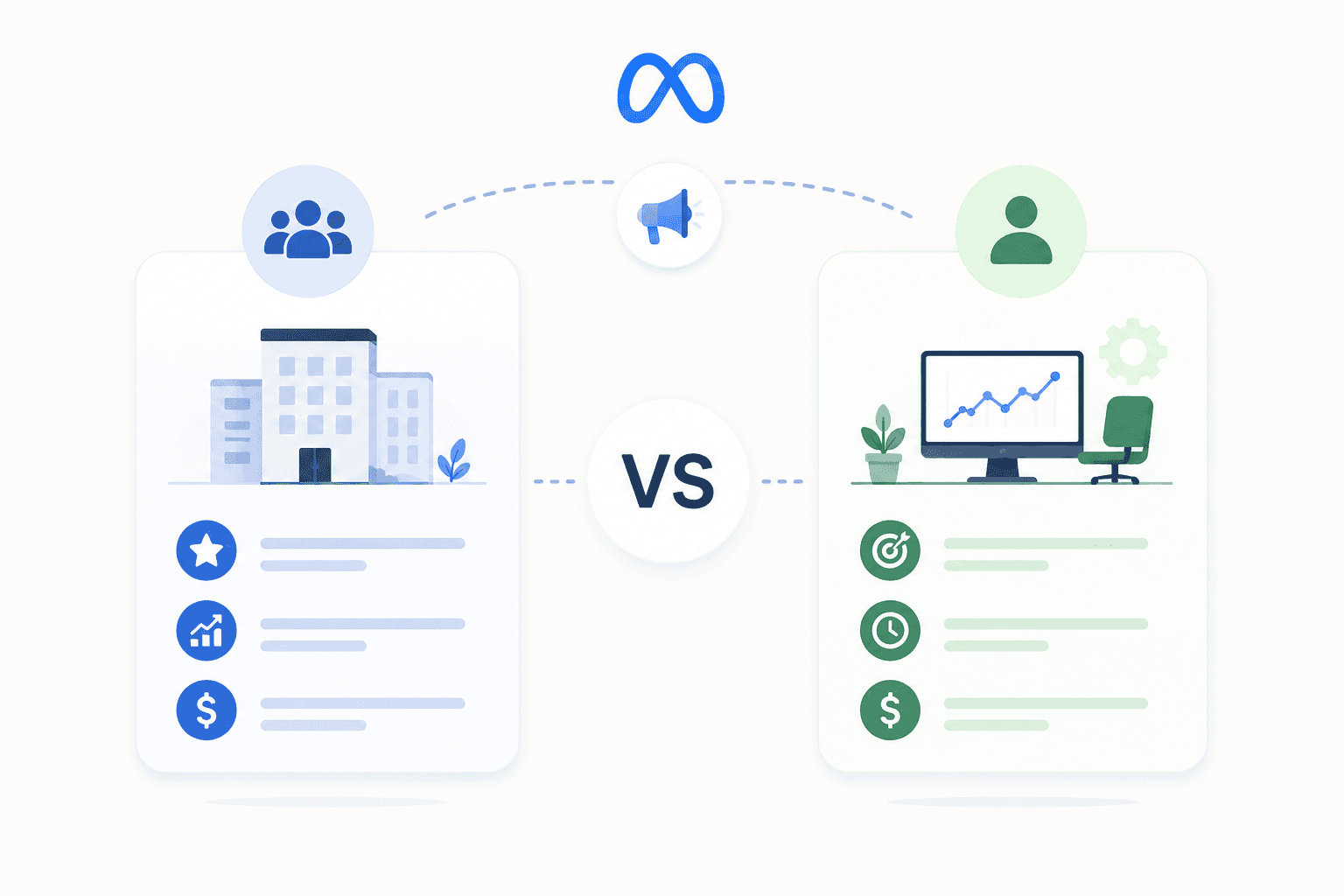
Repeat this for every direct competitor plus 1-2 "aspirational" competitors — brands slightly ahead of you in scale who you'd want to resemble in 12 months. Aspirational competitors often reveal funnel sophistication (retargeting sequences, offer tiers) that direct competitors your size haven't built yet.
3. Sort by Longevity First — It's Your Best Public Performance Signal
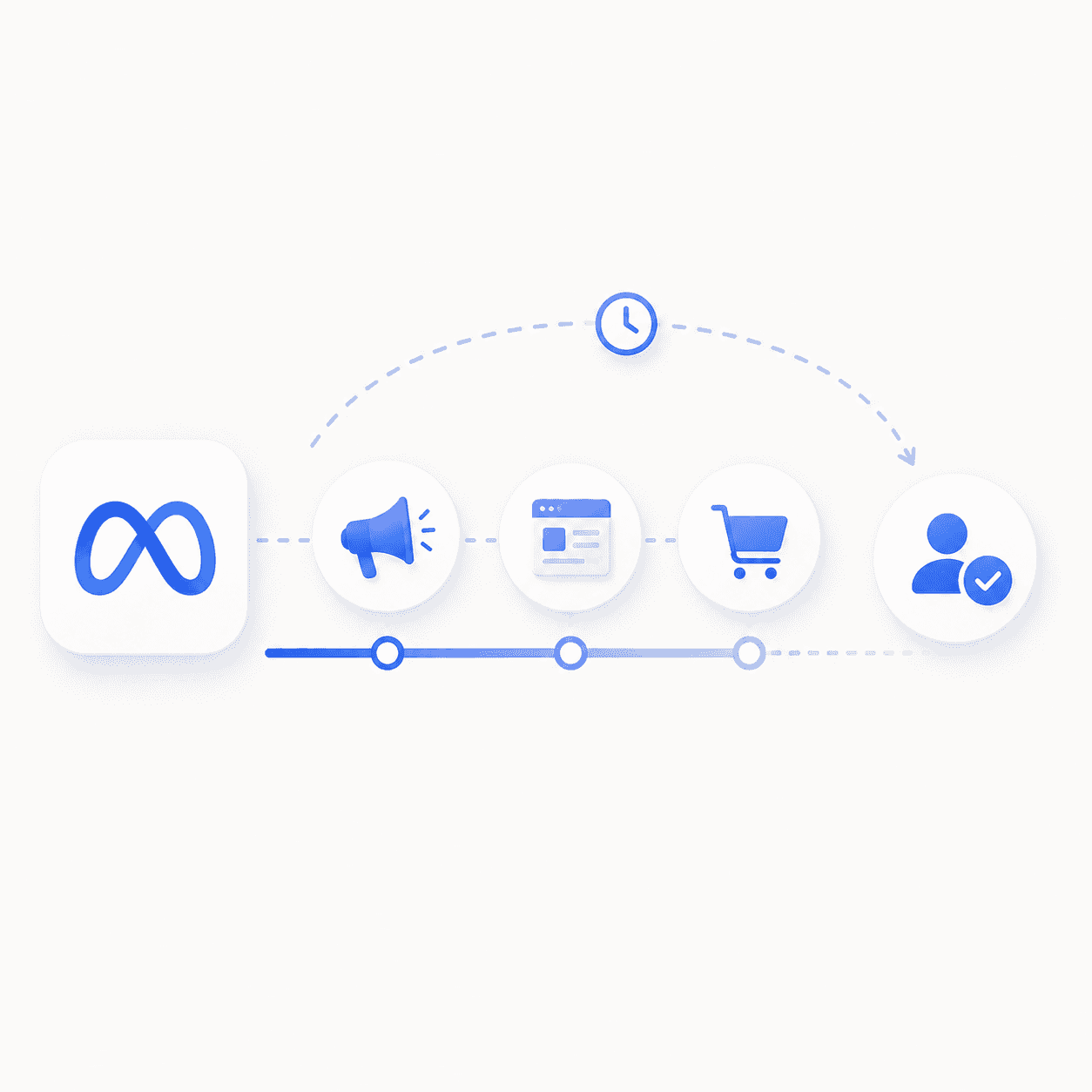
The single most useful data point in this entire process is how long an ad has been running continuously. Meta's delivery system throttles spend on underperforming ads quickly; it doesn't keep paying to show ads nobody engages with. So an ad still live after 30, 45, or 60 days is one Meta's own algorithm has decided is worth continuing to serve.
Use this as a rough performance tier system when you're scanning a competitor's active set:
Days active | What it likely signals | How to treat it |
|---|---|---|
0-7 days | Still in initial testing phase | Note it, don't act on it yet |
8-29 days | Passed early testing, may still be a variant in a split test | Worth tracking across your next check-in |
30-59 days | Validated performer; algorithm has sustained delivery | High-confidence pattern — include in your brief |
60+ days | Core evergreen asset for that competitor | Strongest signal available; prioritize understanding why it works |
This matters more for high ad-velocity DTC brands running dozens of concurrent creatives — if a competitor has 40 live ads and only 4 have cleared 30 days, those 4 are carrying real weight relative to the rest of their account.
4. Cluster by Hook and Offer — Don't Analyze Ads One at a Time
Pull 15-20 ads per competitor and group them by two dimensions:
Hook structure — the first 2-3 seconds of a video, or the headline of a static. Look for repetition in the opening move: pain-point callout ("Still manually tracking X?"), bold claim, social proof lead, or pattern interrupt. If 6 of 20 ads from one competitor open with a similar structural hook, that's not coincidence — it's a validated angle they keep funding.
Offer type — discount percentage, free trial, free consultation, bundle, lead magnet (ebook, calculator, webinar). Offers cluster too, and a shift in dominant offer type over your tracking period (e.g., a B2B competitor moving from "book a demo" to "download the ROI calculator") usually reflects a funnel strategy change worth understanding.
Cross-competitor patterns carry more weight than single-brand patterns. If every long-running ad across multiple unrelated competitors in your category shares a structural approach — say, problem-agitate-solve outperforming social-proof-led openings — that's a category-level signal independent of any one brand's creative team, and it should influence your test plan more than any single competitor's individual ad.
This clustering approach mirrors how dedicated hook-mining workflows process ad sets at scale: filter to long-running creative, group by structural pattern, score by frequency and longevity rather than judging ads individually.
5. Map Destination URLs to Reverse-Engineer the Funnel
Every ad links somewhere. Click through — don't just screenshot the ad itself — and record:
Page type: dedicated landing page vs. homepage vs. product page
Primary CTA: demo booking, free trial, discount code, waitlist, content download
Form friction: how many fields does the form ask for, and is it single-step or multi-step
Message match: does the landing page headline and imagery continue the ad's hook, or does the thread drop
For B2B SaaS competitors specifically, note whether cold traffic lands on a high-friction demo booking page or a lower-friction asset like a free calculator or ebook. That choice reflects where the competitor believes their cold audience sits in the buying cycle, and it's a direct input into your own full-funnel strategy — if every competitor is sending cold Meta traffic straight to a demo page and you suspect that's too much friction for cold audiences, that's a potential wedge, not just an observation.
6. Watch Format and Platform Shifts Over Time
A single snapshot tells you what's running today. A tracked snapshot over several weeks tells you what's changing — and changes are where the real signal lives.
Track these shift types across your check-ins:
Format mix shift: a competitor who was 90% static image suddenly running 70% UGC-style video. This almost always follows an internal test result, not a brand refresh for its own sake.
Cross-platform reuse: the same hook or concept appearing simultaneously on TikTok and Meta. This signals a validated concept being pushed cross-channel after proving out on one platform first.
Volume shift: a sudden jump in total active ad count, often preceding a seasonal push like Black Friday/Cyber Monday or a new product launch.
Date-stamp what you observe. "Competitor X shifted from 20% to 70% video between September 1 and October 1" is a usable data point for your brief. "Competitor X runs some video now" is not.
7. Know When a Paid Tool Earns Its Cost
Native libraries cover single-platform, single-competitor lookups well. Paid tools earn their subscription when you need:
Cross-platform search from one interface (Meta + TikTok + Google in one query)
Saved-ad tracking that alerts you when a tracked competitor launches new creative, instead of manually re-checking
Bulk export for clustering dozens of competitors' ad sets at once rather than one Page at a time
Historical ad data for ads a competitor has already paused or deleted, which native libraries typically drop from view
If you're tracking 3-5 direct competitors on a single platform, native libraries plus a weekly manual check are genuinely sufficient. If you're running ongoing competitive intelligence across 10+ competitors and multiple platforms, the time saved by a paid tool's automation generally justifies the cost. Don't pay for coverage you can get free; do pay to remove manual repetition once your watchlist grows past what you can check by hand in 15-20 minutes a week.
8. Build the Pattern Into a Brief — Not a Swipe File
The output of this entire process should be a short, usable brief, not a folder of screenshots. A working brief includes:
3-5 validated hook patterns, rewritten in your own brand voice and tied to your actual value proposition, not copied verbatim
1-2 funnel gaps you noticed in competitor landing pages — places their post-click experience drops the ad's promise, which you can execute better
Current format mix you're seeing win across the category, as a starting point for your own test matrix
Offer types in rotation, so your first test batch includes a comparable spread rather than one offer type by default
Hand this brief to whoever owns your creative strategy before the first draft gets built, not as a post-hoc justification for ads that already exist. The brief should shape the test plan.
9. Set a Recurring Check — Not a One-Time Audit
Competitor ad sets shift weekly. A one-time pull goes stale fast; the hook winning in September may be retired by November, and you won't know unless you're checking. Build a lightweight recurring cadence into your performance marketing strategy rhythm:
Same 3-5 core competitors, same longevity sort, roughly 15-20 minutes per check
Weekly or biweekly cadence for steady-state monitoring
Daily or near-daily during high-stakes windows like BFCM, when competitors move fast and ad sets change by the day
You're watching for one thing above all else: new ads that start clearing the 30-day mark. That's your signal something changed in what's converting for the category.
Most brands open Meta Ads Manager, build a campaign off a hunch, and find out six weeks later what actually works. That's backwards. Every competitor you have is already running a live experiment on the exact audience you're trying to reach, and Meta's own transparency tools hand you the results for free, no subscription required.
Competitor ad research isn't about copying creative. It's about shortcutting the discovery phase of a Meta campaign: which hooks are surviving past 30 days, which offers get pushed hardest, which funnel stage competitors are investing budget behind, and where the market has gone quiet. Done well, this research compresses weeks of blind creative testing into a focused first batch of ads built on validated patterns, not guesses.
This post is a full pre-launch research process: where to pull data, how to read it correctly, which signals are noise versus signal, and how to turn 40 scattered competitor ads into a one-page brief your creative team can actually execute against. We'll also cover the tool landscape so you know when free native libraries are enough and when a paid tool earns its cost.
Key Takeaways
Meta's Ad Library (free, no login) shows every active ad a Page is running — start there before paying for anything.
Ad longevity (days active) is the strongest public proxy for performance you'll get without account access; 30+ days of continuous runtime signals Meta's algorithm is still rewarding the ad.
Analyze ads in clusters of 15-20 per competitor, grouped by hook and offer type — one winning ad is a data point, a repeated pattern across many ads is a signal worth acting on.
Map destination URLs to reverse-engineer competitor funnel structure: offer type, form friction, and message match between ad and landing page.
Paid spy tools add cross-platform search and saved-ad tracking, but they're built on the same public libraries — know what's genuinely free before you pay.
Treat the output as an input to your account structure and creative strategy, not a replacement for your own testing cycle.
1. Know What's Actually Public — and Where Each Platform's Library Lives
Before touching a third-party tool, understand what the ad platforms themselves already expose. Every major platform runs some form of public transparency library, and coverage differs meaningfully by platform.
Platform | Library name | What it shows | Spend visibility | Login required |
|---|---|---|---|---|
Meta (Facebook/Instagram) | All active ads by Page, full creative + copy | Range shown only for political/social issue ads | No | |
TikTok | Top-performing ads by region/industry, not full advertiser history | No | No | |
All active ads by advertiser Page | No | No | ||
All active ads by advertiser across Google's network | No | No |
Note the asymmetry: Meta and LinkedIn give you a competitor's full active ad set by Page name. TikTok's Creative Center is closer to a trending-ads leaderboard — it won't necessarily surface every ad a specific competitor is running, which is why TikTok-specific research often leans more heavily on paid tools than Meta research does.
For this post we're focused on Meta, since it's where most DTC and B2B SaaS budget concentrates, but the same clustering and longevity logic below applies regardless of platform.
2. Pull the Full Active Set — Search by Page, Not Keyword
Go to Meta's Ad Library and search by the competitor's exact Facebook or Instagram Page name, not a product keyword. Searching "supplements" or "project management software" returns a noisy mix of unrelated advertisers. Searching the Page name directly returns that advertiser's complete active ad library, filtered to just them.
If you don't know a competitor's exact Page name, two reliable sources:
Their website footer, which almost always links to their Facebook Page
Their Instagram bio, which frequently cross-links to the same Business Manager asset
Once you're in, set the country filter to match your target market and the ad category filter to "All ads" (not just political/social). You should now see every live creative, down to the exact copy and image or video.
Repeat this for every direct competitor plus 1-2 "aspirational" competitors — brands slightly ahead of you in scale who you'd want to resemble in 12 months. Aspirational competitors often reveal funnel sophistication (retargeting sequences, offer tiers) that direct competitors your size haven't built yet.
3. Sort by Longevity First — It's Your Best Public Performance Signal
The single most useful data point in this entire process is how long an ad has been running continuously. Meta's delivery system throttles spend on underperforming ads quickly; it doesn't keep paying to show ads nobody engages with. So an ad still live after 30, 45, or 60 days is one Meta's own algorithm has decided is worth continuing to serve.
Use this as a rough performance tier system when you're scanning a competitor's active set:
Days active | What it likely signals | How to treat it |
|---|---|---|
0-7 days | Still in initial testing phase | Note it, don't act on it yet |
8-29 days | Passed early testing, may still be a variant in a split test | Worth tracking across your next check-in |
30-59 days | Validated performer; algorithm has sustained delivery | High-confidence pattern — include in your brief |
60+ days | Core evergreen asset for that competitor | Strongest signal available; prioritize understanding why it works |
This matters more for high ad-velocity DTC brands running dozens of concurrent creatives — if a competitor has 40 live ads and only 4 have cleared 30 days, those 4 are carrying real weight relative to the rest of their account.
4. Cluster by Hook and Offer — Don't Analyze Ads One at a Time
Pull 15-20 ads per competitor and group them by two dimensions:
Hook structure — the first 2-3 seconds of a video, or the headline of a static. Look for repetition in the opening move: pain-point callout ("Still manually tracking X?"), bold claim, social proof lead, or pattern interrupt. If 6 of 20 ads from one competitor open with a similar structural hook, that's not coincidence — it's a validated angle they keep funding.
Offer type — discount percentage, free trial, free consultation, bundle, lead magnet (ebook, calculator, webinar). Offers cluster too, and a shift in dominant offer type over your tracking period (e.g., a B2B competitor moving from "book a demo" to "download the ROI calculator") usually reflects a funnel strategy change worth understanding.
Cross-competitor patterns carry more weight than single-brand patterns. If every long-running ad across multiple unrelated competitors in your category shares a structural approach — say, problem-agitate-solve outperforming social-proof-led openings — that's a category-level signal independent of any one brand's creative team, and it should influence your test plan more than any single competitor's individual ad.
This clustering approach mirrors how dedicated hook-mining workflows process ad sets at scale: filter to long-running creative, group by structural pattern, score by frequency and longevity rather than judging ads individually.
5. Map Destination URLs to Reverse-Engineer the Funnel
Every ad links somewhere. Click through — don't just screenshot the ad itself — and record:
Page type: dedicated landing page vs. homepage vs. product page
Primary CTA: demo booking, free trial, discount code, waitlist, content download
Form friction: how many fields does the form ask for, and is it single-step or multi-step
Message match: does the landing page headline and imagery continue the ad's hook, or does the thread drop
For B2B SaaS competitors specifically, note whether cold traffic lands on a high-friction demo booking page or a lower-friction asset like a free calculator or ebook. That choice reflects where the competitor believes their cold audience sits in the buying cycle, and it's a direct input into your own full-funnel strategy — if every competitor is sending cold Meta traffic straight to a demo page and you suspect that's too much friction for cold audiences, that's a potential wedge, not just an observation.
6. Watch Format and Platform Shifts Over Time
A single snapshot tells you what's running today. A tracked snapshot over several weeks tells you what's changing — and changes are where the real signal lives.
Track these shift types across your check-ins:
Format mix shift: a competitor who was 90% static image suddenly running 70% UGC-style video. This almost always follows an internal test result, not a brand refresh for its own sake.
Cross-platform reuse: the same hook or concept appearing simultaneously on TikTok and Meta. This signals a validated concept being pushed cross-channel after proving out on one platform first.
Volume shift: a sudden jump in total active ad count, often preceding a seasonal push like Black Friday/Cyber Monday or a new product launch.
Date-stamp what you observe. "Competitor X shifted from 20% to 70% video between September 1 and October 1" is a usable data point for your brief. "Competitor X runs some video now" is not.
7. Know When a Paid Tool Earns Its Cost
Native libraries cover single-platform, single-competitor lookups well. Paid tools earn their subscription when you need:
Cross-platform search from one interface (Meta + TikTok + Google in one query)
Saved-ad tracking that alerts you when a tracked competitor launches new creative, instead of manually re-checking
Bulk export for clustering dozens of competitors' ad sets at once rather than one Page at a time
Historical ad data for ads a competitor has already paused or deleted, which native libraries typically drop from view
If you're tracking 3-5 direct competitors on a single platform, native libraries plus a weekly manual check are genuinely sufficient. If you're running ongoing competitive intelligence across 10+ competitors and multiple platforms, the time saved by a paid tool's automation generally justifies the cost. Don't pay for coverage you can get free; do pay to remove manual repetition once your watchlist grows past what you can check by hand in 15-20 minutes a week.
8. Build the Pattern Into a Brief — Not a Swipe File
The output of this entire process should be a short, usable brief, not a folder of screenshots. A working brief includes:
3-5 validated hook patterns, rewritten in your own brand voice and tied to your actual value proposition, not copied verbatim
1-2 funnel gaps you noticed in competitor landing pages — places their post-click experience drops the ad's promise, which you can execute better
Current format mix you're seeing win across the category, as a starting point for your own test matrix
Offer types in rotation, so your first test batch includes a comparable spread rather than one offer type by default
Hand this brief to whoever owns your creative strategy before the first draft gets built, not as a post-hoc justification for ads that already exist. The brief should shape the test plan.
9. Set a Recurring Check — Not a One-Time Audit
Competitor ad sets shift weekly. A one-time pull goes stale fast; the hook winning in September may be retired by November, and you won't know unless you're checking. Build a lightweight recurring cadence into your performance marketing strategy rhythm:
Same 3-5 core competitors, same longevity sort, roughly 15-20 minutes per check
Weekly or biweekly cadence for steady-state monitoring
Daily or near-daily during high-stakes windows like BFCM, when competitors move fast and ad sets change by the day
You're watching for one thing above all else: new ads that start clearing the 30-day mark. That's your signal something changed in what's converting for the category.
Ready to Turn Competitor Research Into a Working Campaign?
Research tells you what's converting in the category. Turning that into a profitable account structure, creative system, and test plan is where most teams stall. Flighted builds the full-funnel execution — media buying, creative production, and landing pages — on top of exactly this kind of research.
Conclusion
Competitor ad research done right isn't about finding ads to copy — it's about compressing the discovery phase of your own campaign. Pull the full active set from native libraries, sort by longevity, cluster by hook and offer, map the funnel behind each ad, and track how the mix shifts over time. Turn what you find into a short brief, not a swipe file, and recheck it on a cadence instead of once before launch. The brands that treat this as a recurring input to their creative process consistently skip the slowest, most expensive part of testing: finding out what doesn't work.
FAQ
Is it legal to look at competitor ads on Meta?
Yes. Meta's Ad Library is a public transparency tool, built specifically so anyone can search any advertiser's active ads without an account, login, or special permission.
How do I find a competitor's ads if I don't follow their Page?
Search Meta's Ad Library by the competitor's exact Facebook or Instagram Page name rather than a product keyword. You don't need to follow, like, or engage with the Page in any way to view its full active ad library.
How long should an ad run before I consider it a "winner"?
There's no universal cutoff, but 30+ days of continuous activity is a reasonable threshold. Meta's delivery system generally throttles spend on underperforming ads well before that point, so sustained runtime is a strong proxy for conversion performance even without visibility into the actual numbers.
Can I see how much a competitor is spending on a specific ad?
Only partially, and only in specific categories. Meta shows spend ranges for ads related to politics, elections, or social issues in certain regions. For standard commercial ads, exact spend isn't public. You'll need to estimate relative scale from ad count, new-creative velocity, and apparent reach rather than exact dollar figures.
Should I copy a competitor's ad if it's been running for months?
No. Copy the underlying pattern — hook structure, offer type, format — not the specific execution. Running near-identical creative risks IP issues and won't carry your actual value proposition or brand voice, which is what ultimately makes an ad convert for your audience specifically rather than theirs.
How often should I re-check competitor ads?
Weekly or biweekly for your core 3-5 competitors is enough to catch meaningful shifts without turning monitoring into a full-time task. Increase to daily only during high-stakes periods like Black Friday/Cyber Monday, when competitor ad sets change quickly and the cost of missing a shift is higher.
Do I need a paid ad spy tool, or are native libraries enough?
For 3-5 competitors on a single platform, native libraries (Meta Ad Library, TikTok Creative Center, LinkedIn Ad Library) plus a weekly manual check are genuinely sufficient. Paid tools earn their cost once you're tracking 10+ competitors across multiple platforms and need automated alerts, bulk export, or historical data on ads competitors have since pulled down.
What's the difference between researching DTC versus B2B SaaS competitor ads?
DTC competitor sets tend to be larger and faster-moving, with more creative volume and format experimentation, so longevity sorting matters more to filter signal from noise. B2B SaaS competitor sets are usually smaller with longer sales cycles, so funnel mapping (what offer sits behind each ad, and how much friction the landing page introduces) tends to carry more weight than raw creative volume.
Related Posts
Related Posts
Related Posts
Related Posts




















Ready to talk?
New York, NY 11217
hello@flighted.co
© Flighted, 2026
Ready to talk?
New York, NY 11217
hello@flighted.co
© Flighted, 2026