Meta Ads Best Practices to Follow in 2026

Meta Ads

July 12, 2026

laptop laying on table

Table Of Contents

No headings found on page

If 2024–2025 taught advertisers anything, it’s that Meta’s ads ecosystem is now dictated by three forces:

  • AI-driven consolidation in ad account structures

  • A renewed emphasis on creative quality and diversity

  • Greater priority on organic content in the auction

The platform is simpler than ever, but with Meta on track to earn $240 billion in ad revenue this year, the competition is fiercer than ever. As a result, advertisers who win in 2026 will be the ones who learn to ride both waves at once.

After months of analyzing performance across dozens of accounts, here’s what’s actually working as we head into 2026.

Key Takeaways

  • Modern Structure: Transition from "Test → Scale" to a three-stage system utilizing "Challenger ASC" campaigns for ads that fail to scale initially.

  • Social-Native Content: Prioritize raw, vertical, low-fidelity video that mimics organic user content to improve engagement.

  • Organic Synergy: Use existing organic post IDs as ads to benefit from social proof and higher Estimated Action Rates.

  • Creative Diversity: Focus on repurposing winning messaging across different formats (static, carousel, video) rather than just increasing volume.

  • Four Peaks Theory: Implement quarterly site-wide promotions to drive revenue spikes and provide Meta with fresh signals.

Testing/Scaling Is Out, “Challenger ASCs” Are In

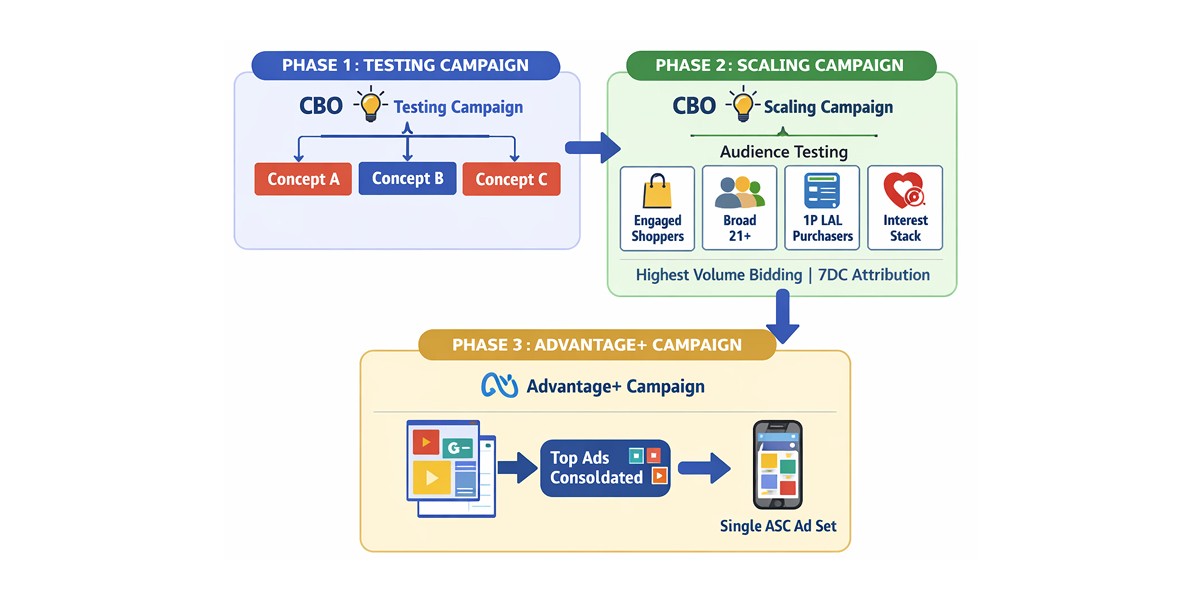
The commonly used Test → Scale approach (where you have a dedicated campaign for creative testing, and a few more stable "scale" campaigns where you promote your creative winners) just doesn’t cut it anymore. The new "Advantage Plus" (or ASC) campaign format means that Meta can handle a much higher volume of ads in a single adset than ever before. Additionally, ads that do well in creative testing have been harder and harder to scale successfully out of their original test adset, so we have adjusted to scale ads where they are originally launched.

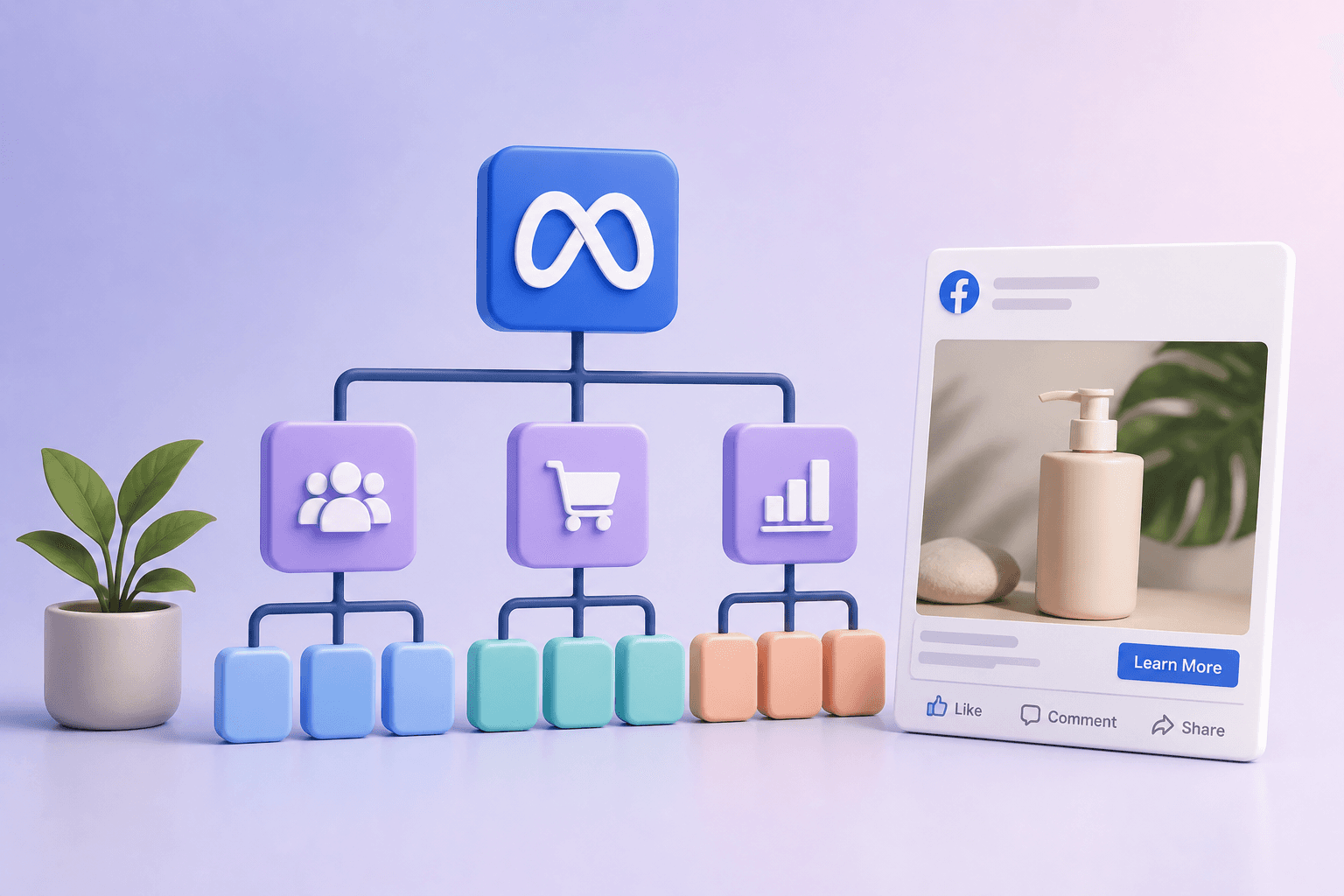
The modern approach has evolved into a three-stage system:

1. Testing Campaign

Run multiple batches of concepts in a single campaign, in a single adset. No more isolating concepts by adset. You can still "scale" any winners into a higher spending scale campaign, but in addition to doing that, you should also execute step 2 in this process.

2. Challenger ASC

In addition to pushing winners straight into your main scale campaign(s), every few months or weeks you should create a “Challenger” ASC ad set (or entire campaign). This is where you put the top 5–10 champion variations that DID NOT scale from their test campaign, and let them compete in a less competitive environment with dedicated budget.

3. Core Campaigns

This element of the account structure remains unchanged. Only the "best of the best" ads that prove themselves in both steps graduate into evergreen. This structure massively reduces wasted spend, stabilizes your ASC, and gives Meta cleaner signals.

Here's roughly how much signal each stage needs before you act on it:

Stage

Typical Spend/Volume Threshold

What It Tells You

Action

Testing Campaign

~$20-$40 total spend per concept (regardless of daily budget)

Enough signal to identify a likely winner

Move top performer to Challenger ASC or Winners campaign

Challenger ASC

5-10 champion variations per challenger set

Whether a near-miss can still scale in a less competitive environment

Promote survivors into Core; retire the rest

Core/Evergreen Campaign

Ads that have proven themselves across both prior stages

Long-term reliability, not just an early spike

Hold spend steady; monitor frequency for fatigue

Ad set volume ceiling

10-20 active ads spanning formats/angles (not 50+ iterations of one hook)

Diversity vs. noise

Repurpose winning messaging into new formats instead of duplicating

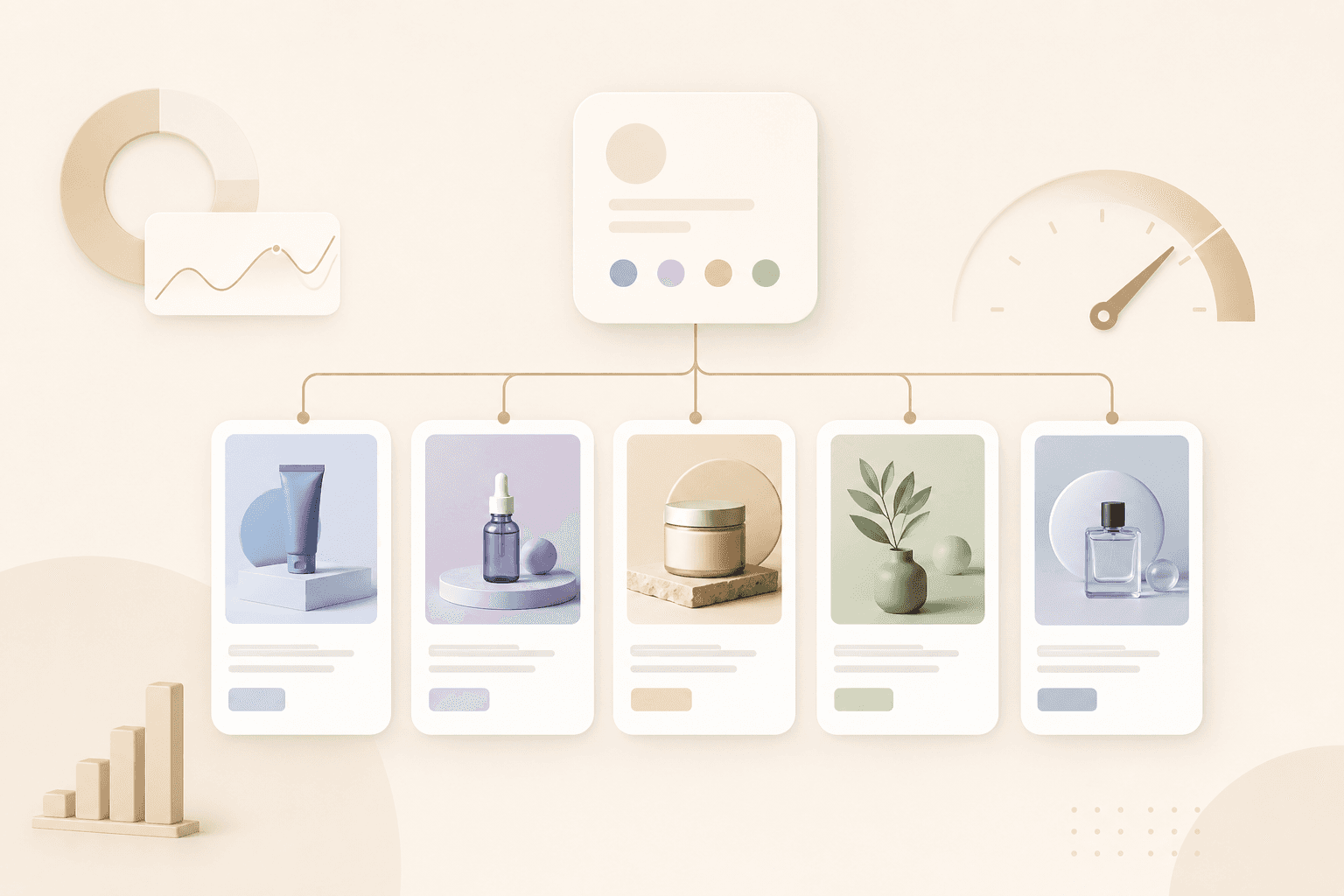
Stop Guessing on Budget: Funnel Stage Allocation and the Prospecting/Retargeting Split

Account structure means nothing if the budget behind it is a guess. Most accounts we inherit are either dumping everything into prospecting with no retargeting safety net, or leaning so hard on retargeting that growth flatlines the moment the warm audience runs dry. Both are fixable with the same discipline you just applied to your ad sets: allocate by stage, not by feel.

Budget by Funnel Stage

Here's the allocation split we default to across client accounts, adjusted from there based on growth stage and traffic volume:

Funnel Stage

Budget Allocation

Primary KPI

What It's For

Awareness (TOF)

10-15%

CPA (cost per acquisition), FTIR (first-time impression rate), New Visitor Percentage

Introducing cold audiences who match your customer profile but don't know you yet

Conversion (BOF Prospecting)

70-85%

CPA, ROAS (return on ad spend), conversion rate

Turning warm and cold-but-primed traffic into first purchases

Retargeting (BOF Warm)

1-10%

Recovery rate, incremental ROAS

Closing cart abandoners and product page viewers

Retention (Past Purchasers)

1-3%

Repeat purchase rate, LTV

Cross-sell, replenishment, and loyalty offers

This skews bottom-heavy on purpose. Conversion campaigns fund everything else, so they get the majority share. But the 20-30% you put into awareness and consideration isn't wasted spend, it's the pipeline that keeps your retargeting audience from drying up and your CPAs from creeping every quarter.

Adjust by stage:

  • Early growth (pre-$1M): skip the awareness split entirely. Push 70-75% into conversion until your bottom-of-funnel is consistently profitable.

  • Scaling ($1-5M): run the standard split above.

  • Established ($5M+): shift awareness up to 20-25%. At this size, brand-building compounds and starts paying down your CPAs across every other stage.

Most agencies will tell you to run a 70/30 or 80/20 prospecting-to-retargeting split. We don't. Our default is to keep retargeting under 10% of total spend, and we don't meaningfully invest in it at all until an account is spending close to $1K/day or more in core prospecting.

Here's the part most of that conventional advice misses: retargeting isn't as separate from prospecting as the old playbooks assume. Since iOS 14, pixel-based exclusion lists have gotten unreliable, retargeting probably reaches only about half the users it used to, and exclusion match rates are poor enough that a meaningful share of "already converted" or "already retargeted" users still show up inside your core prospecting campaigns anyway. In practice, that means your prospecting spend is already doing a chunk of retargeting's job for you, just without a separate line item or a second creative brief.

What this means for your budget:

  • Below roughly $1K/day in prospecting spend, skip a dedicated retargeting campaign almost entirely, or cap it at cart-abandonment only. The audience is too small to justify a second budget line, and prospecting's imperfect exclusions are already recapturing some of that warm traffic.

  • Once you're consistently spending $1K/day or more in core prospecting, layer in dedicated retargeting, but hold it under 10% of total ad spend unless you have a high volume of non-paid traffic (organic, email, SMS) feeding warm audiences that paid isn't already touching.

  • Use different creative in retargeting than prospecting. It doesn't need a from-scratch brief, press quotes, feature callouts, and comparison ads tend to perform well here, or simply older prospecting winners that newer audiences haven't seen yet.

  • Consider using Incremental Attribution in retargeting to ensure that it is only taking credit for sales truly driven by your retargeting ads

  • Where you have multiple SKUs and a lower-consideration product, run dynamic catalog retargeting instead of building static retargeting creative from scratch.

The reason this isn't just a smaller version of the standard split: exclusion targeting on Meta genuinely doesn't work the way it used to. Even with a clean exclusion list synced from your CRM or Klaviyo, a real share of already-converted or already-engaged users will still slip back into your prospecting audience. Rather than fight that with a heavier retargeting build, we let prospecting do double duty and reserve dedicated retargeting spend for the specific warm-intent moments (cart abandonment, high-value SKUs) where it earns its keep.

Dial In Your Audience Signals (Not Just Your Targeting)

Most Meta ads best practices obsess over targeting settings. The real game is the auction. Meta rewards the quality of the signals you feed it, not the precision of the boxes you check.

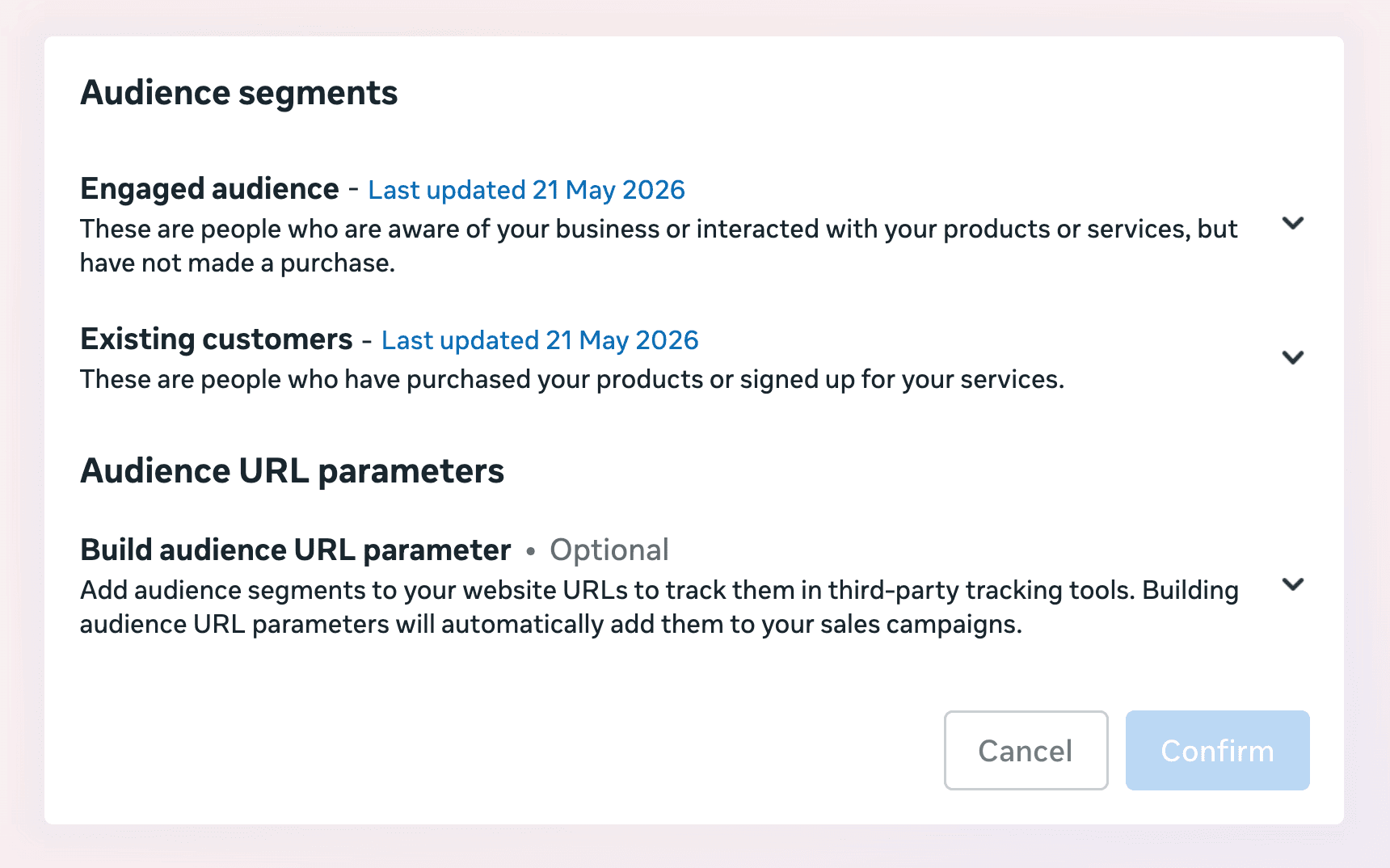
Start with your Meta audience segments. Meta lets you label who is New, Engaged, or Existing. Define all three on purpose.

Existing customers convert at nearly three times the rate of cold audiences, at half the CPA. Segmenting them deliberately changes what the algorithm optimizes toward.

Value Rules and Customer Lifecycle settings now steer the auction, not just your reporting. Use them to tell Meta which conversions are worth more: a repeat buyer over a one-time deal-seeker, or a high-margin SKU over a loss leader. Meta then bids toward value, not raw volume.

According to Meta, Advantage+ Audience drives "15% lower cost per result for awareness objective campaigns." Meta also reports that early results show Value Rules driving 2x more high-value conversions than business-as-usual campaigns.

For prospecting, lead with Advantage+ Audience and feed it first-party and CRM signals: customer lists, purchase events, high-value segments. The stronger your inputs, the better it expands into audiences that resemble your best customers.

One caveat on lookalike audiences: they are only as good as the seed list behind them. A 1% lookalike off a small or low-quality source will underperform a well-fed Advantage+ campaign. Build seeds from your highest-value customers, not your entire buyer file.

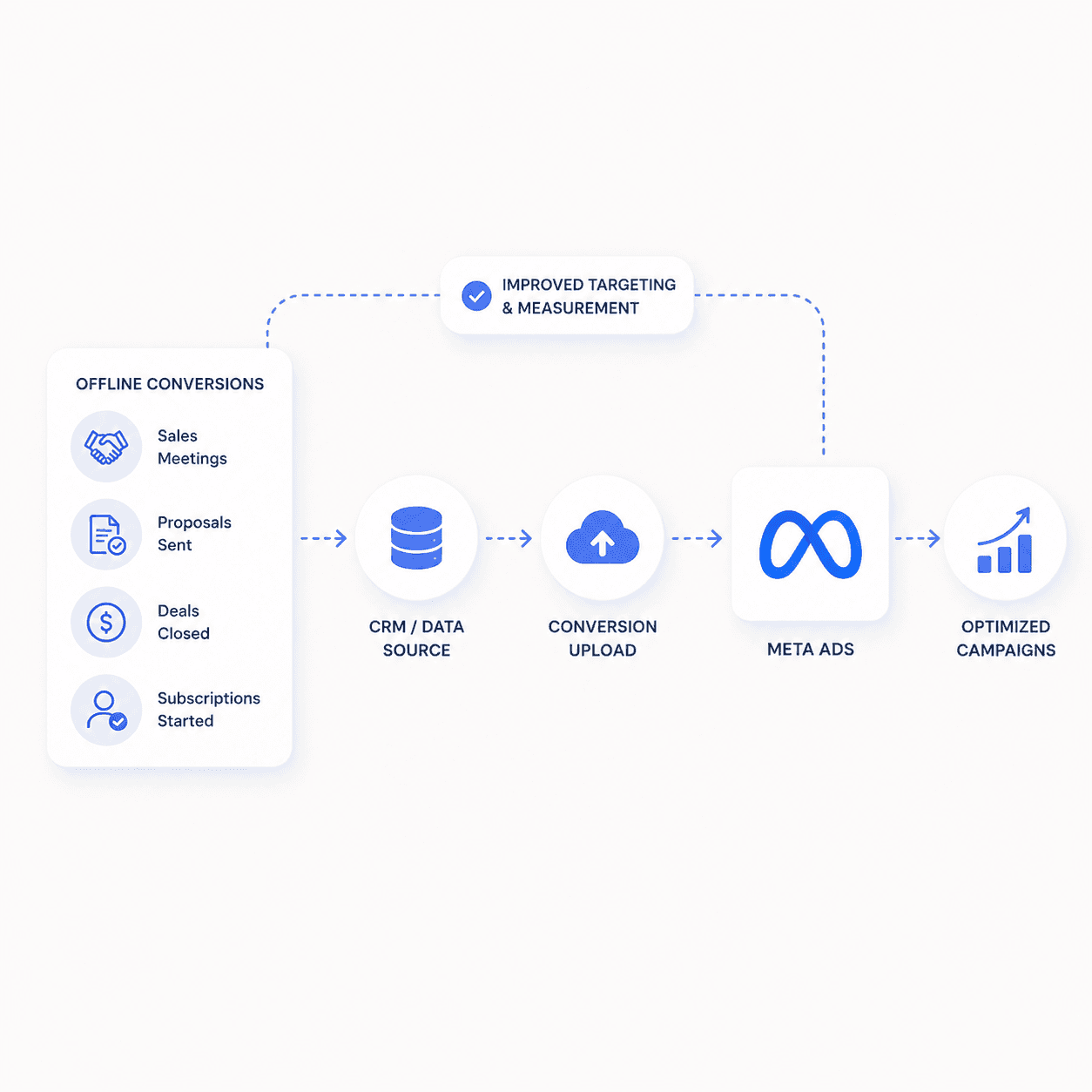
Running Meta for B2B or SaaS? Optimize on lead quality, not lead volume. Fire two events at minimum.

First, a top Lead event: a booked demo or a started trial. Second, a down-funnel Qualified Lead event, passed via form-field logic or a CRM/CAPI signal.

That second event teaches Meta to optimize for fit, not form-fills. At Flighted, we count a lead as qualified only at annual revenue of $500K or more. That teaches the algorithm to find real buyers, not tire-kickers.

Social-Native Videos Are Dominating

The best ads don't look like ads. Vertical, raw, social-native content is no longer a trend or something that should be considered as separate from a paid ads strategy. With Reels now driving 45% of all Instagram engagement, it is the format that Meta is explicitly rewarding.

The more your ad feels like content someone’s friend would post on their story, the better it does. These ads may contain elements like:

  • quick cuts

  • handheld camera angle

  • selfie POV style footage

  • social platform native elements (comment overlays, etc)

  • casual, real-life moments

  • micro-storytelling (called "yapper" ads)

Tools like Reel.farm have become weapons here because they produce assets that feel exactly like Instagram Reels or TikTok content. Super low-fidelity, but scroll-stopping to most Instagram users.

Boosting Your OWN Organic Posts (Seriously, Start Doing This)

We are increasingly seeing boosted posts from a brand's own Instagram page outperform the exact same content when it uploaded manually as a typical Meta ad. In short, Meta is favoring ads built from real post IDs, even if they didn't get a ton of engagement, over normal ads. These organic posts get some social proof to help them gain early traction as an ad, and seem to have higher Estimated Action Rates in Meta's ad auction that help them to outperform Traditional ads.

How to test this in 2026

  1. Build a light but consistent organic posting cadence - Instagram Reels should take the highest precedent.

  2. Identify your top organic performers weekly.

  3. Promote those post IDs directly in your Meta ad campaigns. Treat Instagram as your "test sandbox" for Meta ads.

Pro tip: you can easily select ALL of your IG Reels at once and bulk launch them as ads with Blip, a bulk ad launcher for Meta ads.

Creative Diversity > Pumping Out Volume

Ever since Meta's often talked-about Andromeda ad algorithm update, creative diversity matters more than creative volume now. That means when you find a winner, your job isn’t to crank out 20 more iterations of it. It's to repurpose that winning messaging across new creative formats.

Example repurposing strategies:

  • Winning Video? Extract the hook for a static variation or convert the narrative into a 3-frame carousel.

  • Winning Static? Transform the headline into a video hook or add motion effects using tools like Canva or Sora.

If 2024–2025 taught advertisers anything, it’s that Meta’s ads ecosystem is now dictated by three forces:

  • AI-driven consolidation in ad account structures

  • A renewed emphasis on creative quality and diversity

  • Greater priority on organic content in the auction

The platform is simpler than ever, but with Meta on track to earn $240 billion in ad revenue this year, the competition is fiercer than ever. As a result, advertisers who win in 2026 will be the ones who learn to ride both waves at once.

After months of analyzing performance across dozens of accounts, here’s what’s actually working as we head into 2026.

Key Takeaways

  • Modern Structure: Transition from "Test → Scale" to a three-stage system utilizing "Challenger ASC" campaigns for ads that fail to scale initially.

  • Social-Native Content: Prioritize raw, vertical, low-fidelity video that mimics organic user content to improve engagement.

  • Organic Synergy: Use existing organic post IDs as ads to benefit from social proof and higher Estimated Action Rates.

  • Creative Diversity: Focus on repurposing winning messaging across different formats (static, carousel, video) rather than just increasing volume.

  • Four Peaks Theory: Implement quarterly site-wide promotions to drive revenue spikes and provide Meta with fresh signals.

Testing/Scaling Is Out, “Challenger ASCs” Are In

The commonly used Test → Scale approach (where you have a dedicated campaign for creative testing, and a few more stable "scale" campaigns where you promote your creative winners) just doesn’t cut it anymore. The new "Advantage Plus" (or ASC) campaign format means that Meta can handle a much higher volume of ads in a single adset than ever before. Additionally, ads that do well in creative testing have been harder and harder to scale successfully out of their original test adset, so we have adjusted to scale ads where they are originally launched.

The modern approach has evolved into a three-stage system:

1. Testing Campaign

Run multiple batches of concepts in a single campaign, in a single adset. No more isolating concepts by adset. You can still "scale" any winners into a higher spending scale campaign, but in addition to doing that, you should also execute step 2 in this process.

2. Challenger ASC

In addition to pushing winners straight into your main scale campaign(s), every few months or weeks you should create a “Challenger” ASC ad set (or entire campaign). This is where you put the top 5–10 champion variations that DID NOT scale from their test campaign, and let them compete in a less competitive environment with dedicated budget.

3. Core Campaigns

This element of the account structure remains unchanged. Only the "best of the best" ads that prove themselves in both steps graduate into evergreen. This structure massively reduces wasted spend, stabilizes your ASC, and gives Meta cleaner signals.

Here's roughly how much signal each stage needs before you act on it:

Stage

Typical Spend/Volume Threshold

What It Tells You

Action

Testing Campaign

~$20-$40 total spend per concept (regardless of daily budget)

Enough signal to identify a likely winner

Move top performer to Challenger ASC or Winners campaign

Challenger ASC

5-10 champion variations per challenger set

Whether a near-miss can still scale in a less competitive environment

Promote survivors into Core; retire the rest

Core/Evergreen Campaign

Ads that have proven themselves across both prior stages

Long-term reliability, not just an early spike

Hold spend steady; monitor frequency for fatigue

Ad set volume ceiling

10-20 active ads spanning formats/angles (not 50+ iterations of one hook)

Diversity vs. noise

Repurpose winning messaging into new formats instead of duplicating

Stop Guessing on Budget: Funnel Stage Allocation and the Prospecting/Retargeting Split

Account structure means nothing if the budget behind it is a guess. Most accounts we inherit are either dumping everything into prospecting with no retargeting safety net, or leaning so hard on retargeting that growth flatlines the moment the warm audience runs dry. Both are fixable with the same discipline you just applied to your ad sets: allocate by stage, not by feel.

Budget by Funnel Stage

Here's the allocation split we default to across client accounts, adjusted from there based on growth stage and traffic volume:

Funnel Stage

Budget Allocation

Primary KPI

What It's For

Awareness (TOF)

10-15%

CPA (cost per acquisition), FTIR (first-time impression rate), New Visitor Percentage

Introducing cold audiences who match your customer profile but don't know you yet

Conversion (BOF Prospecting)

70-85%

CPA, ROAS (return on ad spend), conversion rate

Turning warm and cold-but-primed traffic into first purchases

Retargeting (BOF Warm)

1-10%

Recovery rate, incremental ROAS

Closing cart abandoners and product page viewers

Retention (Past Purchasers)

1-3%

Repeat purchase rate, LTV

Cross-sell, replenishment, and loyalty offers

This skews bottom-heavy on purpose. Conversion campaigns fund everything else, so they get the majority share. But the 20-30% you put into awareness and consideration isn't wasted spend, it's the pipeline that keeps your retargeting audience from drying up and your CPAs from creeping every quarter.

Adjust by stage:

  • Early growth (pre-$1M): skip the awareness split entirely. Push 70-75% into conversion until your bottom-of-funnel is consistently profitable.

  • Scaling ($1-5M): run the standard split above.

  • Established ($5M+): shift awareness up to 20-25%. At this size, brand-building compounds and starts paying down your CPAs across every other stage.

Most agencies will tell you to run a 70/30 or 80/20 prospecting-to-retargeting split. We don't. Our default is to keep retargeting under 10% of total spend, and we don't meaningfully invest in it at all until an account is spending close to $1K/day or more in core prospecting.

Here's the part most of that conventional advice misses: retargeting isn't as separate from prospecting as the old playbooks assume. Since iOS 14, pixel-based exclusion lists have gotten unreliable, retargeting probably reaches only about half the users it used to, and exclusion match rates are poor enough that a meaningful share of "already converted" or "already retargeted" users still show up inside your core prospecting campaigns anyway. In practice, that means your prospecting spend is already doing a chunk of retargeting's job for you, just without a separate line item or a second creative brief.

What this means for your budget:

  • Below roughly $1K/day in prospecting spend, skip a dedicated retargeting campaign almost entirely, or cap it at cart-abandonment only. The audience is too small to justify a second budget line, and prospecting's imperfect exclusions are already recapturing some of that warm traffic.

  • Once you're consistently spending $1K/day or more in core prospecting, layer in dedicated retargeting, but hold it under 10% of total ad spend unless you have a high volume of non-paid traffic (organic, email, SMS) feeding warm audiences that paid isn't already touching.

  • Use different creative in retargeting than prospecting. It doesn't need a from-scratch brief, press quotes, feature callouts, and comparison ads tend to perform well here, or simply older prospecting winners that newer audiences haven't seen yet.

  • Consider using Incremental Attribution in retargeting to ensure that it is only taking credit for sales truly driven by your retargeting ads

  • Where you have multiple SKUs and a lower-consideration product, run dynamic catalog retargeting instead of building static retargeting creative from scratch.

The reason this isn't just a smaller version of the standard split: exclusion targeting on Meta genuinely doesn't work the way it used to. Even with a clean exclusion list synced from your CRM or Klaviyo, a real share of already-converted or already-engaged users will still slip back into your prospecting audience. Rather than fight that with a heavier retargeting build, we let prospecting do double duty and reserve dedicated retargeting spend for the specific warm-intent moments (cart abandonment, high-value SKUs) where it earns its keep.

Dial In Your Audience Signals (Not Just Your Targeting)

Most Meta ads best practices obsess over targeting settings. The real game is the auction. Meta rewards the quality of the signals you feed it, not the precision of the boxes you check.

Start with your Meta audience segments. Meta lets you label who is New, Engaged, or Existing. Define all three on purpose.

Existing customers convert at nearly three times the rate of cold audiences, at half the CPA. Segmenting them deliberately changes what the algorithm optimizes toward.

Value Rules and Customer Lifecycle settings now steer the auction, not just your reporting. Use them to tell Meta which conversions are worth more: a repeat buyer over a one-time deal-seeker, or a high-margin SKU over a loss leader. Meta then bids toward value, not raw volume.

According to Meta, Advantage+ Audience drives "15% lower cost per result for awareness objective campaigns." Meta also reports that early results show Value Rules driving 2x more high-value conversions than business-as-usual campaigns.

For prospecting, lead with Advantage+ Audience and feed it first-party and CRM signals: customer lists, purchase events, high-value segments. The stronger your inputs, the better it expands into audiences that resemble your best customers.

One caveat on lookalike audiences: they are only as good as the seed list behind them. A 1% lookalike off a small or low-quality source will underperform a well-fed Advantage+ campaign. Build seeds from your highest-value customers, not your entire buyer file.

Running Meta for B2B or SaaS? Optimize on lead quality, not lead volume. Fire two events at minimum.

First, a top Lead event: a booked demo or a started trial. Second, a down-funnel Qualified Lead event, passed via form-field logic or a CRM/CAPI signal.

That second event teaches Meta to optimize for fit, not form-fills. At Flighted, we count a lead as qualified only at annual revenue of $500K or more. That teaches the algorithm to find real buyers, not tire-kickers.

Social-Native Videos Are Dominating

The best ads don't look like ads. Vertical, raw, social-native content is no longer a trend or something that should be considered as separate from a paid ads strategy. With Reels now driving 45% of all Instagram engagement, it is the format that Meta is explicitly rewarding.

The more your ad feels like content someone’s friend would post on their story, the better it does. These ads may contain elements like:

  • quick cuts

  • handheld camera angle

  • selfie POV style footage

  • social platform native elements (comment overlays, etc)

  • casual, real-life moments

  • micro-storytelling (called "yapper" ads)

Tools like Reel.farm have become weapons here because they produce assets that feel exactly like Instagram Reels or TikTok content. Super low-fidelity, but scroll-stopping to most Instagram users.

Boosting Your OWN Organic Posts (Seriously, Start Doing This)

We are increasingly seeing boosted posts from a brand's own Instagram page outperform the exact same content when it uploaded manually as a typical Meta ad. In short, Meta is favoring ads built from real post IDs, even if they didn't get a ton of engagement, over normal ads. These organic posts get some social proof to help them gain early traction as an ad, and seem to have higher Estimated Action Rates in Meta's ad auction that help them to outperform Traditional ads.

How to test this in 2026

  1. Build a light but consistent organic posting cadence - Instagram Reels should take the highest precedent.

  2. Identify your top organic performers weekly.

  3. Promote those post IDs directly in your Meta ad campaigns. Treat Instagram as your "test sandbox" for Meta ads.

Pro tip: you can easily select ALL of your IG Reels at once and bulk launch them as ads with Blip, a bulk ad launcher for Meta ads.

Creative Diversity > Pumping Out Volume

Ever since Meta's often talked-about Andromeda ad algorithm update, creative diversity matters more than creative volume now. That means when you find a winner, your job isn’t to crank out 20 more iterations of it. It's to repurpose that winning messaging across new creative formats.

Example repurposing strategies:

  • Winning Video? Extract the hook for a static variation or convert the narrative into a 3-frame carousel.

  • Winning Static? Transform the headline into a video hook or add motion effects using tools like Canva or Sora.

Want this structure built for you, and 25+ ads a month?

We're a small, hardworking team. Book a call and get a free Meta Ads audit today.

Run a Sale Quarterly And Adopt The "Four Peaks Theory"

The data is undeniable: brands that run major sitewide promotions at least four times per year grow faster and scale more profitably. Performance marketing has simply gotten too competitive to not run promos. The Four Peaks Theory isn’t optional anymore. It's part of the modern DTC playbook. And it doesn't matter how “premium” your brand is.

A predictable sales calendar does three things:

  1. Drives reliable revenue spikes that drastically improve your blended ROAS

  2. Trains customers to buy during key windows

  3. Gives Meta fresh signals and resets performance

Strategic, infrequent sitewide sales are still one of the few guaranteed performance levers left. Use them.

Grow AOV to Raise Your Tolerable CPA Floor

The hard truth for most DTC businesses is that CPAs only go one direction over time: up. Customer acquisition costs have risen 222% over the past eight years . Your only defense is increasing the value of each customer. You should be obsessing over what you can do OFF of the ad platform to improve AOV (average order value):

  • In-cart upsells

  • Pre-purchase bundles (DTC brands with well-designed bundles see AOV lifts of 1.5x to 2.2x )

  • Post-purchase upsell sequences using tools like Rebuy or Aftersell

Think of the first conversion as your chance to squeeze out as much margin as possible, without relying on repeat purchase behavior you can’t predict.

On bidding, start on Highest Volume (lowest-cost) while you gather signal. Once you hit stable volume (roughly 50 conversions per week per ad set), move high-AOV and multi-SKU accounts to target ROAS (tROAS) or Cost-Per-Result-Goal bidding. That protects margin at scale, and our guide to Meta ads bid strategies covers when to switch.

Measure What Matters: The Meta Ads Best Practices Most Brands Skip

Measuring Meta honestly is one of the most overlooked Meta ads best practices. Platform-reported ROAS and incremental ROAS are not the same number.

The ROAS in Ads Manager tells you what Meta claims credit for. Incremental ROAS tells you what would not have happened without the spend. Only one of those pays your bills.

Stop anchoring to a mythical 4:1 target. Triple Whale's dataset of 40,000+ ecommerce brands posted a median Meta ROAS of 1.88 in 2025–26.

Sports & Outdoors led at 2.35, while Media & Publishing sat at the bottom at 1.13 and Health & Wellness trailed at 1.44. Triple Whale also clocked CPMs up 13.24% year over year. Those are platform-reported, ecommerce-only numbers.

Your break-even ROAS, set by your gross margin, is the only valid floor. If a 2.2 ROAS clears margin, 2.2 is your target, not someone's blog benchmark.

The gap between reported and real is not small, and it does not run one way. In Stella's analysis of 46 DTC brands, average incremental ROAS (2.87) ran 21% above platform-reported ROAS (2.37). There was no reliable linear relationship between the two.

Advantage+ can win early, too. But in Haus's study of 640 geo-holdout experiments, manual campaigns averaged 32% post-treatment lift versus 17% for Advantage+. Overall, Haus found Meta drove a 19% average lift to brands' primary KPIs.

The lesson is not "manual wins." It is: test incrementality in your own account.

As you scale past roughly $100K/month, graduate your scorecard. Platform ROAS alone stops being trustworthy at that spend.

Add NCROAS (new-customer ROAS) to see whether you are buying growth or just repeat orders. Add MER (marketing efficiency ratio, your blended ROAS across all channels) to catch what platform attribution double-counts.

Layer in third-party attribution or a holdout test to keep everyone honest. These are the metrics that actually matter once real money is on the line.

Keep the reporting simple. A monthly Meta report only needs four lines:

  • Total spend

  • Blended MER (and aMER, your ad-only blended ROAS)

  • New-customer CPA

  • Incrementality read (your latest holdout or lift result)

If those four move in the right direction together, you are winning. If platform ROAS looks great but MER and new-customer CPA are sliding, the platform is taking credit for sales you already owned.

Final Thoughts

Meta advertising in 2026 is less about hacky, overly-manual media buying tactics across things like audience testing and bid methods, and more about feeding the ad platform the right signals. Diverse creative. Simplified account structure that plays into the strengths of Advantage Plus. Building a defensible business from a margin perspective. These strategies are how DTC brands will win Meta ads in 2026.

Frequently Asked Questions

Is Advantage Plus (Adv+) targeting right for every DTC brand?

For most DTC brands spending $5K+/month on Meta, yes. Adv+ targeting handles audience allocation better than manual campaign structures at scale, and the Challenger approach gives you a structured way to rescue ads that didn't scale out of testing. The exception: if you're early-stage with limited creative volume, you need enough ad variations to give Adv+ targeting something to work with before it can optimize effectively.

How many ads should I be running in a single campaign?

There's no hard ceiling, but quality and diversity matter more than quantity. Focus on having 10–20 active ads that span different formats (video, static, carousel) and different messaging angles. Stacking 50 iterations of the same hook does not help Meta's algorithm, it just creates noise. Repurpose winning concepts across formats instead of duplicating them.

Do I need a large organic following for the boosted post strategy to work?

No. Meta is rewarding ads built from real post IDs regardless of follower count or engagement on the original post. Even a Reel with 200 views can outperform the same creative uploaded as a standard ad. The key is consistency: post regularly on Instagram (prioritize Reels), identify your top performers weekly, and promote those post IDs directly. The social proof compounds over time, but you don't need it to start.

How do I know when to run a sitewide sale if my brand is positioned as premium?

The "premium brands don't run sales" argument doesn't hold up in the current paid media environment. CPAs trend up over time no matter what. That's not a hypothesis, it's the reality across accounts. Strategic, infrequent promotions (four times per year) protect your brand positioning while giving Meta fresh purchase signals and driving the revenue spikes that improve your blended ROAS. The key word is strategic: set clear windows, don't discount more than necessary, and treat each sale as a planned performance lever, not a panic move.

How do I run Meta ads for an AI SaaS startup in 2026?

The Meta ads best practices here are event-first, not audience-first.

Your addressable audience is small, so signal quality matters more than reach. Optimize to two events. Fire a Lead event (booked demo or started trial) and a Qualified Lead event fed from your CRM through the Conversions API (CAPI).

Expect a demo-and-trial funnel, not a purchase funnel. Judge performance on qualified-lead cost and downstream pipeline, not raw form-fills.

How do I run Meta ads for a fintech SaaS company?

Use the same two-event setup: a Lead event up top and a CRM-fed Qualified Lead event down-funnel. Fintech adds tighter compliance and creative review, so keep claims clean and qualify by CRM stage rather than gated-form volume. The mechanics we use for fintech SaaS brands follow the same discipline: optimize for fit, then let CAPI teach Meta who actually qualifies.

How should I structure a Meta ad account for a B2B SaaS company vs a DTC brand?

The core Meta ads best practices are identical for both; only the optimization event changes.

Both use the same lean testing-to-core structure covered above. A DTC brand optimizes to Purchase; a B2B SaaS brand optimizes to demo/trial plus a qualified-lead event.

Cost expectations differ too. Per WordStream, the average Meta lead-gen CPL is $27.66, well below Google's $70.11.

B2B-adjacent categories like Industrial & Commercial run higher, at a $37.34 CPL, so optimize on qualified-lead cost, not raw CPL. For the full playbook, see our guide to Meta ads for B2B SaaS.

Related Posts

Related Posts

Related Posts

Related Posts

Ready to talk?

Book A Call

We are a Paid Media agency based in New York, NY.
Flighted

New York, NY 11217

hello@flighted.co

© Flighted, 2026

Ready to talk?

Book A Call

We are a Paid Media agency based in New York, NY.

Flighted

New York, NY 11217

hello@flighted.co

© Flighted, 2026