B2B SaaS Conversion Rate Benchmarks 2026
Paid Media
May 5, 2026
Table Of Contents
Looking for Meta ads support?
We're a small, hardworking US-based team. Book a call and get a free audit today.
B2B SaaS Conversion Rate Benchmarks by Funnel Stage
This is the core of what most people are looking for. Each stage has its own typical range, and knowing where you fall helps you prioritize what to fix first.
Visitor to Lead Conversion Rate
Average B2B SaaS companies convert visitors to leads at 1.5–2.5%. Top performers hit 8–15%. That gap represents a lot of potential revenue sitting on the table.
Paid traffic typically converts higher at this stage because visitors arrive with stronger intent. They clicked an ad about a specific problem, so they're already somewhat qualified. PLG companies often see 3–9% visitor-to-signup rates because the barrier to entry is lower.
Lead to MQL Conversion Rate
Once someone becomes a lead, what percentage qualifies as marketing-ready? For sales-led motions, expect 25–40%. PLG companies often see 45–65% because their leads self-select through product usage.
This rate depends heavily on lead source quality. A webinar attendee who sat through 45 minutes of content converts differently than someone who downloaded a PDF and never opened it.
MQL to SQL Conversion Rate
The benchmark falls between 30–45% for sales-led and 35–55% for PLG. This is where sales and marketing alignment shows up in the numbers.
If your MQL-to-SQL rate is low, one of two things is happening: either marketing is passing leads that don't meet sales criteria, or sales isn't following up effectively. Tightening your MQL definition at the previous stage directly improves this number.
SQL to Opportunity Conversion Rate
Most companies land between 40–60% here. At this point, sales has accepted the lead and started working the deal.
Response time, discovery call structure, and follow-up cadence all matter enormously — B2B leads contacted within five minutes are 9x more likely to convert. A lead that waits three days for a callback converts at a fraction of that rate.
Opportunity to Close Conversion Rate
Also called win rate or close rate, this averages 15–25% for most B2B SaaS. Enterprise deals typically show lower close rates because more stakeholders are involved and procurement adds friction.
However, enterprise deals also carry much higher ACVs, so a lower close rate can still produce more revenue per rep.
Free Trial to Paid Conversion Rate
For 14-day trials, expect 15–25%. Opt-out trials that require a credit card upfront can reach 40–60% because you've already cleared a commitment hurdle.
The leading indicator here is activation during the trial. If users don't experience the core value of your product in the first few days, they rarely convert.
Demo to Close Conversion Rate
Sales-led companies typically see 20–35% demo-to-close rates. Demo quality and follow-up speed within 24 hours have outsized impact on this metric.
A demo that addresses the prospect's specific pain points converts better than a generic product walkthrough. And a follow-up email sent the same day converts better than one sent three days later.
B2B SaaS Conversion Rate Benchmarks by Channel
Where your traffic comes from shapes what conversion rates you can realistically expect. Not all visitors are created equal.
Channel | Typical Behavior | Notes |
|---|---|---|
Organic Search | Higher intent, longer nurture | ~14.6% close rate |
Paid Search | High intent, expensive | ~5.1% median conversion |
Paid Social | Lower intent, scalable | ~0.9% conversion rate |
Outbound | Variable | Depends on list quality |
Display | Awareness-focused | ~0.3% conversion rate |
Organic Search
Visitors from organic search are actively looking for solutions. They typed a query, found your content, and clicked through. That intent translates to higher downstream conversion rates, though the nurture cycle tends to run longer.
Paid Search
Paid search captures high-intent traffic, but CPCs in B2B SaaS run expensive. This channel works best for bottom-funnel capture rather than demand creation.
Paid Social
Paid social—especially Meta ads for B2B SaaS—has lower initial intent because users aren't actively searching for your product. They're scrolling through their feed and your ad interrupts them.
This is where creative quality and landing page experience compound. Weak creative attracts low-intent clicks that never convert. Generic landing pages fail to convert the traffic you do capture. When paid media, creative strategy, and landing page optimization work together, paid social becomes scalable. When they don't, you burn budget.
Outbound
Outbound conversion rates depend almost entirely on list quality and personalization. Cold outreach has lower visitor-to-lead rates, but it can reach accounts that aren't actively in-market yet.
Content and Email
Nurture channels build conversion over time rather than driving immediate action. Track attribution windows carefully because content and email often assist conversions without getting direct credit.
B2B SaaS Conversion Rate Benchmarks by Industry
Your vertical impacts benchmarks because buyer sophistication, competitive density, and deal complexity vary widely.
Fintech tends toward lower conversion rates but higher ACVs. Regulatory scrutiny and longer compliance cycles add friction.
Martech and adtech face crowded markets where buyers are marketing professionals. They're hard to impress and quick to compare alternatives.
Cybersecurity shows strong demo-to-close rates when the threat narrative is clear and urgent.
Edtech conversion timing depends heavily on academic budget cycles. Seasonality impacts when deals close more than whether they close.
Healthtech and medtech add compliance friction that lengthens cycles but produces high close rates once deals reach pipeline.
HR and project management tools operate in broad horizontal markets with higher volume, lower ACVs, and typically higher top-of-funnel conversion rates.
B2B SaaS Conversion Rate Benchmarks by Target Company Size
Who you sell to changes your funnel dynamics significantly.
SMB Focused SaaS
Shorter sales cycles, often self-serve or low-touch. Expect higher visitor-to-lead and trial-to-paid rates with lower ACVs. Volume matters more than deal size.
Mid-Market Focused SaaS
A mix of self-serve and sales-assisted motions produces balanced conversion rates across stages. You're dealing with some procurement involvement but not the full enterprise gauntlet.
Enterprise Focused SaaS
Long cycles, large buying committees, and formal procurement processes. Top-of-funnel rates run lower, but contract values justify the investment. Focus optimization efforts on opportunity-to-close rather than visitor-to-lead.
Factors That Influence B2B SaaS Conversion Rates
Beyond channel and industry, several structural factors determine where you realistically land.
ACV and deal size: Higher ACVs mean more scrutiny and longer cycles. Expect lower conversion rates but higher revenue per conversion.
Sales motion: PLG, sales-led, and hybrid motions produce different funnel shapes. More stakeholders in the buying committee means more friction at each stage.
Creative and messaging quality: Weak creative attracts low-intent clicks that never convert. Structured testing of hooks and messaging angles directly impacts paid channel performance.
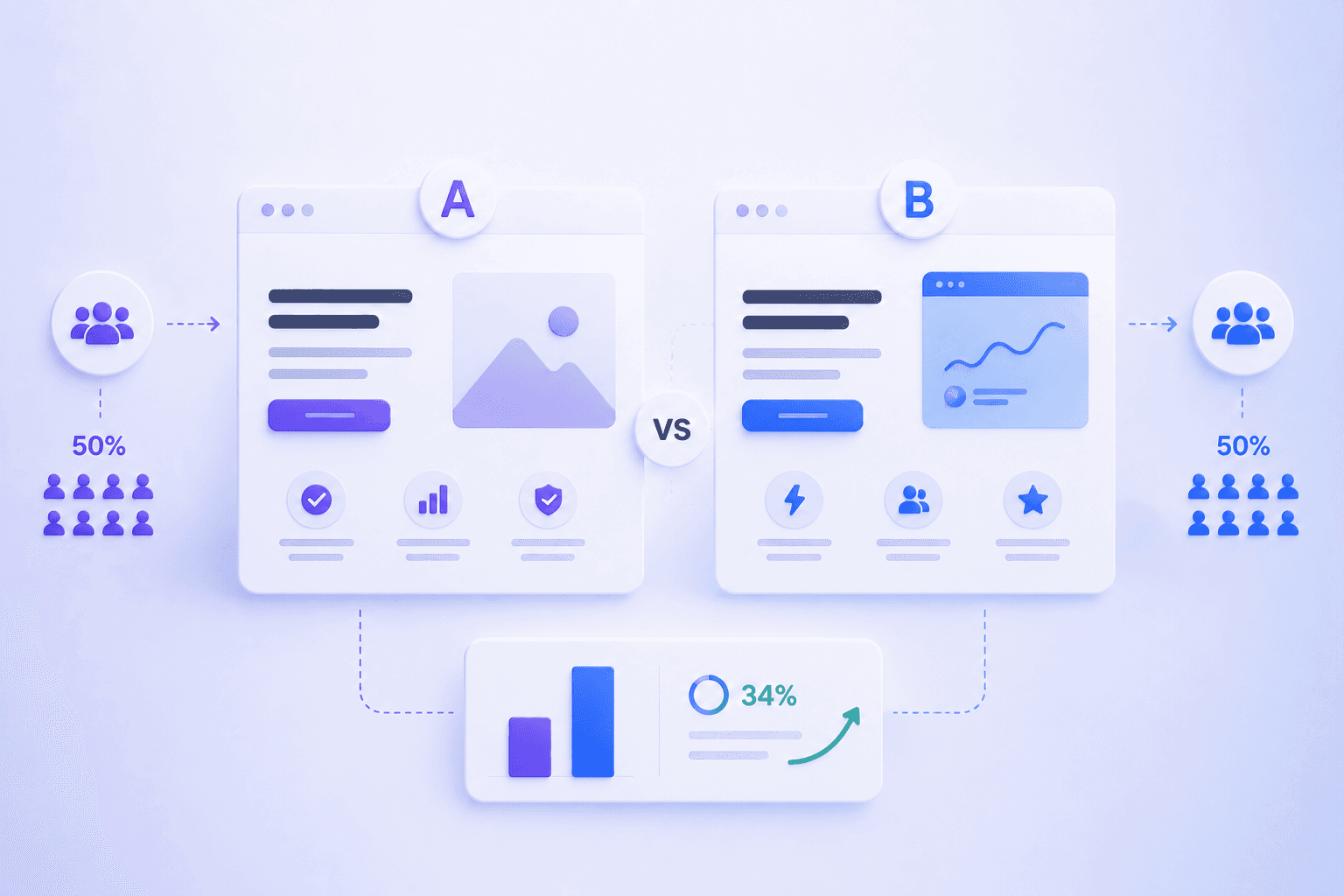
Landing page experience: This is where conversion happens or doesn't — SaaS landing pages convert at a median of just 3.8%, the lowest of any industry. Mobile-first design, single conversion goals, and ongoing A/B testing separate high performers from average.
How to Improve B2B SaaS Conversion Rates
Once you've benchmarked, here's how to close the gaps.
1. Audit Each Funnel Stage Against Benchmark
Identify your biggest drop-off relative to benchmark. Prioritize the stage with the largest gap and highest downstream revenue impact. Fixing a 50% drop at MQL-to-SQL matters more than squeezing another 0.5% from visitor-to-lead.
2. Rebuild Landing Pages Around a Single Conversion Goal
Do not send paid traffic to your homepage. Build dedicated landing pages with one CTA, clear value proposition, and mobile-first design. Every competing link or navigation option reduces conversion.
3. Run High-Frequency Creative Testing
Test hooks, formats, and messaging angles through a structured creative production process. Survey-backed customer insights help identify winning combinations faster than gut instinct. Creative fatigue is accelerating, so testing velocity matters more than ever.
4. Tighten Targeting and Audience Modeling
Refine segments based on conversion data, not just clicks. First-party data, CRM audiences, and behavioral signals improve lead quality. A smaller audience that converts beats a large audience that doesn't.
5. Shorten the Path From Click to Demo Booked
Reduce form fields, add instant scheduling, and remove unnecessary steps. Every additional field decreases conversion rate. If you're asking for phone number, company size, and budget range before someone can book a demo, you're losing people.
How to Use Conversion Rate Benchmarks for Forecasting
Benchmarks help you build a funnel model and set realistic targets. Start with your revenue goal and work backward:
Define revenue target
Estimate average deal size
Calculate required closed deals
Apply opportunity-to-close benchmark to find required opportunities
Continue working backward through each funnel stage
This gives you a baseline for how much traffic, how many leads, and how many demos you'll need to hit your number. For paid channels, pair this model with a target ROAS calculation to validate your spend allocations. Your actual performance data replaces benchmark assumptions over time.
How B2B SaaS Conversion Benchmarks Are Shifting
Several macro trends are reshaping what "normal" looks like heading into next year.
Privacy changes: Third-party cookie deprecation reduces targeting precision on paid channels
AI in buying: Buyers use AI tools to shortlist vendors, compressing the consideration phase
Creative fatigue acceleration: Ad creative burns out faster, requiring higher testing velocity
Landing page expectations: Buyers expect faster, mobile-optimized experiences
Teams that integrate paid media, creative, and landing page optimization will outperform those treating each as a separate workstream.
Scale Past Benchmark With Flighted
Moving from benchmark to above-benchmark performance requires paid media expertise, creative strategy, and landing page optimization working together. Flighted works with B2B SaaS brands scaling paid spend who want to lower CPA and improve ROAS.
Book a call to discuss your funnel performance and goals.
Frequently Asked Questions About B2B SaaS Conversion Rate Benchmarks
What is the average conversion rate for B2B SaaS?
The average varies by funnel stage, channel, and industry. Typical visitor-to-lead rates fall between 1.5–2.5%, while opportunity-to-close rates average 15–25%. Use benchmarks specific to your sales motion and ACV for accurate comparison.
Is a 30% conversion rate good for B2B SaaS?
A 30% rate could be excellent or poor depending on the funnel stage. It's strong for demo-to-close but unusually high for visitor-to-lead. Always compare against the specific stage and channel benchmark rather than a single universal number.
How long does it typically take to move B2B SaaS conversion rates above benchmark?
Most teams see measurable improvement within one to three months of focused optimization, depending on traffic volume and testing velocity. Sustained improvement requires ongoing iteration across creative, landing pages, and targeting.z