The 12 Most Important Meta Ads Metrics To Track
Meta Ads
May 5, 2026
Table Of Contents
Looking for Meta ads support?
We're a small, hardworking US-based team. Book a call and get a free audit today.
8. Video Watch Time
Beyond the initial hook, you want to know if your video holds attention. Metrics like ThruPlay rate (views to 15 seconds or completion), average watch time, and completion percentages (25%, 50%, 75%) show how engaging your content is.
If people watch the first 3 seconds but drop off at 25%, your hook works but your middle content doesn't. If they make it to 75% but don't convert, maybe your call-to-action is weak. Video watch time metrics help you diagnose where the message breaks down.
9. Cost Per Mille (CPM)
CPM is the cost per 1,000 impressions. Think of it as your "cost of entry" to the auction.
A high CPM can mean you're targeting a competitive audience, or that your ad has low relevance to the people seeing it. CPMs also fluctuate with seasonality—they spike as much as 66% during Black Friday and the holiday season when more advertisers are competing for attention. See our guide on how to reduce Meta Ads CPM for proven tactics.
10. Reach
Reach is the number of unique users who saw your ad at least once. This differs from impressions, which counts total views including repeats from the same person.
If your reach is 10,000 and your impressions are 30,000, each person saw your ad an average of 3 times. Reach matters for understanding audience saturation and the efficiency of your prospecting campaigns.
11. Frequency
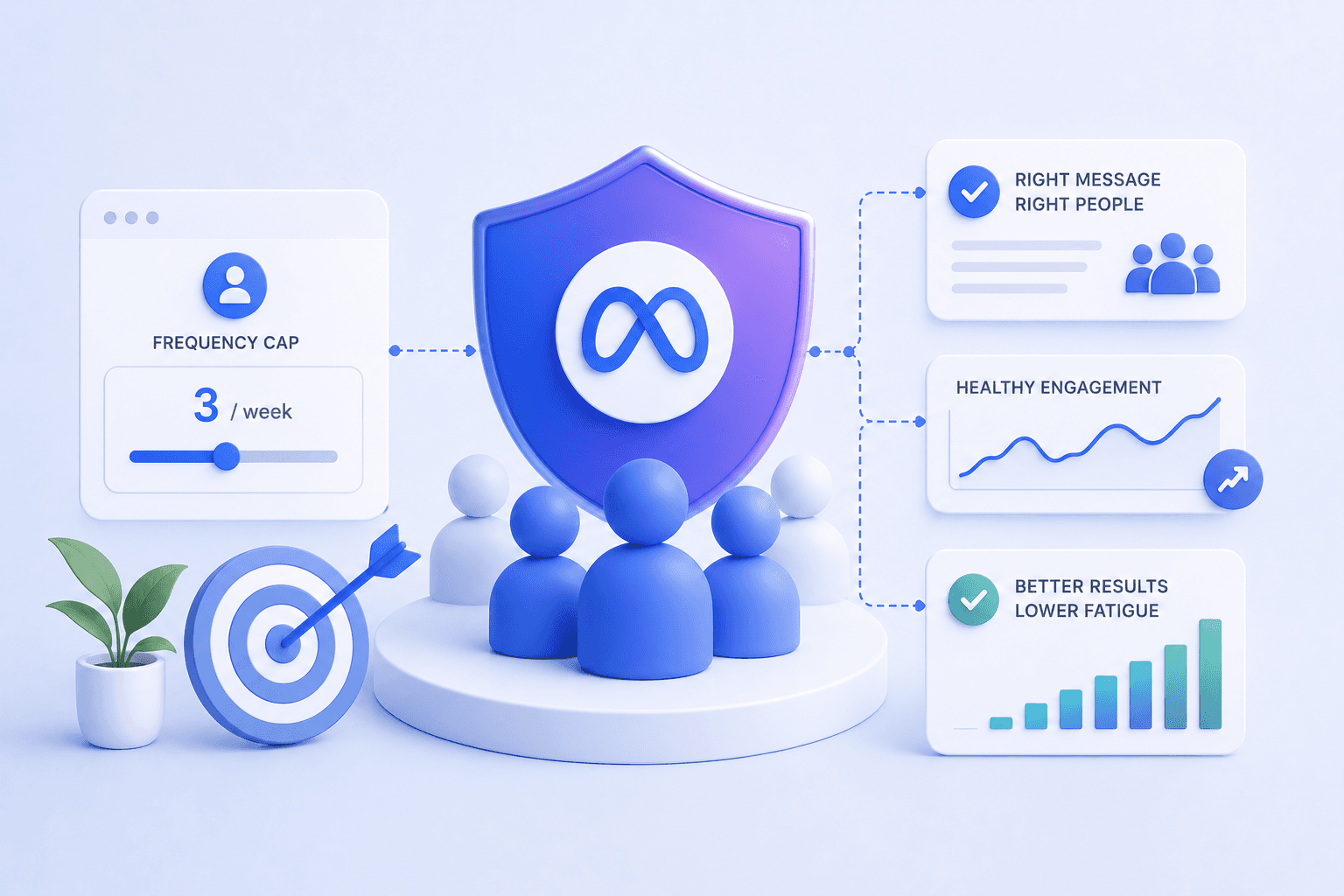
Frequency is the average number of times each person saw your ad. The formula is simple: Impressions divided by Reach.
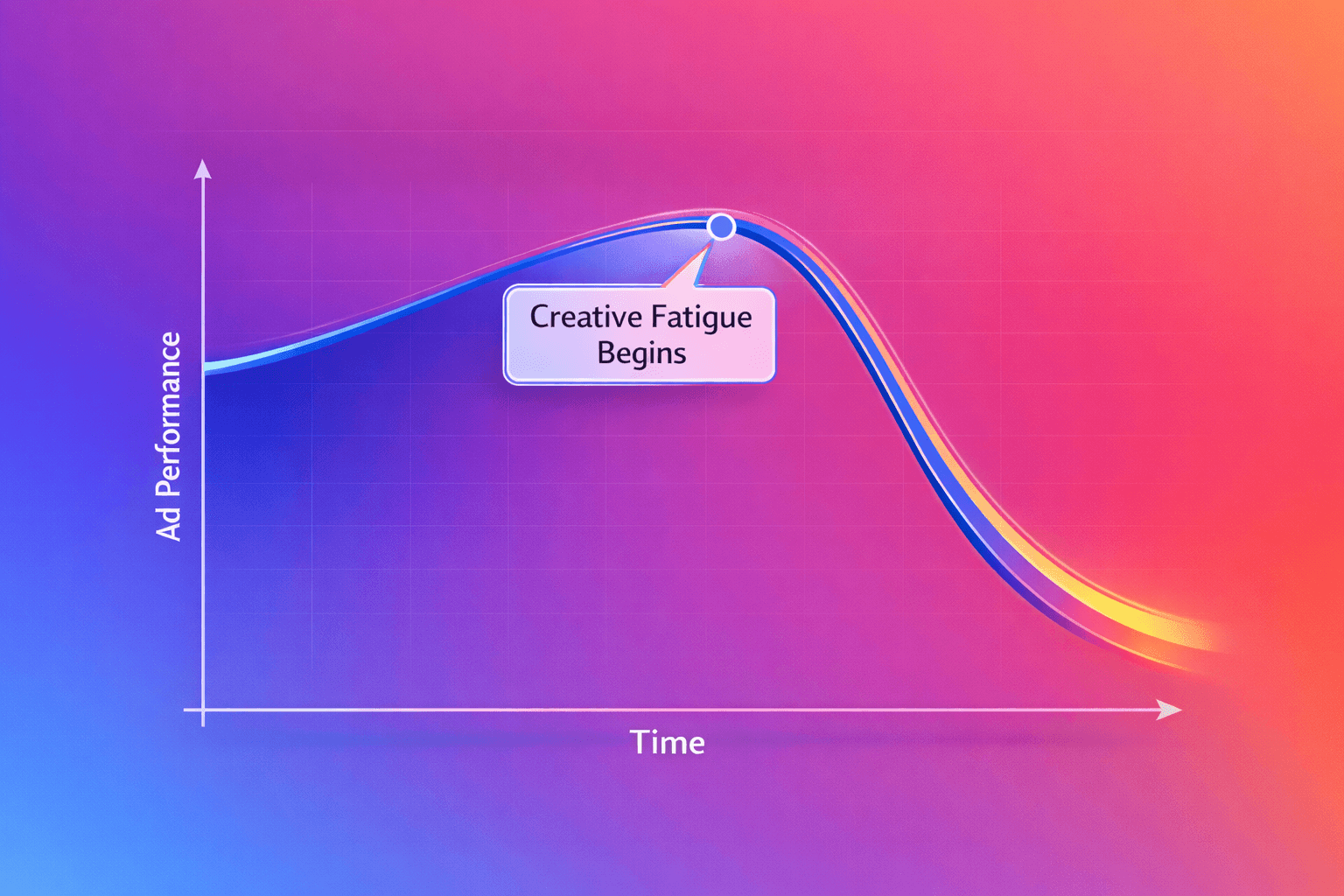
Monitoring frequency helps you manage ad fatigue. If frequency climbs too high too fast, you'll typically see performance decline as people get tired of seeing the same creative.
Healthy frequency ranges differ by campaign type—prospecting campaigns usually perform better at lower frequencies, while retargeting campaigns can tolerate higher frequencies. Our Meta Ads creative strategies guide covers how to refresh creative before fatigue sets in.
12. First-Time Impression Rate
First-Time Impression Rate is the percentage of daily impressions shown to users who are seeing your ad for the first time. It's a signal of audience freshness.
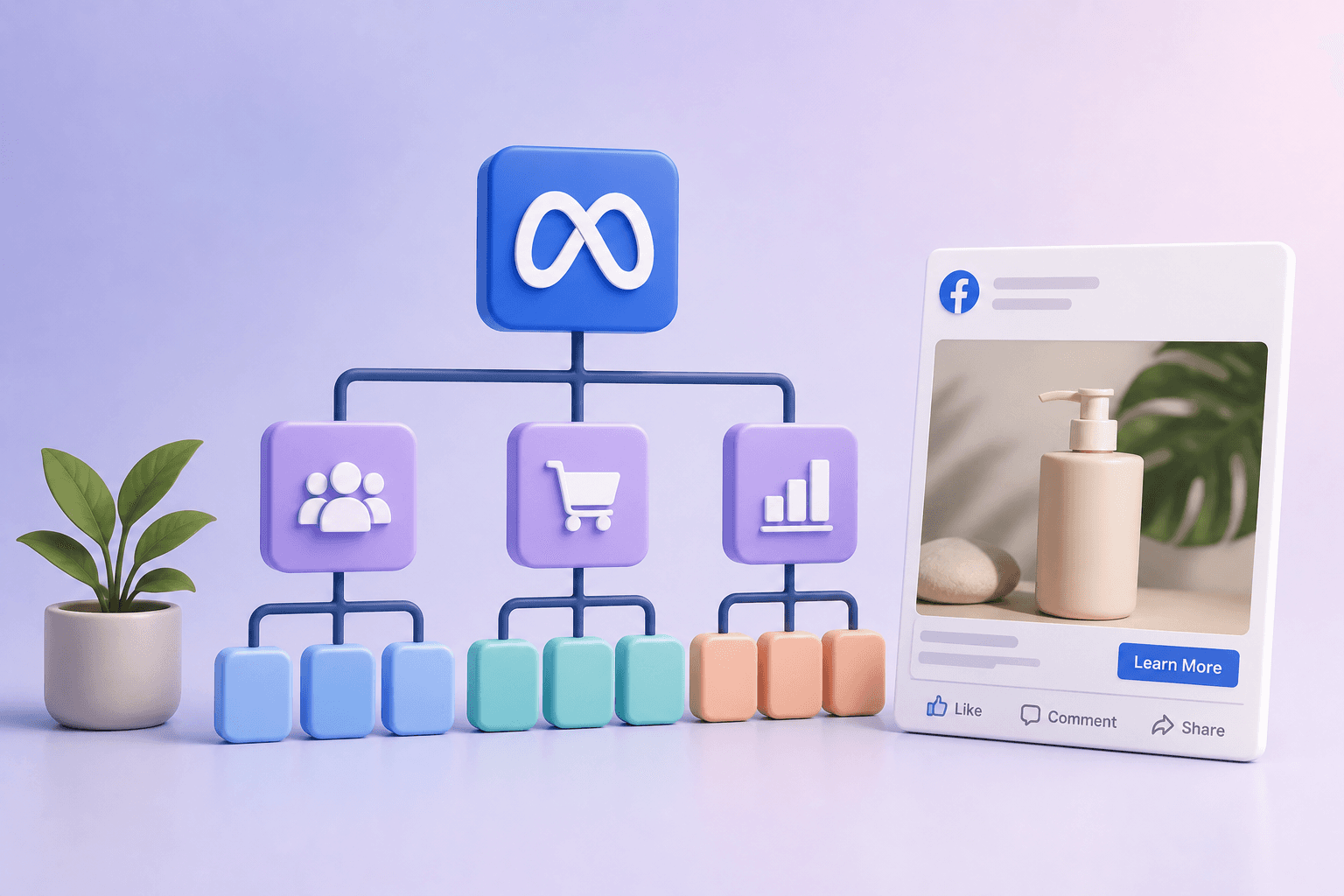
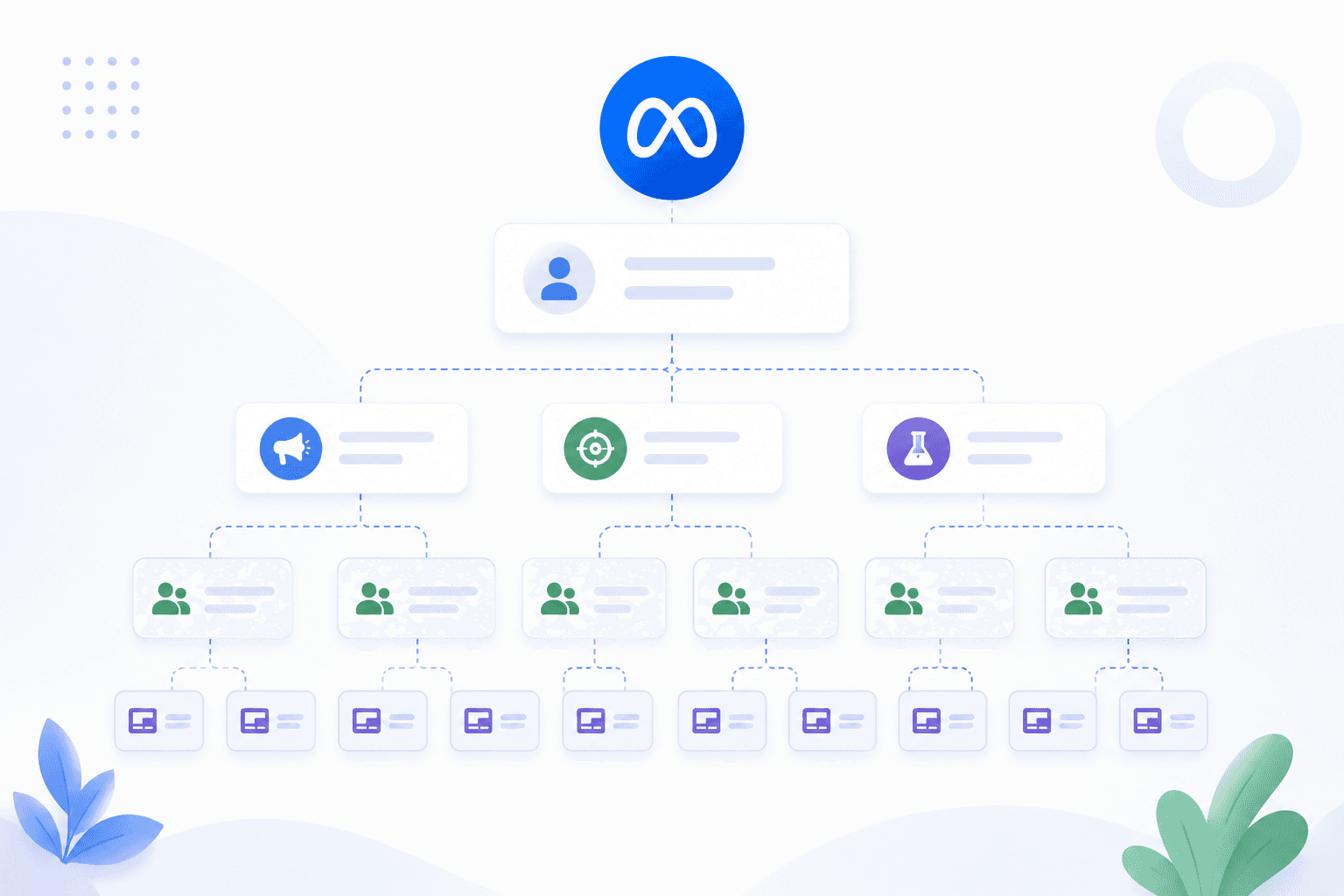
A consistently low first-time impression rate means you're saturating your audience—you're showing ads to the same people over and over instead of finding new ones. When this happens, you've hit a ceiling and expanding your targeting through a stronger account structure becomes necessary to keep scaling.
How Attribution Settings Affect Your Meta Ads Metrics
Your attribution window determines how Meta credits conversions to your ads. The default is 7-day click, 1-day view. Meta attributes a conversion to your ad if someone clicked within 7 days or viewed within 1 day before converting.
Here's the thing: the same campaign can show vastly different ROAS depending on which attribution window you use. A 7-day click window will almost always show higher ROAS than a 1-day click window because it captures more conversions.
Do not compare metrics from campaigns using different attribution windows. The comparison will be invalid.
Also worth noting: metrics like "amount spent" can take up to 48 hours to fully process, so avoid making decisions based on same-day data. For a detailed breakdown of how attribution windows affect reported ROAS, see this guide to Meta Ads attribution settings.
How to Use Meta Ads Metrics to Scale Profitably
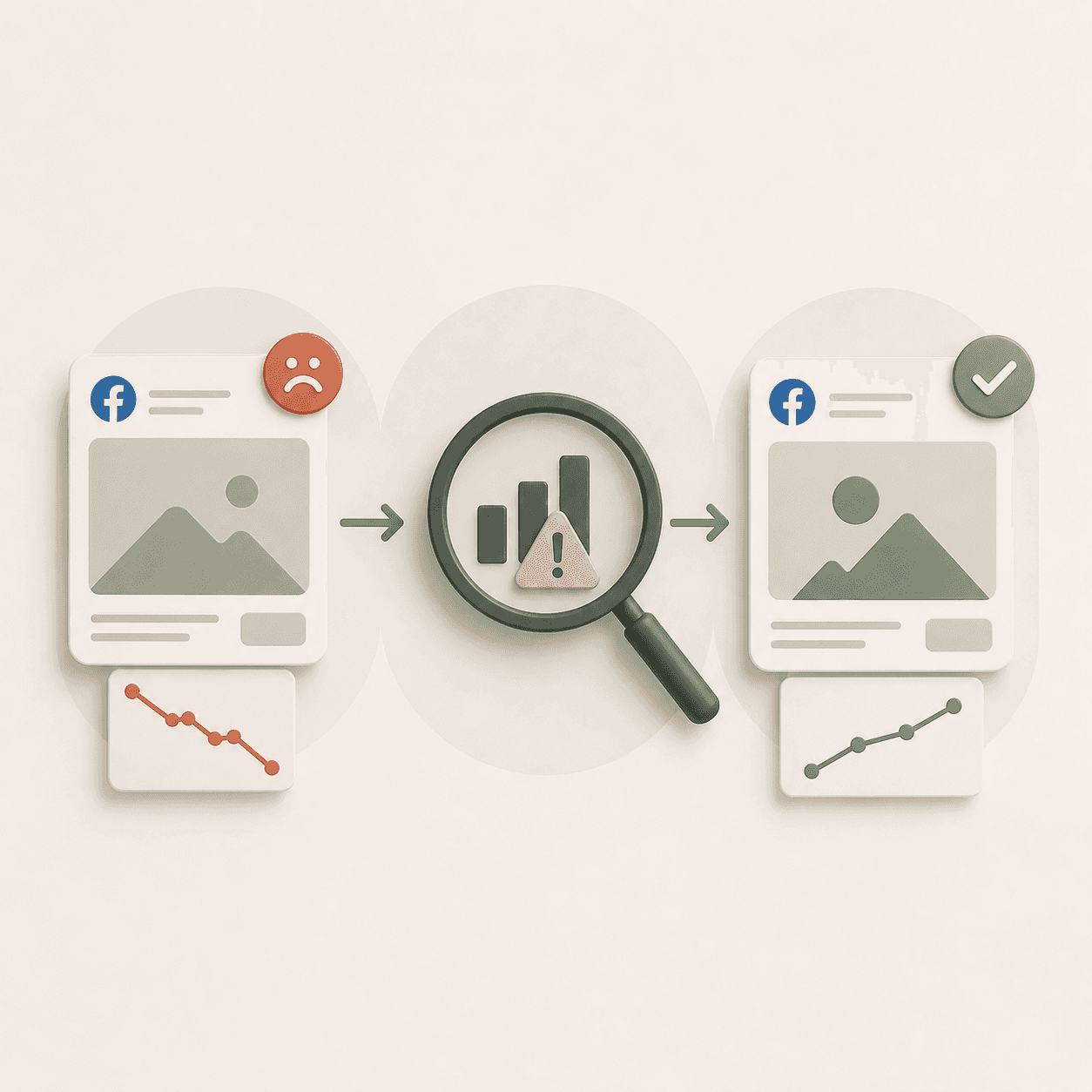
The key to effective optimization is reading metrics together, not in isolation. Individual metrics tell you something is wrong. Combinations of metrics tell you what's wrong.
Symptom | Likely Cause | Action |
|---|---|---|
High CTR, low conversion rate | Landing page or offer issue | Optimize page experience |
Low CTR, high conversion rate | Creative isn't resonating | Test new hooks and angles |
Rising frequency, declining ROAS | Audience saturation | Expand targeting or add new creative |
High CPM, low CTR | Poor audience-creative fit | Test new audiences or messaging |
Flighted's approach combines paid media expertise, creative strategy, and landing page optimization to diagnose and address each of these scenarios as an interconnected system. A creative problem can't be solved with better targeting, and a landing page problem can't be solved with better creative. For a step-by-step framework, see our Meta ad performance improvement checklist.
Start Tracking the Metrics That Actually Drive Growth
Metrics are meaningless unless you act on them. The most successful advertisers don't just check dashboards. They have a system for reviewing data, forming hypotheses, and acting on what the numbers reveal.
For brands that want expert support interpreting and acting on Meta Ads metrics, book a call with the Flighted team.
FAQs About Meta Ads Metrics
What is a KPI in Meta Ads?
A KPI, or Key Performance Indicator, is the primary metric you use to measure success against your campaign objective. For conversion campaigns, the KPI is typically ROAS or CPA. For awareness campaigns, it might be reach or CPM.
How often should you review Meta Ads metrics?
Review metrics daily for active campaigns to catch major issues. Avoid significant optimization decisions until you have enough data—typically after a few days of consistent delivery. Reacting to one day of data often leads to overcorrection.
What is the difference between reach and impressions in Meta Ads?
Reach counts unique users who saw your ad. Impressions counts total views, including multiple views from the same user. If one person sees your ad three times, that's 1 reach and 3 impressions.
Why do my Meta Ads metrics look different from my Shopify or GA4 data?
Different platforms use different attribution models. Meta uses its own pixel and attribution windows (like 7-day click, 1-day view). These often differ from the last-click or data-driven models in Google Analytics 4 or Shopify.
Discrepancies between platforms are normal—the key is picking one source of truth for decision-making.