What Makes a Growth Agency Effective? A Practical Guide for CMOs

Paid Media

August 11, 2026

shoes , goggles purse etc laying on floor

Table Of Contents

No headings found on page

The term "growth agency" has become marketing shorthand for any agency that claims to drive results. But the label alone means nothing. Most agencies call themselves growth-focused. Fewer can prove it.

If you manage a paid media budget and evaluate agency partners, you need to know what separates an effective growth agency from one that burns budget and blames the algorithm. This guide breaks down the traits that matter, the metrics you should expect, and the questions to ask before signing.

Key Takeaways

  1. A growth agency is accountable to revenue-tied outcomes—ROAS (return on ad spend), CAC (customer acquisition cost), and MER (marketing efficiency ratio)—not just campaign activity.

  2. Effective agencies integrate Paid Media Expertise, Creative Strategy, and Landing Page Design as one system.

  3. Execution quality, senior staffing, and transparent reporting are the traits that predict results.

  4. Evaluate agencies on case studies with real metrics, not pitch decks and guarantees.

  5. Outsourcing works when you choose a partner with proven fit for your business model.

What Is a Growth Agency (and Why the Definition Matters)

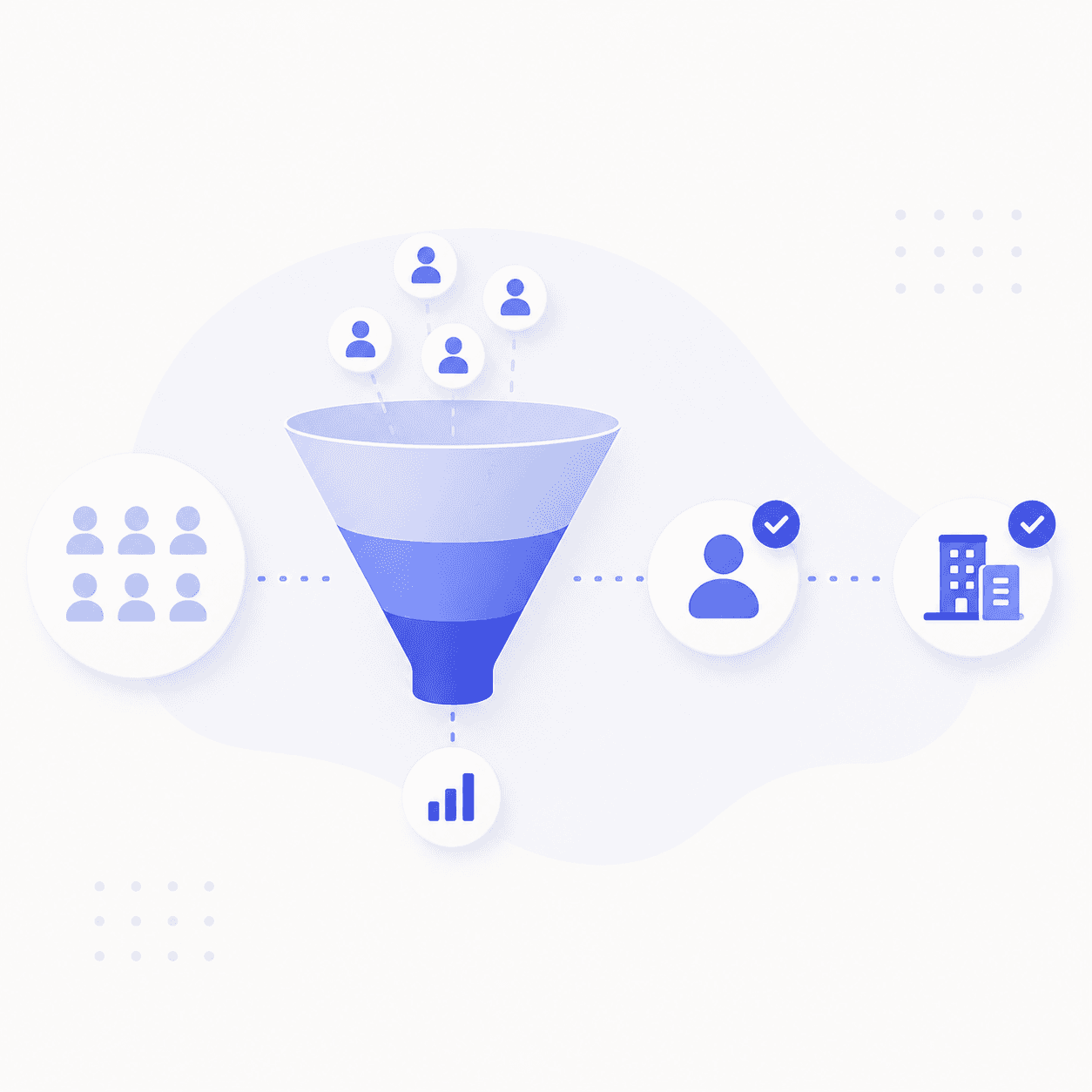
A growth agency is a partner focused on measurable business outcomes—revenue, CAC, and ROAS—across the full funnel. It is not a team that runs campaigns and hands you a report. It owns performance end to end: media buying, creative production, and post-click experience.

Full funnel means the agency is responsible for traffic acquisition, ad creative, and what happens after someone clicks. An ad that drives clicks to a page that does not convert is not growth. It is wasted spend.

This definition matters because most agencies still operate as channel specialists or activity vendors. They run Meta or Google campaigns but do not take responsibility for whether those campaigns turn into revenue. An effective growth agency treats the entire system—media, creative, landing page—as interdependent.

Full-funnel paid media is the outcome, not a buzzword.

The real question is not "what is a growth agency." It is what makes one effective. That is where most brands get stuck.

Growth Agency vs. Traditional Marketing Agency

The simplest way to understand a growth agency is to contrast it with a traditional marketing agency.

Dimension

Traditional Marketing Agency

Growth Agency

Focus

Campaigns, deliverables, activity

Revenue, CAC, ROAS, MER

Success metric

Impressions, reach, deliverable count

Blended contribution margin, conversion rate lift

Scope

Single channel or project

Full funnel: acquisition, creative, landing page

Accountability

Did we deliver the work?

Did we move the business metric?

A marketing agency sells work. A growth agency sells outcomes. The distinction matters when you are paying $10K–$30K/month and need to justify the spend against real pipeline or revenue.

The Metrics an Effective Growth Agency Owns

If an agency is not reporting on revenue-tied metrics, it is not operating as a growth partner.

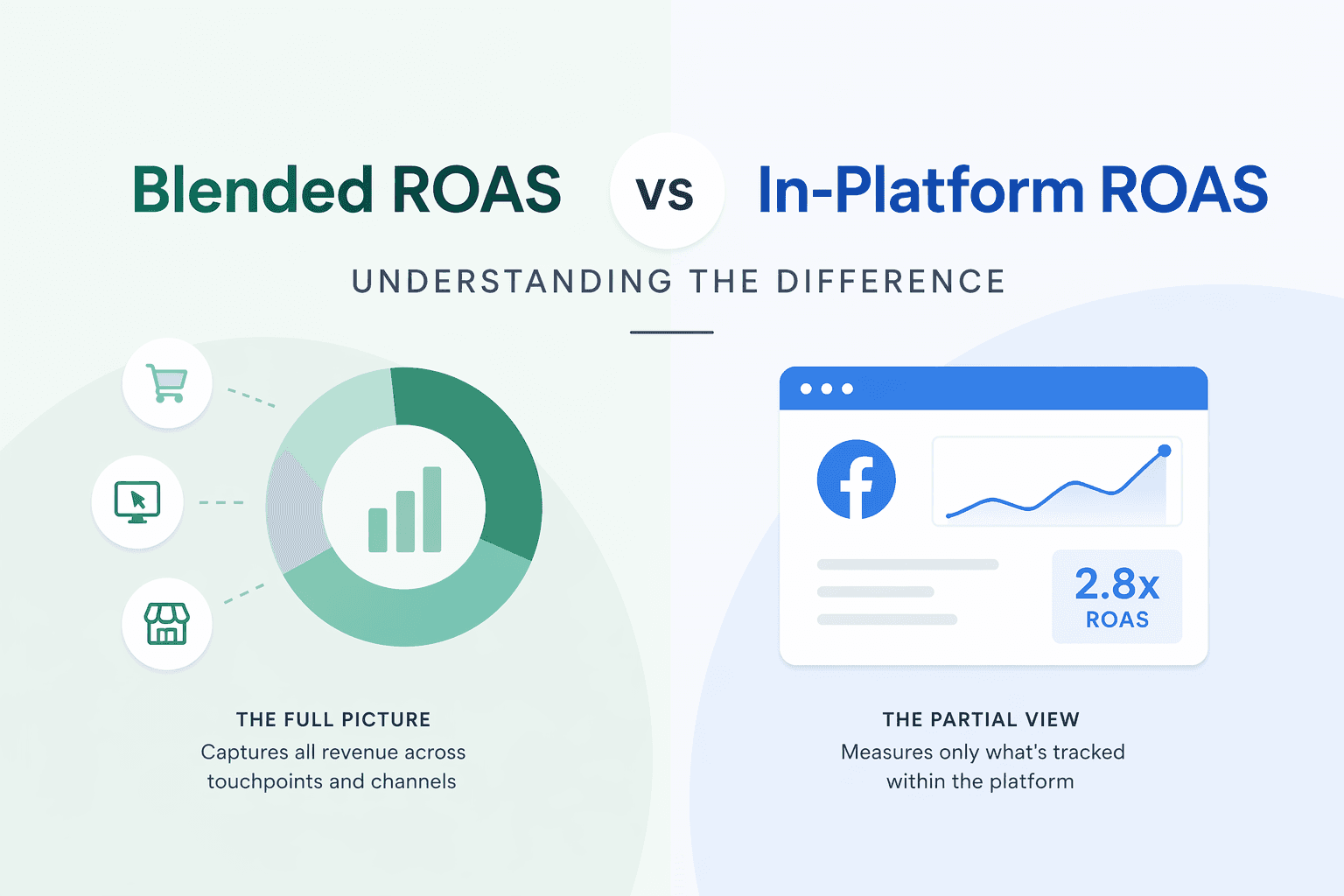
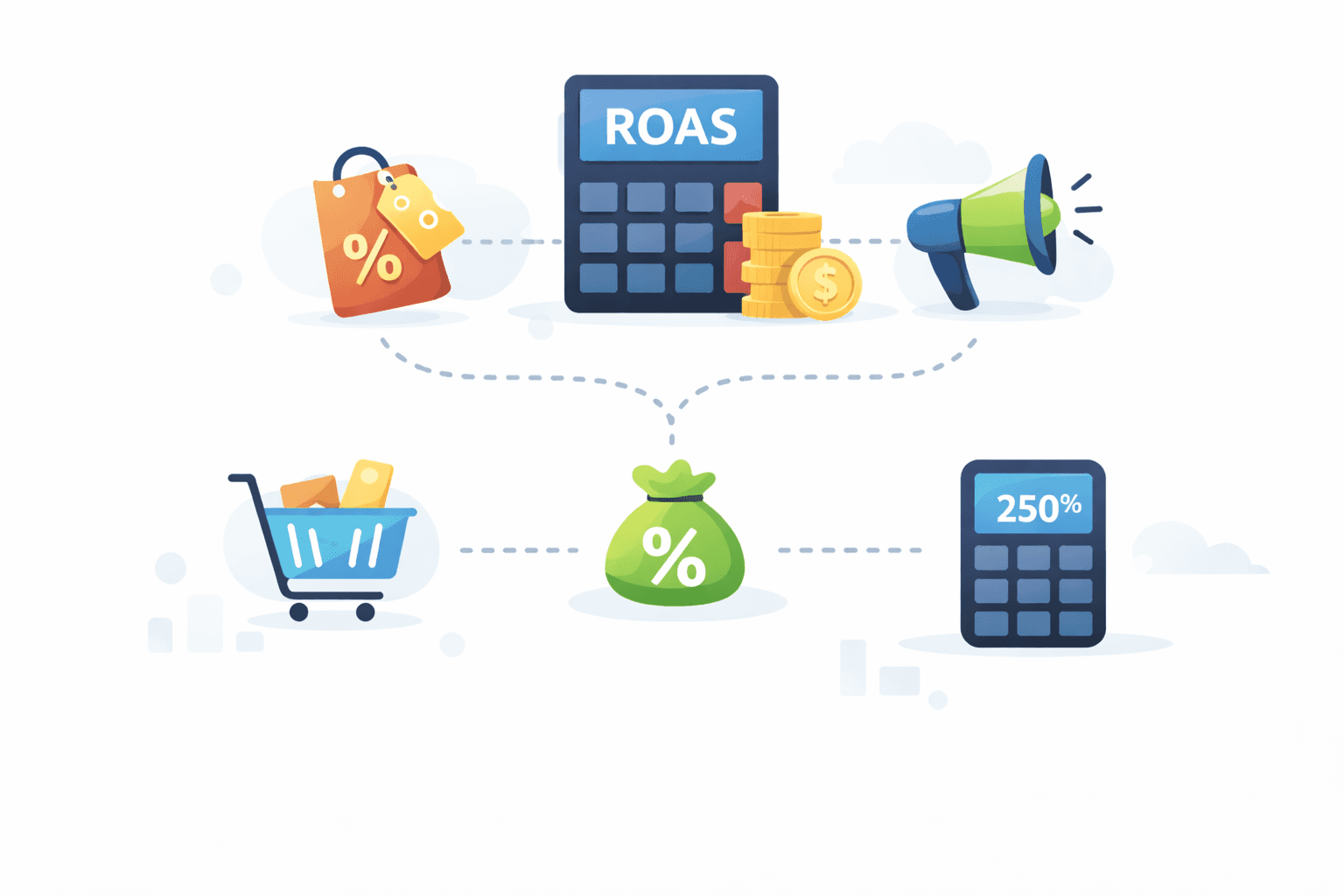
  • ROAS: Revenue generated divided by ad spend. A 2.0 ROAS means $2 revenue per $1 spent. Do not assume "4:1 ROAS" is standard. According to Triple Whale's 2025 benchmarks, median ROAS across ~35,000 ecommerce brands was 1.86, with verticals ranging from 1.17 to 2.54.

  • CAC (Customer Acquisition Cost): Total cost to acquire one customer. This includes ad spend, agency fees, and creative production.

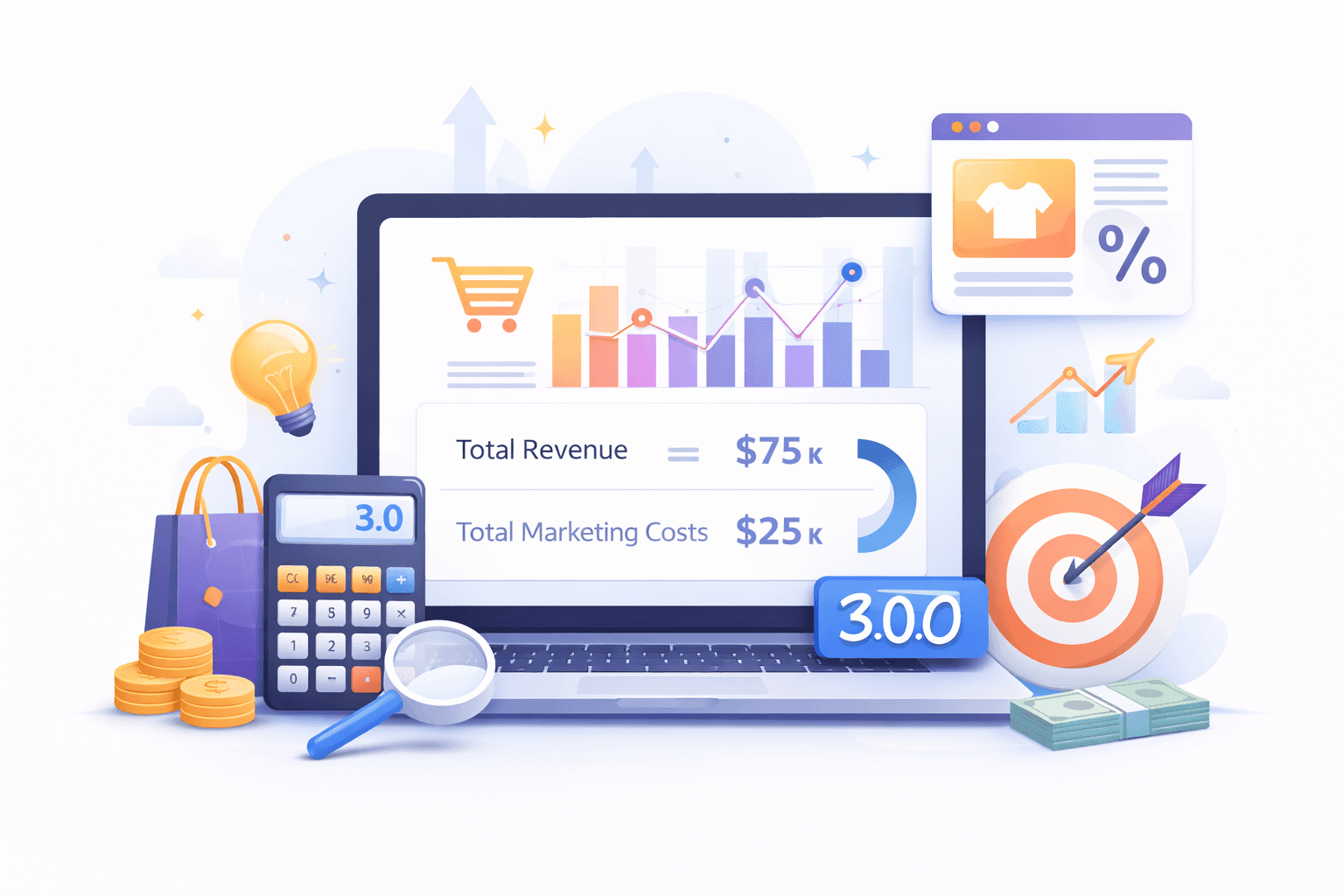
  • MER (Marketing Efficiency Ratio): Total revenue divided by total marketing spend. MER accounts for all channels and is the metric sophisticated brands use for capital allocation.

An effective agency ties its reporting to these numbers. If you are only seeing CTRs (click-through rates) and CPMs (cost per thousand impressions), you are not seeing the whole picture.

Why Effective Growth Support Matters More Than Ever

Paid social is growing. According to Dentsu's 2025 global ad spend forecast, worldwide ad spend is forecast to grow by 4.9% to reach $992 billion, with digital ad spend reaching $678.7 billion (68.4% share). Retail media spend is forecast to grow by 13.9% and social by 9.2%.

Growth means more competition for the same impressions. Costs are rising. According to Triple Whale's analysis of ~35,000 ecommerce accounts, Meta CPMs rose 20.03% in 2025—every single industry saw an increase, with hikes ranging from 8.08% to 38.03%.

Meta continues to command the dominant share of ecommerce spend: Triple Whale brands invested 68.31% of their total ad budget on Meta in 2025. Brands that do not optimize across creative, targeting, and post-click experience pay the penalty in wasted spend.

This is why execution quality matters. The days of ad agencies pushing buttons in an ad platform are over. Success in performance marketing now depends on Flighted's three interdependent pillars working together: Paid Media Expertise (with Meta Ads management as the lead channel), Creative Strategy, and Landing Page Design. When those three are disconnected—different vendors, different timelines, no shared KPIs—iteration slows and performance suffers.

The Traits That Make a Growth Agency Effective

Not every agency that calls itself growth-focused delivers. Here are the five traits that separate agencies that move metrics from agencies that move decks.

1. Paid Media Expertise, Creative Strategy, and Landing Page Design Work Together

The most important trait is integration. Flighted's three interdependent pillars—Paid Media Expertise, Creative Strategy, and Landing Page Design—operate as one system, not as separate add-ons or outsourced to third parties.

Why? Each part depends on the others. A strong creative loses if the landing page does not match the message. A high-converting page loses if the ad brings unqualified traffic. An optimized campaign loses if creative fatigue sets in and no one produces new variants.

Agencies that bring all three together iterate in days, not weeks. They catch conversion leaks earlier. They compound small gains across the funnel instead of fighting between siloed teams. Read more on how full-funnel efficiency reduces costs.

2. Real Execution Quality, Not Button-Pushing

Execution quality is what separates a $5K/month agency from one that earns $15K. It shows up in:

  • Account structure: Use CBO for broad prospecting; consolidate ad sets once you hit 50+ weekly conversions. A strong ad account structure is designed around your business model.

  • Creative testing: Test 2–4 new concepts per week at ~$50 per concept before calling winners. Isolate one variable per test. Review creative testing strategies.

  • Measurement discipline: Compare Meta's reported ROAS against backend revenue. Run holdout tests or post-purchase surveys. Do not trust platform numbers at face value.

Flighted manages $50M+ in cumulative ad spend across diverse brands. That scale means faster pattern recognition—what works in CPG often informs B2B tests, and vice versa.

3. Senior, In-House Talent (No Junior Hand-Offs)

A red flag in agency evaluation: the senior person in the pitch is not the one doing the work. Many agencies close deals with experienced talent, then assign junior associates to manage the account.

Effective agencies keep senior operators on your account. They produce creative in-house rather than outsourcing to a third-party studio.

Flighted assigns roughly three clients per growth manager. Full-time creative strategists produce 500+ ads per month across the portfolio.

Ask who will be in your Slack channel. Ask how many accounts that person manages. Ask where creative is produced. These answers tell you where you fall in their priority stack.

Learn more about what to look for in a Meta Ads management partner.

4. Transparent Measurement and a Clear Plan

An effective agency operates with full transparency:

  • Account access: You own your ad accounts and data. The agency operates inside your accounts, not theirs.

  • Honest reporting: Reports show revenue-tied metrics, not vanity numbers. If performance is down, the agency says so and comes with a plan.

  • Defined roadmap: Before spend begins, a 30-60-90 day plan outlines what will be tested, what success looks like, and when to evaluate.

Agencies that resist account access or report only on impressions are hiding something. Agencies that promise guaranteed ROAS before they see your data are lying.

The term "growth agency" has become marketing shorthand for any agency that claims to drive results. But the label alone means nothing. Most agencies call themselves growth-focused. Fewer can prove it.

If you manage a paid media budget and evaluate agency partners, you need to know what separates an effective growth agency from one that burns budget and blames the algorithm. This guide breaks down the traits that matter, the metrics you should expect, and the questions to ask before signing.

Key Takeaways

  1. A growth agency is accountable to revenue-tied outcomes—ROAS (return on ad spend), CAC (customer acquisition cost), and MER (marketing efficiency ratio)—not just campaign activity.

  2. Effective agencies integrate Paid Media Expertise, Creative Strategy, and Landing Page Design as one system.

  3. Execution quality, senior staffing, and transparent reporting are the traits that predict results.

  4. Evaluate agencies on case studies with real metrics, not pitch decks and guarantees.

  5. Outsourcing works when you choose a partner with proven fit for your business model.

What Is a Growth Agency (and Why the Definition Matters)

A growth agency is a partner focused on measurable business outcomes—revenue, CAC, and ROAS—across the full funnel. It is not a team that runs campaigns and hands you a report. It owns performance end to end: media buying, creative production, and post-click experience.

Full funnel means the agency is responsible for traffic acquisition, ad creative, and what happens after someone clicks. An ad that drives clicks to a page that does not convert is not growth. It is wasted spend.

This definition matters because most agencies still operate as channel specialists or activity vendors. They run Meta or Google campaigns but do not take responsibility for whether those campaigns turn into revenue. An effective growth agency treats the entire system—media, creative, landing page—as interdependent.

Full-funnel paid media is the outcome, not a buzzword.

The real question is not "what is a growth agency." It is what makes one effective. That is where most brands get stuck.

Growth Agency vs. Traditional Marketing Agency

The simplest way to understand a growth agency is to contrast it with a traditional marketing agency.

Dimension

Traditional Marketing Agency

Growth Agency

Focus

Campaigns, deliverables, activity

Revenue, CAC, ROAS, MER

Success metric

Impressions, reach, deliverable count

Blended contribution margin, conversion rate lift

Scope

Single channel or project

Full funnel: acquisition, creative, landing page

Accountability

Did we deliver the work?

Did we move the business metric?

A marketing agency sells work. A growth agency sells outcomes. The distinction matters when you are paying $10K–$30K/month and need to justify the spend against real pipeline or revenue.

The Metrics an Effective Growth Agency Owns

If an agency is not reporting on revenue-tied metrics, it is not operating as a growth partner.

  • ROAS: Revenue generated divided by ad spend. A 2.0 ROAS means $2 revenue per $1 spent. Do not assume "4:1 ROAS" is standard. According to Triple Whale's 2025 benchmarks, median ROAS across ~35,000 ecommerce brands was 1.86, with verticals ranging from 1.17 to 2.54.

  • CAC (Customer Acquisition Cost): Total cost to acquire one customer. This includes ad spend, agency fees, and creative production.

  • MER (Marketing Efficiency Ratio): Total revenue divided by total marketing spend. MER accounts for all channels and is the metric sophisticated brands use for capital allocation.

An effective agency ties its reporting to these numbers. If you are only seeing CTRs (click-through rates) and CPMs (cost per thousand impressions), you are not seeing the whole picture.

Why Effective Growth Support Matters More Than Ever

Paid social is growing. According to Dentsu's 2025 global ad spend forecast, worldwide ad spend is forecast to grow by 4.9% to reach $992 billion, with digital ad spend reaching $678.7 billion (68.4% share). Retail media spend is forecast to grow by 13.9% and social by 9.2%.

Growth means more competition for the same impressions. Costs are rising. According to Triple Whale's analysis of ~35,000 ecommerce accounts, Meta CPMs rose 20.03% in 2025—every single industry saw an increase, with hikes ranging from 8.08% to 38.03%.

Meta continues to command the dominant share of ecommerce spend: Triple Whale brands invested 68.31% of their total ad budget on Meta in 2025. Brands that do not optimize across creative, targeting, and post-click experience pay the penalty in wasted spend.

This is why execution quality matters. The days of ad agencies pushing buttons in an ad platform are over. Success in performance marketing now depends on Flighted's three interdependent pillars working together: Paid Media Expertise (with Meta Ads management as the lead channel), Creative Strategy, and Landing Page Design. When those three are disconnected—different vendors, different timelines, no shared KPIs—iteration slows and performance suffers.

The Traits That Make a Growth Agency Effective

Not every agency that calls itself growth-focused delivers. Here are the five traits that separate agencies that move metrics from agencies that move decks.

1. Paid Media Expertise, Creative Strategy, and Landing Page Design Work Together

The most important trait is integration. Flighted's three interdependent pillars—Paid Media Expertise, Creative Strategy, and Landing Page Design—operate as one system, not as separate add-ons or outsourced to third parties.

Why? Each part depends on the others. A strong creative loses if the landing page does not match the message. A high-converting page loses if the ad brings unqualified traffic. An optimized campaign loses if creative fatigue sets in and no one produces new variants.

Agencies that bring all three together iterate in days, not weeks. They catch conversion leaks earlier. They compound small gains across the funnel instead of fighting between siloed teams. Read more on how full-funnel efficiency reduces costs.

2. Real Execution Quality, Not Button-Pushing

Execution quality is what separates a $5K/month agency from one that earns $15K. It shows up in:

  • Account structure: Use CBO for broad prospecting; consolidate ad sets once you hit 50+ weekly conversions. A strong ad account structure is designed around your business model.

  • Creative testing: Test 2–4 new concepts per week at ~$50 per concept before calling winners. Isolate one variable per test. Review creative testing strategies.

  • Measurement discipline: Compare Meta's reported ROAS against backend revenue. Run holdout tests or post-purchase surveys. Do not trust platform numbers at face value.

Flighted manages $50M+ in cumulative ad spend across diverse brands. That scale means faster pattern recognition—what works in CPG often informs B2B tests, and vice versa.

3. Senior, In-House Talent (No Junior Hand-Offs)

A red flag in agency evaluation: the senior person in the pitch is not the one doing the work. Many agencies close deals with experienced talent, then assign junior associates to manage the account.

Effective agencies keep senior operators on your account. They produce creative in-house rather than outsourcing to a third-party studio.

Flighted assigns roughly three clients per growth manager. Full-time creative strategists produce 500+ ads per month across the portfolio.

Ask who will be in your Slack channel. Ask how many accounts that person manages. Ask where creative is produced. These answers tell you where you fall in their priority stack.

Learn more about what to look for in a Meta Ads management partner.

4. Transparent Measurement and a Clear Plan

An effective agency operates with full transparency:

  • Account access: You own your ad accounts and data. The agency operates inside your accounts, not theirs.

  • Honest reporting: Reports show revenue-tied metrics, not vanity numbers. If performance is down, the agency says so and comes with a plan.

  • Defined roadmap: Before spend begins, a 30-60-90 day plan outlines what will be tested, what success looks like, and when to evaluate.

Agencies that resist account access or report only on impressions are hiding something. Agencies that promise guaranteed ROAS before they see your data are lying.

Looking for paid media support?

We're a small, hardworking, US-based team. Book a call and get a free audit today.

5. Fit for Your Business Model

An agency effective for a DTC supplement brand may not be effective for B2B SaaS. Business model determines creative style, funnel length, attribution windows, and success metrics.

When evaluating DTC agencies, ask for case studies in your category. Flighted works with both DTC ecommerce and B2B software—about 70% of clients are B2B software. Flighted treats Meta as a B2B arbitrage channel that most competitors ignore.

Be skeptical of agencies that claim expertise in every vertical. If they cannot show results in your business model, you are their experiment.

How to Evaluate a Growth Agency Before You Sign

Evaluation is where most brands get lazy. Do not sign based on a pitch deck. Do not sign based on a referral without digging in. Use this checklist:

  • Case studies with real metrics: Ask for specific outcomes—CPA changes, ROAS, revenue impact—not testimonials alone.

  • Senior staffing: Confirm who will run your account. Ask how many accounts they manage.

  • Integrated services: Do they produce creative in-house? Do they build or optimize landing pages?

  • Account access and transparent reporting: Confirm you will own your accounts and data.

  • Realistic expectations: Effective agencies do not guarantee results. They explain realistic timelines and how they will measure success.

Red flags to walk away from:

  • Guaranteed ROAS or CPA before seeing your data

  • Junior account managers with 10+ clients each

  • No access to your own ad accounts

  • Creative outsourced to a third party with no connection to media buying

  • Vague reporting with no revenue tie-in

More brands now work with external partners than they did five years ago. According to Sagefrog's 2026 B2B Marketing Mix Report, 46% of companies now use a hybrid model combining in-house and external support—up from 36% in 2025. Only 4% said outsourced marketing did not help them meet their goals.

Outsourcing works—but only when you choose a partner who passes the checks above.

For a deeper dive, read how to vet an agency in the 2026 edition.

What Effective Results Actually Look Like

Set realistic expectations. Performance marketing is not an overnight fix.

  • First 30 days: Testing phase. Expect creative tests, audience discovery, and baseline establishment. Meaningful trends do not emerge in week one.

  • Days 30–60: Optimization. Winning creative, audiences, and landing pages get scaled. Losing variants get cut.

  • Days 60–90: Consolidation. The account structure stabilizes. ROAS and CAC trends become reliable.

Here is what effective results look like in practice:

  • Halfday Travel: +38% website conversion rate and +69% top-line revenue in 30 days through integrated creative and landing page testing.

  • Cat Person: CPA reduced 13% while scaling spend—efficiency improved as volume increased.

  • Apple Bottom Jeans: CPA reduced 43% in 2 months through structured creative testing and account restructuring.

  • Nimble Beauty: Meta ROAS increased 160% by aligning creative angles with audience segments.

These outcomes are grounded in integrated execution across media, creative, and landing page. No single lever produces results like this alone.

Ready to see where your current paid media stands? Book a call for a no-obligation audit of your ad account, creative pipeline, and landing page performance. We will tell you where the gaps are and whether we are the right fit.

Frequently Asked Questions

What is a growth agency?

A growth agency is a marketing partner accountable to business outcomes—revenue, CAC, ROAS—rather than campaign deliverables. It operates across the full funnel: acquisition, creative, and post-click experience.

How is a growth agency different from a marketing agency?

A marketing agency delivers campaigns and reports on activity metrics like impressions. A growth agency owns revenue-tied outcomes and takes responsibility for whether campaigns convert into measurable business results.

Do I need a growth agency or an in-house team?

An agency gives you a full team—media buyer, creative strategists, and landing page support—for less than the fully loaded cost of one senior in-house hire. Build in-house only once your volume keeps several full-time specialists busy; until then, an agency wins on cost and flexibility.

Is a growth agency only for startups?

No. Growth agencies work with brands at all stages. The $5M–$20M revenue range is often the inflection point where an integrated agency provides the most leverage—too complex for a single channel specialist, too early to build a full in-house team.

What makes a good growth strategy?

A good growth strategy ties specific tactics to measurable business goals. It includes clear hypotheses, disciplined testing, and decision rules for scaling winners and cutting losers. Strategy without execution cadence is just a slide deck.

How many marketing channels should I run at once?

For most brands, 3 to 6 channels is the practical range. Running fewer limits discovery; running more spreads budget and attention too thin. Focus on finding one or two scalable channels before diversifying.

Conclusion

An effective growth agency is defined by outcomes, not promises. It integrates Paid Media Expertise, Creative Strategy, and Landing Page Design as one interdependent system. It staffs accounts with senior talent. It operates with transparency and comes with a plan.

Evaluate agencies on execution quality and proof—case studies with real metrics, not testimonials. Ask hard questions about staffing, account access, and realistic timelines. Walk away from guaranteed results and junior hand-offs.

Growth is a system problem. The right agency treats it like one.

Related Posts

Related Posts

Related Posts

Related Posts

Ready to talk?

Book A Call

We are a Paid Media agency based in New York, NY.

Flighted

New York, NY 11217

hello@flighted.co

© Flighted, 2026

Ready to talk?

Book A Call

We are a Paid Media agency based in New York, NY.

Flighted

New York, NY 11217

hello@flighted.co

© Flighted, 2026