Landing Page vs Product Page: Which Converts Better on Meta Ads
Paid Media
July 7, 2026

Table Of Contents
You're running paid ads, traffic is flowing, and now you're staring at a decision: send visitors to your product page or build a dedicated landing page? It's one of the most common questions in ecommerce, and the answer isn't as simple as picking one over the other.
The right choice depends on where your traffic comes from and how familiar visitors are with your brand. This guide breaks down when each page type works best, how to decide for your specific campaigns, and what makes a landing page actually outconvert a product page.
Key Takeaways
Whether your landing page can be your product page depends on your traffic source and how aware your audience is of your brand.
For cold paid traffic on Meta or TikTok, dedicated landing pages almost always outperform product pages.
Product pages work better for warm traffic, branded search, and platforms like Google Shopping that require them.
The conversion advantage of landing pages comes from a single focus: one message, one offer, one action.
Treat landing pages as living assets that require ongoing A/B testing, not one-time builds.
What Is a Landing Page
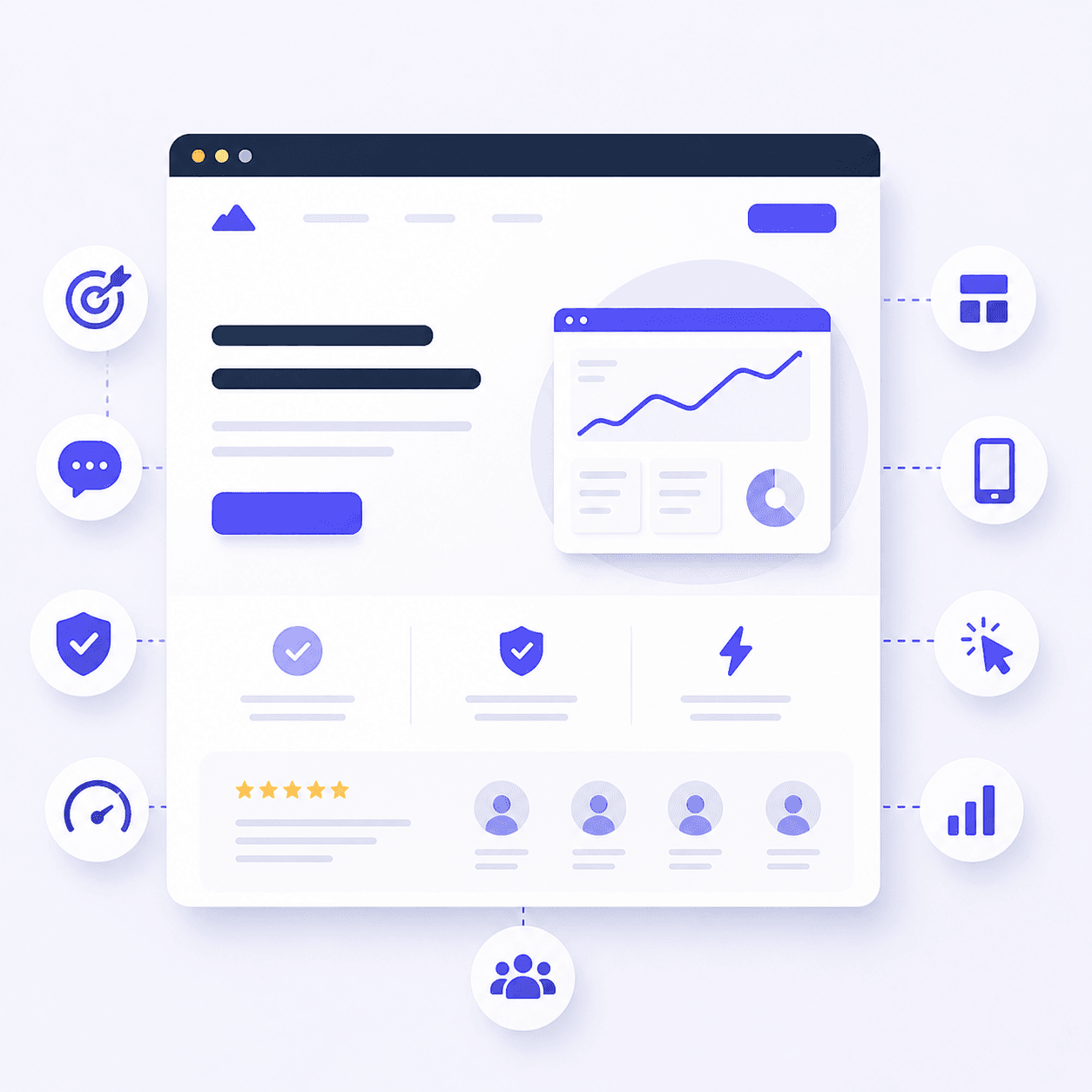
A landing page is a standalone page built for one conversion goal. Unlike other pages on your site, it has no navigation menu, no footer links, and no paths that lead visitors away from the action you want them to take.
You might build one landing page for a Meta ad promoting a new product launch, another for a TikTok campaign targeting a different demographic, and a third for an email promotion. Each page matches the message and intent of the traffic hitting it.
The defining characteristic is focus. Everything on the page—headline, imagery, copy, social proof—points toward one CTA (call to action). Nothing else.
What Is a Product Page
A product page, sometimes called a PDP (product detail page), is a permanent page in your ecommerce catalog. It displays product specifications, pricing, variant options, and the add-to-cart button.
Product pages include your site's standard navigation, so visitors can browse to other products, check your about page, or explore collections. This structure makes sense because product pages serve multiple purposes: organic search traffic, returning customers, and people browsing your catalog.
The assumption behind a product page is that the visitor already has purchase intent. They know what they're looking for, and the page's job is to provide the information they require to complete the transaction.
Landing Page vs Product Page Key Differences
The distinction between landing pages and product pages matters because each serves a different job. Here's how they compare:
Feature | Landing Page | Product Page |
|---|---|---|
Primary Goal | Single conversion action | Catalog browsing and purchase |
Navigation | Removed entirely | Full site navigation |
Traffic Source Fit | Paid campaigns, cold audiences | Organic, branded search, warm traffic |
Customization | Campaign-specific messaging | Standardized template |
SEO Value | Minimal (usually not indexed) | High (built for organic discovery) |
Conversion Focus | One offer, one CTA | Multiple paths and options |
Purpose and Intent
Landing pages persuade. They take someone who may have never heard of your brand and move them toward a specific action through focused messaging and social proof.
Product pages inform. They assume the visitor already wants to buy and provide the details required to complete that purchase.
Page Structure and Navigation
Landing pages strip away headers, footers, and menus. Every element that isn't driving toward the CTA is a potential exit point, and exit points kill conversion rates.
Product pages retain full navigation because they're part of a larger shopping experience. A visitor might add one item to cart, then browse for complementary products. That behavior makes sense for warm traffic but creates friction for cold audiences who don't yet know your brand.
Traffic Source Fit
Different traffic sources carry different levels of intent:
Cold Meta and TikTok traffic: Landing pages preferred because visitors require education before they're ready to buy
Google Shopping: Product pages required by the platform
Branded search: Product pages often sufficient since visitors are already looking for you
Retargeting: Either can work depending on campaign goals
Conversion Rate Benchmarks
Landing pages typically convert at higher rates than product pages for paid traffic. The lift comes from message match (the ad promise aligns with the page content) and reduced cognitive load (fewer decisions to make).
The exact improvement varies by product, audience, and execution quality. However, the structural advantages of landing pages—single focus, no distractions, matched messaging—consistently favor conversion when traffic is cold.
Do Landing Pages Convert Better Than Product Pages
For cold paid traffic, yes. Landing pages almost always outperform product pages.
Here's why: when someone clicks an ad, they have a specific expectation based on what the ad promised. A landing page can deliver exactly that promise with no detours. A product page, on the other hand, drops them into a broader shopping experience that may or may not match what caught their attention in the first place.
This advantage diminishes as traffic gets warmer. Someone who has already visited your site, added items to cart, or engaged with multiple ads has context. They don't require the same level of persuasion. For warm visitors, a product page can perform just as well—sometimes better, because it lets them complete the purchase faster.
Can Your Product Page Be Your Landing Page
Yes, you can use a product page as a landing page. Whether doing so makes sense is a different question.
Using a product page works in specific scenarios:
Your brand already has strong awareness and visitors recognize you immediately
Traffic is warm or retargeted and visitors have prior context
The platform requires product pages (Google Shopping, for example)
Budget or resources prevent landing page creation and something is better than nothing
The tradeoff is clear: you lose message match and campaign-specific customization. Your product page can't speak directly to the ad that drove the click, and it can't be optimized for a single audience segment.
For one-product stores with limited resources, making the product page your homepage can work. But for brands running multiple campaigns across Meta, TikTok, and Google, dedicated landing pages typically deliver better results.
When to Send Paid Traffic to a Landing Page vs a Product Page
The decision comes down to traffic source and audience awareness. Here's how to think through it by channel.
Cold Meta and TikTok Traffic
Send cold audiences to a landing page. Visitors who have never heard of your brand require education, social proof, and a clear value proposition before they're ready to buy.
A product page assumes too much. It expects visitors to understand your brand, trust your quality, and navigate your site—all within seconds of arriving. Cold traffic doesn't have that context yet.
Retargeting and Warm Audiences
For people who have visited your site, added to cart, or engaged with previous ads, product pages can work. Warm visitors already know who you are.
That said, a landing page with urgency messaging or an offer-specific hook can still outperform. Test both and let the data decide.
Branded and Non-Branded Google Search
Branded search (people searching for your company name) can go to product pages. Visitors are looking for you specifically, so they have intent.
Non-branded search (people searching for product categories) often performs better with landing pages. You're competing against other brands, and a focused landing page differentiates you better than a generic PDP.
Google Shopping and Performance Max
Google Shopping requires product pages. You cannot substitute landing pages for this channel—it's a platform constraint.
If Shopping is a major channel for your brand, invest in optimizing your PDPs for conversion. Add reviews, improve imagery, and tighten your product descriptions.
How to Build a Landing Page That Outconverts Your Product Page
Building a high-converting landing page requires coordination between creative strategy and page design. Here are the elements that matter most.
1. Match the Landing Page Message to the Ad Creative
The headline, imagery, and offer on your landing page all reflect what the ad promised. This is called message match, and it's the single biggest factor in landing page conversion.
When someone clicks an ad about "50% off your first order," they expect to see that offer immediately. If they land on a generic page instead, they bounce. At Flighted, we treat creative strategy and landing page design as interdependent—you can't optimize one without the other.
2. Design Mobile First and Compress Above the Fold
Most paid social traffic is mobile. Your landing page loads fast and communicates the core value proposition without scrolling.
"Above the fold" refers to what's visible before the user scrolls. On mobile, that's roughly the top 600 pixels. Your headline, hero image, and primary CTA all fit there.
3. Strip Navigation and Exit Paths
Remove header navigation, footer links, and any element that lets visitors leave without converting. Every link that isn't your CTA is a leak in your funnel.
4. Front Load Social Proof and Reviews
Place testimonials, reviews, trust badges, and customer logos early on the page. Social proof reduces friction for cold audiences who don't yet trust your brand.
5. Use a Direct Response Call to Action
Your CTA is specific and action-oriented. "Buy Now" or "Get Started" outperforms vague CTAs like "Learn More."
Repeat the CTA multiple times throughout the page: once above the fold, once mid-page, and once at the bottom.
6. Add Objection Handling and FAQ Blocks
Anticipate common objections—shipping times, return policies, sizing questions—and address them directly on the page. FAQ blocks handle objections without cluttering the main content.
You're running paid ads, traffic is flowing, and now you're staring at a decision: send visitors to your product page or build a dedicated landing page? It's one of the most common questions in ecommerce, and the answer isn't as simple as picking one over the other.
The right choice depends on where your traffic comes from and how familiar visitors are with your brand. This guide breaks down when each page type works best, how to decide for your specific campaigns, and what makes a landing page actually outconvert a product page.
Key Takeaways
Whether your landing page can be your product page depends on your traffic source and how aware your audience is of your brand.
For cold paid traffic on Meta or TikTok, dedicated landing pages almost always outperform product pages.
Product pages work better for warm traffic, branded search, and platforms like Google Shopping that require them.
The conversion advantage of landing pages comes from a single focus: one message, one offer, one action.
Treat landing pages as living assets that require ongoing A/B testing, not one-time builds.
What Is a Landing Page
A landing page is a standalone page built for one conversion goal. Unlike other pages on your site, it has no navigation menu, no footer links, and no paths that lead visitors away from the action you want them to take.
You might build one landing page for a Meta ad promoting a new product launch, another for a TikTok campaign targeting a different demographic, and a third for an email promotion. Each page matches the message and intent of the traffic hitting it.
The defining characteristic is focus. Everything on the page—headline, imagery, copy, social proof—points toward one CTA (call to action). Nothing else.
What Is a Product Page
A product page, sometimes called a PDP (product detail page), is a permanent page in your ecommerce catalog. It displays product specifications, pricing, variant options, and the add-to-cart button.
Product pages include your site's standard navigation, so visitors can browse to other products, check your about page, or explore collections. This structure makes sense because product pages serve multiple purposes: organic search traffic, returning customers, and people browsing your catalog.
The assumption behind a product page is that the visitor already has purchase intent. They know what they're looking for, and the page's job is to provide the information they require to complete the transaction.
Landing Page vs Product Page Key Differences
The distinction between landing pages and product pages matters because each serves a different job. Here's how they compare:
Feature | Landing Page | Product Page |
|---|---|---|
Primary Goal | Single conversion action | Catalog browsing and purchase |
Navigation | Removed entirely | Full site navigation |
Traffic Source Fit | Paid campaigns, cold audiences | Organic, branded search, warm traffic |
Customization | Campaign-specific messaging | Standardized template |
SEO Value | Minimal (usually not indexed) | High (built for organic discovery) |
Conversion Focus | One offer, one CTA | Multiple paths and options |
Purpose and Intent
Landing pages persuade. They take someone who may have never heard of your brand and move them toward a specific action through focused messaging and social proof.
Product pages inform. They assume the visitor already wants to buy and provide the details required to complete that purchase.
Page Structure and Navigation
Landing pages strip away headers, footers, and menus. Every element that isn't driving toward the CTA is a potential exit point, and exit points kill conversion rates.
Product pages retain full navigation because they're part of a larger shopping experience. A visitor might add one item to cart, then browse for complementary products. That behavior makes sense for warm traffic but creates friction for cold audiences who don't yet know your brand.
Traffic Source Fit
Different traffic sources carry different levels of intent:
Cold Meta and TikTok traffic: Landing pages preferred because visitors require education before they're ready to buy
Google Shopping: Product pages required by the platform
Branded search: Product pages often sufficient since visitors are already looking for you
Retargeting: Either can work depending on campaign goals
Conversion Rate Benchmarks
Landing pages typically convert at higher rates than product pages for paid traffic. The lift comes from message match (the ad promise aligns with the page content) and reduced cognitive load (fewer decisions to make).
The exact improvement varies by product, audience, and execution quality. However, the structural advantages of landing pages—single focus, no distractions, matched messaging—consistently favor conversion when traffic is cold.
Do Landing Pages Convert Better Than Product Pages
For cold paid traffic, yes. Landing pages almost always outperform product pages.
Here's why: when someone clicks an ad, they have a specific expectation based on what the ad promised. A landing page can deliver exactly that promise with no detours. A product page, on the other hand, drops them into a broader shopping experience that may or may not match what caught their attention in the first place.
This advantage diminishes as traffic gets warmer. Someone who has already visited your site, added items to cart, or engaged with multiple ads has context. They don't require the same level of persuasion. For warm visitors, a product page can perform just as well—sometimes better, because it lets them complete the purchase faster.
Can Your Product Page Be Your Landing Page
Yes, you can use a product page as a landing page. Whether doing so makes sense is a different question.
Using a product page works in specific scenarios:
Your brand already has strong awareness and visitors recognize you immediately
Traffic is warm or retargeted and visitors have prior context
The platform requires product pages (Google Shopping, for example)
Budget or resources prevent landing page creation and something is better than nothing
The tradeoff is clear: you lose message match and campaign-specific customization. Your product page can't speak directly to the ad that drove the click, and it can't be optimized for a single audience segment.
For one-product stores with limited resources, making the product page your homepage can work. But for brands running multiple campaigns across Meta, TikTok, and Google, dedicated landing pages typically deliver better results.
When to Send Paid Traffic to a Landing Page vs a Product Page
The decision comes down to traffic source and audience awareness. Here's how to think through it by channel.
Cold Meta and TikTok Traffic
Send cold audiences to a landing page. Visitors who have never heard of your brand require education, social proof, and a clear value proposition before they're ready to buy.
A product page assumes too much. It expects visitors to understand your brand, trust your quality, and navigate your site—all within seconds of arriving. Cold traffic doesn't have that context yet.
Retargeting and Warm Audiences
For people who have visited your site, added to cart, or engaged with previous ads, product pages can work. Warm visitors already know who you are.
That said, a landing page with urgency messaging or an offer-specific hook can still outperform. Test both and let the data decide.
Branded and Non-Branded Google Search
Branded search (people searching for your company name) can go to product pages. Visitors are looking for you specifically, so they have intent.
Non-branded search (people searching for product categories) often performs better with landing pages. You're competing against other brands, and a focused landing page differentiates you better than a generic PDP.
Google Shopping and Performance Max
Google Shopping requires product pages. You cannot substitute landing pages for this channel—it's a platform constraint.
If Shopping is a major channel for your brand, invest in optimizing your PDPs for conversion. Add reviews, improve imagery, and tighten your product descriptions.
How to Build a Landing Page That Outconverts Your Product Page
Building a high-converting landing page requires coordination between creative strategy and page design. Here are the elements that matter most.
1. Match the Landing Page Message to the Ad Creative
The headline, imagery, and offer on your landing page all reflect what the ad promised. This is called message match, and it's the single biggest factor in landing page conversion.
When someone clicks an ad about "50% off your first order," they expect to see that offer immediately. If they land on a generic page instead, they bounce. At Flighted, we treat creative strategy and landing page design as interdependent—you can't optimize one without the other.
2. Design Mobile First and Compress Above the Fold
Most paid social traffic is mobile. Your landing page loads fast and communicates the core value proposition without scrolling.
"Above the fold" refers to what's visible before the user scrolls. On mobile, that's roughly the top 600 pixels. Your headline, hero image, and primary CTA all fit there.
3. Strip Navigation and Exit Paths
Remove header navigation, footer links, and any element that lets visitors leave without converting. Every link that isn't your CTA is a leak in your funnel.
4. Front Load Social Proof and Reviews
Place testimonials, reviews, trust badges, and customer logos early on the page. Social proof reduces friction for cold audiences who don't yet trust your brand.
5. Use a Direct Response Call to Action
Your CTA is specific and action-oriented. "Buy Now" or "Get Started" outperforms vague CTAs like "Learn More."
Repeat the CTA multiple times throughout the page: once above the fold, once mid-page, and once at the bottom.
6. Add Objection Handling and FAQ Blocks
Anticipate common objections—shipping times, return policies, sizing questions—and address them directly on the page. FAQ blocks handle objections without cluttering the main content.
Looking for Meta ads support?
We're a small, hardworking, US-based team. Book a call and get a free audit today.
How to Test Landing Page vs Product Page Performance
The only way to know which page type works best for your specific traffic and product is to test.
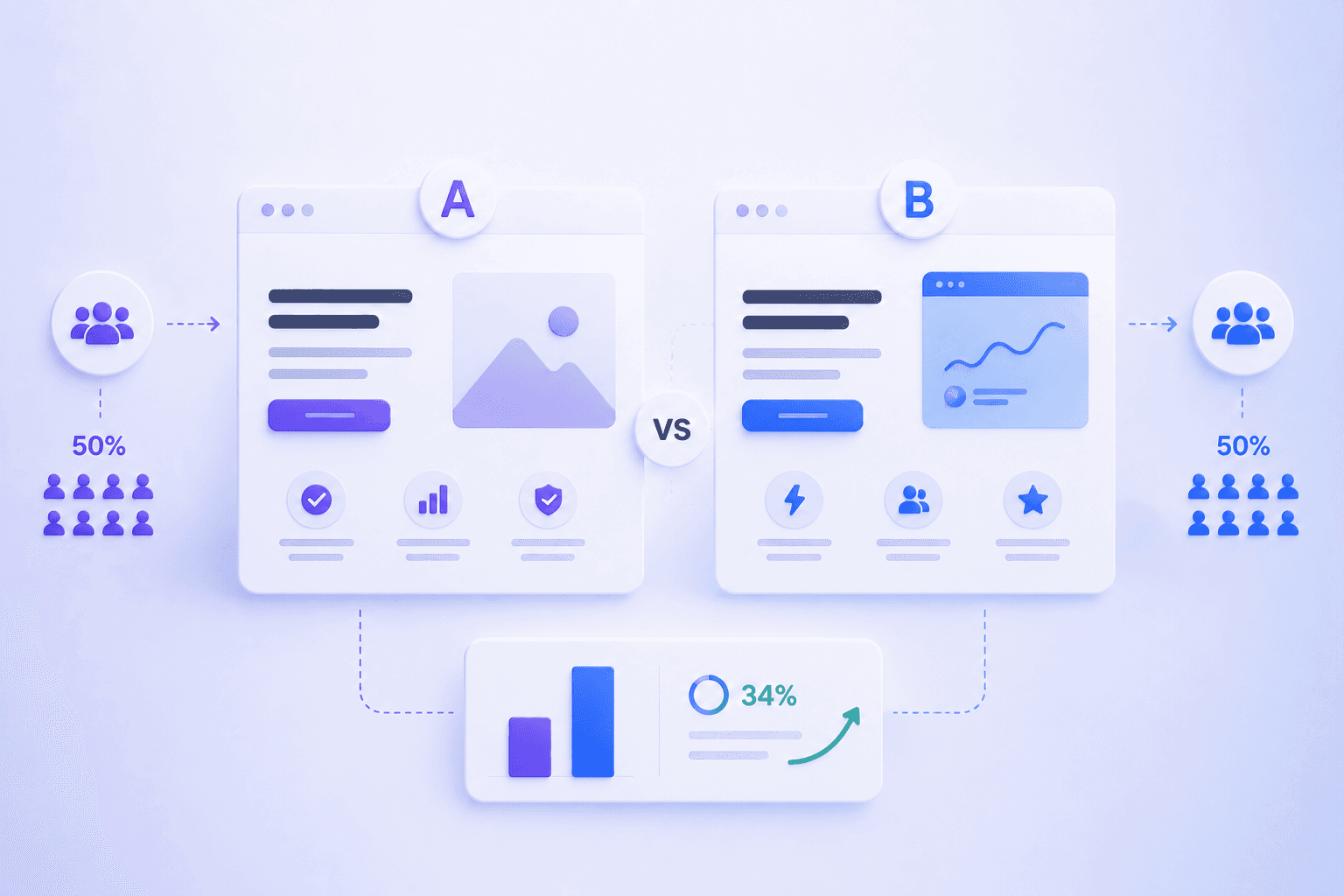
Split traffic evenly between your landing page and product page for the same campaign. Track three metrics:
CVR (conversion rate): The percentage of visitors who complete the desired action
CPA (cost per acquisition): How much you spend to acquire each customer
ROAS (return on ad spend): Revenue generated divided by ad spend
Run the test long enough to reach statistical significance—typically at least 1,000 visitors per variation.
One test isn't enough. Treat landing pages as living assets. Continue testing headlines, layouts, offers, and page structures over time. The brands that win at paid acquisition are the ones that iterate relentlessly.
Build Higher Converting Landing Pages With Flighted
At Flighted, we treat landing page optimization as inseparable from paid media expertise and creative strategy. All three work together—you can't optimize one without the others.
We build mobile-first, data-driven landing pages and treat every page as a living asset through ongoing A/B testing. Our team has managed $50M+ in ad spend across Meta, TikTok, and Google, and we've seen firsthand how the right landing page can transform campaign economics.
Book a call to talk through your goals and see if we're a fit.
Frequently Asked Questions About Landing Pages and Product Pages
How much conversion rate lift should I expect from a landing page?
The lift varies by product, audience, and traffic source. Brands typically see meaningful improvement when switching from product pages to dedicated landing pages for cold paid traffic—especially on Meta and TikTok where message match matters most.
Do landing pages hurt SEO?
Landing pages are typically not indexed or built for organic search, so they don't compete with or harm your product pages' SEO performance.
How long does it take to build a high-converting landing page?
A well-built landing page can launch in one to two weeks. However, optimization is ongoing—expect to run continuous A/B tests to improve performance over time.
Should I use a landing page for Google Shopping campaigns?
No. Google Shopping requires product pages, and you cannot substitute landing pages for this channel.
How often should I update or test my landing page?
Treat landing pages as living assets and test new variations regularly—at minimum monthly, or whenever you see performance decline or creative fatigue in your ad campaigns.
Related Posts
Related Posts
Related Posts
Related Posts




Ready to talk?
New York, NY 11217
hello@flighted.co
© Flighted, 2026
Ready to talk?
New York, NY 11217
hello@flighted.co
© Flighted, 2026