"How Did You Hear About Us" Survey For Paid Media Attribution Explained
Paid Media
May 13, 2026
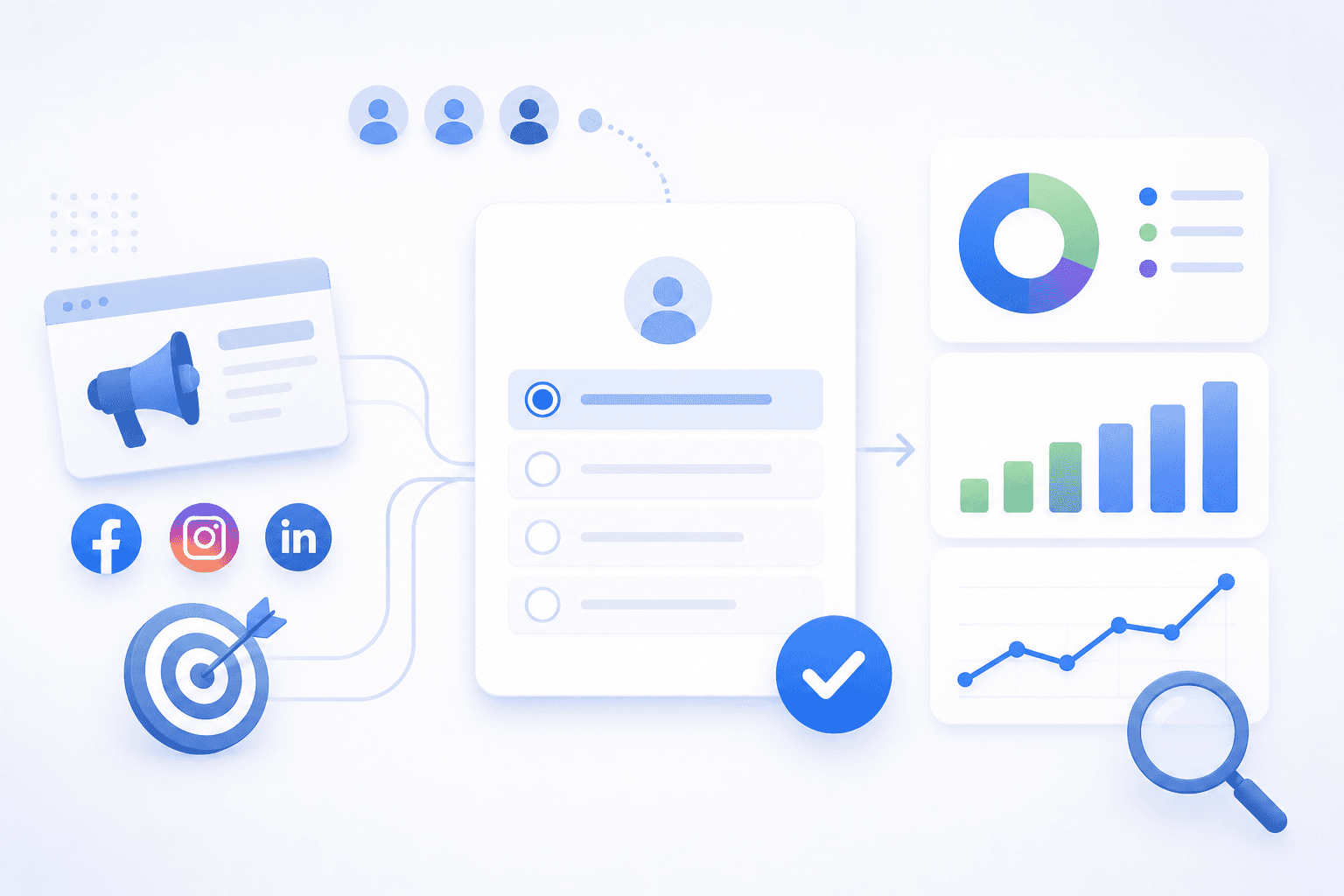
Table Of Contents
Looking for Meta ads support?
We're a small, hardworking US-based team. Book a call and get a free audit today.
What a how did you hear about us survey is
A how did you hear about us survey is a single-question tool that asks customers to tell you how they discovered your brand. The approach is called self-reported attribution because customers share the information directly, rather than relying on pixels or cookies to track their path.
Why does this matter? Analytics platforms like Google Analytics or Meta Ads Manager can only track what they can see.
When someone hears about your brand on a podcast, gets a recommendation from a friend over text, or sees a mention in a Slack channel, that touchpoint shows up as "direct" traffic in analytics. This is where analytics dashboards lose visibility. The industry calls this "dark social"—private channels that influence buying decisions but leave no trackable footprint.
The question itself can take a few forms:
"How did you hear about us?"
"Where did you first learn about us?"
"How were you referred to us?"
All three accomplish the same goal: getting customers to self-report their discovery channel while the experience is still fresh in their memory.
Why self-reported attribution matters for paid media
Platform attribution—what Meta Ads Manager or GA4 reports—undercounts channels it cannot track. Podcasts, influencer mentions, organic social shares, and offline conversations all drive conversions that never appear in your dashboards. If you rely solely on last-click data, you're likely funding channels that get credit while starving channels that actually work.
This gap has widened since iOS 14.5. Privacy changes degraded pixel-based tracking, which means Meta's reported conversions often undercount reality. A how did you hear about us survey gives you a second data source to validate—or challenge—what the platforms tell you.
For brands running paid social, this connection is direct. If survey responses show Meta driving more conversions than the pixel reports, you have evidence to defend or increase that spend.
A strong Meta ads strategy follows. If responses reveal podcasts or influencers are driving discovery, you know where to invest creative resources next.
When and where to ask how did you hear about us
Placement determines both response quality and completion rate. Ask too early and you create friction before conversion. Ask too late and customers forget or ignore the question entirely.
Post-purchase confirmation page
Post-purchase is the best placement for ecommerce and DTC brands. The customer has already converted, so there's no risk of hurting your conversion rate. Memory is fresh—they just completed checkout and can recall what prompted the purchase.
Account signup and lead capture forms
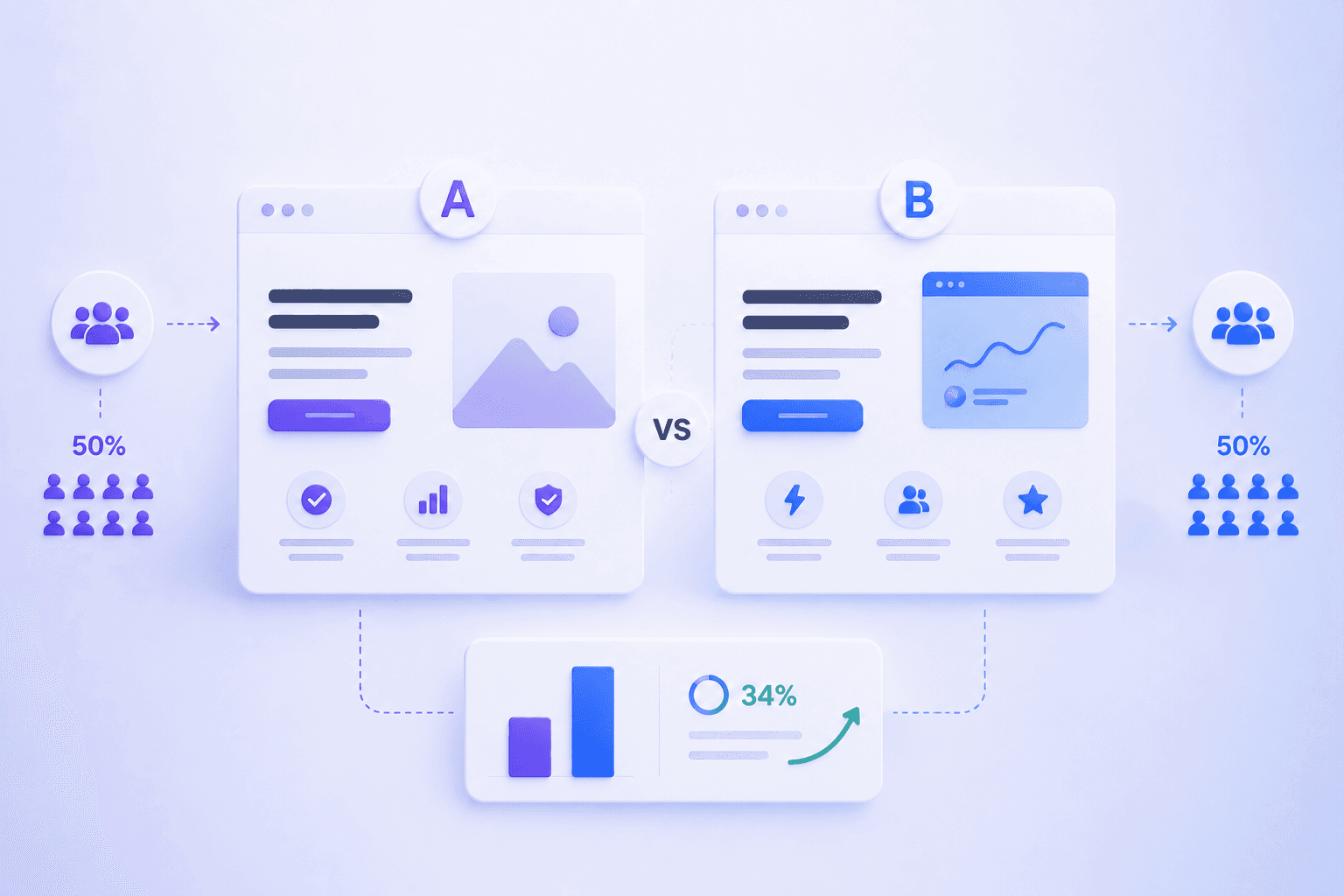
This placement is common for B2B SaaS and lead generation. However, adding a required field can reduce form completion rates depending on form length. Testing an optional field first, then A/B testing required vs. optional, helps you measure the tradeoff between data collection and conversion friction.
Email and SMS follow-ups
Email or SMS follow-ups work as an alternative for brands that don't want to add friction at conversion. Response rates are lower—typically a fraction of recipients respond—but this approach captures customers who skip the post-purchase form or didn't see it.
How did you hear about us answer options for accurate attribution
Vague or incomplete response options produce unusable data. "Social media" tells you nothing actionable. "Instagram Ad" tells you exactly where to look.
Be specific with your options. List actual channel names, not generic categories. Always include an "Other" field with a text box to capture unexpected sources—this is often where you discover channels you didn't know were working.
Generic option | Specific option |
|---|---|
Social Media | Instagram, TikTok, Facebook |
Ad | Meta Ad, Google Ad, YouTube Ad |
Search | Google Search, ChatGPT/AI Search |
Referral | Friend/Family, Colleague/Coworker |
Paid social and Meta ads
List "Facebook/Instagram Ad" or "Meta Ad" as a distinct option. This directly informs whether your paid media spend is driving attributed conversions that the pixel may be missing.
Search engines and AI tools
Separate "Google Search" from "ChatGPT" or "AI assistant." Discovery through AI-driven search represents a different behavior than traditional search, and tracking both independently reveals how your audience actually finds you.
Word of mouth and referrals
Include "Friend or Family Recommendation" and "Colleague/Coworker." Word of mouth captures dark social influence that appears as direct traffic in analytics but often represents your highest-intent acquisition channel.
Podcasts and influencers
List specific podcast names if you sponsor them, or use "Podcast (please specify)" and "Influencer/Creator." Without self-reported data, you have no way to attribute conversions to podcast or influencer spend.
Offline and traditional media
Include "TV," "Radio," "Billboard," "Event/Conference" for brands with offline marketing. Offline channels have no digital attribution path whatsoever, so self-reported data is the only way to measure their impact.
How to build a how did you hear about us survey
Keep it simple. This is one question, not a multi-question survey. The goal is high response rates and clean data, not comprehensive customer research.
1. Define your attribution goals
Start by asking what you want to learn. Are you validating that Meta spend is working? Trying to understand podcast ROI?
Curious whether word of mouth is driving more than you thought? Your goal shapes the response options you include.
2. Choose a survey tool
For Shopify stores, post-purchase survey tools like Fairing, Enquire Labs, or KnoCommerce integrate directly with checkout. For lead gen forms, native form builders or tools like Typeform work well. For B2B SaaS brands, see our Meta ads strategy for B2B SaaS for context on how attribution fits into your paid media stack.
3. Write the question and response options
Keep the question short. List response options in order of expected volume—put your most common channels first. Always include "Other" with a text field to capture sources you didn't anticipate.
4. Place the survey at the right touchpoint
For ecommerce, default to post-purchase. For B2B, test an optional field on your lead form vs. a follow-up email. Monitor which approach yields higher response rates without hurting conversion.
5. Test response rate and iterate
Track what percentage of customers respond. If response rate is low for post-purchase or for required form fields, simplify your options or change placement. A/B testing helps you find the right balance.
Follow-up questions to add to your HDYHAU survey
Once your how did you hear about us survey is working, consider adding one follow-up question for more granularity. Do not add more than one or two questions—this is not a comprehensive customer survey.
"What convinced you to buy today?" — Captures the messaging or offer that drove conversion, useful for creative strategy
"How long have you known about us?" — Distinguishes new discovery from long consideration cycles
"What almost stopped you from buying?" — Identifies objections you can address in ads and landing pages
How to analyze HDYHAU survey data for media decisions
Raw responses become actionable when you aggregate and compare. Export responses weekly or monthly, then calculate the share of attributed conversions per channel.
Export and aggregate responses weekly or monthly to build a dataset large enough to draw conclusions
Calculate share of attributed conversions per channel to see which sources drive the most customers
Compare to platform-reported data to identify discrepancies between what customers say and what your dashboards show
Adjust spend toward channels that are underattributed in platform data once you have enough responses to trust the pattern
If many respondents say "Instagram Ad" but Meta Ads Manager claims a smaller share, you have evidence that Meta is underreporting. This informs budget decisions and gives you confidence to scale.
Triangulating survey data with Meta Ads Manager and GA4
HDYHAU data does not replace platform attribution—it supplements it. Use how did you hear about us survey data, Meta Ads Manager reporting, and GA4 together to triangulate the truth.
When survey responses show Meta driving more conversions than the pixel reports, you have evidence to defend or increase Meta spend. When responses reveal a channel you're not investing in—like podcasts or word of mouth—you know where to explore next.
This triangulation is where self-reported attribution connects to paid media expertise, creative strategy, and landing page optimization. Knowing where customers come from informs what creative angles to test and which landing pages to build for specific traffic sources.
How did you hear about us survey examples and templates
Ecommerce post-purchase template
Question: How did you hear about us?
Options: Instagram/Facebook Ad, TikTok, Google Search, Influencer/Creator, Friend or Family, Podcast, Other (please specify)
B2B SaaS signup template
Question: Where did you first learn about us?
Options: Google Search, LinkedIn, Colleague Referral, Podcast, Industry Newsletter, Conference/Event, Other (please specify)
For more on running paid media for B2B, see our B2B SaaS growth agency page.
Lead generation form template
Add as an optional dropdown field within your contact form. Label it "How did you hear about us? (optional)" to avoid conversion friction while still capturing data from those willing to share.
Turn better attribution into profitable scale with Flighted
Knowing where customers come from is only valuable if you act on it. That means adjusting creative strategy based on top channels and reallocating budget toward underattributed sources. Optimize landing pages for channel-specific behavior with a paid media agency.
At Flighted, we bring together Paid Media Expertise, Creative Strategy, and Landing Page Optimization as three interdependent pillars—not separate services. Survey-based attribution informs all three. It tells us which Meta campaigns deserve more budget, which creative angles resonate by source, and which landing pages convert channel-specific traffic.
Book a call to talk through how HDYHAU data can inform your paid media strategy.
FAQs about how did you hear about us surveys
How many survey responses do you need before making media decisions?
Wait until you have enough responses to see a clear pattern. For ecommerce, aim for at least 200–300 responses before drawing conclusions. For B2B with lower volume, 30–50 responses can reveal directional insights, though you'll want more data before making major budget shifts.
How does a HDYHAU survey compare to a media mix model?
A HDYHAU survey is a simple, low-cost tool you can implement today. A media mix model (MMM) is a statistical model requiring years of historical data and ongoing investment.
Most brands at lower spend levels start with HDYHAU and consider MMM later as they scale. See our case studies for examples of how attribution data drives paid media results.
Should the survey question be required or optional?
For post-purchase surveys, make it required—the customer has already converted so there's no friction risk. For lead capture forms, test optional first to avoid reducing form completion rates, then A/B test required vs. optional to measure the actual impact.
How do you handle attribution across multiple channels?
Accept that customers often encounter your brand on multiple channels before converting. Ask for the "first" or "primary" channel, or allow multiple selections and weight responses accordingly in your analysis.
Some brands ask "Where did you first hear about us?" and "What made you decide to buy today?" separately. This captures both discovery and conversion triggers.