How to Run a Landing Page A/B Test: A Guide For B2B SaaS
Paid Media
June 10, 2026
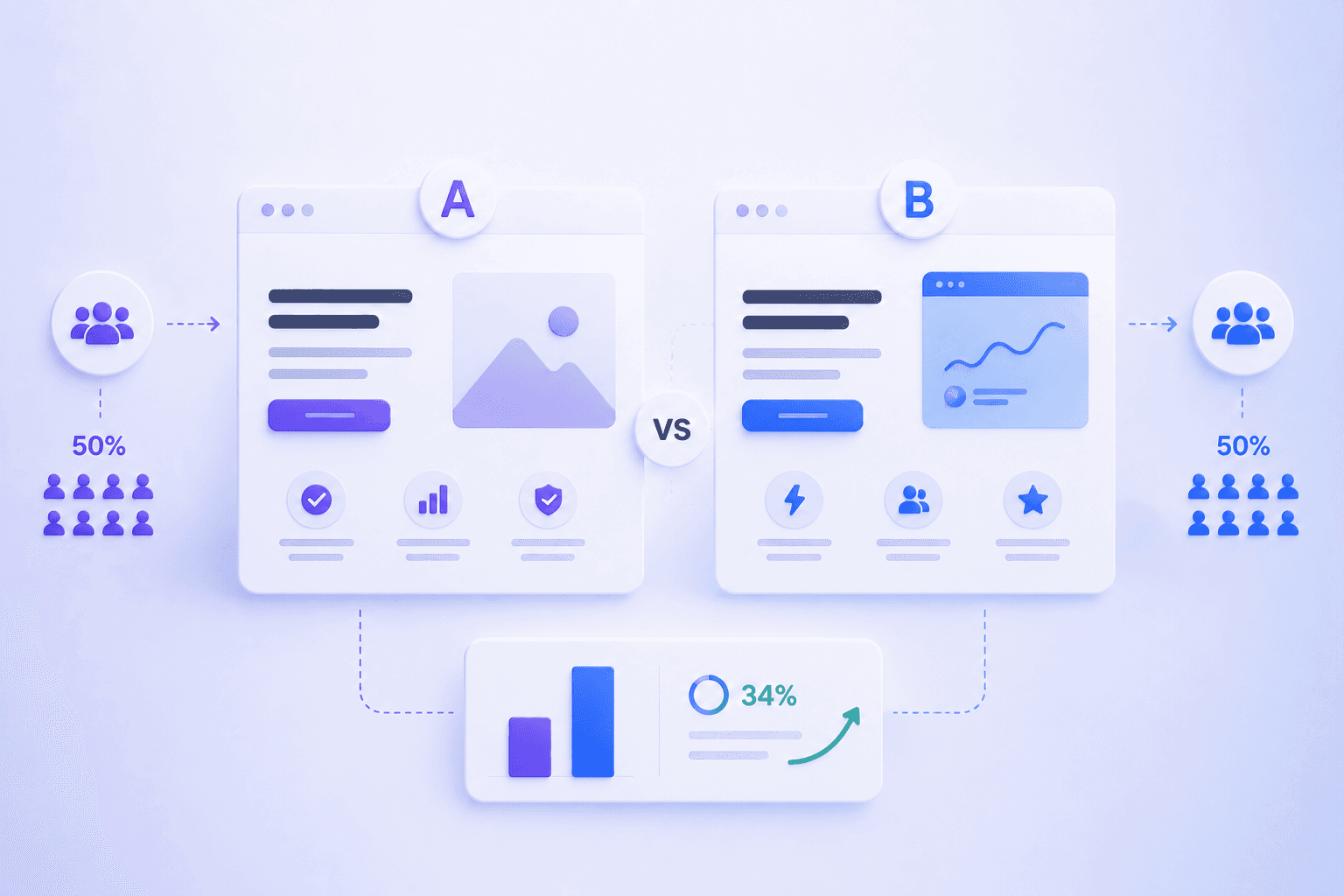
Table Of Contents
Most landing page changes are guesses dressed up as strategy. Someone on the team thinks the headline is weak, another person wants to move the CTA above the fold, and the loudest voice in the room wins.
A/B testing replaces that dynamic with data. You show half your visitors one version, half see another, and the conversion numbers tell you which one actually works. This guide covers the mechanics, the tools, and the step-by-step process for running valid tests on B2B SaaS landing pages.
Key takeaways
A/B testing splits traffic evenly between a control version (A) and a modified version (B) to see which converts better, replacing guesswork with real user data.
B2B SaaS tests typically run longer than ecommerce tests because of longer consideration cycles and lower traffic volumes.
Test one element at a time so you know exactly what caused the change in conversion rate.
Wait for statistical significance before declaring a winner. Ending tests early invalidates your results.
Landing page performance directly impacts paid media efficiency. A higher-converting page means lower CPA and better ROAS.
What is a landing page A/B test
A/B testing landing pages involves splitting your traffic evenly between a control version (A) and a modified version (B) to see which converts better. Half of your visitors see one version of the page, while the other half sees a different version. You then compare conversion rates between the two.
This approach replaces opinions with data. Instead of debating whether the headline or the form length is hurting conversions, you run a test and let actual user behavior answer the question.
You might hear this called split testing. Same concept, different name.
How landing page A/B testing works for B2B SaaS
The mechanics are straightforward. Visitors arriving at your landing page get randomly assigned to either version A or version B. You track conversions on both versions, then compare performance after collecting enough data.
That said, B2B SaaS testing differs from ecommerce in a few important ways:
Traffic split: Visitors are randomly assigned, usually 50/50, though some tools allow different ratios.
Conversion tracking: In B2B, a conversion is typically a demo request, free trial signup, or contact form submission rather than a purchase.
Comparison window: B2B buyers take longer to decide, so your tests often run 2–4 weeks minimum compared to days for high-traffic DTC sites.
The longer sales cycle also means you're testing for lead quality, not just volume. A variation that generates more form fills but attracts worse-fit leads isn't actually winning.
Why A/B testing matters for SaaS landing page conversion
Testing removes opinions from optimization decisions. Foundry CRO's benchmark analysis found that A/B testing produces 37% average conversion gains, yet only 17% of marketers actively test their landing pages. You run a test, collect data, and let the results guide your next move.
Small conversion rate improvements compound over time. Moving from 2% to 2.5%—numbers consistent with typical B2B SaaS conversion rate benchmarks—represents a 25% improvement in leads from the same traffic. If you're spending $50K/month on paid acquisition, that difference adds up quickly.
Conversion rate optimization, often called CRO, is the discipline of systematically improving the percentage of visitors who take a desired action. A/B testing is the primary method for doing CRO well.
How much traffic you need to A/B test a landing page
Here's the uncomfortable truth: most B2B SaaS landing pages don't have enough traffic to run fast tests.
Statistical significance refers to the confidence that your results aren't random noise. Reaching statistical significance requires a minimum sample size, and that sample size depends on your current conversion rate and the size of improvement you're trying to detect.
Lower-traffic sites can still run valid tests by adjusting their strategy:
Extend test duration: Run tests for 4–6 weeks (instead of the standard 2) to collect more data.
Focus on high-impact changes: Test major elements like headlines or value propositions rather than minor design tweaks.
Avoid trivial variables: Don't test button colors or small font changes if traffic is under 500 visitors per month.
Before launching any test, use a sample size calculator. Plug in your current conversion rate, the minimum improvement you'd consider meaningful (usually 10–20%), and your weekly traffic. The calculator tells you how long to run the test.
Landing page elements to A/B test
Test one element at a time. If you change the headline and the CTA simultaneously, you won't know which change caused the result.
Headlines and subheadlines
Headlines are high-impact because they're the first thing visitors read. Your B2B SaaS landing page headline tests should compare benefits-driven copy against question-based headlines against direct value propositions.
For example: "Reduce churn by 30%" versus "Struggling with customer retention?" versus "Customer Success Platform for SaaS." Each framing appeals to different motivations.
Call to action copy and placement
The CTA is your direct conversion trigger. You can test button text like "Start Free Trial" versus "Get a Demo" versus "See Pricing." You can also test button color, size, and position on the page.
Above the fold versus below the fold matters more than most teams realize. A CTA that visitors never scroll to is a CTA that never gets clicked.
Form length and field order
Shorter forms typically convert better—Genesys Growth found that 81% of users abandon forms after starting—but longer forms can improve lead quality by filtering out less serious prospects.
Test email-only versus email plus company name versus a full qualification form. For B2B, also test which fields appear first. Company size before job title, or vice versa, can affect completion rates.
Hero image or video
Test a static image versus an explainer video versus no visual at all.
Video can increase engagement, but it may also slow page load, which hurts mobile conversion. Measure both conversion rate and page speed when running visual tests.
Social proof and customer logos
B2B buyers look for validation from similar companies. Test the presence, placement, and type of social proof you include.
Options include logo bars, written testimonials, case study snippets, or specific metrics like "Used by 500+ SaaS companies." Different audiences respond to different proof formats.
Page length and section order
Test long-form pages with multiple sections against short pages focused on one action.
Also test section order. Does pricing above features perform better than features above pricing? The answer varies by product and audience.
Pricing and offer framing
Test how pricing is displayed: monthly versus annual, with or without competitor comparison, free trial versus demo-first.
Framing changes perception of value even when the actual price stays the same. A $99/month price feels different than a $1,188/year price, even though the math is identical.
Steps to run a landing page A/B test
Follow this sequence to run a valid test.
1. Pick a landing page A/B testing tool
Choose based on your existing stack. If you're already using HubSpot or Webflow, their native tools work fine. If you're building dedicated campaign pages, Unbounce or Instapage have built-in split testing.
More detail on tool options appears in the next section.
2. Write a hypothesis worth testing
Structure your hypothesis using this formula:
If we change [element], then [metric] will improve because [reason].
For example: "If we shorten the form from 5 fields to 3, then conversion rate will improve because we're reducing friction for visitors."
A testable hypothesis prevents random changes and gives you something to learn from regardless of the outcome.
3. Run an A/A test to validate your setup
An A/A test runs two identical versions to confirm your tracking and traffic splitting work correctly. If your A/A test shows a 15% difference between identical pages, something is broken.
Fix tracking issues before introducing a real variation. Otherwise, you'll draw conclusions from bad data.
4. Build the variation
Change only one element. Document exactly what changed. Keep the control unchanged as your baseline.
This discipline feels slow, but it's the only way to know what actually caused a change in performance.
5. Launch the test and lock the sample size
Set your target sample size before launch. Do not end the test early. Do not peek at results and make decisions before reaching significance.
Early peeking introduces bias and invalidates your findings. Let the test run its full course.
6. Read results and ship the winner
Wait for 95% statistical significance. Once you have a clear winner, implement it as the new default, document the result, and use the insight to inform your next test.
Testing is iterative. Each test builds on the last.
A/B testing tools for SaaS landing pages
Tool Type | Examples | Best For |
|---|---|---|
Dedicated page builders | Unbounce, Leadpages, Instapage | Teams building landing pages from scratch with built-in split testing |
Integrated platforms | HubSpot, Webflow | Teams already using these platforms who want native A/B testing |
Ad-native tools | Google Ads Experiments | Testing landing page URLs directly within paid campaigns |
Analytics-based | VWO, Optimizely | Teams testing on existing pages without rebuilding |
Most B2B SaaS teams use a combination. Dedicated builders work well for campaign-specific pages, while integrated tools handle site pages.
Metrics to measure in a landing page A/B test
Conversion rate: Percentage of visitors who complete the desired action, such as a demo request, trial signup, or form submission. This is your primary metric.
Bounce rate: Percentage of visitors who leave without interacting. High bounce rate suggests a mismatch between ad messaging and landing page content.
Cost per acquisition (CPA): If you're running paid traffic, landing page performance directly affects acquisition cost. A 20% improvement in conversion rate means proportionally lower CPA.
Click-through rate (CTR): For pages with multiple steps, the percentage who click to the next step.
Prioritize conversion rate and CPA over engagement metrics like time on page.
A/B testing mistakes to avoid
Ending tests too early: Stopping before statistical significance means your "winner" might be random noise. According to Kissmetrics, early stopping can inflate false positive rates to 30%.
Testing too many elements at once: You won't know which change caused the result.
Ignoring sample size requirements: Low-traffic tests require longer run times or results will be unreliable.
Not documenting results: Without a record of past tests, teams repeat failed experiments.
Copying competitors without context: What works for another company may not work for your audience.
Testing trivial changes: Button color rarely moves the needle. Focus on messaging and offer instead.
How A/B testing connects paid media and landing page performance
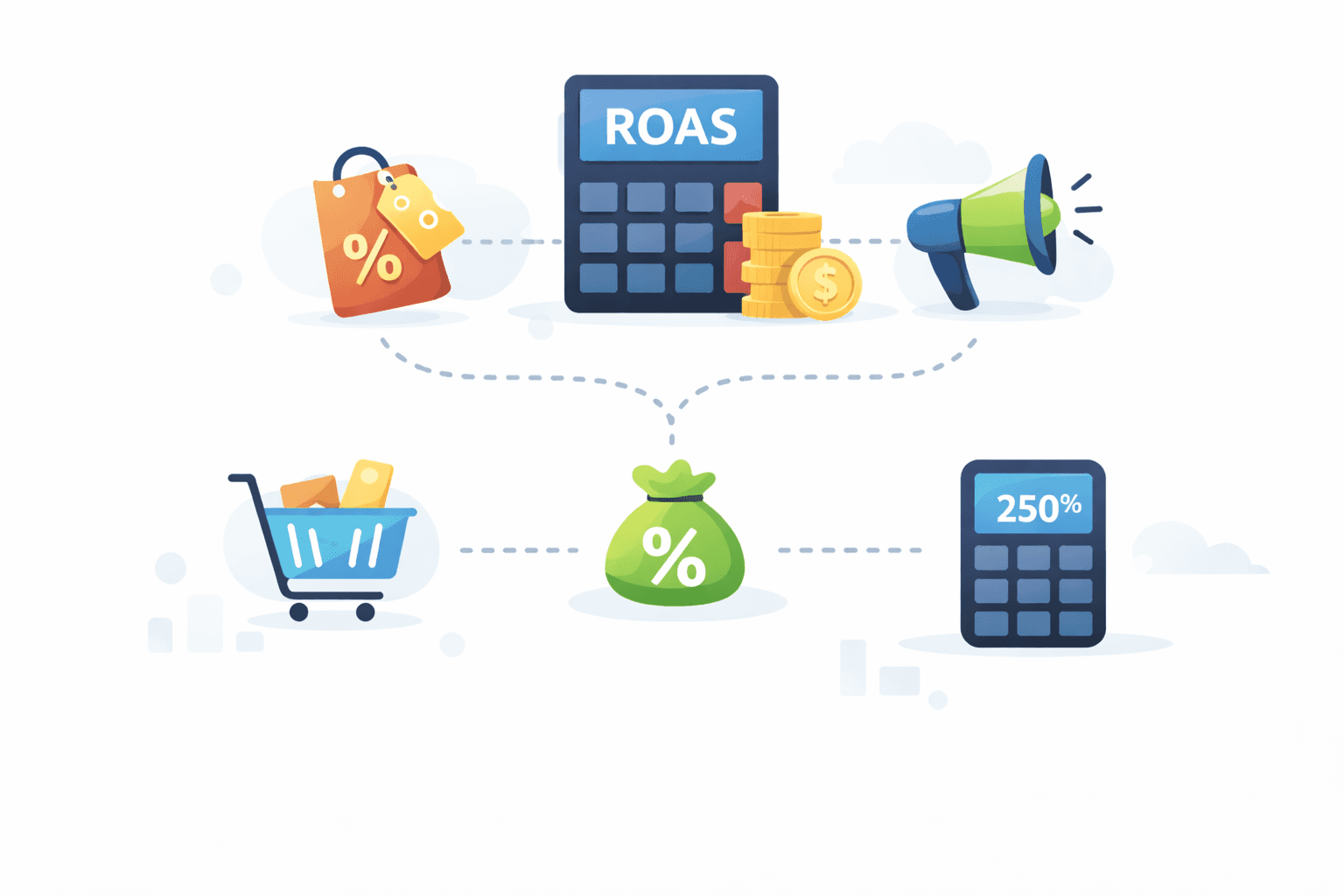
Landing page conversion rate directly impacts paid media efficiency. If your page converts at 2% instead of 1%, your cost per acquisition drops by half. Your return on ad spend, or ROAS, which measures revenue generated per dollar spent on ads, improves proportionally.
This connection is why Flighted treats Paid Media Expertise, Creative Strategy, and Landing Page Optimization as three interdependent pillars rather than separate services. A winning ad creative that sends traffic to a poorly converting landing page wastes budget. A high-converting landing page with weak ad creative never gets enough traffic to matter.
Insights from landing page tests also inform ad creative. If a benefits-driven headline outperforms a feature-focused headline on your landing page, that same messaging angle likely works in your Meta Ads creative. The learning flows both directions.
Turn landing page testing into a growth engine with Flighted
Flighted treats every landing page as a living asset through ongoing A/B testing rather than a one-time build. Testing works best when it's connected to paid media and creative strategy under one team, so insights flow in both directions.
Book a call to discuss how Flighted can turn your landing pages into a compounding growth lever.
Frequently asked questions about landing page A/B testing
How long should you run a landing page A/B test?
Run the test until it reaches statistical significance, which typically requires at least one to two full business cycles. For B2B SaaS, that usually means 2–4 weeks minimum to account for daily and weekly fluctuations in visitor behavior.
What is the difference between A/B testing and multivariate testing?
A/B testing compares two versions with one element changed. Multivariate testing compares multiple combinations of several elements simultaneously. Multivariate requires significantly more traffic, often 10x or more, to reach valid conclusions. For most B2B SaaS pages, A/B testing is the practical choice.
Can you run A/B tests on a low-traffic B2B SaaS landing page?
Yes, but tests take longer to reach statistical significance. Focus on high-impact elements like headlines and CTAs rather than minor design tweaks. You might also consider testing across multiple similar pages to aggregate traffic.
How often should you re-test a winning landing page variation?
Re-test periodically as audience behavior, market conditions, and the competitive landscape change. A variation that won six months ago may no longer be optimal. Quarterly reviews are a reasonable starting point for most teams.
Most landing page changes are guesses dressed up as strategy. Someone on the team thinks the headline is weak, another person wants to move the CTA above the fold, and the loudest voice in the room wins.
A/B testing replaces that dynamic with data. You show half your visitors one version, half see another, and the conversion numbers tell you which one actually works. This guide covers the mechanics, the tools, and the step-by-step process for running valid tests on B2B SaaS landing pages.
Key takeaways
A/B testing splits traffic evenly between a control version (A) and a modified version (B) to see which converts better, replacing guesswork with real user data.
B2B SaaS tests typically run longer than ecommerce tests because of longer consideration cycles and lower traffic volumes.
Test one element at a time so you know exactly what caused the change in conversion rate.
Wait for statistical significance before declaring a winner. Ending tests early invalidates your results.
Landing page performance directly impacts paid media efficiency. A higher-converting page means lower CPA and better ROAS.
What is a landing page A/B test
A/B testing landing pages involves splitting your traffic evenly between a control version (A) and a modified version (B) to see which converts better. Half of your visitors see one version of the page, while the other half sees a different version. You then compare conversion rates between the two.
This approach replaces opinions with data. Instead of debating whether the headline or the form length is hurting conversions, you run a test and let actual user behavior answer the question.
You might hear this called split testing. Same concept, different name.
How landing page A/B testing works for B2B SaaS
The mechanics are straightforward. Visitors arriving at your landing page get randomly assigned to either version A or version B. You track conversions on both versions, then compare performance after collecting enough data.
That said, B2B SaaS testing differs from ecommerce in a few important ways:
Traffic split: Visitors are randomly assigned, usually 50/50, though some tools allow different ratios.
Conversion tracking: In B2B, a conversion is typically a demo request, free trial signup, or contact form submission rather than a purchase.
Comparison window: B2B buyers take longer to decide, so your tests often run 2–4 weeks minimum compared to days for high-traffic DTC sites.
The longer sales cycle also means you're testing for lead quality, not just volume. A variation that generates more form fills but attracts worse-fit leads isn't actually winning.
Why A/B testing matters for SaaS landing page conversion
Testing removes opinions from optimization decisions. Foundry CRO's benchmark analysis found that A/B testing produces 37% average conversion gains, yet only 17% of marketers actively test their landing pages. You run a test, collect data, and let the results guide your next move.
Small conversion rate improvements compound over time. Moving from 2% to 2.5%—numbers consistent with typical B2B SaaS conversion rate benchmarks—represents a 25% improvement in leads from the same traffic. If you're spending $50K/month on paid acquisition, that difference adds up quickly.
Conversion rate optimization, often called CRO, is the discipline of systematically improving the percentage of visitors who take a desired action. A/B testing is the primary method for doing CRO well.
How much traffic you need to A/B test a landing page
Here's the uncomfortable truth: most B2B SaaS landing pages don't have enough traffic to run fast tests.
Statistical significance refers to the confidence that your results aren't random noise. Reaching statistical significance requires a minimum sample size, and that sample size depends on your current conversion rate and the size of improvement you're trying to detect.
Lower-traffic sites can still run valid tests by adjusting their strategy:
Extend test duration: Run tests for 4–6 weeks (instead of the standard 2) to collect more data.
Focus on high-impact changes: Test major elements like headlines or value propositions rather than minor design tweaks.
Avoid trivial variables: Don't test button colors or small font changes if traffic is under 500 visitors per month.
Before launching any test, use a sample size calculator. Plug in your current conversion rate, the minimum improvement you'd consider meaningful (usually 10–20%), and your weekly traffic. The calculator tells you how long to run the test.
Landing page elements to A/B test
Test one element at a time. If you change the headline and the CTA simultaneously, you won't know which change caused the result.
Headlines and subheadlines
Headlines are high-impact because they're the first thing visitors read. Your B2B SaaS landing page headline tests should compare benefits-driven copy against question-based headlines against direct value propositions.
For example: "Reduce churn by 30%" versus "Struggling with customer retention?" versus "Customer Success Platform for SaaS." Each framing appeals to different motivations.
Call to action copy and placement
The CTA is your direct conversion trigger. You can test button text like "Start Free Trial" versus "Get a Demo" versus "See Pricing." You can also test button color, size, and position on the page.
Above the fold versus below the fold matters more than most teams realize. A CTA that visitors never scroll to is a CTA that never gets clicked.
Form length and field order
Shorter forms typically convert better—Genesys Growth found that 81% of users abandon forms after starting—but longer forms can improve lead quality by filtering out less serious prospects.
Test email-only versus email plus company name versus a full qualification form. For B2B, also test which fields appear first. Company size before job title, or vice versa, can affect completion rates.
Hero image or video
Test a static image versus an explainer video versus no visual at all.
Video can increase engagement, but it may also slow page load, which hurts mobile conversion. Measure both conversion rate and page speed when running visual tests.
Social proof and customer logos
B2B buyers look for validation from similar companies. Test the presence, placement, and type of social proof you include.
Options include logo bars, written testimonials, case study snippets, or specific metrics like "Used by 500+ SaaS companies." Different audiences respond to different proof formats.
Page length and section order
Test long-form pages with multiple sections against short pages focused on one action.
Also test section order. Does pricing above features perform better than features above pricing? The answer varies by product and audience.
Pricing and offer framing
Test how pricing is displayed: monthly versus annual, with or without competitor comparison, free trial versus demo-first.
Framing changes perception of value even when the actual price stays the same. A $99/month price feels different than a $1,188/year price, even though the math is identical.
Steps to run a landing page A/B test
Follow this sequence to run a valid test.
1. Pick a landing page A/B testing tool
Choose based on your existing stack. If you're already using HubSpot or Webflow, their native tools work fine. If you're building dedicated campaign pages, Unbounce or Instapage have built-in split testing.
More detail on tool options appears in the next section.
2. Write a hypothesis worth testing
Structure your hypothesis using this formula:
If we change [element], then [metric] will improve because [reason].
For example: "If we shorten the form from 5 fields to 3, then conversion rate will improve because we're reducing friction for visitors."
A testable hypothesis prevents random changes and gives you something to learn from regardless of the outcome.
3. Run an A/A test to validate your setup
An A/A test runs two identical versions to confirm your tracking and traffic splitting work correctly. If your A/A test shows a 15% difference between identical pages, something is broken.
Fix tracking issues before introducing a real variation. Otherwise, you'll draw conclusions from bad data.
4. Build the variation
Change only one element. Document exactly what changed. Keep the control unchanged as your baseline.
This discipline feels slow, but it's the only way to know what actually caused a change in performance.
5. Launch the test and lock the sample size
Set your target sample size before launch. Do not end the test early. Do not peek at results and make decisions before reaching significance.
Early peeking introduces bias and invalidates your findings. Let the test run its full course.
6. Read results and ship the winner
Wait for 95% statistical significance. Once you have a clear winner, implement it as the new default, document the result, and use the insight to inform your next test.
Testing is iterative. Each test builds on the last.
A/B testing tools for SaaS landing pages
Tool Type | Examples | Best For |
|---|---|---|
Dedicated page builders | Unbounce, Leadpages, Instapage | Teams building landing pages from scratch with built-in split testing |
Integrated platforms | HubSpot, Webflow | Teams already using these platforms who want native A/B testing |
Ad-native tools | Google Ads Experiments | Testing landing page URLs directly within paid campaigns |
Analytics-based | VWO, Optimizely | Teams testing on existing pages without rebuilding |
Most B2B SaaS teams use a combination. Dedicated builders work well for campaign-specific pages, while integrated tools handle site pages.
Metrics to measure in a landing page A/B test
Conversion rate: Percentage of visitors who complete the desired action, such as a demo request, trial signup, or form submission. This is your primary metric.
Bounce rate: Percentage of visitors who leave without interacting. High bounce rate suggests a mismatch between ad messaging and landing page content.
Cost per acquisition (CPA): If you're running paid traffic, landing page performance directly affects acquisition cost. A 20% improvement in conversion rate means proportionally lower CPA.
Click-through rate (CTR): For pages with multiple steps, the percentage who click to the next step.
Prioritize conversion rate and CPA over engagement metrics like time on page.
A/B testing mistakes to avoid
Ending tests too early: Stopping before statistical significance means your "winner" might be random noise. According to Kissmetrics, early stopping can inflate false positive rates to 30%.
Testing too many elements at once: You won't know which change caused the result.
Ignoring sample size requirements: Low-traffic tests require longer run times or results will be unreliable.
Not documenting results: Without a record of past tests, teams repeat failed experiments.
Copying competitors without context: What works for another company may not work for your audience.
Testing trivial changes: Button color rarely moves the needle. Focus on messaging and offer instead.
How A/B testing connects paid media and landing page performance
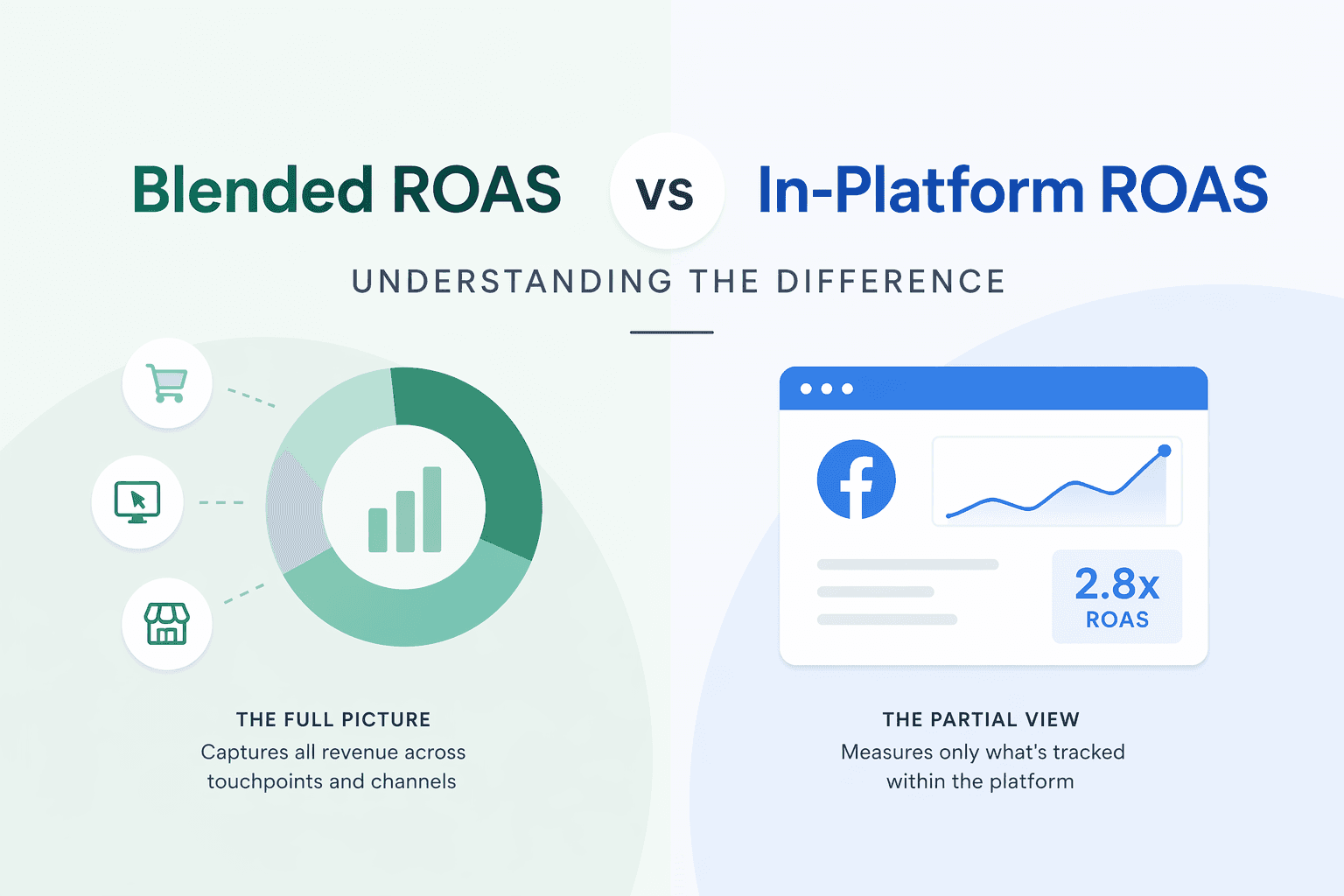
Landing page conversion rate directly impacts paid media efficiency. If your page converts at 2% instead of 1%, your cost per acquisition drops by half. Your return on ad spend, or ROAS, which measures revenue generated per dollar spent on ads, improves proportionally.
This connection is why Flighted treats Paid Media Expertise, Creative Strategy, and Landing Page Optimization as three interdependent pillars rather than separate services. A winning ad creative that sends traffic to a poorly converting landing page wastes budget. A high-converting landing page with weak ad creative never gets enough traffic to matter.
Insights from landing page tests also inform ad creative. If a benefits-driven headline outperforms a feature-focused headline on your landing page, that same messaging angle likely works in your Meta Ads creative. The learning flows both directions.
Turn landing page testing into a growth engine with Flighted
Flighted treats every landing page as a living asset through ongoing A/B testing rather than a one-time build. Testing works best when it's connected to paid media and creative strategy under one team, so insights flow in both directions.
Book a call to discuss how Flighted can turn your landing pages into a compounding growth lever.
Frequently asked questions about landing page A/B testing
How long should you run a landing page A/B test?
Run the test until it reaches statistical significance, which typically requires at least one to two full business cycles. For B2B SaaS, that usually means 2–4 weeks minimum to account for daily and weekly fluctuations in visitor behavior.
What is the difference between A/B testing and multivariate testing?
A/B testing compares two versions with one element changed. Multivariate testing compares multiple combinations of several elements simultaneously. Multivariate requires significantly more traffic, often 10x or more, to reach valid conclusions. For most B2B SaaS pages, A/B testing is the practical choice.
Can you run A/B tests on a low-traffic B2B SaaS landing page?
Yes, but tests take longer to reach statistical significance. Focus on high-impact elements like headlines and CTAs rather than minor design tweaks. You might also consider testing across multiple similar pages to aggregate traffic.
How often should you re-test a winning landing page variation?
Re-test periodically as audience behavior, market conditions, and the competitive landscape change. A variation that won six months ago may no longer be optimal. Quarterly reviews are a reasonable starting point for most teams.
Related Posts
Related Posts
Related Posts
Related Posts










Ready to talk?
Flighted is the operating brand of Peter Czepiga LLC, a New York City-based performance marketing agency.
New York, NY 11217
hello@flighted.co
© Flighted, 2026
Ready to talk?
Flighted is the operating brand of Peter Czepiga LLC, a New York City-based performance marketing agency.
New York, NY 11217
hello@flighted.co
© Flighted, 2026