What Is Marketing Mix Modeling? A Practical Guide for Growth Teams
Paid Media
July 23, 2026
Table Of Contents
Introduction
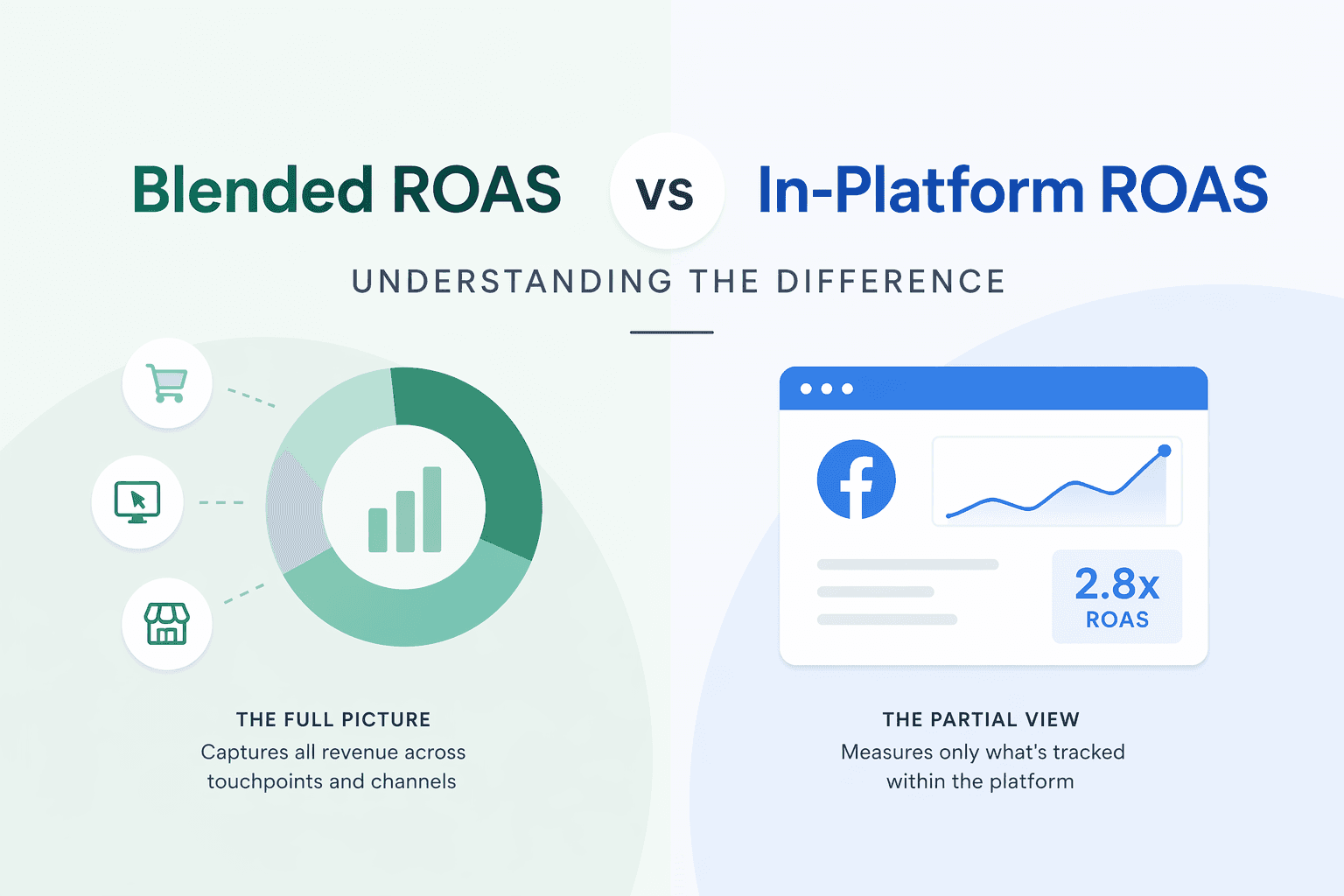
Your CFO wants to know if the $80K a month you're spending across Meta, Google, and TikTok is actually working. Platform-reported ROAS (return on ad spend) says yes. An incrementality test might say something more complicated. Neither one accounts for the podcast ad you ran in March, the price increase that hit in Q2, or what your biggest competitor did during their last sale. That's the gap marketing mix modeling (MMM) is built to close.
MMM is having a moment in 2026, and not because it's new. It's a decades-old technique that's resurging for one reason: it doesn't need cookies, device IDs, or consent signals to work. That makes it one of the few measurement methods that still functions cleanly in a privacy-locked ad ecosystem. This guide covers what MMM actually measures, how it differs from attribution and incrementality testing, and when it's worth building versus skipping.
Key Takeaways
MMM uses aggregated historical data, not user-level tracking, to estimate how each marketing channel and non-marketing factor (price, promotions, seasonality) contributes to revenue.
It answers a strategic question ("where should next quarter's budget go") not a tactical one ("which ad do I turn off today").
MMM, multi-touch attribution (MTA), and incrementality testing measure different things and are strongest combined, not chosen between.
You generally need it once you're spending $50K+/month across channels, especially if 30%+ of that spend is offline or your sales cycle runs past 30 days.
A model is only as trustworthy as its validation: look for MAPE under 10%, R² above 0.7, and holdout tests within 15% of in-sample results.
1. What marketing mix modeling actually measures
Marketing mix modeling is a regression-based statistical technique that uses aggregated historical data, spend, impressions, sales, and external factors, to estimate how each marketing channel contributes to business outcomes without tracking individual users. Instead of following one person from ad click to purchase, MMM looks at the pattern across your whole business: when Meta spend went up 20% last month, what happened to revenue? When you cut TikTok spend, did anything change?
The output splits your results into two buckets: base sales (what would have happened anyway, driven by brand equity, repeat customers, or organic demand) and incremental sales generated by marketing activities. That split is the entire point. It's the same causal question incrementality testing asks on Meta specifically, just answered at the portfolio level across every channel simultaneously, including the ones you can't run a Meta-style holdout test on, like TV, out-of-home, or affiliate.
2. How an MMM model actually gets built
An MMM model isn't a single number, it's a regression model trained on weekly or daily data going back two to three years, applying adstock (carryover) and saturation (diminishing returns) transformations to isolate each channel's incremental contribution.
Two concepts do the heavy lifting:
Adstock (carryover effect): Ad exposure doesn't stop working the moment someone closes the app. A Meta ad seen on Monday can still influence a purchase decision on Thursday. Adstock accounts for that decay curve.
Saturation (diminishing returns): Doubling your Meta budget doesn't double your incremental revenue. Every channel has a point where additional spend produces shrinking returns, and the model maps that curve so you know where you're sitting on it.
Because MMM works on aggregate data rather than individual identifiers, it sidesteps the tracking problems that have gutted platform-level attribution since iOS App Tracking Transparency and browser-level cookie blocking erased 30 to 40 percent of previously trackable conversions.
3. MMM vs. MTA vs. incrementality testing
These three get lumped together constantly. They're not interchangeable, and mixing them up leads to bad budget calls.
Method | What it measures | Data required | Best for |
|---|---|---|---|
MMM | Channel-level contribution to revenue across the full media mix | Aggregate historical data, no user tracking | Quarterly/annual budget allocation |
MTA | Which touchpoints preceded a conversion | User-level identifiers, pixels, cookies | Daily, in-platform optimization |
Incrementality testing | Causal lift from a specific campaign or channel | Randomized holdout/control groups | Validating whether spend is truly incremental |
Multi-touch attribution tracks individual user journeys across touchpoints, while MMM uses aggregated historical data to estimate the incremental impact of channels on business outcomes and does not need user-level tracking. It covers all channels simultaneously, and modern versions update weekly rather than quarterly. If you've already read our guide on Meta ads incrementality testing, this is the same causality question, just scaled up. Incrementality testing tells you if Meta specifically is working. MMM tells you if Meta is working relative to Google, TikTok, and every offline channel competing for the same budget.
None of the three replaces the others. MMM is best for quarterly and annual budget allocation across all channels including offline, incrementality testing is the gold standard for proving causal lift before scaling spend, and MTA remains useful for daily campaign-level optimization within already-validated digital channels.
4. Why MMM is resurging right now
MMM isn't new, it's a decades-old econometric technique that's resurging because it needs no cookies, device IDs, or user-level tracking, making it the natural privacy-era answer to degraded multi-touch attribution, with free open-source tools from Google (Meridian) and Meta (Robyn) collapsing the cost of entry. That last part matters for smaller teams: this used to require an expensive econometrics vendor. It doesn't anymore.
The other driver is trust. Platform-reported numbers have an obvious incentive problem, Meta and Google are grading their own homework. The 2026 best practice is triangulation: MMM plus incrementality testing plus attribution, rather than picking one source of truth and hoping it holds up under CFO scrutiny.
5. When you actually need MMM (and when you don't)
Don't build an MMM model because it's trending. Build one when your situation matches these thresholds:
Spend level. Five forces have converged to make marketing mix modeling essential, not optional, for any team spending more than $50K per month on marketing. Below that, an MMM model is expensive relative to the decisions it improves.
Channel mix. Use MMM when offline channels exceed 30% of spend, sales cycles exceed 30 days, or identity resolution falls below 60%. If you're Meta-only with a same-day purchase cycle, incrementality testing on Meta directly (see our incrementality testing guide) gets you most of the value at a fraction of the cost.
Sales cycle. Use MTA instead when sales cycles are under 7 days, you need daily optimization, and you're tracking more than 1,000 conversions monthly. B2B SaaS brands running longer, multi-touch cycles are exactly where MMM earns its keep; DTC brands with fast purchase cycles often get more signal from incrementality tests run directly on Meta.
If you're an early-stage brand still finding your first profitable channel, skip MMM entirely for now. Get your Meta ads budget to a stable, scaling level first, then revisit this once you're spending across three or more channels.
6. How to know if your MMM model is any good
This is the step most teams skip, and it's why MMM gets a bad reputation. A model that isn't validated is just a guess with a chart attached. A properly validated model requires MAPE (mean absolute percentage error) under 10%, R² above 0.7, and a holdout test within 15% of the in-sample result before you let it drive a budget decision.
If a vendor hands you channel contribution percentages without showing you those three numbers, ask for them before you reallocate a dollar. Traditional MMM measures correlation between spend and outcomes; the stronger, more defensible version calibrates the model against your own incrementality experiments so it's anchored to causally-validated results rather than statistical pattern-matching alone.
7. Turning MMM output into a budget decision
The model itself isn't the deliverable, the reallocation is. Once you have channel-level contribution and saturation curves, the workflow looks like this:
Identify saturated channels. If a channel's saturation curve is flattening, more budget there produces shrinking incremental return. That's a signal to hold or shift spend, not a reason to panic.
Cross-check against incrementality tests. Where MMM and your Meta Conversion Lift results agree, act with confidence. Where they disagree, trust the incrementality test for that specific channel and use MMM for the channels you can't test directly.
Reallocate on a quarterly cadence. MMM is a strategic tool, not a daily dashboard. Rebuild or refresh the model quarterly, and let your day-to-day platform optimization run inside the boundaries it sets.
Ready to make your channel mix defensible?
We help DTC and B2B SaaS brands connect Meta performance to the bigger measurement picture. If you're spending across channels and can't get a straight answer on where the next dollar should go, book a call and we'll walk through your setup.
Conclusion
Marketing mix modeling won't replace your Meta reporting, and it isn't a substitute for running an incrementality test before you scale a campaign. What it does is answer the question neither of those tools can: across your entire media mix, including the channels you can't A/B test, where is the next dollar actually working hardest. If you're spending meaningfully across Meta, Google, TikTok, and anything offline, that's a question worth answering with real validation numbers behind it, not a vendor's slide deck.
Introduction
Your CFO wants to know if the $80K a month you're spending across Meta, Google, and TikTok is actually working. Platform-reported ROAS (return on ad spend) says yes. An incrementality test might say something more complicated. Neither one accounts for the podcast ad you ran in March, the price increase that hit in Q2, or what your biggest competitor did during their last sale. That's the gap marketing mix modeling (MMM) is built to close.
MMM is having a moment in 2026, and not because it's new. It's a decades-old technique that's resurging for one reason: it doesn't need cookies, device IDs, or consent signals to work. That makes it one of the few measurement methods that still functions cleanly in a privacy-locked ad ecosystem. This guide covers what MMM actually measures, how it differs from attribution and incrementality testing, and when it's worth building versus skipping.
Key Takeaways
MMM uses aggregated historical data, not user-level tracking, to estimate how each marketing channel and non-marketing factor (price, promotions, seasonality) contributes to revenue.
It answers a strategic question ("where should next quarter's budget go") not a tactical one ("which ad do I turn off today").
MMM, multi-touch attribution (MTA), and incrementality testing measure different things and are strongest combined, not chosen between.
You generally need it once you're spending $50K+/month across channels, especially if 30%+ of that spend is offline or your sales cycle runs past 30 days.
A model is only as trustworthy as its validation: look for MAPE under 10%, R² above 0.7, and holdout tests within 15% of in-sample results.
1. What marketing mix modeling actually measures
Marketing mix modeling is a regression-based statistical technique that uses aggregated historical data, spend, impressions, sales, and external factors, to estimate how each marketing channel contributes to business outcomes without tracking individual users. Instead of following one person from ad click to purchase, MMM looks at the pattern across your whole business: when Meta spend went up 20% last month, what happened to revenue? When you cut TikTok spend, did anything change?
The output splits your results into two buckets: base sales (what would have happened anyway, driven by brand equity, repeat customers, or organic demand) and incremental sales generated by marketing activities. That split is the entire point. It's the same causal question incrementality testing asks on Meta specifically, just answered at the portfolio level across every channel simultaneously, including the ones you can't run a Meta-style holdout test on, like TV, out-of-home, or affiliate.
2. How an MMM model actually gets built
An MMM model isn't a single number, it's a regression model trained on weekly or daily data going back two to three years, applying adstock (carryover) and saturation (diminishing returns) transformations to isolate each channel's incremental contribution.
Two concepts do the heavy lifting:
Adstock (carryover effect): Ad exposure doesn't stop working the moment someone closes the app. A Meta ad seen on Monday can still influence a purchase decision on Thursday. Adstock accounts for that decay curve.
Saturation (diminishing returns): Doubling your Meta budget doesn't double your incremental revenue. Every channel has a point where additional spend produces shrinking returns, and the model maps that curve so you know where you're sitting on it.
Because MMM works on aggregate data rather than individual identifiers, it sidesteps the tracking problems that have gutted platform-level attribution since iOS App Tracking Transparency and browser-level cookie blocking erased 30 to 40 percent of previously trackable conversions.
3. MMM vs. MTA vs. incrementality testing
These three get lumped together constantly. They're not interchangeable, and mixing them up leads to bad budget calls.
Method | What it measures | Data required | Best for |
|---|---|---|---|
MMM | Channel-level contribution to revenue across the full media mix | Aggregate historical data, no user tracking | Quarterly/annual budget allocation |
MTA | Which touchpoints preceded a conversion | User-level identifiers, pixels, cookies | Daily, in-platform optimization |
Incrementality testing | Causal lift from a specific campaign or channel | Randomized holdout/control groups | Validating whether spend is truly incremental |
Multi-touch attribution tracks individual user journeys across touchpoints, while MMM uses aggregated historical data to estimate the incremental impact of channels on business outcomes and does not need user-level tracking. It covers all channels simultaneously, and modern versions update weekly rather than quarterly. If you've already read our guide on Meta ads incrementality testing, this is the same causality question, just scaled up. Incrementality testing tells you if Meta specifically is working. MMM tells you if Meta is working relative to Google, TikTok, and every offline channel competing for the same budget.
None of the three replaces the others. MMM is best for quarterly and annual budget allocation across all channels including offline, incrementality testing is the gold standard for proving causal lift before scaling spend, and MTA remains useful for daily campaign-level optimization within already-validated digital channels.
4. Why MMM is resurging right now
MMM isn't new, it's a decades-old econometric technique that's resurging because it needs no cookies, device IDs, or user-level tracking, making it the natural privacy-era answer to degraded multi-touch attribution, with free open-source tools from Google (Meridian) and Meta (Robyn) collapsing the cost of entry. That last part matters for smaller teams: this used to require an expensive econometrics vendor. It doesn't anymore.
The other driver is trust. Platform-reported numbers have an obvious incentive problem, Meta and Google are grading their own homework. The 2026 best practice is triangulation: MMM plus incrementality testing plus attribution, rather than picking one source of truth and hoping it holds up under CFO scrutiny.
5. When you actually need MMM (and when you don't)
Don't build an MMM model because it's trending. Build one when your situation matches these thresholds:
Spend level. Five forces have converged to make marketing mix modeling essential, not optional, for any team spending more than $50K per month on marketing. Below that, an MMM model is expensive relative to the decisions it improves.
Channel mix. Use MMM when offline channels exceed 30% of spend, sales cycles exceed 30 days, or identity resolution falls below 60%. If you're Meta-only with a same-day purchase cycle, incrementality testing on Meta directly (see our incrementality testing guide) gets you most of the value at a fraction of the cost.
Sales cycle. Use MTA instead when sales cycles are under 7 days, you need daily optimization, and you're tracking more than 1,000 conversions monthly. B2B SaaS brands running longer, multi-touch cycles are exactly where MMM earns its keep; DTC brands with fast purchase cycles often get more signal from incrementality tests run directly on Meta.
If you're an early-stage brand still finding your first profitable channel, skip MMM entirely for now. Get your Meta ads budget to a stable, scaling level first, then revisit this once you're spending across three or more channels.
6. How to know if your MMM model is any good
This is the step most teams skip, and it's why MMM gets a bad reputation. A model that isn't validated is just a guess with a chart attached. A properly validated model requires MAPE (mean absolute percentage error) under 10%, R² above 0.7, and a holdout test within 15% of the in-sample result before you let it drive a budget decision.
If a vendor hands you channel contribution percentages without showing you those three numbers, ask for them before you reallocate a dollar. Traditional MMM measures correlation between spend and outcomes; the stronger, more defensible version calibrates the model against your own incrementality experiments so it's anchored to causally-validated results rather than statistical pattern-matching alone.
7. Turning MMM output into a budget decision
The model itself isn't the deliverable, the reallocation is. Once you have channel-level contribution and saturation curves, the workflow looks like this:
Identify saturated channels. If a channel's saturation curve is flattening, more budget there produces shrinking incremental return. That's a signal to hold or shift spend, not a reason to panic.
Cross-check against incrementality tests. Where MMM and your Meta Conversion Lift results agree, act with confidence. Where they disagree, trust the incrementality test for that specific channel and use MMM for the channels you can't test directly.
Reallocate on a quarterly cadence. MMM is a strategic tool, not a daily dashboard. Rebuild or refresh the model quarterly, and let your day-to-day platform optimization run inside the boundaries it sets.
Ready to make your channel mix defensible?
We help DTC and B2B SaaS brands connect Meta performance to the bigger measurement picture. If you're spending across channels and can't get a straight answer on where the next dollar should go, book a call and we'll walk through your setup.
Conclusion
Marketing mix modeling won't replace your Meta reporting, and it isn't a substitute for running an incrementality test before you scale a campaign. What it does is answer the question neither of those tools can: across your entire media mix, including the channels you can't A/B test, where is the next dollar actually working hardest. If you're spending meaningfully across Meta, Google, TikTok, and anything offline, that's a question worth answering with real validation numbers behind it, not a vendor's slide deck.
Related Posts
Related Posts
Related Posts
Related Posts















Ready to talk?
New York, NY 11217
hello@flighted.co
© Flighted, 2026
Ready to talk?
New York, NY 11217
hello@flighted.co
© Flighted, 2026