The Ecommerce Growth Strategy Playbook for 2026
Meta Ads
October 20, 2026

Table Of Contents
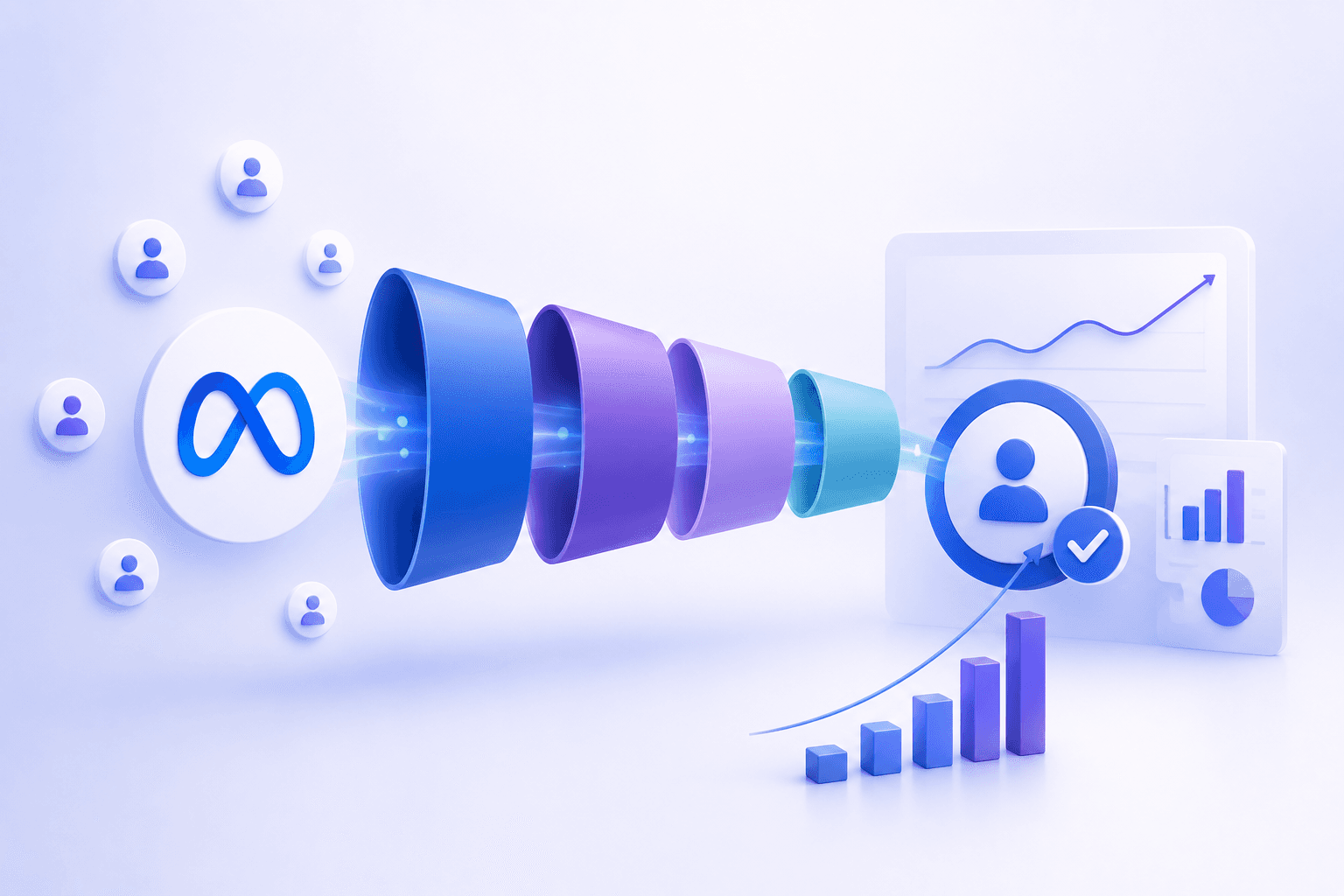
Ecommerce growth strategy used to mean one thing: drive more qualified traffic to your site at a lower CAC (customer acquisition cost) than last quarter. That's no longer the whole job. In 2026, a meaningful share of product discovery is happening inside ChatGPT, Gemini, and AI-powered search before a shopper ever lands on your site, and that's changing what "the funnel" even looks like.
This doesn't mean your paid media and landing page fundamentals stopped mattering. It means you now have two jobs instead of one: win visibility in AI-assisted discovery, and keep converting once that AI-referred shopper arrives. Brands that treat 2026 as "do what worked in 2024, but harder" are going to lose share to the ones who adjust where and how they show up. Below is the strategy breakdown, grounded in what's actually measurable right now, not speculation about what AI commerce might become.
Key Takeaways
AI-referred shoppers already convert at a premium: Adobe Analytics found they generate 41% higher revenue per visit than shoppers arriving through traditional channels.
Consumers want AI to help them research and narrow choices, not decide for them. Only 11% are willing to let AI make the purchase call outright (Gartner).
Paid social (Meta, TikTok) is still your primary acquisition lever. What's changed is the standard for creative and trust signals once that traffic lands.
Retention and CLV (customer lifetime value) now carry as much strategic weight as acquisition. Treat them as one growth system, not two departments.
Your landing page is the final checkpoint for AI-referred traffic. If it doesn't load fast and build trust immediately, you lose the premium those visits came with.
1. The Funnel Is Splitting in Two: Where AI Discovery Fits
Shoppers are expected to spend $8 billion this year after AI agents like ChatGPT and Gemini direct them to retail sites, according to Juniper Research. Adobe Analytics separately found that 41% of U.S. consumers used generative AI for online shopping in June 2026, and that AI-referred visitors generated 41% higher revenue per visit than shoppers who arrived through traditional channels.
That second number is the one to build around. AI-referred traffic isn't a side channel you can ignore. It's converting better than what you're already spending on. The practical move: audit whether your product pages, FAQs, and comparison content actually answer the specific questions AI tools are fielding about your category. If a chatbot can't find clear, structured information about your product on your own site, it's citing a competitor's instead.
Retailers including Walmart and Ulta Beauty have already restructured their site content around this shift, and Ulta's digital team reports seeing "double the conversion and intent" from shoppers arriving via Gemini and ChatGPT. You don't need their budget to apply the same logic: make sure your product and category pages answer direct comparison questions in plain language, not just marketing copy.
2. Consumers Want AI's Help With Research, Not the Final Decision
Don't overcorrect into building an "AI shopping assistant" before you've nailed the basics. A Gartner survey of 322 U.S. consumers found that willingness to let AI make purchase decisions tops out at just 11%, even in low-stakes categories like personal care. Consumers are, however, meaningfully more open to AI narrowing their options: 31% for household supplies, 28% for personal electronics.
There's also a trust gap you need to know about before you lean into AI-generated content. Among consumers who used AI while shopping, 54% said they had to double-check the accuracy of all the information the tool gave them, and 62% said information from GenAI tools ended up wasting their time. Translation: AI visibility gets you into the consideration set, but sloppy or inconsistent product data will get you flagged as unreliable just as fast. Keep your pricing, specs, and claims consistent everywhere they appear, including third-party listings and reviews, because that's what AI tools are pulling from.
Need a partner who thinks about paid acquisition and AI visibility as one system, not two separate projects? Flighted builds growth strategy around Paid Media Expertise, Creative Strategy, and Landing Page Design working together, not as bolt-on services. Book a call to talk through where your funnel has gaps.
3. Paid Social Still Owns Acquisition, But the Math Changed
Don't read "AI discovery is growing" as "stop running paid social." Meta and TikTok remain the highest-leverage channels for most DTC and ecommerce brands spending $20K-$500K+/month, because they're still the fastest way to put your product in front of a cold, qualified audience at scale. What's different in 2026 is the bar for efficiency. Rising CPMs mean you need tighter audience modeling and a disciplined testing cadence (hooks, formats, and offers), not just more spend thrown at the same creative that worked in Q1.
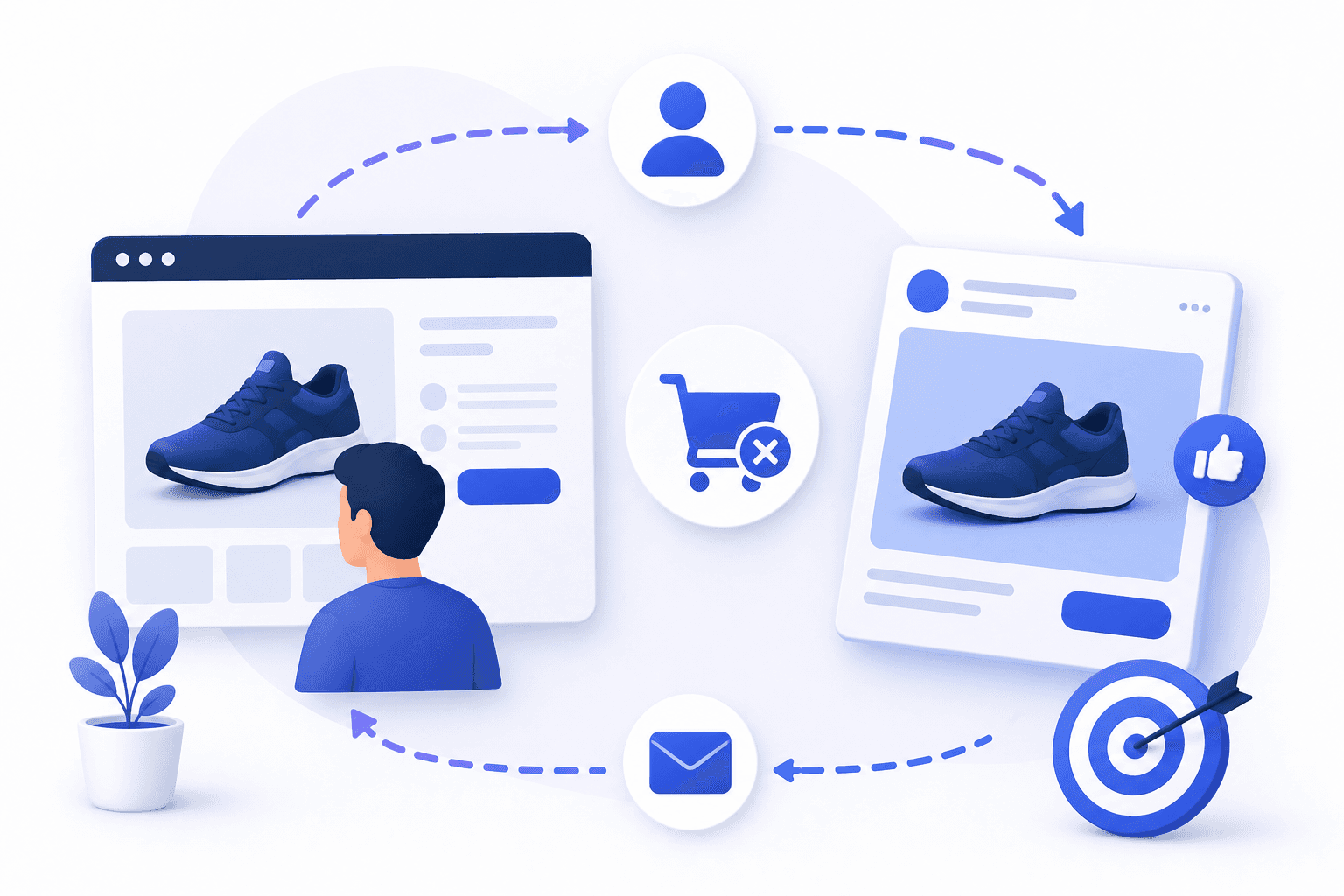
If you're not actively tracking CAC against a target MER (marketing efficiency ratio, total revenue divided by total ad spend), you're flying blind on whether your paid social is actually profitable at your current scale. Run the CAC formula for your brand before you make any 2026 budget decisions, and pair it with retargeting to recapture the AI-referred and organic traffic that doesn't convert on the first visit. A structured retargeting strategy typically recovers 15-25% of visitors who browsed but didn't buy.
4. Trust Signals and Creative Are Doing More Conversion Work Than Ever
Because shoppers can't touch your product, and because they're increasingly skeptical of AI-generated claims (see Section 2), social proof is carrying more conversion weight than it did two years ago. Yotpo's research found that shoppers who engage with user-generated content (UGC) convert at a rate 161% higher than those who don't. That's not a rounding error. That's a reason to prioritize UGC collection and display as a core part of your creative strategy, not an afterthought.
The same applies to site performance. Mobile devices account for 79% of smartphone shopping purchases in the past six months, and even a 0.1-second improvement in mobile load speed can measurably lift conversion rate. If your product pages are slow on mobile or thin on real customer photos and reviews, you're losing a disproportionate share of the traffic you're paying to acquire, AI-referred or not.
5. Retention Now Carries as Much Weight as Acquisition
Acquisition gets the budget and the attention, but CAC keeps climbing across every paid channel, which means the brands protecting their margins in 2026 are the ones who've built a real retention engine, not just a loyalty widget in the footer. Track repeat purchase rate and CLV alongside CAC every month, not quarterly. If you don't know your ratio of CLV to CAC, you don't actually know whether your growth is profitable or just fast.
This doesn't mean deprioritizing acquisition. It means treating acquisition and retention as one connected system: the same first-party data you collect for retention (purchase history, product preferences) should feed back into sharper lookalike audiences and creative targeting for your paid social campaigns.
6. The Landing Page Is Your Last Line of Defense
Every dollar you spend driving traffic, whether through Meta, TikTok, or AI-referred discovery, gets wasted the moment it lands on a slow, confusing, or generic page. This is where landing page design earns its place as one of the three pillars of a real growth strategy, alongside paid media and creative. AI-referred visitors in particular are shopping with higher intent already (remember that 41% revenue-per-visit premium), which means they'll bounce faster, not slower, if your page doesn't immediately confirm they're in the right place.
Treat every landing page as a living asset. Run ongoing A/B tests on headline framing, trust badges, and page speed rather than shipping a page once and leaving it untouched for a year.
7. How to Prioritize This in Your 2026 Roadmap
You don't need to overhaul everything in Q1. Sequence it:
First 30 days: Audit product and FAQ content for AI-readability (clear, structured answers to comparison and "best for" questions). Run your CAC and MER numbers.
Days 30-60: Tighten paid social creative testing cadence and layer in retargeting if you haven't already. Add UGC collection to your post-purchase flow.
Days 60-90: Audit landing page speed and trust signals specifically for the traffic sources converting best (check your analytics for AI-referral patterns). Stand up or formalize a retention/loyalty program if CLV:CAC is below 3:1.
If you're spending meaningfully on paid social already and have a sense of your numbers but no system tying creative, media buying, and landing pages together, that's the gap worth fixing before chasing AI discovery tactics. For a structured look at what a real growth partner should bring to the table, see what separates an effective growth agency from an average one, and if you're currently evaluating partners, run them through these 15 questions before you sign anything.
FAQ
What is the most effective ecommerce growth strategy for 2026?
There isn't a single tactic. The brands growing fastest in 2026 are running paid social acquisition (Meta and TikTok) with disciplined creative testing, pairing it with strong retention/CLV tracking, and making sure their product content is structured clearly enough for AI shopping tools to surface and cite accurately.
How is ecommerce marketing changing in 2026?
The biggest shift is the rise of AI-assisted shopping research. Adobe Analytics found 41% of U.S. consumers used generative AI while shopping in June 2026, and those AI-referred visitors spent 41% more per visit than traffic from traditional channels. Marketing teams now need to optimize for AI discovery alongside paid acquisition and SEO.
Will AI agents replace paid advertising for ecommerce brands?
No, not in 2026. Gartner's research shows only 11% of consumers are willing to let AI make the actual purchase decision. Paid social remains the primary way to put your product in front of new, qualified audiences; AI discovery is an additional surface to win, not a replacement channel.
What's the biggest mistake brands make with ecommerce growth strategy right now?
Treating acquisition and retention as separate problems, and treating AI visibility and paid media as competing priorities instead of one connected system. The data on your best customers should inform your paid targeting, and the traffic AI tools send you still needs to land on a fast, trustworthy page to convert.
How do I know if my current growth strategy is working?
Track CAC against a target MER monthly, not quarterly, and know your CLV:CAC ratio. If that ratio is below 3:1, retention needs attention before you pour more budget into acquisition.
Does my ecommerce brand need to optimize for AI shopping tools specifically?
Yes, at minimum on your product and FAQ pages. Make sure specs, pricing, and comparison information are stated clearly and consistently across your site and third-party listings. AI tools pull from whatever's clearest and most consistent, and 54% of shoppers already report having to double-check AI-provided shopping information, so accuracy is now a trust signal.
Conclusion
The ecommerce brands that win in 2026 aren't the ones chasing every new AI shopping feature. They're the ones who kept their fundamentals, profitable paid acquisition, disciplined creative testing, strong landing pages, and real retention tracking, while adapting their content and product data to be legible to both human shoppers and the AI tools increasingly standing between discovery and purchase. Start with the 90-day sequence above, and reassess every quarter as AI-referred traffic share grows.
Related Posts
Related Posts
Related Posts
Related Posts





















Ready to talk?
New York, NY 11217
hello@flighted.co
© Flighted, 2026
Ready to talk?
New York, NY 11217
hello@flighted.co
© Flighted, 2026