5x'ing Collective's Meta NMRR

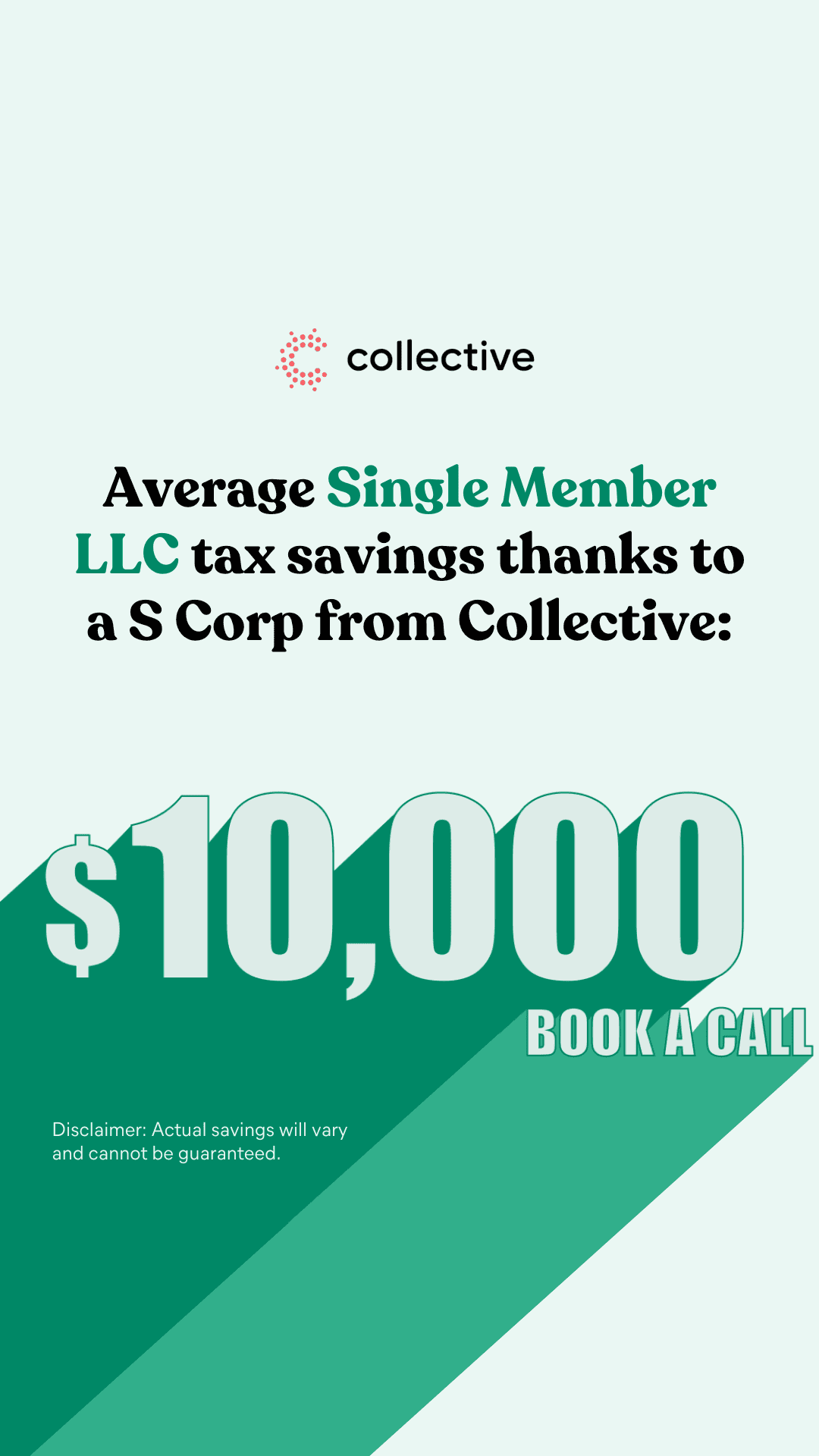
Collective is the all-in-one financial platform for self-employed entrepreneurs — S Corp formation, bookkeeping, payroll, and tax filing bundled into a single membership that saves the average member around $10,000 a year in taxes. The offer is excellent. The advertising problem is harder than it looks: you are asking a solopreneur to reconsider their entire business entity structure, from a cold Instagram scroll, using a concept most of them have never heard of.
When we started in May 2024, Meta was running at low five-figures per week in ad spend. By August of 2026, Flighted had delivered a 5x increase to over $1 million a month in Meta ad spend, while continuing to hit their pipeline targets for the channel. That kind of sustained scale over 2 years isn't a single unlock. It's a system that Flighted rebuilt, stress-tested, and rebuilt again.
Funnel and Event Optimization Strategy
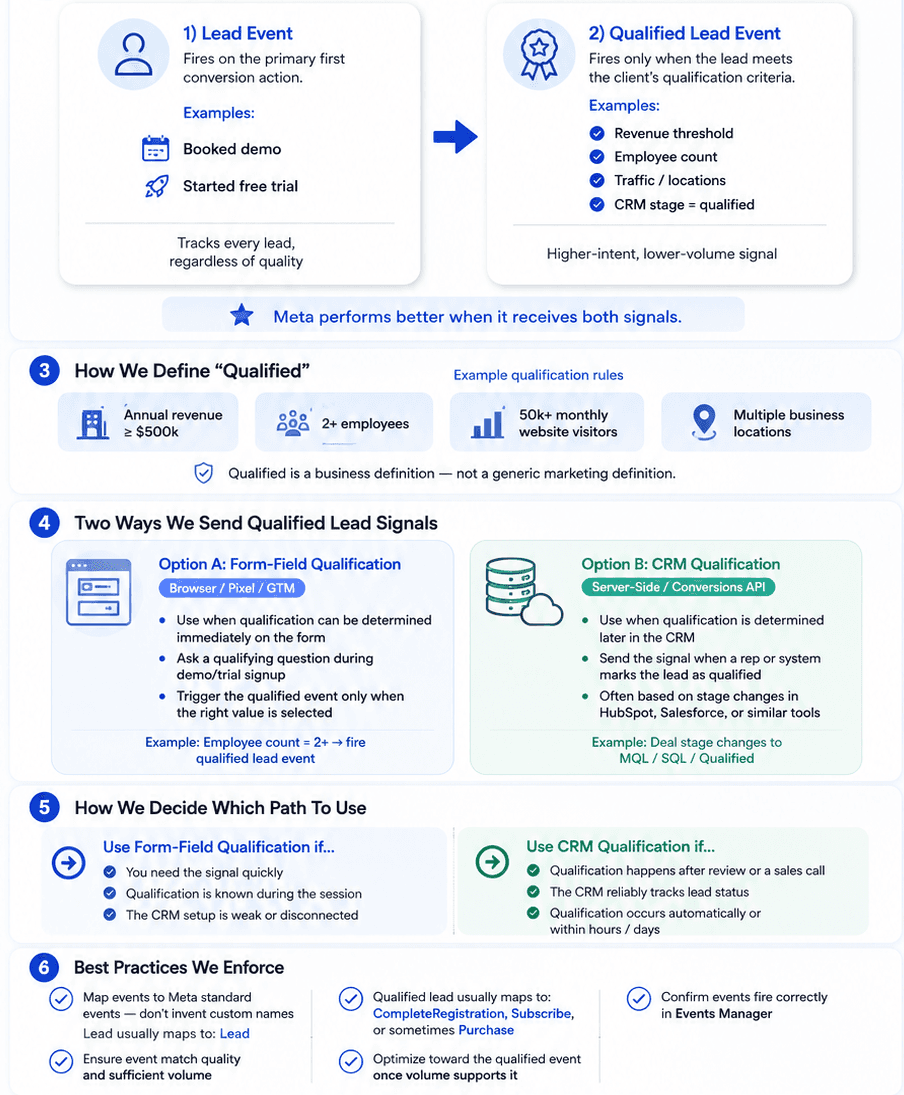
The first constraint we hit had nothing to do with creative. It was signal. Collective's funnel runs lead → qualified lead → scheduled call → closed member, and early on the account was optimizing toward the top of that chain.
Meta did exactly what Meta always does: it found us the cheapest possible form-fillers. Understanding Meta's ad performance benchmarks by industry helped us set realistic targets. Lead volume looked healthy while MQL rate and scheduled-call conversion quietly eroded.
We reoriented the account around cost per scheduled call (CPSC) as the north-star metric, with MQL rate as the health check underneath it. Our approach follows the principles outlined in our Meta Ads Funnel for B2B SaaS guide. We tested optimizing directly for the qualified lead event in prospecting rather than raw leads.
We audited and repaired pixel and event firing. We added an active-member exclusion to every prospecting ad set to stop advertising to existing customers. We also layered in website-visitor exclusions to keep cold campaigns genuinely cold.
That exclusion work alone pulled frequency and CPM down measurably while first-time impression ratio climbed.
Above the conversion layer, we built a deliberate top-of-funnel engine. When frequency in the core ASC crept past 1.2, we launched dedicated TOF campaigns. These included educational S Corp content, a tax savings calculator funnel, webinar registration campaigns, and advertorial-style landing pages.
These campaigns weren't judged on direct CPSC. Their job was to widen the pool, suppress frequency in the campaigns underneath them, and seed warm audiences the conversion campaigns could harvest.
We also ran a retargeting campaign optimized for landing page views with a hard frequency cap. Meta's conversion objective only surfaces people ready to buy today — Collective has a large audience who will be ready in three months.
Landing pages were treated as part of the media buy, not a separate project. We ran head-to-head LP tests continuously: truncated versus full-length, advertorial versus direct, multiple variants behind the same creative.
See our Landing Page A/B Test guide for B2B SaaS for the full methodology. This ensured we knew which page deserved traffic before scaling.
Ad Account Structure and Scaling
When we inherited the account, roughly 70% of spend was sitting in the learning phase. Too many campaigns, too many ad sets, too many changes per week. Choosing between ABO vs CBO structures was one of the first decisions we addressed.
Our first job was subtraction: consolidating prospecting down to one or two ad sets, converting the fragmented ABO testing campaign to CBO, and killing a retargeting campaign posting a cost per scheduled call many multiples above the account average.
Fragmentation isn't a cosmetic problem. It's a computational one — thin spend across many ad sets means no single entity ever accumulates enough signal to exit learning, and the whole account gets stuck.
What emerged was a durable architecture we ran and refined for two years:
Creative Testing (CBO) — a controlled-chaos sandbox holding roughly 20–25% of spend, batched monthly so each concept cohort got a clean read. Ad set minimums (typically $25–$100/day) forced delivery on concepts Meta was starving, without overriding its allocation logic.
Core ASC — the highest-spending campaign, holding only proven winners, scaled by Post ID so ads retained social proof and their Estimated Action Rate in the auction.
Non-ASC CBO — a manual-targeting campaign running Broad, stacked 1% Lookalikes, interest stacks, and Advantage+ side by side. This is where audience testing lived, refreshed every 7–14 days.
Seasonal and thematic campaigns — a Retroactive S Corp ASC timed to filing deadlines, an Influencer/whitelisting ASC, BFCM and spring sale campaigns, and webinar campaigns.
Scaling was rhythm, not a budget dump. We ran systematic weekend pullbacks — trimming ~10% every few hours into Friday until we were down 25%, inverting on Monday, cutting closer to 40% around holidays — because CTR and conversion rate reliably collapse on weekends and unadjusted budgets just buy expensive impressions. We front-loaded aggression around demand peaks (the June 30 retroactive deadline, tax season, BFCM) and hunkered down around Independence Day, Labor Day, and the late-December dead zone. On one holiday stretch we cut spend 33% and held lead volume flat, which told us more about the account's diminishing-returns curve than any incrementality test would have.
The hardest discipline was doing less. We repeatedly resisted pausing high-spend ads with mediocre row-level CPAs, because the breakdown effect is real — the top spender is often filling the funnel that makes everything beneath it look efficient. Our standing instruction to the team was to keep structure stable whenever the account was performing, and to make one or two changes every few days rather than twenty overnight.
Creative Strategy
Creative was the engine. Over 27 months we ran hundreds of concepts through the testing campaign, and the pattern that held from month one to month twenty-seven was that educational, direct, zero-context creative beat clever creative every time.
The clearest early proof was a comparison: metaphor-driven statics produced cheap leads in volume but converted terribly to scheduled calls, because they neither qualified the audience nor taught anyone what an S Corp is. Meanwhile, educational carousels explaining S Corp mechanics became the account's dominant format for months. We iterated that format relentlessly — same value props, different hooks and entry points for different audiences.
Four creative systems carried the account:
Persona-based iteration. Collective's ICP is wide — designers, photographers, coaches, consultants, videographers, developers, therapists. Rather than run one generic ad, we took winning assets and re-cut them per persona ("Photographers, here's why you need Collective"), then matched those creatives to interest ad sets targeting those same occupations. This unlocked new pockets of demand repeatedly.
Member and creator UGC at volume. We built a whitelisting engine using member and creator content run from personal handles with Partnership Ad codes, plus a dedicated Influencer ASC. When influencer creative got expensive to produce and the campaign stalled for lack of new winners, we supplemented with low-lift UGC-style statics — screengrab and IG-story-native formats with value props overlaid — proving whitelisting doesn't require video.
Format diversification against fatigue. Educational carousels, testimonial statics, podcast-style long-form interviews, fake-tweet and fake-Reddit statics, lo-fi IG story formats, comment-overlay social-native edits, UGC mashups, "Frankenstein" hook splices recombining proven openings with proven bodies, AI-generated variants, and 90-second podcast cutdowns. When a winner emerged, our job was never to make twenty near-identical clones — it was to port the winning message into new formats.
Seasonal reframing. The retroactive S Corp election deadline gave us a genuine urgency lever twice a year, and we built dedicated campaigns and urgency-led creative around it — a rare, honest deadline in a category that mostly lacks one.
The flip side of a great ad is dependency. When a single explainer video was carrying an entire ASC, blended CTR decayed as it fatigued and CPCs rose across the campaign. We eventually turned off the best-performing ad in the account to force Meta to distribute learning across newer winners — an uncomfortable call that improved performance. Over-reliance on one ad is a fragility, not an asset.
Conclusion
Twenty-seven months of structural discipline, patient budget management, and relentless creative volume took Collective from a fragmented account with 70% of spend stuck in learning to one of the largest sustained Meta programs in the self-employed financial services category. We grew weekly Meta spend from $30,000 to $150,000 — a 5x increase — while more than doubling weekly qualified lead volume from 150 to over 350, absorbing five times the budget without breaking the funnel underneath it.
None of it came from a hack. It came from a simplified account structure that let Meta learn, a signal chain aligned to scheduled calls rather than raw leads, a top-of-funnel engine that kept frequency healthy at scale, and a creative system that never stopped feeding the machine.