Launching Meta Ads for Honeydew Care & Beating Their CPL Goal in 7 Days

Honeydew Care, a telehealth platform built around personalized acne treatment, partnered with Flighted as their Meta ads agency in July 2024 to fix two stubborn problems: a high cost-per-lead and inconsistent conversion off Meta ads. The category isn't easy: pharma advertising means elevated CPCs, insurance qualification headaches, HIPAA compliance, and a sales cycle that doesn't always close inside the click window. Over the course of our partnership, we rebuilt the account structure, nearly doubled conversion rate, and drove blended CAC to an account-best metric through a relentless cycle of creative testing and strategic ad account management, scaling them to over $50,000/month in Meta ad spend.
Ad Account Structure and Scaling
We took over an account leaning heavily on a single CBO that was struggling to scale efficiently. Within weeks, we restructured into a hybrid model purpose-built for telehealth: an Advantage+ Shopping Campaign (ASC+) doing the heavy lifting on volume, a Creative Testing CBO running on cost caps for controlled experimentation, and an Audience Testing CBO to layer in incremental signal from interest stacks and lookalikes. ASC+ became the workhorse — after we switched it from cost caps to highest volume to make scaling easier, CPL on that campaign dropped 28% WoW in November and we redirected budget out of less efficient ad sets.
The biggest unlock came in early January, when we switched our primary optimization event from leads to purchases. The moment we started making media buying decisions off actual purchase data instead of upper-funnel signals, our newly launched ASC+ Purchases campaign hit an account-best $94 CAC almost immediately. We layered in a "Challengers" ASC+ — a duplicate campaign running only ads that weren't getting spend in the main ASC+ — to surface latent creative winners without disrupting our scale campaign. That single tactic resurfaced multiple creatives that went on to drive significant volume.
To protect efficiency, we excluded geographies where Honeydew's care availability ran 5+ weeks out (~11% of spend at the time), and trimmed poor-converting age brackets. We implemented CAPI to tighten attribution and feed Meta cleaner signal. When CPL crept up, we added cost caps. When volume stalled, we pulled them off. We treated budget allocation between ASC+ and CBO as a live dial — shifting spend toward whichever was outperforming on a trailing 7- to 14-day window — and increased total daily budget 25% in November once efficiency was stable enough to scale into BFCM.
Creative Strategy
Honeydew's organic content was a goldmine. We did a complete facelift of their top-performing organic social assets — recutting TikToks with bold text overlays and captions so they served effectively across sound-off placements like Reels and Stories. The lift was immediate. The Flighted recut of one of their top organic UGC videos became the highest-spending ad in the account, with our ASC and test campaigns seeing 26% and 16% CPL drops respectively the week we scaled it. From that point on, every UGC asset we touched got the subtitle treatment by default.
With a baseline creative engine in place, we built a messaging matrix and dynamically tested angles: before/after transformations, dating confidence, customer review overlays, AI voiceover explainers, "side-by-side with vs. without" comparisons, and microdosing animations. We tested aggressively across treatment options — and isolated Accutane and Doxycycline as the two clear conversion drivers. That insight collapsed our creative iteration cycle: instead of spreading bets across Honeydew's full treatment catalog, we doubled down on those two angles and built endless iterations from there.
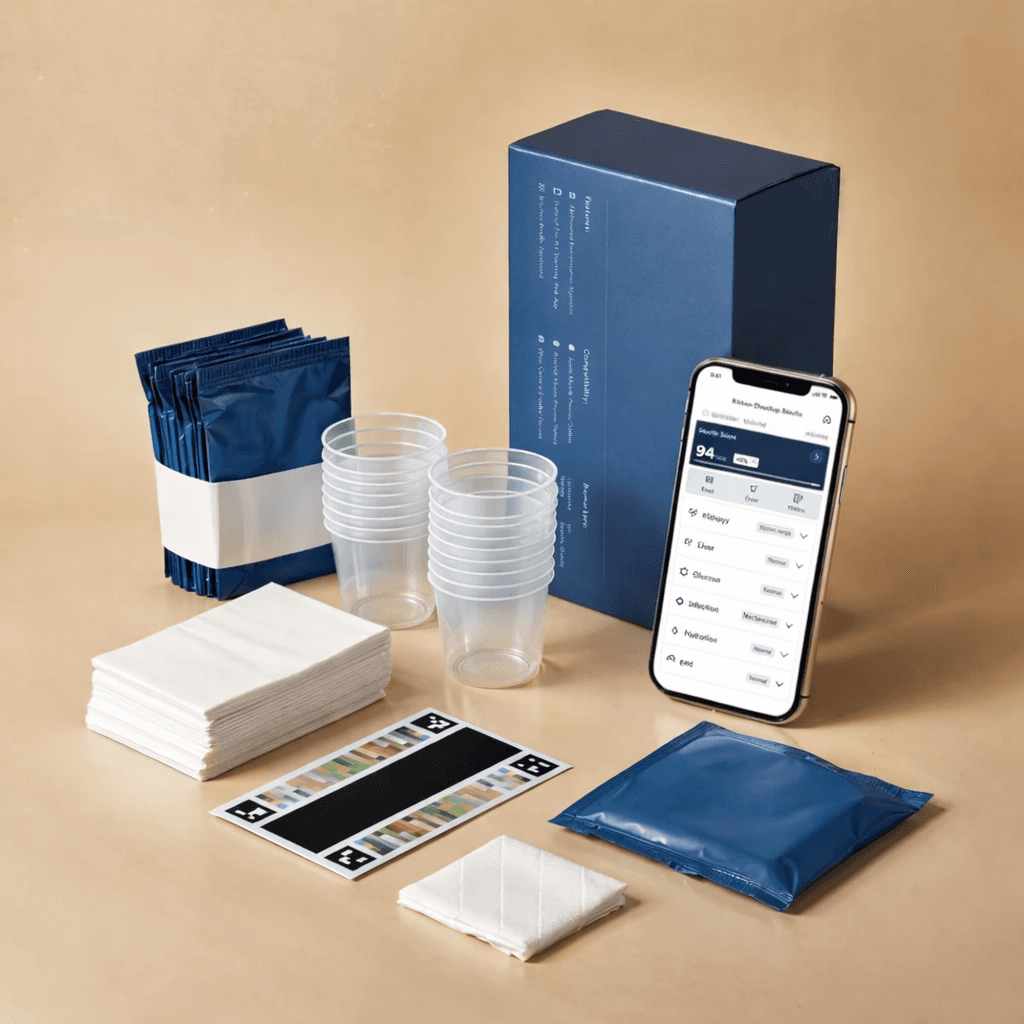
The "Box + Value Props" static became the breakout — it drove a $5 CPL in creative testing, the cheapest cost-per-lead we'd ever seen in the account. We scaled it into ASC+ and Audience Testing, then built iterations the moment Meta flagged the original ad for "promotion of prescription drugs." That cycle — winning ad → rejection → fast iteration → relaunch — became a core competency. Pharma advertising punishes brands that can't move quickly, and we built a creative pipeline that could keep pace without missing a beat on efficiency.
We also pushed format diversity to give the Meta algorithm room to breathe: carousels, GIFs, and static iterations of our top videos all feeding the same proven messaging. By month six, conversion rate had climbed from 1.2% at launch to a peak of 2.1%, with CPC at its lowest point since we'd taken over.
Summary
Combining a purpose-built campaign structure with ruthless creative testing on the right treatment angles revitalized Honeydew Care's Meta performance. The numbers tell the story: a 27% WoW CPL drop the week after launch, a 28% CPL reduction on ASC+ during our budget scale-up, conversion rate nearly doubling to 2.1%, and an account-best $94 CAC after the shift to purchase optimization. Honeydew Care's Meta advertising now operates with a scalable structure and a creative engine built for a high-rejection-risk category — positioning the brand for sustained growth in one of DTC telehealth's most competitive verticals.