Scaling Ambrook's Meta Spend 181% While Cutting Cost Per Qualified Lead by 62%
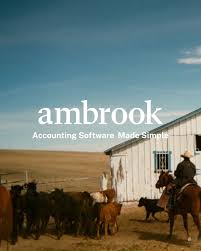
Ambrook builds financial management software specifically for farmers and agricultural businesses — a niche with real pain and a genuinely differentiated product, but one that requires a more disciplined approach to reach at scale on Meta. When they started looking for a Meta ads agency, the foundation was there. What wasn't was a system that could scale that story efficiently.
Nine weeks later, Ambrook had scaled Meta ad spend by 181% month-over-month into 6-figures monthly while cutting Cost Per Qualified Lead by 62%. We ultimately scaled Ambrook to over $150,000 in monthly Meta ad spend. That combination of more spend at a dramatically lower cost is what happens when every layer of the account gets tightened at once.
Funnel & Event Optimization Strategy
The first thing we addressed was the quality problem that lives underneath every B2B Meta account: not all leads are created equal. Optimizing toward raw lead volume in a niche vertical like agriculture gets expensive fast, because Meta finds whoever converts easiest — not necessarily whoever becomes a customer. We rebuilt the optimization stack around qualified leads, aligning the signals we fed the algorithm with the actual users Ambrook needed to close.
To solve top-of-funnel saturation — a real constraint when your ICP is agricultural operators in a finite market — we introduced a parallel set of farm-focused educational and newsletter campaigns. These ran at extremely low CPLs in the single-digit range and served a structural purpose: expanding reach, reducing frequency pressure on the conversion-focused campaigns below them, and continuously seeding warm audiences that downstream prospecting could harvest. In a niche vertical where the same users see your ads repeatedly, solving the frequency problem at the top of the funnel isn't optional if you want to scale.
Audience strategy evolved alongside it. We layered customer lookalikes, engager audiences, and adjacent non-agricultural audiences on top of core ag targeting. This expanded the addressable pool without compromising lead quality — which is often the ceiling for B2B advertisers operating in narrow verticals.
Ad Account Optimizations and Scaling
The account structure had the familiar fragmentation problem: spend distributed across too many campaigns and ad sets, too much time in learning, too little signal concentration to let the algorithm optimize efficiently. We rebuilt it around a clean test → scale architecture — dedicated creative testing campaigns running under CBO, feeding proven winners into ASC and core scaling campaigns where Meta could allocate budget in a more stable environment.
Budget discipline then became the primary efficiency lever. We made systematic pullbacks from retargeting (high frequency, CPL trending toward what we were already getting from top-of-funnel cold traffic) and from cost cap experiments that were producing volatility more than efficiency. Freed-up budget moved into the campaign types that were actually generating qualified leads at scale.
Bidding strategy required real iteration. We ran multiple cost cap CBO configurations and tested various ASC setups before finding the right balance. The consistent lesson was that consolidation beat complexity. Fewer campaigns with concentrated budget gave Meta cleaner signal, more stable delivery, and better learning conditions. Scaling required bid discovery, not just budget increases. Pushing more money into a fragmented structure never worked.
Creative Strategy
The single biggest unlock for this account was creative strategy maturity. Early on, Ambrook's ads were leaning soft: lifestyle content, meme-adjacent formats, indirect messaging that gestured at the product without doing the work of explaining why a farmer should stop scrolling. Those ads buried the product. We changed that direction entirely.
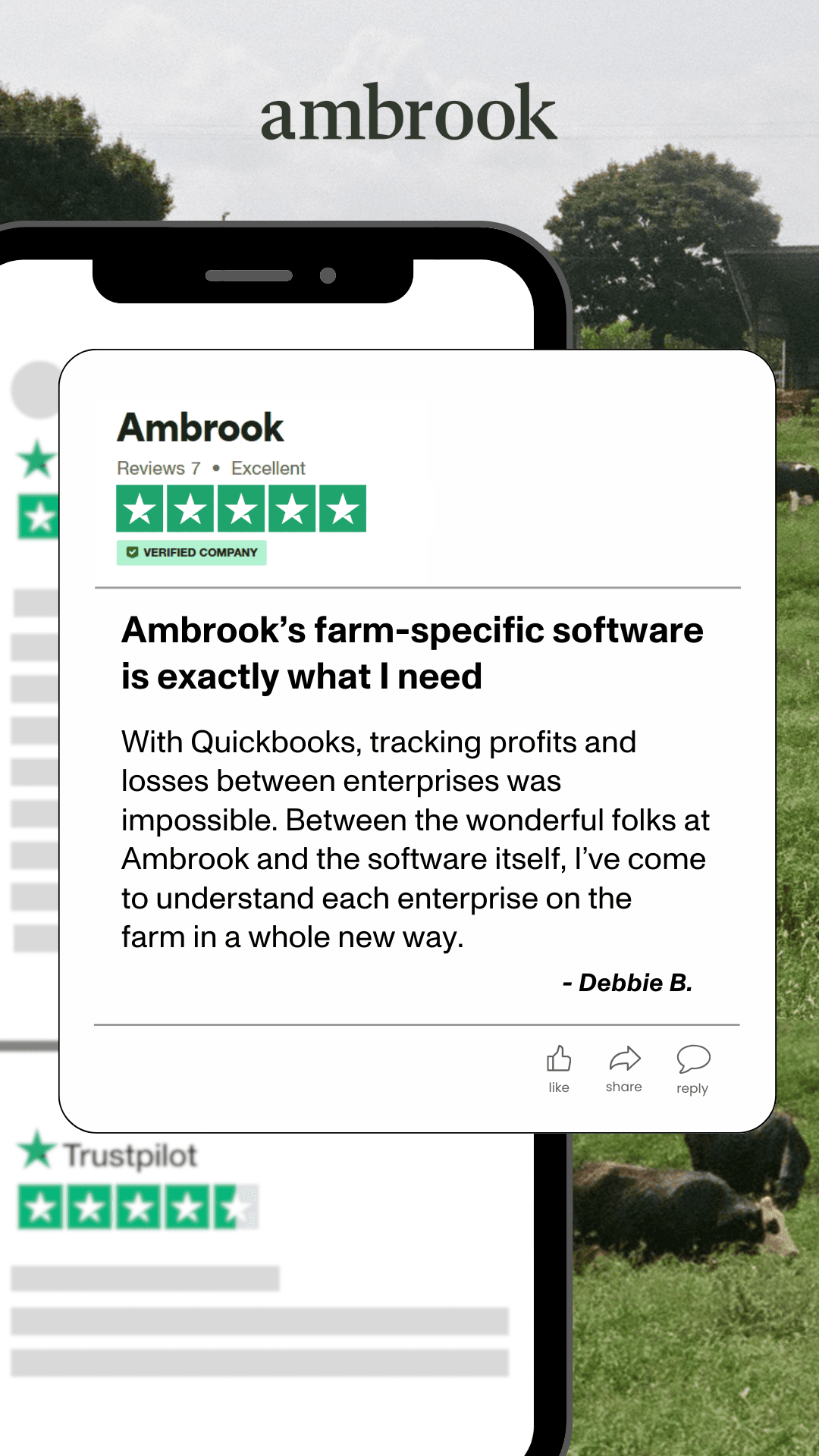
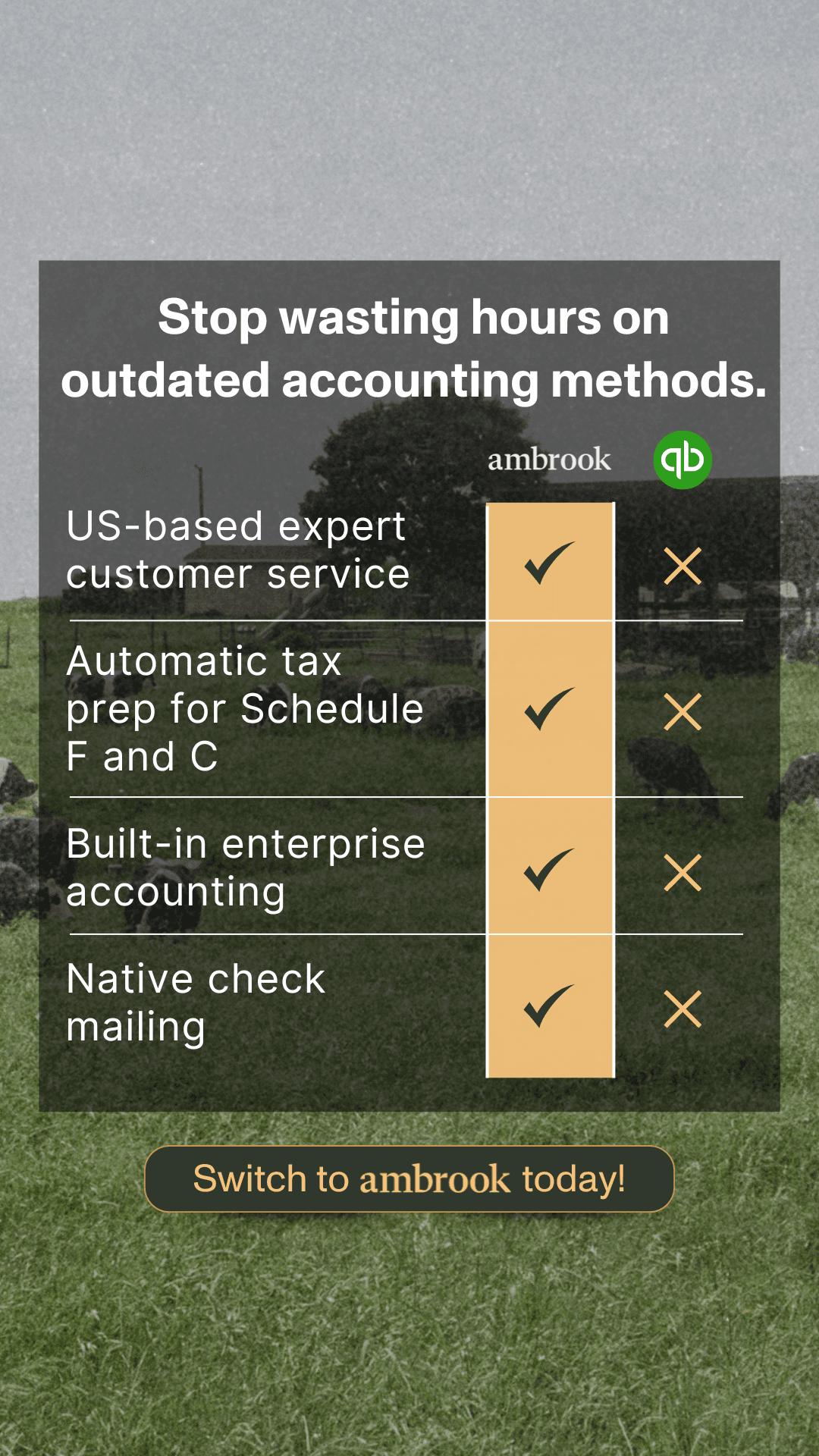
The shift was toward direct-response, product-forward creative with faster hooks, earlier product reveals, and messaging grounded in the specific financial pain that agricultural businesses actually feel. "Tax prep" messaging emerged as the most powerful creative angle in the account. It translated a software feature into a felt, timely urgency — not "here's a finance tool" but "here's how Ambrook handles tax season for farms in a way QuickBooks can't." That specificity made all the difference with cold traffic.
Two creative formats drove the most consistent efficiency. "Demo clip with headline" — a short product walkthrough paired with a punchy one-liner — became a go-to format because it was fast, clear, and UI-driven. Prospective customers could see the software working in seconds. "Ambrook vs. QuickBooks" comparison ads landed hard for a simple reason: farmers already know QuickBooks. The moment you articulate exactly what it can't do for an agricultural business, the comparison sells itself.
UGC also improved meaningfully as we applied tighter hook discipline. Faster product reveals in the first three to five seconds, UI-forward framing showing the software in action, and hooks leading with identifiable farm finance pain all drove stronger early engagement and lower CPL over time. The creative testing engine ran as a true system throughout — new concepts isolated in CBO testing, winners identified quickly, then scaled into ASC and core prospecting. This loop became the primary growth driver.
Conclusion
Ambrook is a strong product serving a real, underserved need. What they needed was a system that could tell that story at scale, structured by a best-in-class growth agency. By combining a qualified-lead optimization stack, a structural rebuild of the account, and creative that shifted from soft-sell to direct-response, we scaled Meta spend 181% month-over-month while cutting Cost Per Qualified Lead by 62% in nine weeks. The account went from ceiling to growth engine.