3x Annual Growth From 8 to 9 Figure ARR Via Meta Ads For Owner
Intro
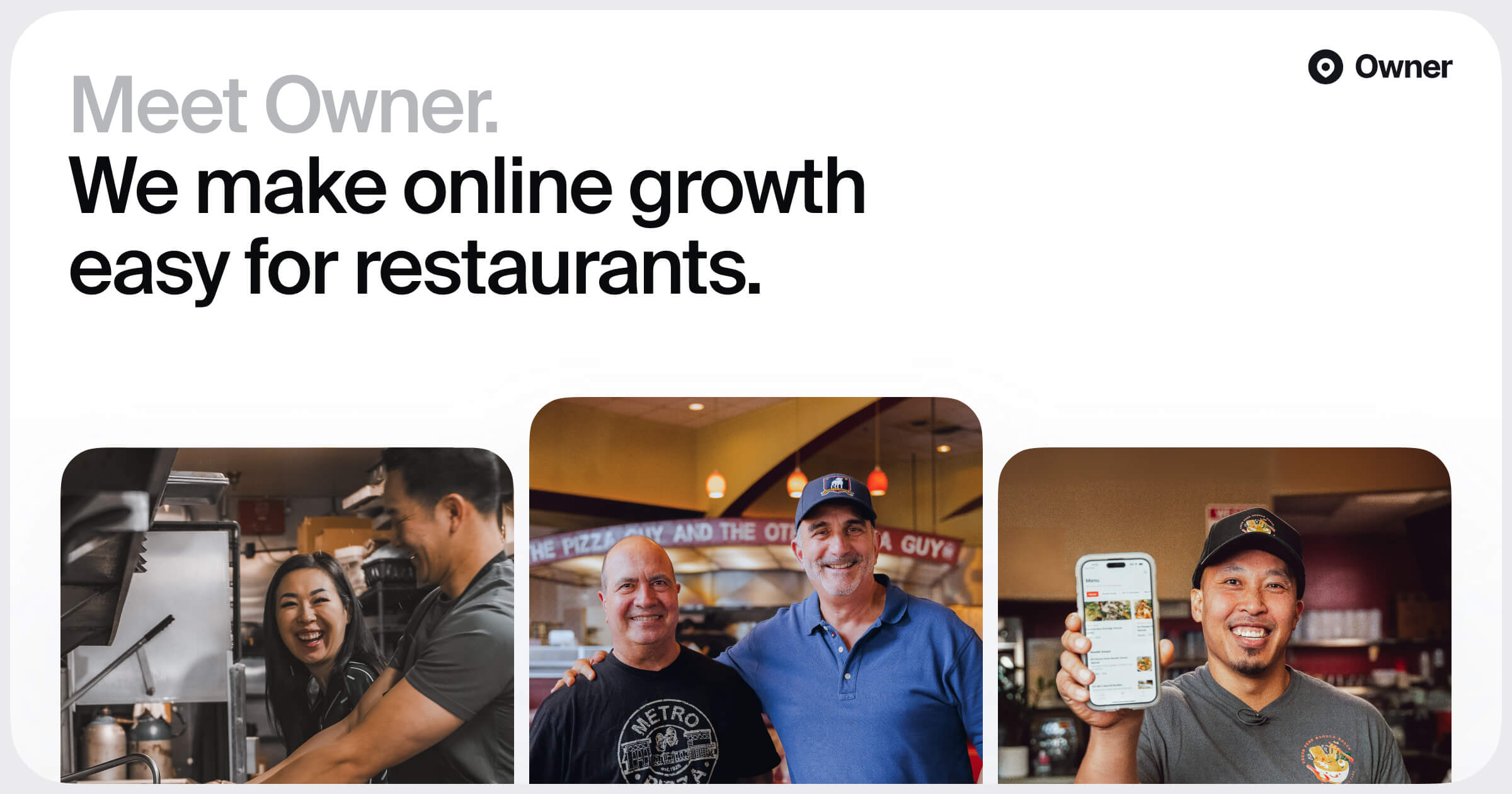
Owner had already found traction on Meta before we got involved. They were spending at low six figures a month, had clear product-market fit, and were growing. But they knew Meta could be doing more — a lot more - with the right Meta ads agency partner. They came to us wanting to make it their primary growth channel, not just a supporting one.
Two years later, Flighted had scaled Owner from low six-figures in monthly Meta spend to over $1 million a month, achieved 3x annual growth, and crossed eight figures in ARR. This is the most successful case study we've produced as an agency. It came down to three interconnected things: building a smarter funnel, fixing the account structure, and creating ads that actually resonated with restaurant owners.
Funnel & Event Optimization Strategy
The first thing we identified was that their traditional demo-driven funnel was capping efficiency. Driving cold traffic straight to a sales action works until it doesn't — and for Owner, the ceiling was clear. So we introduced a new lead magnet funnel built around their AI Grader tool: an educational, tool-based experience designed to pre-qualify leads before they ever talked to sales.
The results were immediate. CPAQL consistently landed in the $60–$140 range, and AQL rates hit as high as 70%. What started as a parallel acquisition engine quickly outperformed core campaigns in both efficiency and scalability. We reallocated budget accordingly, and the Grader funnel became the primary driver of qualified lead volume.
We also uncovered a tracking problem mid-engagement that changed everything. A pixel misfire was artificially inflating lead volume — making performance look better than it was. We corrected it and rebuilt optimization around true qualified leads (AQLs), overhauling targeting and budget decisions around AQL feedback loops instead of in-platform metrics. It was a painful reset in the short term. But it's what aligned media performance with real revenue outcomes and gave us a signal we could actually trust.
Ad Account Optimizations and Scaling
The account structure we inherited was fragmented. Excessive campaigns and ad sets were diluting signal density and keeping spend trapped in learning. We rebuilt it around a simple, proven system: dedicated creative testing campaigns (CBO) feeding into consolidated scaling campaigns (ASC). Winners got promoted into ASC environments where Meta could allocate budget more efficiently — without resetting learning phases or destabilizing what was already working.
From there, we aggressively consolidated. We paused low-signal ad sets, collapsed underperforming campaigns, and concentrated spend behind proven performers. This increased signal density, improved auction efficiency, and gave Meta the clean learning environment it needed to optimize at scale.
As performance data matured, the picture became clear: the AI Grader campaigns were consistently outperforming everything else. So we made a decisive budget shift — pulling spend from inefficient prospecting and redirecting it into the campaign types that were actually driving qualified growth. This wasn't a marginal tweak. It was a strategic reorientation of where Owner's growth was coming from.
We also introduced flex ad structures to solve creative fatigue at the ad level. By grouping multiple creative variants into single, consolidated flex units, Meta could dynamically allocate spend across variations and identify winning combinations faster. Instead of spreading budget thin across dozens of individual ads, we concentrated it within flexible frameworks that improved learning efficiency and made it easier to scale winning concepts without duplicating effort.
Creative Strategy
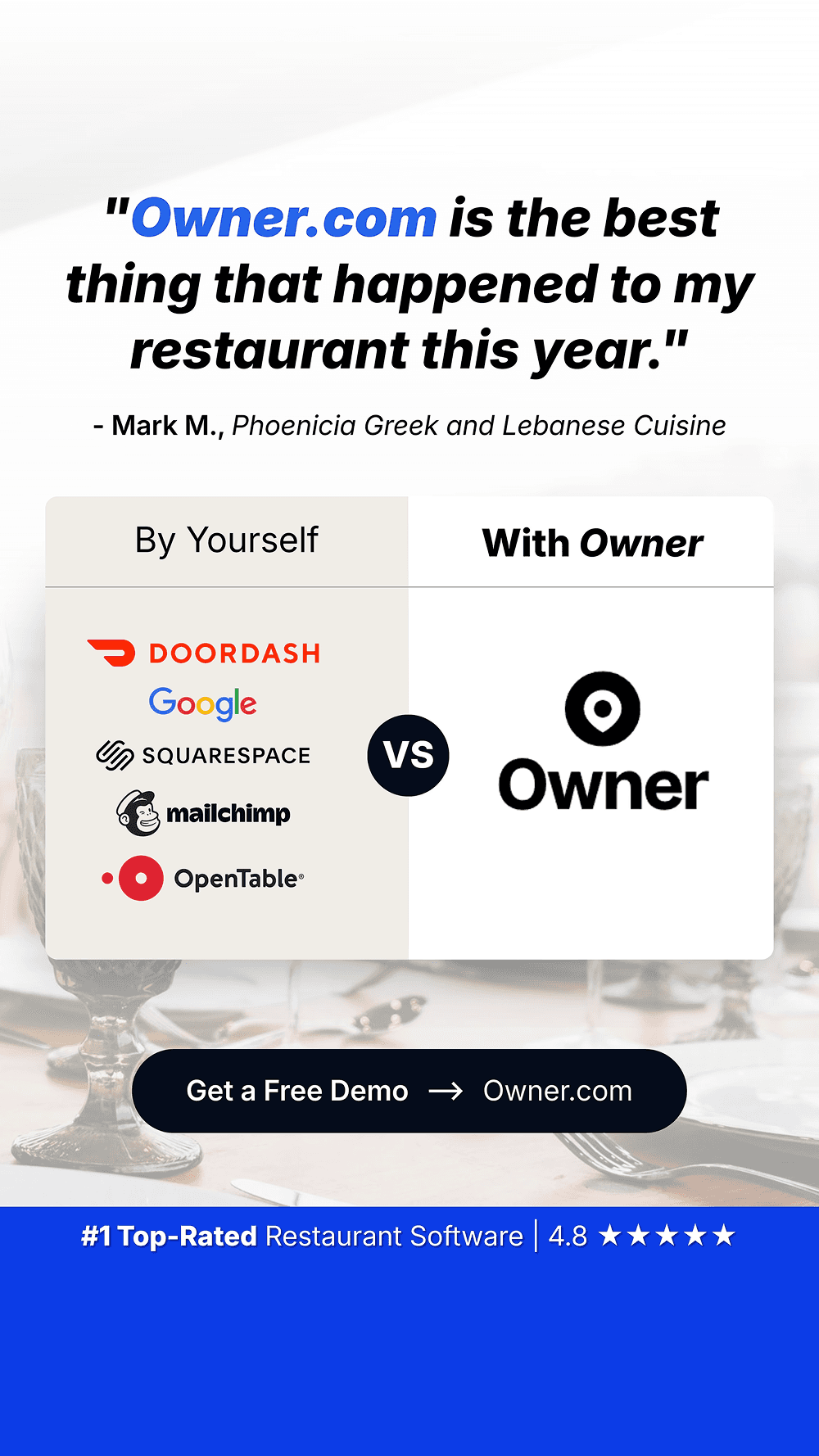
Owner's ICP is restaurant owners, and we leaned into that specificity hard. Rather than speaking to "restaurant owners" in the abstract, we built static ads that called out specific verticals — pizza restaurants, Mexican food, Chinese food — using formats that mimicked commonly used UI elements and felt native to how these operators actually spend time online. One of our top performers featured a simple Google search bar with one line of copy: "Rank #1 for pizza near me WITHOUT using an agency." It stopped the scroll because it spoke directly to the tension their audience already felt.
Customer research surfaced a stat that became a cornerstone of the creative strategy: customers are 2x more likely to order from a restaurant when the menu is easy to read on mobile. We deployed this insight in fast-paced, social-native video formats optimized for Instagram Reels, and it drove major growth. The format matched the insight — quick, scroll-native, built for the environment where restaurant owners are actually consuming content.
Not every winning format was educational. We produced VSL-style videos that leaned directly into the pain of running a restaurant right now — rising costs, shrinking margins, closures up across the country — and twisted the knife on how hard it's become to stay open. These performed extremely well with cold traffic, because they led with something the audience already felt before we ever mentioned Owner.
We rounded out the creative mix with carousel ads that compared Owner directly to third-party delivery apps. The format did the work: curiosity pulled viewers through each slide, and each swipe educated them on another reason to pay attention. The best carousels don't sell upfront — they earn the scroll.
Conclusion
Owner came to us with momentum. Partnering with us as their growth agency helped them turn it into a machine. By combining funnel innovation, structural discipline, and creative that spoke directly to restaurant owners' real frustrations, we helped them scale from low six-figures in monthly Meta spend to nine figures over two years — achieving 3x annual growth and crossing eight figures in ARR in the process. This is what it looks like when Meta stops being a supporting channel and becomes the engine.